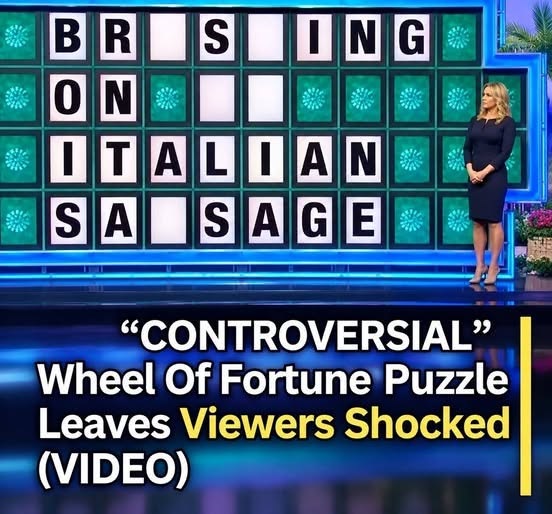
If you were sitting on your sofa recently with dinner cooling on your tray, you probably found yourself gasping over the infamous Wheel of Fortune green flash puzzle. Few things unite living rooms across the country quite like the half-hour television ritual of solving word puzzles before the evening news wraps up. You kick off your shoes, sip a mug of hot cinnamon tea, and feel like a bona fide genius as letters pop onto the giant glittery board. Every so often, the game serves up a moment so baffling that whole households drop their forks in disbelief.
That exact shockwave hit viewers during an episode that featured two distinct emotional rollercoasters. First came an obscure turn of phrase that caused a collective meltdown on social media, followed shortly by a bonus round miss that broke hearts from coast to coast. It sparked a fiery debate about game integrity, category definitions, and why solving puzzles from an armchair feels miles apart from spinning that heavy wheel under studio spotlights.

Weeknight puzzle rituals are sacred in many households, where a warm mug of tea and a sharp pencil set the stage for shouting answers at the screen.
The Wheel of Fortune Green Flash Puzzle: When Categories Go Rogue
The primary flashpoint of the night revolved around a puzzle that solved to the phrase “Seeing the green flash.” On its own, the phrase sounds poetic, evocative of breezy coastal shores and maritime folklore. The trouble began the second viewers glanced at the category banner at the top of their screens, which boldly labeled the puzzle as an “Event.”
In standard game show logic, an “Event” typically signals something you mark on a kitchen wall calendar. Viewers expect clues pointing toward an anniversary party, a neighborhood bake sale, or a summer parade down Main Street. Framing a split-second atmospheric refraction as an everyday social occasion sent contestant guesses tumbling down the wrong rabbit hole. As blanks sat empty on the board, contestants danced around seasonal festivities while fans at home groaned into their throw pillows.
The controversy spilled onto community forums immediately after the broadcast. One camp argued fiercely that the clue was unfair, insisting the puzzle belonged under “Thing” or “Phenomenon.” Another faction pointed out that catching the elusive sunburst is indeed a rare personal occurrence that people actively travel to witness. Regardless of which side you lean toward, the disconnect between player expectations and the writers’ category selection proved costly.

The legendary green flash is a genuine atmospheric optical trick, making its game show debut under the “Event” category both technically correct and deeply confounding.
The Real-World Science Behind the Emerald Horizon
To understand why this puzzle stumped so many people, it helps to understand what the phenomenon actually entails. A green flash happens right as the upper rim of the sun dips below a clear, flat horizon, usually over the ocean. As the sunlight travels through thick layers of atmosphere, the air acts like a prism, bending different wavelengths of light at slightly different angles.
Red and orange light get absorbed by the atmosphere or refracted away first, leaving a razor-thin sliver of bright emerald light visible for barely two seconds. Because you need completely unobstructed horizon lines and minimal pollution, most people go their entire lives without ever spotting one. Expecting an everyday player to pull a rare optical anomaly out of thin air under pressure was a tall order.
“When a puzzle relies on niche meteorological science under an everyday category, the gap between the living room couch and the studio floor turns into a canyon.”
Ten Seconds, Three Words, and Forty Grand: Stephen Sporer’s Heartbreaker
Just as the dust began to settle from the green flash debate, the broadcast delivered an even more gut-wrenching moment during the final segment. Contestant Stephen Sporer fought his way through the main rounds with sharp gameplay, securing a well-earned trip to the Bonus Round. He stood beside the host, stared at the final grid of blank spaces, and prepared to play for life-changing cash.
After the show supplied the standard base letters—R, S, T, L, N, and E—along with Stephen’s chosen consonants and vowel, the puzzle sat partially revealed. The final answer waiting beneath the board was the simple three-word phrase: “ON OUR WAY.” It was not an obscure nautical occurrence or a complicated idiom. It was an ordinary phrase spoken by millions of people heading out the front door every single morning.

When the timer ticks down on stage, simple everyday words can evaporate from memory in a way couch players never experience.
As the ten-second countdown buzzer started ticking, silence filled the stage. Stephen called out a couple of plausible combinations, his eyes darting frantically across the empty squares. The final buzzer sounded, the remaining tiles turned, and the $40,000 envelope was revealed. The collective groan from living rooms was palpable. Watching a kind, sharp contestant miss out on a stack of cash because of common words that simply refused to click in time is a special kind of weeknight heartbreak.
The Couch-Solver Effect: Why We Feel So Smart in Our Slippers
Why do moments like Stephen’s bonus round or the green flash puzzle cause such massive reactions from folks watching at home? Psychologists refer to this as hindsight bias, but around our house, we just call it the couch-solver effect. When you are curled up on a comfy sectional with a cold glass of sparkling apple cider, your brain works in a completely relaxed state.
Armchair viewers enjoy several distinct advantages over the brave folks who actually stand on that soundstage:
- Zero Financial Stakes: If you guess the wrong letter from your armchair, your bank account remains completely unaffected.
- No Glaring Lights or Studio Hum: Contestants face searing hot studio lighting, noisy crowds, television cameras tracking their every breath, and the physical weight of spinning a 2,400-pound wheel.
- Cognitive Tunnel Vision: Under immense adrenaline, human brains naturally narrow their focus. A contestant fixates on finding a complex word, completely overlooking simple prepositions like “ON” or “OUR.”
- Instant Retrospective Clarity: The second a host reads an answer out loud, our brains trick us into believing we knew it all along, erasing our own initial confusion.

Armchair puzzle-solving brings families together after a long day, turning quick-fire word games into spirited living room banter.
Sharpening Your Wordplay Skills for Family Game Night
Watching these broadcast blunders does more than provide evening drama; it reminds us how much fun it is to stretch our mental muscles. You do not need a television audition to build lightning-fast pattern recognition and expand your vocabulary. Turning weeknight television into a lively, interactive tradition helps clear away workday stress while bringing the whole household closer together.
Here are a few simple ways to turn regular evening game-watching into a fun mental workout:
- Track Letter Frequencies: Pay attention to how vowels interact with high-frequency consonants like D, H, and M. Notice how often compound words hide in plain sight.
- Practice Ten-Second Drills: Grab a daily paper or an anagram app on your tablet and set a kitchen timer. Forcing yourself to spit out three quick options before the chime sounds builds real-world mental resilience under pressure.
- Mix Up Refreshing Alcohol-Free Sips: Keep the mood light and social by serving chilled sparkling water infused with muddled blackberries and fresh mint, or a warm pot of steeped ginger lemon tea.
- Embrace the Humorous Misses: The best part of solving puzzles with friends or family is laughing through the wildly wrong guesses before the board clears.
Game shows have held a firm spot in our evening routines for decades because they capture the unpredictability of human thought under pressure. Whether a puzzle setter picks an eccentric clue category or a contestant freezes on simple everyday words, these moments remind us that language is delightfully messy. Which is why the Wheel of Fortune green flash puzzle will remain legendary couch-coaching lore for seasons to come.