
You know the feeling: you are sitting in your car or walking briskly toward the train, warm paper cup cradled in your hand, steam rising through the sip spout. As you raise the cup to take that first hot sip, your eyes catch that miniature pinprick sitting quietly on the opposite side of the plastic lid. It looks like an afterthought, a manufacturing puncture, or perhaps a decorative detail. Yet, that tiny hole in your coffee cup lid is quietly doing some of the most elegant heavy lifting in modern industrial design.
Without that modest puncture, your morning coffee routine would quickly turn into a messy disaster of sputtering liquid, scalded lips, and stained shirts. Let us pull back the curtain on the fluid dynamics, historical ingenuity, and daily kitchen maintenance surrounding this unsung hero of morning brew culture.

A standard takeaway coffee dome lid features a tiny vent hole opposite the drinking spout to balance interior cup pressure.
The Anatomy of a Coffee Cup Lid: More Than Just Molded Plastic
Disposable lids seem simple, but they are masterclasses in thermoformed plastic engineering. Before the late 1960s, to-go coffee barely existed; patrons drank from ceramic mugs at diners or poked crude peel-and-pull tabs into flat plastic covers that splashed everywhere. The breakthrough arrived with domed lids—most famously the 1986 Solo Traveler lid, designed by Jack Clements—which gave our noses room to breathe and reshaped the entire commuter experience.
Take a closer look at your lid next time you grab a fresh roast. You will find several intentional features working together:
- The Sip Opening: The raised spout angled to fit the natural curve of your lower lip while keeping hot fluid from pooling.
- The Raised Dome: A contoured reservoir that catches slight splashes and creates headspace for latte foam or whipped toppings.
- The Recessed Drainage Moat: A sloped channel around the rim that catches escaping drips and funnels them back toward the drinking port.
- The Secondary Air Vent: That exact pinprick on the high point of the dome, positioned directly across from where your mouth rests.

Steam gently vents from a modern tumbler lid, releasing thermal pressure before your first morning sip.
The Fluid Physics: Why Air Intake Prevents the Coffee Glug
Why does that little air channel matter so much? The answer comes down to basic fluid mechanics and pressure displacement. When you tilt your cup back to take a sip, hot liquid pours through the drink spout. As that liquid exits, the volume of coffee inside the cup decreases. If the container were completely sealed with only one opening, that exiting liquid would leave an empty space behind it, creating a partial vacuum.
Nature dislikes vacuums. The air pressure outside your cup becomes significantly higher than the pressure inside. As a result, the outside atmosphere pushes against the liquid trying to leave, forcing the coffee to retreat back into the cup so a pocket of air can bubble inward through the drinking spout. This tug-of-war causes the dreaded “glug-glug” surge—a jerky, splashing liquid flow that splatters hot coffee against your chin and shirt.
Think of it like an old-fashioned can of apple juice or chicken broth. If you punch only one triangular hole in the top, the liquid sputters and splashes unevenly. The moment you punch a second relief hole on the opposite side, the liquid streams out in a silky, unbroken pour.
The tiny hole in your coffee cup lid acts as that second relief point. As coffee flows out through the main spout, ambient air slips through the vent hole behind it, instantly filling the newly vacated space. Air pressure stays equalized, and your drink flows into your mouth in a steady, controlled stream.
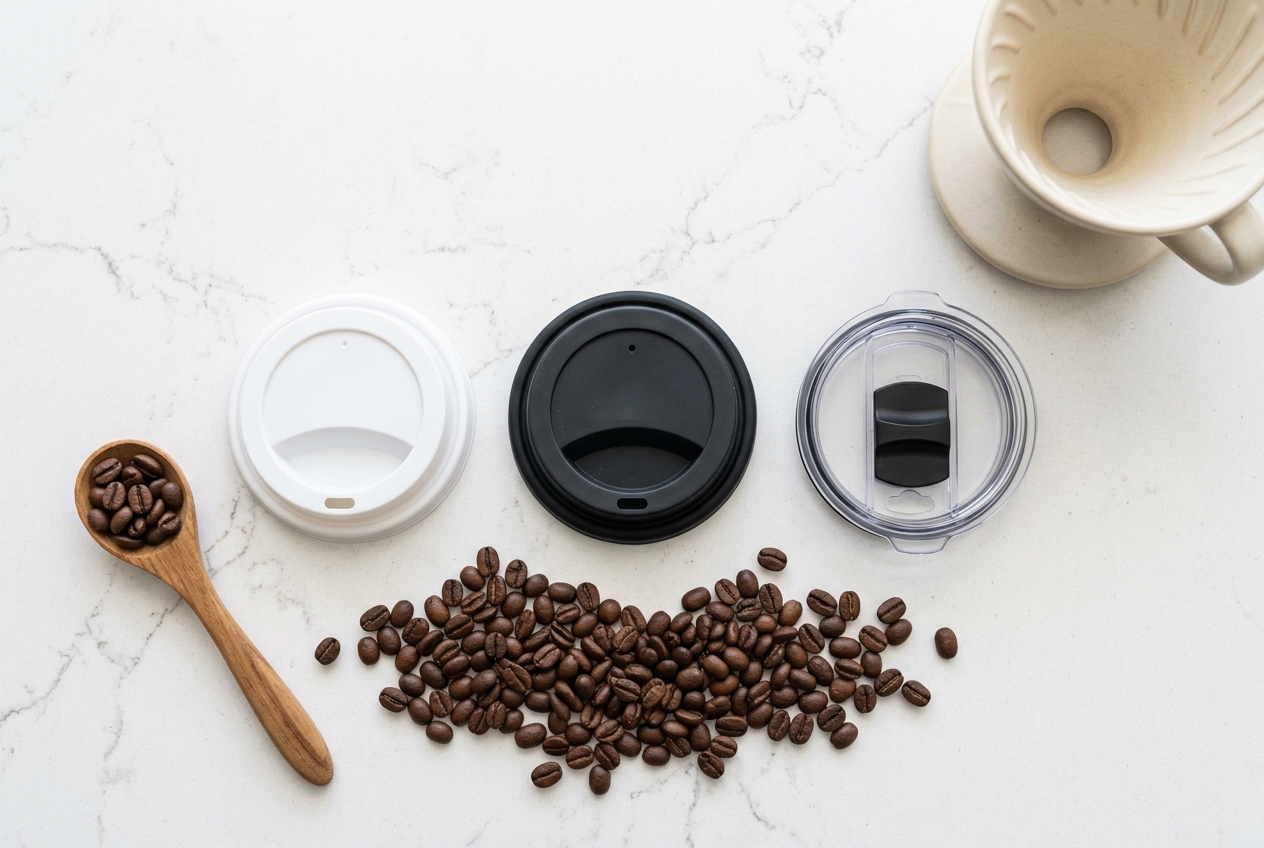
Different lid styles rely on distinct vent placements to ensure a steady, splash-free liquid flow.
Steam Pressure and Splash Defense: Keeping Your Hands Safe
Equalizing liquid flow is only half the battle; the other half is managing thermal expansion. Freshly brewed coffee is served hot, typically between 160°F and 185°F (71°C to 85°C). At those temperatures, water vapor evaporates rapidly from the liquid surface, filling the small air pocket beneath the lid with hot steam.
As that trapped air and water vapor heat up, they expand. In a rigid or tightly snapped disposable cup, expanding steam builds internal pressure. If that hot air had no route of escape, it would exert force against the thinnest structural points—either popping the lid off the paper cup rim entirely or building up a pressurized blast behind the drinking spout. The moment you opened a flap or took a sip, hot liquid could shoot forward unexpectedly.
The micro-vent serves as a continuous pressure relief valve. It lets steam off-gas steadily at a safe, controlled rate. This steady release prevents the lid from warping, stops the cup walls from bulging, and keeps hot liquid from bursting outward when your car hits a sudden bump in the road.

Carrying takeaway cups on foot creates liquid resonance, making smart lid geometry and venting necessary to prevent spills.
The Walk-and-Sip Slosh Factor: How Lids Tame Commuter Spills
Have you ever noticed that carrying a full mug of coffee without a lid almost always leads to a spill within your first twenty steps? Physicists have studied this phenomenon closely: the natural frequency of human walking matches the sloshing frequency of liquid in a standard cylindrical cup. With each step, kinetic energy amplifies the waves inside your drink until they climb the sides and splash over the rim.
A well-engineered travel lid disrupts this liquid resonance. The sloping plastic walls deflect the rising coffee waves back toward the center of the cup. The elevated dome gives the wave room to rise without breaching the lip, while the small vent allows air to push down against the splashing fluid, damping the wave movement.
If you want to test how effective this system is, try a quick experiment next time you are enjoying an afternoon decaf or warm herbal tea: place your index finger firmly over the tiny vent hole and try taking a sip. You will feel the flow instantly drag, gurgle, and stutter. Lift your finger, and the smooth flow returns immediately.

Modern reusable travel mugs incorporate flexible silicone gaskets to seal tight while venting cleanly on demand.
Reusable Tumblers vs. Paper Cups: Managing Modern Vent Valves
As more of us switch to insulated stainless steel tumblers and ceramic-lined travel mugs to reduce morning waste, the engineering around air intake has evolved. Disposable lids rely on static, open pinpricks because they are designed for immediate consumption. Reusable mugs, on the other hand, must balance two conflicting goals: allowing smooth fluid flow while remaining 100% leakproof in a tote bag or backpack.
Modern tumblers solve this puzzle using clever multi-stage seals:
- Dual-Gasket Slide Lids: When you push the slider back, it simultaneously opens both the main drinking channel and a hidden secondary air hole behind the seal.
- Silicone Umbrella Valves: Some insulated sports tumblers use a tiny flexible silicone diaphragm that flexes inward to let air enter under negative pressure, but snaps flat to prevent liquid from leaking outward.
- Magnetic Snap Latches: Popular outdoor tumblers use magnetic lever covers fitted with rubberized nubs that seal both openings with a single snap.
Understanding this balance helps explain why your travel tumbler might occasionally whistle or sputter if its internal gasket gets slightly twisted out of position during assembly.
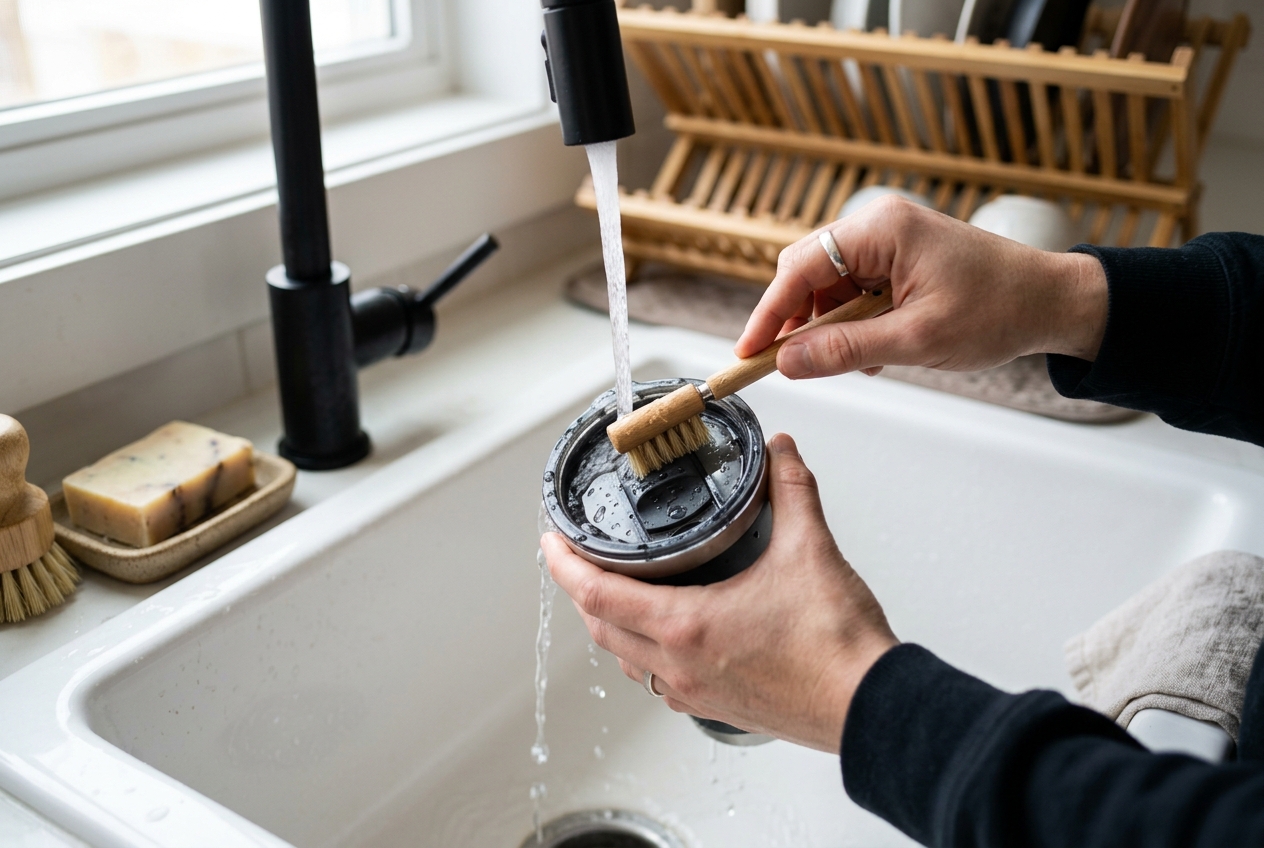
Running a tiny detail brush through your lid’s air vent prevents milk residue and trapped oils from souring your brew.
The Gunk Trap: How to Deep Clean Micro-Vents in Reusable Lids
While disposable lids get recycled or tossed after one use, reusable travel mug lids require deliberate care. That tiny air vent—along with the silicone gaskets and sliding tracks surrounding it—is a prime spot for dried milk proteins, oat milk residue, and coffee oils to hide.
Over time, trapped residue inside a narrow vent hole can harbor bacteria, produce stale off-flavors in fresh roasts, or clog the air channel completely, causing your tumbler to pour poorly. Here is a simple, effective routine to keep your travel lids fresh:
- Disassemble the Moving Parts: Pop off magnetic sliders and gently pry out silicone o-rings using the flat tip of a butter knife once a week.
- Use an Interdental or Straw Detail Brush: Standard sponges cannot reach inside a 1-millimeter air vent. Use a thin nylon bristle brush to clear out the hole under warm running water.
- Baking Soda Soak: If a lingering aroma persists, soak the disassembled lid components in a bowl of warm water mixed with two tablespoons of baking soda for twenty minutes, then rinse thoroughly.
Small Design, Big Difference for Your Morning Routine
Great design often hides in plain sight. It is easy to overlook the humble plastic lid sitting atop our morning drinks, yet that tiny puncture represents a thoughtful marriage of atmospheric physics, thermal safety, and ergonomic comfort. The next time you grab a warm drink on a chilly morning, take a quick second to appreciate that quiet little hole keeping your coffee steady, your hands safe, and your morning running smoothly.