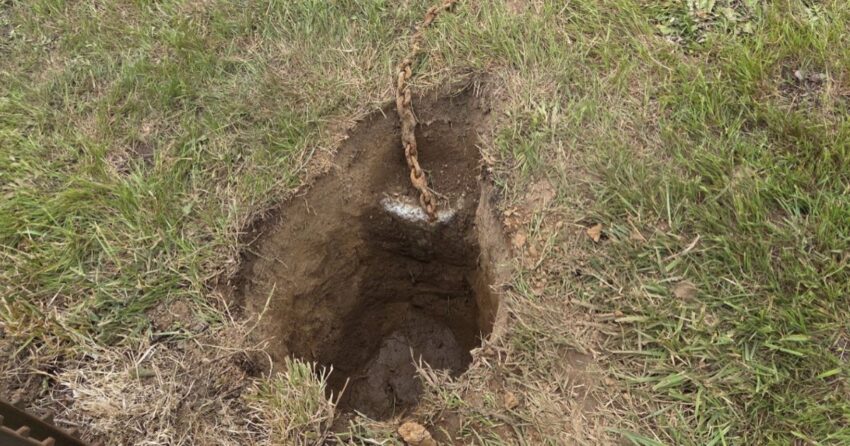
Last Saturday started like any standard weekend project. Armed with a shovel, work gloves, and a fresh glass of iced sweet tea sitting on the porch rail, I set out to replace our weathered, sun-bleached mailbox post. The wood had softened near the base, and the box itself leaned like it had given up on upright living years ago.
Three shovelfuls into the dirt, the blade struck something with a dull, metallic clang. I scraped away the top layer of rich dark soil, expecting an old irrigation pipe or maybe a stray piece of rebar. Instead, I uncovered thick, rusted steel links disappearing straight down into the earth.
If you have ever uncovered an old chain hooked underground near your driveway, you are not digging up hidden treasure. You have stumbled upon an ingenious, slightly stubborn relic of country life: traditional rural mailbox anchors.
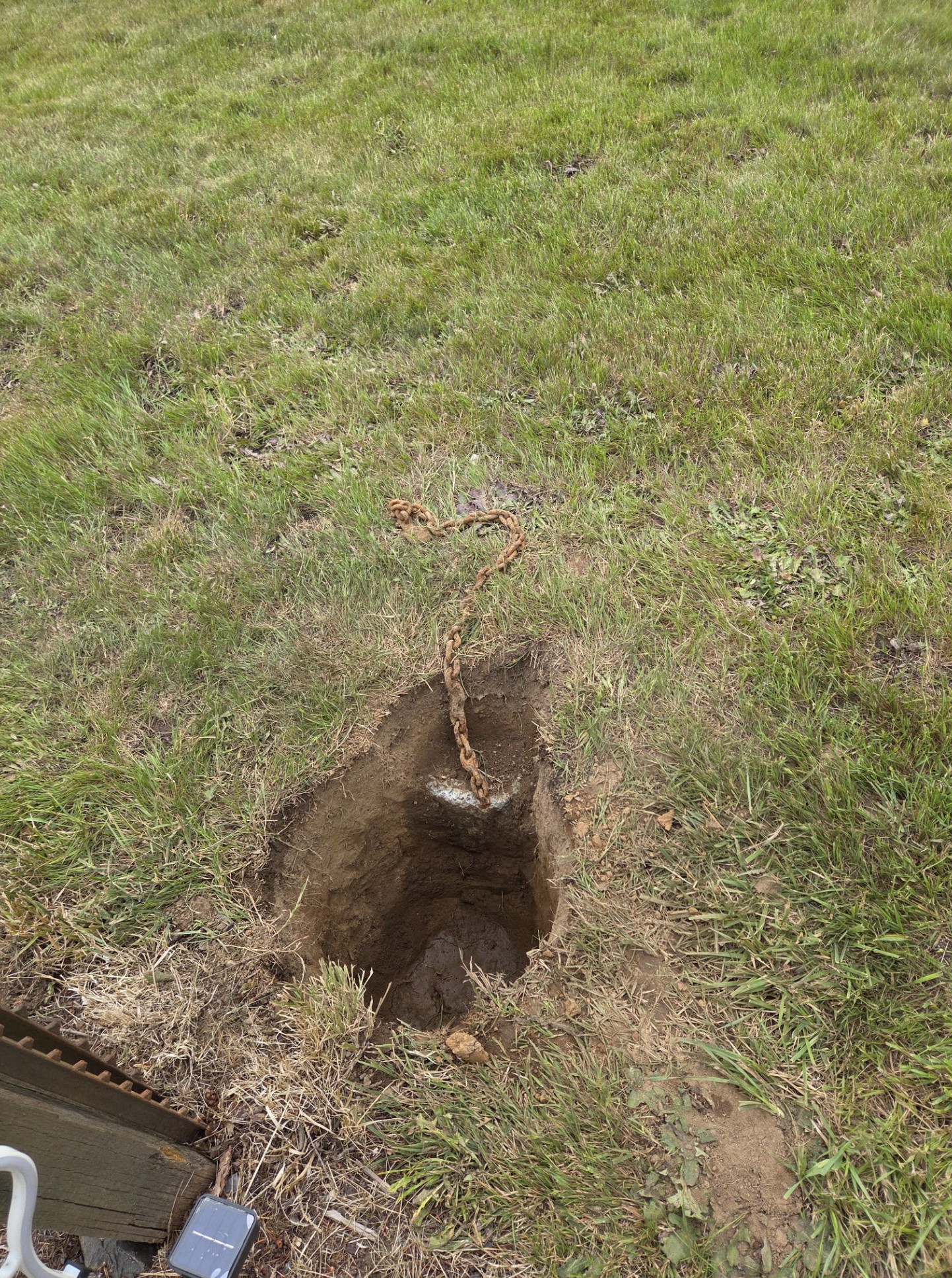
Unearthing an old log chain embedded in concrete—a relic of old-school rural mailbox anchors meant to resist roadside impacts.
What Are Rural Mailbox Anchors and Why Were They Buried?
To understand why someone took the time to bury heavy-duty towing chains under a simple roadside post, you have to understand the long history of country road mischief. For decades, isolated rural mailboxes have been prime targets for late-night vandalism, reckless drivers cutting corners, and winter snowplows hurling heavy sheets of packed slush.
Replacing a wooden post every three months gets old fast. Frustrated homeowners took matters into their own hands, using heavy physics to push back. They dug deep holes, poured fifty pounds of concrete, and dropped in a heavy log chain clipped to a buried anchor plate before securing the other end directly to the bottom of the post.
The concept was simple. If someone hit the box with a baseball bat or side-swiped it with a truck bumper, the chain held fast to the buried concrete plug. Instead of easily snapping off, the post held its ground, often sending shockwaves back into whatever struck it.
Old-timers called it roadside justice. If a bumper met an unyielding steel chain anchored in four feet of concrete, the driver usually left behind more paint and plastic than the mailbox did.
The Hidden Risks of “Indestructible” Mailbox Setups
Finding one of these old anchors is a fun glimpse into how previous generations tackled everyday annoyances. However, building an immovable, tank-proof mailbox today can create serious problems for modern homeowners. What used to pass for rural cleverness now runs directly into federal road standards and severe personal liability.
The Federal Highway Administration (FHWA) and the United States Postal Service (USPS) have specific safety rules for roadside structures. Curbside mailbox posts are legally classified as roadside hazards. When an errant vehicle veers off the road—whether due to black ice, a blown tire, or an honest mistake—the post must give way to protect the driver’s life.
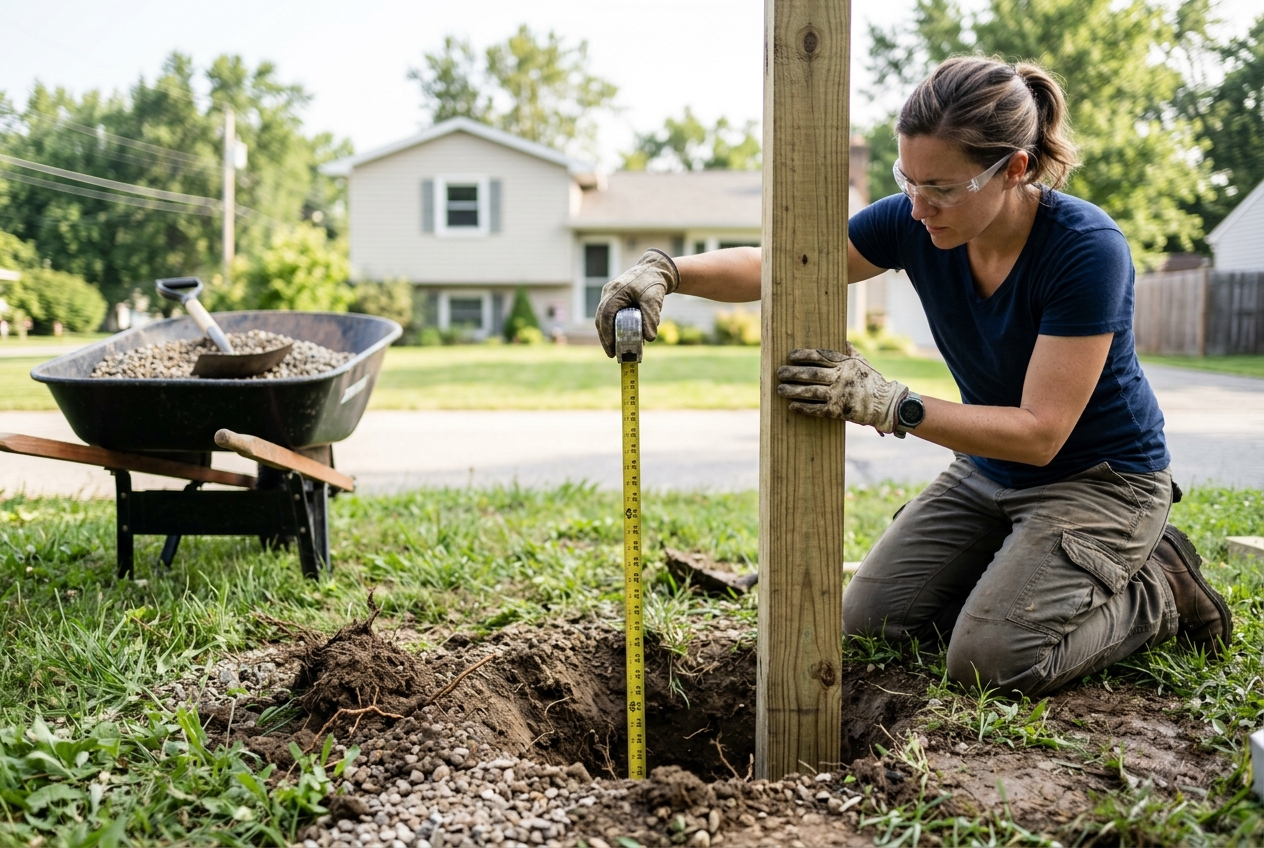
Checking the post hole depth to ensure proper stability and drainage before setting the new post.
If you build an unyielding post using heavy I-beams, concrete-filled steel well pipes, or rigid underground chain locks, you may be held personally liable for vehicle damages or severe injuries in an accident. Road authorities require “breakaway” designs specifically because human life always takes priority over a damaged twenty-dollar steel box.
Smart, Legal Ways to Protect Your Mailbox Today
You do not need to turn your roadside curb into a military checkpoint to stop your mailbox from getting smashed. Smart design and mechanical deflection work far better than sheer brute force, keeping you fully compliant with local safety codes.
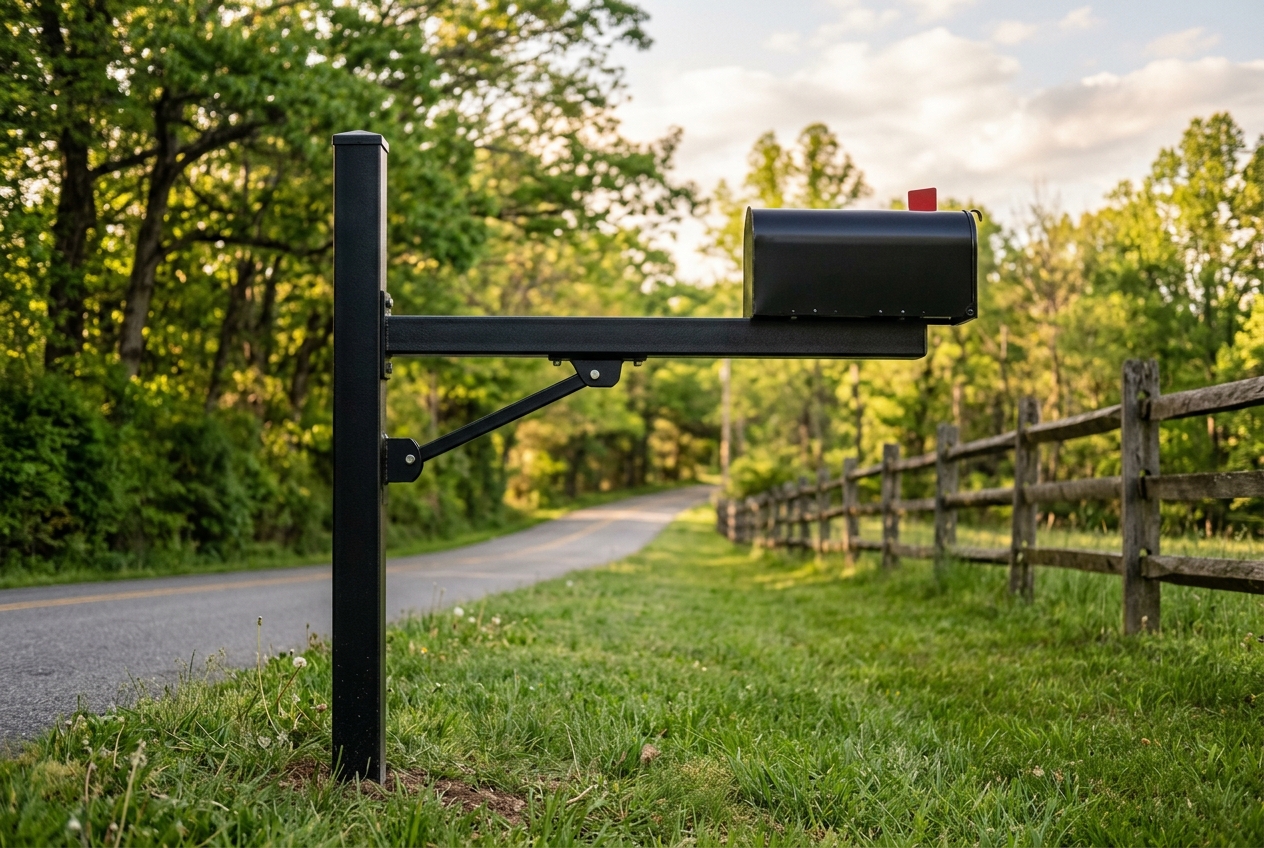
A cantilever swing-away arm allows your mailbox to spin out of harm’s way when hit by snowplows or flying debris.
- The Cantilever Swing-Away Post: Instead of fighting incoming force, a swing-away arm works with it. Mounted on an offset pivot arm, the box simply spins 360 degrees when struck by heavy snow from a plow or an errant impact, then drops right back into place without breaking the post.
- Shear-Pin Breakaway Systems: These systems mount a steel or heavy wooden post to a base using small, engineered shear bolts. In a normal storm, the post stands completely rigid. On severe impact, the bolts shear cleanly at ground level, saving the primary mount while sparing the vehicle.
- Natural Buffer Plantings: Placing your mailbox behind a gentle curve of smooth river stones, ornamental grasses, or soft mulch beds creates visual awareness for drivers without creating dangerous fixed obstructions on the shoulder.
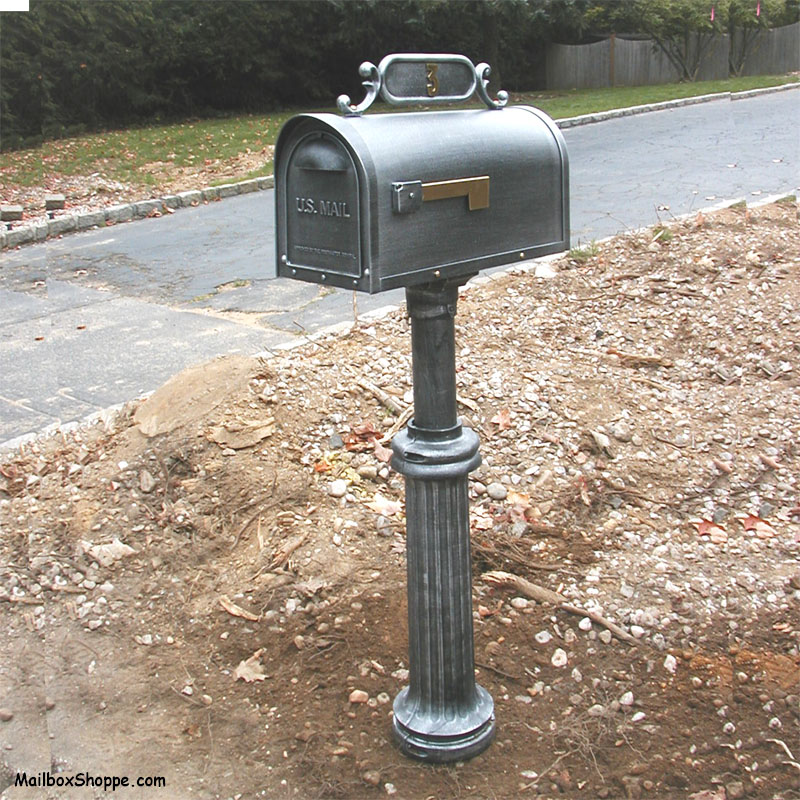
A sturdy cast-aluminum curbside mailbox adds timeless curb appeal while standing up to heavy weather and daily roadside wear.
USPS Guidelines for Proper Mailbox Installation
Whether you are replacing an old setup or installing a brand-new post, sticking to official postal guidelines ensures your carrier can easily deliver packages while road maintenance crews pass by without issue.
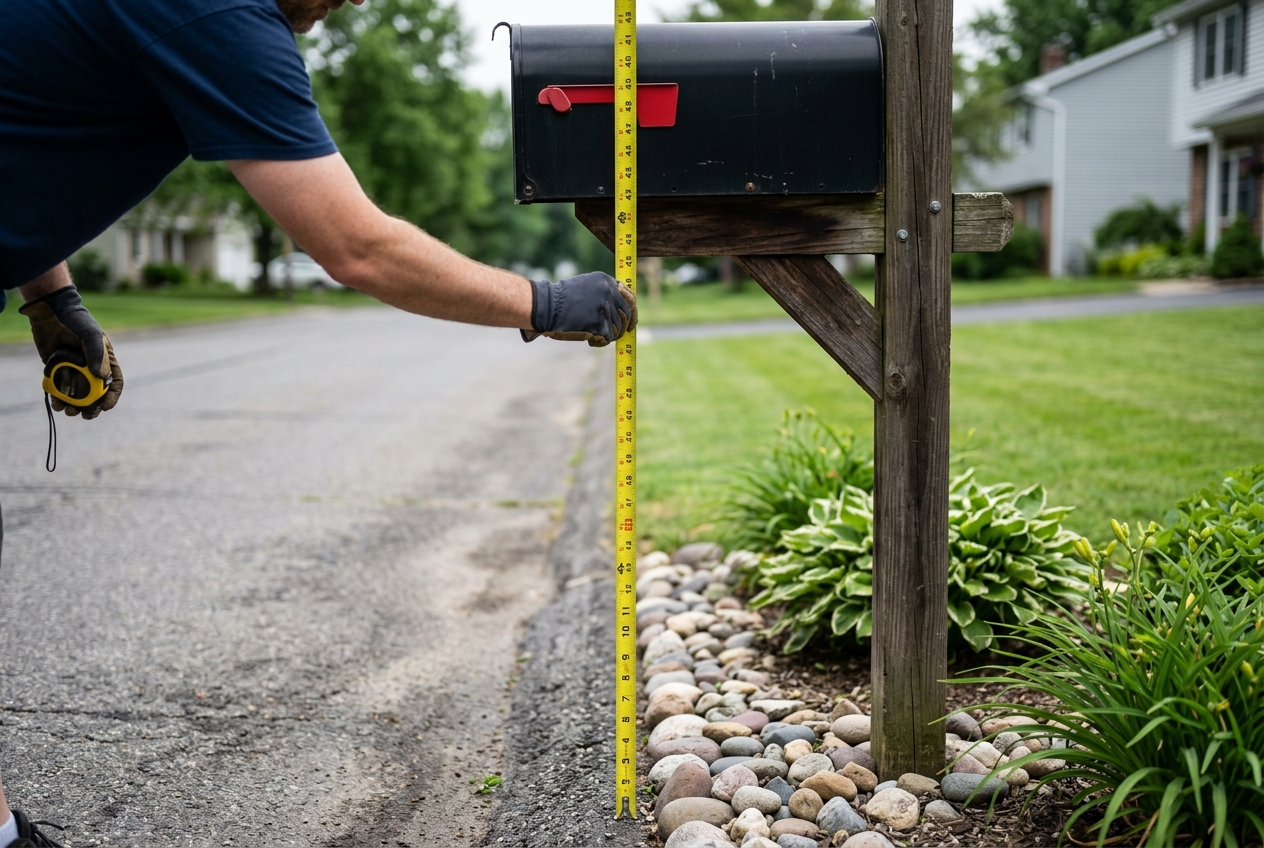
USPS regulations require mailbox heights to sit between 41 and 45 inches from the road surface to the bottom of the box.
A compliant curbside installation comes down to three basic measurements:
- Height from Road Surface: Position the mailbox so the bottom of the box sits between 41 and 45 inches above the actual road surface.
- Curb Setback: Set the face of the mailbox 6 to 8 inches back from the edge of the curb or road shoulder to keep it clear of passing mirrors and snowplow blades.
- Post Dimensions: Use a standard 4×4 inch wooden post or a 2-inch diameter standard steel or aluminum pipe. Avoid heavy structural posts larger than 4×4 inches to maintain standard breakaway safety.
How to Deal with Old Buried Concrete and Chains
When you uncover a heavy chain sunk into a massive concrete block during a weekend yard project, you have two practical choices: work around it or lift it out using leverage.
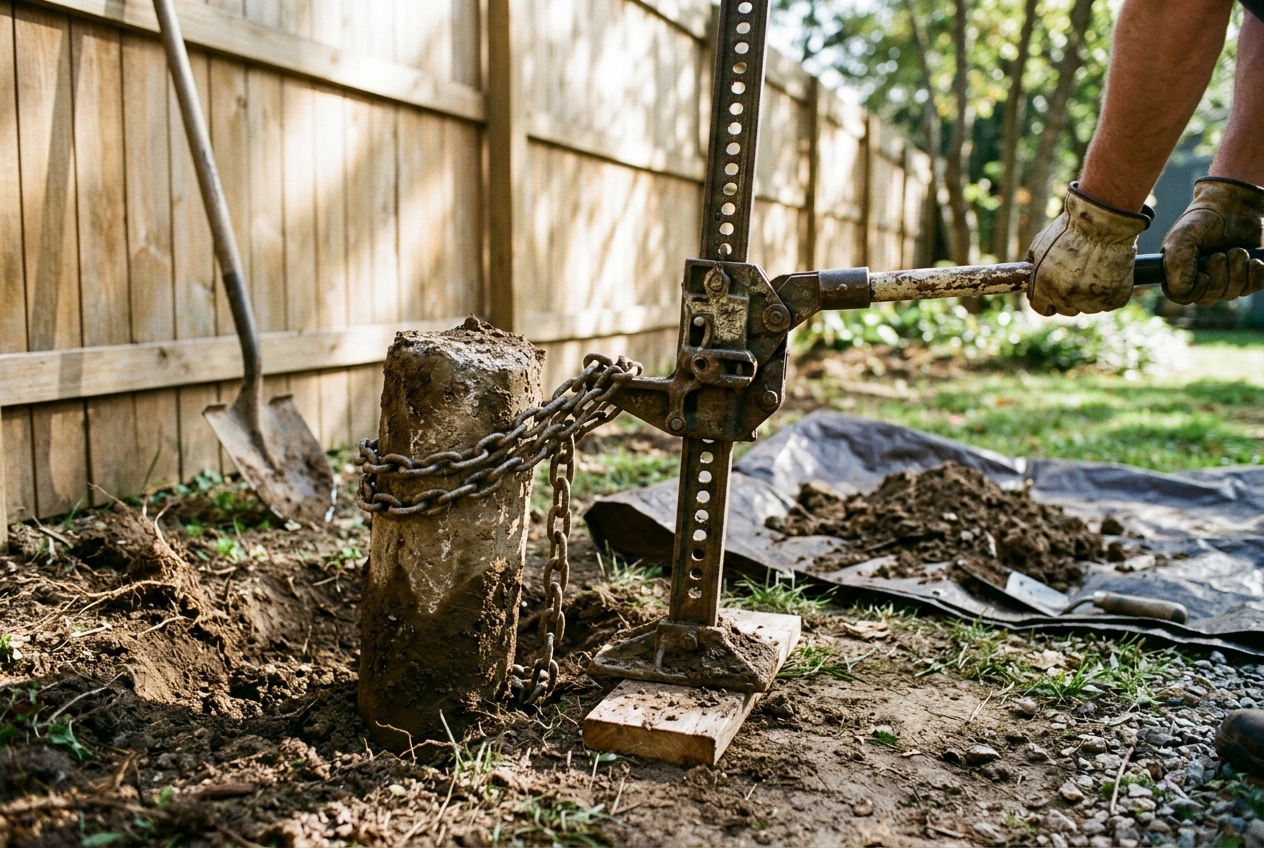
Using leverage with a farm jack makes quick work of removing heavy, buried concrete plugs left behind by previous owners.
If the old block sits directly where your new post needs to go, do not try to muscle it out with your back. Wrap a tow strap around the old chain or the base of the concrete, hook it to a standard high-lift farm jack resting on a wide wooden board, and pump the handle. The mechanical leverage will pop even a hundred-pound concrete plug straight out of the ground in minutes.
If the old anchor sits slightly offset from your installation line, the simplest approach is often to leave the steel asleep in the dirt. Cut the exposed chain links below grass level with a pair of bolt cutters, cover the spot with topsoil, and set your new breakaway post on a fresh bed of compacted crushed gravel for clean, long-lasting drainage.
Smart Roadside DIY
Finding old rural mailbox anchors reminds us how resourceful and determined homeowners have always been when defending their homesteads. While modern road safety standards mean we no longer lock our posts to underground boulders, the spirit of good, solid craftsmanship never goes out of style.
Build your post straight, give it proper drainage, leave room for the carrier, and let smart mechanical design do the heavy lifting. Your mail will stay dry, your curb will look sharp, and your weekends can go back to quiet porch sitting.