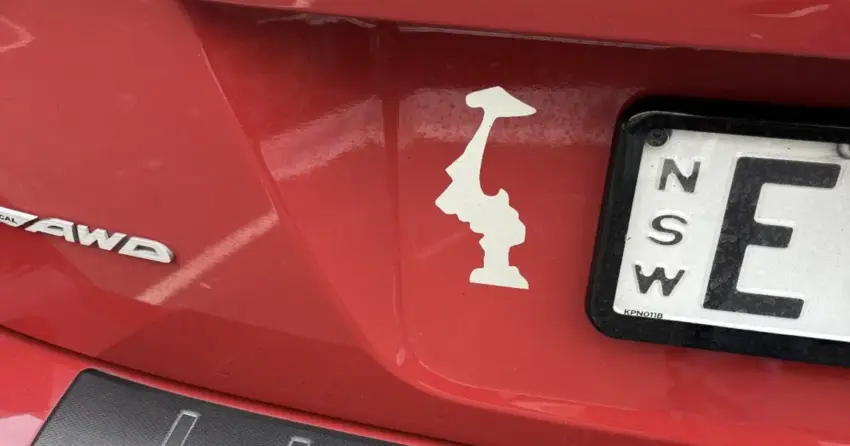
If you have ever spent twenty minutes waiting in the Bainbridge Island ferry line with wipers thumping against a steady drizzle, you know the game. You sip your dark roast coffee from an insulated travel mug, watch the steam curl toward the defroster vents, and study the tailgate of the all-wheel-drive hatchback ahead of you. Among the national park passes and ski mountain decals sits something odd: a crisp white outline of Washington State, turned cleanly upside down.
Your first instinct is to smile and chalk it up to a rookie application error. Someone rushed the backing tape in a freezing garage and slapped it on without looking. But then you spot another one on an old wagon in Spokane, and a third on a dusty rig outside Moab. The upside down Washington state sticker is not an accident at all; it is a quiet, deliberate signal shared by drivers across thousands of highway miles.
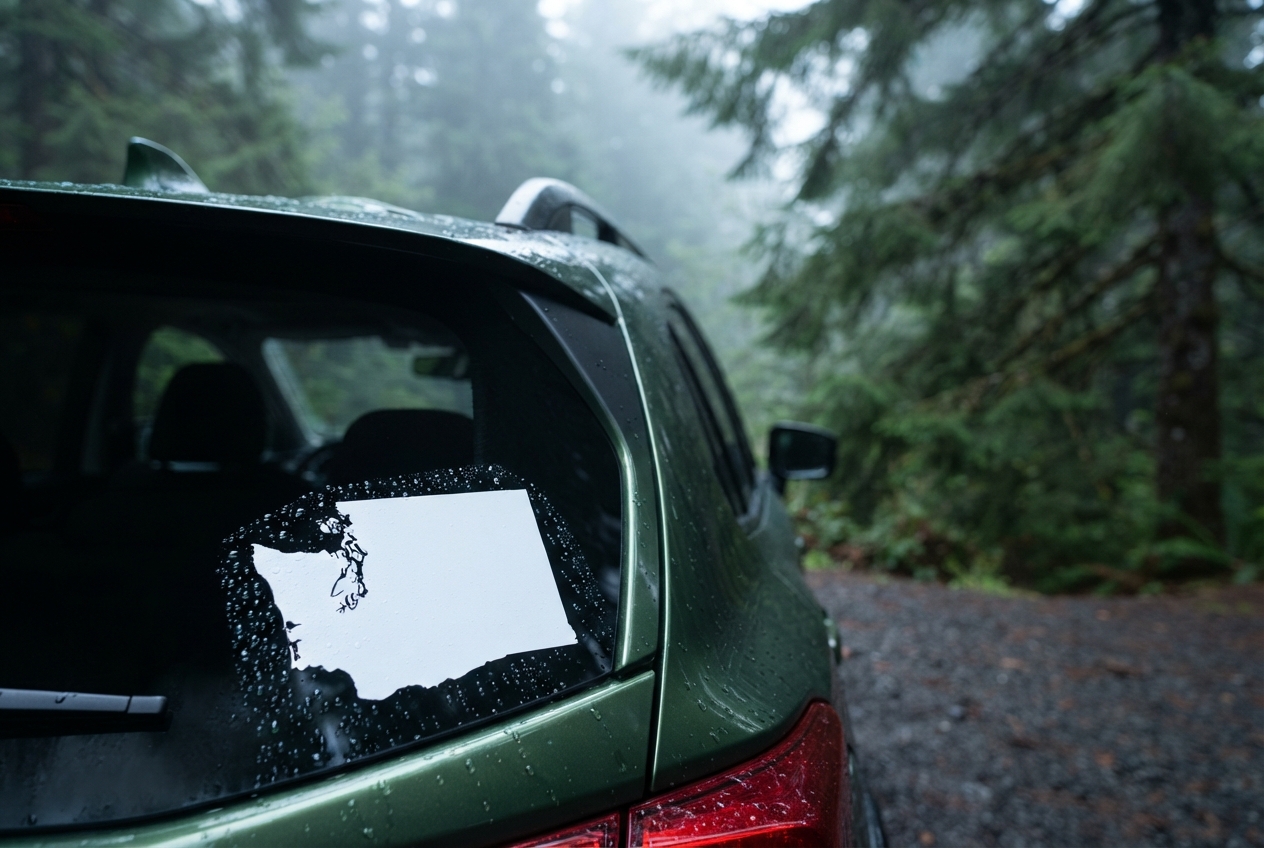
A clean die-cut silhouette turned on its head stands out against the cool mist of a morning mountain drive.
Decoding the Mystery: Why Is That Upside Down Washington State Sticker on the Road?
Turn a map on its head and your brain immediately stumbles. The sharp hook of Cape Flattery shifts to the bottom right, while the Columbia River border floats up top. For drivers who display the decal this way, that visual disorientation is precisely the point.
The most common explanation comes straight from nautical tradition. Flying an ensign or state symbol upside down has served as an international signal of distress for centuries. When transplants pack their lives into moving trailers and head to sun-baked desert suburbs or flat midwestern plains, they carry an undeniable homesickness for cedar groves, rocky beaches, and damp ocean air. Flipping the decal signals that they are surviving in unfamiliar territory, far from the evergreen roots that ground them.
“Flipping the decal started as an inside joke when I moved my family down to Arizona,” explains one longtime Tacoma native. “It was my way of telling anyone who recognized it that I felt completely upside down until I could get back to the sound.”
There is also an optical quirk that regional mountaineers love to debate. When inverted, the jagged indentations of Puget Sound and the Olympic Peninsula take on an entirely new character. Some drivers swear the inverted silhouette mimics a breaching orca tail, while others claim the southern boundary suddenly resembles a sharp mountain ridgeline. Whether people view it as visual irony or a cheeky thumb-to-the-nose at traditional bumper pride, it never fails to start a parking lot conversation.
From Skis to Trailheads: The Northwest Decal Subculture
Car windows in the Pacific Northwest have long served as personal scrapbooks. Between muddy hiking boots in the cargo area and pine needles trapped in the rubber floor mats, rear glass tells stories of weekend escapes. You see decals for local bakeries, independent coffee roasters, ski patrols, and trail associations layered across rear hatches.
State outline stickers began as simple geography, but local outdoor communities quickly morphed them into badges of belonging. Climbers and backcountry wanderers embraced the inverted outline because it felt unconventional. It offered a wink to fellow road-trippers without shouting for attention. It speaks to people who would rather spend Saturday morning in wool socks beside a camp stove than browse a shiny shopping mall.

Long road trips and mountain mornings are where these understated regional badges feel right at home.
You will spot these stickers across British Columbia, down through Oregon, and tucked along gravel trailheads throughout Idaho and Montana. They connect people across rest stops and gas stations. Seeing that flipped shape on a beat-up camper van thousands of miles from home feels like spotting an old friend in a crowded room.
Window vs. Paint: How to Properly Apply Car Decals
If you are ready to mount your own decal, placement requires a little care. Automotive glass is always the safest location for vinyl stickers. Applying decals directly to painted body panels exposes clear coat to uneven fading from sun exposure, leaving a ghost outline if you ever decide to remove the vinyl later.
Preparation makes the difference between a decal that lasts five years and one that curls at the edges after the first car wash. Avoid cheap commercial glass sprays that leave slick silicone residues behind. Instead, mix a simple solution of warm water with a splash of white vinegar to cut through road grime and oily exhaust film.
- Wipe the surface clean: Use a lint-free microfiber cloth to remove all grit, tree sap, and dust.
- Check your temperature: Apply vinyl when the glass is between 50°F and 80°F. Cold glass makes adhesive brittle, while scorching direct sunlight causes the vinyl to stretch out of shape.
- Use the painter’s tape hinge method: Position the decal exactly where you want it, then secure the top edge with a strip of blue painter’s tape.
- Smooth from center to edge: Peel the backing paper away slowly while smoothing the vinyl down using a felt squeegee or plastic card.
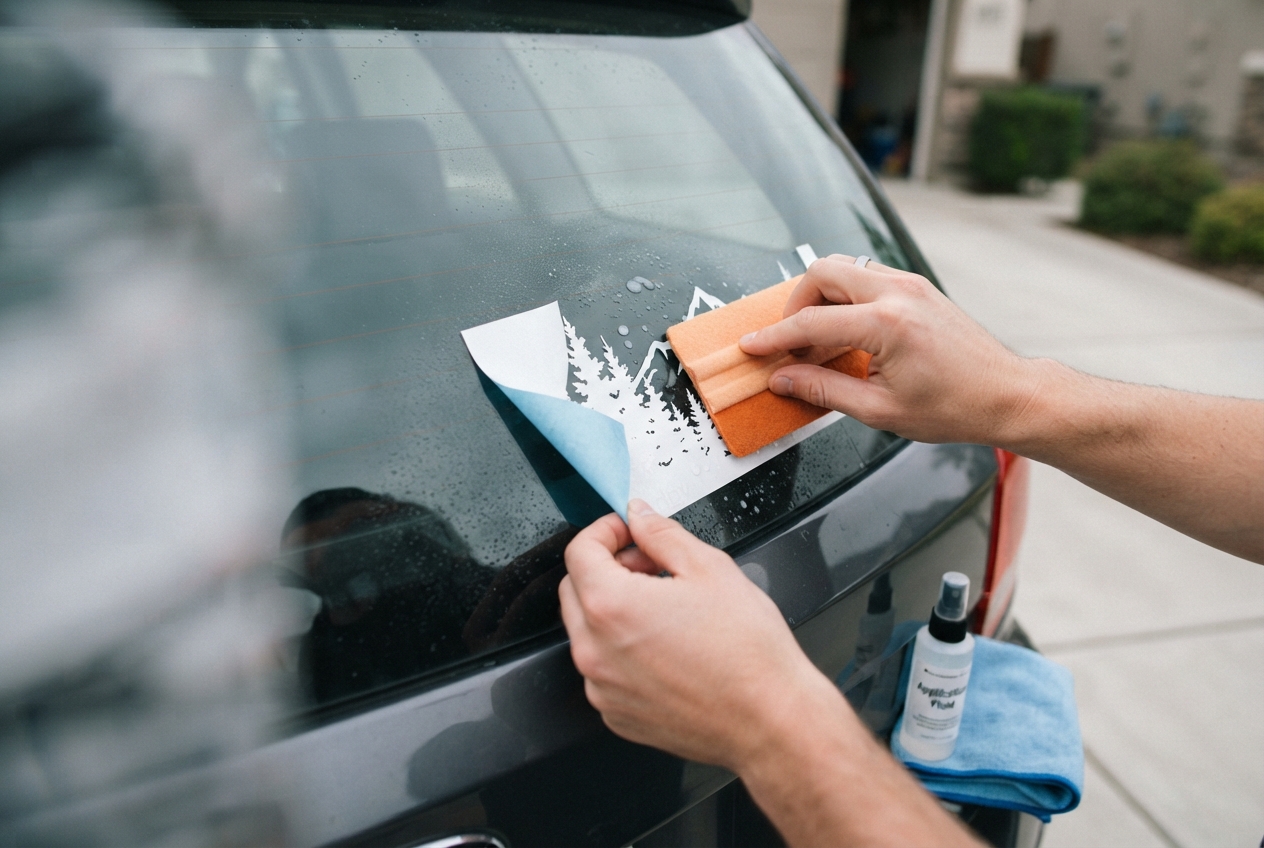
Taking your time with a squeegee and painter’s tape ensures your decal goes on smooth without trapped air pockets.
Pay close attention to interior defroster wires if you are placing decals on inside glass surfaces. Outside glass application is almost always better for rear windows because it keeps the heating filaments safe and prevents wiper blades from snagging internal edges.
How to Safely Remove Vinyl Without Ruining Your Glass
Tastes change, vehicles get sold, or you might simply want to swap out an old sticker for a fresh design. Peeling hardened vinyl with a metal razor blade is an easy way to gouge auto glass or slice right through an expensive rear defroster grid. Patience and gentle heat are far safer companions.
Soften the vinyl adhesive using a handheld hairdryer on medium heat, holding the nozzle about four inches away from the glass. Move the heat in steady circles for sixty seconds. Once the material feels supple and warm to the touch, use your fingernail or a flexible plastic razor blade to lift an outer corner.
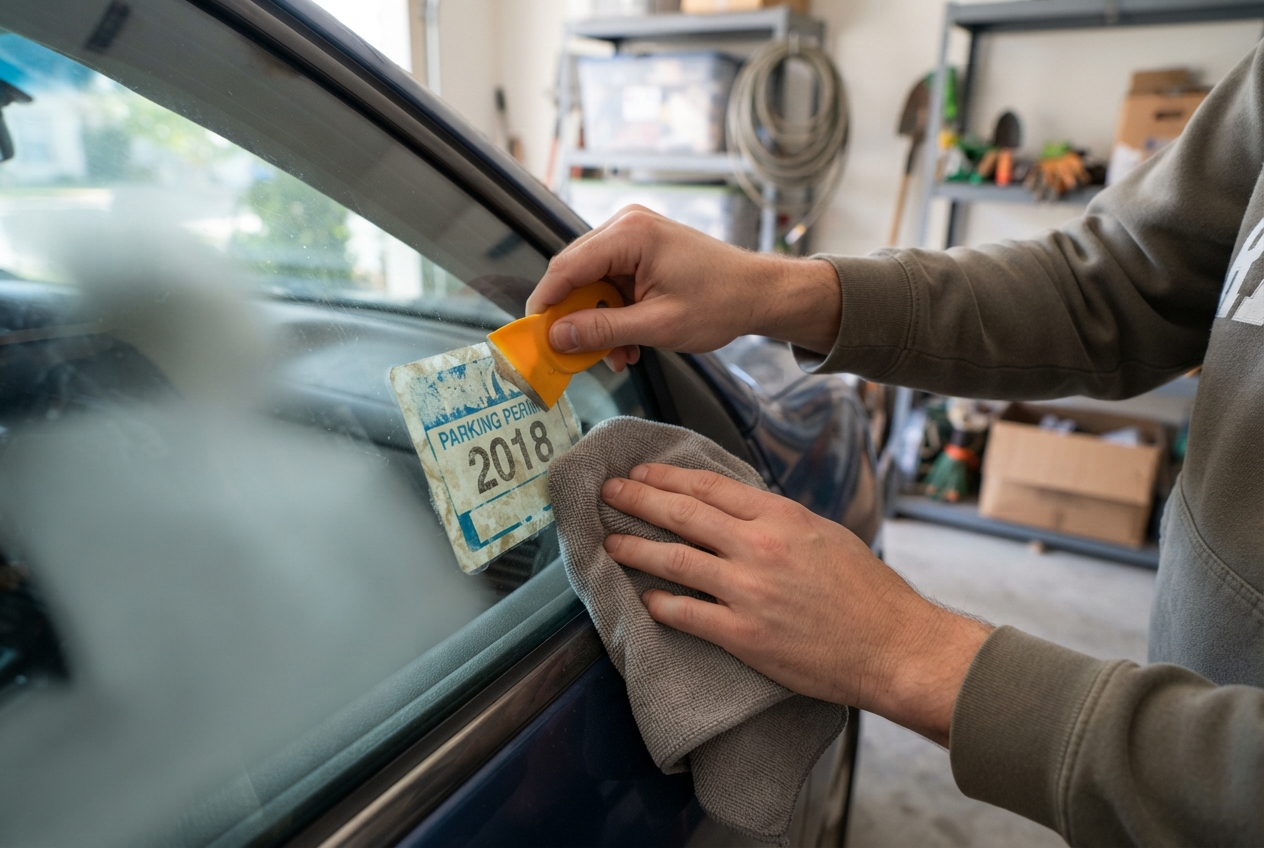
Gentle warmth and a soft cloth help lift aged vinyl cleanly without scraping your rear window defroster lines.
Pull the vinyl back against itself at a flat 180-degree angle rather than pulling straight out. This technique keeps the adhesive stuck to the vinyl sheet rather than leaving a gummy mess behind on the window. If any sticky residue stays behind, apply a few drops of natural citrus oil or white vinegar to a soft rag, let it rest on the spot for two minutes, and wipe clean.
Supporting Independent Makers and Choosing Weatherproof Vinyl
Not all vinyl decals hold up to highway speeds and persistent winter weather. Cheap paper-backed stickers from mass-market novelty vendors fade to grey and crumble after a single season under summer sun and winter salt. When browsing for your next decal, look for designs made from cast vinyl rated for outdoor durability.
Cast vinyl remains thin, pliable, and resistant to shrinkage, making it tough enough to handle automatic car wash brushes and freezing mountain passes. Small print shops throughout Seattle, Spokane, Olympia, and Bellingham produce wonderful variations of these outlines. Many independent artists add subtle topographic lines, fir silhouettes, or native floral patterns into the body of the cut.
Choosing locally produced goods puts your dollars directly into the hands of regional craftsmen who understand the damp Northwest climate firsthand. Their materials are tested against torrential rains and mountain snow, ensuring your piece of home stays sharp wherever your wheels roll.
Ultimately, vehicle decorations are deeply personal reflections of where we have walked and where our memories live. Whether you stick yours right-side up to show direct pride or deliberately flip it to share a knowing grin with a stranger on the interstate, the message remains grounded. Driving with an upside down Washington state sticker means carrying a piece of cedar-scented mountain air and misty shoreline with you, no matter how far your journey leads.