
Whenever a server walks up to the table with a cold pitcher of ice water, asking if anyone wants a slice of lemon, almost everyone nods along. That sunny yellow wedge floating beside the ice cubes looks like the very definition of crisp, healthy hydration. It smells bright, cuts through heavy restaurant food, and makes an ordinary beverage feel a little more special.
For years, asking for extra citrus was a standard habit of mine whenever I went out to eat. But after learning what actually happens behind the scenes of commercial prep stations, I completely changed how I order my drinks. Understanding the reality of restaurant lemon water helps you make smarter choices at the table without losing your love for fresh citrus.
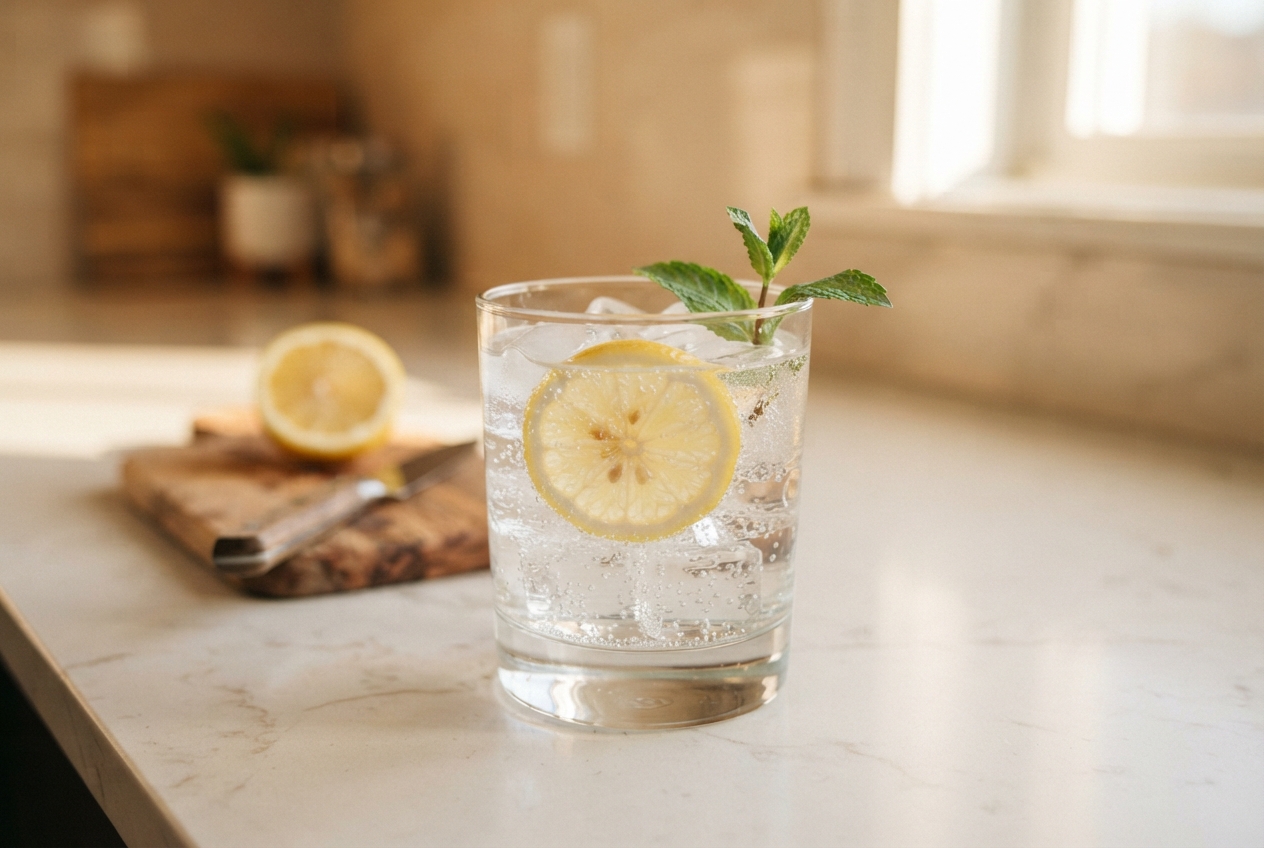
A crisp glass of homemade lemon water with fresh garden mint on a sunlit morning countertop.
What Science Really Says About Citrus Garnishes in Dining Rooms
The issue with citrus wedges at dining establishments is rarely the fruit itself. Lemons are naturally acidic, which gives many people a false sense of security regarding food safety. While citric acid can inhibit certain bacteria over time, a quick dip in an icy glass of water does not sanitize a contaminated peel.
A landmark investigation published in the Journal of Environmental Health tested lemon slices collected from 21 different restaurants across dozens of visits. The researchers discovered that nearly 70 percent of the sampled citrus slices harbored microbial growth, including various strains of bacteria and wild yeasts collected across multiple shifts.
These microorganisms do not spontaneously appear on the fruit. They travel from hands, storage crates, cutting boards, and prep tongs directly onto the textured exterior of the peel before landing in your drink.
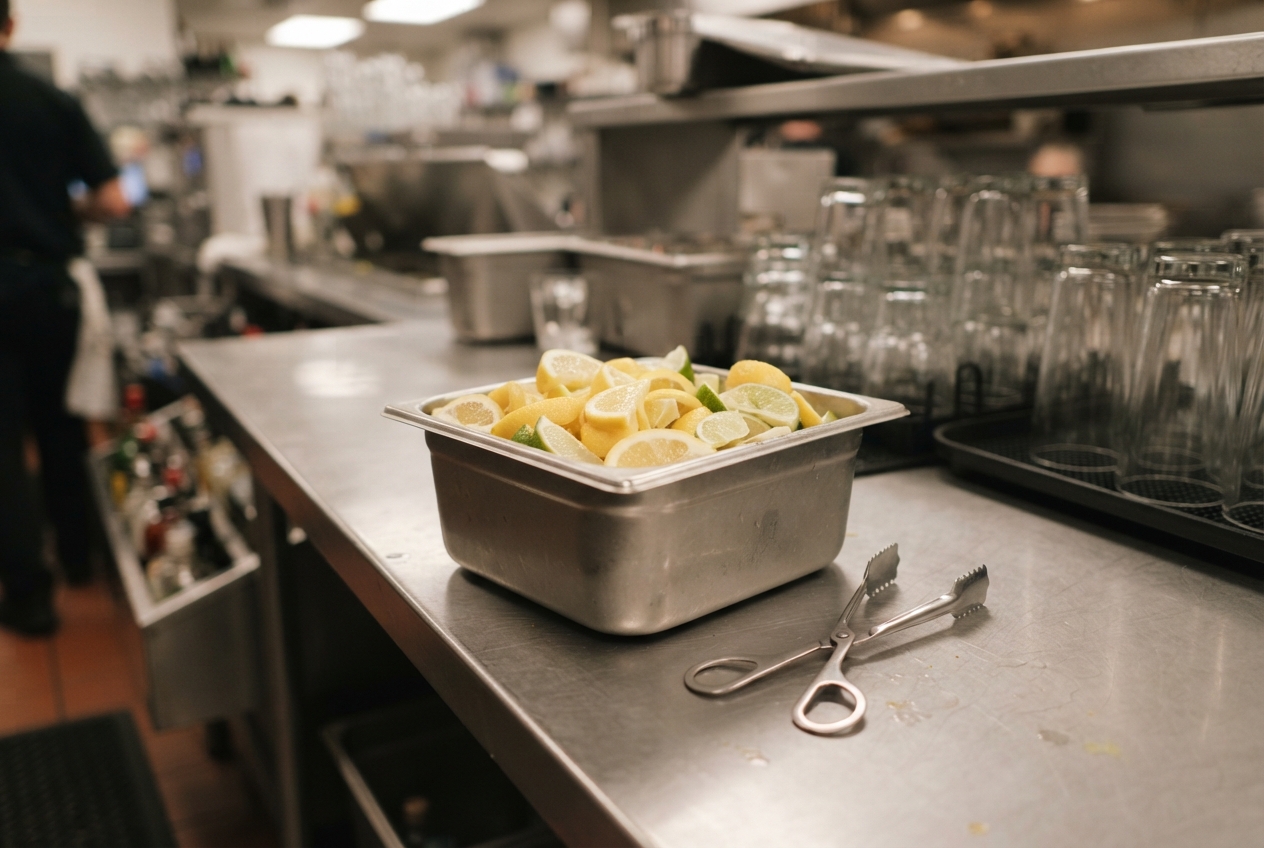
Quick-service drink stations move at high speed, making garnish containers a common cross-contamination touchpoint.
The Hidden Journey from Shipping Crate to Your Beverage Glass
To understand how cross-contamination occurs, you have to follow the physical journey of a single lemon through a commercial kitchen. It arrives tightly packed in bulk cardboard boxes from agricultural distributors, often coated in natural food-grade wax to retain moisture during transit.
In a bustling dinner rush, staff members juggle hundreds of tasks simultaneously. While professional kitchens follow strict safety guidelines, beverage garnishes occupy a gray area in daily operations compared to raw meats or cooked meals.
The Porous Nature of Citrus Peels
Take a close look at a lemon peel. It is covered in thousands of tiny dimples and microscopic crevices designed by nature to hold essential oils. Those same crevices easily trap fine dust, harvest soil, and handling residues from transit.
If a kitchen does not thoroughly scrub each individual piece of fruit under running water before slicing, the blade of the chef’s knife drags whatever sits on the outer peel straight through the tender flesh inside. Once sliced, that exposed fruit sits ready to absorb whatever it touches next.
Prep Trays and Rush-Hour Touchpoints
During a fast-paced lunch or dinner service, efficiency is everything. Garnishes are pre-sliced in massive batches and stored in small plastic caddies behind service counters and drink stations.
- Multiple hands in the garnish bin: Servers, runners, and bussers frequently access the same tray throughout a five-hour shift.
- Handling menus and payment terminals: Staff members handle printed menus, touchscreens, and credit card readers before grabbing a citrus wedge.
- Tong placement slip-ups: Tongs may accidentally rest against other prep surfaces or be set aside during peak volume, leading to direct bare-hand handling.
A garnish is raw, ready-to-eat produce that receives no cooking step to neutralize surface microbes. It demands the same rigorous washing standards as fresh salad greens.
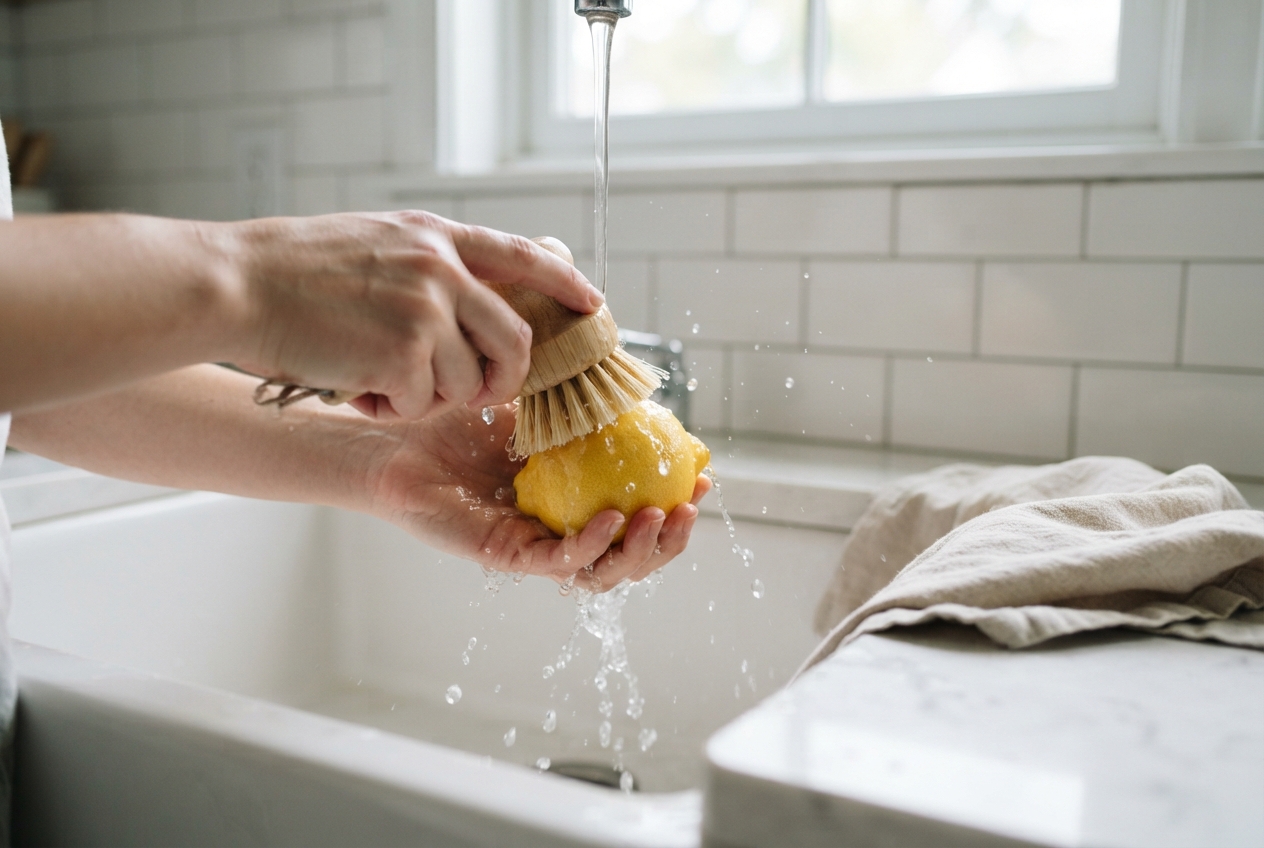
A gentle scrub under cool water removes surface dirt, oils, and residues from citrus rinds before slicing.
How to Clean and Prep Fresh Citrus Safely at Home
Giving up restaurant garnishes does not mean you have to abandon the energizing ritual of citrus water at home. In your own kitchen, you hold full control over the washing process, cutting surfaces, and storage conditions.
Rinsing fruit under a weak stream of water for two seconds is not enough to clear away agricultural wax and dirt. A few simple steps ensure your morning drink remains fresh, bright, and clean.
The Gentle Baking Soda Soak
Baking soda creates a mild alkaline environment that gently breaks down surface grime and wax coatings without altering the flavor of the fruit. This simple routine takes only five minutes on grocery prep day.
- Fill a large clean bowl with cool tap water and stir in one tablespoon of standard baking soda.
- Submerge your whole lemons, limes, or oranges, letting them soak for 10 to 12 minutes.
- Use a dedicated natural-bristle produce brush to gently scrub the dimpled skin around the stems and tips.
- Rinse the fruit thoroughly under cold running water and dry completely with a clean linen towel before storing.
Store your clean, whole lemons in a sealed glass container in the crisper drawer of your refrigerator. They will stay firm and juicy for weeks without drying out.
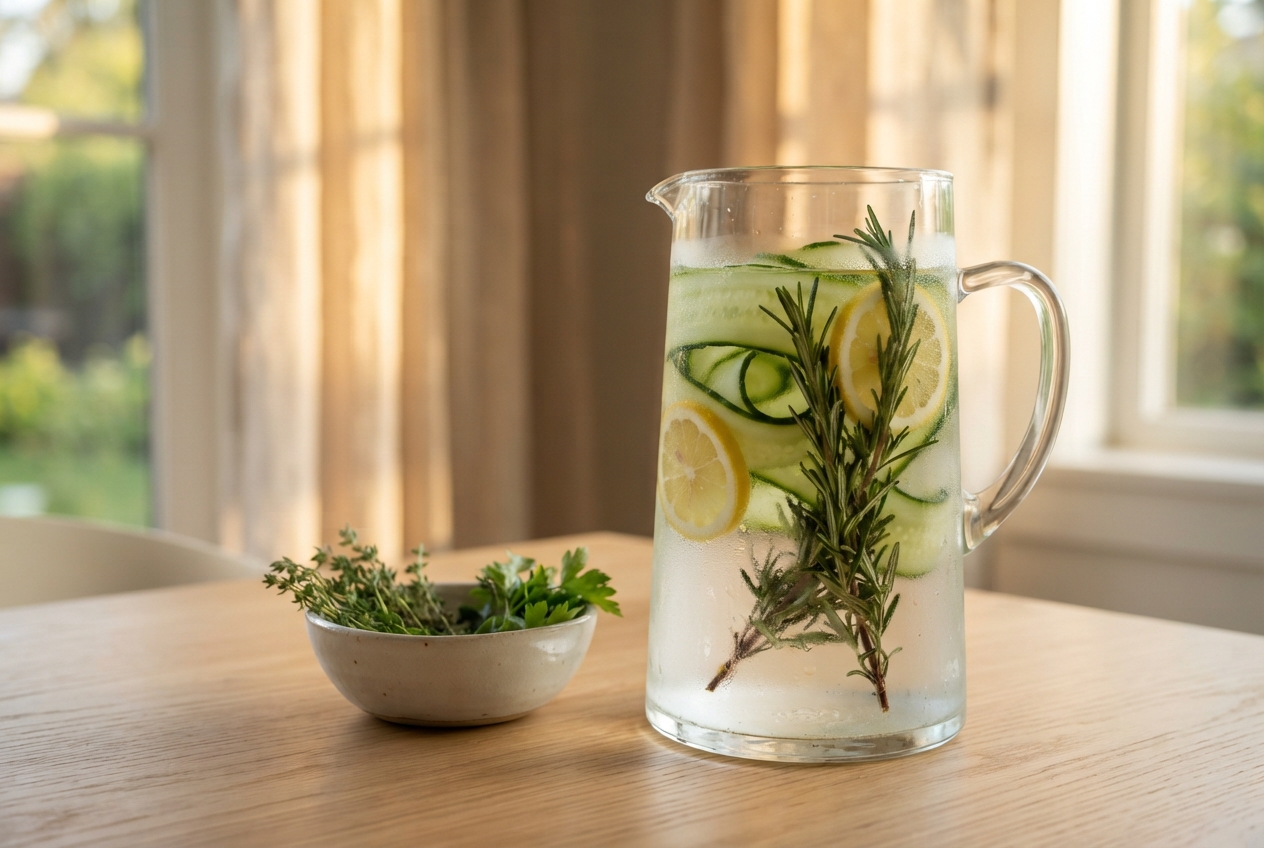
Infusing chilled water with garden herbs and fresh citrus provides crisp flavor right from your refrigerator.
3 Delicious Homemade Herb and Citrus Water Combinations
Once you have a batch of properly prepped citrus ready in the fridge, crafting your own refreshing beverages is pure joy. These alcohol-free combinations brighten everyday hydration with subtle botanical aromas and vibrant flavor.
1. Crisp Lemon, Cucumber, and Garden Mint
This classic combination turns plain water into a cooling spa-style drink. Thinly slice half a prepped lemon and half an English cucumber, then drop them into a 64-ounce glass pitcher filled with cold filtered water. Lightly clap a small handful of fresh spearmint leaves between your palms to release the aromatic oils before dropping them in. Chill for two hours before pouring over ice.
2. Sunny Lemon and Crushed Sweet Basil
Sweet Italian basil offers an herbal, slightly peppery aroma that balances the bright sharpness of fresh lemon. Place three thick lemon rounds at the bottom of a quart jar with five fresh basil leaves. Use a wooden spoon handle to gently press the ingredients once or twice, then fill with sparkling seltzer water for a fizzy afternoon pick-me-up.
3. Rosemary, Sliced Lemon, and Chilled Herbal Brew
For an earthy, deeply soothing drink, brew a pot of caffeine-free rooibos or chamomile tea and let it cool completely. Pour the chilled tea over ice, add a fresh lemon wheel, and stir with a fresh sprig of garden rosemary. The woodsy herbal notes blend smoothly with the bright citrus scent.

Squeezing fresh citrus juice directly into your favorite travel tumbler keeps drinks bright and clean on the go.
Ordering Smarter When Dining Out
You do not need to feel stressed or overly anxious when enjoying a wonderful meal with friends. Making a few quick adjustments to your ordering habits eliminates common food safety concerns while keeping your dining experience effortless and fun.
- Request your water plain: A simple “Just tap water with ice, no lemon please” keeps things clear and easy for your server.
- Ask for a whole wedge on a side plate: If you love fresh citrus flavor, ask for a lemon wedge on a separate clean bread plate so you can squeeze the juice directly into the water without dropping the rind into your cup.
- Carry your own citrus infuser: Keep an insulated travel bottle filled with your favorite home-prepped lemon and mint water in your bag or car for the ride home.
Food safety is all about recognizing where simple points of contact exist and taking sensible steps that make you feel comfortable. By keeping your citrus prep clean at home and skipping restaurant lemon water rinds when eating out, you get to enjoy the bright flavor of fresh fruit with complete peace of mind.