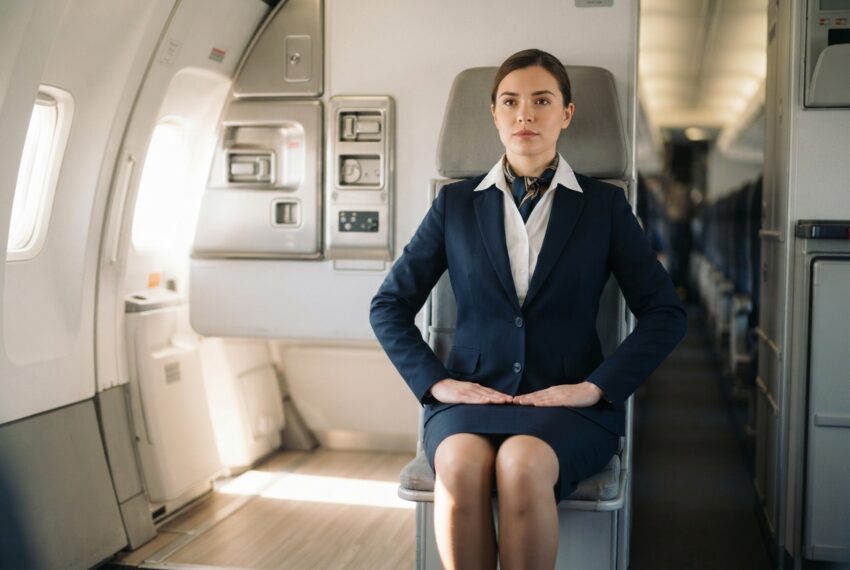
You find your seat, slide your carry-on into the overhead bin, and settle into 14B as the engines begin their steady, low hum. The cabin settles down. While you adjust your air vent and wait for the safety demonstration to finish, you glance toward the front of the aircraft. Sitting on the jumpseat across from the bulkhead, the flight attendant fastens their four-point shoulder harness, sits straight against the headrest, and slides both hands firmly under their thighs, palms turned up.
They remain completely still in that exact position until the plane lifts into the clouds. It looks unusual at first glance, almost like someone trying to warm cold fingers or suppress nervous energy. Yet this quiet posture is among the most deliberate routines in commercial aviation. Understanding why flight attendants sit on their hands reveals how every single habit in the air is shaped by safety science.
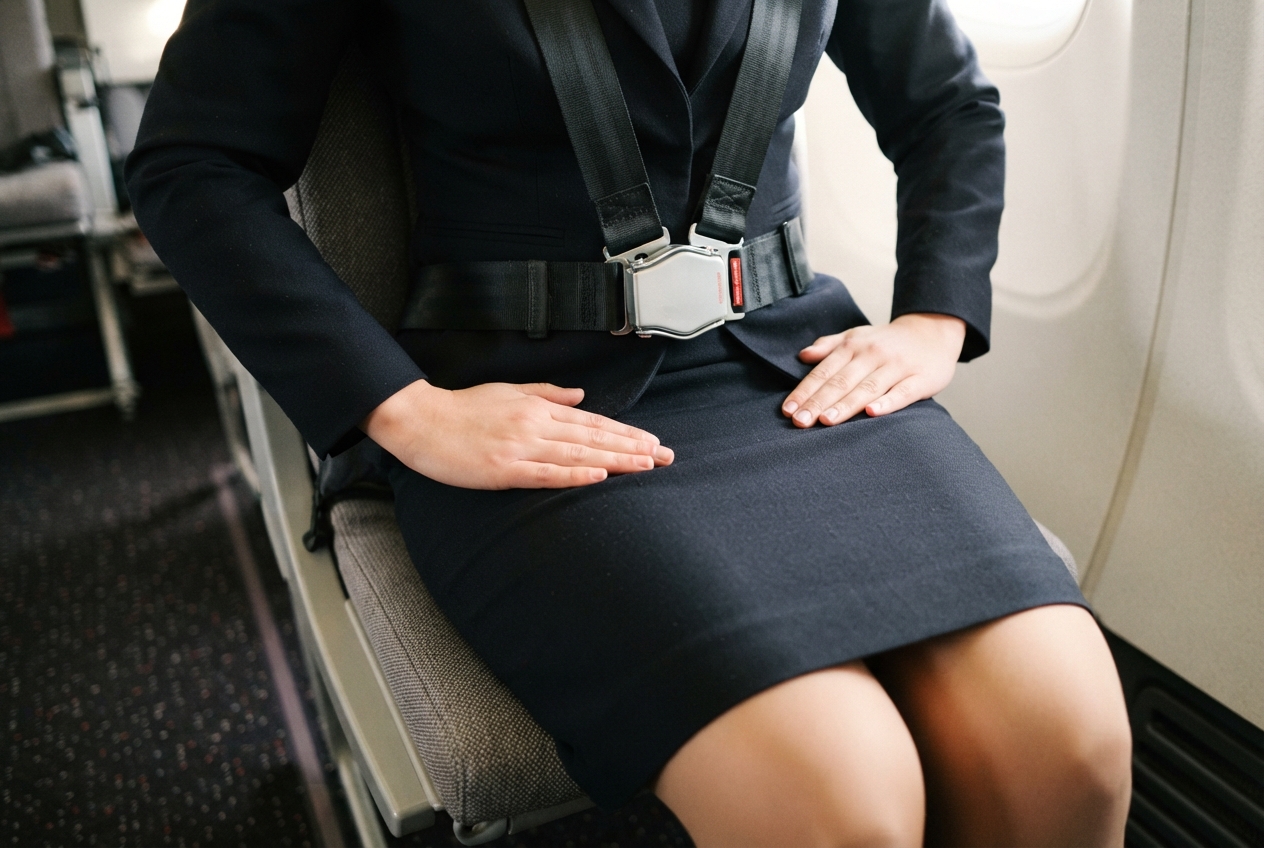
Tucking palms upward under the thighs secures the arms against the torso, preventing broken bones during sudden deceleration.
The Jumpseat Brace Position: Anatomy of a Habit
The posture you see during takeoff and landing is formally known in flight attendant manuals as the jumpseat brace position. It is not an informal way to rest during the climb. Aviation safety agencies around the globe mandate that crew members adopt this position during the most demanding phases of flight: taxi, takeoff, approach, and touchdown.
The position requires flight attendants to sit fully upright with their back and neck flat against the jumpseat bulkhead. Their feet stay flat on the floor, spaced hip-width apart. They then slide their hands beneath their upper thighs, keeping their elbows pulled close against their ribs.
Why not hold the armrests or cross their arms over their chests? If an aircraft experiences a sudden stop, an aborted takeoff, or heavy runway turbulence, unsecured arms fling outward with tremendous force. The momentum can easily snap a wrist, dislocate a shoulder, or break fingers against nearby galley equipment or partition walls.
In an unexpected landing, a flight attendant’s hands are their most valuable rescue tools. If their hands or wrists are broken, they cannot haul open a 50-pound emergency exit door or guide passengers down an evacuation slide.
Tucking the hands under the thighs effectively locks the arms against the body. By using their own body weight to anchor their limbs, crew members protect the small bones in their hands and keep their arms from flailing wildly under sudden deceleration.
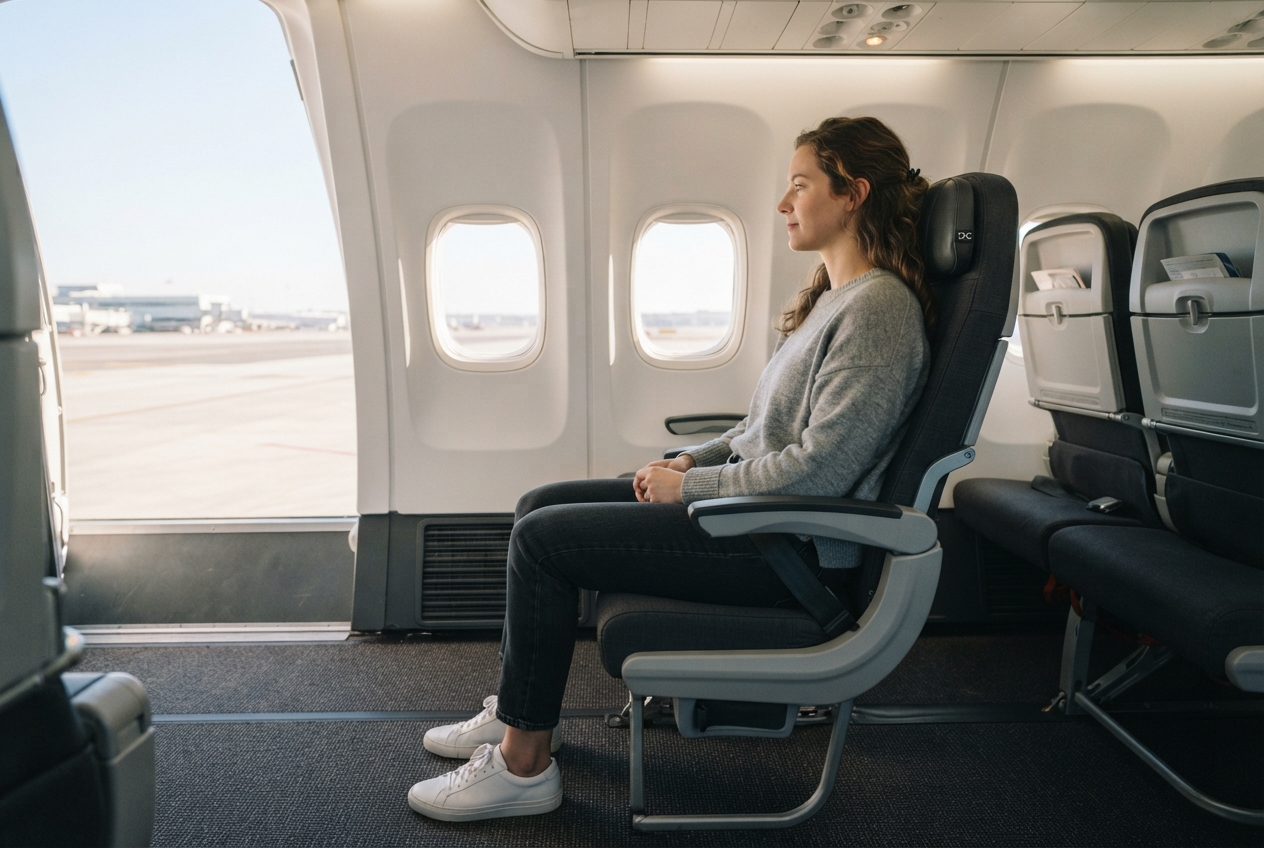
Keeping feet flat on the floor and seatbelts low across the pelvis prepares passengers for sudden movements on the tarmac.
Forward-Facing vs. Aft-Facing Jumpseats: The Physics of Impact
Not every jumpseat faces the same direction. Depending on the aircraft layout, flight attendants may sit facing forward toward the nose of the plane, or facing backward looking directly at the passenger cabin. The exact brace posture changes based on which way the jumpseat points.
When seated in an aft-facing jumpseat, the attendant faces the passengers. During a sudden forward deceleration, their head and torso are pushed directly back into the seat structure. In this position, keeping the head pressed firmly against the headrest and feet flat prevents whiplash and keeps the spine aligned along the protective backboard of the seat.
When seated in a forward-facing jumpseat, the body wants to pitch forward during hard braking. Here, crew members keep their chin tucked toward their chest, feet slightly behind their knees, and hands securely anchored under their thighs or across their knees to prevent upper-body flailing.
- Aft-Facing Position: Head flat against headrest, shoulder straps snug, hands beneath thighs, feet planted flat.
- Forward-Facing Position: Head bowed chin-to-chest, harness locked, elbows drawn tight, palms wedged beneath thighs.
- Foot Placement: Shoes stay firmly planted; feet are never tucked backward underneath the seat frame where they could catch on metal rails.
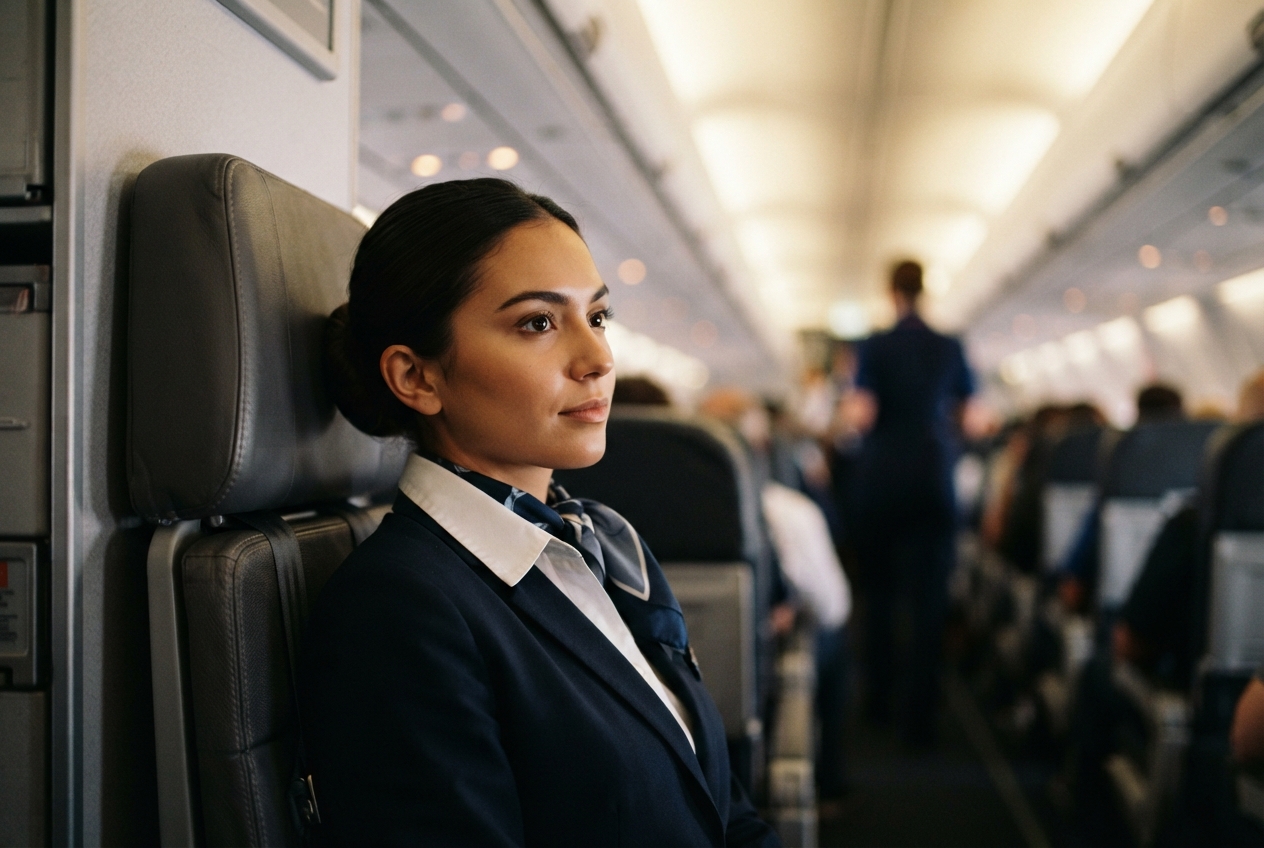
During taxi, takeoff, and landing, crew members run a silent mental checklist to prepare for split-second decisions.
The 30-Second Silent Review: What Happens in Their Heads
While an attendant sits quietly with their hands anchored, their mind is far from idle. They are conducting a mandatory, silent mental safety check known across the airline industry as the 30-Second Review.
From the moment the aircraft taxies onto the runway until it climbs past 10,000 feet, the crew runs through an internal checklist. They mentally rehearse their emergency commands, identify the location of their primary and secondary exits, and visualize operating the door handles if power fails.
They also survey the passengers seated nearest to them. Crew members quietly identify able-bodied passengers who look capable of assisting with heavy door operations during an evacuation. At the same time, they note passengers who may need extra help, such as travelers carrying infants or elderly passengers.
Beyond visual checks, the crew stays tuned to the sounds and smells of the aircraft. They listen for irregular engine spools, feel for unusual vibration through the floor, and sniff for any hint of burning wire or hot oil. That quiet seated posture provides the physical stability needed to focus their senses completely on the aircraft.
Cabin Habits Every Traveler Can Borrow from the Crew
You do not need to sit on your hands in row 22, but travelers can adapt several habits from flight attendant training to make their flights safer and more comfortable. Takeoff and landing represent the critical eight minutes of any flight, and small adjustments in your seat make a real difference.
1. Uncross Your Legs During Runway Movement
Crossing your legs feels natural when settling in with a book or watching the runway pass by. Yet crossing your legs twists your pelvis and puts uneven strain on your spine during sudden braking. It also creates an immediate tripping hazard for yourself and your seatmates if everyone needs to stand up quickly. Keep both soles flat on the floor until the seatbelt sign chimes off.
2. Fasten Your Belt Low and Snug
Many travelers buckle their seatbelt loosely across their stomach for comfort. In a rough runway stop or severe clear-air turbulence, a high belt can cause internal abdominal injuries. Pull the strap down across your pelvic bones—the strongest bone structure in your lower body—and pull the tail tight.
3. Keep Your Shoes On for the First Ten Minutes
Slipping off your sneakers right after boarding is tempting, especially on long cross-country flights. Resist the urge until the plane reaches cruising altitude. If the aircraft aborts a takeoff and everyone must evacuate onto tarmac, grass, or wet pavement, running in socks or bare feet risks cuts from glass and sharp metal debris.
4. Pay Attention to the Emergency Exit Row Count
When you take your seat, count the physical rows between you and the nearest two exits—both ahead of you and behind you. If smoke or poor lighting fills the cabin during an incident, you will not be able to rely on sight. Counting the seat headrests by hand lets you find your way out even in total darkness.
A Fresh View on Cabin Safety
Air travel has become so routine that we often view cabin crews primarily as hospitable hosts offering cups of hot tea, ginger ale with fresh lime, or warm pretzels. They handle those customer service duties with care, but their foundational job is that of trained first responders managing a high-altitude environment.
The next time you settle into your seat and spot a crew member tucking their fingers beneath their legs, you will recognize what you are witnessing. Understanding why flight attendants sit on their hands reveals the calm discipline, anatomical protection, and constant mental vigilance that help keep every commercial flight operating safely from takeoff roll to final rollout.