
You set four glasses on the table, fill each with clear water until the surface levels match right to the millimeter, and drop an everyday object into each one. To a casual glance, they seem identical. Yet beneath the rim, an invisible tug-of-war between volume and liquid is playing out. Which glass has more water? It is one of those timeless brain teasers that pops up on kitchen tables and community forums alike, tripping up even the sharpest minds before morning coffee kicks in.
Most of us trust what our eyes report immediately. If the liquid lines up evenly across the rims, our intuition insists the volumes must match. But intuition loves to skip a step or two. Slow down for sixty seconds, look past the water line, and let us break down what is actually happening inside each vessel.
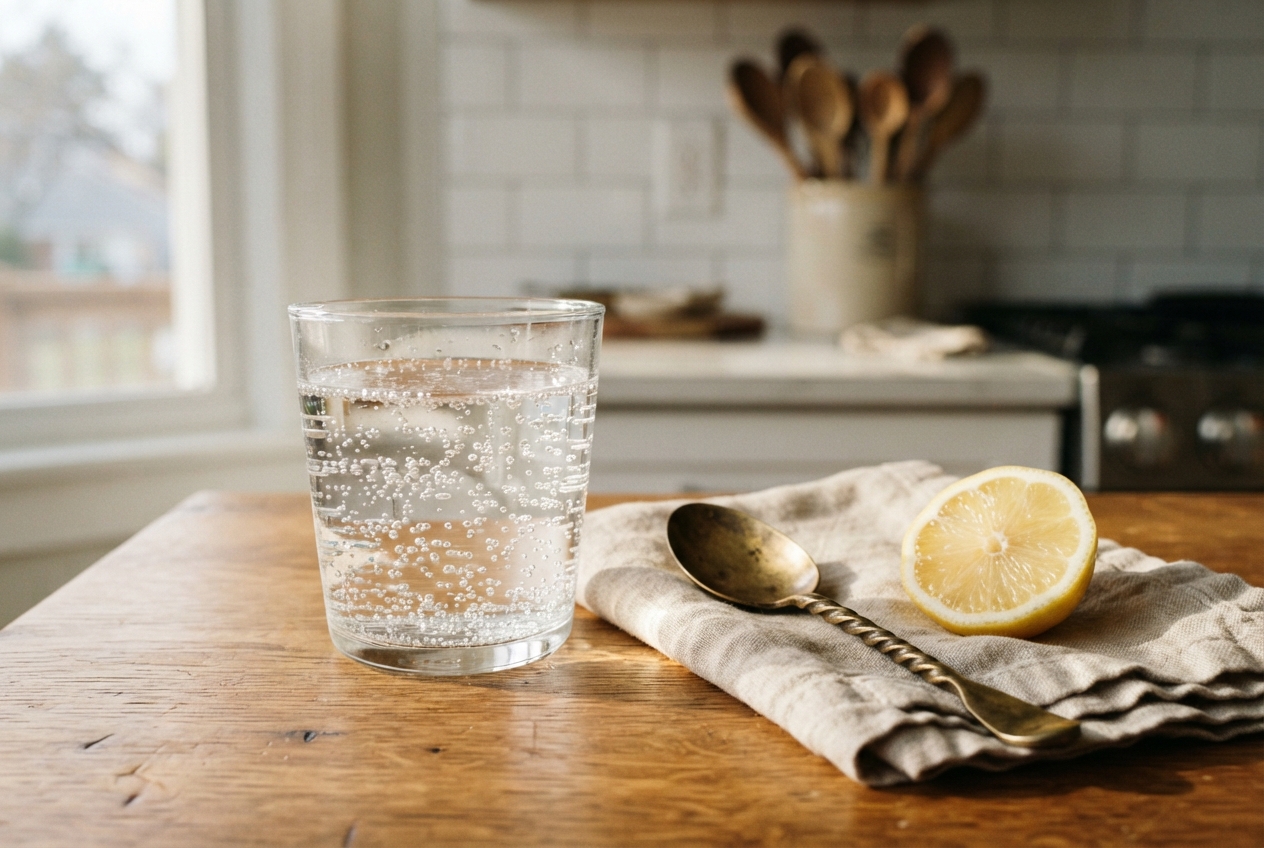
A simple glass of water on a quiet morning holds more physics lessons than most textbooks.
The Four Glasses: Take Your Pick
Picture four identical, round-bellied goblets sitting side by side on a clean wooden table. The water in each glass reaches the exact same height:
- Glass A: Contains a standard silver paperclip resting at the bottom.
- Glass B: Holds a solid baseball submerged in the center.
- Glass C: Holds a rectangular pink school eraser.
- Glass D: Holds a classic wristwatch with its leather band curled inside.
If you poured the contents of each glass through a fine mesh strainer into separate measuring cups, which one would give you the greatest volume of plain water? Commit to an answer now before your analytical brain starts overthinking.
The Verdict: Why Glass A Carries the Most Water
The correct answer is Glass A, the glass holding the small paperclip. It contains significantly more liquid than any of the other three.
To see why, you have to rewind the clock to the moment before the objects dropped into the glasses. Two physical things cannot occupy the exact same spot at the exact same moment. When you slip an object into a brimmed cup, the object demands room for its own physical body. It shoves the water aside and forces the liquid level up. This fundamental rule is known as water displacement.
The final height you see is not just water. It is water plus the exact volume of the item submerged inside.
Because all four glasses show the exact same overall water line right now, the glass containing the smallest, slimmest object required the least amount of space stolen from the liquid. A paperclip has tiny dimensions and displaces barely a fraction of a milliliter. That means nearly the entire interior space of Glass A is pure, unadulterated water.
In contrast, the baseball in Glass B is bulky. It claims dozens of cubic centimeters for itself, forcing a smaller splash of liquid to rise high up the walls of the goblet. Glass B looks full, but the baseball is doing most of the heavy lifting.
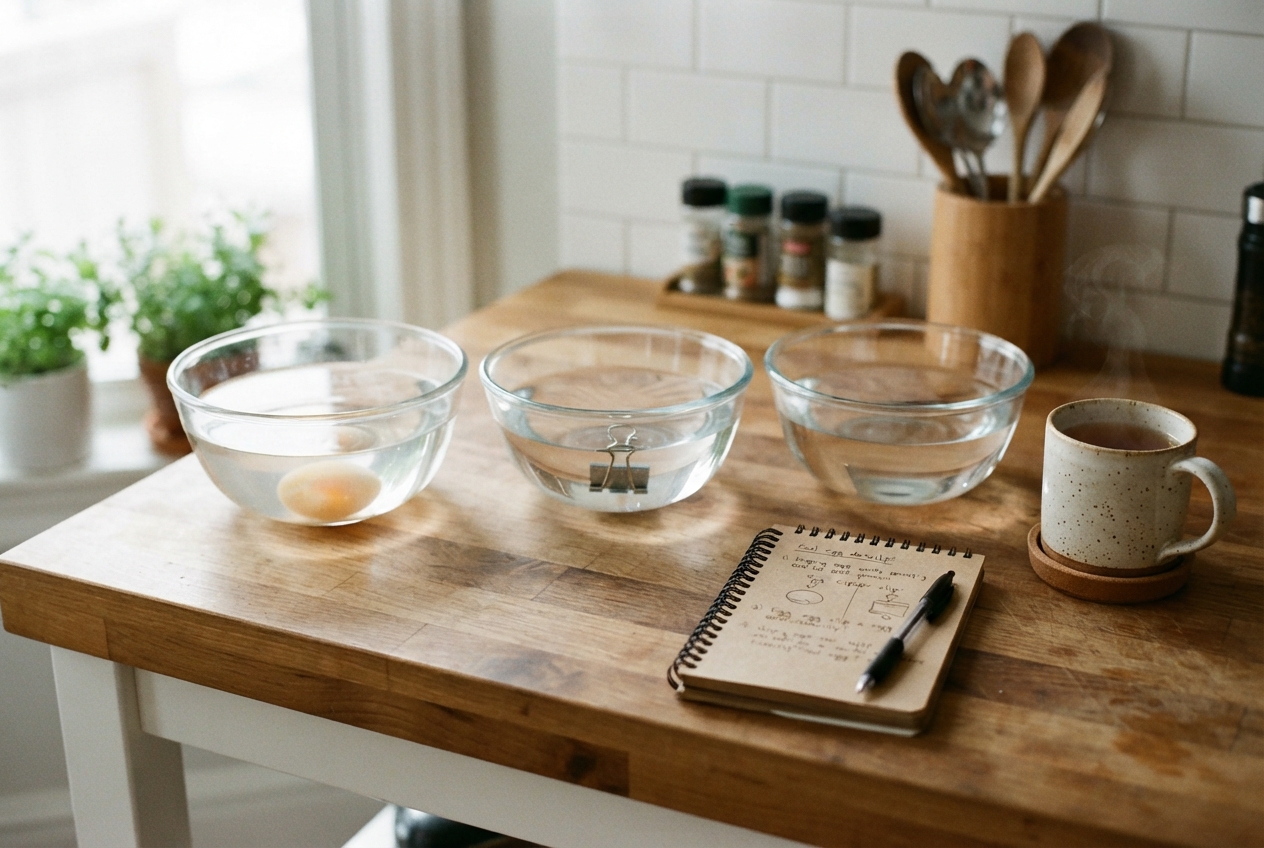
Testing volume and displacement with everyday kitchen staples is one of the easiest ways to bring hands-on curiosity to the table.
Volume vs. Water Level: A Quick Reference
Here is how the four objects stack up when you evaluate them side-by-side using everyday volume displacement:
| Glass | Submerged Object | Physical Volume | Actual Water Content |
|---|---|---|---|
| Glass A | Paperclip | Extremely Low | Highest (Winner) |
| Glass B | Baseball | Very High | Lowest |
| Glass C | Eraser | Moderate | Second Highest |
| Glass D | Wristwatch | Moderate to High | Second Lowest |
Why Our Eyes Deceive Us: The Cognitive Shortcut
Why do so many bright people instantly point to the baseball or assume every glass is tied? Psychologists call this visual heuristic processing. When our eyes scan a scene, our minds reach for the quickest proxy for volume: the top edge of the liquid line.
In our daily kitchen routines, a cup filled to the second ring generally holds the same liquid as yesterday’s cup filled to the second ring. We rarely drop an iron weight or a wristwatch into our morning glass of iced lemon water. Because our everyday baseline assumes an empty vessel, we equate the height of the line with the volume of the contents. Riddles like this hijack that habitual shortcut, forcing us to uncouple visual height from actual liquid density.
The Kitchen Science Behind Displacement: Archimedes at Home
More than two thousand years ago, the Greek mathematician Archimedes stepped into a full bath, watched the water spill over the rim tiles, and cracked the mystery of volume measurement. You do not need an ancient bathtub to experience the beauty of his discovery. You use it in a sensible home kitchen all the time.
Have you ever tried measuring cold butter or shortening using dry measuring cups? Scraping chilled butter out of a sticky tablespoon is an exercise in frustration. Instead, use the water displacement technique:
- Fill a clear liquid measuring cup to exactly one cup with cold tap water.
- Drop in chunks of butter until the water level climbs to one and a quarter cups.
- Pour off the water, and you are left with exactly one-quarter cup of butter, clean and ready for pastry dough.
The exact same principle explains why broth creeps higher when you toss quartered carrots and hearty potatoes into a simmering soup pot, or why your ice-filled tumbler overflows if you top it off too eagerly before the cubes settle.
Taking five quiet minutes to stretch your brain with visual puzzles helps untangle mental clutter after a busy afternoon.
What Your Choice Says About How You Observe
While the physical physics behind the riddle has one solid answer, how people arrive at their guess is always fun to unpack around the table:
The Analytical Thinker (Chose Glass A)
If you landed on the paperclip right out of the gate, you likely assess situations from the foundation upward. You notice subtle discrepancies, pause before accepting surface statements, and calculate invisible variables. You are the friend who double-checks the recipe cooking times against oven temperatures rather than just trusting the timer.
The Gut-First Decider (Chose Glass B)
Picking the baseball usually points to high visual engagement. The baseball dominates the frame, drawing immediate focus. If you chose B, you lean toward bold, decisive choices and trust strong first impressions. You tackle projects head-on, even if you need to adjust your course down the road.
The Balanced Pragmatist (Chose Glass C)
The eraser is a middle-ground object, neither tiny nor massive. Those drawn to C often weigh competing factors carefully. You tend to seek compromise in messy projects, finding practical solutions that sidestep extremes while keeping everyone moving forward.
The Narrative Seeker (Chose Glass D)
The watch carries texture, moving parts, and personal history. Choosing D suggests a creative mind that tracks storytelling and curious details. You notice the vintage clock on the mantel, the patina on an old wooden cutting board, and the quiet rhythm of an afternoon at home.
Sharpening Everyday Observation at the Kitchen Counter
Visual teasers are a lovely reminder to slow our pace and practice genuine observation. In a world full of rapid scrolling and split-second decisions, pausing to examine an ordinary glass of water brings a refreshing breath of curiosity back into our daily habits.
The next time you gather friends for brunch or settle into an evening with the family, set out this simple question over a pitcher of iced mint tea. It sparks laughter, friendly debate, and that satisfying moment when the subtle mechanics of the world click right into focus. In both puzzles and home life, the sweetest discoveries are almost always hidden in the small, quiet details we nearly walked right past.