Few things spark curiosity like finding an odd kitchen tool at an estate sale. In fact, you might spot a tiny brass shovel resting inside a dusty jar of vintage spoons. It has a flat blade, a spiral handle, and a tiny flower stamped on the tip. Naturally, you might wonder if it belongs in a child’s dollhouse. Perhaps it served some forgotten dining ritual from the past.
Recently, an internet user shared photos of a tiny brass shovel on Reddit. The little tool carried the stamped mark “Made in Occupied Japan.” Immediately, the online crowd threw out dozens of wild guesses. For instance, some users joked about old party favors. Others thought it was a small bonsai trowel. However, the true history is much richer than those quick jokes.
miniature 1940s shovel, what is it for?
by
u/answermezantetsuken in
whatisit
What Was This Miniature Shovel Actually Made For?
Despite the wild online theories, this piece is an authentic vintage miniature sugar shovel. During the mid-twentieth century, hostesses loved highly specific table utensils. They used separate tools for every condiment on the table. For example, dining sets included butter picks, tiny salt scoops, and sugar shovels.
Standard teaspoons have rounded bowls, but a sugar shovel works differently. It features a wide, flat blade with raised side walls. Therefore, guests could scoop loose sugar crystals without spilling grains onto the linen. In most cases, manufacturers paired these small spoons with matching porcelain sugar bowls as complete service sets.
In addition, hostesses placed similar miniature shovels into small condiment caddies. These caddies held dry mustard, coarse black pepper, and flaked sea salt. If your brass shovel measures about two inches long, it served this exact tabletop purpose.
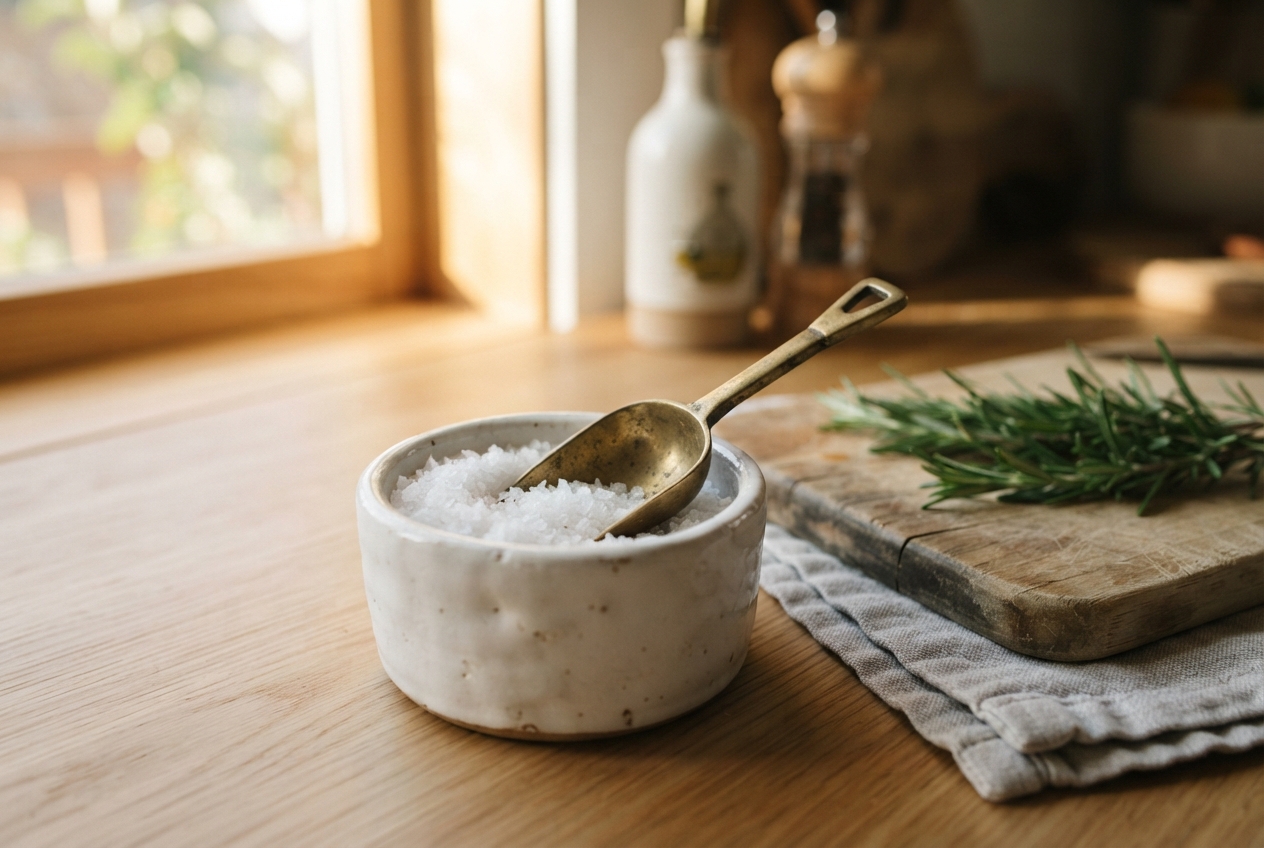
A miniature vintage shovel makes a charming, functional scoop for flaky sea salt in an everyday kitchen.
The Real History Behind the ‘Made in Occupied Japan’ Stamp
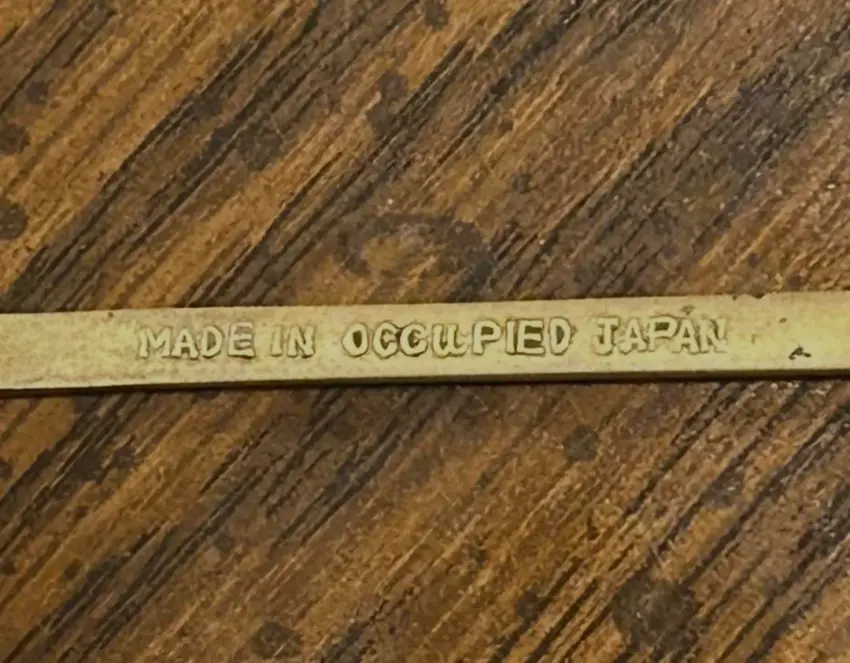
When you flip the shovel over, the stamped lettering reveals a fascinating story. The mark Made in Occupied Japan dates the item to a brief seven-year window between 1945 and 1952.
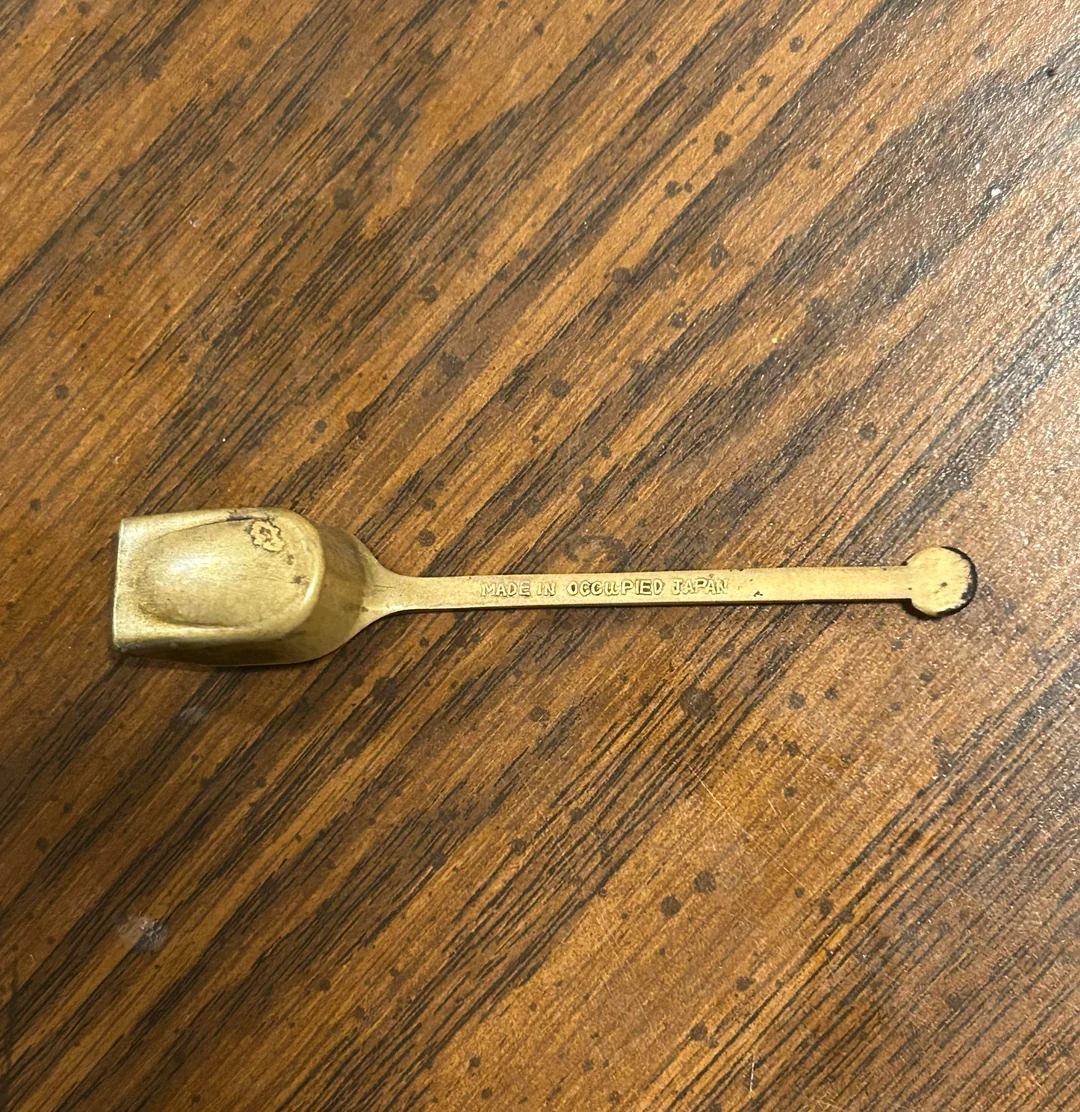
The crisp ‘Made in Occupied Japan’ mark on the reverse side confirms this brass scoop was manufactured between 1945 and 1952.
Allied forces governed Japan right after the Second World War. During this period, administrators worked hard to rebuild the nation’s export economy. As a result, Japanese workshops quickly resumed manufacturing small consumer goods for foreign buyers. Most of these shipments headed straight to the American market.
United States import rules required foreign makers to stamp all exported goods clearly. Consequently, Japanese workshops stamped fine porcelain, lacquer boxes, celluloid toys, and brass flatware. This requirement ended in April 1952 when Japan regained full sovereignty. After that date, factories retired the famous mark permanently.
Because makers only used this mark between 1945 and 1952, collectors can easily date every authentic piece to this post-war period.
Anatomy of a Mid-Century Sugar Scoop
These post-war brass spoons feature three distinct design elements that collectors recognize instantly:
- The Twisted Stem: The spiral pattern looks lovely, but it also provides structural strength. Specifically, twisting the thin brass wire kept the slender handle from bending during daily use.
- The Floral Finial: Artisans stamped the tip of each handle with a small motif. Most often, you will spot a traditional Japanese cherry blossom or a stylized rosette.
- The Flat Shovel Blade: The square front edge cuts through hardened sugar lumps with ease. Because of this shape, serving dry goods was quick and mess-free.
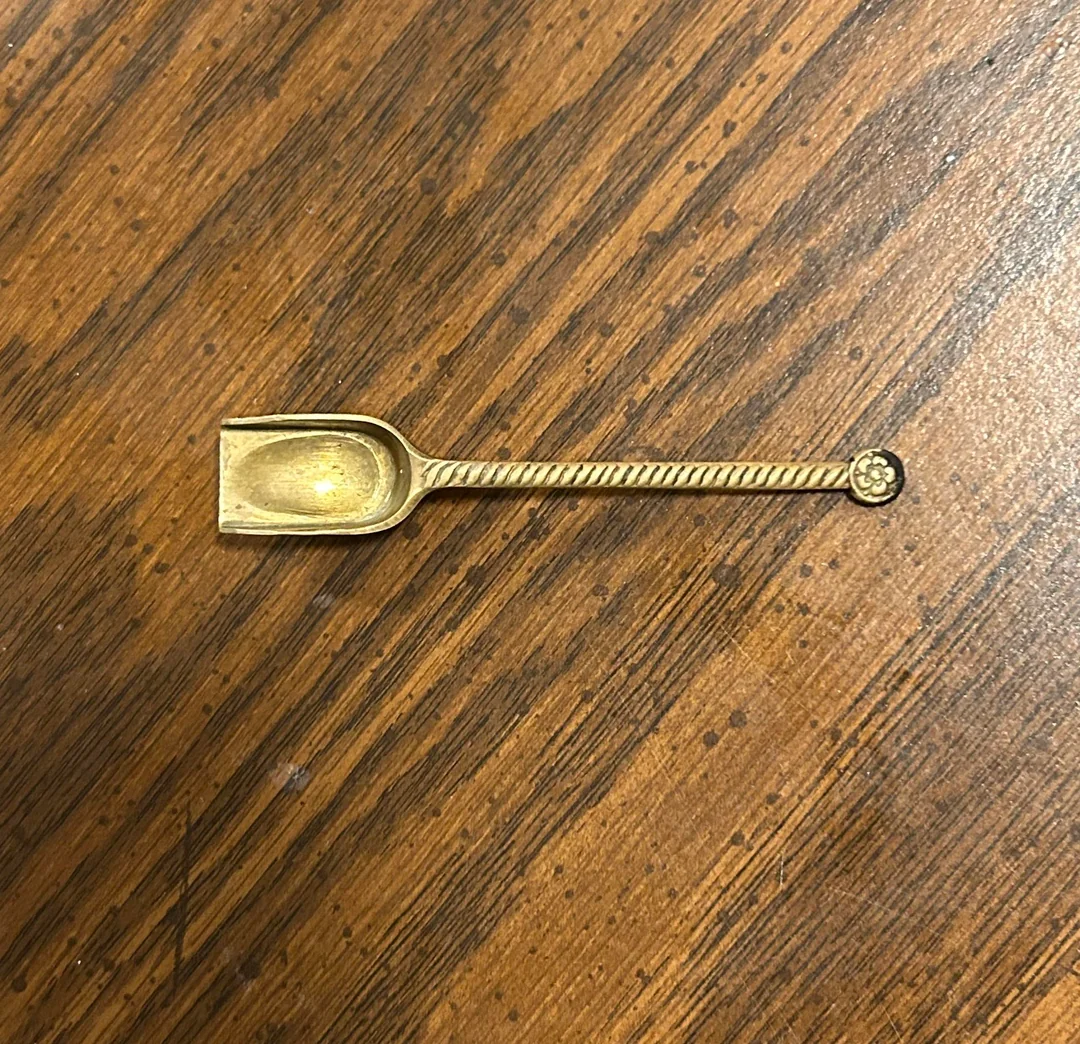
The delicate twisted stem and stamped floral finial highlight the practical craftsmanship of post-war Japanese metalware.
Raw materials were scarce during the early post-war years. Because metal supplies ran low, Japanese artisans showed remarkable ingenuity. They melted down surplus industrial stock and scrapped machinery to cast charming household items. Thus, simple scrap metal became treasured kitchen keepsakes across American dining rooms.
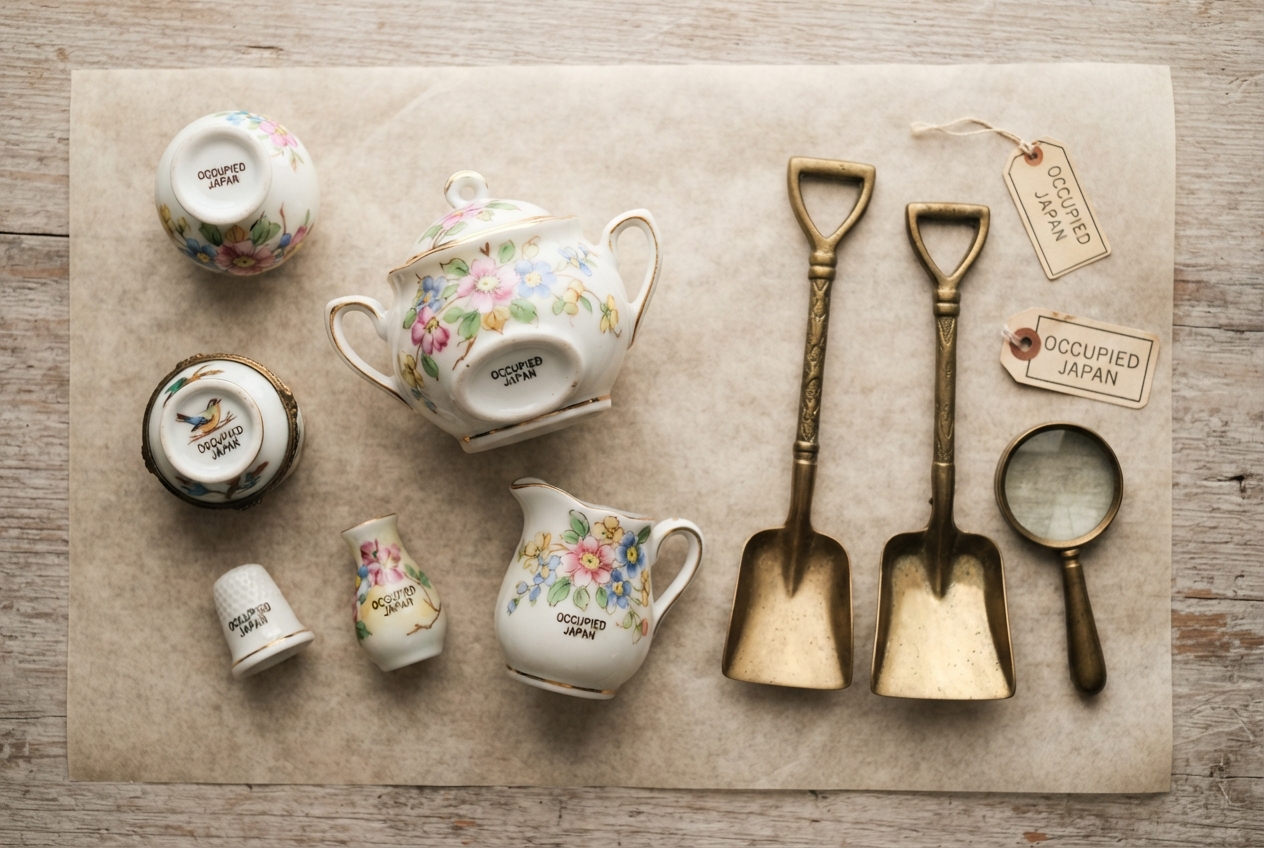
Post-war Japanese export sets paired delicate hand-painted porcelain with pressed brass serving spoons.
What Are Occupied Japan Miniature Spoons Worth Today?
Japanese factories exported millions of decorative novelties during the late 1940s. For that reason, individual brass sugar scoops remain quite accessible today. Still, antique enthusiasts actively hunt for them at flea markets and estate sales.
A single brass shovel in good shape typically sells for $10 to $20 online. However, complete vintage sets fetch a much higher price. For instance, a hand-painted porcelain sugar bowl with its matching brass spoon can bring $45 to $85. Always check the stamp on the back of the stem. Sharp, clear lettering gives the piece the highest collector appeal.
5 Charming Ways to Use a Miniature Shovel Today
You do not need a glass display case to enjoy vintage flatware. In fact, you can put a miniature brass scoop to work in your modern kitchen right away. Here are five practical ways to use this little treasure today.
1. The Flaky Sea Salt Cellar
Keep a small ceramic pinch pot of coarse sea salt near your stove. Then, slip the tiny brass shovel right into the bowl. It delivers a neat pinch of crunchy salt over sliced heirloom tomatoes or warm focaccia. Best of all, your fingers stay clean and dry while you cook.
2. Loose-Leaf Tea and Matcha Doser
Store the scoop inside your favorite loose-leaf tea tin. The wide spade holds about half a teaspoon of dry leaves. As a result, it measures the right amount for your morning steep. Similarly, it works wonders for transferring bright green matcha powder into a bowl.
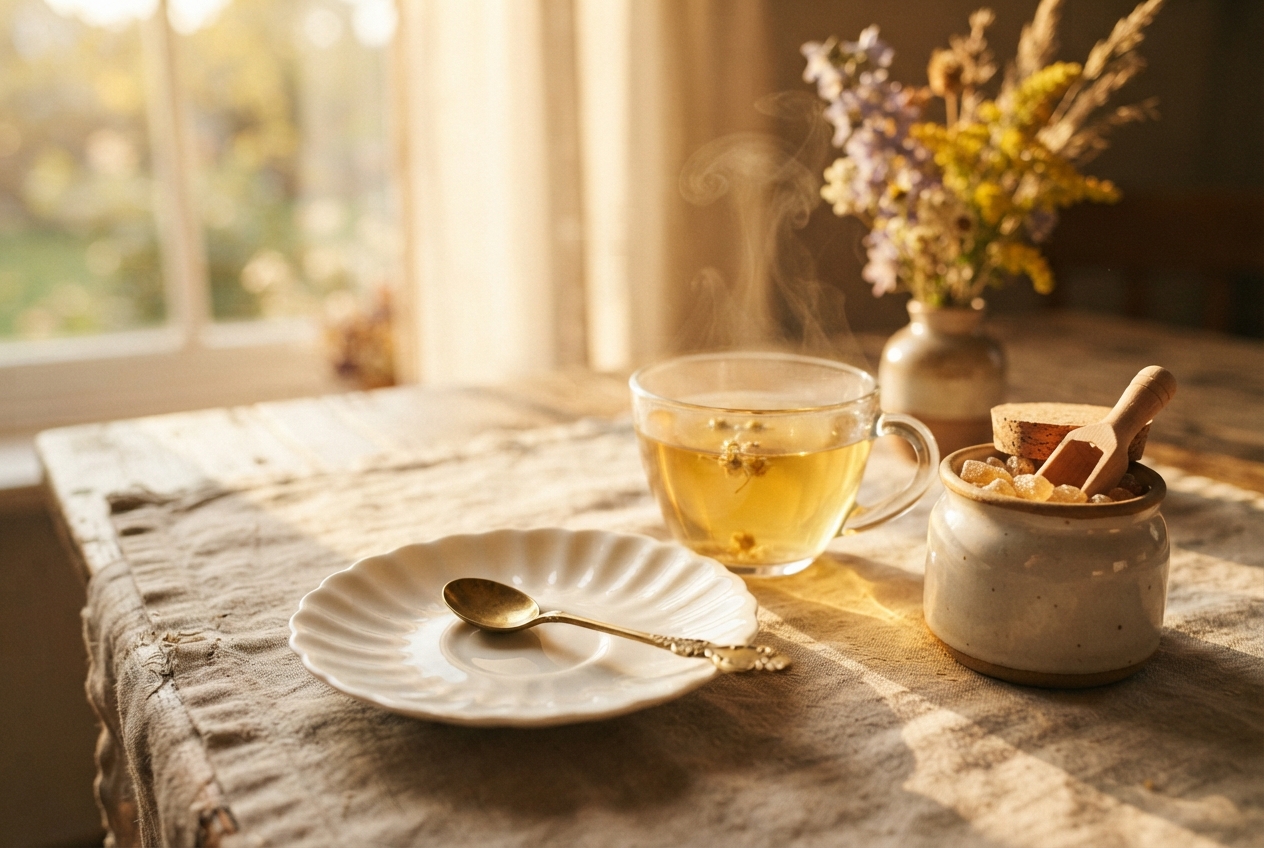
Small brass scoops add a touch of vintage ceremony to morning coffee and loose-leaf tea rituals.
3. Narrow Spice Jar Scoop
Standard round measuring spoons rarely fit inside compact spice containers. Fortunately, a mini shovel slides into narrow jars without any trouble. Use it to sprinkle ground cinnamon over morning oats or measure cumin into warm chili. This simple swap keeps spice counters tidy and spill-free.
4. Coffee Station Sweetener Scoop
Set a small bowl of raw cane sugar next to your coffee kettle. The warm brass finish looks stunning against golden crystals. Moreover, guests will love the tactile ritual of scooping their own sweetness. It brings an intentional, cozy vibe to slow weekend mornings.
5. Handcrafted Bath Salt Jars
If you make homemade gifts, this tiny spoon offers a wonderful finishing touch. Fill a small glass jar with coarse Epsom salts and dried flower petals. Next, tie the miniature shovel around the jar neck with rustic twine. It creates a thoughtful, boutique-quality present for anyone who loves relaxing baths.
How to Clean and Care for Vintage Post-War Brass
Many post-war items gathered dust in damp attics for decades. Consequently, they often arrive with dull dark tarnish or sticky dirt. Cleaning them requires a gentle touch so you do not rub away the historic lettering.
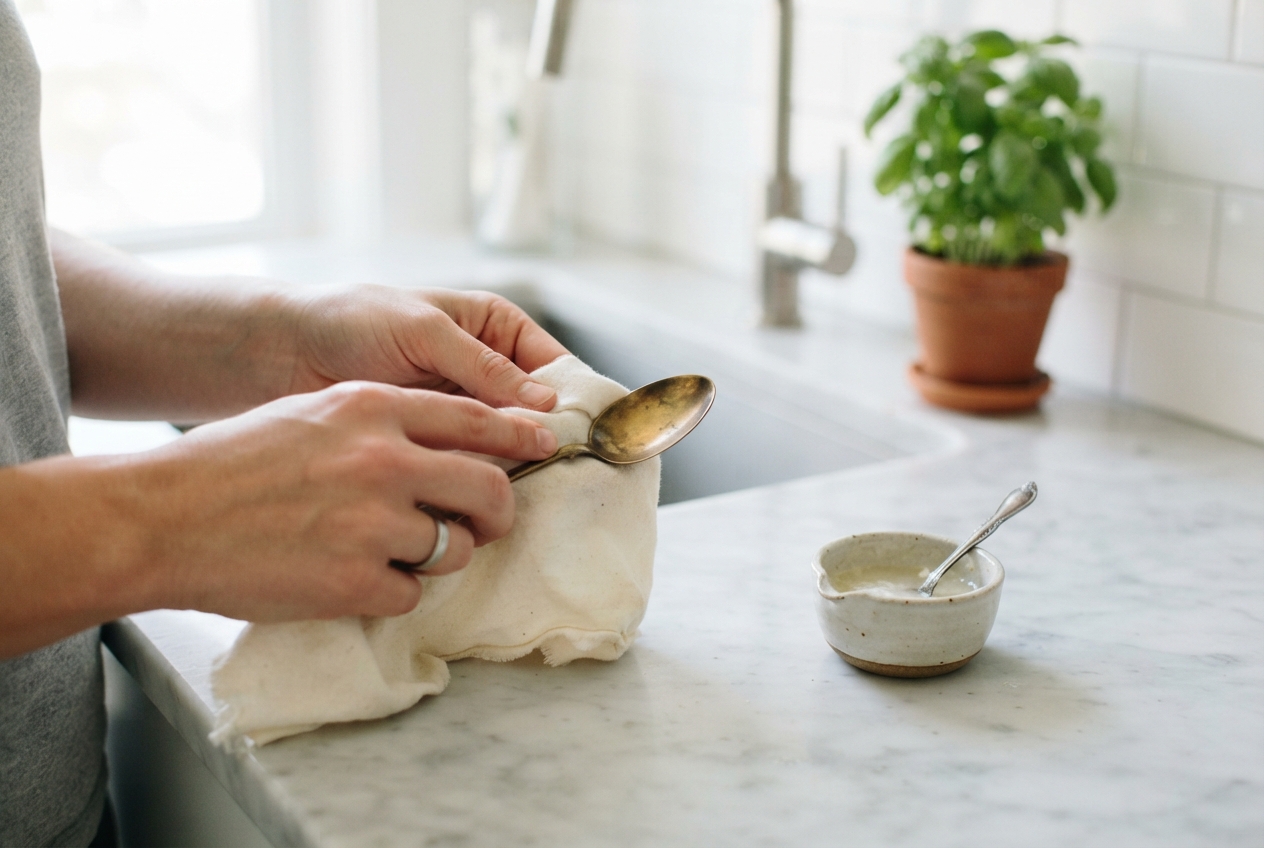
A gentle wipe with natural ingredients removes grime while keeping the warm, historic patina intact.
Skip harsh chemical cleaners and scratchy scouring pads. Instead, use this safe three-step routine with common pantry staples:
- Wash with Warm Soap: Soak the spoon for five minutes in warm water with mild dish soap. Then, scrub the spiral handle with a soft toothbrush to lift trapped dirt.
- Brighten with Natural Acid: Mix equal parts fresh lemon juice and baking soda into a runny paste. Next, apply the paste with a soft cotton cloth and buff the metal gently.
- Rinse and Dry Thoroughly: Rinse the scoop under running water. Afterward, dry it immediately with a clean towel so water spots do not form on the brass.
Finding Joy in Small Pieces of History
Thrifting brings joy because small household items carry big stories. What looks like a quirky little toy was once a significant export for a rebuilding nation. Japanese craftspeople forged these pieces with care during a major turning point in modern history.
So, check the back the next time you find a vintage miniature sugar shovel in an antique booth. You might hold a genuine piece of mid-century history that is ready for a second life in your home.