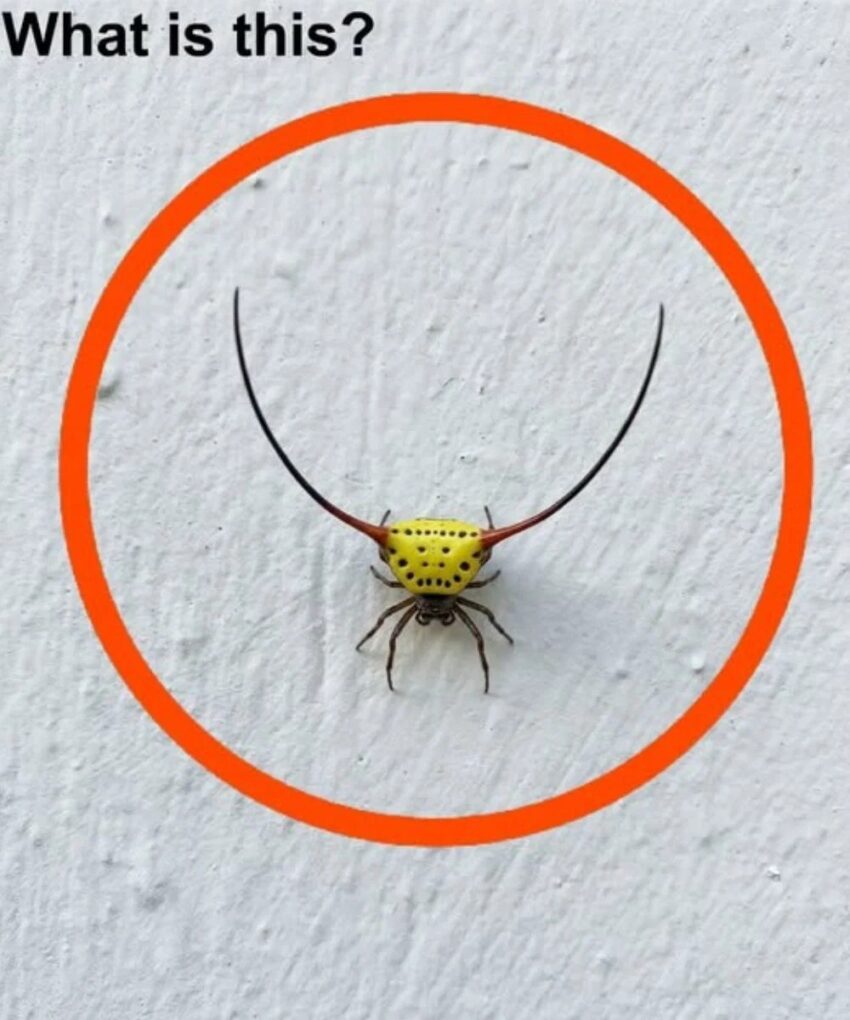
Flipping the garage light switch after dark usually brings familiar sights: a dusty lawnmower, stacks of plastic storage bins, and the faint, earthy smell of potting soil. Last Tuesday, as the overhead bulb flickered to life with a quiet hum, my eyes caught a flash of bright color on the drywall right next to my garden tool rack. Sitting motionless was a creature that looked like it had crawled straight out of a comic book—a tiny, hard-shelled arachnid sporting long, sweeping curved horns and a vibrant armored body.
Finding a spiny orb weaver in garage corners is enough to send a quick jolt of adrenaline through your veins. My first instinct was to grab the nearest broom and back away toward the driveway. But as I leaned in closer with my phone flashlight, I realized this strange little visitor wasn’t hostile at all. It was simply waiting for night flies near the light bulb.
What Is That Horned Creature? Identifying the Spiny Orb Weaver in Garage Spaces
What many homeowners mistake for a dangerous tropical pest is actually one of nature’s most fascinating backyard helpers. Spiny orb-weavers belong to the family Araneidae, a group famous for building intricate, circular webs. Depending on the exact species—such as Macracantha arcuata or Gasteracantha cancriformis—these spiders display extraordinary shell shapes ranging from bright yellow and stark white to deep crimson.
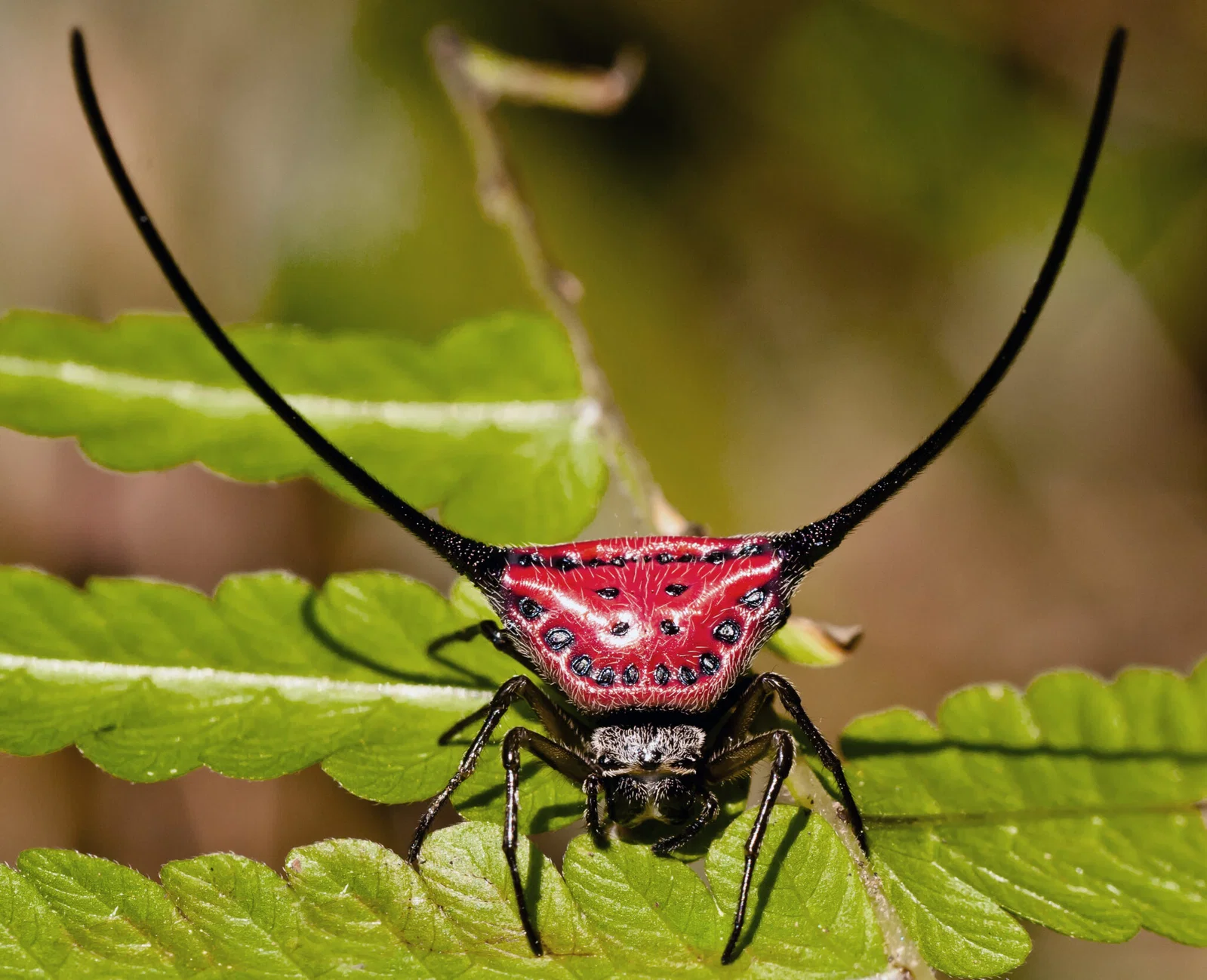
A striking red long-horned spiny orb-weaver rests on garden foliage, showcasing its dramatic defensive horns.
Their most striking features are the hard, enamel-like abdomen and protruding spines. These outer shells look like polished ceramic or heavy plastic, often marked with dark symmetry spots that resemble tiny ink droplets.
To help you quickly distinguish harmless web-builders from creatures that warrant more caution around the house, keep this simple visual breakdown handy:
| Category | Shell & Body Texture | Primary Colors | Defense Mechanism | Danger to Humans |
|---|---|---|---|---|
| Spiny Orb-Weaver | Hard, crab-like shell with long curved horns | Yellow, red, white, black | Bright warning colors & sharp spines | None (Harmless) |
| Black Widow | Glossy spherical abdomen | Jet black with red hourglass | Secretive hiding & potent venom | High (Seek medical care) |
| Brown Recluse | Smooth oval abdomen with violin mark | Tan to chocolate brown | Hides in dark boxes & necrotic venom | High (Seek medical care) |
| Yellow Garden Spider | Large elongated velvety abdomen | Yellow and black stripes | Zig-zag web patterns | None (Harmless) |
Why Do They Look So Intimidating? Understanding Defensive Armor
Mother Nature has a brilliant sense of humor, and the spiny orb-weaver is proof. Those long, menacing horns and vivid warning colors look terrifying to human eyes, but they serve a purely defensive purpose known as aposematism.
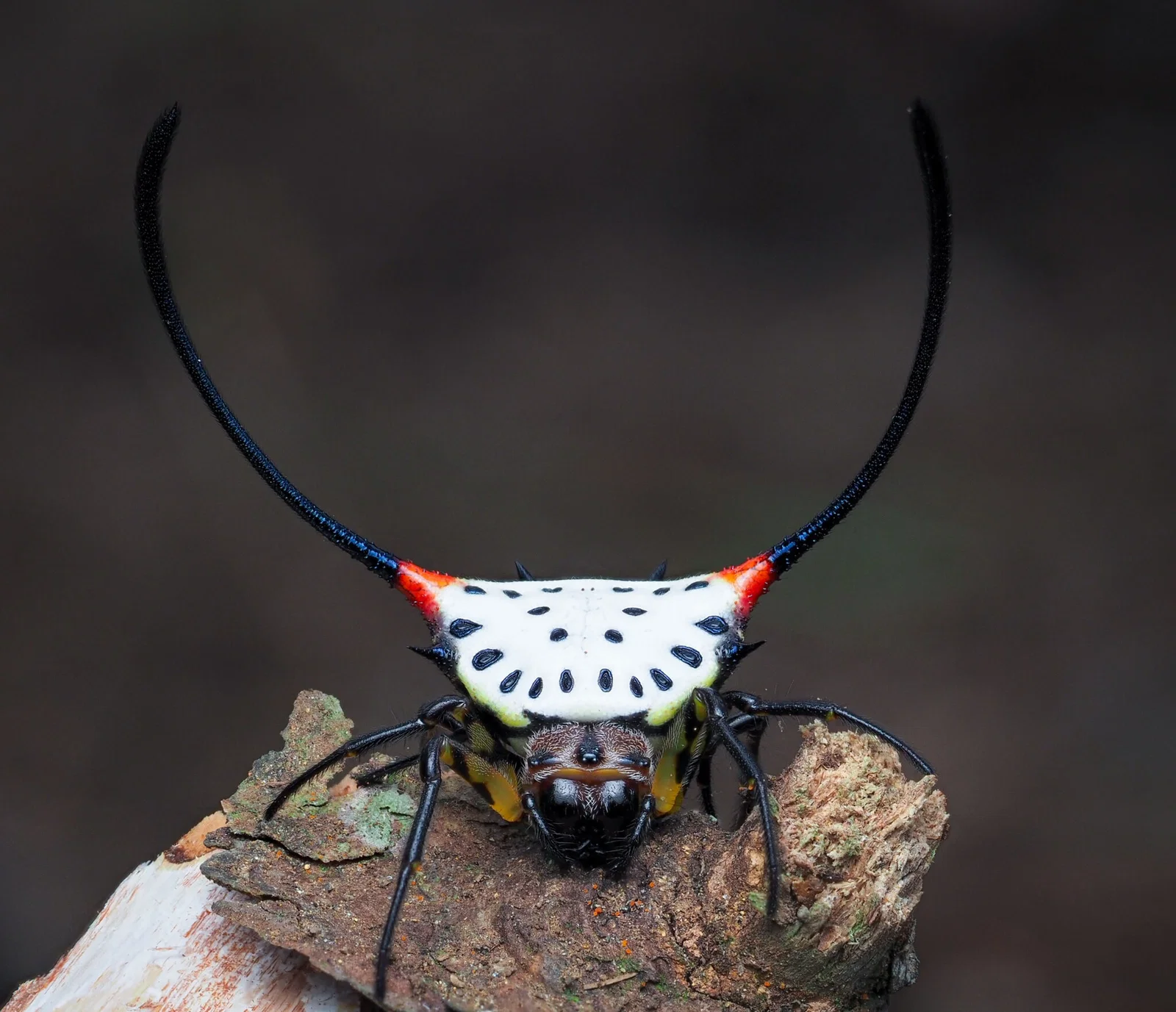
This white and black long-horned orb-weaver demonstrates the intense contrast patterns designed to startle hungry birds.
In the wild, birds and lizards love snacking on soft-bodied spiders. By developing a rigid, spiked exoskeleton that is nearly impossible for a small bird to swallow, the spider protects itself from becoming a quick meal. The bright yellow or white shell acts like a giant neon sign telling predators that this catch is far too spiky to eat.
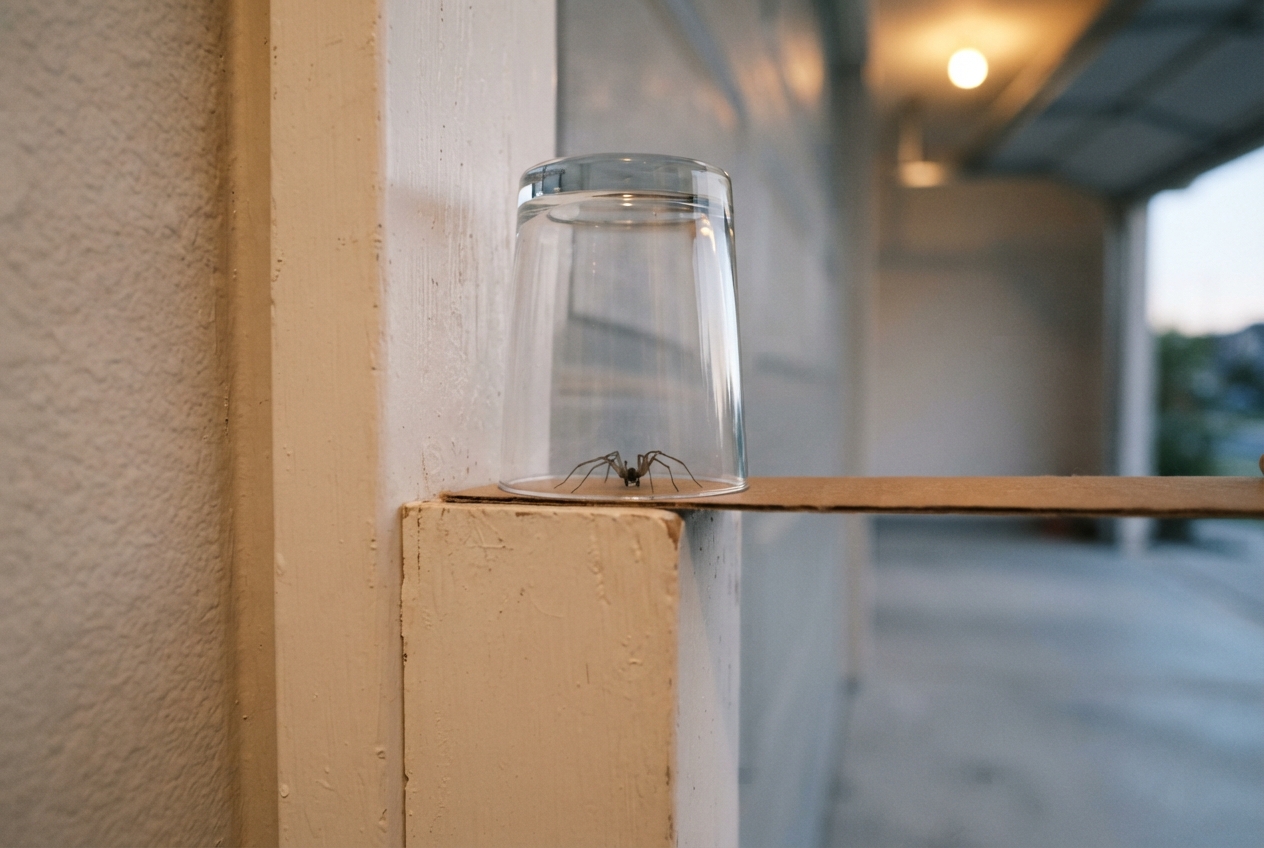
A simple glass cup and card method allows for safe, gentle relocation of garage visitors back to the garden.
Why do these outdoor architects drift into indoor spaces? Garages are magnet zones for nocturnal insects. Standard incandescent or cool-white LED bulbs outside or inside garage doors draw moths, gnats, and mosquitoes by the hundreds. The spider simply sets up its fishing net where the catch is guaranteed.
Nature’s Free Pest Control: Why You Want Them Near Your Garden
Before you consider spraying chemical insecticides around your garage baseboards, consider the work these little creatures accomplish for free every single night. A single orb-weaver can capture dozens of flying pests during a single evening feeding cycle.
Unlike web spiders that leave messy, sticky cobwebs in dusty ceiling corners, spiny orb-weavers are meticulous engineers. They construct geometric, wheel-shaped webs designed to catch flying insects mid-flight. Even more impressive, many species consume their own silk at dawn, recycle the proteins, and spin a completely fresh web when dusk approaches.
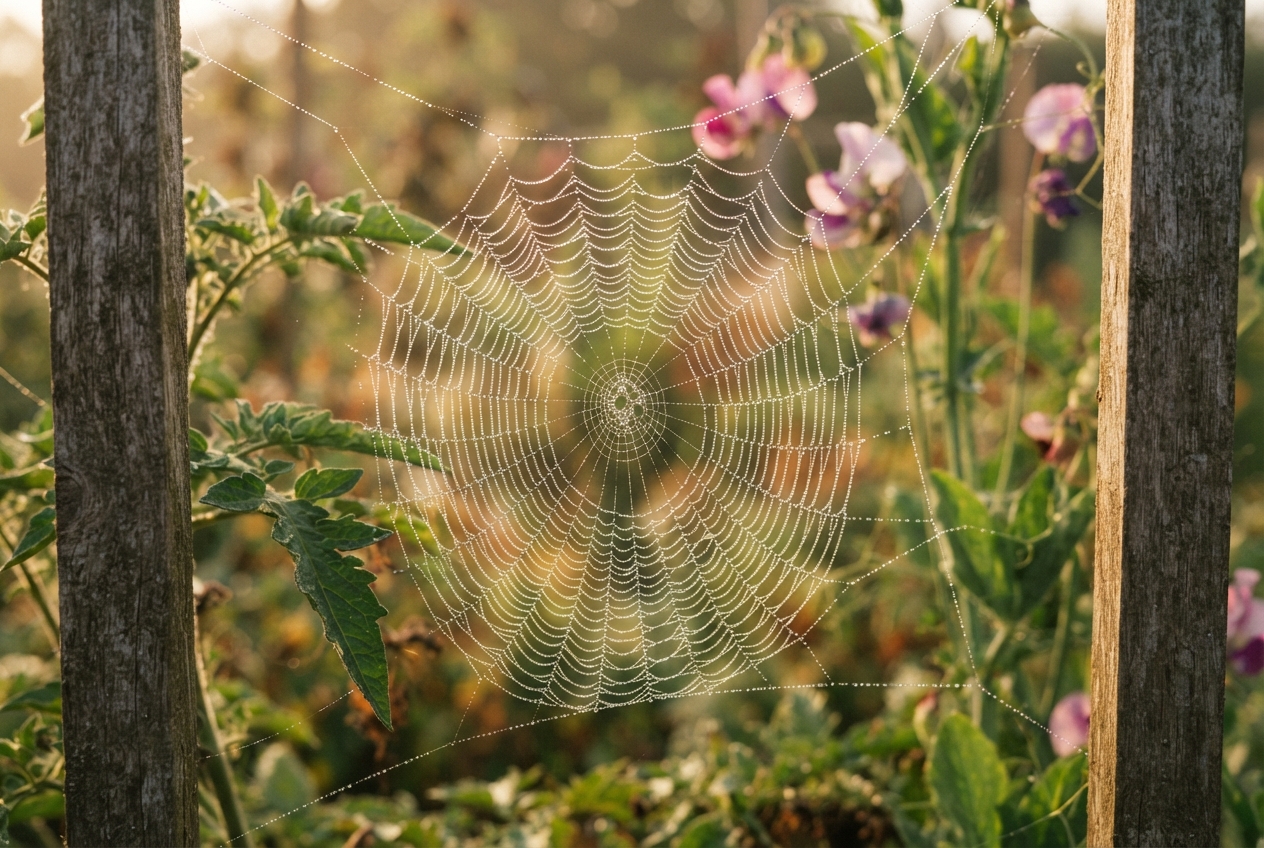
An intricate circular spiderweb spun between garden stems catches morning dew and traps flying garden pests.
Having them stationed around your garden perimeter, vegetable patch, or porch overhang means fewer mosquitoes buzzing around your ankles while you enjoy a glass of cold iced tea on summer evenings. They act as natural pest managers without leaving toxic residues on your soil or outdoor furniture.
How to Safely Relocate a Spiny Orb Weaver Without Harm
If a spider has built its web directly across your garage door opening or tool bench, living in total harmony might mean moving it to a better location in your yard. Relocating these spiders is simple, safe, and takes less than two minutes.
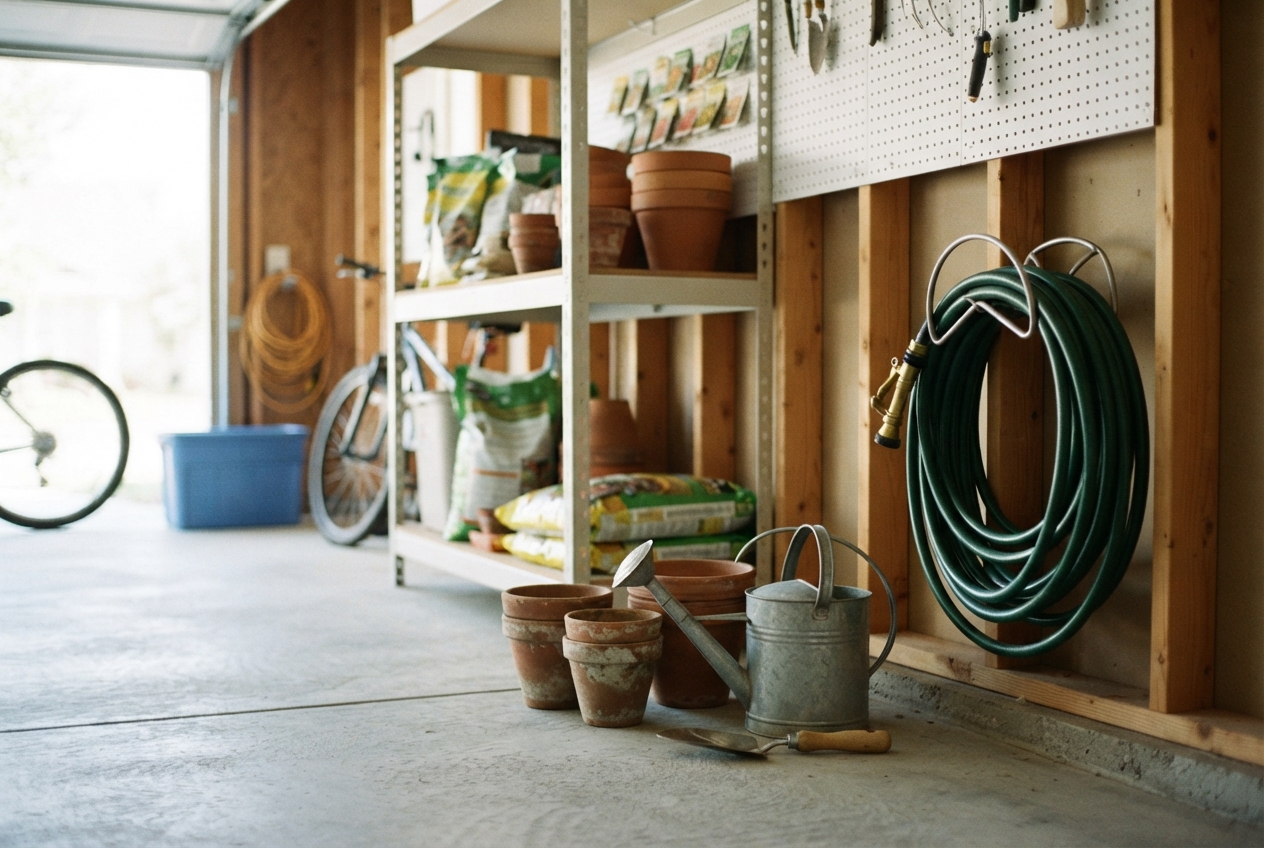
Keeping garage workbenches tidy and organized reduces dark hiding places for unwanted insects.
Follow these easy steps to move your helper back to the garden:
- Grab a clear cup and card: Find a clean glass or plastic tumbler and a piece of stiff junk mail or cardboard.
- Place the cup gently: Position the cup slowly over the spider on the wall, ensuring its long spines fit comfortably inside the rim.
- Slide the card beneath: Gently slide the cardboard flat against the wall under the cup opening until the spider steps onto the card.
- Transfer to the garden: Carry the cup outside to a sturdy shrub, tomato trellis, or tall flower bed, then gently tip the glass so the spider can climb onto a branch.
Avoid touching the spider directly with bare hands. While their tiny fangs can barely puncture human skin, handling them roughly can break their delicate legs or crack their protective shell.
Preventing Unwanted Garage Bug Encounters Naturally
If you prefer to keep your garage interior entirely bug-free without harming local wildlife, a few simple household tweaks will do the trick:
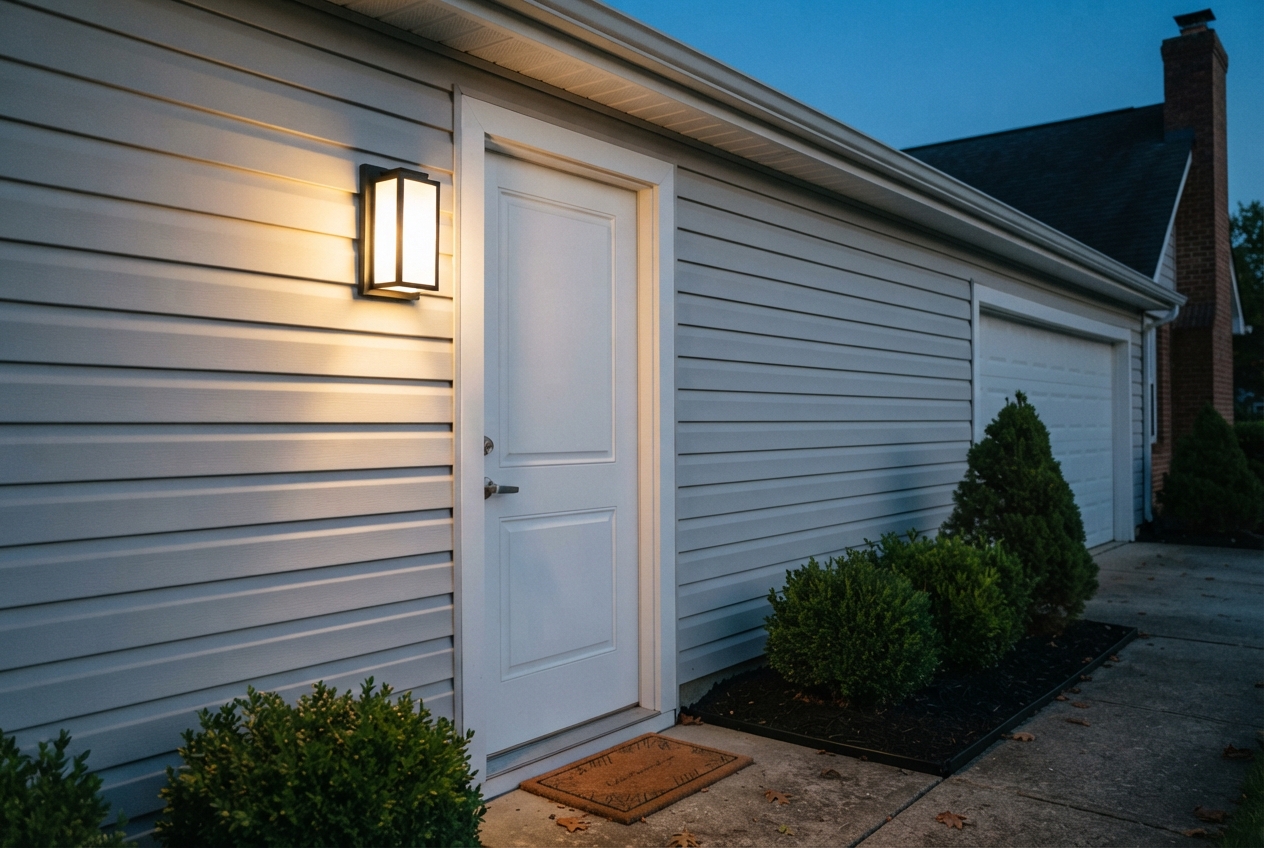
Switching to warm outdoor lighting reduces the swarm of nocturnal insects near home entry points.
- Switch your bulb color: Replace harsh white exterior garage lights with warm yellow LED “bug bulbs.” Yellow wavelengths are far less visible to flying insects, which stops the food chain before it starts.
- Check door weatherstripping: Inspect the rubber seal along the bottom of your garage door. Replacing cracked seals keeps crawling insects and damp moisture outside.
- Keep tool areas dry: Fix leaking hose bibs or dripping utility sinks in the garage. Spiders and their prey seek out humid microclimates for hydration.
- Declutter storage areas: Store extra lawn gear and seasonal decor in sealed plastic totes rather than damp cardboard, which attracts silverfish and crickets.
Welcoming Wildlife Magic in Everyday Spaces
That late-night garage encounter started with a sudden startle, but it ended with a newfound respect for one of nature’s most clever designs. The next time you spot a spiny orb weaver in garage beams or garden fences, take a moment to admire the vivid colors and remarkable geometry before guiding it back to work in your flower beds.
Homes are living spaces that connect directly with the outdoors. By choosing curiosity over panic, we keep our living spaces safe, comfortable, and full of surprising natural wonders.