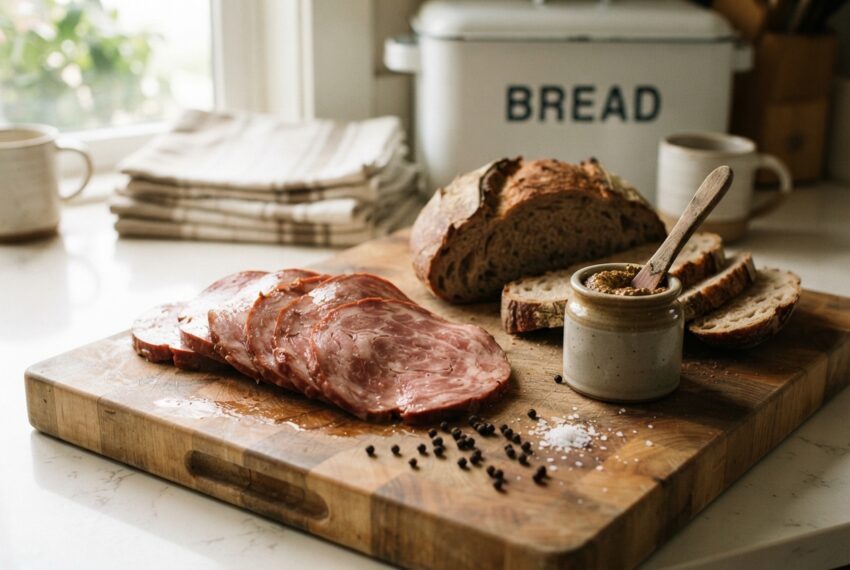
Walk up to any neighborhood deli counter, and you will spot it right between the smoked turkey breast and the aged provolone: a massive, pale-pink cylinder wrapped in bright red plastic. For generations of kids, a couple of cold slices slapped between soft white bread with yellow mustard was the gold standard of brown-bag lunches. Yet at some point, an urban legend took hold on school playgrounds, convincing half the neighborhood that lunchmeat was churned out from mysterious, unnamed scraps.
When you ask butcher shop pros and culinary historians what is bologna made of, you quickly find out that genuine bologna is not a punchline. It is a precise marvel of old-world charcuterie science. Strip away the playground rumors, and you find high-grade muscle meat, finely balanced fat, crushed ice, and warm baking spices crafted through centuries of sausage-making tradition.
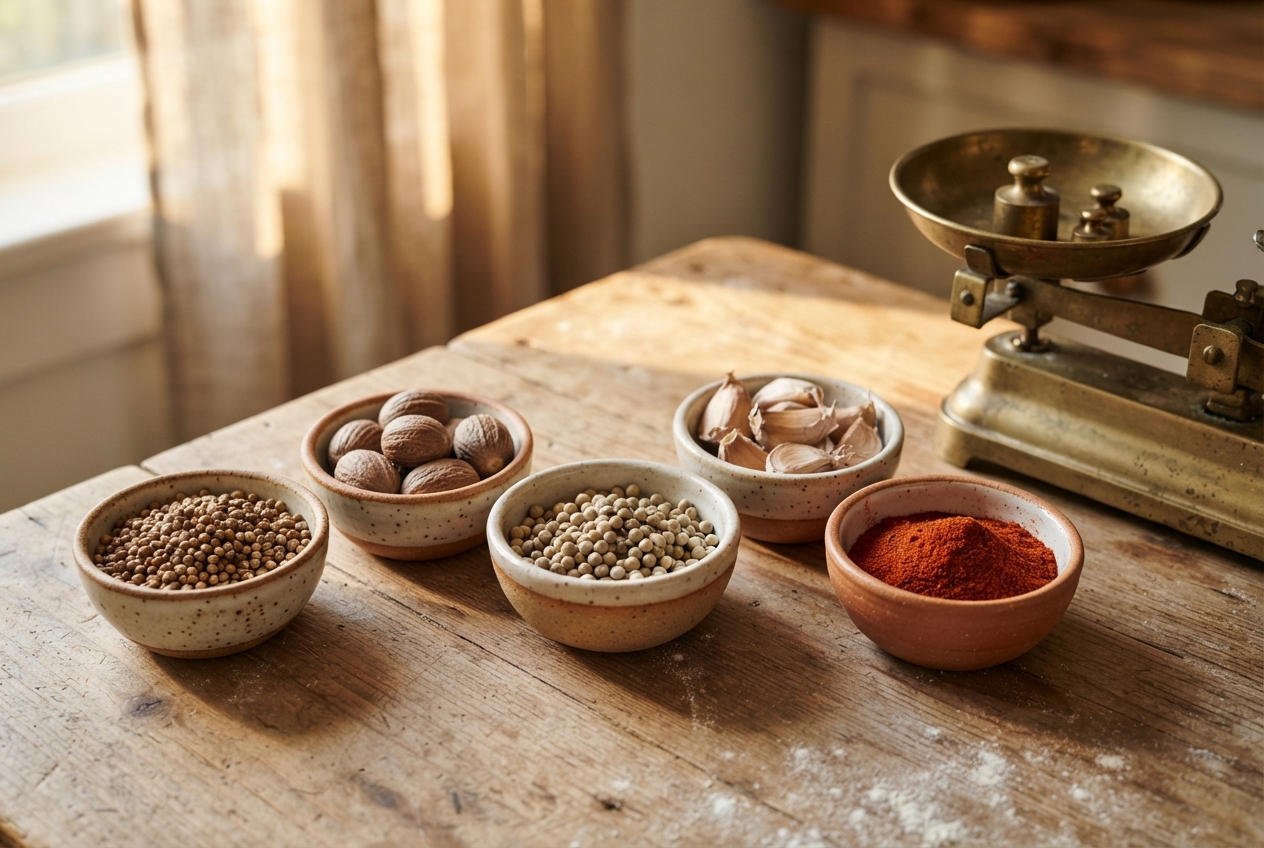
Freshly cracked coriander, white pepper, and garlic form the warm, aromatic backbone of quality bologna.
The Meat Batter: What Is Bologna Made Of at the Scientific Level?
At its core, bologna belongs to a category of sausages known as emulsified meat. Unlike coarse country sausages, bratwurst, or salami where you can spot distinct bits of lean meat and diced fatback, bologna requires a uniform, silk-smooth texture. Achieving that velvety bite requires culinary physics.
To make the batter, whole muscle trimmings—typically beef, poultry, or veal—are run through heavy industrial grinders. As the meat breaks down, processors add measured amounts of pure salt. Salt plays a functional role here: it dissolves and extracts two muscle proteins called actin and myosin. Once freed, these sticky proteins act as a natural glue.
Next comes the fat and crushed ice. The mixture spins inside a high-speed bowl cutter spinning at thousands of revolutions per minute. As the blades whip the meat, the extracted proteins wrap around microscopic fat droplets, locking them in place. The ice keeps the mixture below 58°F (14°C). If the batter gets too warm from the friction of the blades, the protein bonds melt, the emulsion breaks, and you end up with a greasy, crumbly disaster instead of a bouncy, tender bite.
Once smooth, seasoned artisans fold in the spice blend. While recipes change depending on whether you are buying all-beef varieties or mild turkey cuts, the traditional profile leans on cracked coriander, white pepper, ground celery seed, nutmeg, garlic, and dried sweet paprika. The seasoned puree is packed into synthetic or collagen casings, slowly hot-smoked over hardwood, and gently steam-cooked until firm.
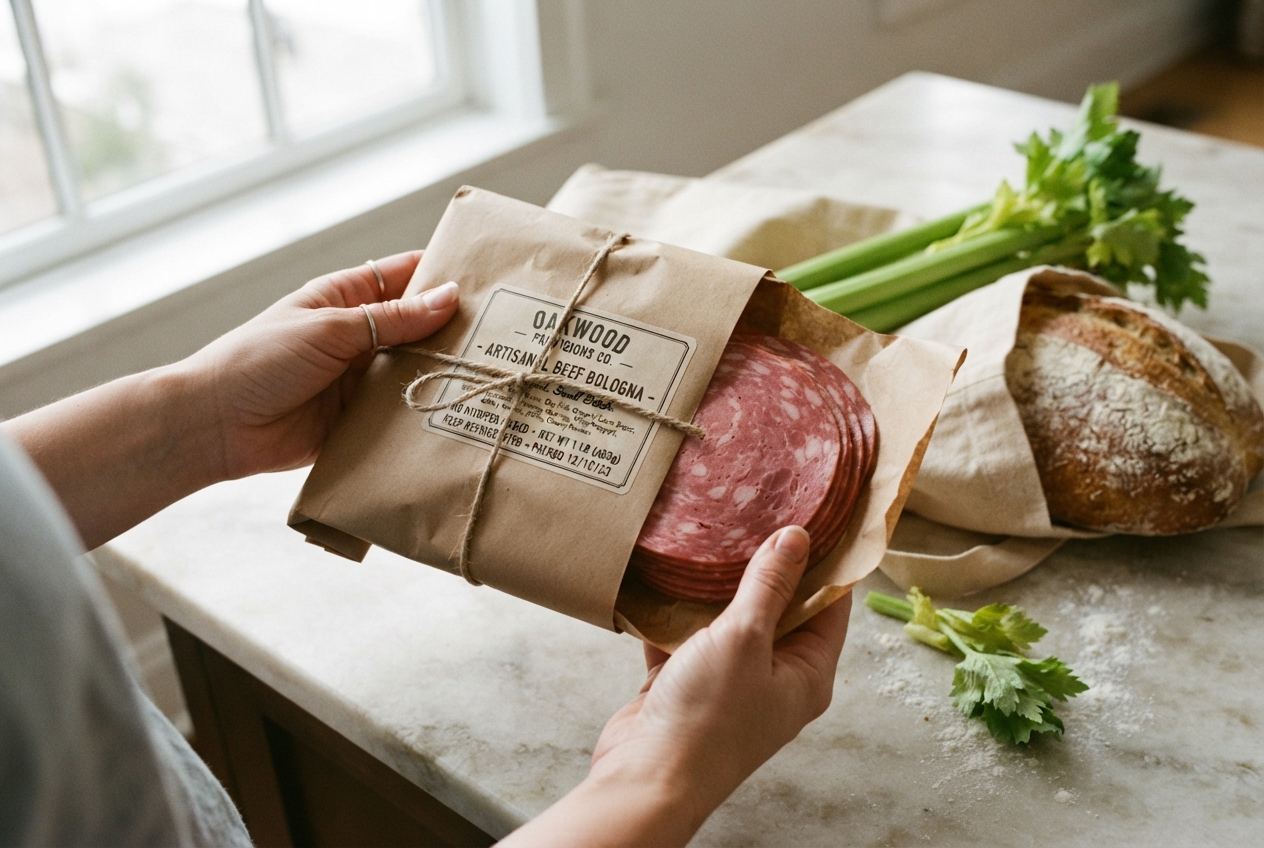
Checking the deli label ensures you get pure cuts of meat without unwanted fillers or byproducts.
Decoding the Deli Counter: How to Read Bologna Labels
Not all rings hanging in the deli case share the same pedigree. The United States Department of Agriculture (USDA) enforces strict standards of identity on cooked sausage packaging. Learning to read these labels lets you dodge low-grade sandwich fillers and bring home clean, savory cuts.
- All-Beef Bologna: By federal law, this must contain 100% beef skeletal muscle meat and beef fat. You will find no binders, no starches, and no poultry additions. If you want a deep, garlicky flavor reminiscent of classic New York pastrami, this is the package to grab.
- Poultry Bologna (Turkey or Chicken): Made exclusively from poultry meat. Quality turkey bologna offers a lighter, leaner profile that takes exceptionally well to mild smoke and nutmeg seasonings. Check the label to confirm it uses whole turkey muscle rather than mechanically separated poultry pastes.
- Bologna with Byproducts or Variety Meats: If a package contains organs like heart, liver, or tripe, federal regulations mandate that the label clearly state “with variety meats” or “with byproducts.” These varieties also frequently rely on cereal fillers, nonfat dry milk, and potato starches to bind extra moisture.
A quick rule of thumb at the counter: scan the ingredient panel for short lists. Premium brands focus on meat, water, sea salt, ground spices, and natural celery powder for curing. If the first four ingredients feature corn syrup solids and soy protein concentrates, put it back on the shelf.
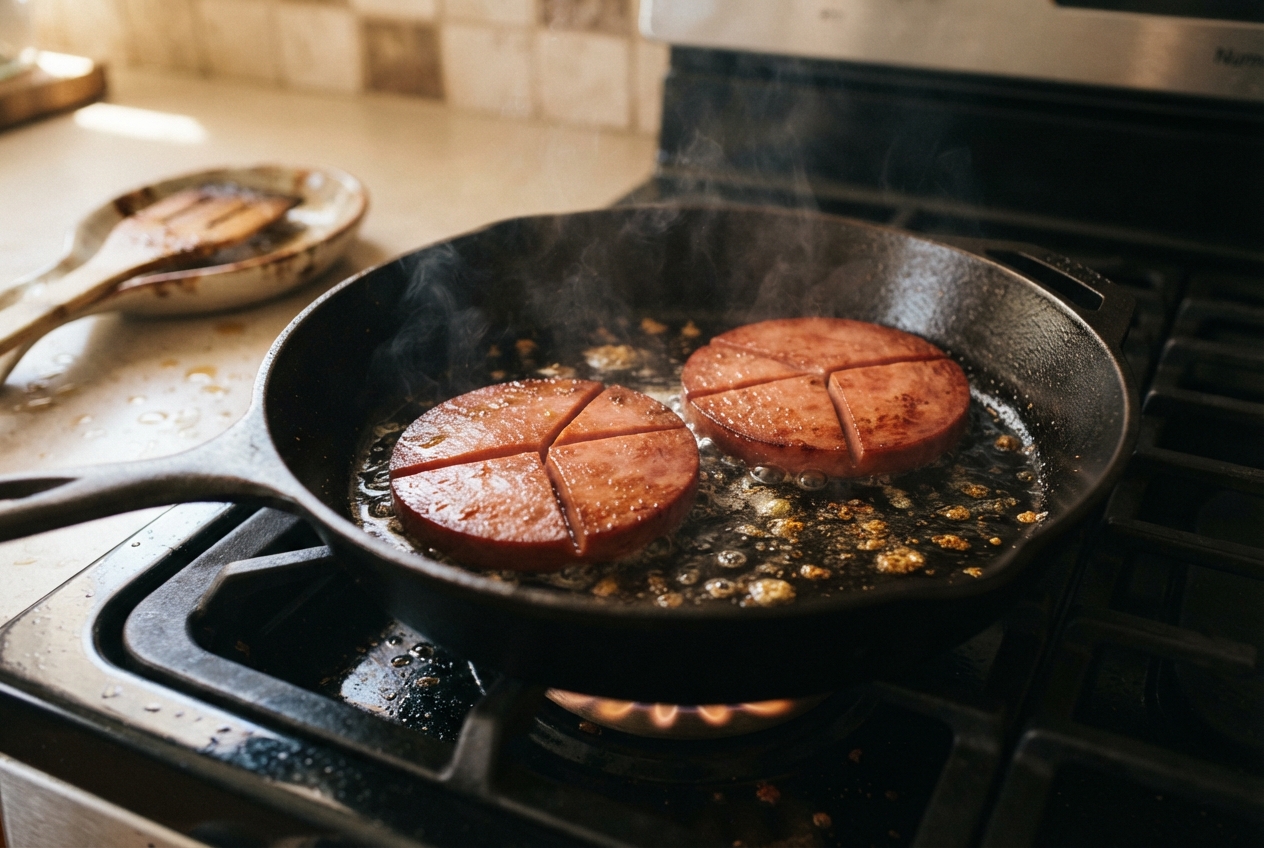
Slitting the edges before hitting a hot cast iron skillet stops the meat from puffing into a dome while browning.
Mortadella vs. American Bologna: The Italian Heritage
You cannot understand American bologna without tracing its roots back to the cobblestone streets of Bologna, Italy. Its noble ancestor is Mortadella di Bologna, a cured specialty dating back to the Middle Ages, originally pounded smooth using giant stone mortars.
While American bologna took inspiration from the silky base of mortadella, the two parted ways over the last century. Traditional Italian mortadella is studded with firm, visible cubes of high-grade neck fat and seasoned with aromatic myrtle berries, whole black peppercorns, and often vibrant green pistachios. It carries a delicate, floral fragrance and is sliced paper-thin so the rich fat melts across your tongue.
When German and Italian immigrants arrived in the American Midwest and Pennsylvania during the late 19th and early 20th centuries, they adapted the process to local tastes and home smoking setups. They swapped out rare myrtle berries for garlic and pungent black pepper, smoked the chubs heavily over hickory or applewood, and emulsified the entire mix into a uniform, sliceable cylinder that could survive a working man’s lunch pail. The result became a brand-new cultural staple: ring bologna.
The Skillet Secret: Frying Thick Slices Without the Dome
Cold slices have their place on a picnic blanket, but frying thick-cut bologna turns simple sandwich meat into something extraordinary. Heat caramelizes the natural sugars and rendered fats, crisping the edges until they resemble crackling bacon.
Anyone who has tossed a cold slice into a smoking pan knows the frustration of the “bubble dome.” As heat hits the meat, the outer perimeter shrinks faster than the center, causing the middle to balloon upward into a bowl shape. The center never touches the pan, leaving you with pale meat in the middle and scorched outer rings.
Fixing this takes ten seconds with a paring knife. Lay a quarter-inch slice flat on your cutting board. Cut four evenly spaced slits from the outer rim inward toward the middle, stopping about half an inch before the center point. You will end up with what old-school southern diners call the “Pac-Man cut” or cross-cut. When the heat hits the slice, the flaps expand independently, keeping the entire surface flush against the hot cast iron for maximum browning.
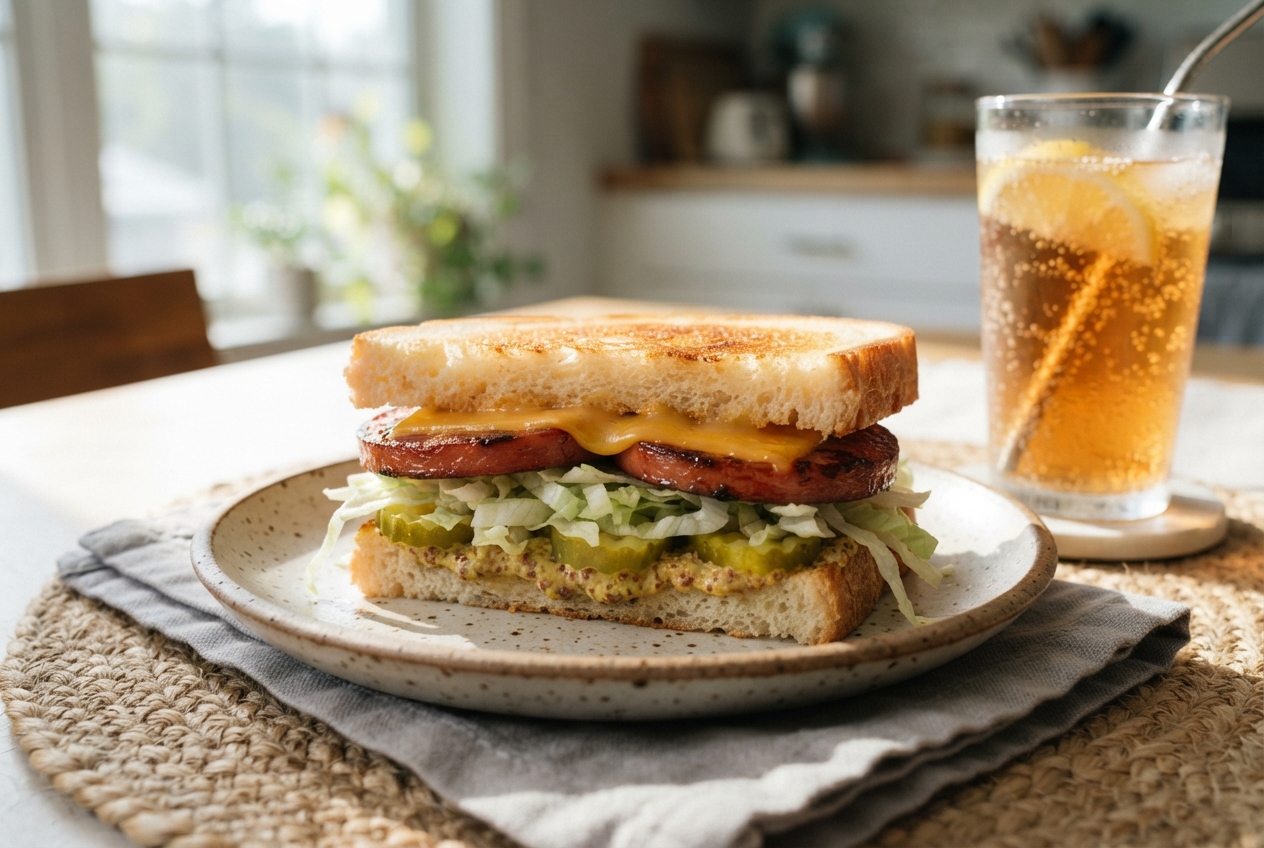
Griddled bread, melted cheddar, and crisp pickles turn simple deli cuts into lunchbox comfort food.
Building a Grown-Up Fried Bologna Sandwich
Transforming this nostalgic classic into an artisan weeknight meal requires balancing rich, salty meat with clean acid, gentle heat, and sturdy bread. Skip the squishy grocery store buns and build something worthy of a relaxed Saturday lunch.
Start with a well-seasoned cast-iron skillet over medium heat. Add a tiny dab of unsalted butter. Lay down two scored slices of thick-cut, all-beef bologna. Let them sear undisturbed for three to four minutes until the undersides develop a deep mahogany crust. Flip the slices, immediately lay a thick slab of sharp white cheddar over the top, and drop a lid over the skillet for sixty seconds to melt the cheese.
Spread stone-ground mustard across two slices of thick, toasted sourdough. The vinegar tang cuts straight through the buttery richness of the beef. Stack the cheesy crisped meat onto the toast, top with thin ribbons of crisp iceberg lettuce and three thick bread-and-butter dill pickle chips, and press the sandwich together. Pour a tall glass of cold sparkling iced tea garnished with a lemon wheel, slice the sandwich on a sharp diagonal, and enjoy every crunchy, savory bite.
The Verdict on Modern Bologna
Now that you know exactly what is bologna made of, you can leave the old childhood myths behind. High-quality bologna is an honest, finely crafted sausage born from European charcuterie heritage. When you skip the hyper-processed mystery packages and pick up all-beef cuts spiced with real coriander and garlic, you bring home a delicious, budget-friendly cut that deserves an honored spot in your kitchen rotation.