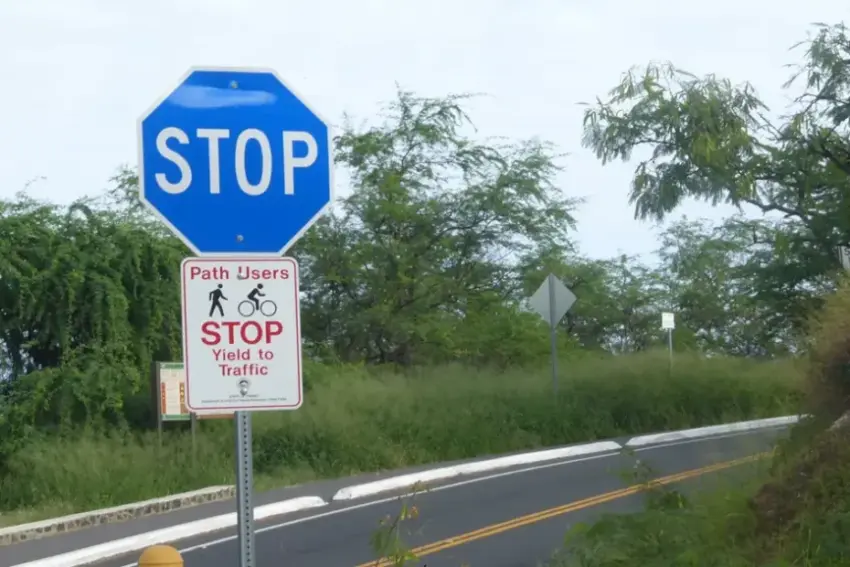
You are cruising down a quiet residential lane, turning through a new outdoor shopping plaza, or pedaling along a shaded park trail when an eight-sided shape catches your eye. Muscle memory kicks in, and your foot drifts instinctively toward the brake pedal. Then your brain registers the surprise: the sign is not crimson red. It is a striking, deep cobalt blue.
Catching sight of a blue stop sign feels like stumbling across an odd quirk in the everyday world. We spend our lives trained to spot bright red octagons at every intersection, so an unexpected color switch naturally makes you wonder what is going on. What does a blue stop sign mean, who puts them up, and are you legally required to hit the brakes?
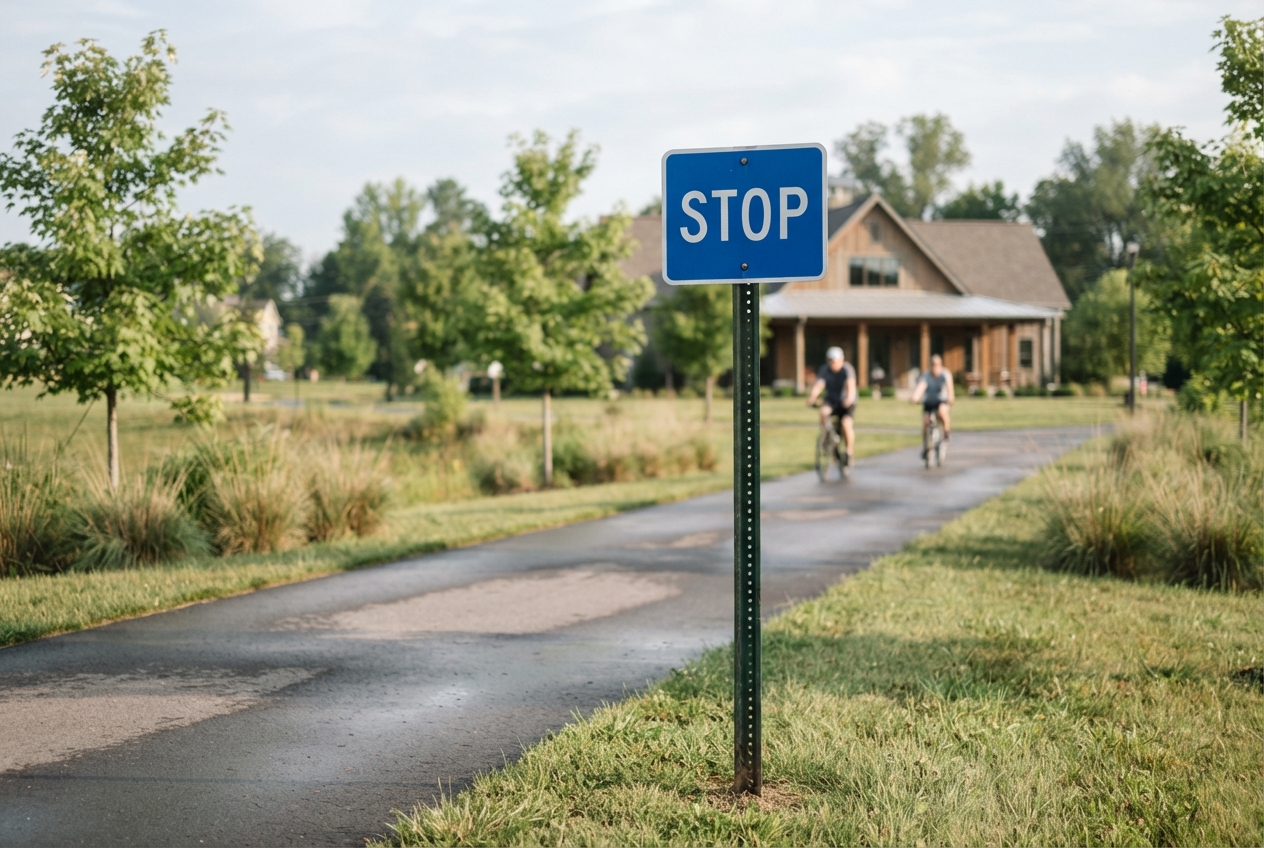
Many community recreation paths and private parks use blue stop signs to keep cyclists and walkers safe near crossing lanes.
What Does a Blue Stop Sign Mean?
A blue stop sign carries the exact same basic instruction as a traditional red one: come to a complete halt, look both ways, and proceed only when the path is clear. The real distinction comes down to jurisdiction, property boundaries, and federal highway standards.
Every official traffic marker installed on public streets in the United States must comply with the Federal Highway Administration’s Manual on Uniform Traffic Control Devices (MUTCD). This detailed handbook governs everything from letter height and reflective coatings to specific color codes across state highways and city streets. Under these rules, an official stop sign on a public roadway must always display white lettering on a red background.
Because blue octagons do not meet MUTCD criteria for public roadways, state road crews and municipal maintenance teams will not install them on public streets. Whenever you see one, you are almost certainly driving or walking on private property, within an independent planned community, or along a regional park path.
Where You Will Usually Spot Blue Stop Signs
Private property managers, business parks, and residential associations enjoy far greater creative freedom when designing and ordering their outdoor hardware. Rather than purchasing standard utility-grade signs from municipal suppliers, they frequently pick custom styles to suit specific environments.
- Gated Neighborhoods and HOAs: Many community boards prefer custom blue or dark green markers that complement brick entrance gates, manicured flower beds, and lantern-style streetlights instead of bright utility red.
- Commercial Town Centers: Retail developments and office parks rely on custom internal signs to direct parking lot lanes, slow down delivery vans, and protect busy crosswalks.
- University and Tech Campuses: Large educational institutions frequently adopt custom signs matching their school colors or campus branding palettes.
- Paved Multi-Use Greenway Trails: Regional recreation departments often place smaller blue signs along bike lanes to remind trail users to yield before crossing maintenance roads.
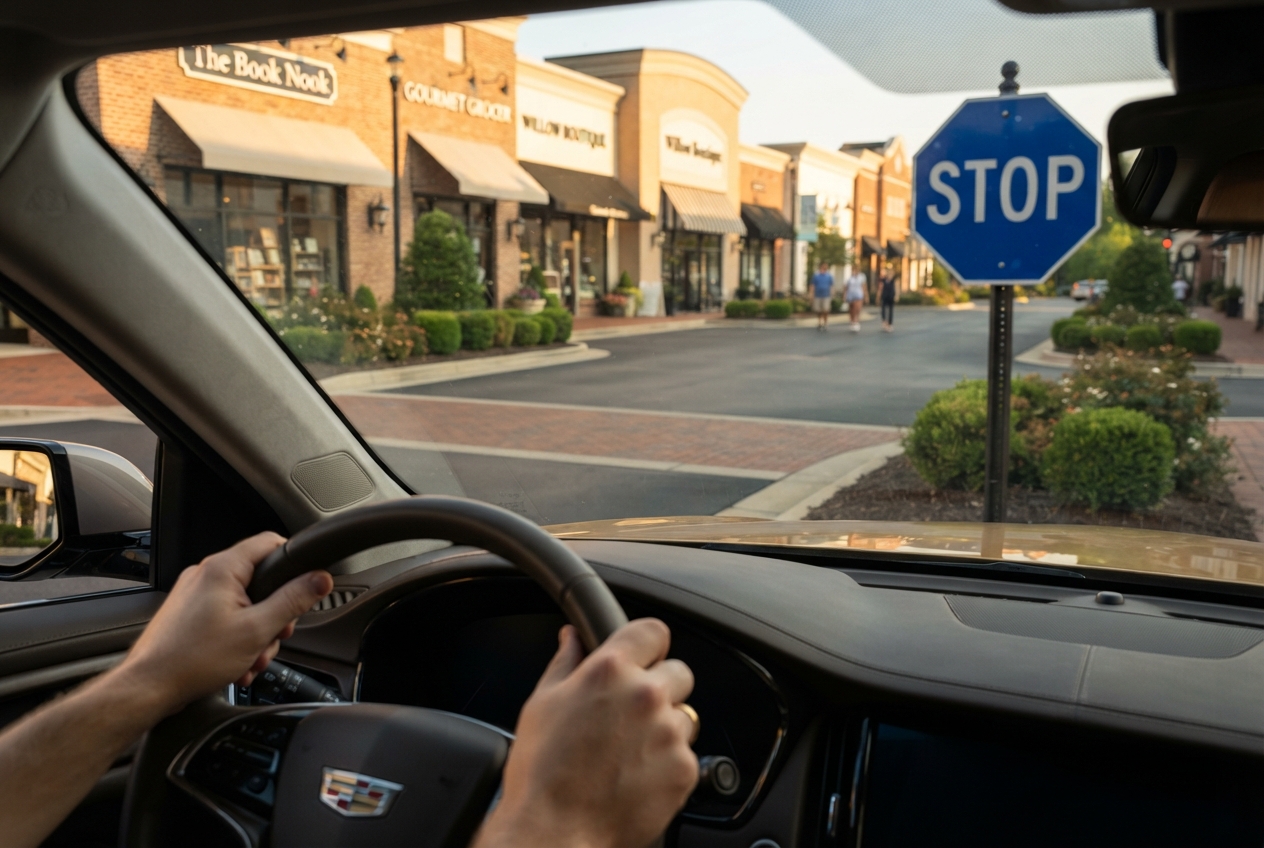
Private shopping centers often install custom-colored signs to blend seamlessly into architectural guidelines while guiding parking lot traffic.
Are Blue Stop Signs Legally Enforceable?
The legal question is where things get interesting for everyday drivers. Can a local police officer hide behind a hedge on a private road, pull you over, and hand you a moving violation for rolling past a blue sign? In most states and towns, the short answer is no.
City police officers and county sheriffs generally lack jurisdiction to enforce standard municipal moving violations on private roadways unless the property owners have executed a formal, written traffic enforcement agreement with local authorities. A community security guard might issue an internal HOA citation with a neighborhood fine, but that ticket will not put penalty points on your state driver’s license.
A Sensible Rule of Thumb: Even if a sign lacks official municipal backing, ignoring it is a bad idea. If you roll past a private blue sign and clip another car or crosswalk pedestrian, insurance adjusters and civil courts will look closely at your actions. Failing to stop when a visible safety marker was present almost always counts as driver negligence.
From a purely practical standpoint, treating every blue stop sign as a full, genuine stop is the smartest move. It sits there because an engineer or property manager spotted a blind driveway, a hidden turn, or a spot where kids frequently cross the street on scooters.
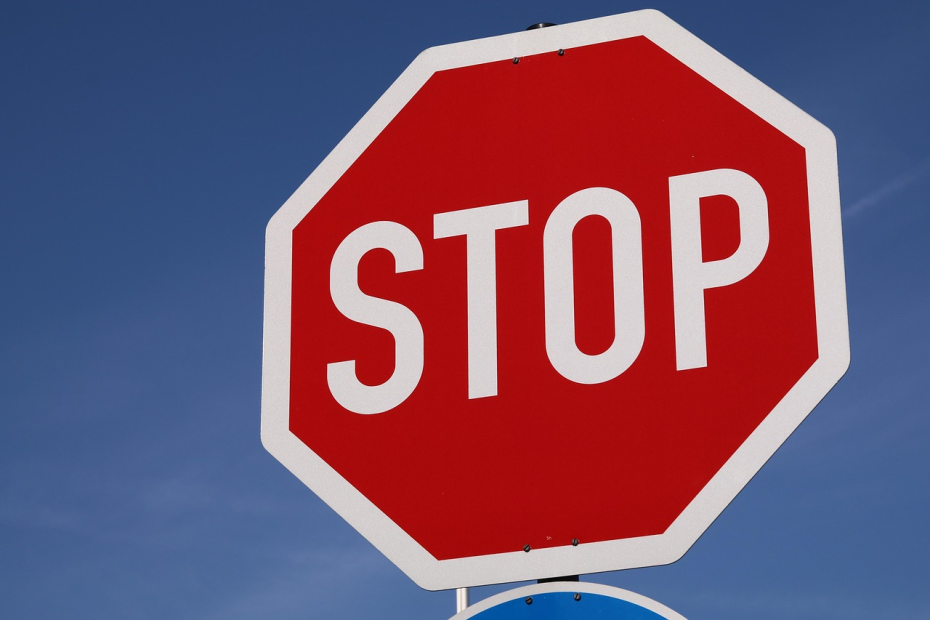
Standard red stop signs owe their look to 1950s reflective paint advancements, replacing earlier yellow and black street signs.
Why Did Transportation Officials Choose Red in the First Place?
Spotting a blue stop sign makes you realize just how consistent our everyday road system usually is. That reliable uniformity took decades of trial and error to establish across American towns.
The earliest known stop signs appeared in Detroit around 1915, measuring roughly two feet square with simple black letters painted over a white background. By the 1920s, early traffic committees switched to bright yellow backgrounds with bold black letters. The reason was entirely practical: paint makers at the time could not produce a weather-resistant red formula that stayed vibrant and reflective under vehicle headlights after months of rain and sun.
By 1954, newly developed synthetic reflective coatings solved the fading problem for good. Highway regulators officially updated national road guidelines to mandate red octagons across the country. Red was already deeply rooted in rail signals and stoplights as the universal cue for hazard and stopping, cementing the red octagon into everyday culture.
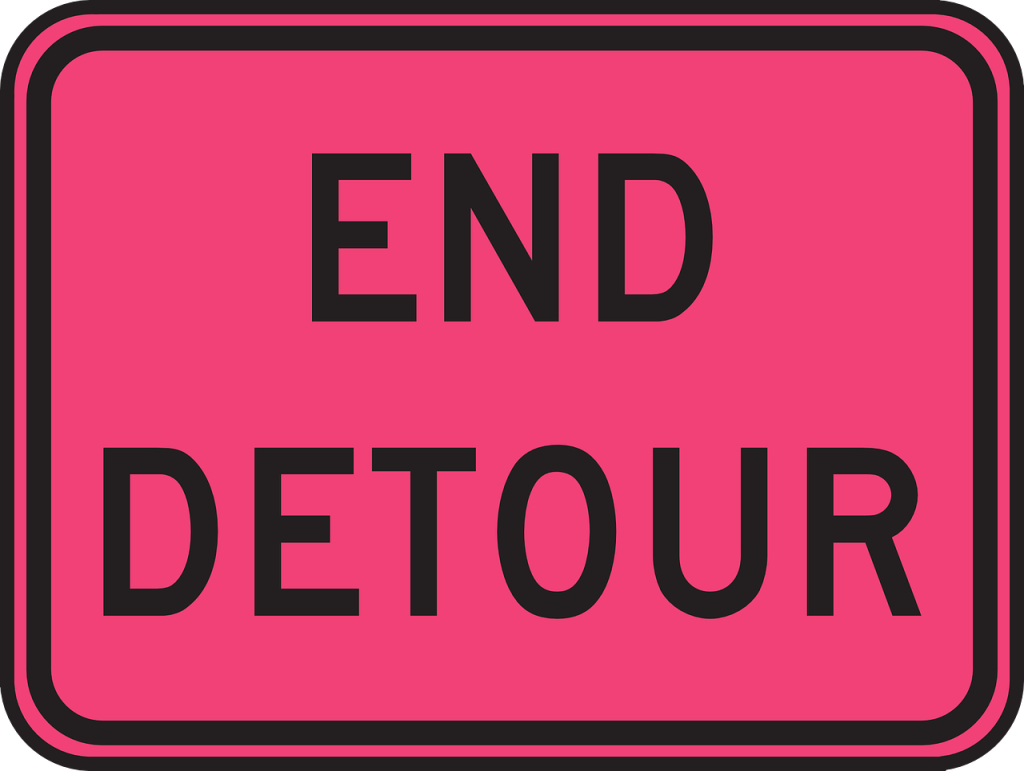
Fluorescent pink traffic markers are official federal signs reserved specifically for temporary accident detours and incident management.
What Other Rare Road Sign Colors Actually Mean
While blue stop signs are quirky custom creations, the official federal color system does assign distinct jobs to other unexpected sign colors across national highways and country backroads. Knowing these colors helps keep road trips calm and organized:
- Blue Rectangles: Official blue highway signs point drivers toward essential travel services, including rest stops, fuel stations, hospitals, food, and state campgrounds.
- Fluorescent Pink: Reserved exclusively for incident management. When a sudden highway blockage, storm washout, or major crash shuts down a road, emergency responders set up bright pink detour markers.
- Fluorescent Yellow-Green: Reserved for pedestrian crosswalks, school zones, and active cycling routes where extra daytime visibility prevents accidents.
- Earthy Brown: Used nationwide to highlight state parks, historic landmarks, national forests, and scenic viewpoints.
- Purple Signs: Designated specifically for electronic toll lanes and automated payment plazas.
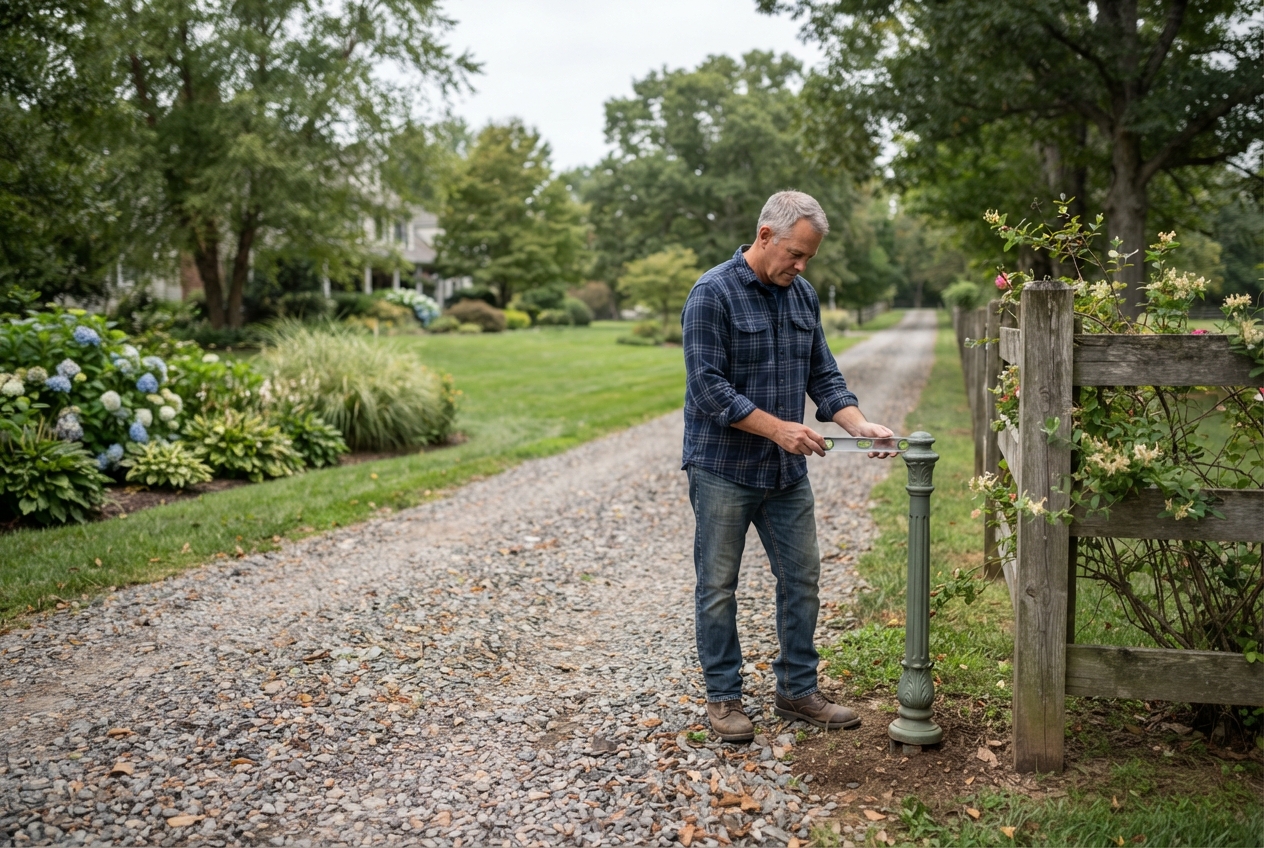
When placing private speed or stop reminders on personal driveways, mounting height and sightlines matter just as much as color.
Thinking of Adding Signs to a Private Driveway or Homestead?
If you own a long rural driveway, run an active home garden stand, or help manage your neighborhood road committee, you might think about putting up your own signs to slow down delivery trucks and visitors. Adding clear direction around your property is a great weekend project, but keeping a few practical details in mind makes all the difference.
Always double-check your local township zoning codes before setting posts in concrete. Certain municipalities require any traffic markers visible from public easements to match standard reflective dimensions to avoid confusing passing drivers. If you have full freedom on your land, make high visibility your main concern. A navy blue or hunter green sign might look handsome near a garden trellis, but high-intensity reflective finishes keep family members and guests far safer when turning home on stormy winter evenings.
The Takeaway on Blue Stop Signs
Spotting a blue stop sign during your morning commute or evening walk is simply a reminder that you have crossed onto privately maintained ground. While it may not carry a state patrol ticket, it carries the same common-sense safety message.
Take two seconds to bring your wheels to a full stop, glance both ways, and enjoy the distinct personality of the neighborhood around you. A quick pause keeps everyone on the road safe and gives you a moment to take in the view.