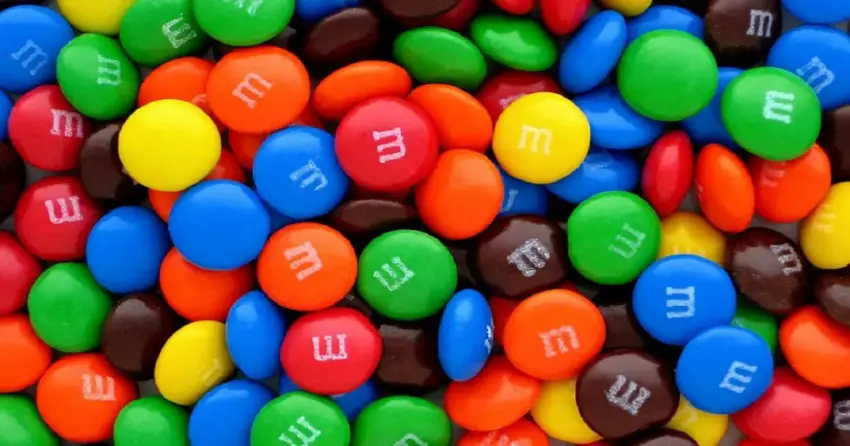
Every time I pour a handful of bright, candy-coated chocolates into a little ceramic dish for movie night, I hear that unmistakable rattle. It is the exact sound of childhood birthday parties, holiday baking marathons, and sneaking treats from grandma’s crystal candy jar. We have all crunched through thousands of them over the years. Yet, very few people know what the M&M initials stand for or the surprisingly intense corporate drama that brought them to life.
Most candy lovers assume the double letters stand for catchy marketing slogans like “Melt & Mouth” or “Mars & More.” The real story involves a wartime partnership, a bitter rivalry between chocolate dynasties, and a clever piece of food engineering designed to survive scorching battlefield heat.
Crisp sugar shells in vibrant hues have kept these button-sized chocolates melt-free since 1941.
The Sweet Truth: What the M&M Initials Actually Stand For
The two “M”s stand for Mars and Murrie. Specifically, they honor Forrest Mars Sr., the ambitious son of the founder of the Mars candy empire, and Bruce Murrie, the son of Hershey Chocolate’s long-standing president, William Murrie.
Back in the late 1930s, Forrest Mars Sr. had a stormy falling out with his father, Frank Mars, the creator of the Milky Way bar. Determined to build his own confectionery name, Forrest traveled across Europe. While in Spain during the Spanish Civil War, he noticed British volunteer soldiers snacking on small chocolate pellets encased in a hardened sugar shell. The shell stopped the chocolate from melting into sticky puddles in their uniform pockets under the blistering summer sun.
Forrest instantly saw the commercial power of a heat-resistant chocolate treat. He secured a patent for the manufacturing process in 1941, but he faced a massive roadblock: America was entering World War II, and raw ingredients were heavily rationed. To get his idea off the ground, he needed an inside connection who controlled chocolate and sugar supplies.
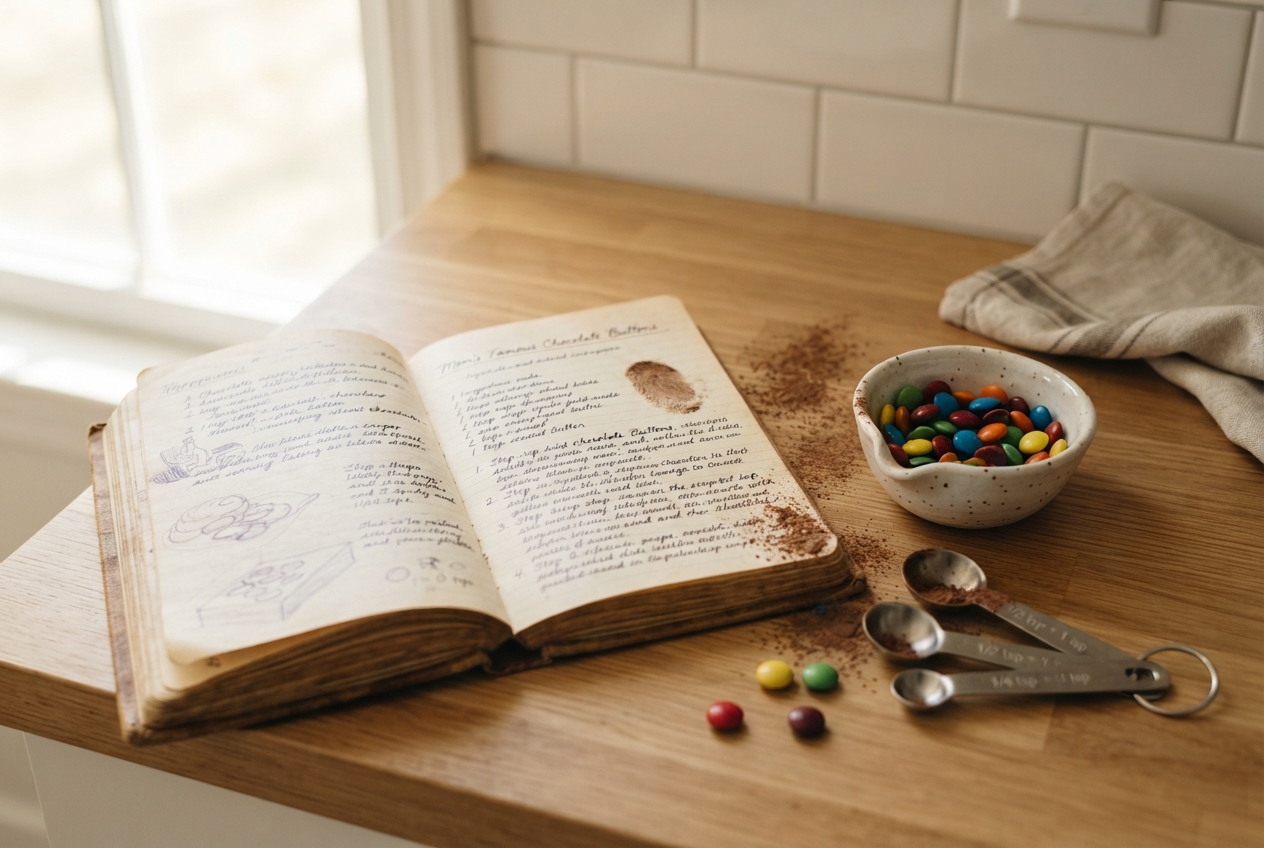
A timeless baking staple, hard-shelled chocolate candies have brightened family cookie recipes for generations.
The Forgotten Hershey Connection and the 80/20 Split
Enter Bruce Murrie. Because his father ran the powerhouse Hershey company, Bruce held the golden ticket: reliable access to industrial chocolate supplies during wartime rationing. Forrest offered Bruce a 20% stake in the new venture in exchange for a steady supply of Hershey cocoa and production support.
They named the new candy after their combined surnames: Mars & Murrie, shortened to M&M. When the candy debuted in 1941, every single batch was made with Hershey-supplied chocolate. Sold in slim cardboard tubes, the entire initial production run was bought exclusively by the United States military as standard field rations for troops serving overseas.
“The soldiers loved that the candy survived tropical heat without turning into soup. By the time the troops returned home from World War II, they were hooked on the crunchy, chocolate-filled buttons.”
Once wartime rationing ended, civilian demand skyrocketed. However, the partnership did not last. Forrest Mars was a notoriously demanding perfectionist with an abrasive management style. Bruce Murrie, frustrated by constant clashes over business decisions, eventually allowed Forrest to buy out his 20% share in 1949 for roughly one million dollars. Forrest took complete control, folded the product into the Mars family brand, and phased out Hershey chocolate entirely in favor of his own proprietary blend.
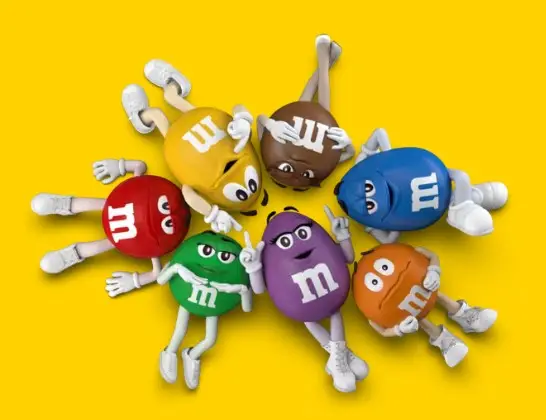
The iconic character lineup took decades to develop, turning simple candy colors into household personalities.
The Great Red Dye Panic and the Rise of the Spokescandies
As the candy grew into a global household staple, its presentation changed. In 1950, the company began stamping each individual piece with a tiny black “m” so copycat brands could not fool shoppers. By 1954, that stamp turned bright white, and the beloved peanut variety made its retail debut alongside the classic yellow packaging.
The color lineup has its own colorful history. The original 1941 mix featured brown, yellow, orange, green, red, and violet shells (violet was replaced by tan in 1949). But in 1976, an unexpected scare shook the candy world. A controversial Russian study suggested that Red Dye No. 2 might have health risks.
Even though Mars never actually used Red Dye No. 2—relying instead on safe Red Dye No. 40—public panic was so intense that the company pulled all red pieces from their production lines to keep consumers at ease. For eleven years, candy bags were red-free, using orange and extra brown to fill the gap, until a massive grassroots letter-writing campaign convinced Mars to bring red back in 1987.
A few years later, in 1995, the brand held a worldwide vote to replace the plain tan candy. Consumers had to choose between blue, pink, and purple. Blue won by a landslide, ushering in the modern color palette we reach for today.
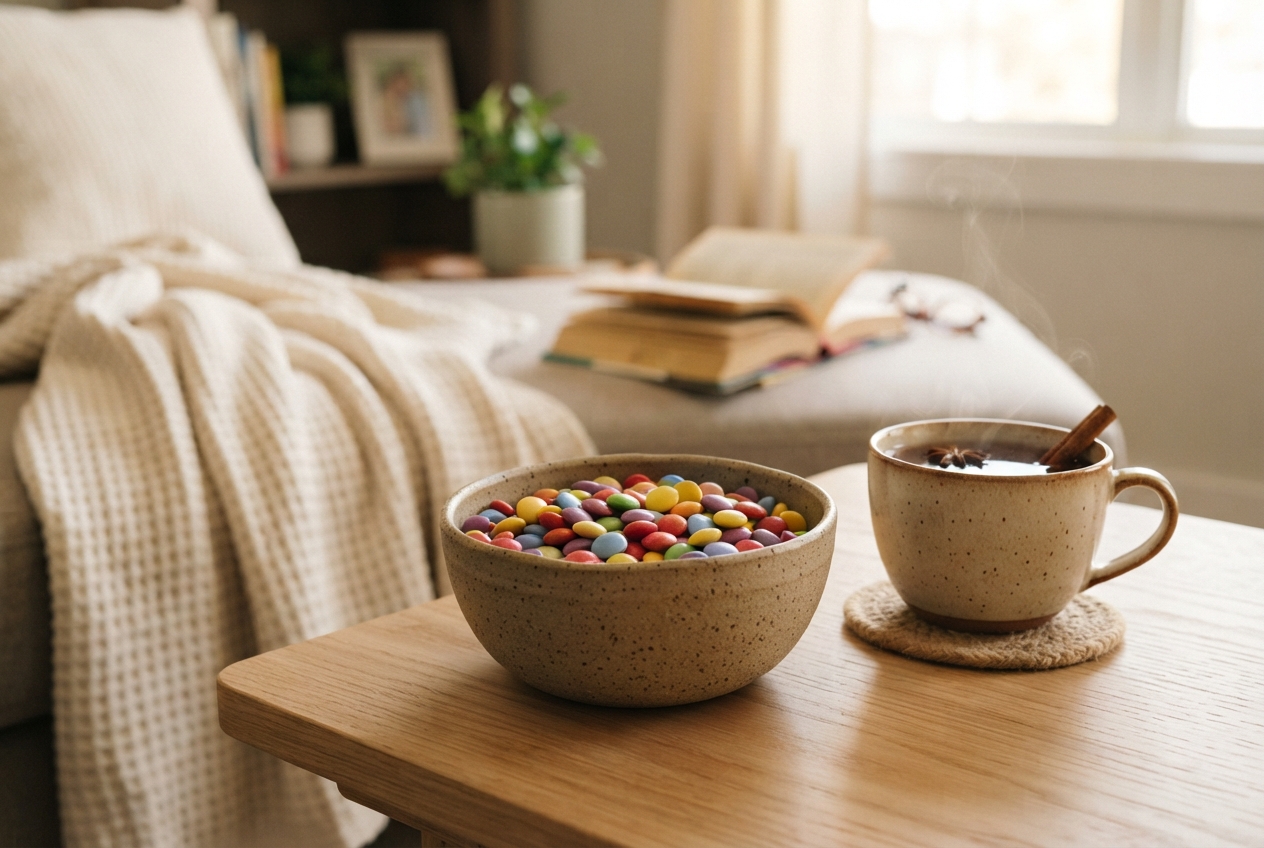
A small bowl of colorful sweets adds an easy, nostalgic touch to an afternoon reading nook.
From Ground Rations to Outer Space
The hard sugar shell proved so durable that NASA took notice. In 1981, when astronauts aboard the Space Shuttle Columbia prepared for orbit, they requested a snack that wouldn’t crumble into weightless dust or melt across sensitive control panels.
The candy became the first commercial chocolate to travel into space. Astronauts discovered that floating loose candies in zero gravity and catching them in their mouths was not just an easy snack, but also one of the best morale boosters in orbit. To this day, Mars prepares custom candy batches for shuttle and space station crews.
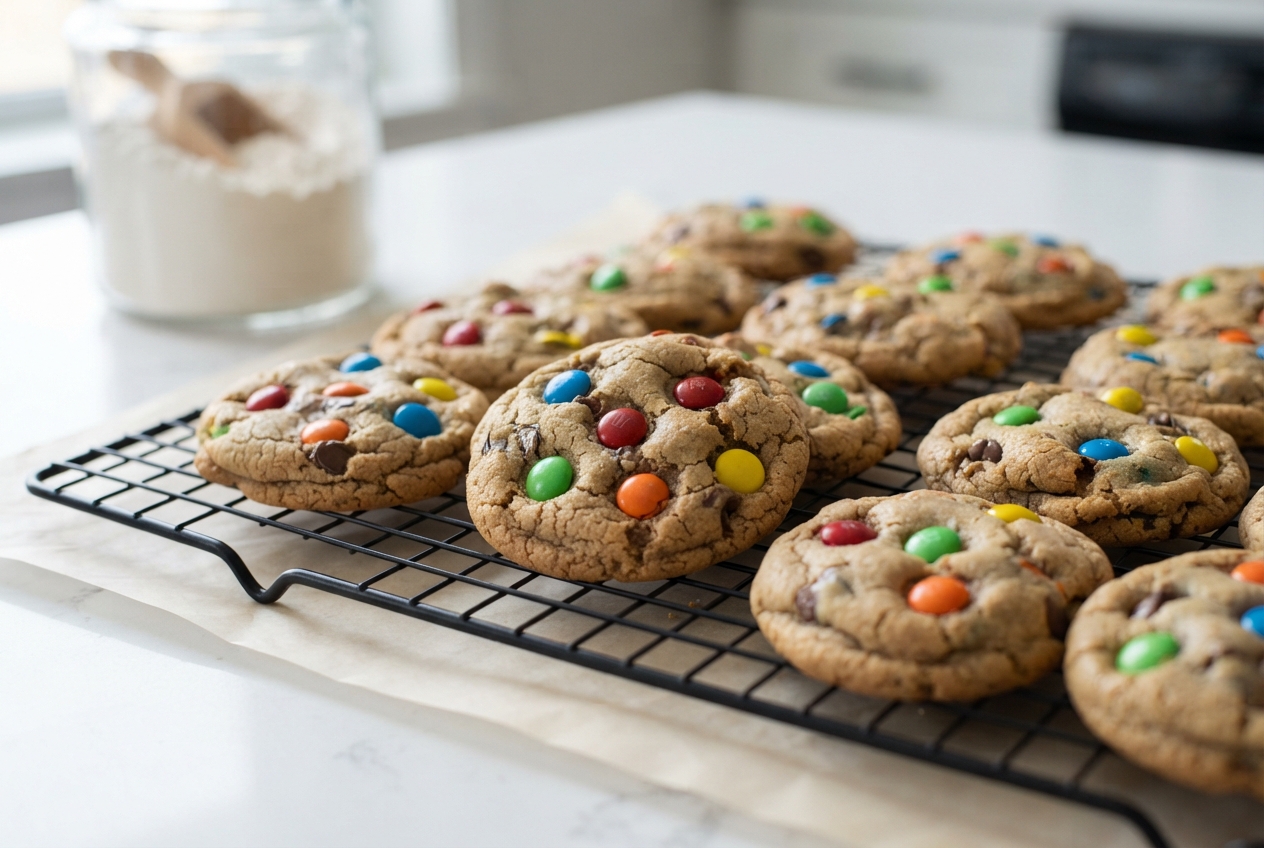
The signature hard shell prevents the chocolate from scorching, keeping colors bright even after twenty minutes in the oven.
Why the Candy Shell Makes Holiday Baking Easier
There is real food science behind why hard-shelled candies remain a top choice for home bakers. When you mix regular chocolate chips into thick drop-cookie dough, the fat in the cocoa butter melts quickly at standard oven temperatures, spreading through the batter and softening the crumb.
Candy buttons, however, act differently in the oven:
- Heat Shielding: The crystallized sucrose shell shields the chocolate core from direct heat, keeping the centers soft without scorching.
- Color Retention: The candy coatings stay vibrant during a 10-to-12-minute bake at 350°F, creating picture-worthy contrast against golden, buttery dough.
- Texture Balance: The outer shell gives a gentle snap that breaks into warm chocolate, balancing the chewiness of soft-baked oat or brown sugar cookies.
If you love making holiday snack boards, these candies are an easy way to add festive color. Mix a handful with salted roasted almonds, crunchy mini pretzel twists, and tart dried cranberries for a quick sweet-and-salty bowl that guests can snack on throughout the afternoon.
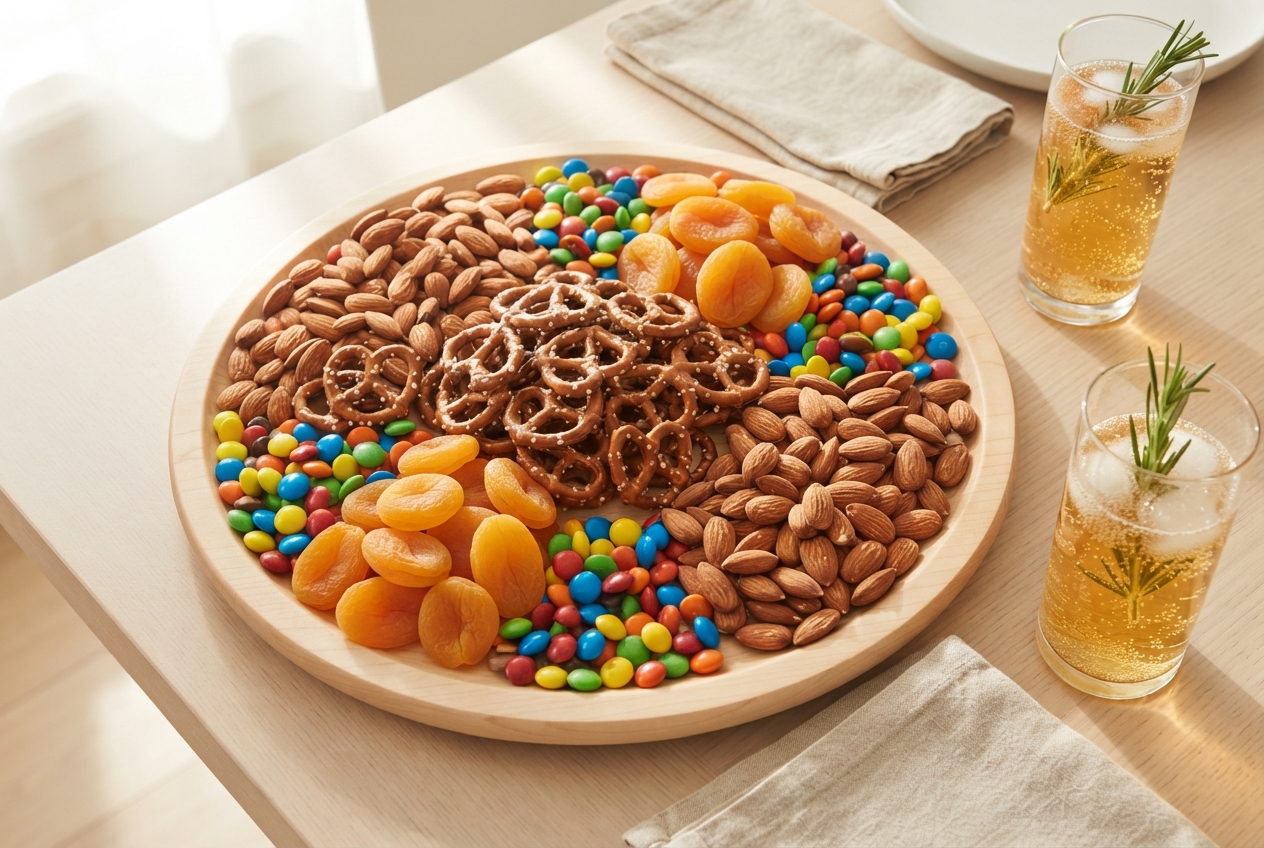
Pairing sweet candy buttons with salty pretzels and roasted nuts makes a balanced spread for casual movie nights.
Sweet Nostalgia in Every Handful
It is amazing how a simple pantry treat holds over eighty years of history, from wartime ingenuity and high-stakes business buyouts to space shuttle missions. The next time you open a bag while whipping up cookies or filling snack bowls for friends, you will know the real story behind the initials on the package.
Those two little letters represent a temporary alliance between two legendary candy names, Forrest Mars and Bruce Murrie, who forever changed the way the world enjoys a handful of chocolate.