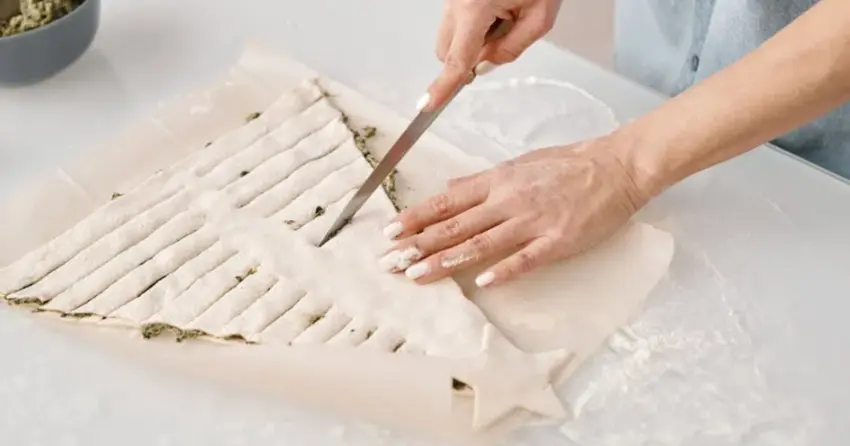
You lay out your parchment paper, pull that store-bought sheet from the fridge, and get ready to roll out something buttery and golden. Then you spot them: tiny, scattered dark flecks peppered across the raw dough. Your heart sinks for a second. Did you just buy spoiled dough? Is it mold? Or did something go wrong in your freezer?
Seeing mysterious black dots on puff pastry can halt your weekend baking right in its tracks. Take a breath before tossing that pastry sheet into the trash. In the vast majority of home kitchens, those tiny flecks are completely harmless side effects of raw grains, cold butter, or natural air exposure. Let us walk through exactly what you are seeing, how to run a ten-second safety check, and when it is genuinely time to throw the dough out.
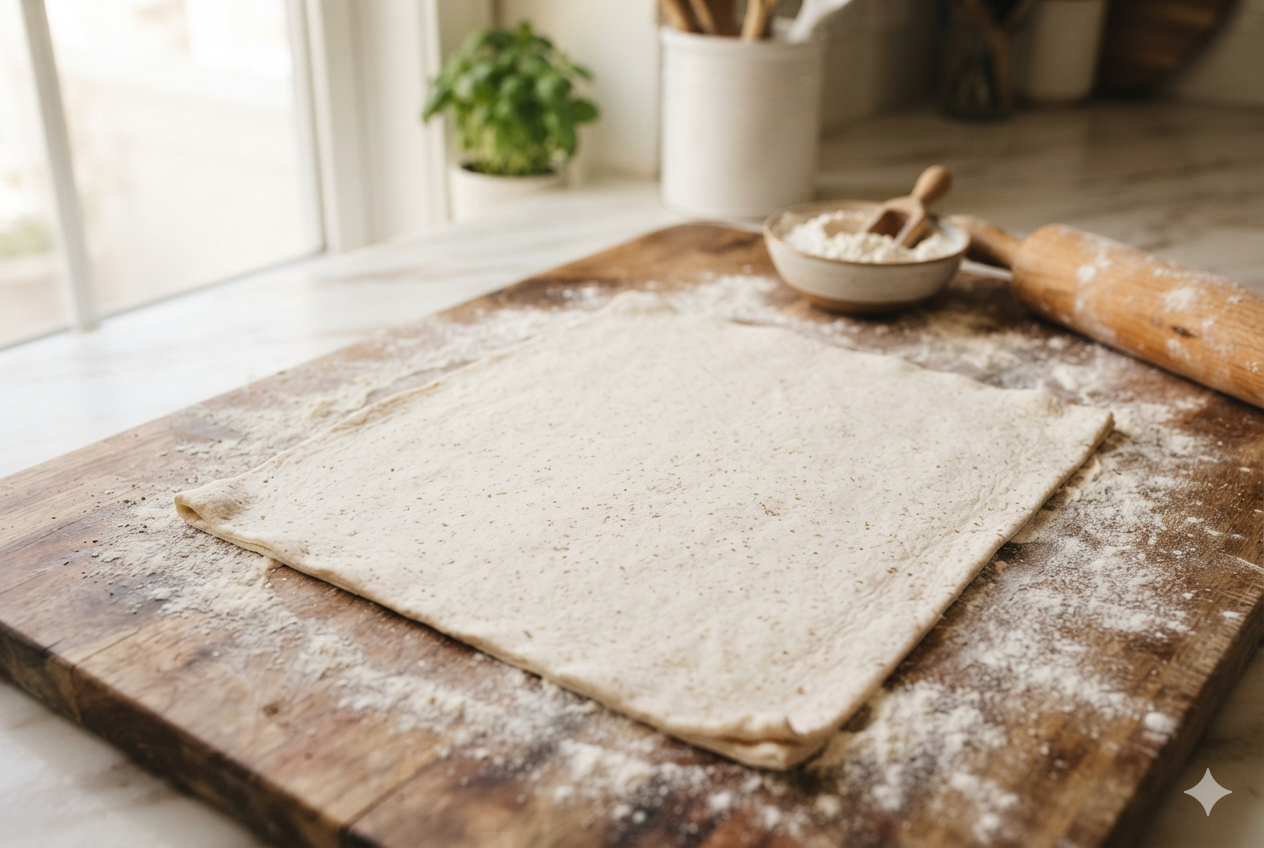
An unrolled sheet of cold dough reveals flat, harmless bran specks nestled directly inside the flour layers.
The 4 Common Culprits Behind Black Dots on Puff Pastry
Puff pastry is deceptively simple: just flour, water, salt, and generous blocks of cold butter folded over and over into hundreds of micro-layers. Because the ingredient list is so short, any variation in your raw pantry staples shows up on the surface. Here is what is usually going on behind those tiny dark spots.
1. Wheat Bran Flecks in Unbleached Flour
Commercial white flour is processed to strip away the grain’s outer husk, but artisan, organic, and European-style flours leave tiny traces of the wheat germ and bran behind. When you unroll a higher-end puff pastry dough, those specks are frequently microscopic fragments of natural grain. They sit entirely flush with the surface, feel dry to the touch, and often deepen to a toasted brown or charcoal tone during baking. Far from being a flaw, these flecks often indicate quality flour that was not aggressively bleached with chlorine gas.
2. Caramelized Butter Solids and Lamination Quirks
Real butter contains roughly 80 to 82 percent milk fat, with the remaining balance made of water and milk solids. As pastry chefs laminate dough, those tiny milk proteins get compressed tightly between sheets of flour. If the pastry undergoes minor temperature fluctuations during transit from the creamery to the grocery store, milk solids can clump slightly. Once exposed to dry air, these proteins darken into tiny, freckle-like spots that carry a completely normal, sweet dairy scent.
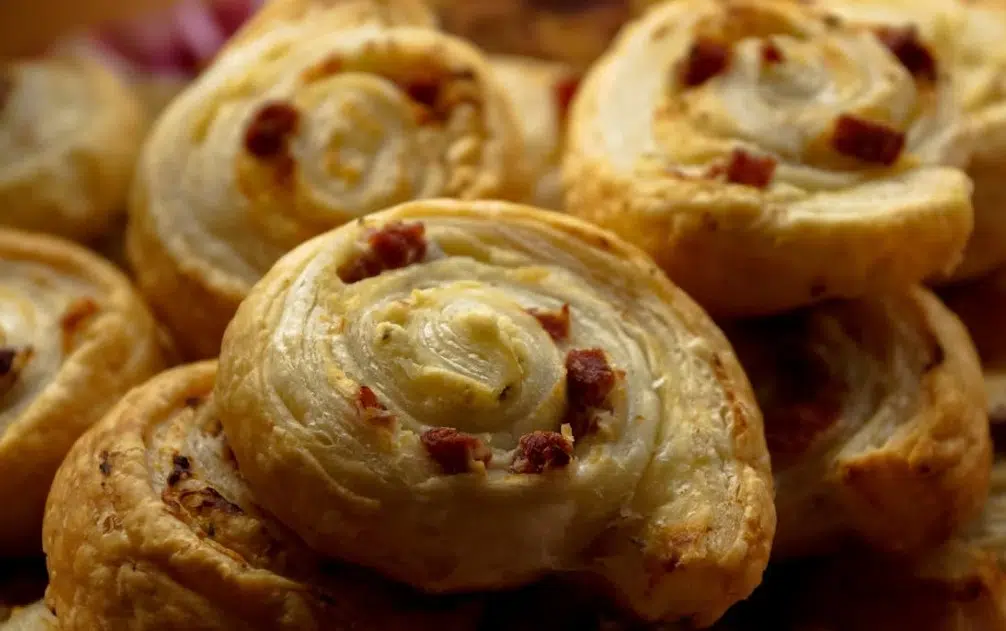
Golden, flaky pinwheels show how heat transforms natural butter proteins and savory bits into harmless toasted specks along the swirls.
3. Dough Oxidation (The Freezer Sitter Effect)
Have you ever left a cut apple on the kitchen counter and watched it blush rusty brown? Dough experiences a similar process called oxidation. Flours contain enzymes known as polyphenol oxidases. When frozen dough thaws slowly or sits uncovered in the refrigerator, these enzymes react with ambient oxygen, causing the outer surface to develop tiny grey-black speckles or a mottled look. While heavy oxidation can lead to a slightly stale crust, minor oxidation spots are food-safe and bake out without leaving any sour taste behind.
4. Residual Baking Debris and Sheet Pans
Sometimes the mark did not originate in the dough factory at all. If you reuse baking sheets, wire cooling racks, or rolling pins without a thorough scrub, leftover charred flour from your last batch of flatbreads or sourdough loaves can easily transfer onto the moist surface of your raw dough. These little carbon tattoos look intimidating, but they wipe away with a damp kitchen towel or simply toast harmlessly into the bottom crust.
Fresh, layered pastries stacked together highlight the contrast between a clean, even bake and old tray crumbs clinging to the underside.
The Quick 3-Step Safety Check: Harmless Specks vs. Dangerous Mold
You should never have to guess when it comes to food safety. When you notice strange markings on raw dough, run this simple physical test right on your cutting board before deciding whether to bake or discard.
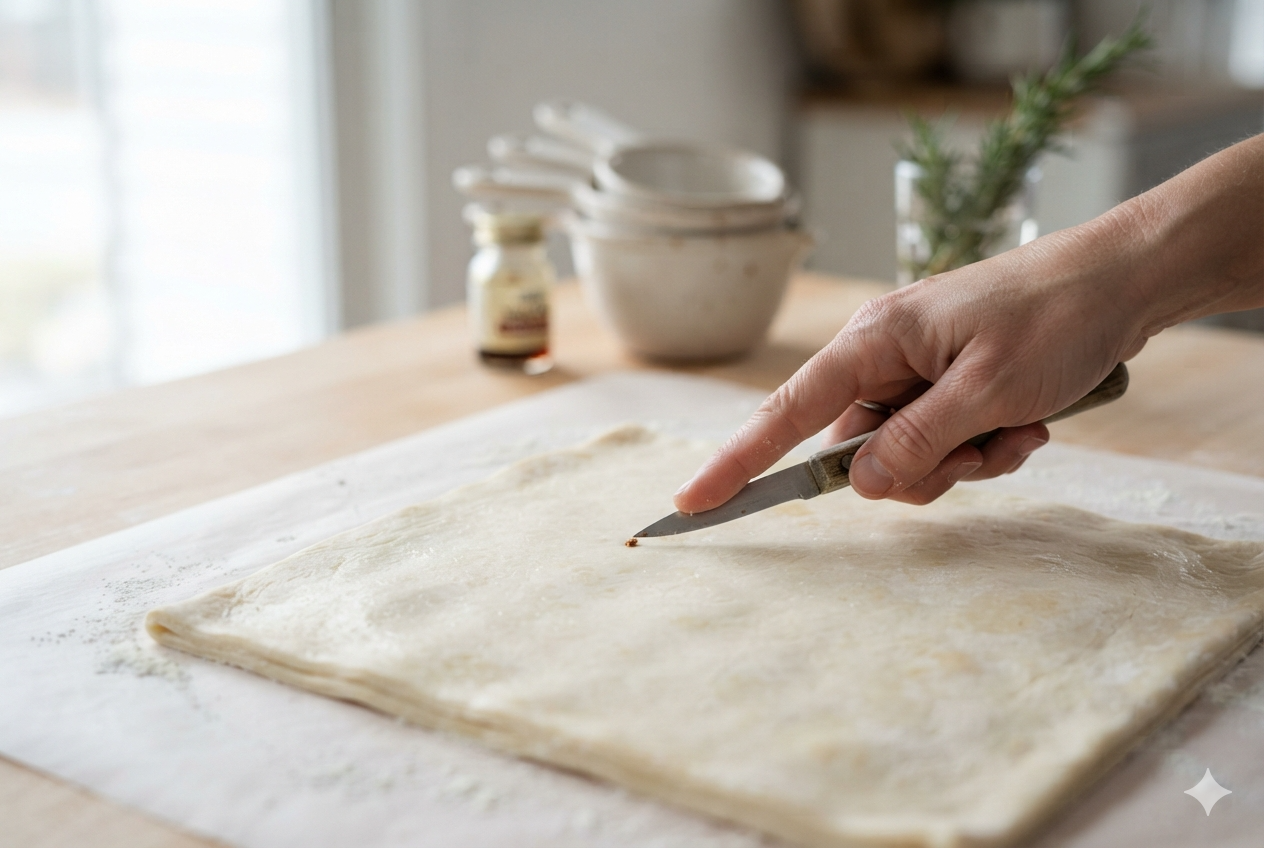
Using a paring knife to check if a spot is flat and dry or elevated and powdery makes all the difference.
Step 1: The Paring Knife Scrape (Texture Check)
Gently run the flat side of a small paring knife across the spot. Harmless grain flecks and butter solids are completely flush with the dough. They feel smooth, dry, and cohesive with the surrounding gluten layers. Mold, on the other hand, is a living fungus that grows outward and upward. If the speck feels fuzzy, powdery, velvety, or slimy under your fingertip, it is active mold.
Step 2: The Color Spectrum Test
True flour specks and oxidized spots range from tan to deep walnut brown or matte charcoal grey. Mold colonies rarely stick to a single neutral shade. If you observe vibrant specks of forest green, dusty turquoise, pale blue, or downy white fuzz sitting atop the dough, the pastry has spoiled.
Step 3: The Sniff and Bend Test
Fresh puff pastry smells clean, cold, faintly sweet, and rich with butter. Hold the sheet close to your nose. If you detect even a faint hint of sour milk, damp basement, alcohol, or pungent vinegar, discard it immediately. Additionally, if the dough feels strangely slick, wet, or gummy when thawed, moisture has pooled in the package, creating a breeding ground for bacteria.
Baker’s Rule of Thumb: If the spots are flat, dry, uniformly distributed, and the dough smells like fresh sweet cream, bake on with confidence. If the spots are fuzzy, colorful, clustered in patches, or sour-smelling, let it go.
Quick Reference: Is Your Pastry Safe?
| Feature | Harmless Specks (Bran / Butter) | Spoiled Dough (Mold / Rot) |
|---|---|---|
| Texture | Flat, smooth, integrated into the dough | Fuzzy, raised, velvety, or sticky |
| Color Range | Tan, light brown, dark brown, dull charcoal | Bright green, blue, yellow, dusty white |
| Aroma | Mild, buttery, neutral, or fresh flour scent | Musty, sour, earthy, fermented, or stale |
| Pattern | Evenly peppered across the entire surface | Irregular patches, concentric rings, edges |
| Action | Safe to bake and serve | Wrap securely and throw in the bin |
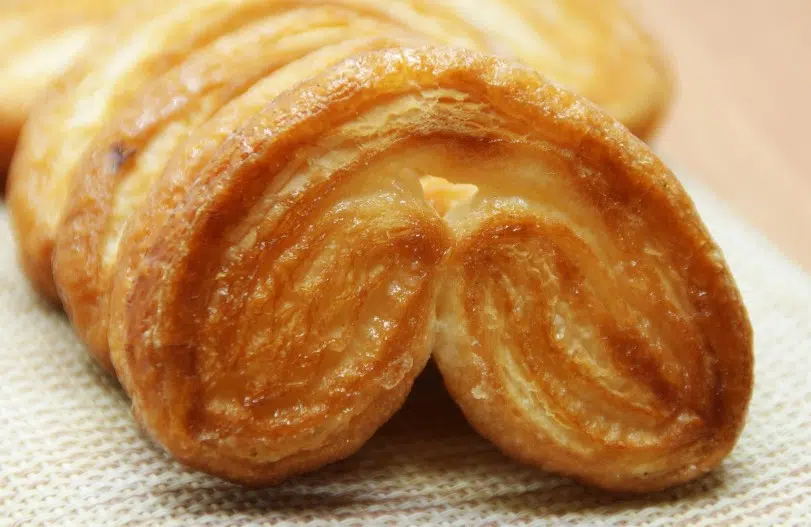
Classic crisp palmiers prove that tiny surface spots disappear into rich, caramelized layers once fully baked.
How to Prevent Dark Spots and Keep Pastry Fresh
Preventing dry spots, grey edges, and unwanted humidity is simple once you know how commercial dough reacts to temperature swings. A few simple adjustments will protect your sheets from freezer burn and surface damage.
- Thaw Slowly in the Refrigerator: Resist the urge to let frozen dough sit on a warm counter for hours. Rapid warming causes exterior condensation while the core remains frozen rock solid. That surface moisture encourages enzyme discoloration and dough sogginess. Thaw pastry in the fridge overnight for the most even texture.
- Wrap Leftovers with Double Protection: Once you break the factory seal, factory plastic bags fail to keep air out. Wrap unused sheets tightly in parchment paper, wrap again with clear food wrap, and slip them into a heavy-duty zip-top freezer bag with the excess air pressed out.
- Avoid the Thaw-and-Refreeze Cycle: When puff pastry thaws and refreezes, water crystals expand, puncturing the delicate butter laminations. This leaks moisture, accelerates enzyme spotting, and ruins that dramatic pastry rise in the oven. Cut off only what you need while the sheet is cold and firm.
Smart Ways to Use Pastry Sheets with Safe Minor Flecks
If your pastry passed the freshness test but still looks a bit freckled for your liking, you do not have to settle for plain visual results. You can easily disguise surface variations while creating delicious treats for your family.
- Savory Appetizer Twists: Brush the dough with an egg wash, sprinkle generously with grated aged cheddar, cracked black pepper, and minced fresh rosemary, then twist into flaky cheese straws.
- Caramelized Sugar Palmiers: Coat the pastry thoroughly with coarse sparkling raw sugar and ground cinnamon before rolling and slicing. As the sugar melts into deep golden caramel in the oven, any tiny grain specks blend right into the glaze.
- Rustic Pot Pie Toppers: Lay the sheet over a bubbly casserole dish filled with roasted chicken, sweet leeks, and tender garden vegetables. A golden egg wash and a light dusting of coarse sea salt turns minor dough flaws into an appetizing, rustic crust.
Baking should bring genuine warmth and simple satisfaction to your day, not unnecessary stress. The next time you spot tiny black dots on puff pastry, give the dough a gentle scrape, take a quick sniff, and verify the texture. Once you know you are working with clean, honest grain and real butter, slide that baking sheet into a hot oven and look forward to every crisp, flaky, golden layer.