You know that feeling of mild irritation when you reach for a brand-new roll of toilet paper, only to realize the tail end is stuck down tighter than a drum?
Well, one person on Reddit recently experienced a moment of genuine, head-scratching alarm that makes a stuck TP tail look like a walk in the park.
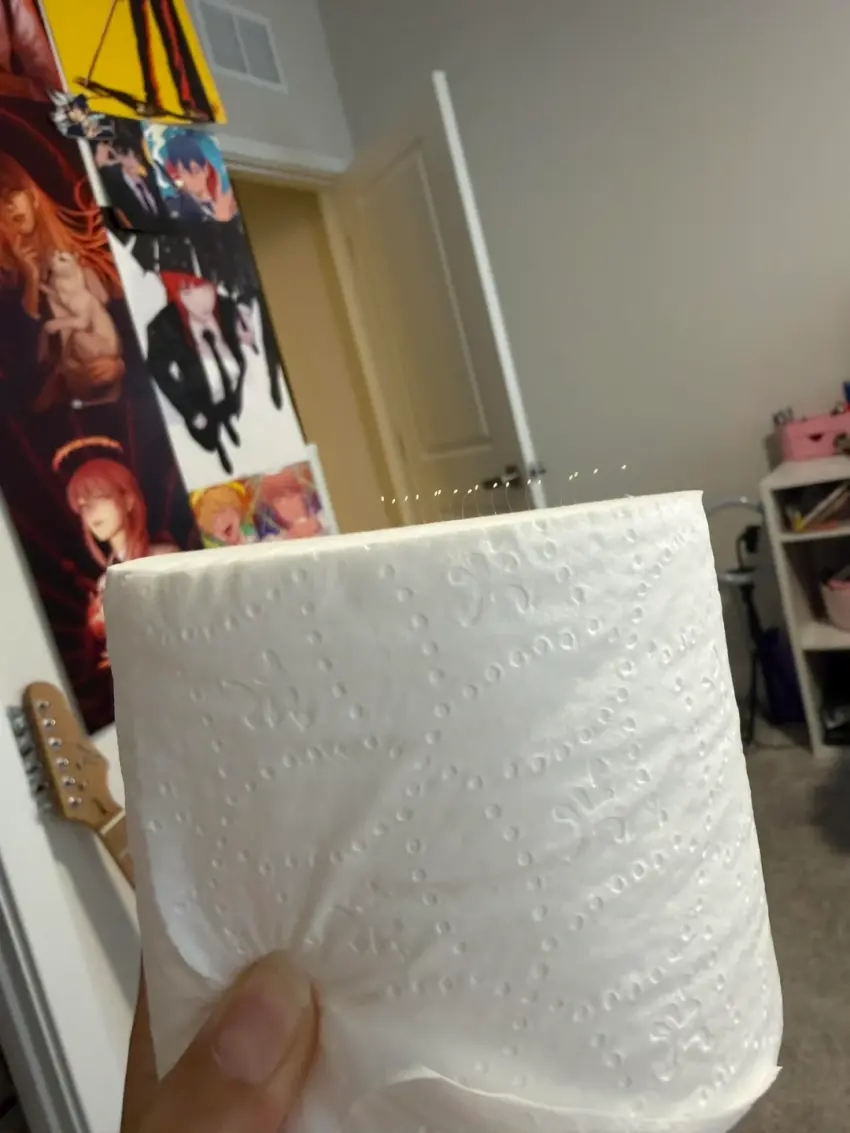
This user shared a picture of a fresh roll, seemingly innocent enough. But upon using it, they noticed something truly bizarre: a cluster of delicate, hair-like white stalks growing right out of the side of the paper.
Initial Panic: “I Thought I Was Going Crazy”
The original poster (OP) was understandably freaked out. “I thought I was going crazy,” they wrote, describing how they had *just* used the roll for the first time before noticing the strange growths.
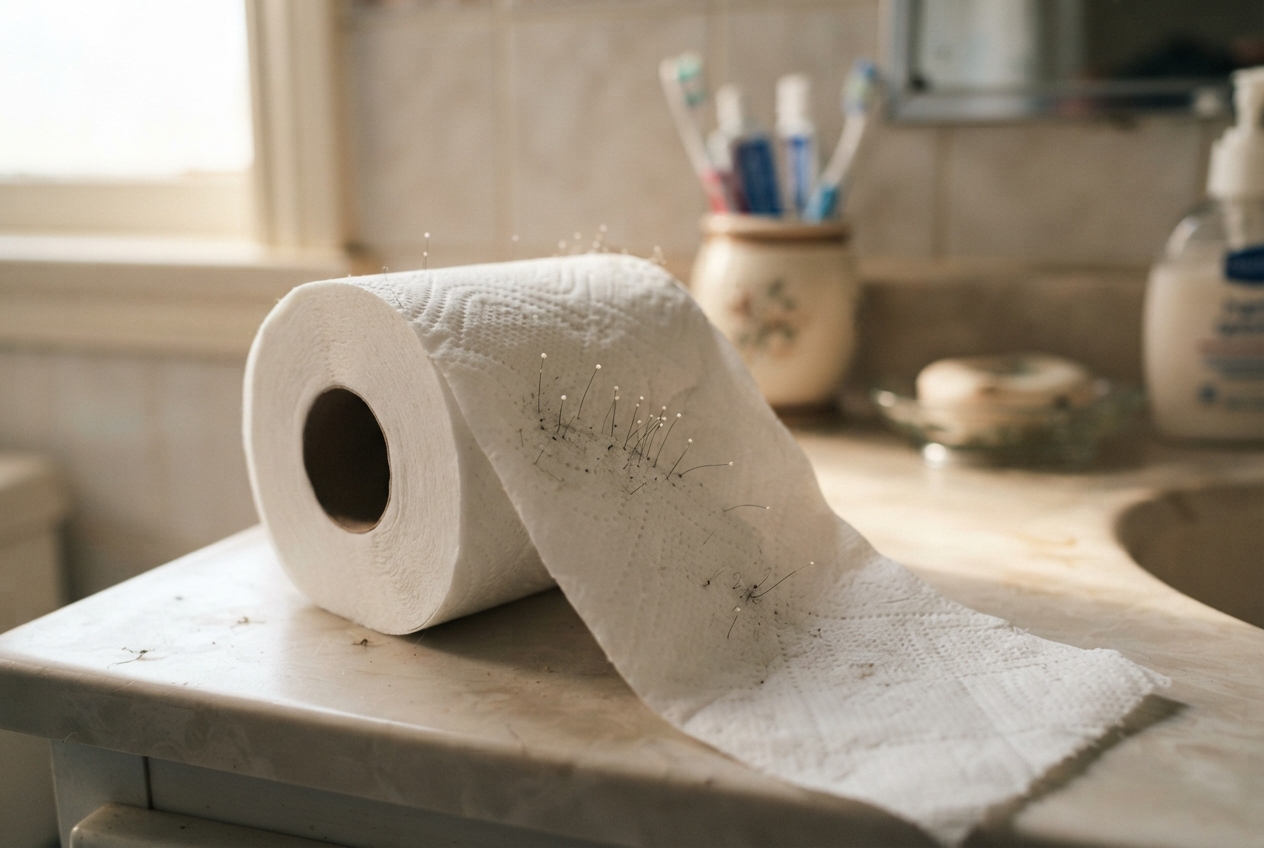
The image shared by the user shows a series of incredibly fine, almost translucent threads pushing through the quilted texture of the toilet paper. At the end of each thread, a tiny, distinct white dot was visible.
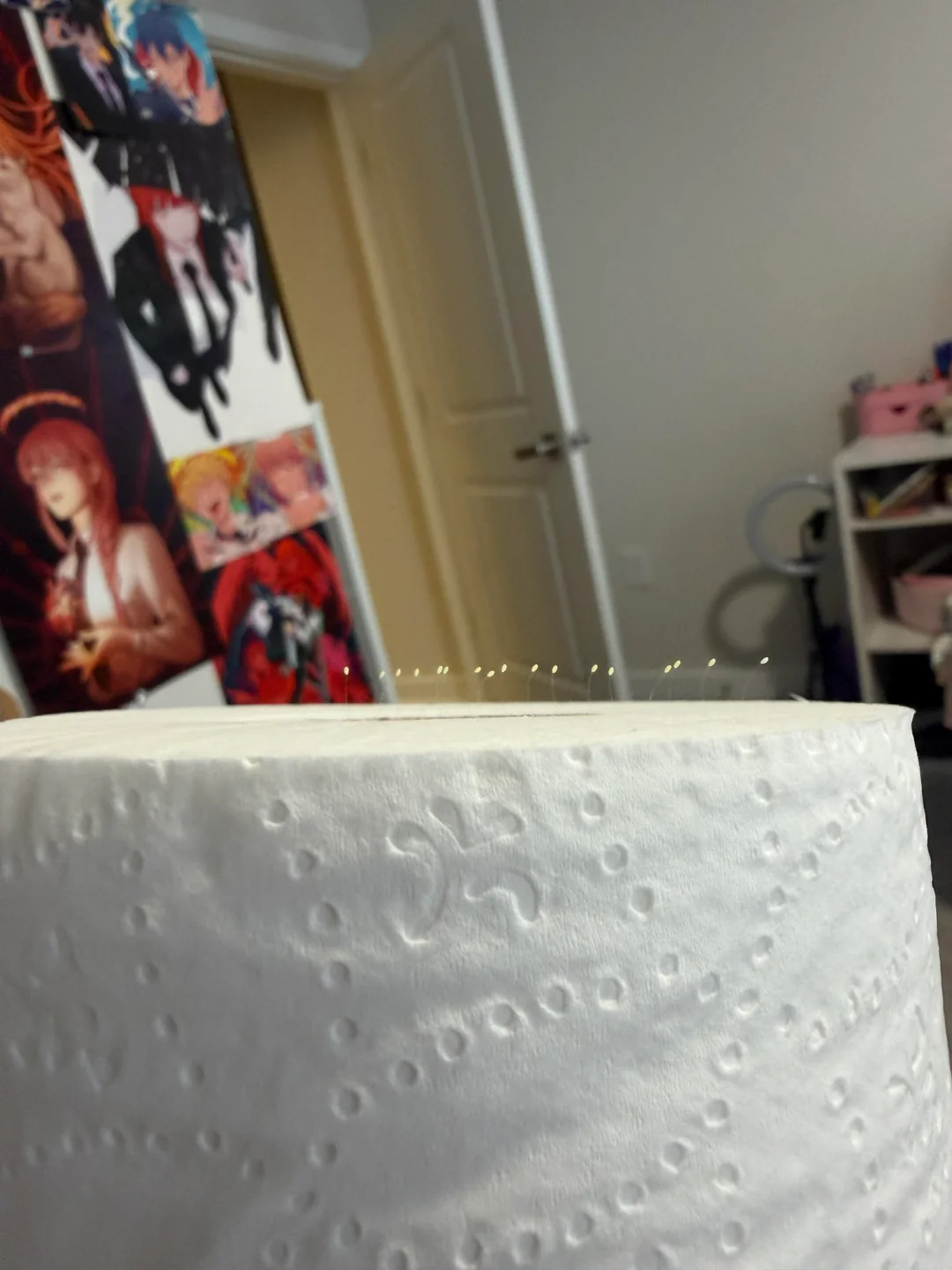
What on earth are these tiny white stalks growing out of a brand-new roll?
It didn’t look like typical mold. It didn’t look like any normal bathroom pest. The sheer strangeness of it—finding delicate, structured growths on a product associated so closely with cleanliness—sent a shiver down many readers’ spines.
“I’m going to throw it away,” the OP declared, “but what *is* this?” The internet, as always, had opinions.
What is this coming out of my toilet paper
by
u/Yukine58231 in
whatisit
From Disgust to Hilarious Denial: The Internet Reacts
The comments section, predictably, erupted. While many expressed sheer disgust, the most popular responses quickly pivoted to witty denial and bizarre theories.
The advice ranged from the practical (“Just brush them off!”) to the hilariously alarming. Many users made jokes about what *exactly* would happen if those tiny eggs came into contact with… sensitive areas.
“No way I’m taking a chance of some little eggs getting in my [sensitive body part],” one user candidly wrote, echoing a sentiment shared by hundreds.
Another joked, “Don’t talk to me or my toilet paper egg son ever again!!!”—the kind of one-liner that Reddit is famous for.
Through the laughter and the eww-factor, however, the real answer was waiting to be found.
The Reveal: Why You Might Want to Spare Those Tiny Stalks
Finally, among the witty banter and standard “burn the house down” responses, the mystery was solved. And the answer is surprisingly… positive?
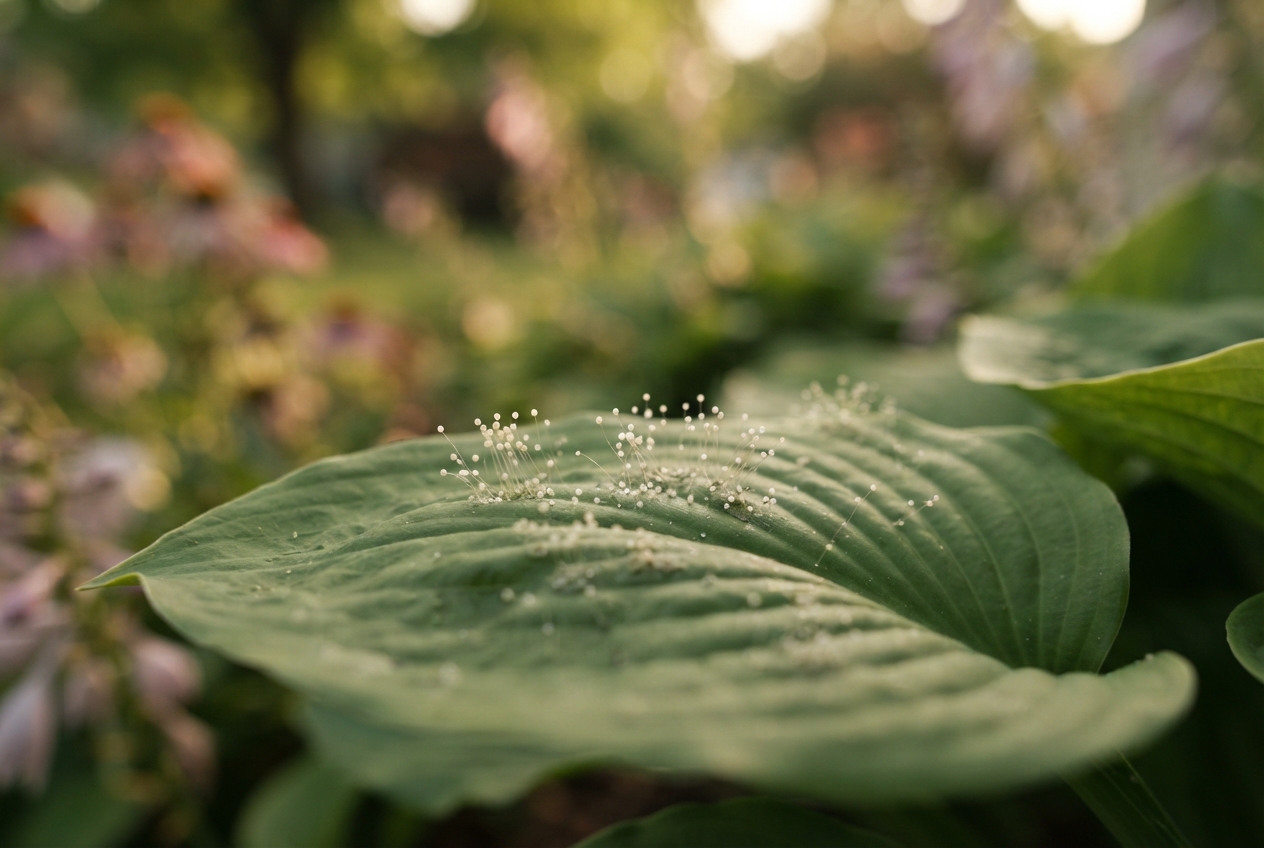
Those unsettling, hair-like stalks with the tiny white dots are, in fact, **lacewing eggs**.
Yes, insects had decided to use a roll of toilet paper as a nursery. But here’s the kicker: you actually *want* these bugs around.
Green lacewings are fascinating creatures. The reason their eggs are laid on these long, delicate stalks is ingenious: it’s to prevent cannibalism. Lacewing larvae are famously voracious. If the eggs were laid directly on the surface next to each other, the first larva to hatch would immediately turn around and devour its unhatched siblings.
By suspending the eggs high above the surface on these tiny, sticky stalks, the mother lacewing gives each baby a fighting chance.
Why Lacewings Are a Gardener’s Best Friend
Now, while you absolutely don’t want them in your bathroom (or near your sensitive parts!), many experienced gardeners will tell you that lacewings are incredibly beneficial insects.
The larvae, often called “aphid lions,” are predatory powerhouses. They primarily feed on common garden pests like aphids, mites, thrips, and even small caterpillars. People often purchase lacewing eggs *intentionally* to release them in their gardens as a form of natural, chemical-free pest control.
This bizarre discovery was not a sign of a hygiene crisis, but rather a misplaced garden ally.
What to Do if You Find Bugs (or Eggs) on Your Toilet Paper
So, what should the OP (or you, if this ever happens!) do?
First, don’t panic. And, surprisingly, you don’t necessarily have to throw the whole roll away. If you find something like this, here are the steps to follow:
- Isolate and Inspect: Carefully examine the roll. Are the growths just on the surface? In this case, yes. The lacewing eggs were only on the very exterior stalks; they hadn’t burrowed deep into the roll.
- Relocate (Don’t Squish!): If you are comfortable doing so, and you have a garden or house plants, the best option is to *relocate* them. Gently tear off the squares of paper containing the eggs.
- Placement is Key: Place the affected squares outside, ideally in a shaded area of your garden near plants that often attract pests, like roses or tomatoes. You can just tuck the paper gently into the foliage.
- Wipe and Sanitize: Once the eggs are removed, you can gently wipe the remaining roll. While not necessary for hygiene, it provides peace of mind.
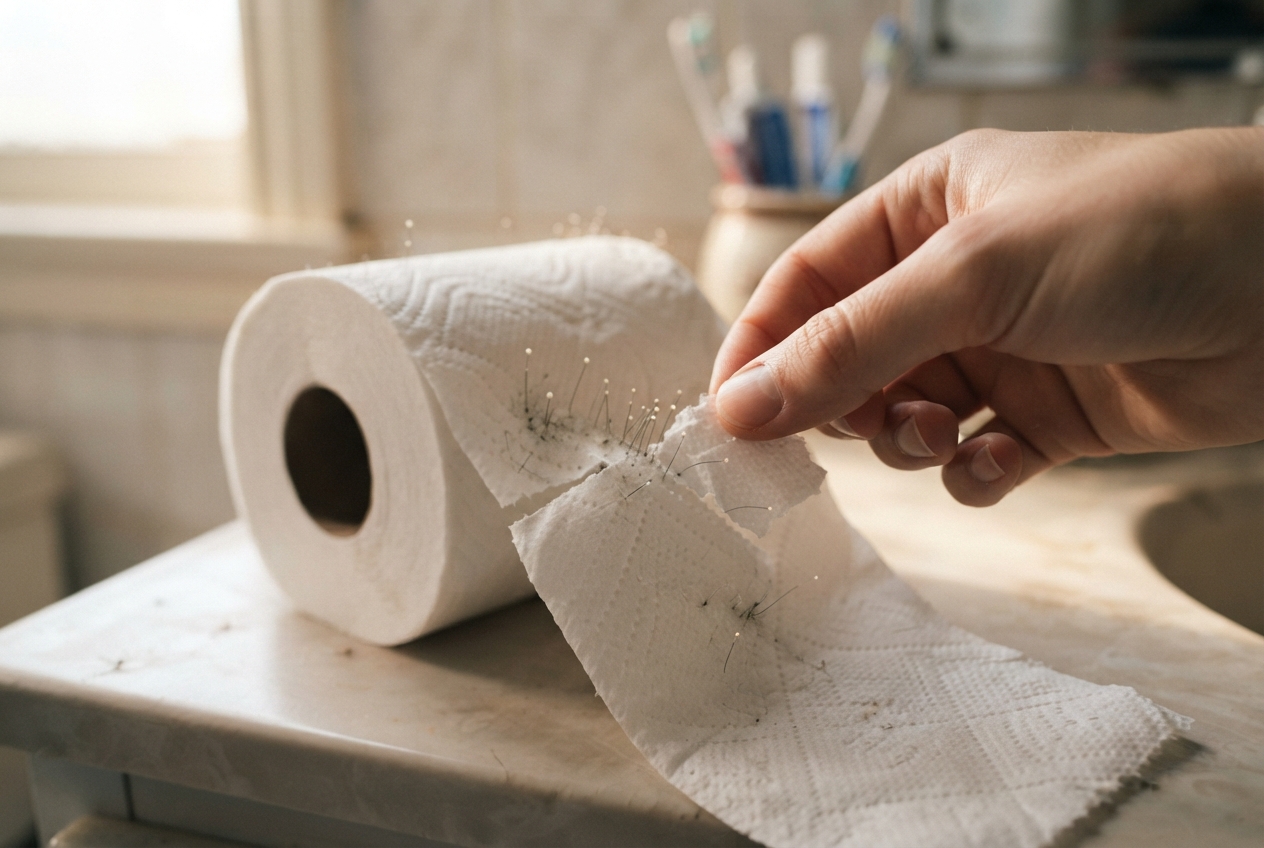
As one insightful commenter noted, “Once the little bulbs on the ends turn completely white, then the lacewings are gone. And then you can throw it [the used paper squares] away.”
Preventing Misplaced Pest Nurseries: Proper Storage is Key
This bizarre situation naturally leads to a more practical question: *How* did this happen, and can it be prevented?
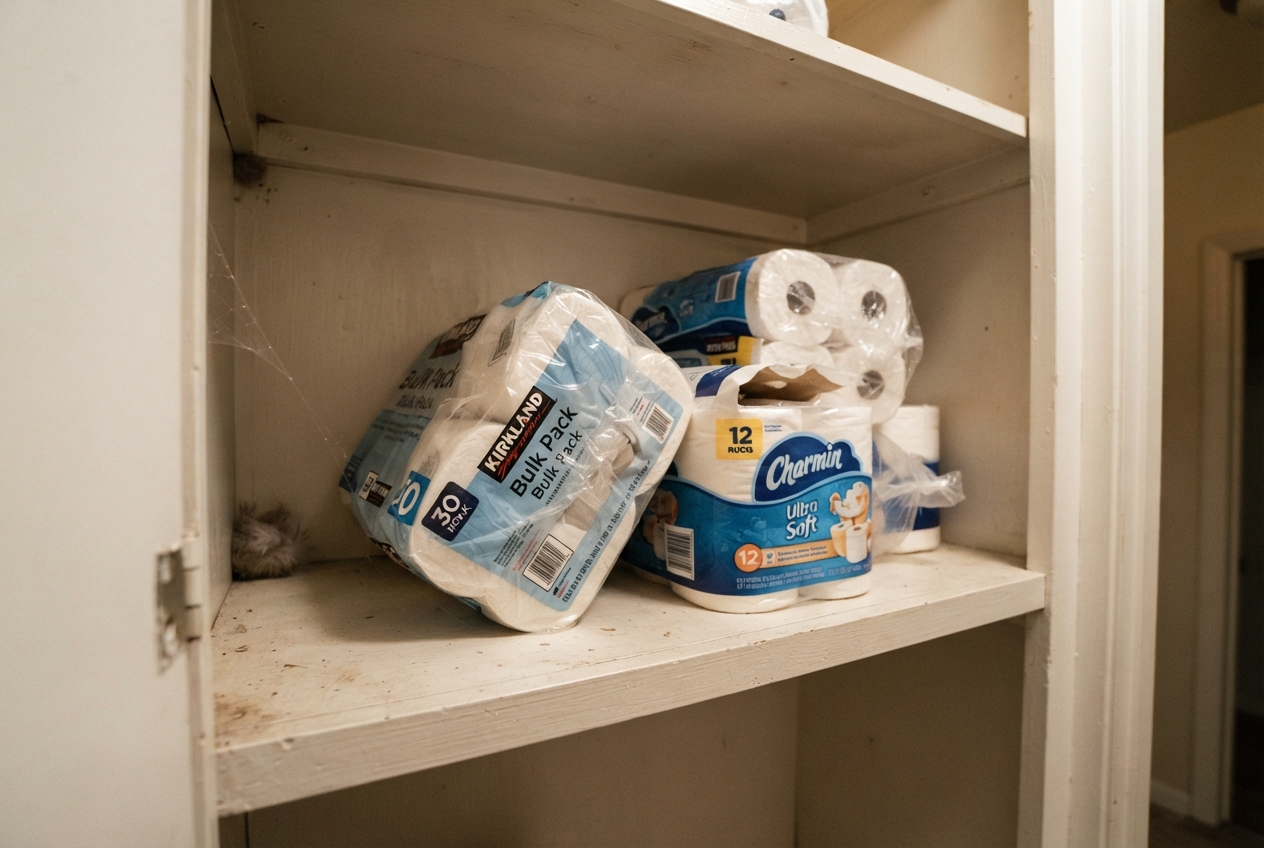
Bugs are opportunistic. They will find small, dry spaces to lay their eggs, and an open bathroom cabinet (especially one that might have been slightly humid or left ajar) can be tempting.
While this specific occurrence is rare, practicing correct storage is the best prevention against any uninvited bathroom guests:
- Sealed Containers: Consider storing your back-up TP rolls in sealed plastic bins or decorative, lidded baskets rather than leaving packages open on the floor or on low shelves.
- Dry and Dark: Moisture attracts pests. Ensure your linen closet or cabinet is a dry, dark environment. If you notice dampness, address the source.
- Keep it Elevated: Store paper products off the floor, which is the most accessible route for many insects.
While the initial “toilet paper terror” was certainly good for a viral laugh and some genuine shudders, it ended up being an educational moment. It’s a vivid reminder that nature is resourceful, even in the most unexpected—and occasionally, slightly gross—places.