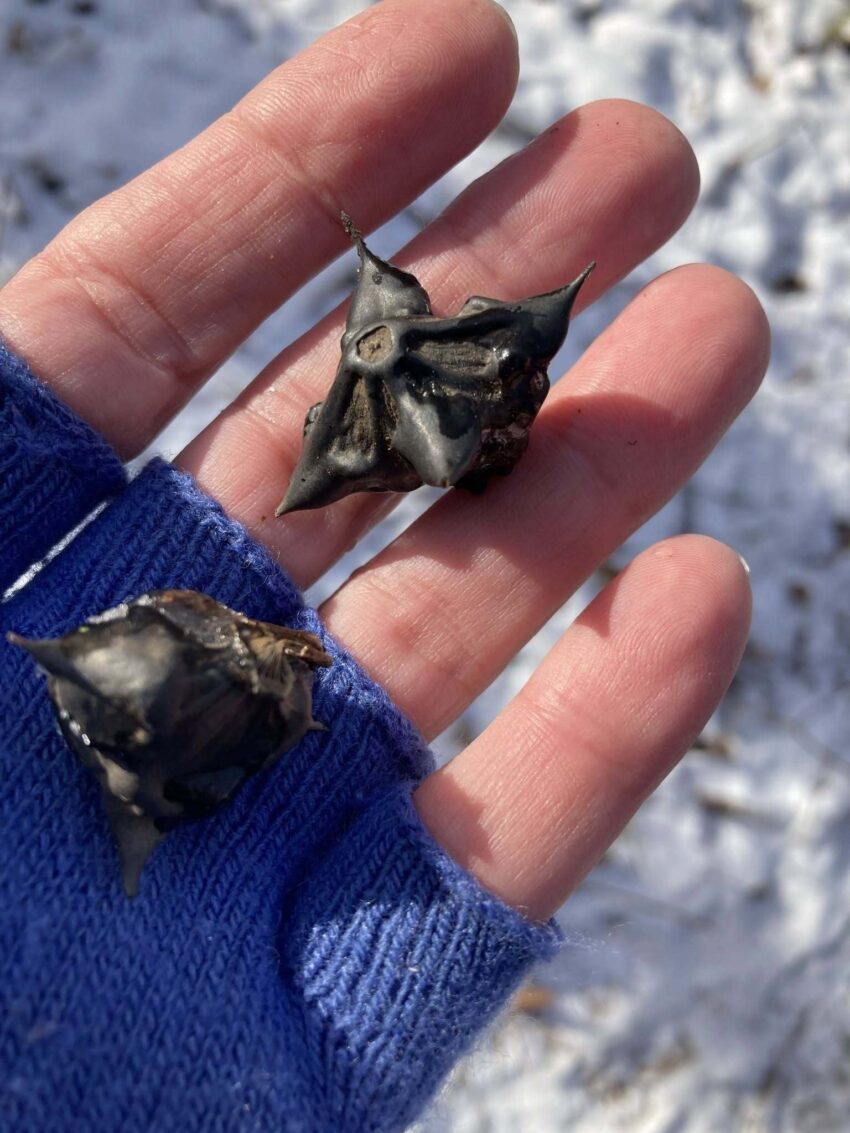
Oh, the intriguing things neighbors give you! I still remember when my lovely neighbor from two doors down popped over with a crinkly bag. “I have no idea what these are, but I thought you’d know,” she said. What was inside, you ask? A few dark, spiky, almost menacing little pods that looked more like bats frozen mid-flight than any food I’d ever seen. My initial reaction, much like my friend in the photo below, was absolute bewilderment, mixed with genuine curiosity. We were left staring, wondering: What are bat nuts? Are they even edible? (They are, thankfully!) But first, how in the world do you eat them? I mean, look at those thorns!
The Ultimate Identification Guide: What Exactly Are These Strange Black Pods?
If you’re staring at something like the spiky structures in that image, you have encountered *Trapa natans*. This aquatic plant, native to parts of Asia, Africa, and Europe, is known by several colorful common names, including Water Caltrop, Devil Pod, and most popularly, the “Bat Nut” because of its distinctive 4-pointed, horned shape. Those sharp spikes are its calling card. Do not underestimate them; they can easily pierce a glove or a fingertip.
I always tell people to handle them with respect. That menacing, black/dark brown shell is incredible armor protecting a truly sweet and starchy surprise. But just knowing the name is only the beginning. The biggest hurdle is getting inside that armor without sacrificing your sanity or your tools.
Invasive Beauty or Garden Curiosity? Where Do Bat Nuts Come From?
*Trapa natans* is an aquatic species. My neighbor, who is a serious pond gardener, actually keeps them in a controlled environment. She gives them away every winter when she manages the growth. This is a crucial distinction. In some regions, *Trapa natans* is categorized as highly invasive, taking over entire water bodies and suffocating native plants. If your neighbor got them from their own pond, they likely keep them in check. Always know your source and never release them into local wild waterways.
This aquatic nature makes harvesting an adventure, often involving wading in shallow water and pulling up the floating rosettes that produce these nuts. Once they fall off the plant, they settle in the muddy bottom, often found along muddy banks in winter, much like the snow-covered setting in our initial identification shot.
Can You Eat Them? (Yes, But There’s a Catch!)
The short answer is absolutely, yes. Bat nuts are not only edible; they are a cherished culinary ingredient in many cultures. However, the catch is in the shell. Do not, under any circumstances, try to crack these like a simple pecan with your hands. That shell is incredibly thick and woody, requiring substantial force and strategy. Trying to rush the process is where I’ve seen some hilarious, albeit frustrating, kitchen fails.
And please, always cook them. Raw consumption is not a safe bet unless you know they are from very clean water, and even then, parasites like *Fasciolopsis buski* can be a risk with aquatic plants. Cooking solves that issue and unlocks the sweet, chestnut-like flavor and texture you’re after.
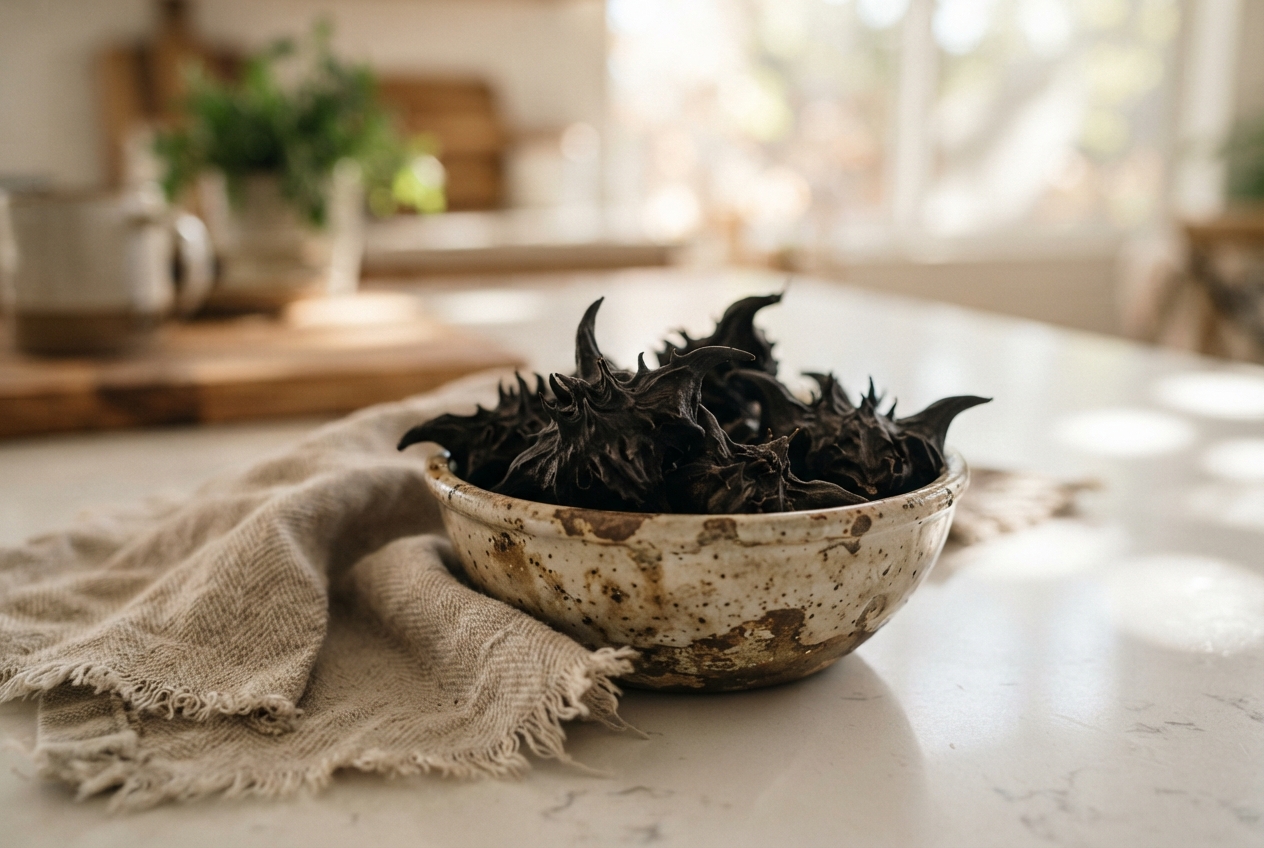
Discover the intriguing world of the Bat Nut, from identification to delicious preparation.
The Ultimate Guide to Shelling and Preparing Bat Nuts
First things first: you need the right tools for the job. Do not grab your favorite silver nutcracker; it won’t stand a chance. I’ve found that a pair of heavy-duty pliers, or even better, a substantial hammer and a sturdy wooden cutting board, are your best friends here. Some people use a clean vice grip in the garage, but that seems a bit dramatic for the kitchen! My go-to method is to carefully place the nut spikiest-side down and give the flat bottom a firm, controlled crack with the hammer.
Here is my foolproof way to enjoy the nutty payoff:
- 1. Boil or Roast: Thoroughly clean the mud off the pods. Submerge the bat nuts in boiling water for at least 30–45 minutes, or roast them on a tray in a 375°F oven for about an hour. They must be cooked through.
- 2. Crack that Shell: Take the cooked nuts. Place each one securely on a heavy, non-slip cutting board and use heavy-duty pliers or a hammer to carefully crack the shell. This takes a little practice to apply just enough force. The goal is to crack the shell, not crush the kernel.
- 3. Extract the Kernel: Once the shell is cracked, the starchy, ivory-white nut will often slide right out. Sometimes a small paring knife is helpful to tease it free.
- 4. Enjoy the Taste: The flavor is starchy, slightly sweet, and reminds most people of a roasted water chestnut (another type of water caltrop!) or a true chestnut. Eat them warm.
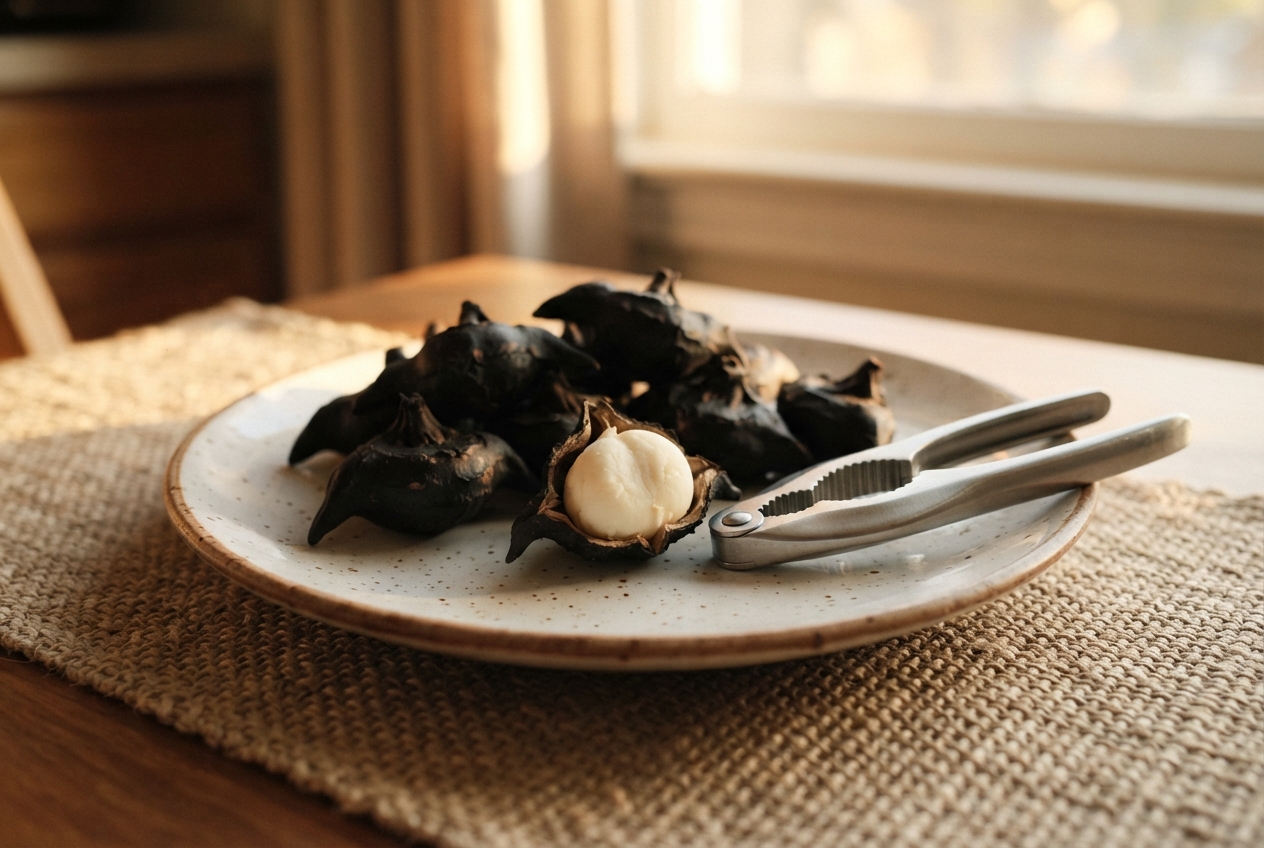
The challenging shell must be carefully cracked after boiling to get to the starchy treasure inside.
Beyond the Bowl: Decor and Crafts
If you have way more bat nuts than patience, there’s an entirely non-culinary world to explore. Because of their truly unique, slightly spooky shape, dried bat nuts make incredible natural decor elements. Think beyond simple rustic themes; they lend an authentic, organic feel to contemporary and even dark aesthetic interiors.
My friend down the street actually creates incredible autumnal flat lays and table garlands using dried *Trapa* pods. I love the simple contrast of their dark form against natural slate or light linen. You can clean them thoroughly and let them air dry for a few weeks, or put them in a very low oven for a few hours. I’ve even seen some painted in matte metallics or deep reds for a dramatic, moody winter table setting.
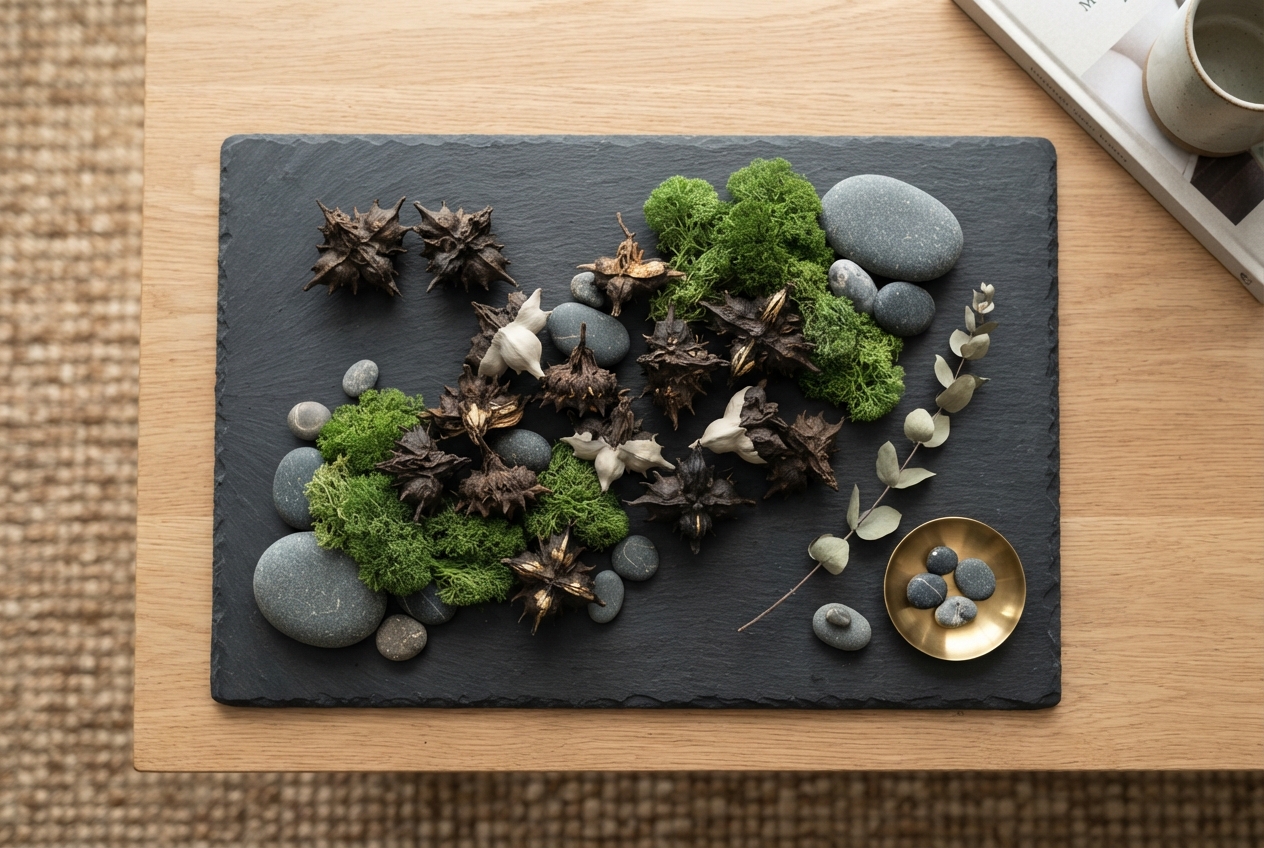
When dried, these unique pods offer incredible visual texture for seasonal decor and thoughtful gifts.
A Little Taste of Starchy History
*Trapa natans* isn’t just a quirky garden find; it has a deep history as a staple food source. In China, where they are sometimes called “devil’s pods” or “water caltrops,” they have been part of the diet for millennia, particularly useful in areas prone to floods. And in Europe, before the arrival of the potato, these starchy little nuts were a vital food source during times of famine.
So when you look at that intimidating, spiky black pod, you’re not just looking at a weird neighbor gift; you’re looking at an ancient survival food that continues to intrigue today. Don’t let the spines deter you!
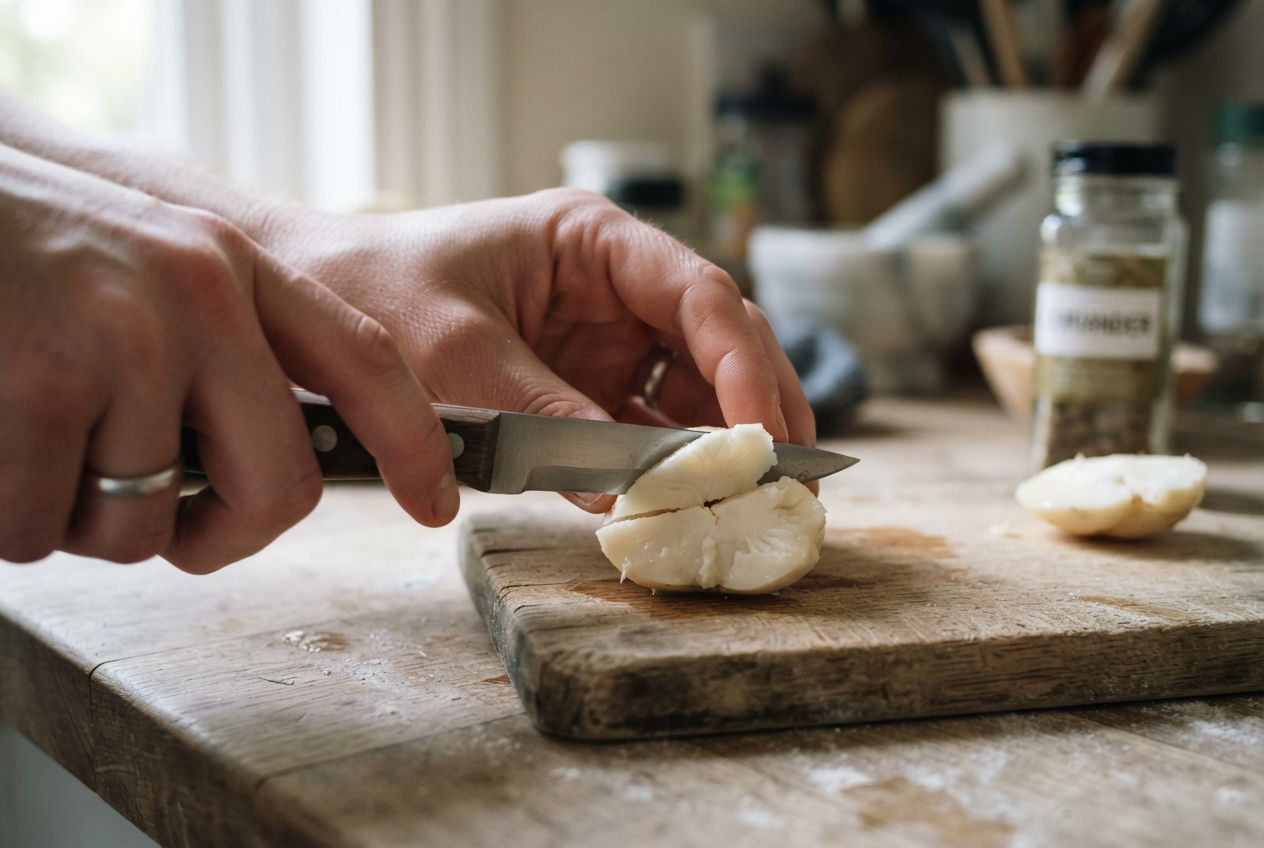
Once cooked, the sweet, starchy nut is sliced and ready to enjoy, often compared to the texture of a chestnut.
What to Do When the Neighbor Strikes Again
So, what should you do if your neighbor hands you a mysterious, spiky bag? My advice: smile, say thank you, and get your boiling pot ready! Unlocking the delicious, starchy kernel of a bat nut is a rewarding experience. It’s a true lesson in patience and controlled force in the kitchen. Just remember to always cook them, find a sturdy tool to open that impenetrable shell, and enjoy the distinctively sweet, roasted-chestnut taste. It’s a flavor you won’t soon forget, and it makes for a fantastic story every single time.