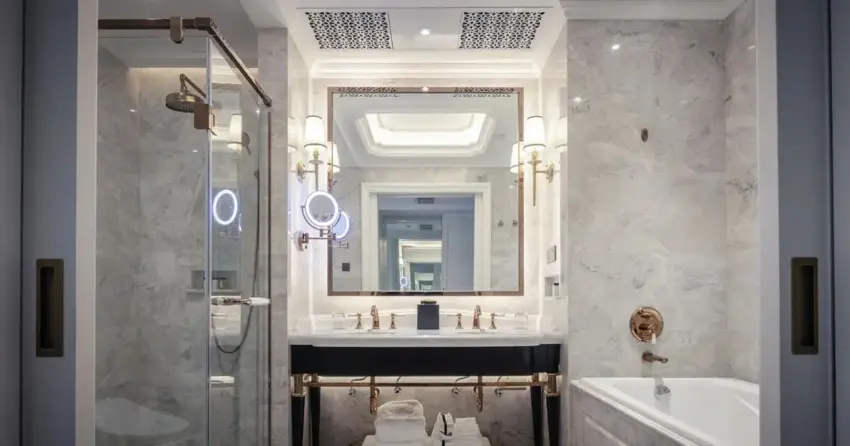
We have all had that disorienting moment at 3:00 AM. You wake up thirsty in a strange room, slide out from beneath crisp percale sheets, and take three confident steps into total blackness. A split second later, your pinky toe collides with the solid steel corner of a heavy luggage bench.
Sleeping away from home throws your brain into a state of quiet vigilance. Your subconscious tracks strange air-conditioning hums, elevator chimes, and unfamiliar floor layouts. That is why leaving bathroom light on in hotel rooms has become an essential habit for seasoned travelers.
Yet, like most travel tricks, doing it wrong can leave you tossing and turning all night under harsh glare. Finding the sweet spot between safe visibility and sound rest requires a little strategy.
The 3 AM Reality Check: Why Pitch Black Isn’t Always Your Friend
At home, muscle memory guides you. You know precisely how many paces separate the mattress from the bathroom door, and you can sidestep the laundry basket without opening your eyes. In a hotel room, that mental map vanishes.
Stepping out of bed in an unfamiliar layout turns a simple trip for water into an obstacle course of heavy coffee tables, desk chairs, and open suitcases. A tiny reference point of light prevents painful stubs and unexpected falls.
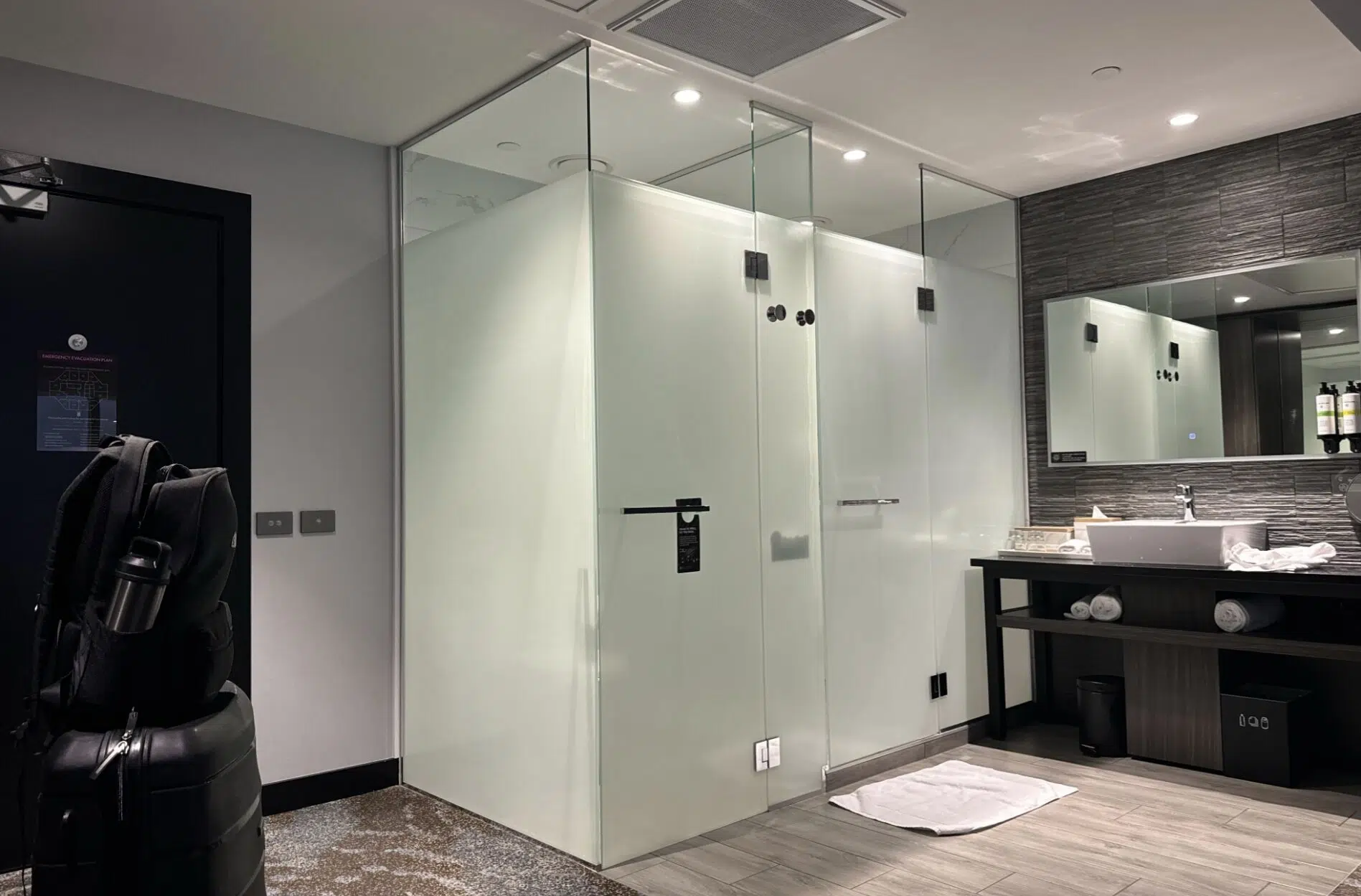
Leaving a soft perimeter light helps you spot suitcase clutter and room obstacles without flipping on the main switches.
There is also the matter of peace of mind. Waking up in complete darkness in a new city can trigger a brief spike in adrenaline before your brain registers where you are. A soft ambient glow grounds you the instant you open your eyes.
In the rare event of a late-night emergency or a sudden alarm, having immediate visibility gives you the clarity to grab your shoes, phone, and room key without frantic fumbling.
The Melatonin Dilemma: Why Harsh Lights Ruin Your Rest
While bumping into furniture hurts, blasting your eyes with overhead lighting in the middle of the night creates a different problem. Most modern hotels use bright, cool-toned LED bulbs designed to make vanity mirrors clear and bright for morning routines.
When you flip those switches at 2:00 AM, your retinas receive a strong burst of high-Kelvin light. This instantly tells your brain to suppress melatonin production, the hormone responsible for keeping you in deep sleep.
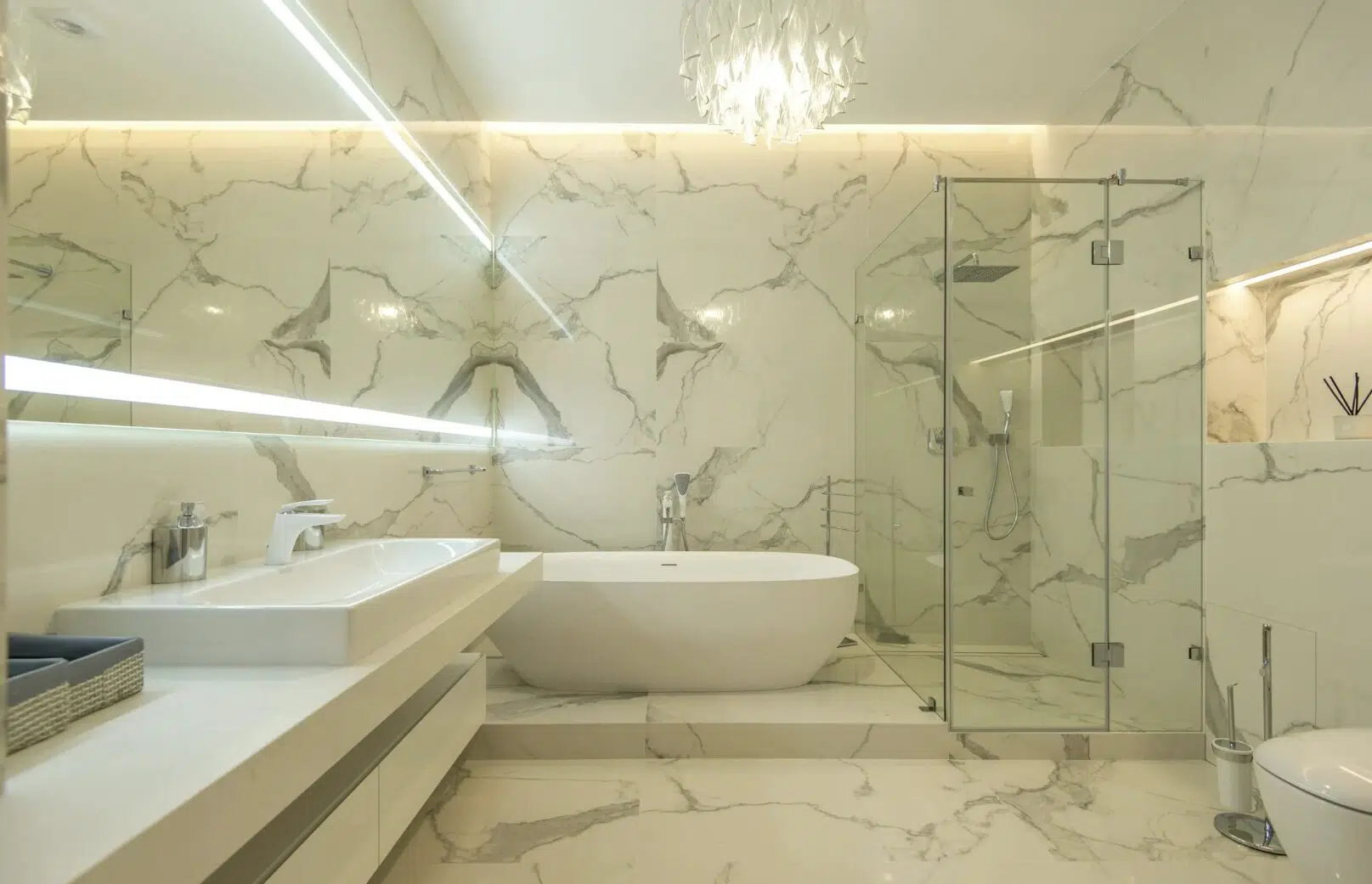
High-lumen, cool-white vanity LED strips can instantly trick your brain into thinking it is daytime.
Once that flood of cool light hits your eyes, getting back to sleep can take forty-five minutes or more. The secret is finding a low-level, warm-toned light source that preserves your night vision while keeping the room restful.
The Modern Hotel Quirk: Taming Frosted Glass Enclosures
Architectural trends in newer boutique hotels have introduced an unexpected headache: open-concept bathroom pods with floor-to-ceiling frosted glass walls. While they look striking in daytime promotional photos, they behave like massive lightboxes at night.
Leaving a light on inside an all-glass enclosure can illuminate the entire sleeping area with the intensity of a streetlight right next to your pillow.
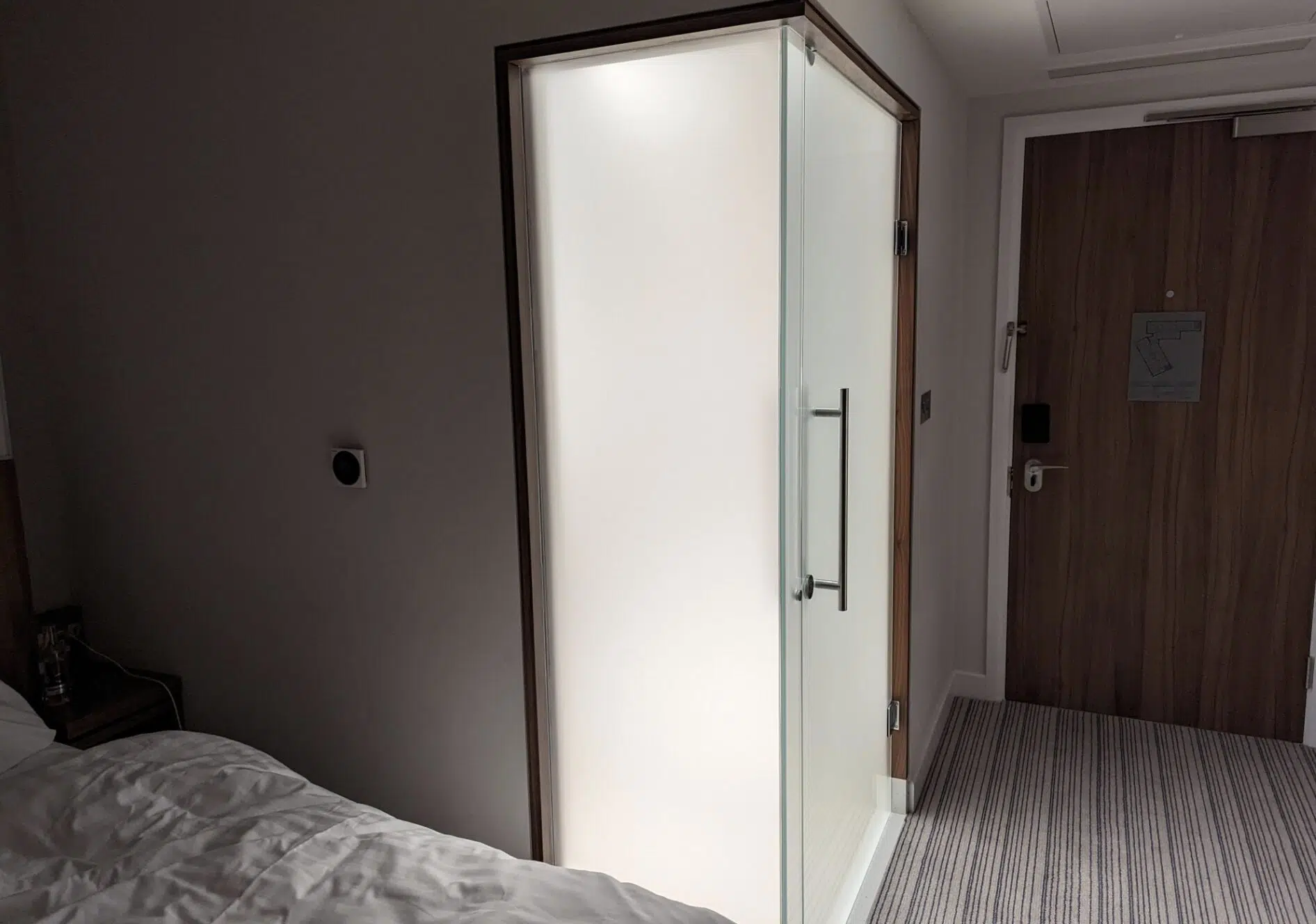
Frosted glass bathroom pods look sleek by day but can flood the entire sleeping space with unwanted glare at night.
If your room features glass walls, leaving the main vanity fixture on will overpower the bedroom. You will want to look for lower-level secondary lamps or use a targeted nightlight instead.
Fire Safety Warning: The Dangerous Hack You Must Avoid
Some travel blogs suggest throwing a bath towel or a piece of clothing over a bright bathroom lamp to dim the room. Never do this under any circumstances.
Many hotel fixtures still use halogen or high-wattage bulbs that generate substantial surface heat within minutes. Covering any light fixture with dry cotton or synthetic fabrics creates an immediate fire hazard in an enclosed space.
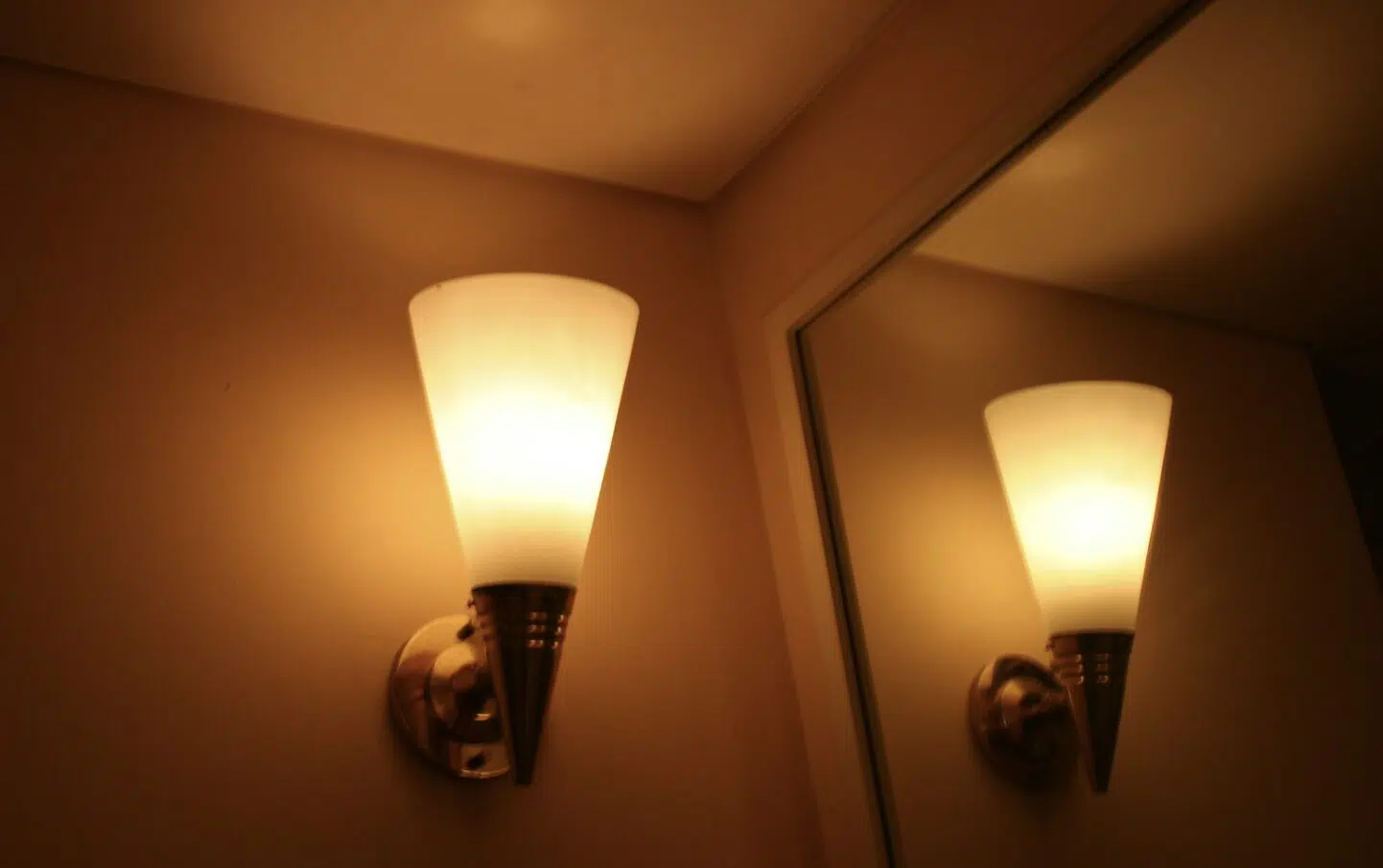
Wall sconces provide warm ambient diffusion, but fixtures should never be covered with fabric or towels.
Always manage room brightness through distance, angles, and safe tools rather than placing anything directly against a light bulb.
Smarter Ways to Master Hotel Room Lighting
You do not have to choose between stubbing your toe and enduring glaring lights. A few smart adjustments will give you soft illumination without sacrificing your rest.
1. The Precision Door Crack
The simplest zero-cost fix is using the bathroom door as your personal dimmer switch. Turn on the bathroom vanity light, then close the solid wooden door until only a one-inch gap remains.
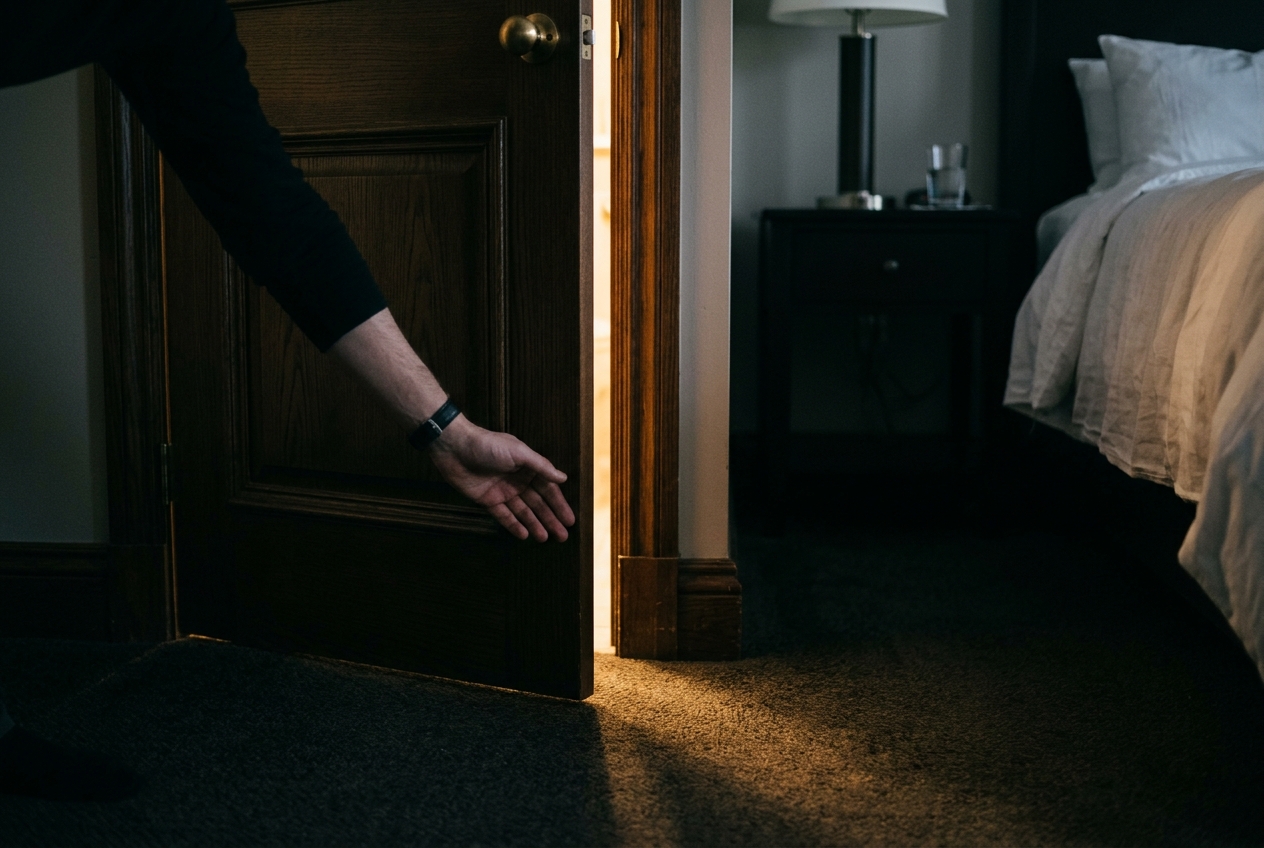
Adjusting the bathroom door to a slight crack creates a customized natural dimmer switch for the bedroom.
This angles the beam away from your bed while casting a gentle, indirect stripe of illumination along the entryway floor. If the door swings open on its own, tuck the corner of a folded bath mat underneath the bottom edge to anchor it firmly in place.
2. The Amber Travel Nightlight
If you travel frequently, carry a compact plug-in nightlight with an amber or red LED diode. Warm wavelengths do not disrupt your circadian rhythm the way white or blue spectrum lights do.
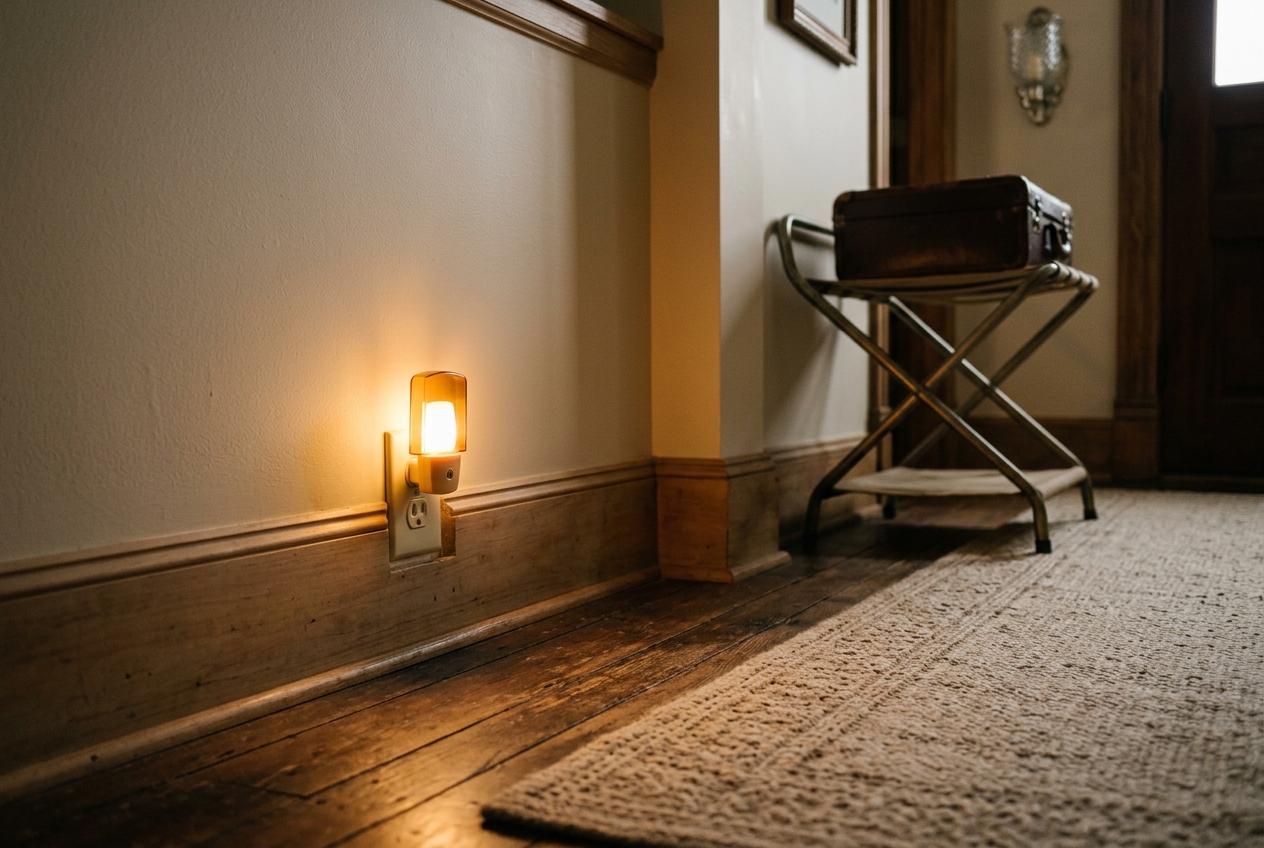
A portable amber nightlight keeps the floor illuminated without filling the bedroom with wakeful blue light.
Plug it into a low wall outlet near the entryway or baseboard. It provides clear floor-level guidance while keeping the upper half of the room in calming shadow.
3. The Under-Door Towel Roll
Sometimes the hallway outside your room has bright industrial lighting that leaks beneath your entry door. Roll up a spare bath towel and lay it flush against the bottom threshold of the main entry door.
This blocks unwanted hallway glare and muffles the sound of early morning housekeeping carts rolling down the corridor.
4. The Closet Pant-Hanger Trick
Blackout curtains often leave a two-inch gap in the middle where streetlights sneak through. Grab a wooden pants hanger with metal pinch clips from the hotel closet and clamp the two curtain panels tightly together.
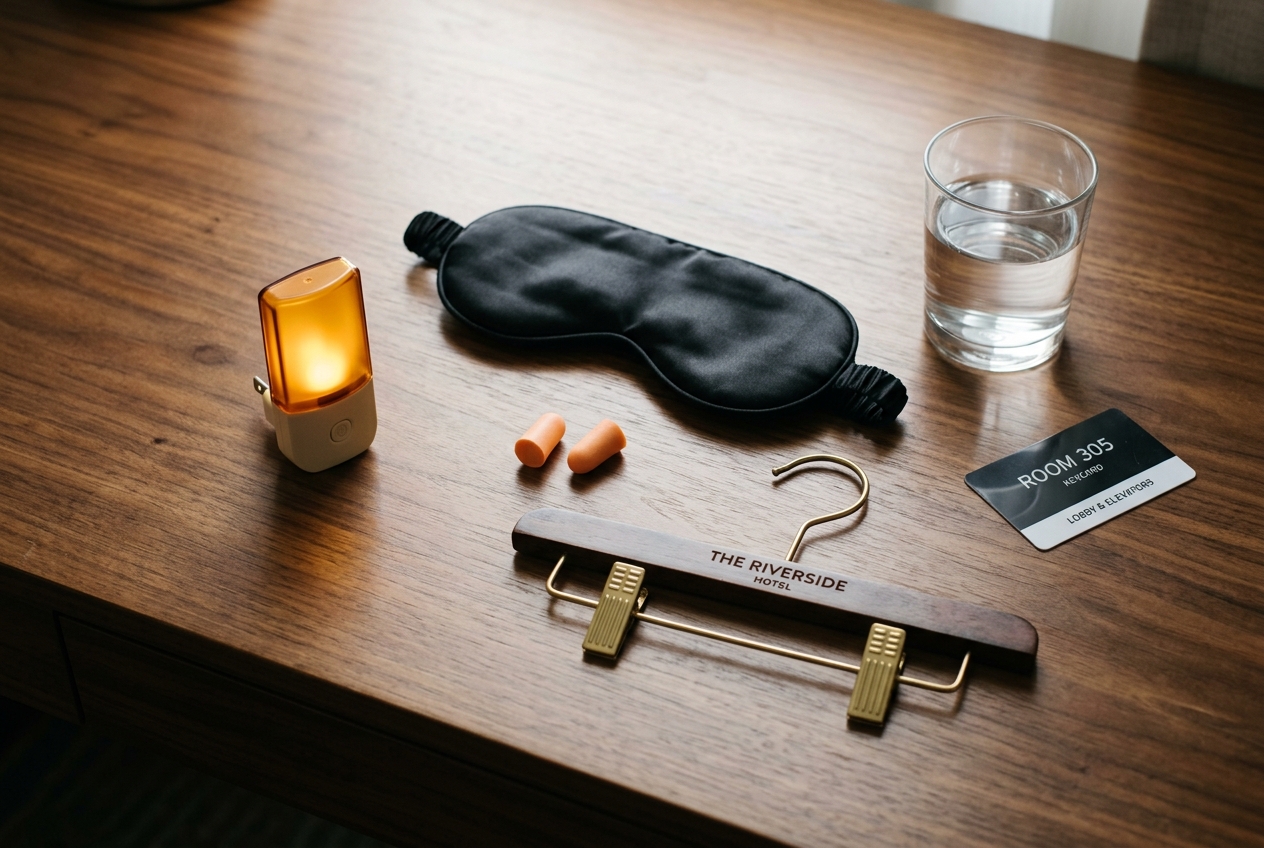
Packing a few simple sleep essentials lets you control the lighting and sound in any hotel room.
Sealing that curtain gap ensures that your only light source is the soft, controlled glow you deliberately set inside your room.
Sharing Rooms with Kids and Light Sleepers
When you are traveling with family or sharing a room, lighting management becomes even more important. Children waking up in a dark hotel room can feel easily frightened, while adults stumbling toward the sink often wake their partner.
Bright overhead lights can startle sleeping companions, making soft secondary lighting a much kinder choice.
A soft bathroom light acts as a quiet beacon for little ones, allowing them to use the toilet independently without waking the whole room. It keeps midnight wake-ups calm, quiet, and swift.
Better Sleep, Zero Stubbed Toes
Mastering your travel routine comes down to small, thoughtful comforts. Taking sixty seconds before you climb into bed to set your lighting makes the difference between a restless night and waking up refreshed.
By leaving bathroom light on in hotel spaces using the cracked-door method or a pocket amber light, you get safe footing and sound sleep all in one simple move.