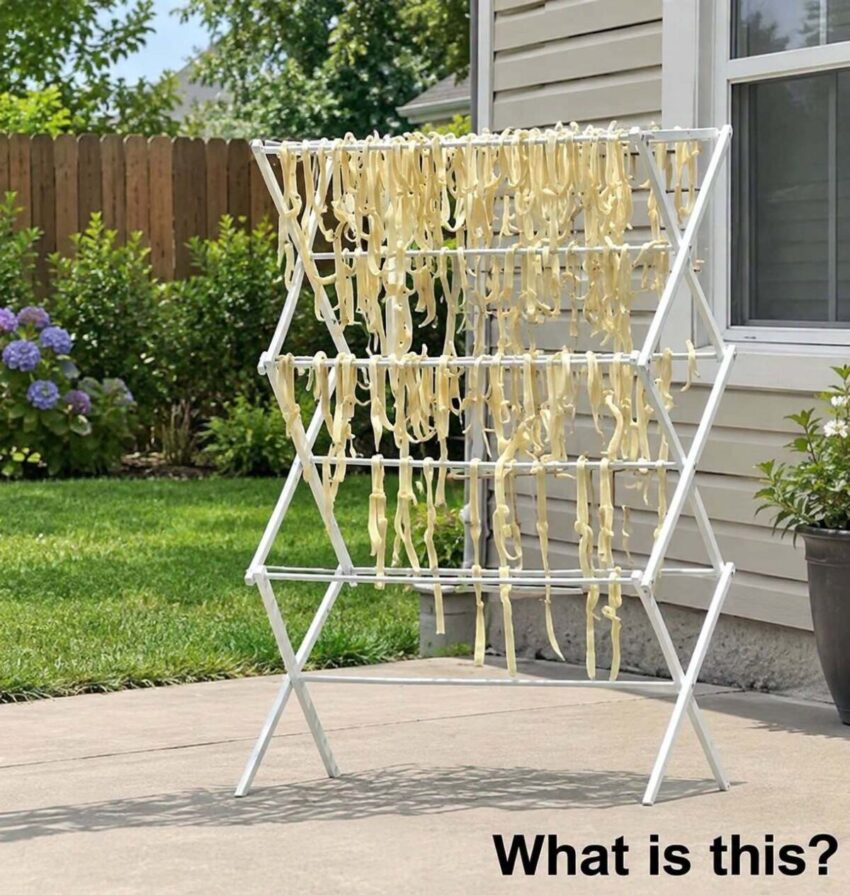
Walk past a neighbor’s backyard in mid-July and you might spot what looks like pale fringe swaying on a folding laundry airer. It stops people mid-stride. A few folks chuckle, some snap photos for neighborhood community boards, and others wonder whether laundry day took a bizarre culinary turn. What you are actually seeing is one of the oldest food preservation rituals known to home cooks: backyard pasta drying.
Hanging freshly cut noodles outdoors lets the heat of the sun and a steady breeze pull moisture out of the dough within hours. Long before electric food dehydrators existed, cooks spread noodles across wooden dowels on sun-drenched terraces. Doing it in your own yard or sunroom is surprisingly simple, deeply satisfying, and leaves you with golden noodles that store inside your pantry for months. Here is what you need to know about sun-drying homemade pasta safely and effectively.
The Science Behind Sun-Drying Homemade Pasta
Fresh dough made from flour, water, and whole eggs carries significant moisture. When you drop fresh ribbons directly into boiling water, that high hydration yields a tender, silky bite. But if you want to store those same noodles inside a glass jar, every trace of free water must evaporate. Without complete drying, trapped moisture turns your hard-rolled noodles moldy within days.
Sunlight provides dry radiant heat, while outdoor airflow sweeps away the evaporating moisture. That double action forms an exterior crust along each strand within thirty minutes. This rapid surface set prevents the dough from sagging, stretching under its own weight, or sticking together in clumpy clusters.
Commercial factories use temperature-controlled chambers running for twelve to twenty-four hours to cure dry semolina noodles. When you harness dry summer heat outside, nature handles the hard part for free. The finished noodles turn firm, deeply golden, and cook up with an authentic toothsome bite that store-bought boxes cannot replicate.
Choosing the Right Dough: Egg vs. Semolina
Not every pasta recipe belongs outside in the sunshine. The ingredients you knead into your flour determine how safely your batch responds to warm outdoor temperatures.
- Durum Semolina and Water Doughs: This is the absolute gold standard for sun-drying homemade pasta. Without raw egg present, these strands carry zero salmonella concern. Semolina yields sturdy, structural noodles that hold their shape across laundry rungs without snapping prematurely.
- Rich Egg Yolk Doughs: Traditional egg pasta requires caution outdoors. In high heat, raw eggs can develop bacterial risks if left out too long. If your weather is dry, breezy, and warm (under 85 degrees Fahrenheit), thin strands of egg pasta dry to brittle safety within two to three hours. If your afternoon is muggy, keep egg-rich ribbons indoors under a ceiling fan instead.
- Herb and Vegetable Purees: Spinach or tomato purees add gorgeous tint to your pasta, but the extra organic solids spoil faster. Dry flavored doughs indoors on small trays rather than leaving them under direct sunlight, which bleaches out their vibrant greens and reds.
Semolina flour creates the cleanest dry snap. Dust your counter generously with coarse semolina rather than standard white flour so the dough ribbons glide off the rungs effortlessly.
Food Safety and Backyard Logistics
The biggest reason people hesitate to dry noodles outdoors comes down to hygiene. Nobody wants dust, stray pollen, or curious summer insects settling on dinner. Setting up your outdoor drying station takes a small bit of common sense and a couple of inexpensive barriers.
First, check the ambient humidity before rolling your dough. You need humidity below 50 percent for proper dehydration. If the morning air feels sticky or your weather app warns of rain storms, save the outdoor project for another afternoon. High moisture in the air causes pasta to soften and sour rather than crisp.
Second, pick the right frame. A clean, dedicated wooden pasta rack works wonders for modest batches. If you are prepping ten pounds of pasta for bulk winter storage, an ordinary collapsible clothes drying rack washed with hot soapy water gives you yards of hanging space. Ensure the metal bars are coated enamel or stainless steel so they never react with damp dough.
Third, guard the station. Drape clean cheesecloth, lightweight linen tea towels, or pop-up mesh food screens over the top of the rack. Air circulates through the mesh while keeping neighborhood debris and buzzing bees away from your hanging harvest.
Step-by-Step Guide to Sun-Drying Noodles at Home
Transforming fresh dough ribbons into shelf-stable dry noodles is a rewarding kitchen ritual. Follow this rhythm for consistent, clump-free batches:
- Roll and Cut: Roll your dough thin, around setting five or six on a standard counter roller. Cut into flat shapes like fettuccine, tagliatelle, or pappardelle. Long, flat shapes dry evenly compared to thick round shapes.
- Dust Generously: Toss the fresh strands in coarse semolina flour. This creates a tiny non-stick cushion around every single noodle.
- Drape Evenly: Carry your rungs outdoors and drape the strands with a pinky-finger gap between each piece. Never allow noodles to overlap, which traps damp pockets.
- Track the Sun: Position your rack in bright, indirect sun or open afternoon sun for two to four hours. A gentle warm breeze does wonders.
- The Snap Test: Check your pasta by snapping a single strand in half. If it bends or feels leathery, it still holds water. If it breaks cleanly in two with a sharp, crisp snap, drying is complete.
Storing Your Dry Pasta for Long-Term Pantries
Once your noodles pass the snap test, resist the urge to drop them directly into sealed containers immediately. Bringing warm pasta straight inside can cause condensation inside glass jars, undoing all your hard work.
Let the noodles rest on a clean kitchen counter at room temperature for about one hour until they cool completely. Carefully curl the brittle ribbons into loose nests or gently lay long strands flat into wide glass jars with silicone-gasket lids. Store the jars in a cool, dark cabinet away from the stove.
Properly cured, moisture-free semolina pasta stays fresh on your shelf for six to twelve months. When dinner rolls around, drop the dried strands straight into heavily salted boiling water for four to six minutes, finish with a dollop of crushed garlic and fresh garden tomatoes, and enjoy the sunny crunch of true homemade cooking.