
Few things will bring you down to earth faster than tossing an honest photograph into the digital town square and asking strangers what they see. When thirty-six-year-old Emily Jane picked up her phone, wiped her camera lens, and posted an unfiltered clip to TikTok asking viewers to guess her age, she expected a few playful comments. What she received instead was an avalanche of guesswork placing her well into her late forties, fifties, and even her sixties.
One commenter placed her at fifty-one. Another settled on forty-seven. The sharpest sting came from someone who casually asked if she was fifty-eight, prompting Emily to upload a follow-up video with a wry, bewildered laugh: “Do I genuinely look like I am nearly sixty? Like I am nearly at retirement age?” The true answer was simple: she had just celebrated her thirty-sixth birthday. Behind that gap between perception and reality lies a fascinating cultural blind spot about postpartum fatigue and the growing movement of embracing grey hair in your 30s.
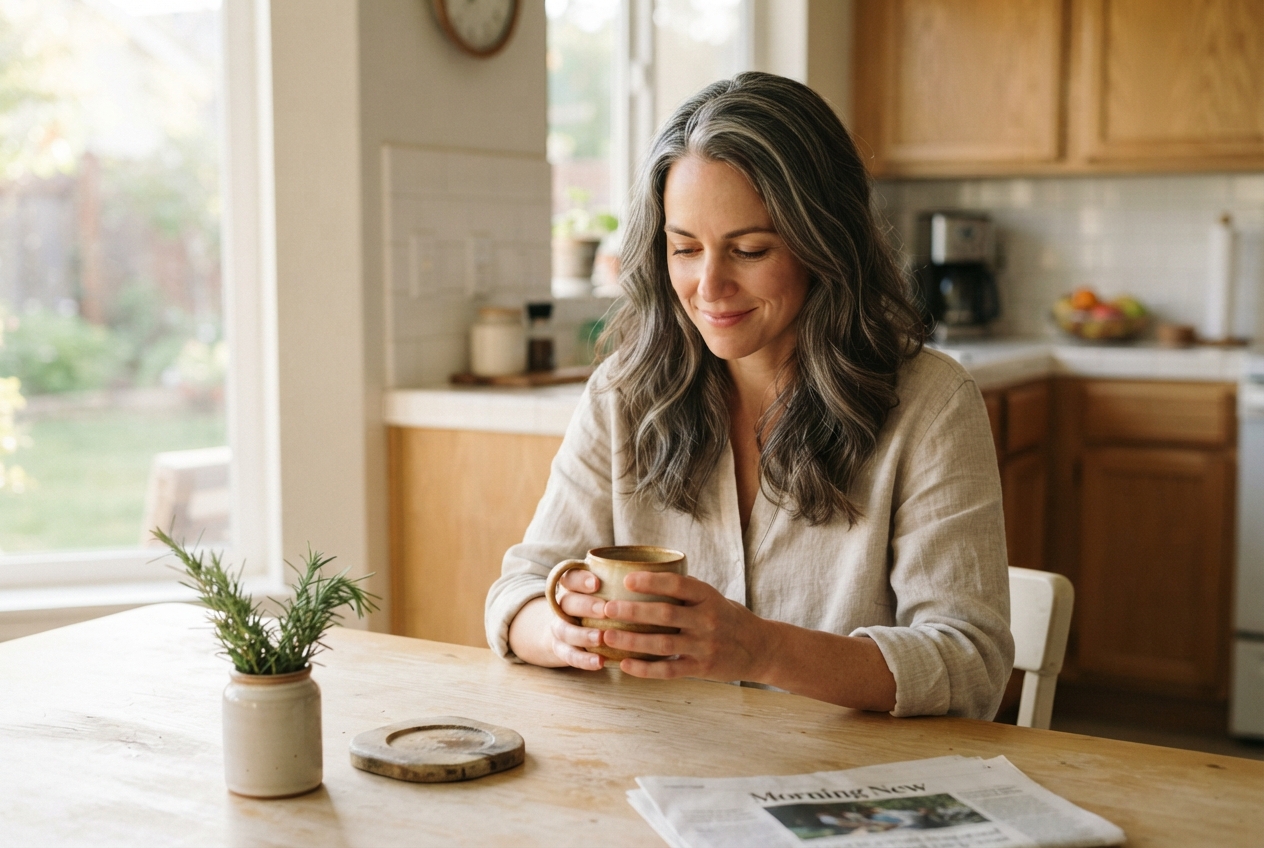
Stepping away from heavy hair dyes lets natural silver strands catch the morning light with unpretentious elegance.
Why the Filter Bubble Broke Our Internal Age Detector
How did our collective sense of what thirty-six looks like get so distorted? Emily did not use a ring light, heavy studio makeup, or skin-smoothing camera presets. She showed up with bare skin, the natural dark shadows that accompany life with a newborn baby, and hair that started turning silver when she was just nineteen.
Our eyes have been trained by algorithms that automatically erase pores, blur fine expression lines, and soften under-eye tear troughs. When we scroll through hundreds of clips every evening, our baseline for “normal thirty-something skin” shifts away from human biology and toward digital plastic. We forget that living faces move, crinkle, and dry out in dry winter rooms.
“I have never had any work done. This is my face, and this is what I look like, and I think this is what most people my age would look like without a filter.” — Emily Jane
When viewers saw genuine laugh lines and uncolored hair, their brains scrambled for an age bracket associated with silver: retirement. Yet genetic graying often starts in a person’s late teens or twenties, long before fine lines ever appear.
The Shift Toward Embracing Grey Hair in Your 30s
For generations, discovering a silver strand before forty was treated as an emergency requiring an immediate salon run. Many of us spent years trapped in a three-week touch-up cycle, inhaling chemical fumes while watching roots creep back along our parts. Choosing to stop that hamster wheel is rarely about wanting to look older; it is about reclaiming personal peace and honest beauty.
Silver hair carries a reputation it does not deserve. People equate white strands with advanced decades because hair dye marketing spent seventy years reinforcing that exact story. In reality, hair follicles simply stop producing melanin whenever genetics decide the time is right, whether you are twenty-four or fifty-four.
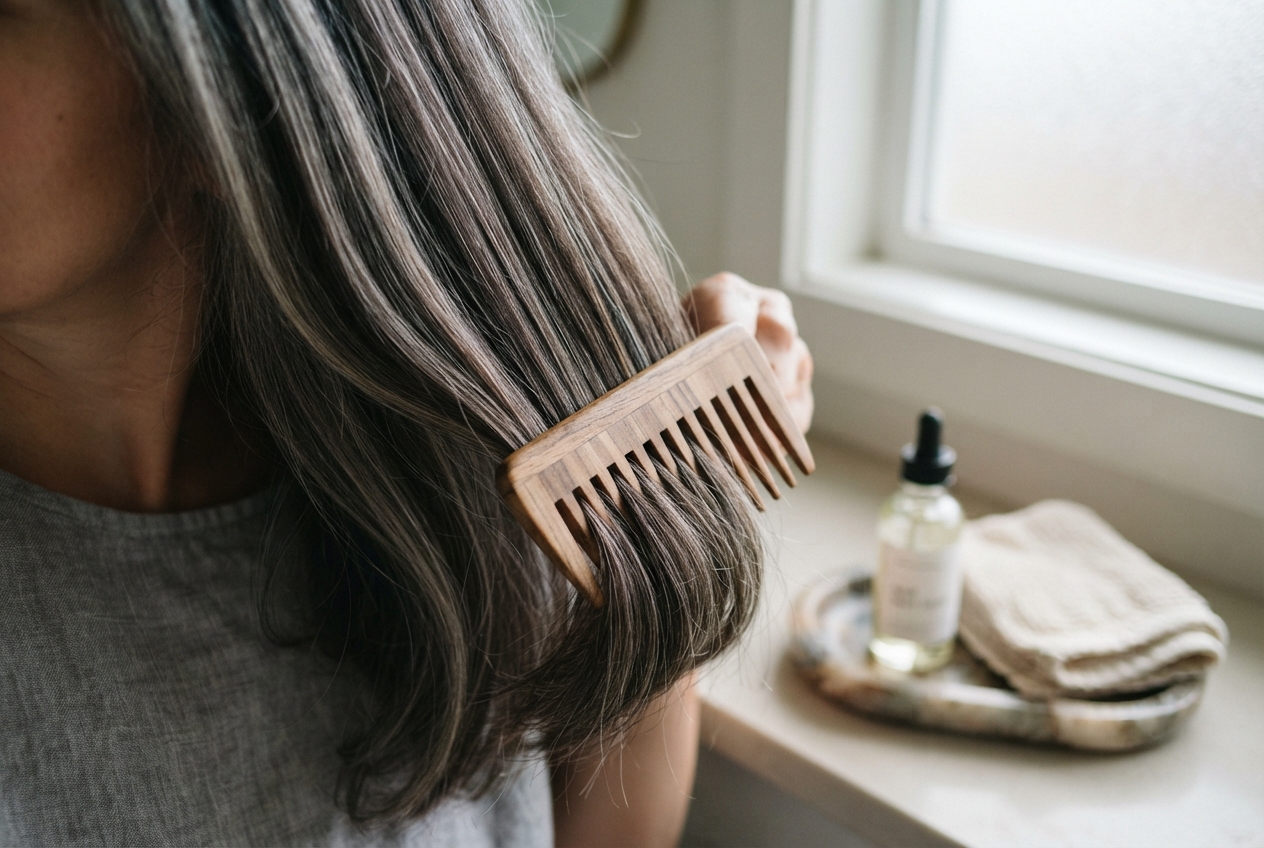
Coarser silver strands thrive on simple moisture routines and gentle botanical oils rather than chemical cover-ups.
When you let those silver strands emerge alongside younger skin, it creates a visual surprise that social media commenters clearly struggle to categorize. Some see it as aging; others see striking individuality. Either way, living with your real texture requires rethinking your everyday shelf of hair products.
Nourishing Silver Strands: Moisture, Shine, and Texture
Silver hair behaves differently than pigmented hair. The loss of melanin leaves the hair shaft slightly more porous, creating a wiry, coarse feel that needs deep nourishment rather than aggressive stripping shampoos.
- Switch to gentle, sulfate-free cleansers: Harsh detergents strip the protective lipid layer of white strands, leaving them brittle and dull under daylight.
- Introduce botanical oils for moisture: Light drops of cold-pressed jojoba or argan oil smoothed over damp ends tame frizz without weighting down natural wave patterns.
- Neutralize brassiness with purple botanical toners: Mineral buildup from tap water can turn bright silver into a muddy yellow. A gentle violet-tinted wash once every two weeks keeps silver looking crisp and luminous.
- Protect hair from heat styling: Without natural pigment to buffer temperatures, white hair scorches easily. Keep flat irons low and let your natural texture air-dry whenever possible.

The soft lines around a mother’s eyes tell the honest story of sleepless nights and quiet morning moments.
Postpartum Exhaustion vs. Algorithmic Skin
Hair was only half of Emily Jane’s equation. The other half was the honest signature of new motherhood. Emily openly shared that her eye shadows came straight from sleepless nights caring for an infant, a reality millions of parents know down to their bones.
New motherhood changes skin overnight. Hormonal shifts drop moisture levels, broken sleep stalls nightly cellular repair, and long nursing sessions sap hydration faster than you can pour another glass of iced herbal tea. Yet online audiences, accustomed to influencers posting “five-minute full-face tutorials” fresh out of bed, mistook common fatigue for deep structural aging.
A tired eye is not a damaged eye. It is the temporary mark of caring for someone who wakes every two hours. Attempting to match an internet aesthetic while keeping a small human alive is an exhausting game nobody needs to play.
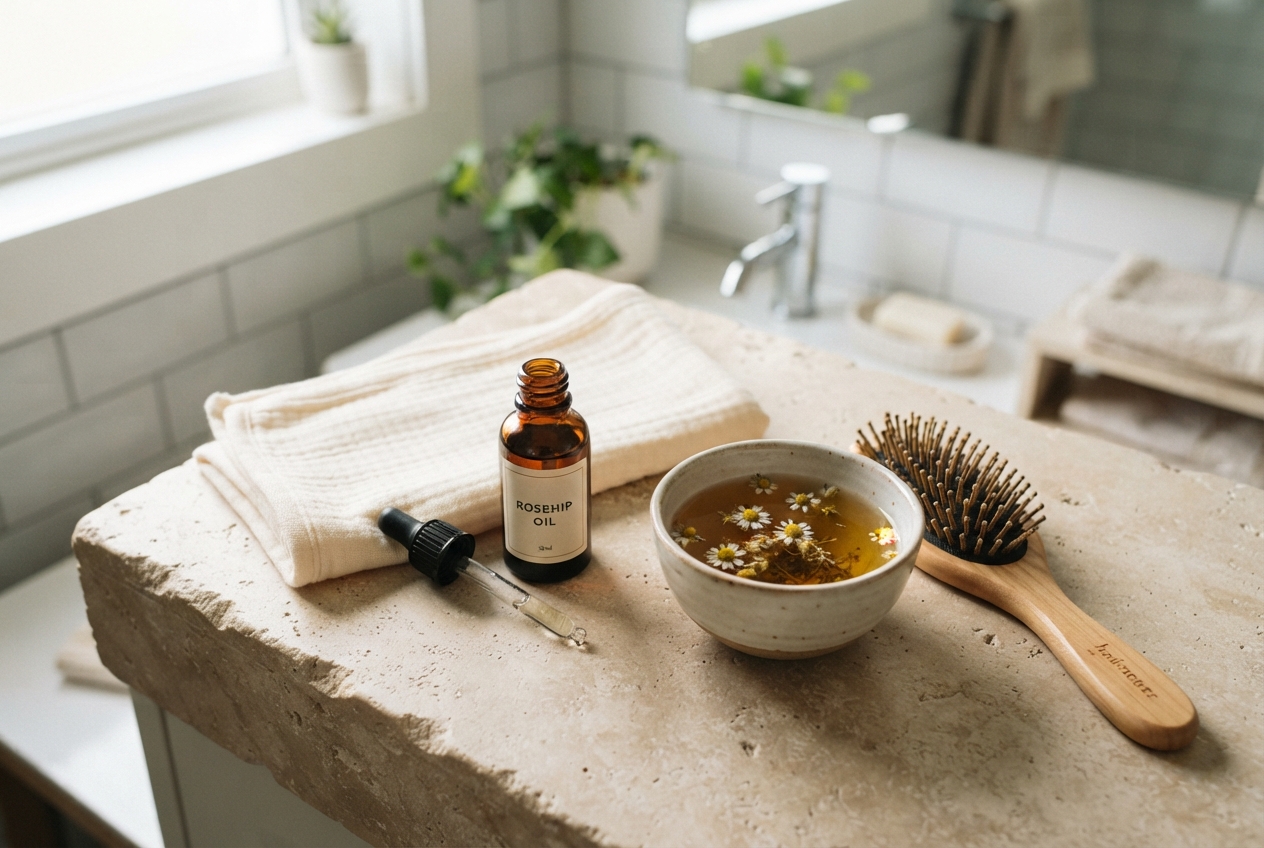
Simple, gentle morning rituals offer deep nourishment for skin adjusting to postpartum changes and busy seasons of life.
Small Morning Resets for Tired Postpartum Skin
When sleep is in short supply, complicated ten-step cosmetic routines feel like a joke. Instead of layering heavy concealers that crease into tired lines, small, soothing rituals restore comfort and a healthy glow.
- Cold compresses with chamomile water: Soaking a soft cotton washcloth in chilled chamomile tea and pressing it gently over the eyes for sixty seconds eases puffiness and calms tight skin.
- Glycerin and rosewater mists: A quick spritz on clean skin attracts environmental moisture without clogging delicate pores during warm afternoons.
- Pure squalane or rosehip seed oil: Patting three drops of plant-derived oil over damp skin locks in hydration and creates a soft, natural radiance that no powder can imitate.
- Hydration from the inside: Keeping a tall mason jar of water infused with cucumber slices and mint on the kitchen counter makes staying hydrated second nature during busy mornings.
Reclaiming Authenticity: Life Beyond the Digital Mirror
The comment section beneath Emily Jane’s video revealed far more about the insecurity of our digital culture than it did about her actual face. We have reached a bizarre moment where real human skin, textured hair, and motherhood fatigue look shocking simply because they are honest.
Emily took the wild guesses with steady composure, noting that she likes her face and has no intention of picking up a bottle of dye just to comfort strangers on the internet. That kind of quiet self-assurance is the true lesson hiding beneath the viral uproar.
Choosing to step outside the pressure cooker of artificial perfection is liberating. Whether you are growing out your roots, nursing a baby through the small hours of the night, or simply letting your skin breathe in the morning sun, embracing grey hair in your 30s reminds us that aging is an ordinary, beautiful part of being alive.