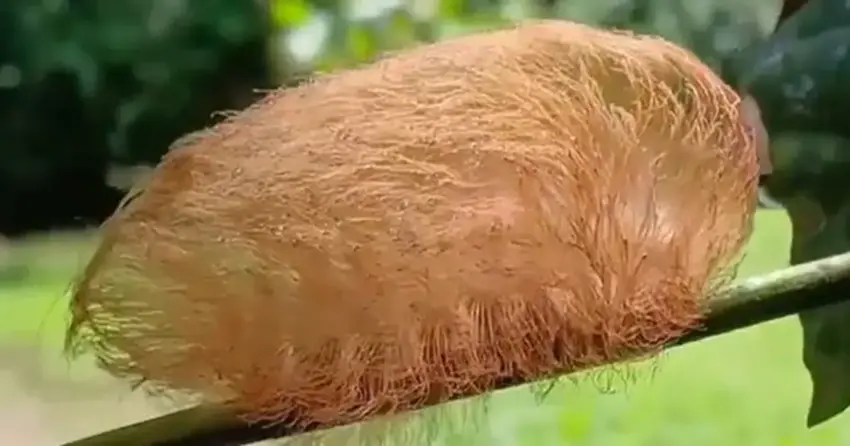
You are out in the yard with pruning shears in hand, clearing dead stems from the hydrangeas or raking fallen oak leaves, when something odd catches your eye. Clinging quietly to a twig is a teardrop of thick, caramel-colored fluff that looks suspiciously like a tiny displaced wig. Your first instinct is almost irresistible: reach down, stroke that ridiculously plush coat, and wonder what kind of charming garden pet just moved in.
Pull your hand back right now. That tiny creature is Megalopyge opercularis, commonly called the puss caterpillar, and brushing against it is a mistake your skin will not quickly forgive. Coping with a puss caterpillar sting is widely described by emergency room physicians and seasoned gardeners alike as comparable to broken glass pressed into skin, accompanied by throbbing pain that radiates straight into your joints.
What kind of caterpillar is this?
by
u/Zestyclose-Salad-290 in
whatisit
Before you run for the pesticide spray or vow to abandon your flowerbeds until winter, take a breath. Understanding how this creature lives, why it carries such a fierce sting, and what to do if you make accidental contact gives you your yard back without the panic.
Decoding the Camouflage: What Does a Puss Caterpillar Look Like?
Nature pulled a cruel practical joke with this insect. While most venomous animals display glaring warning signs—think neon wasp stripes or bright warning patterns—this larva disguises itself as an inviting tuft of downy fleece. The common name comes directly from its resemblance to a fluffy Persian kitten, but the charm stops at the visual surface.
In terms of shape, picture a rounded teardrop or an oversized comma roughly one to one-and-a-half inches long. The long, silky setae (hairs) drape over the body like a heavy winter coat, completely concealing the head, legs, and body segments underneath. From above, you cannot tell which end is moving forward until it starts its slow glide along a branch.
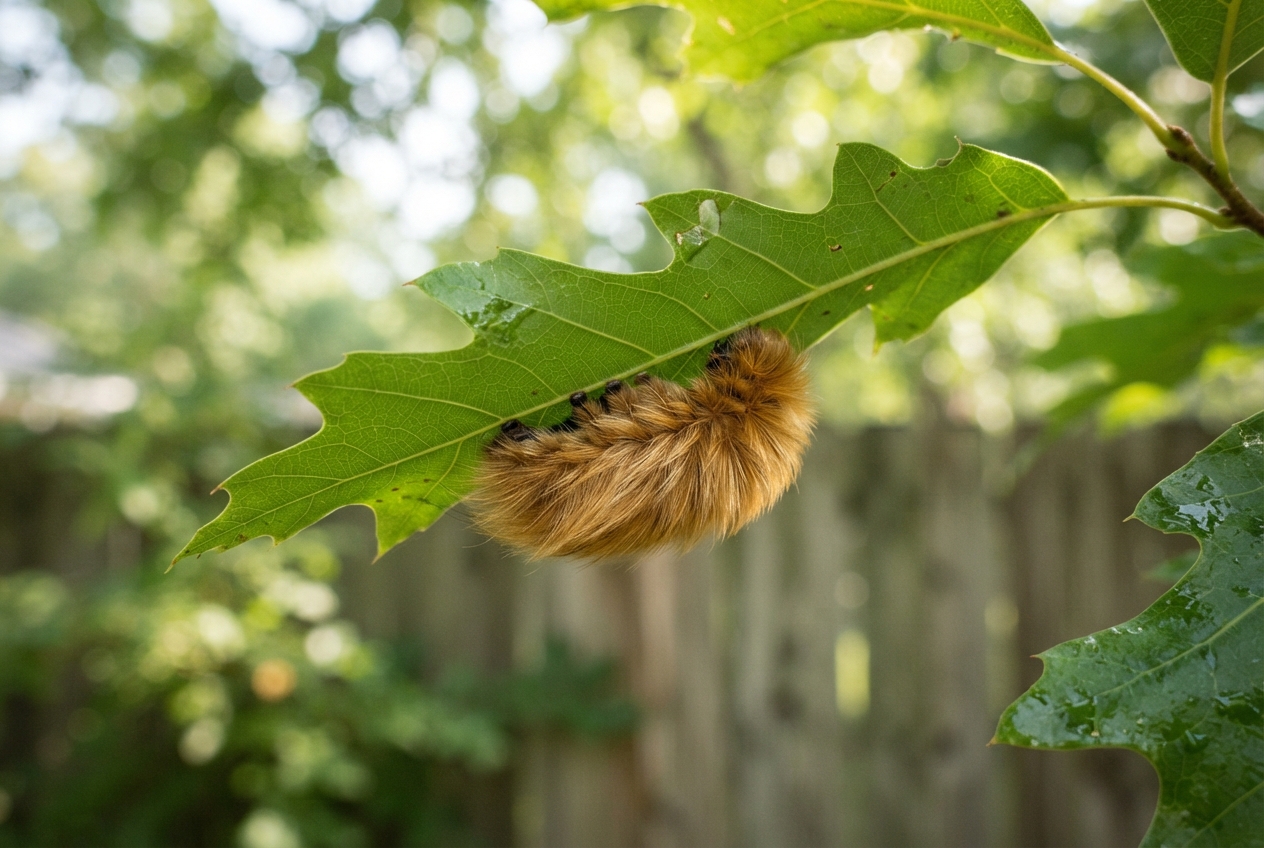
Beneath this cozy, golden teardrop of soft fur lies one of North America’s most potent insect defense mechanisms.
Their coloration shifts depending on their age and local environment. Young larvae often look pale cream, dirty gray, or bleached blond. As they mature through late summer, their coat deepens into a warm tan, reddish-chestnut, or dark chocolate brown, frequently featuring a darker stripe running down the spine.
Because they lack distinctive warning stripes, they blend naturally against tree trunks, dried seed heads, and garden furniture. You are far more likely to brush against one while reaching for a garden hose or harvesting herbs than you are to spot it marching out in the open.
The Hidden Trap: Why a Puss Caterpillar Sting Hurts So Badly
To understand the misery of this encounter, you have to peel back the illusion of that fur. The long, soft hairs you see are entirely harmless; they act as a facade. Tucked directly beneath that silk carpet are hundreds of short, rigid, hollow calcified spines connected to subcutaneous venom reservoirs.
When skin brushes against the caterpillar, those concealed spines snap off effortlessly, sticking upright into your dermal tissue like microscopic hypodermic needles. Pressure pumps the venom directly into your bloodstream. This distinction is key: the insect is venomous, not poisonous. It does not bite, jump, or aggressively pursue you. It simply sits still and lets its passive defense system do the work.
The pain does not build slowly over hours. It hits within minutes—a white-hot, throbbing sensation that frequently tracks up the affected limb toward the nearest lymph nodes.
Gardeners who have taken a direct hit to the forearm often report dull, heavy aches in their armpit or shoulder within thirty minutes. The physical mark left behind is distinctive: an erythematous grid pattern that mirrors the exact arrangement of the spines on the caterpillar’s body, resembling a miniature tire track stamped onto red, swollen skin.
Surviving a Puss Caterpillar Sting: Real First Aid That Works
If you or someone in your family accidentally brushes against one of these little garden landmines, speed matters. How you manage the first ten minutes can mean the difference between localized irritation and hours of misery.
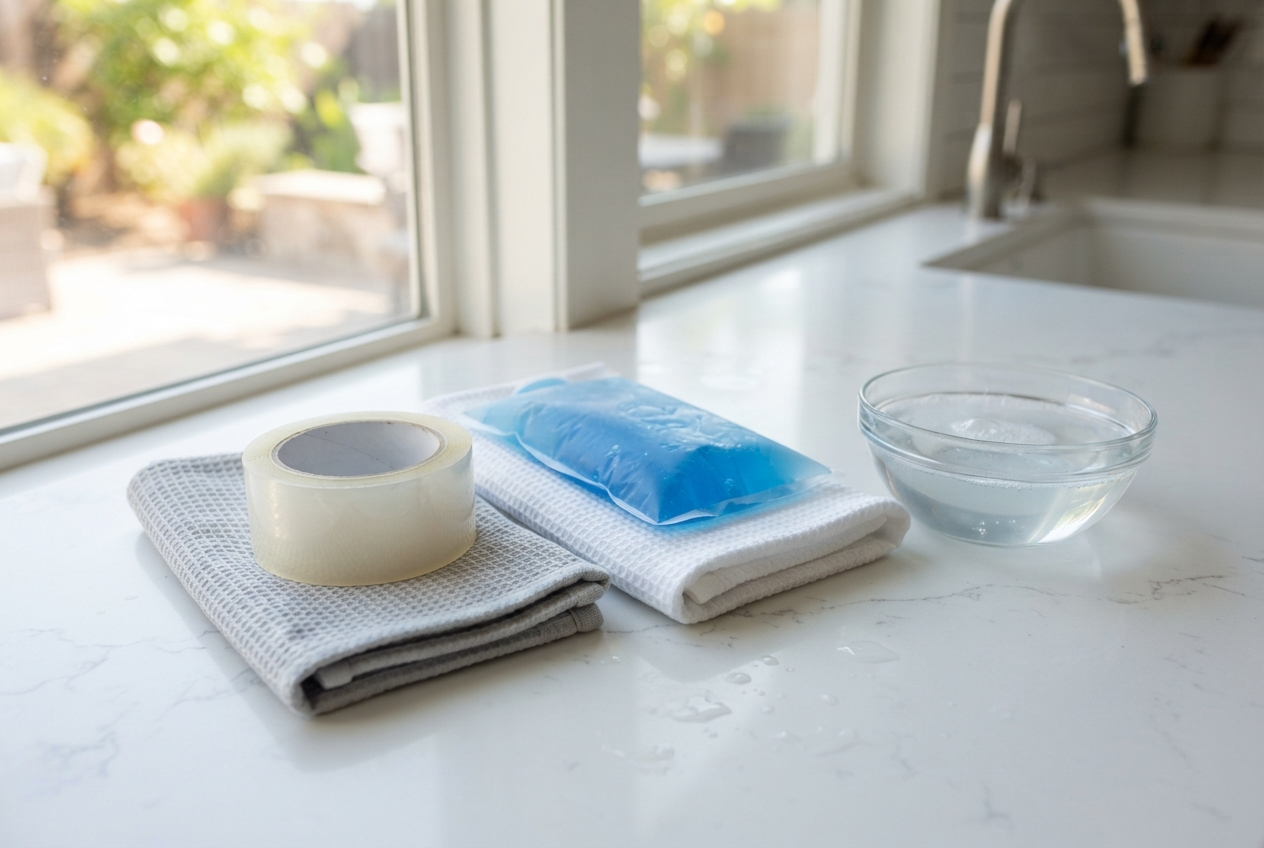
Prompt treatment matters: cellophane tape lifts embedded venomous spines before they release their full payload into your skin.
- Strip the spines immediately: Never rub the area with your bare hand, a cloth, or a garden glove, as this drives the hollow shafts deeper into the flesh. Grab a roll of cellophane tape, duct tape, or a sticky lint roller. Press it gently over the sting site and peel it away cleanly. Repeat with fresh tape across the grid until no spine tips remain.
- Wash with cool, soapy water: Cleanse the site gently without scrubbing. Cool water helps wash away surface toxins while preventing excess capillary dilation that can spread venom faster.
- Apply cold therapy: Wrap an ice pack or a bag of frozen peas in a clean cotton tea towel and press it to the area for ten to fifteen minutes at a time. The cold numbs the nerve endings and constricts local vessels to blunt the throbbing ache.
- Soothe the skin barrier: A thick paste made from baking soda and cool water applied directly to the rash helps pull moisture and ease surface irritation. Over-the-counter hydrocortisone cream and calamine lotion also provide relief once the skin is dry.
While most healthy adults can weather the sting at home with cold packs and rest, systemic reactions happen. Seek prompt medical care if you experience swelling around the face or throat, dizziness, shortness of breath, nausea, or abdominal cramping. Children and individuals with severe insect allergies require immediate clinical attention.
Furry Friend or Yard Hazard? Spotting Harmless Look-Alikes
Not every hairy caterpillar crawling across your porch step is a miniature hazard. Backyard ecosystems teem with fuzzy larvae, most of which play helpful roles as pollinators, composters, and food for backyard songbirds. Panicking at every tuft of fluff on your siding only adds unnecessary yard stress.
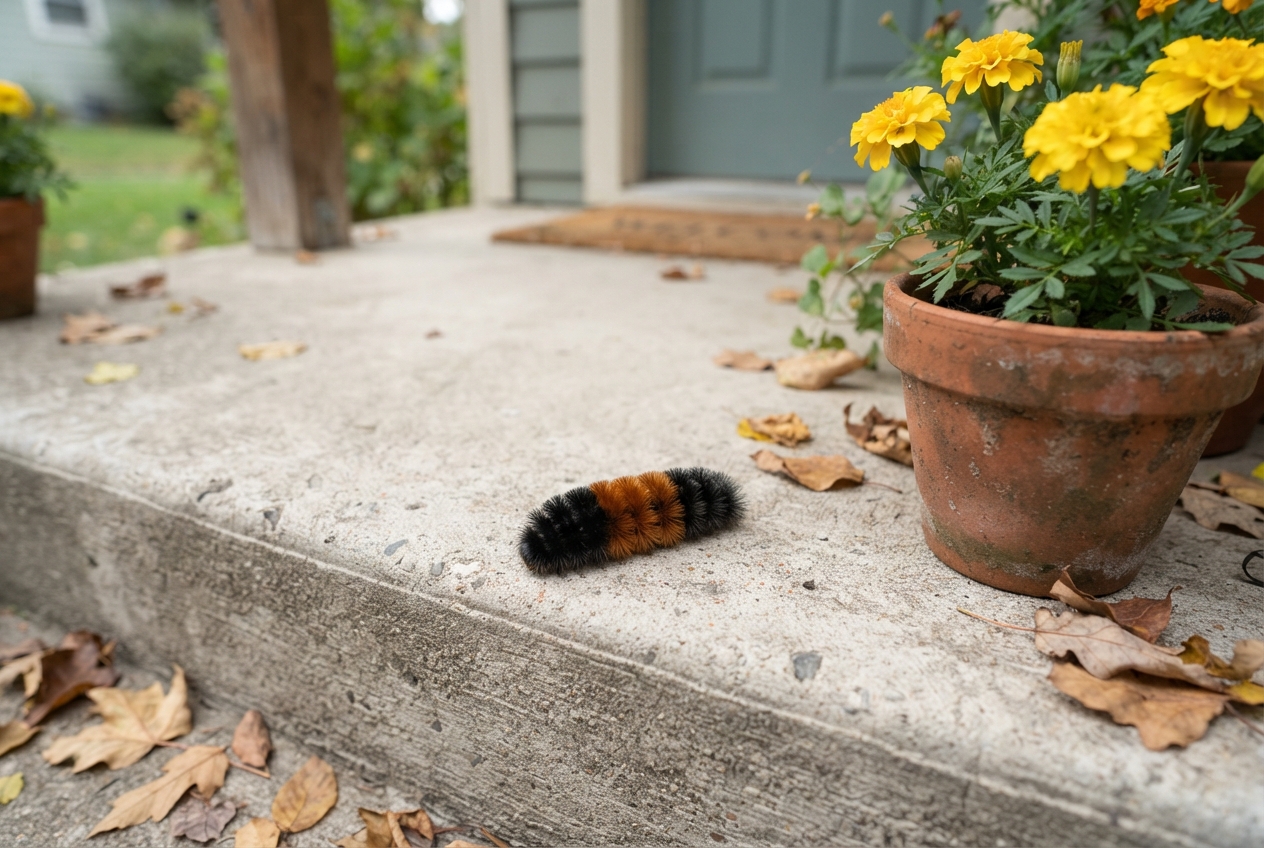
Unlike the puss caterpillar, the common woolly bear sports bristly bands of black and rust, posing zero venomous threat to gardeners.
The most common harmless neighbor is the beloved woolly bear, the larva of the Isabella tiger moth. Woolly bears feature stiff, bristly bands of dense black and rich rust-orange. Their bristles feel coarse, like a stiff toothbrush, rather than silky, and they lack venom glands entirely. When handled or startled, a woolly bear curls into a tight, defensive donut and waits for you to leave.
Another frequent yard visitor is the tussock moth caterpillar. These look significantly more dramatic, featuring distinct toothbrush-like hair pencils, bright red or yellow head capsules, and spiky hair tufts. While tussock caterpillars do not inject venom through hollow spines, their hairs can trigger mechanical contact dermatitis—an itchy, bumpy rash that responds well to washing. As a reliable rule of thumb: admire fuzzy insects with your eyes, keep your hands clear, and save your touch for smooth garden leaves.
Hotspots in Your Yard: Where Flannel Moths Hide and How to Protect Pets
Puss caterpillars are not random wanderers; they have clear dietary preferences. They feed heavily on deciduous shade trees and woody shrubs across the southern and eastern United States, ranging from New Jersey down through Florida and westward into Texas. Knowing where they feed keeps you from accidentally disturbing a feeding cluster.

Curious snouts and fallen leaves are a risky mix in late autumn when mature caterpillars drop from tree canopies.
Inspect the undersides of leaves on these preferred garden host plants:
- Oak trees (especially red oak and live oak canopies)
- Pecan and hickory branches
- Elm, hackberry, and sweetgum leaves
- Rose bushes and climbing ornamental brambles
- Citrus trees in southern coastal zones
Their numbers peak twice each year: a smaller wave in late spring and a much larger, denser population during late summer and autumn (September through November). As autumn temperatures drop and foliage thins, mature larvae crawl down trunks or drop directly into lawn mulch to seek out pupation spots.
This drop zone creates a specific hazard for outdoor pets. Dogs naturally investigate new smells by pushing their damp noses directly into piles of leaves. A curious hound that nudges or attempts to taste a puss caterpillar will suffer severe swelling of the muzzle, tongue, and throat, often accompanied by excessive drooling and distress. Keep your garden pathways cleared of heavy leaf drop during peak autumn weeks, and redirect pets away from trunk bases.
From Stinging Larva to Harmless Fluff: Meet the Adult Southern Flannel Moth
The caterpillar’s life cycle holds a reassuring secret. Once it finishes feeding on your oak foliage, it constructs a tough, brown, teardrop-shaped cocoon glued firmly to a branch or tree trunk. It overwinters inside that sheltered casing before emerging as a completely harmless adult.
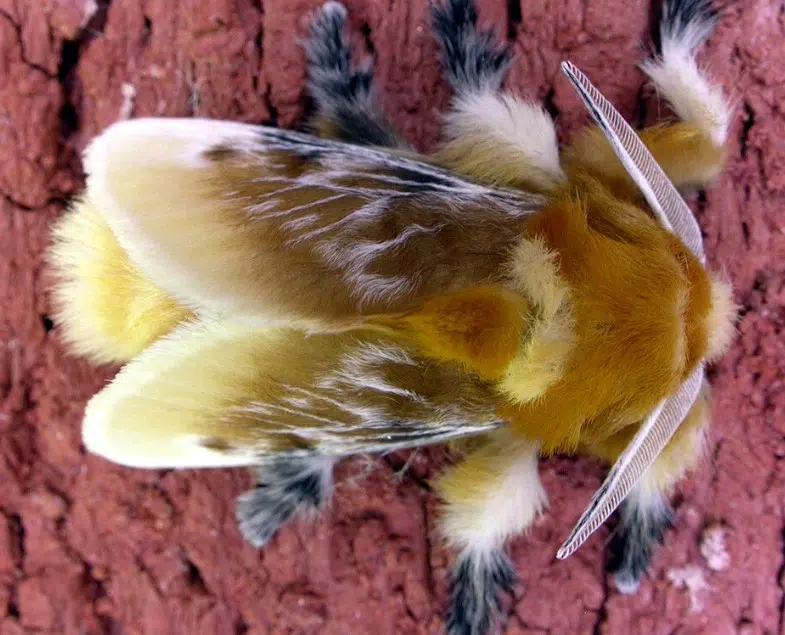
The adult southern flannel moth looks like a winged plush toy and, unlike its caterpillar stage, possesses no venomous spines.
The adult southern flannel moth is an absolute marvel to encounter under porch lights. It sports a remarkably thick, furry coat of golden-yellow, cream, and warm rust, complete with fluffy feathered legs and delicate comb-like antennae. It looks more like an animated miniature teddy bear with wings than a standard moth.
Most importantly: adult southern flannel moths do not sting. They have no venomous spines, no functional stinging apparatus, and relatively short adult lifespans dedicated solely to mating and laying the next generation of eggs on high canopy leaves. If one lands on your screen door on a warm summer evening, you can admire its peculiar fluff without fear.
Backyard Etiquette: Safe Relocation Without Chemicals
Spotting a puss caterpillar in your landscape does not justify soaking your yard in synthetic broad-spectrum pesticides. Chemical sprays kill beneficial pollinators, displace predatory wasps, and throw your garden’s balance out of order for a single insect that will turn into a moth within weeks.
If you find one clinging to a low shrub near a patio chair or children’s play set, use a simple relocation technique. Put on heavy leather work gloves, snap off the individual twig or leaf the caterpillar is resting on, and gently transfer it into a deep glass jar or bucket. Carry the leaf over to a wild tree line, dense woodlot, or an out-of-the-way oak tree far away from foot traffic.
If you notice a widespread infestation threatening a small ornamental tree, spray the foliage with Bacillus thuringiensis (Bt), a natural soil bacterium that targets leaf-chewing caterpillars without harming birds, bees, or mammals. For the occasional stray visitor, however, space and non-contact observation remain your best tools. Give that little toupee room to breathe, respect its prickly boundaries, and you will never have to experience a puss caterpillar sting firsthand.