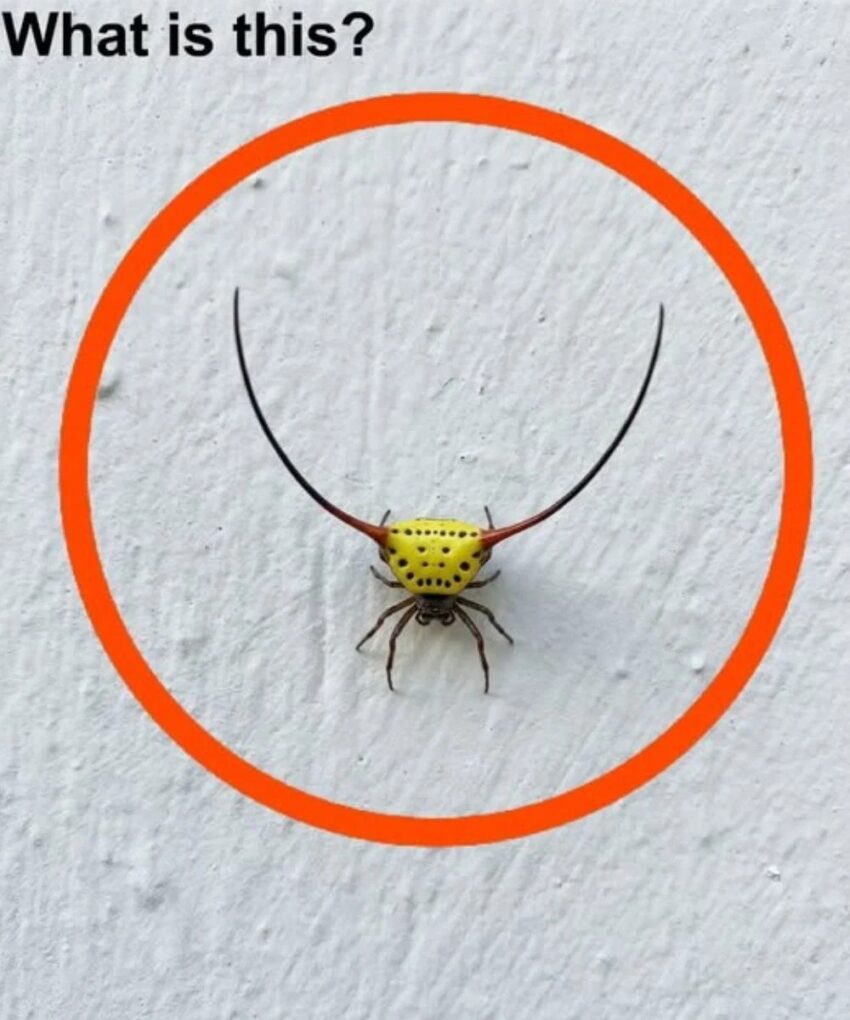
You flip on the garage light to grab a trowel or put away a basket of laundry, and there it is. Clinging to the painted drywall is a creature that looks like it crawled out of a science fiction storyboard. It sports a bright, hard-shell body, jet-black spots, and long, curved horns stretching out like miniature antennas.
Your pulse spikes. Your first instinct might be to grab a heavy boot or a can of spray. Before you panic, take a step back and look closer. That strange, armored visitor is a spiny orb-weaver spider, and it happens to be one of the gentlest, most helpful allies your home garden could ever ask for.
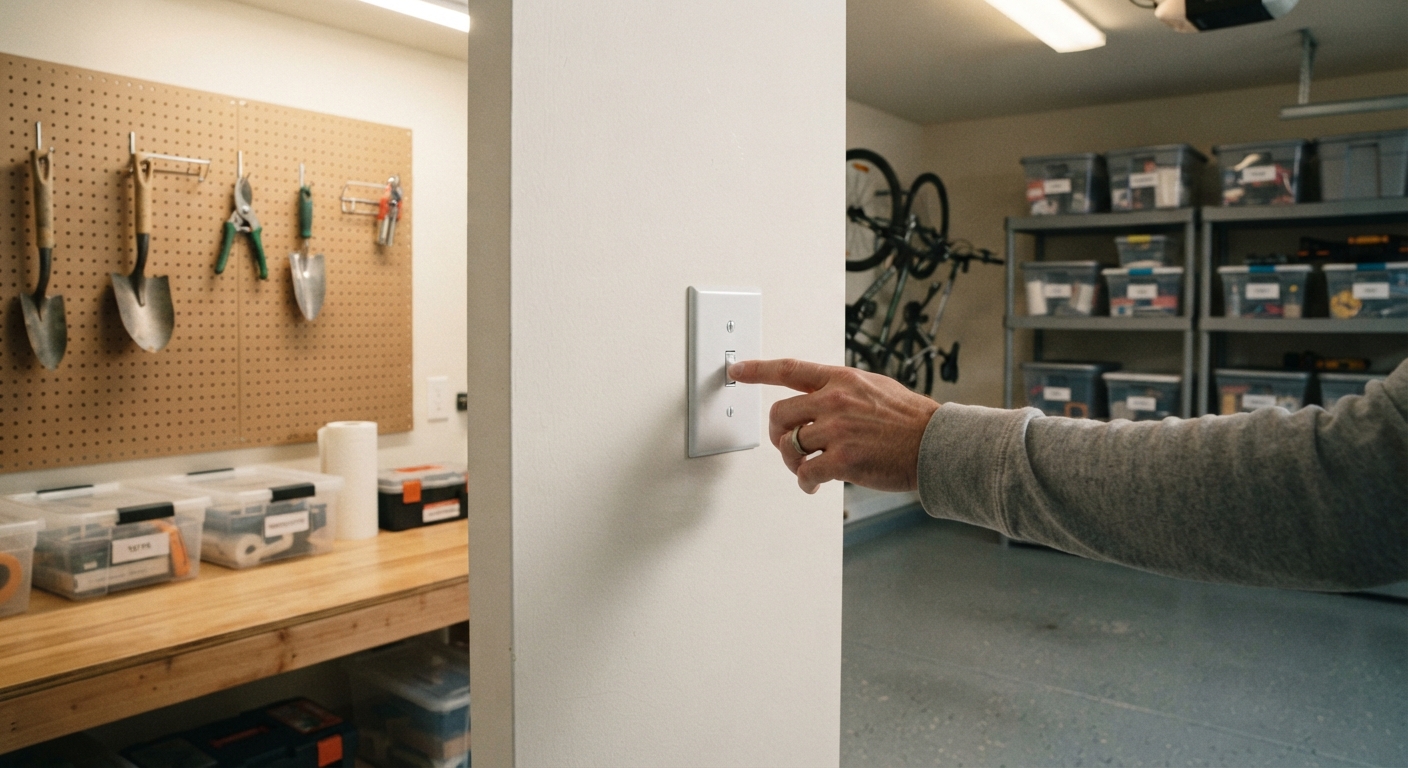
A quiet evening walk into the garage can quickly turn into an unexpected wildlife encounter.
Meet the Spiny Orb-Weaver Spider: Nature’s Armored Architect
Finding an unfamiliar insect or arachnid indoors can startle anyone. Spiny orb-weavers belong to the family Araneidae, a widespread group of orb-weaving spiders celebrated for their circular, wagon-wheel web patterns. While standard garden spiders have soft, rounded abdomens, spiny orb-weavers show off a hardened, crab-like shell edged with distinct points or sweeping spines.
The variety often spotted in outbuildings and sheltered corners features an unusually dramatic profile: a bright yellow or white abdomen flanked by elongated, arching spikes. These curved projections make the spider look twice its actual size. In truth, the central body is roughly the size of a thumbnail.
These spiders are completely non-aggressive. They do not hunt on foot, jump at humans, or hide under floorboards to cause trouble. They spend almost their entire lives suspended in silk webs, waiting patiently for flying pests to wander in.
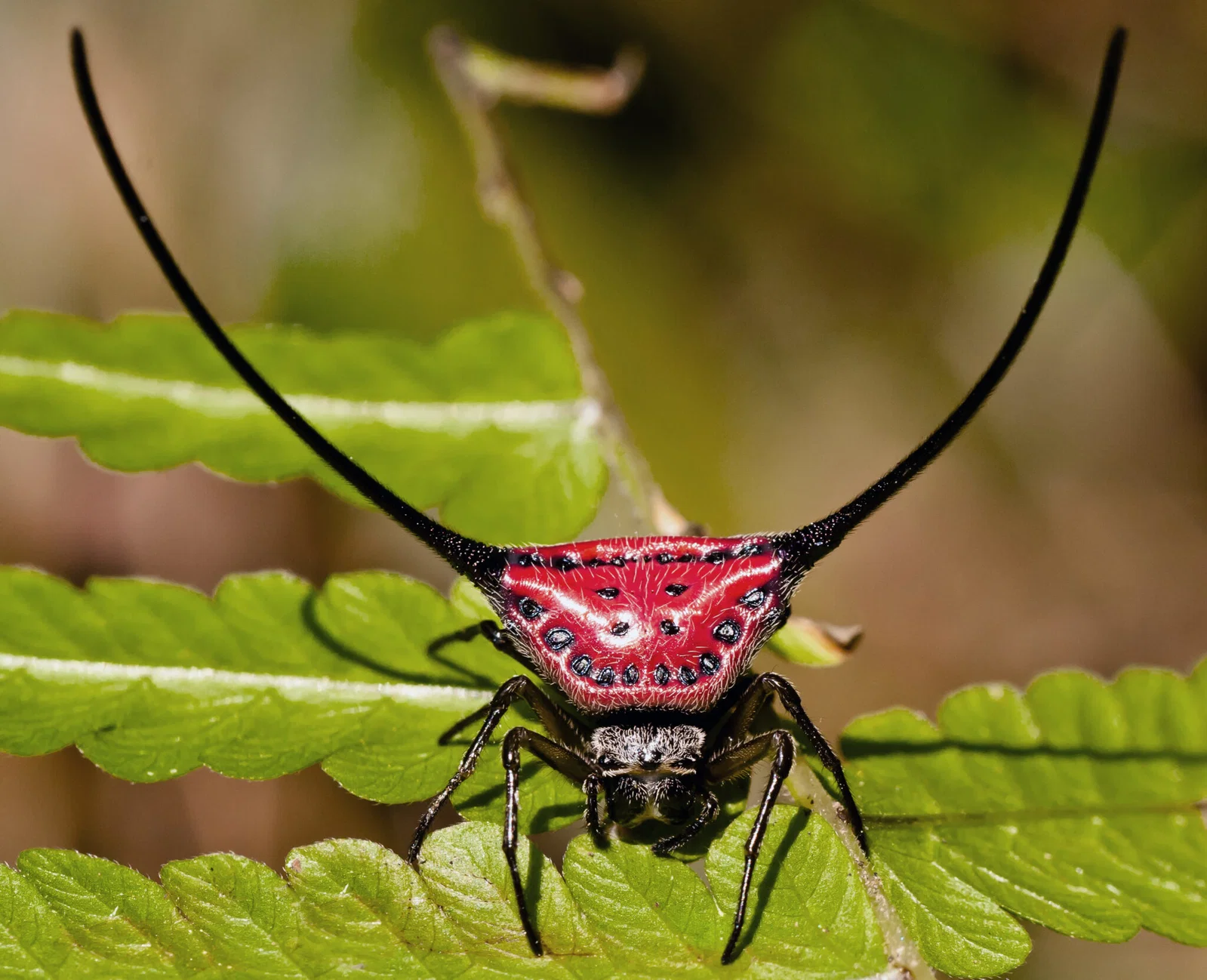
The dramatic red-and-black curved spines on this spiny orb-weaver look intimidating, but they exist strictly to deter hungry birds.
The Science Behind the Spikes
Why would a tiny garden spider build such an elaborate set of horns? The answer comes down to pure survival. Small birds, lizards, and predatory wasps view soft-bodied spiders as easy snacks. A spiny orb-weaver turns itself into a hard, prickly pill that predators simply cannot swallow comfortably.
The bright coloration acts as an honest warning in the wild, signaling to birds that this meal comes with sharp edges. Those spikes are not stingers, venom needles, or weapons designed for people. They are purely structural armor made of hardened chitin.
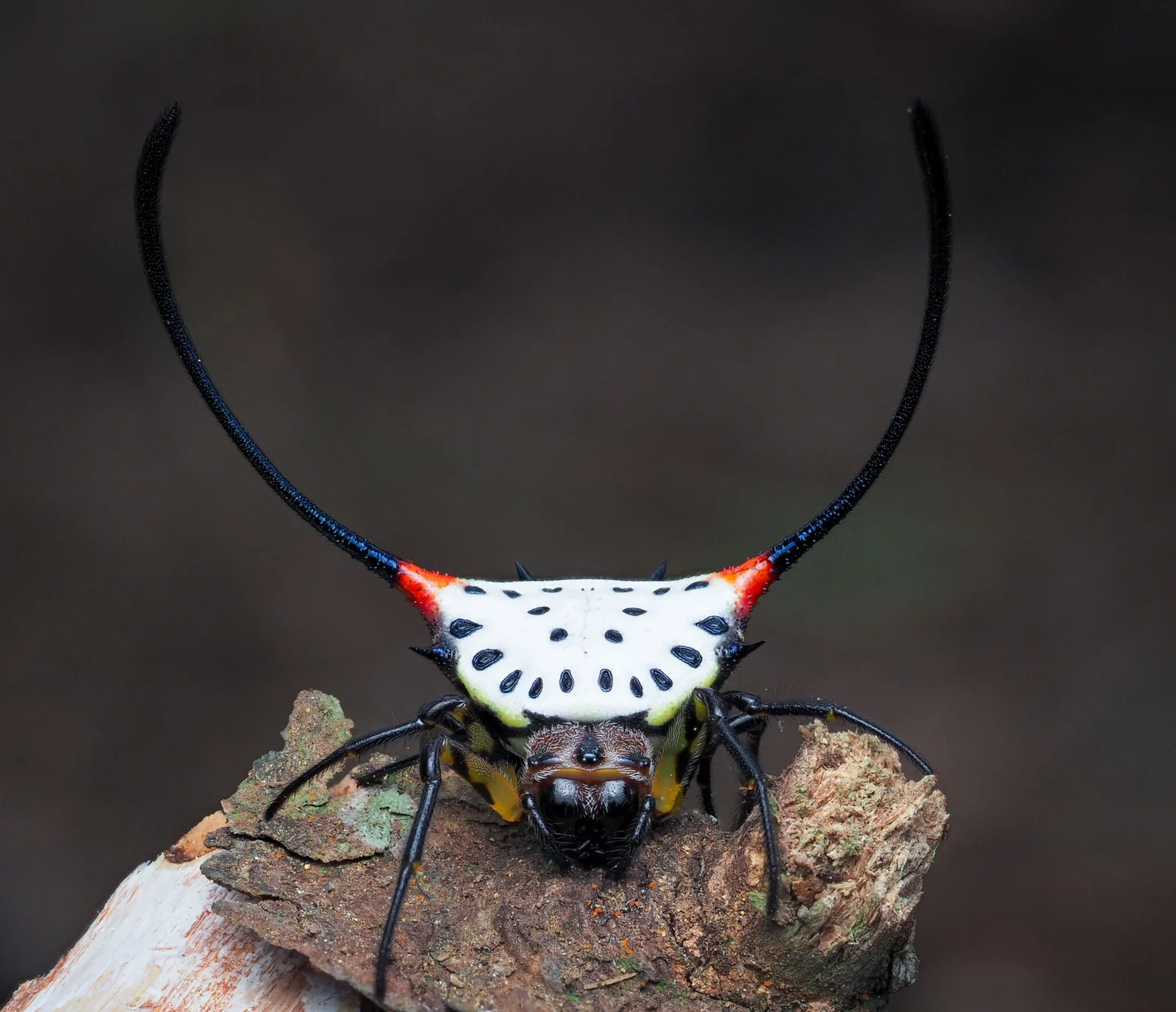
Spiny orb-weavers also display striking white porcelain tones with elongated, antenna-like horns.
Color Morphs: From Bright Yellow to Ghost White
Depending on your region and local species variants, these spiders display stunning color patterns. Some show off a radiant lemon-yellow shell with black pits that look like hand-painted enamel. Others exhibit a crisp, porcelain-white top plate tipped with bright orange or red bases right where the horns begin.
Males are significantly smaller than females and rarely possess the oversized horns that catch our attention. If you spot one perched dramatically on a wall or framed against a window screen, you are almost certainly looking at an industrious female managing her territory.
Why Did a Spiny Orb-Weaver Show Up in Your Garage?
Spiders do not wander into human spaces out of malice. During late summer and early autumn, mature orb-weavers reach their full size and expand their web-spinning efforts. Garages, breezeways, carports, and covered porches offer quiet protection from heavy rains and gusty winds.
Nighttime lighting around exterior doors also acts as a magnet for moths, gnats, midges, and mosquitoes. A spider looking for a prime hunting spot simply follows the food supply. If a side garage door stayed cracked during afternoon yard work, a drifting breeze can easily carry an orb-weaver inside on a strand of silk.
“Most indoor spider sightings aren’t signs of an infestation; they are simply outdoor wanderers taking advantage of shelter and evening light.”
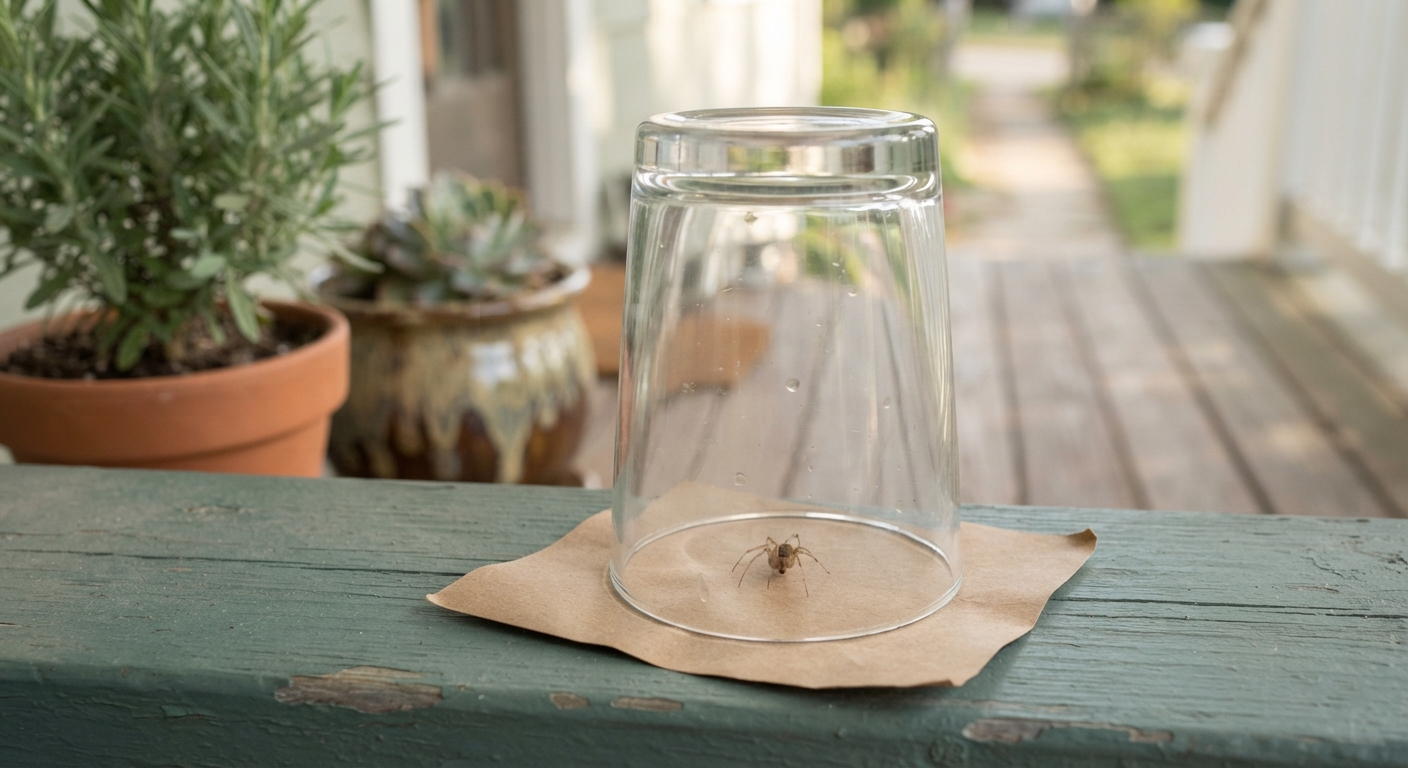
A simple clear glass tumbler and a piece of sturdy cardstock make catch-and-release stress-free for both you and the spider.
How to Safely Relocate a Spiny Orb-Weaver (No Squashing Required)
Because a garage wall offers very few flying insects, a stranded orb-weaver will eventually run out of energy if left indoors. Moving the spider out to your garden beds or shrubbery takes less than two minutes and keeps your garden ecosystem thriving.
- Grab a Clear Glass: Place a clean, wide-mouthed drinking glass or mason jar gently over the spider while it rests on the wall.
- Slide Sturdy Cardstock Underneath: Slide a piece of stiff junk mail, cardstock, or an index card slowly between the wall and the rim of the glass. The spider will step right onto the paper.
- Keep It Level: Hold the paper tight against the rim, turn the cup upright, and walk out to your garden.
- Release Near Foliage: Rest the open jar sideways among sturdy plant stems, such as tomato cages, hydrangeas, or tall ornamental grasses. The spider will crawl out safely within minutes.
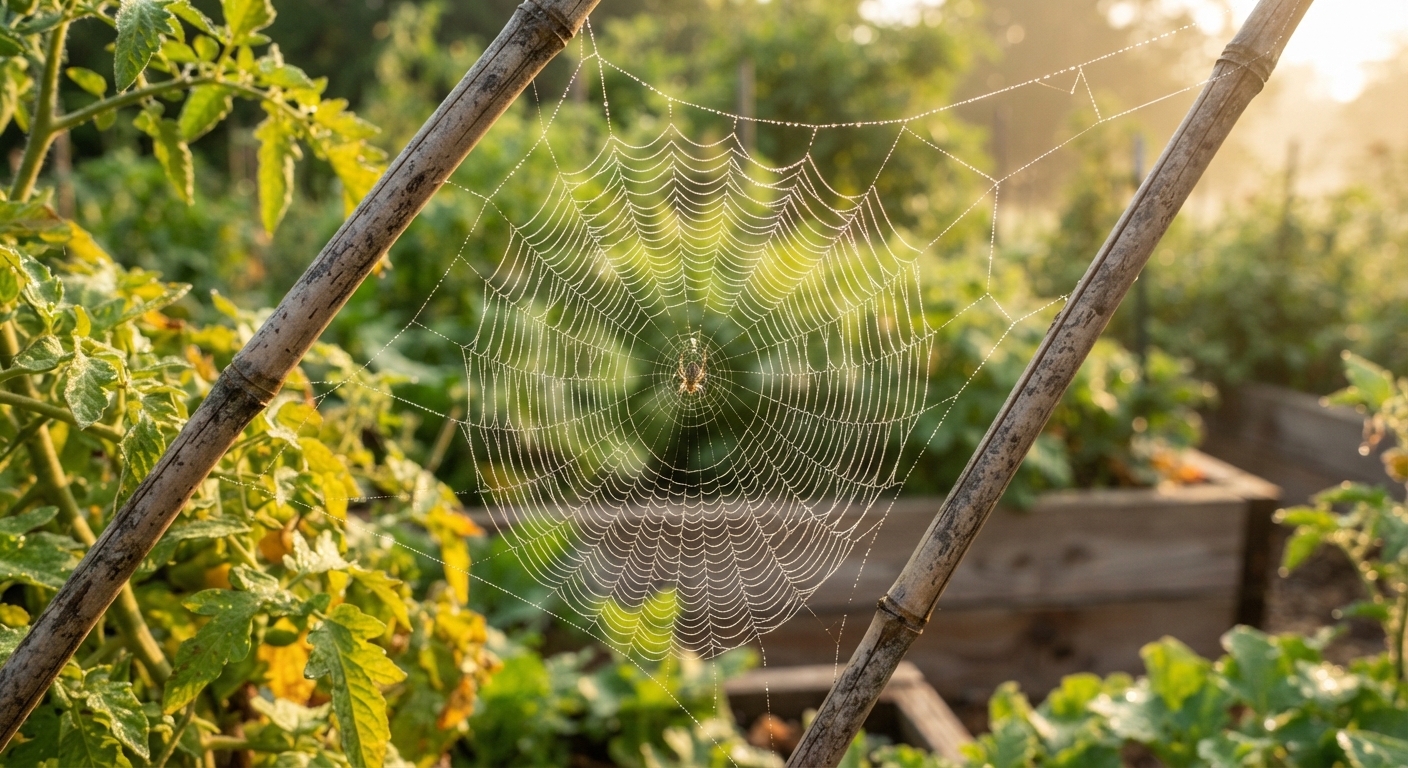
Dew-covered orb webs woven between garden trellises quietly trap flies, moths, and aphids from dawn to dusk.
Backyard Benefits: Why Gardeners Love These Spiders
Every homemaker and gardener knows the frustration of dealing with insect damage on heirloom vegetables and patio herbs. Aphids, whiteflies, cucumber beetles, and nuisance mosquitoes can overwhelm outdoor living areas quickly. Spiny orb-weavers provide 24-hour organic pest management without a single drop of synthetic spray.
Each morning, a female orb-weaver constructs a fresh, symmetrical web with incredible precision. Throughout the day, her sticky silk traps dozens of tiny flying pests that would otherwise nibble your prized dahlias or buzz around your iced mint tea. At night, many species consume their old web silk to recycle the proteins, rebuilding a fresh structure before sunrise.
Having one or two of these living sculptures nestled in your flower borders creates a balanced, thriving backyard space where natural predators do the hard work for you.
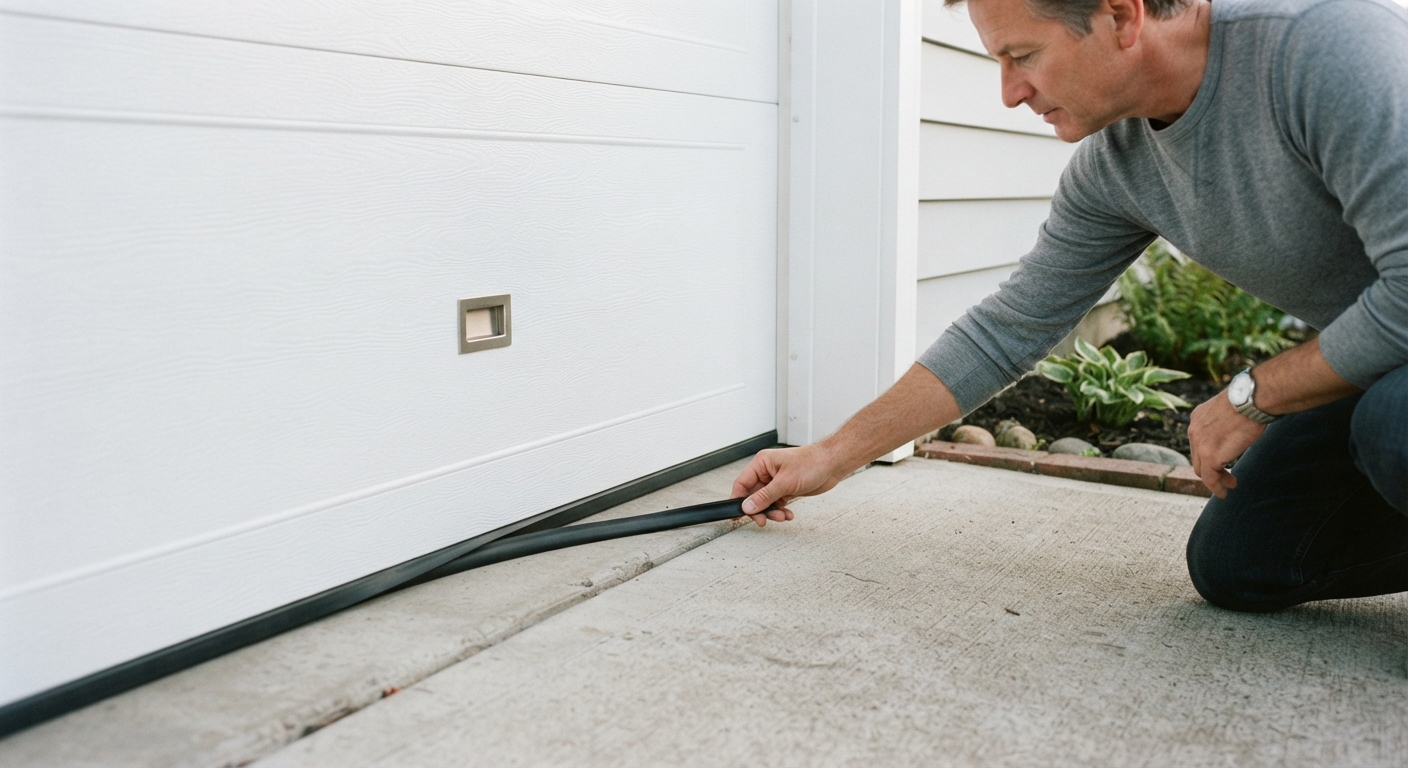
Inspecting garage door sweeps and perimeter seals keeps outdoor critters where they thrive best.
Humane Ways to Keep Spiders Outdoors Where They Belong
While we appreciate having beneficial arachnids in the garden, we usually prefer to keep our indoor walls and utility rooms clutter-free. You can discourage spiders from drifting inside using simple, non-toxic household habits.
- Refresh Door Weatherstripping: Check the bottom rubber seal on your main garage door and side entryways. Replacing cracked sweeps blocks ground-level entry points.
- Switch Exterior Bulbs: Swap out bright white incandescent bulbs near garage doors for warm yellow LED bug lights, which attract far fewer night-flying insects.
- Clear Wall Clutter: Keep storage bins, cardboard boxes, and garden tools neatly organized on wall hooks or raised shelving rather than piled in corners.
- Use Peppermint Sprays: Lightly mist entry thresholds with a mixture of warm water and a few drops of natural peppermint oil. Spiders dislike strong aromatic oils and naturally avoid crossing treated thresholds.
Embracing the Quirky Wonders of Everyday Nature
Finding a strange, horned visitor on your garage wall is a classic reminder that our backyards are full of tiny, astonishing marvels. What looks like a tiny monster at first glance is simply a gentle, hardworking ally sporting a clever suit of armor.
Next time you flip on the light and spot a spiny orb-weaver spider, skip the broom and the panic. Snap a photo of its remarkable geometry, guide it out to your tomato patch, and let it get back to doing what it does best: keeping your garden healthy and pest-free.