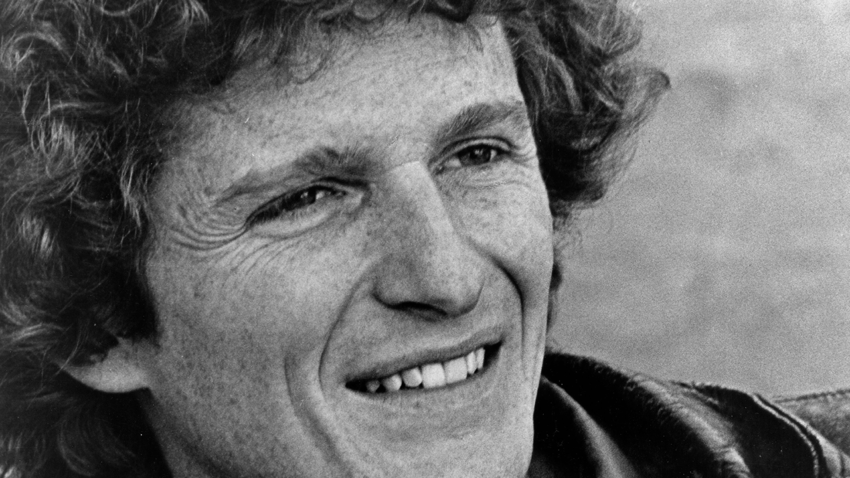
Some lives take turns so wild that fiction could never get away with writing them. When news broke that Marjoe Gortner passed away at 82 in Santa Fe, New Mexico, memories rushed back of a golden-haired boy who once commanded thousands from a sawdust-covered stage. He died peacefully from congestive heart failure, surrounded by family, closing the book on one of the strangest American odysseys ever recorded.
To really understand who he was, you have to peel back decades of Hollywood cult films, charity sports matches, and rock-and-roll experiments. At the core of the Marjoe Gortner life story lies a small boy trapped inside a grueling traveling show, an artist who blew the whistle on his own world, and a grown man who spent the second half of his life learning how to simply be himself.
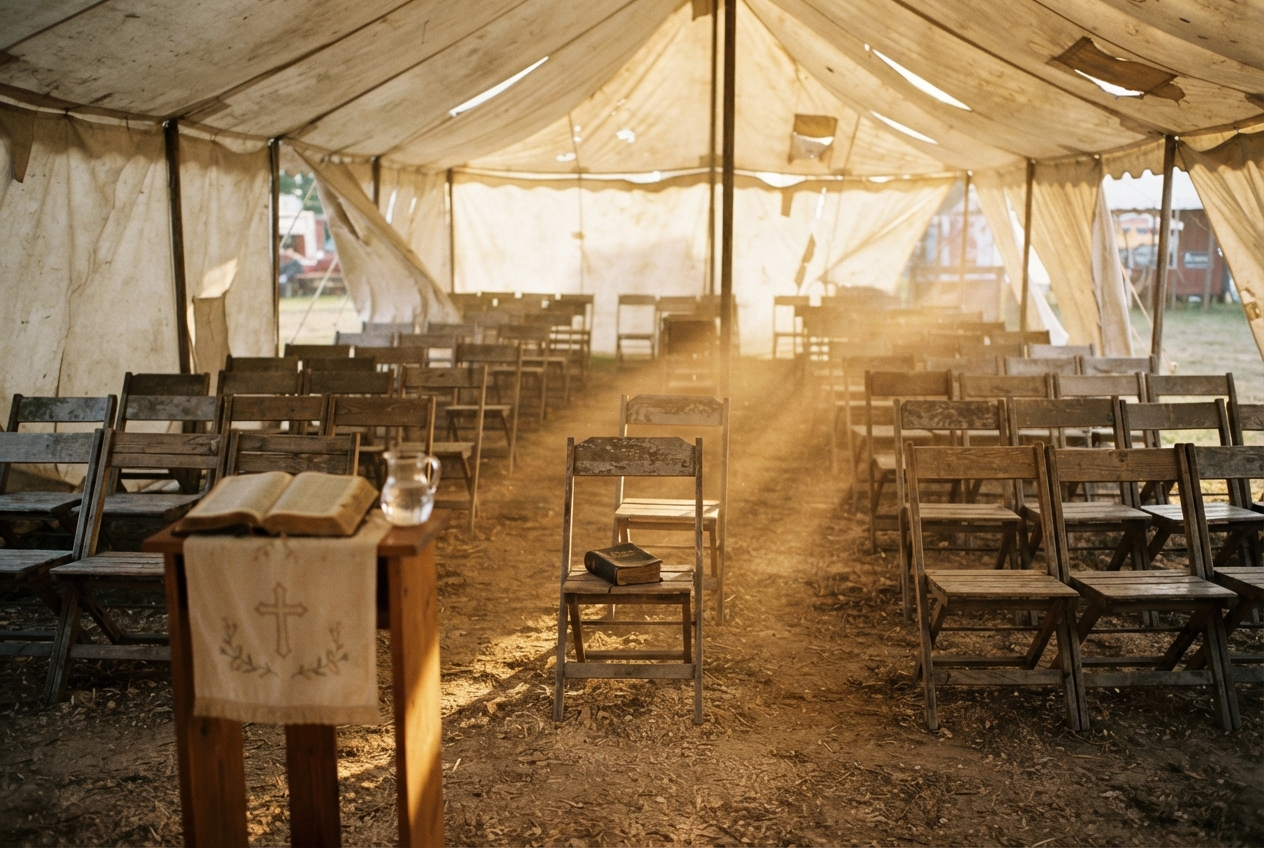
Beneath billowing canvas tents and smelling of fresh sawdust, young Marjoe Gortner was taught how to hold thousands spellbound before he even learned to read.
The Marjoe Gortner Life Story: A Child Prodigy in the Sawdust Ring
His story began with an impossible burden. Born Hugh Marjoe Ross Gortner in Long Beach, California, his first name was stitched together from Mary and Joseph. His parents, Vernon and Marge Gortner, were third-generation traveling ministers who saw rare gold in their son. Before the boy could tie his shoes, they claimed he received a direct vision from heaven.
The reality was far darker and far more disciplined. Marjoe was drilled relentlessly on cadence, theatrical pauses, and dramatic hand gestures. By age four, he was ordained as a minister, traveling from rural church auditoriums to boiling summer tents across the country. He even officiated a legal marriage ceremony at four years old, wearing tiny suspenders and reciting lines through a babyish lisp.
Audiences were mesmerized. His shock of amber curls and bright eyes made him look like a cherub delivered straight from a Renaissance fresco. When he shouted into the microphone about brimstone, crowds gasped, wept, and rushed the altar with open pocketbooks.
Behind the Curtain: The Illusion and the Disappearing Fortune
Every night brought the same routine. The room smelled of sweet tallow candles, damp wool coats, and red-clay dust kicked up by pacing feet. Little Marjoe learned how to work the room into a fever pitch, knowing exactly when to drop his voice to a whisper and when to hammer the pulpit wood with his fist.
“When I started back, I preached about redemption, love, the war, social responsibility. The message people came to hear was always about eternal damnation, to be threatened with Hell, to be driven into repenting.”
The collection plates filled quickly. Between four and sixteen, Marjoe was the engine of an enterprise that gathered roughly three million dollars. But the security he thought he was earning vanished in an instant. Shortly after his sixteenth birthday, his father disappeared, taking every cent of the family fortune with him and leaving Marjoe with empty pockets and a fractured sense of identity.
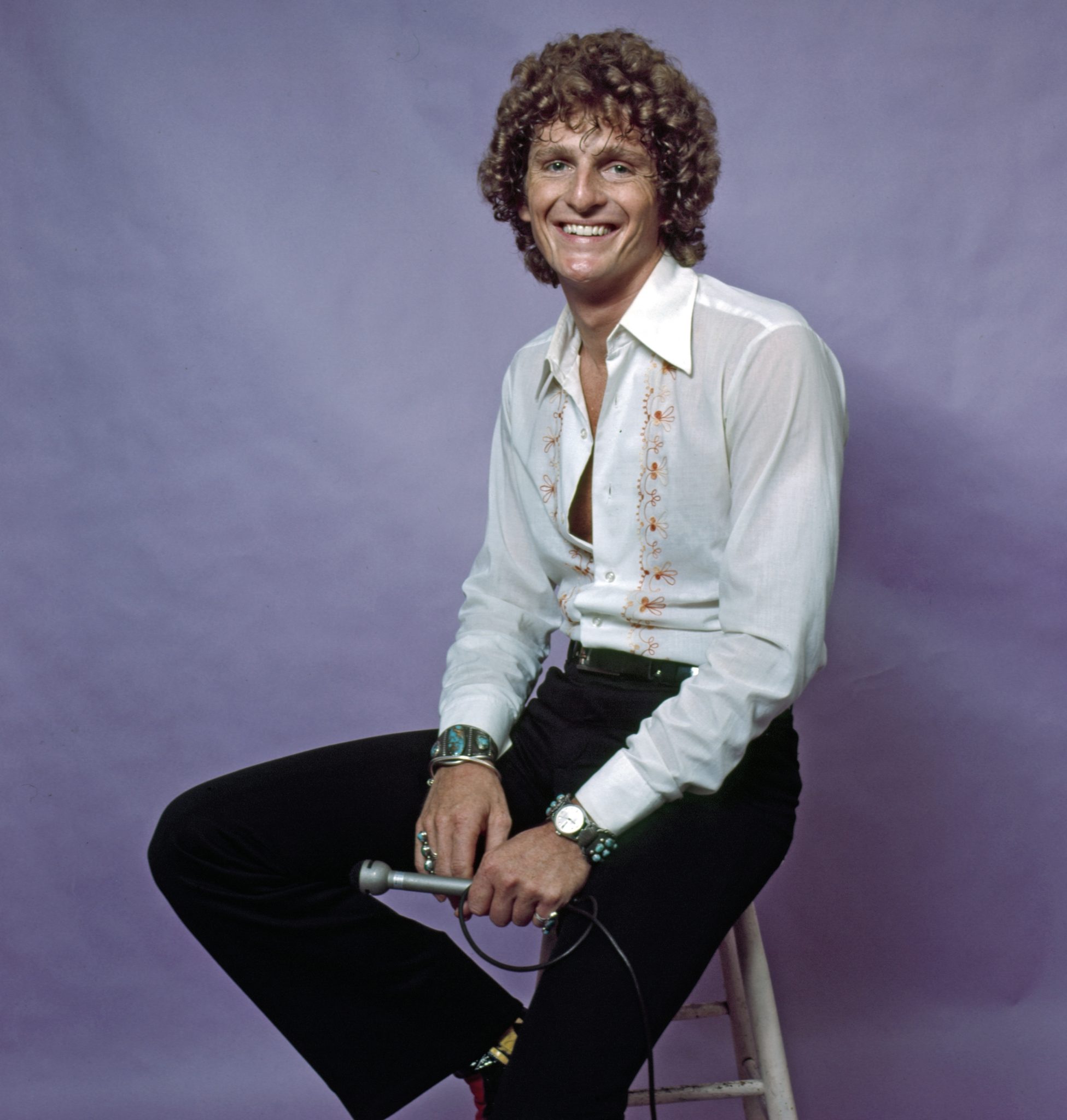
Holding a stage microphone in 1972, Gortner paired Mick Jagger flair with revivalist rhythm while pulling the curtain back on the entire operation.
Blowing the Whistle: The 1972 Oscar-Winning Documentary
Most people who survive that kind of childhood stay hidden. Marjoe took the opposite road. In his late twenties, finding himself short on cash and deeply disillusioned, he made a daring choice. He teamed up with documentary directors Howard Smith and Sarah Kernochan for what would be his farewell tour across the American South.
The cameras rolled as Marjoe went through his paces on stage, leaping and shouting like a Pentecostal rock star. Then, behind closed motel doors, he turned directly to the camera lens. He counted piles of green cash on the floral bedspread, explained the trade secrets of audience psychology, and demonstrated how to fake speaking in tongues.
The resulting 1972 film, titled simply Marjoe, hit theaters like a lightning strike. It premiered at Cannes, stunned critics, and captured the Academy Award for Best Documentary Feature. By pulling back the curtain on the entire business, Marjoe bought back his own freedom.
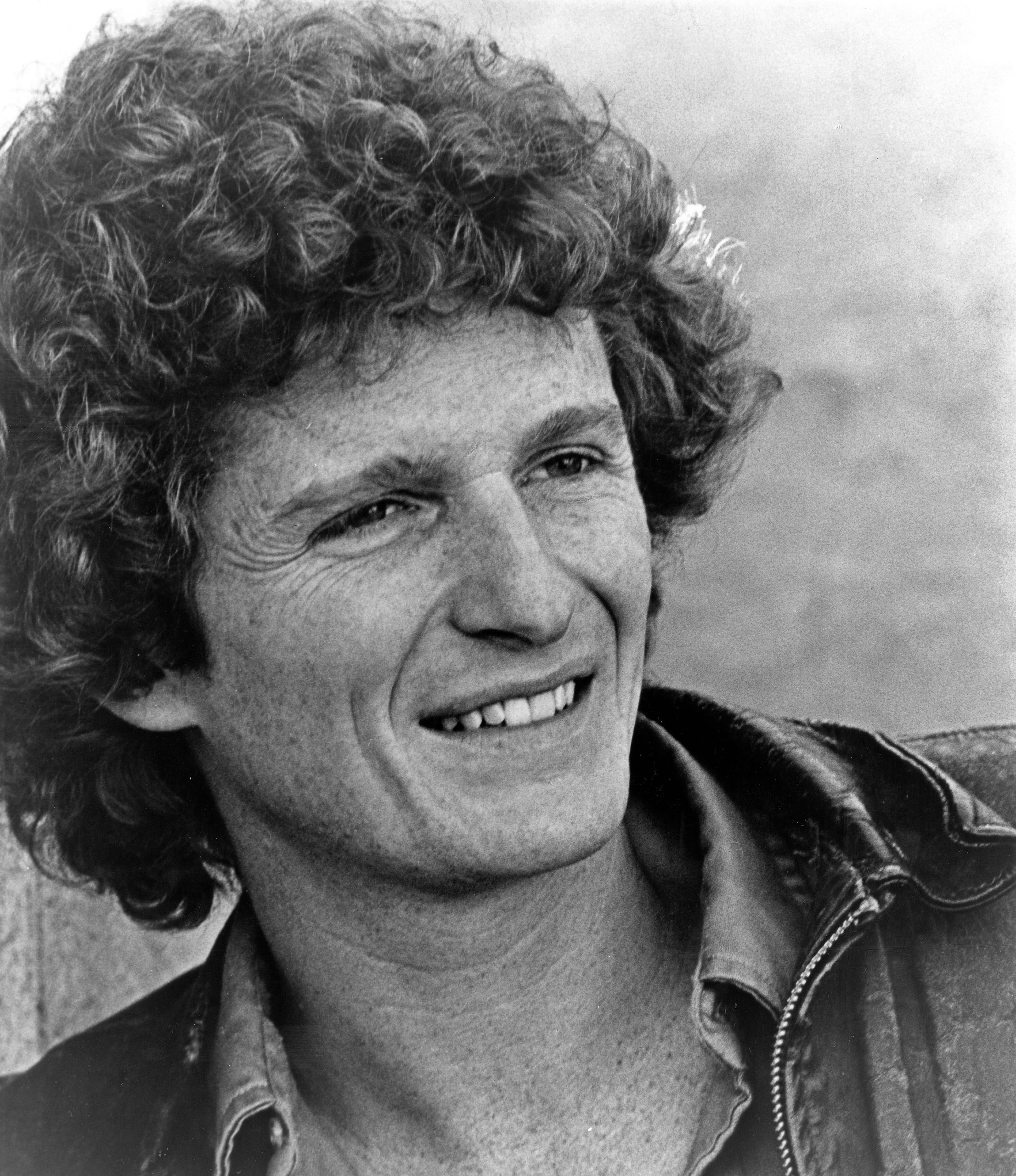
Armed with a tousle of curls and an unmistakable grin, Marjoe carried his natural stage presence straight onto Hollywood soundstages.
From Revivals to Hollywood Soundstages
Once the world knew him as a performer rather than a preacher, Hollywood came calling. He signed a studio deal with Universal Pictures, trading the altar for screen roles that leaned into his raw, frenetic energy. He knew how to command a camera lens because he had spent twenty years learning crowd psychology from the stage.
He broke out in The Marcus-Nelson Murders, the celebrated television movie that served as the launchpad for Kojak. Soon after, he starred in the 1974 disaster blockbuster Earthquake alongside Charlton Heston, playing a volatile grocery clerk turned National Guardsman. Cult cinema fans still celebrate his roles in The Food of the Gods, Bobbie Jo and the Outlaw, and the campy space adventure Starcrash.
Throughout the 1980s, his face popped up across prime-time television. Viewers tuned in to watch him on The A-Team, Airwolf, and Fantasy Island. On the hit drama Falcon Crest, he delighted audiences as Vince Karlotti, an eccentric and unscrupulous psychic who fit Gortner’s sharp humor like a tailored glove.

Stepping away from the pulpit meant finding his own voice through rock records, late-night script readings, and an unpredictable string of screen roles.
Reinvention in the High Desert: Charity, Peace, and Santa Fe
Acting paid the bills, but it did not define his middle age. In the late 1980s and 1990s, Marjoe stepped into producing. He created the Marjoe Gortner Celebrity Sports Invitationals, organizing weekend competitions that brought television stars together to raise millions of dollars for children’s hospitals and charities.
His friend, actor Ian Ziering, remembered his warmth and relentless drive to give back. Marjoe took the charisma that had once been exploited for profit and turned it into an engine for genuine community good, quietly funding causes without needing the sermon attached.
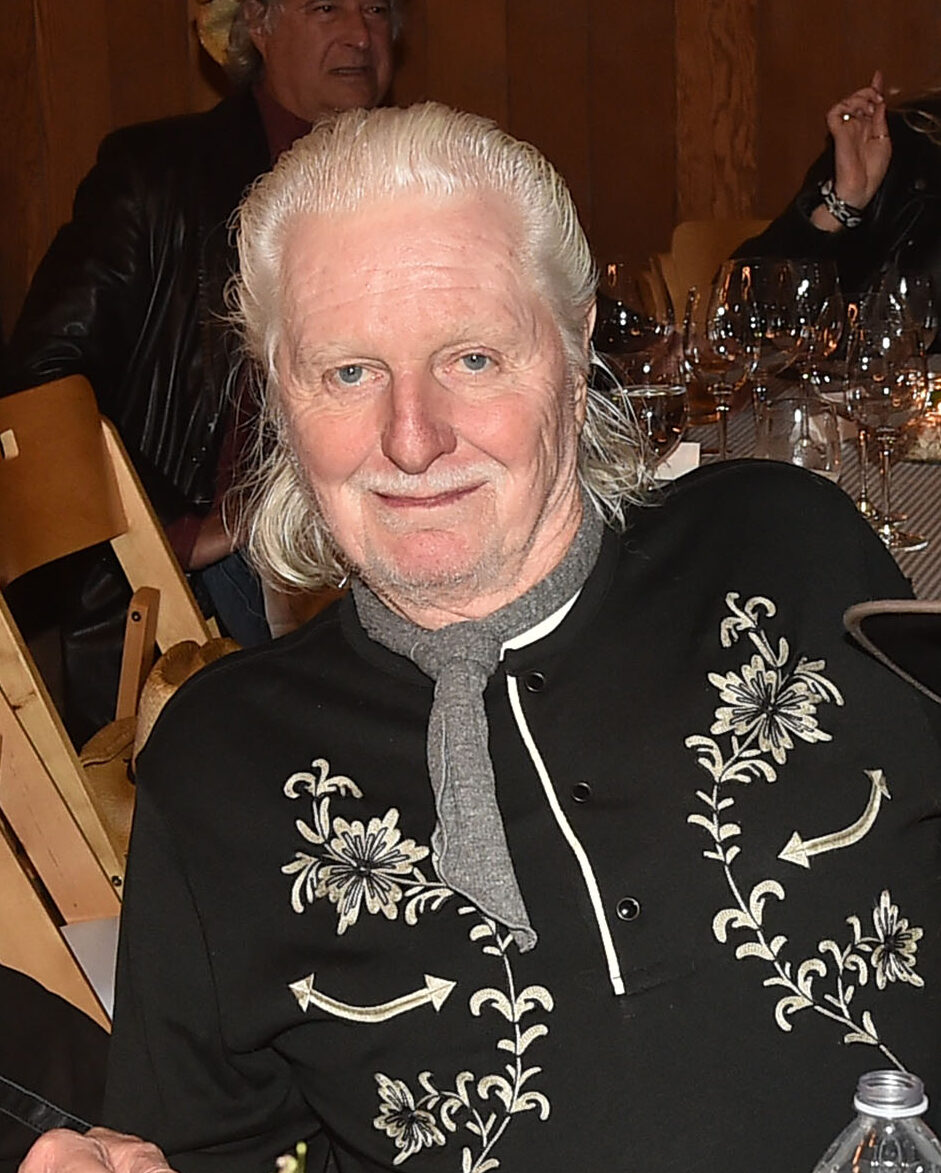
Decades after leaving the revival circuit, Marjoe found comfort in the New Mexico high desert, trading spectacle for quiet community gatherings.
Eventually, the glitz of Southern California gave way to the quiet charm of northern New Mexico. Marjoe made his home in Santa Fe, drawn to the smell of cedar smoke in the winter air, the red dirt hills, and the slower tempo of life. In 2019, he married Susan Magestro in an intimate ceremony, finding deep companionship in his final chapter.

In Santa Fe, the constant noise of the spotlight finally gave way to wide skies, adobe courtyards, and a life lived on his own terms.
What Marjoe Gortner Leaves Behind
Looking back across the decades, it is easy to view his life as an outrageous chapter of vintage Americana. But beneath the headlines, his journey offers a comforting reminder about human resilience. When someone is handed a script they never chose, they still have the power to put the script down, tell the truth, and start over.
Marjoe walked away from deception, survived betrayal, and rebuilt his identity piece by piece. He replaced guilt with laughter, turned exposure into an Oscar, and spent his twilight years resting quietly under the wide Santa Fe sky. The full Marjoe Gortner life story stands as proof that nobody is stuck with the role their parents wrote for them.