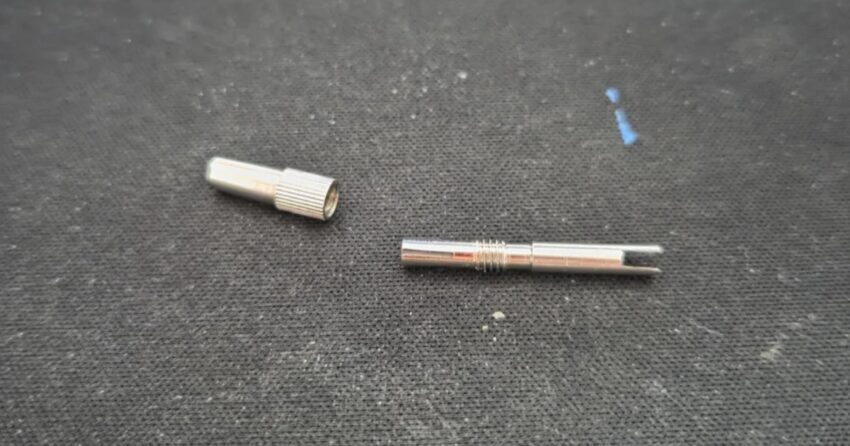
We have all stood over the kitchen counter or stared into the depths of a junk drawer holding an odd, shiny metallic relic. It is barely an inch long. It features two tiny split prongs on one side, microscopic screw threads in the middle, and a hollow barrel that looks like it fell out of an old bicycle pump or a miniature clockwork mechanism. You hesitate right above the trash can, wondering if throwing it away will break something important you haven’t used in months.
Put the garbage can lid back down. That mysterious little gadget is not scrap metal from a broken cabinet hinge or a rogue piece of audio hardware. You are holding the unsung hero of childhood math class: the compass lead holder collet.
Mystery Solved: The Two-Pronged Collet Chuck in Your Junk Drawer
Every home junk drawer has its own personality. Between the stray twist ties, spare rubber bands, and extra house keys lives an assortment of orphan hardware. When this tiny silver prong surfaces, people usually guess it belongs to a sewing machine, an old stereo headphone jack, or a bicycle tire valve stem.
In reality, this piece is a miniature split-collet chuck. Its entire purpose in life is to pinch a delicate 2mm piece of graphite firmly enough that you can sweep a smooth circle across crisp paper without the tip wobbling or snapping in half.
Because geometry boxes rattled loose in backpacks for decades, the friction screws on compass legs had a habit of backing out on their own. The collar would roll into a corner of the backpack, the holder would slip out, and years later, it turns up during spring cleaning like a forgotten treasure.
Anatomy of the Precision Compass: Where That Rogue Metal Bit Belonged
To understand why this piece looks so peculiar, it helps to look at the vintage drafting tool it came from. A traditional student drawing compass has two distinct legs joined by a sturdy top hinge. One leg terminates in an ultra-sharp steel needle point meant to anchor your center mark. The other leg is hollowed out to receive our mystery piece.
The lead holder itself consists of two interlocking parts:
- The Slotted Spindle (Collet): The shaft with the two flexible metal fingers you found loose. The slot down the center gives the prongs room to flex inward around the graphite.
- The Knurled Tightening Collar: The threaded outer ring or sleeve that slides over the spindle. As you twist this collar clockwise, it forces the split jaws together, clamping down on the pencil lead with surprising mechanical force.
When both pieces are seated properly in the compass leg, you get an adjustable, vibration-free grip. When separated, each half looks like an enigmatic bit of micro-machinery that defies easy identification.
The Sensory Magic of Vintage Geometry Tins
Finding one of these loose parts instantly unlocks a wave of schoolhouse nostalgia. Remember the distinct snap of the tin case opening during seventh-grade geometry? The smell of stamped aluminum rulers mixed with cedar pencil shavings, rubber eraser dust, and cold steel is unforgettable.
“A good geometry tin felt like a box of real engineering tools. It turned an ordinary desk into an architect’s drafting studio.”
Those tins held clear plastic set squares that chipped at the corners, an oval protractor with tiny degree markings, and a cylindrical plastic vial containing three brittle sticks of replacement lead. The compass felt weighty and cold in your hand. Getting the needle set on your paper, matching the radius to the millimeter ruler, and sweeping that unbroken graphite ring was pure satisfaction.
What to Do If You Find One: Fix, Replace, or Repurpose
Before you toss this little silver piece into the recycling bin, check around the house for an incomplete drafting set. Whether you have school-age kids tackling technical drawing or you enjoy botanical sketching, watercolor layouts, and quilt pattern planning, a functional vintage compass runs circles around flimsy modern plastic ones.
1. Testing and Reassembling the Compass Arm
If you have the matching compass leg and knurled collar, drop the smooth end of the spindle into the socket. Thread the collar on just a couple of turns until the threads catch smoothly. Slide in a fresh 2mm graphite refill, align the tip so it sits even with the steel needle point when closed, and hand-tighten the collar until snug. Never use pliers; finger-tight pressure is plenty to secure the graphite.
2. Quick Fixes for Missing Collet Collars
What if you found the spindle prong, but the threaded collar is gone for good? Standard replacement collets for vintage Staedtler, Helix, or Helix Oxford sets are widely sold online as replacement sets. In a pinch during craft projects, wrapping the top of a shortened 2mm wooden pencil with a thin layer of masking tape can friction-fit directly into the larger clamp arm of universal compasses.
3. Creative Repurposing Around the Home
If you don’t own the original compass anymore, hobbyists love these miniature threaded chucks. They make remarkable pin-vise collets for holding micro-drill bits (under 1mm) for jewelry making, miniature painting, dollhouse building, and detailed craft carving. Keep it tucked in a small craft container rather than tossing it away.
Organizing Tiny Mystery Hardware for a Clutter-Free Home
The reason small parts like the compass lead holder cause so much confusion during tidy-up sessions is that they lack a designated holding zone. Instead of letting mystery screws, stray bolts, and tiny metal collets float loose across drawer liners, set up a simple “quarantine jar” in your utility closet.
A small glass jam jar or a magnetic craft tin works wonders. When a mysterious metal piece appears under the living room rug or behind a bookshelf, drop it into the jar. If nothing in the house breaks or goes missing over the next six months, you can confidently clear it out knowing you gave it a fair trial period.
Next time you run your fingers across that tiny silver prong in a desk organizer, you can smile, recognize the clever mechanical design behind it, and maybe even track down that old metal tin for a quiet afternoon of sketchbook drawing.