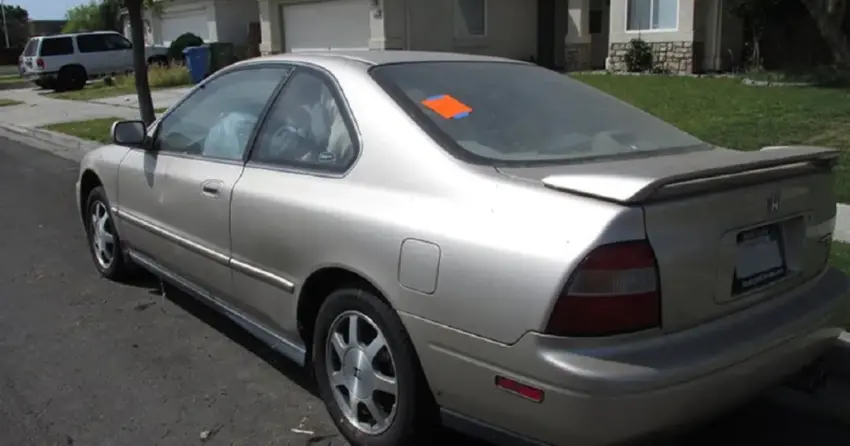
You walk down your front steps with a hot mug in hand, ready for the morning routine, only to stop dead in your tracks. Plastered squarely against your driver side window or windshield sits a thick, eye-watering neon orange sticker. It is not an ordinary parking ticket tucked politely under the wiper blade. It is adhesive, hard to ignore, and stamped with official municipal lettering.
Finding an orange tag on your windshield is an immediate adrenaline rush, but it does not mean your vehicle is getting hooked to a winch this exact second. It is a formal warning that local code compliance or parking enforcement has flagged your ride as an apparent abandoned vehicle. Understanding what started that clock and taking quick action will save you hundreds of dollars in municipal impound fees.
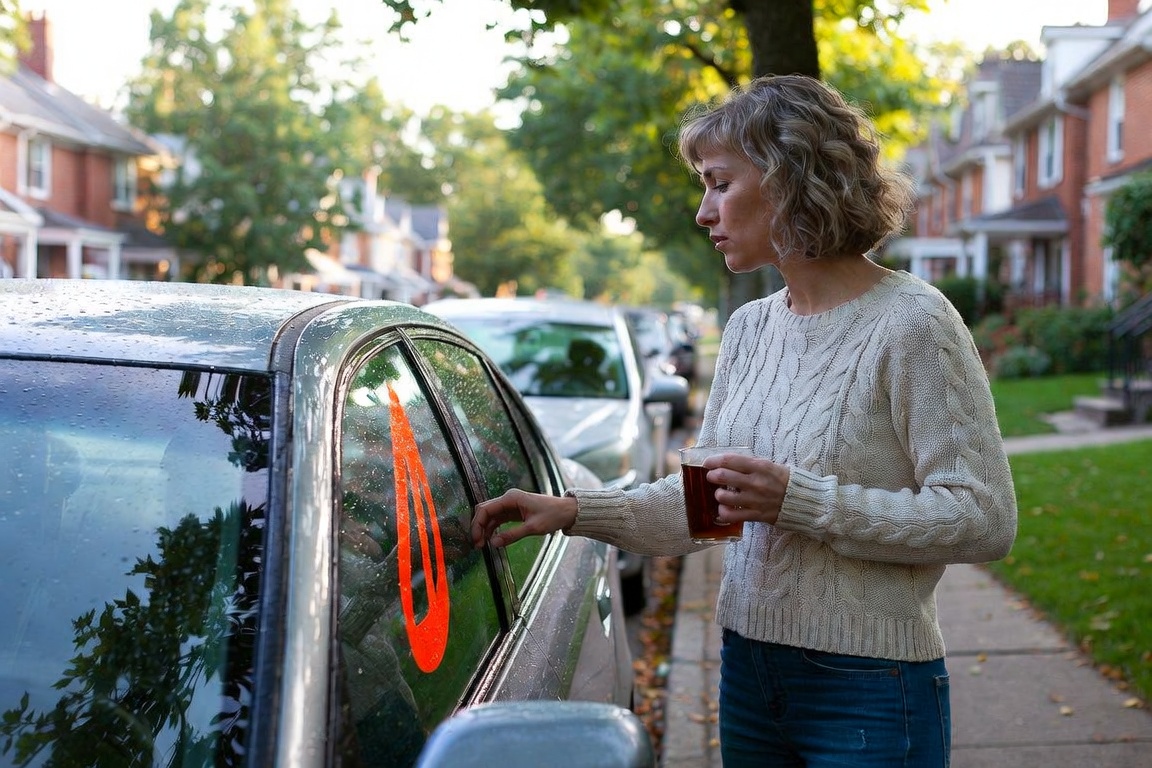
Finding an unexpected notice on your car parked outside your home can instantly derail your morning routine.
What Does an Orange Tag on Your Windshield Mean?
In municipal code speak, an orange adhesive notice serves as a pre-tow warning. Cities, townships, and police departments use high-visibility tags to initiate a legally mandated grace period before seizing property from a public roadway.
When an officer or code compliance inspector applies this sticker, they are documenting that the vehicle appears inoperative, hazardous, or deserted. The label establishes a public paper trail. If the owner fails to correct the issue or relocate the vehicle before the deadline expires, the municipality earns the legal right to dispatch a tow operator.
Every city enforces slightly different timelines. In most jurisdictions, the warning window runs anywhere from 48 to 72 hours, though certain dense urban sectors allow as little as 24 hours if the vehicle blocks street sweeping or trash routes. The sticker represents an active countdown.
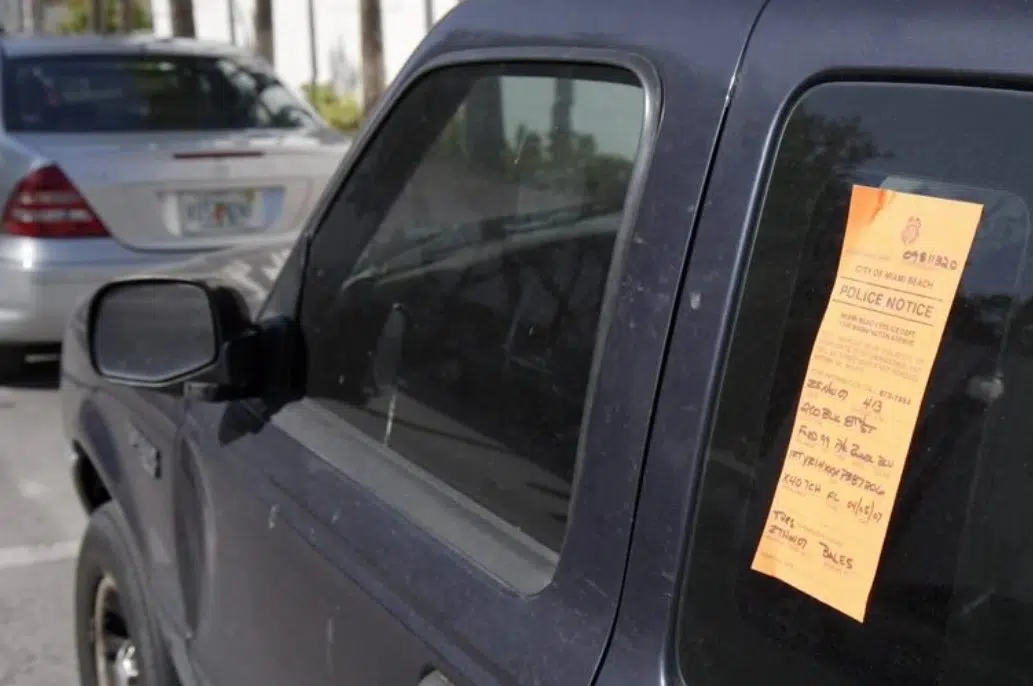
A close-up view of an official police warning sticker affixed to a truck window, listing the violation date and local ordinance details.
Common Reasons Your Car Received an Abandoned Notice
Many drivers assume their car is completely safe simply because it sits directly in front of their own house. Unfortunately, public streets belong to the city, not the adjacent homeowner. Code enforcement officers patrol residential blocks looking for specific visual cues that signal neglect.
- Exceeded Street Parking Limits: Most suburbs and cities have statutory 72-hour limits prohibiting any vehicle from remaining stationary on a public street without moving.
- Expired Registration or Missing Plates: If your license plate tags expired three months ago, enforcement officers assume the vehicle is non-operational on public asphalt.
- Obvious Mechanical Distress: Flat tires, broken side windows covered in plastic, cracked windshields, or missing bumpers instantly draw neighborhood complaints.
- Neighbor Complaints: In close-knit neighborhoods with limited curbside space, neighbors often report cars that sit unmoved for several consecutive days.
- Impending Maintenance: If the city scheduled tree trimming, utility repairs, or seasonal asphalt sealing, long-parked cars receive priority tagging.
Heads Up: Wiping dust off the windshield or peeling the sticker off does not stop the municipal countdown. Parking officers mark the tire treads with chalk and log your valve stem positions into a digital tracking database.
5 Immediate Steps to Take When You Get Tagged
Panic will not help, but delay will cost you dearly once daily impound storage rates start racking up. Tackle the situation logically with these straightforward steps.
1. Read the Fine Print and Photograph the Notice
Before you attempt to scrub the adhesive off the glass, read every line written on the tag. It will list the issuing agency, citation number, officer badge ID, observed violation, and the exact date and hour the grace period ends. Snap clear photos of the sticker in place, along with wide shots of where the vehicle sits relative to the curb.
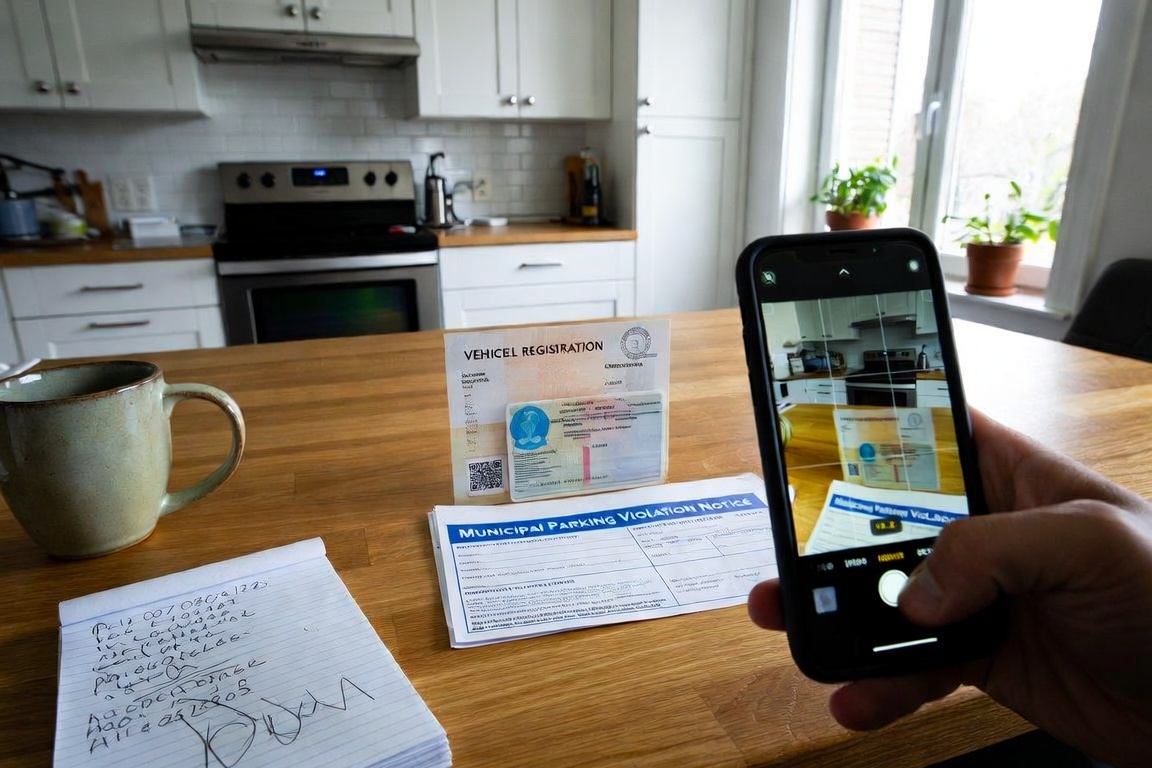
Gathering your ownership documents and taking dated photos of the vehicle creates a solid foundation before calling parking enforcement.
2. Call the Issuing Department Immediately
Look for the phone number printed on the notice. This typically connects to municipal code enforcement, parking management, or non-emergency police dispatch. Provide your license plate and citation number, state calmly that you are the registered owner, and confirm the exact deadline on their internal file.
3. Move the Car to Private Property
Moving your car two feet forward will not satisfy the officer; many codes require driving the vehicle at least two-tenths of a mile or clearing the block entirely. The safest move is pulling the car up into your private driveway, tucking it inside your garage, or arranging storage on private property where public parking rules do not apply.
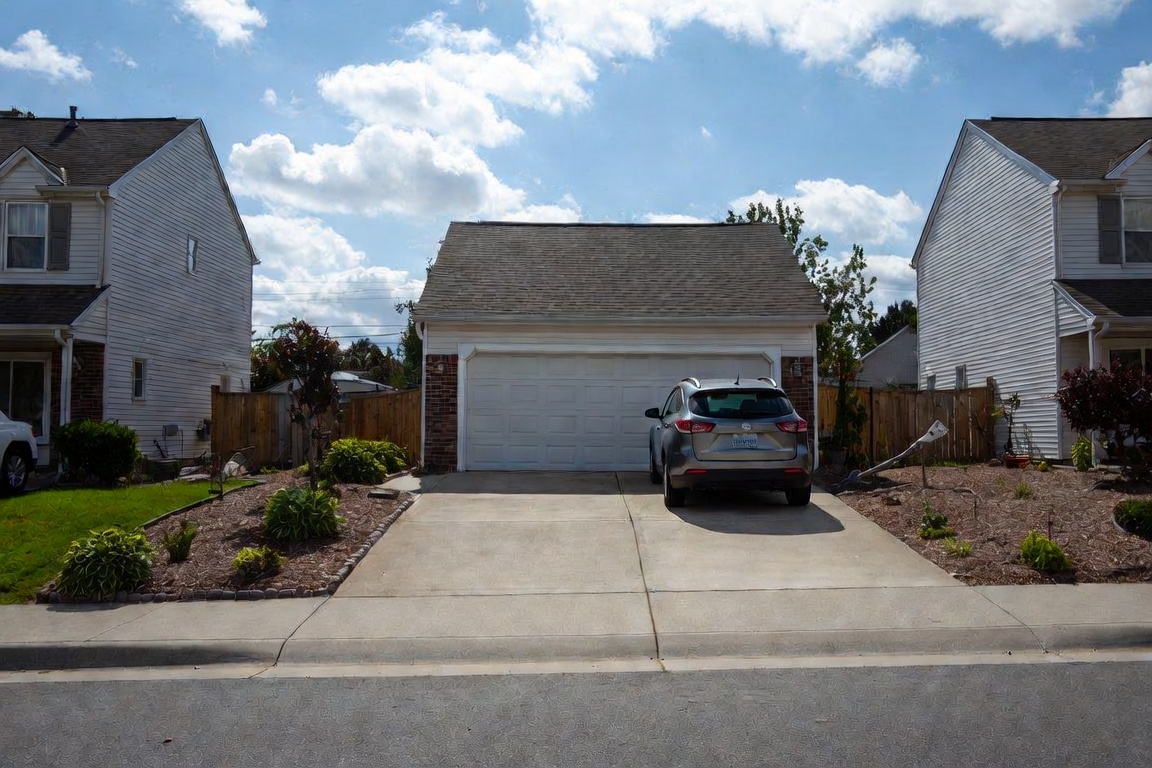
Tucking your vehicle fully onto private property or behind your driveway apron instantly resets municipal public street countdowns.
4. Address Inoperative Issues Promptly
If the car has a dead battery or flat tire, spend an afternoon pumping up the rubber and getting the engine running. An operational vehicle that starts and displays valid registration tags immediately weakens any city claim of abandonment.
5. File a Dispute if Wrongfully Tagged
Were you away on a brief business trip while your legally registered, operable car sat outside your front door? Most municipalities allow you to file an emergency administrative challenge. Provide proof of valid insurance, current state registration, and proof of residency on that block to clear the file.
Public Curbs vs. Driveways: Know Your Rights
A frequent point of confusion among homeowners is property boundary jurisdiction. The curb outside your front yard is almost universally classified as a public right-of-way. Even if you mow the grass strip right beside it, you do not own the parking spot on the street.
Once you pull the vehicle past the sidewalk line and onto your concrete driveway apron, municipal street-parking time restrictions typically drop away. Keep in mind that local zoning rules or strict homeowner associations (HOAs) may still enforce regulations against keeping visibly broken or untagged vehicles in plain view on private driveways.
What Happens If You Miss the Deadline?
Ignoring the warning is the most expensive path you can choose. Once that printed hour strikes, the municipality dispatches a contracted tow company. The financial burden shifts entirely to your shoulders:
- Hookup and Towing Surcharges: Often ranging from $150 to $300 just to transport the vehicle to the storage yard.
- Daily Storage Accrual: Municipal impound yards routinely charge $40 to $90 every single calendar day the car sits behind their fence.
- Administrative Release Penalties: Cities frequently levy a separate administrative fee before stamping an impound release slip.
If an impounded car remains unclaimed for 30 to 45 days, state salvage statutes permit the municipality to auction the vehicle to recover towing and storage overhead. You will still remain on the hook for unpaid citations and collections balance.
Keeping Your Curbside Clean and Notice-Free
If you own an extra car that rarely gets driven, make it a habit to rotate parking spots twice a week. Keep the tabs current, run the engine on Sunday afternoons, and wash off seasonal tree pollen so your ride looks actively cared for.
Spotting an orange tag on your windshield is a wake-up call, not a death sentence for your car. Treat the bright sticker as an urgent invitation to tidy your curb, check your registrations, and protect your hard-earned dollars before an unwanted tow truck rolls around the corner.