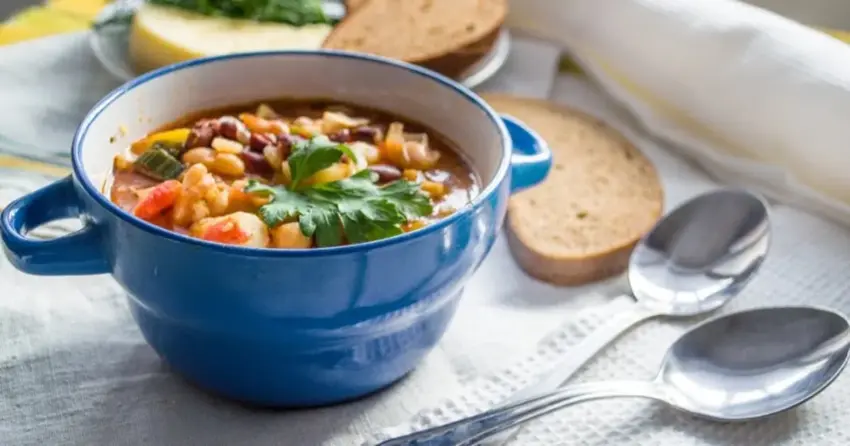
You know that specific brand of morning chaos. The coffee maker is hissing, lunches need packing, and you are standing in front of an open freezer staring at a solid, icy block of chicken breasts. The slow cooker sits on the kitchen counter, ready and waiting. It feels so tempting to drop that rock-hard slab straight into the ceramic pot, dump a jar of salsa over the top, lock the lid, and walk out the door for eight hours.
Every busy home cook has faced that exact moment of temptation. But before you switch that dial to Low and head out to work, let us talk about what actually happens inside that ceramic dish when frozen protein meets low-and-slow heat.
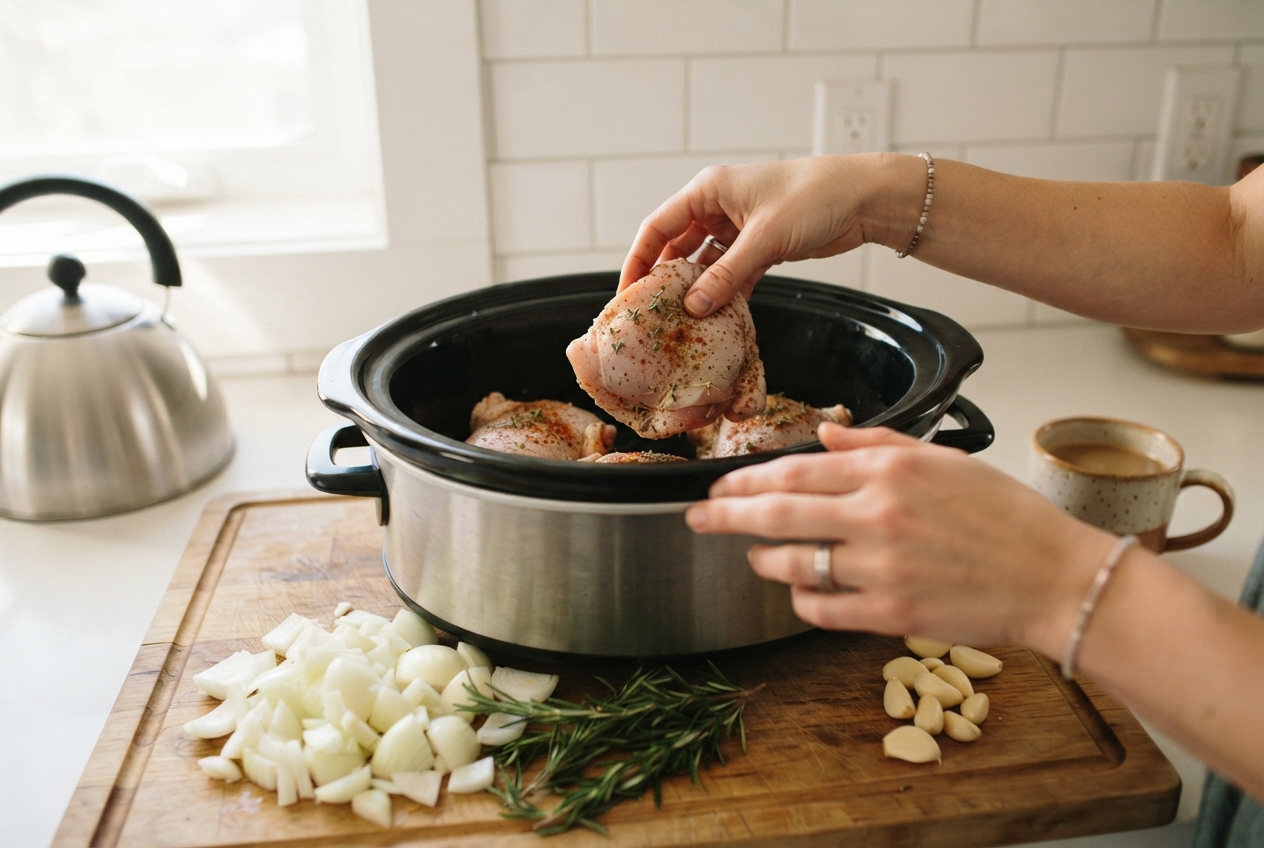
Starting with fully thawed chicken lets your slow cooker heat up quickly and evenly right from the start.
The Straight Answer on Putting Frozen Meat in a Slow Cooker
The short, unambiguous answer from the USDA Food Safety and Inspection Service is simple: you should not cook raw, frozen meat directly in a slow cooker. Whether you are dealing with a thick chuck roast, a whole chicken, or boneless pork chops, putting frozen meat in a slow cooker creates conditions that compromise both food safety and dinner quality.
Slow cookers are designed to warm ingredients gently over six to ten hours. Their heating elements operate at low wattage, slowly radiating heat through a heavy ceramic crock. When you introduce a large block of ice-cold protein, you fundamentally disrupt that heating cycle.
Instead of bringing ingredients up to a steady simmer within an hour, the entire contents of the pot stall at lukewarm temperatures. That delayed heat curve is where the real trouble begins.
The Biology of the Temperature Danger Zone
Food safety experts frequently discuss the temperature danger zone, which spans from 40°F to 140°F (4°C to 60°C). Inside this specific window, common foodborne bacteria such as Salmonella, Campylobacter, Listeria monocytogenes, and Staphylococcus aureus double their populations every twenty minutes.
When you start with properly refrigerated meat (around 38°F), a quality slow cooker pushes the food through that danger window relatively quickly. But a rock-solid block of frozen meat acts like a thermal anchor in the center of your crock.
A frozen roast forces the surrounding liquids and exterior meat to linger inside the 40°F–140°F range for hours before the dense center ever reaches room temperature.
This prolonged warm bath gives microbes ample time to reproduce. Even if the meal eventually bubbles away at 200°F by hour seven, the biological damage has already occurred.
Why Heat Does Not Always Destroy Bacterial Toxins
A common misconception among home cooks is that high heat at the end of the cooking cycle fixes everything. The logic seems sound: if the stew reaches a boiling simmer for hours, does that not sterilize the food?
Unfortunately, microbiology is more stubborn than that. While sustained heat kills live bacterial cells, certain pathogens—particularly Staphylococcus aureus and Bacillus cereus—produce heat-stable enterotoxins as they multiply. These toxic byproducts can easily withstand boiling temperatures for extended periods.
In simple terms, you can kill the live bacteria with high heat, but you cannot cook away the chemical toxins they left behind while your meat spent three hours warming up. Eating those heat-stable toxins can lead to severe gastrointestinal illness just a few hours after dinner.
Why Adding Hot Broth and Cranking to “High” Still Fails
Many online cooking groups recommend workarounds: simply pour boiling chicken stock over the frozen cut, or set the appliance to High for the first two hours. While these tricks sound sensible on paper, thermodynamic tests show they do not solve the core issue.
Pouring hot liquid over frozen protein causes the exterior millimeter of meat to blanch and tighten, while the interior remains a block of ice. The liquid quickly cools down as it absorbs the cold energy of the meat, dragging the whole pot back down into the lukewarm danger zone.
Furthermore, the High setting on most modern slow cookers does not generate higher maximum temperatures than the Low setting; it merely reaches the same target temperature (roughly 209°F) faster. The cold interior of a dense frozen roast still thaws too sluggishly to clear the biological threshold safely.
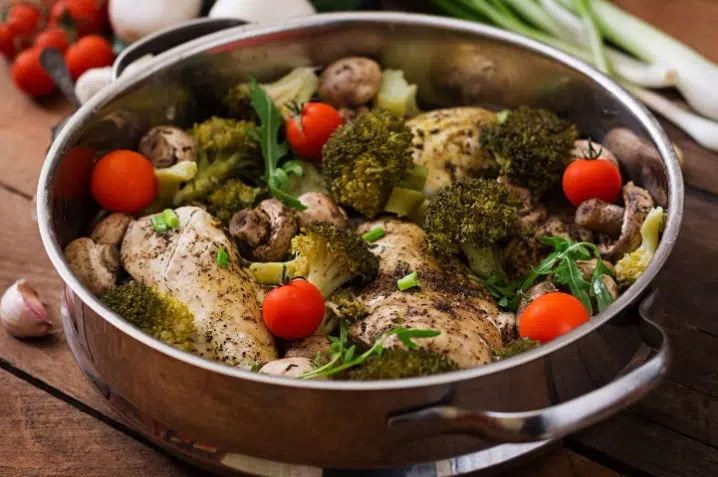
Fresh vegetables and properly thawed chicken cook evenly, keeping broths rich and preventing soggy textures.
Beyond Food Safety: What Frozen Cooking Does to Meat Texture
Even if food safety were not a factor, cooking meat from a rock-hard frozen state ruins the culinary outcome of your recipe. When meat freezes slowly in home freezers, water inside the cells expands into jagged ice crystals. These sharp crystals puncture the delicate muscle fiber walls.
When subjected to the gradual warmth of a slow cooker, those damaged muscle cells dump all their intracellular moisture at once. Instead of gently braising in rich juices, your meat essentially boils in a pool of watery purge.
The results on your dinner plate are unmistakable:
- Chalky, Stringy Texture: Chicken breasts turn dry, woody, and unpleasantly fibrous.
- Diluted Flavor: Sauces and curries turn watery and thin instead of rich, glossy, and concentrated.
- Uneven Seasoning: Salt and aromatic spices cannot penetrate frozen muscle fibers, leaving the outside over-seasoned and the inside bland.
- Gray Appearance: Meat releases excess albumin (that cloudy white protein foam), clouding your sauces and making broths look murky.
Safe, Rapid Thawing Methods for Busy Mornings
If you wake up to frozen meat and a planned slow-cooker dinner, do not panic. You have three reliable, USDA-approved methods to thaw your protein safely before it touches the crock.
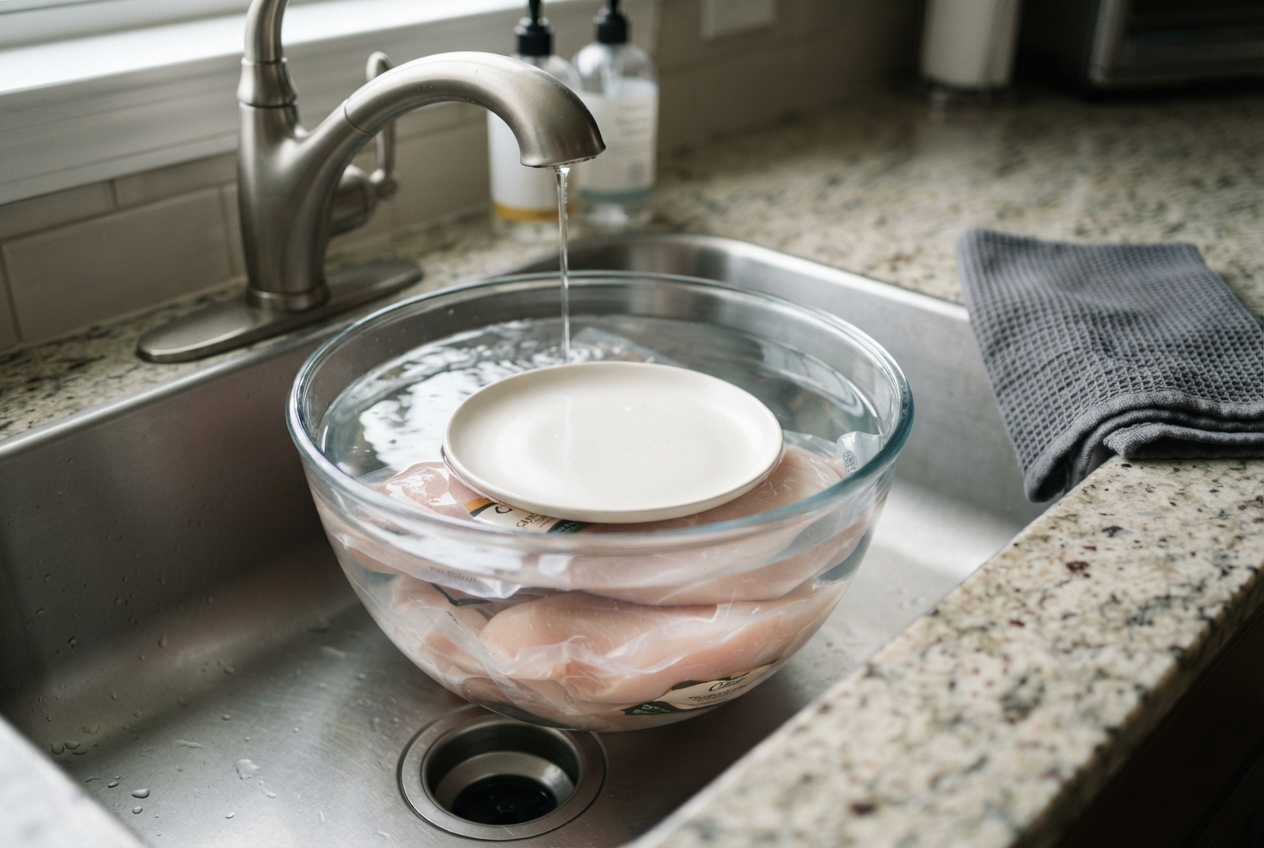
Submerging vacuum-sealed meat in a cold-water bath cuts thaw times down to under thirty minutes safely.
1. The Cold-Water Submersion Bath (Best Morning Fix)
This is the gold standard for rapid, safe thawing when you have thirty to sixty minutes before leaving the house:
- Keep the meat sealed in a leak-proof plastic storage bag to prevent water absorption and bacterial contamination.
- Fill a large bowl or clean sink with cold tap water (never warm or hot water).
- Submerge the bagged meat completely, placing a small ceramic plate on top if it floats.
- Change the water every twenty to thirty minutes so it remains consistently cold.
Small packages of chicken cutlets or ground turkey thaw in about thirty minutes. Larger two-pound roasts take roughly an hour to an hour and a half.
2. The Controlled Microwave Defrost (When Minutes Count)
If you need to leave the house immediately, your microwave defrost setting can save the day. Set the power level to 30% and defrost in short two-minute bursts, turning and flipping the meat between cycles.
The golden rule of microwave defrosting is strict: you must transfer the meat into the preheated slow cooker immediately after thawing. Because microwave heat distributes unevenly, small sections of the meat may begin warming up during defrosting, meaning it cannot sit on the counter afterward.
3. The Refrigerator Staging Routine (The Zero-Effort Habit)
The easiest long-term solution is establishing a nightly fridge routine. Before turning off the kitchen lights at night, transfer your frozen meat from the freezer onto a rimmed plate on the bottom shelf of your refrigerator. By the time your alarm rings at 7:00 AM, the meat is soft, cold, and ready to cook without a second thought.
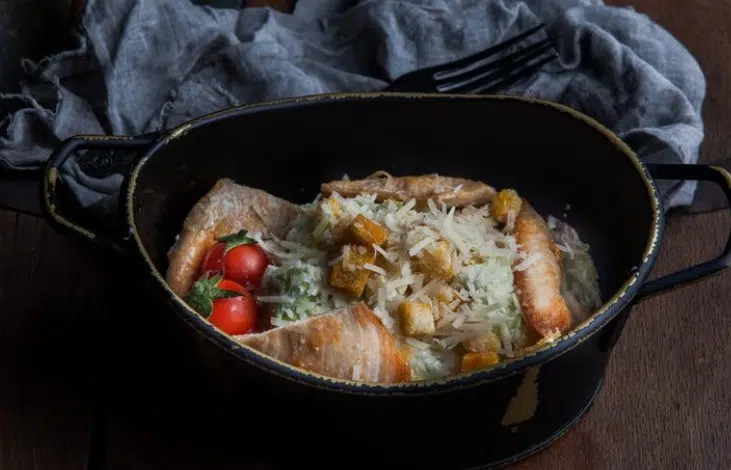
A savory slow-cooked chicken dish achieves tender shreds and rich flavor only when started from thawed cuts.
Smart Kitchen Pivots When You Forget to Thaw
What happens when you simply do not have forty-five minutes for a cold-water bath and your microwave is out of commission? Skip the crock pot and pivot to these foolproof alternatives:
Switch to a Pressure Cooker (Instant Pot)
Unlike slow cookers, electric pressure cookers generate intense steam heat under high pressure, taking food past the 140°F mark in a matter of minutes. Pressure cookers can safely transform rock-hard frozen chicken breasts or beef stew cubes into tender dinners in thirty to forty-five minutes. Just ensure you add enough cooking liquid (such as rich vegetable or bone broth) and add five to ten minutes to the standard cook time.
Try a Quick Skillet Sear and Simmer
If you have twenty minutes at dinnertime, slice semi-thawed meat thinly across the grain. Sear it in a smoking hot cast-iron pan with olive oil, garlic, and fresh herbs, then simmer it in your prepared sauce. You get superior caramelization, deeper flavor, and dinner on the table in a fraction of the time.
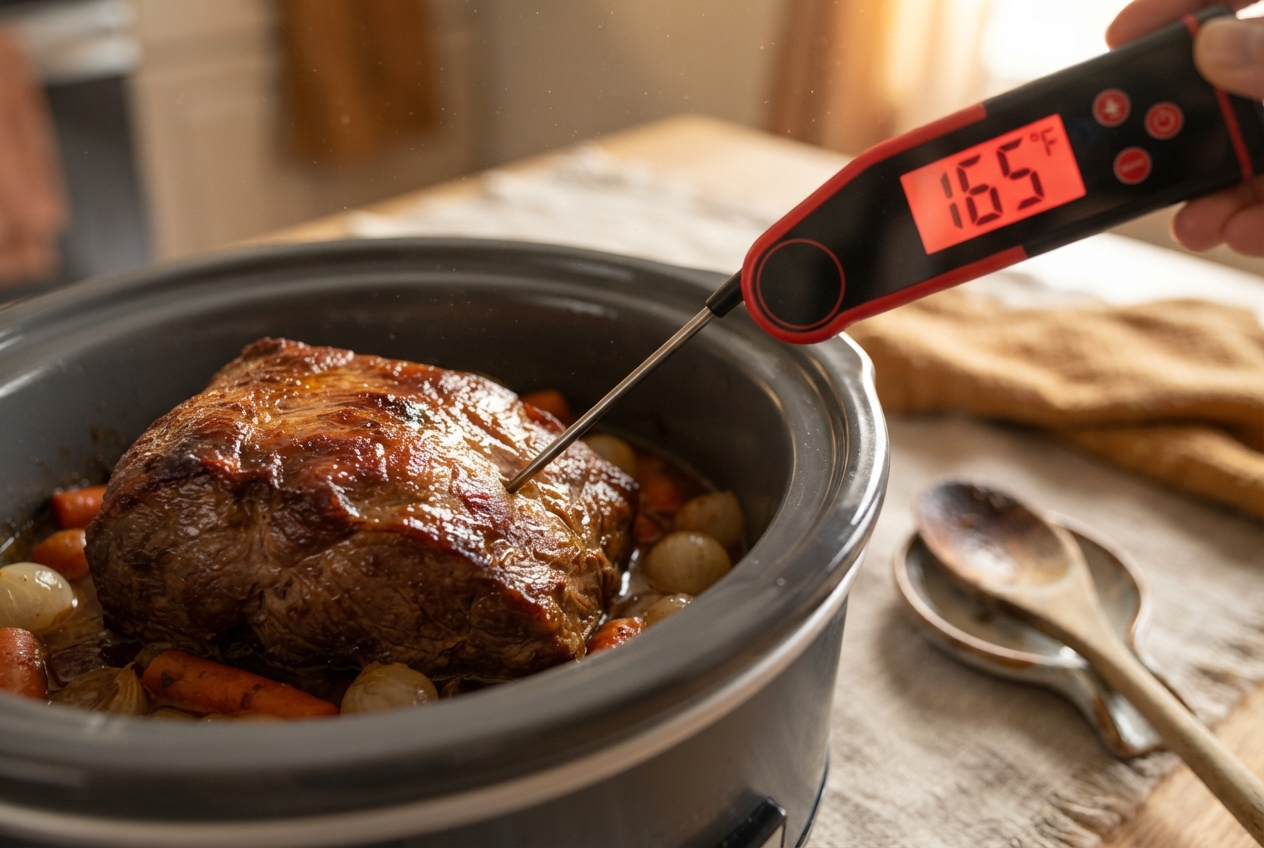
An instant-read food thermometer confirms your meal has cleared safe internal temperature benchmarks.
Frequently Asked Questions About Slow Cooking Meat
Can I put store-bought frozen meatballs in a slow cooker?
Yes, commercially prepared frozen meatballs are an exception. Because they are fully precooked before freezing, smaller in mass, and individually portioned, they heat through quickly in hot sauces without the bacterial growth risks associated with raw poultry and beef.
What about large bone-in roasts like pork shoulder or whole chickens?
Bone-in cuts present an even higher risk when frozen. Bone conducts heat at a different rate than muscle tissue, creating dense cold pockets near the joint that can remain chilled well past the four-hour mark. Always thaw bone-in cuts completely in the refrigerator over twenty-four to forty-eight hours.
How do I verify my slow cooker meal is truly safe to eat?
Never rely solely on visual cues or timer clicks. Insert a calibrated digital meat thermometer into the thickest part of your meat before serving. Poultry should reach a minimum internal temperature of 165°F (74°C), ground meats 160°F (71°C), and whole cuts of beef or pork 145°F (63°C) with a three-minute rest.
Taking those few extra minutes to thaw your meat properly guarantees your slow-cooked dinners turn out tender, flavorful, and completely safe for everyone gathered around your table.