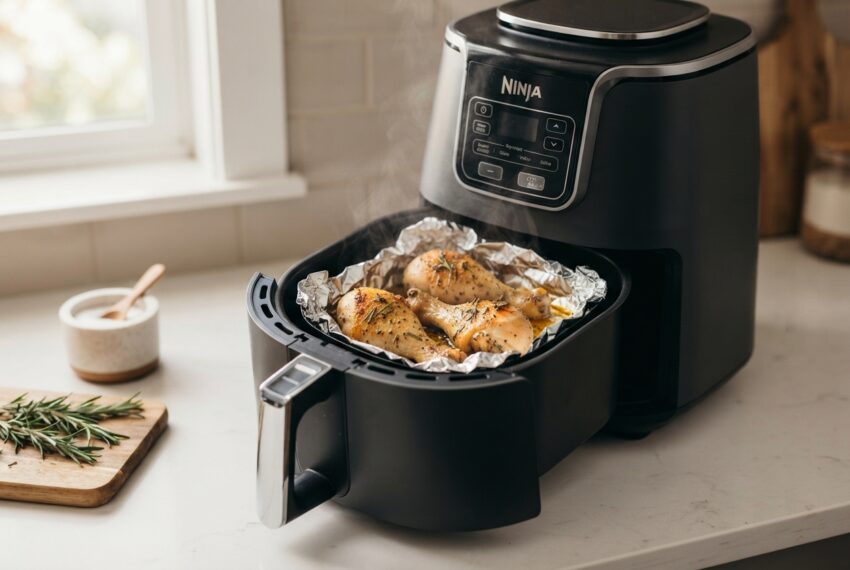
You just unpacked a fresh batch of sticky barbecue chicken tenders, looked at the grease pooling in your air fryer basket, and reached for the aluminum foil roll. It feels like second nature. After all, a sheet of foil saves twenty minutes of scrubbing baked-on sauce off your sheet pans every single Sunday night.
Before you line that metal basket, you need to understand how these countertop machines actually move heat. The direct answer is simple: yes, you can use aluminum foil in an air fryer. However, treating your air fryer like a miniature toaster oven without following a few basic airflow rules can ruin your dinner, strip your non-stick coating, or create a serious fire hazard.
How Air Fryers Move Heat (And Why Foil Changes Everything)
An air fryer is essentially a supercharged, ultra-compact convection oven. A high-wattage heating coil sits directly at the top of the chamber, right underneath a powerful, high-speed fan. That fan pulls air upward, drives it past the scorching element, and blasts it downward through your food before circulating it up through the perforated floor of your basket.
This rapid, 360-degree vortex is what produces that signature golden crunch with barely a teaspoon of oil. The open holes in your fryer basket exist for a reason. They let hot air pass underneath your food so the bottom crisps just as fast as the top.
When you drop a solid sheet of aluminum foil across the entire bottom of the basket, you sever that loop. The downward air hits a metallic wall, bounces sideways, and traps grease right against your ingredients. Instead of getting crispy roasted potatoes, you end up steaming them from the bottom up.
The Golden Rules for Using Foil Without Starting a Fire
Foil is an exceptional tool for quick kitchen cleanup, but air fryers do not tolerate loose materials. The internal fan generates enough suction to lift light objects straight into the heating coils.
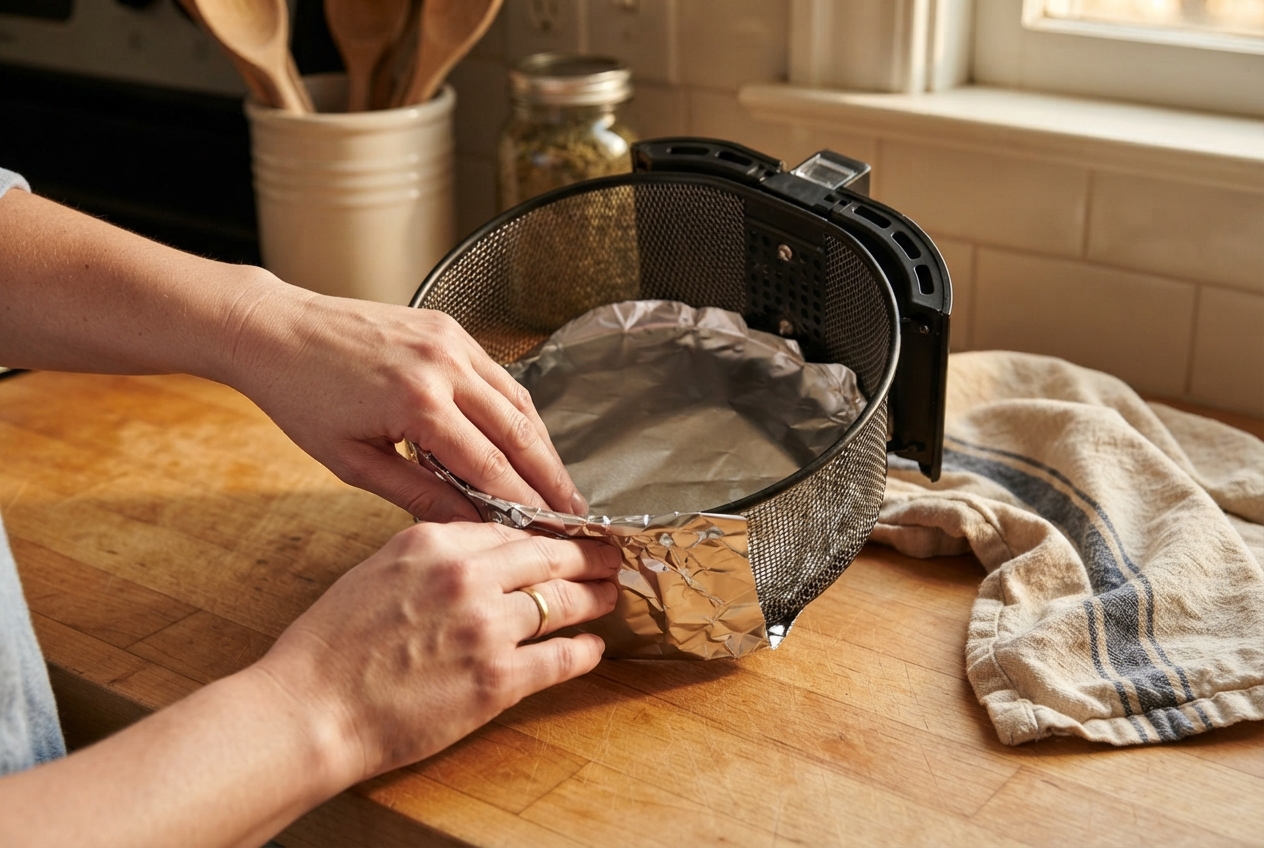
Always crimp foil tightly around the edges to prevent the high-velocity convection fan from lifting loose sheets toward the heating element.
- Always weigh down the foil with food: Never preheat your air fryer with an empty sheet of foil sitting inside. Without the weight of meat or potatoes holding it down, the draft will pull the foil upward until it touches the glowing element, sparking an immediate electrical fire.
- Keep the foil inside the basket only: Never tuck foil into the bottom drawer beneath the removable crisper basket. Placing foil directly on the bottom pan restricts the designed air channels and can cause the appliance base to overheat dangerously.
- Leave an inch of breathing room around the edges: Avoid lining the entire basket wall to wall. Tear a piece that sits flat on the base plate while leaving the outer holes open so the convection current continues flowing freely.
- Crimp down all corners: Press the foil securely around the bottom grate or fold the edges inward into a small, sturdy tray. Loose, flapping corners will catch the breeze and disrupt heat distribution.
Safety Check: If you ever smell a sharp electrical burn or hear a distinct crinkling sound during a cooking cycle, pause the machine immediately. A loose corner of foil has likely shifted into the upper fan guard.
The Acidic Food Reaction Most Cooks Overlook
Beyond fire safety, chemistry plays a major role in how foil interacts with your meals. Aluminum is a reactive metal. When it comes into direct contact with high-acid ingredients under intense heat, a chemical breakdown begins within minutes.

High-acid foods like lemons and tomato sauces break down aluminum foil, creating metallic flavors and ruined textures.
If you are air-frying chicken breasts marinated in fresh lemon juice, roasted cherry tomatoes, or wings coated in an apple cider vinegar hot sauce, skip the foil completely. The acid eats through the ultra-thin aluminum layer, causing tiny black specks to pit the foil surface. That aluminum leaches straight into your sauce, leaving your dinner with a harsh, bitter, metallic aftertaste.
Save the foil for savory dry rubs, olive oil herb blends, garlic butters, and thick glazes that do not rely on heavy citrus or vinegar bases.
Foods That Shine in Foil (And Foods That Flop)
Knowing when to grab the foil roll comes down to the texture you want on your plate. Some recipes thrive inside a little foil packet, while others turn into a soggy disappointment.
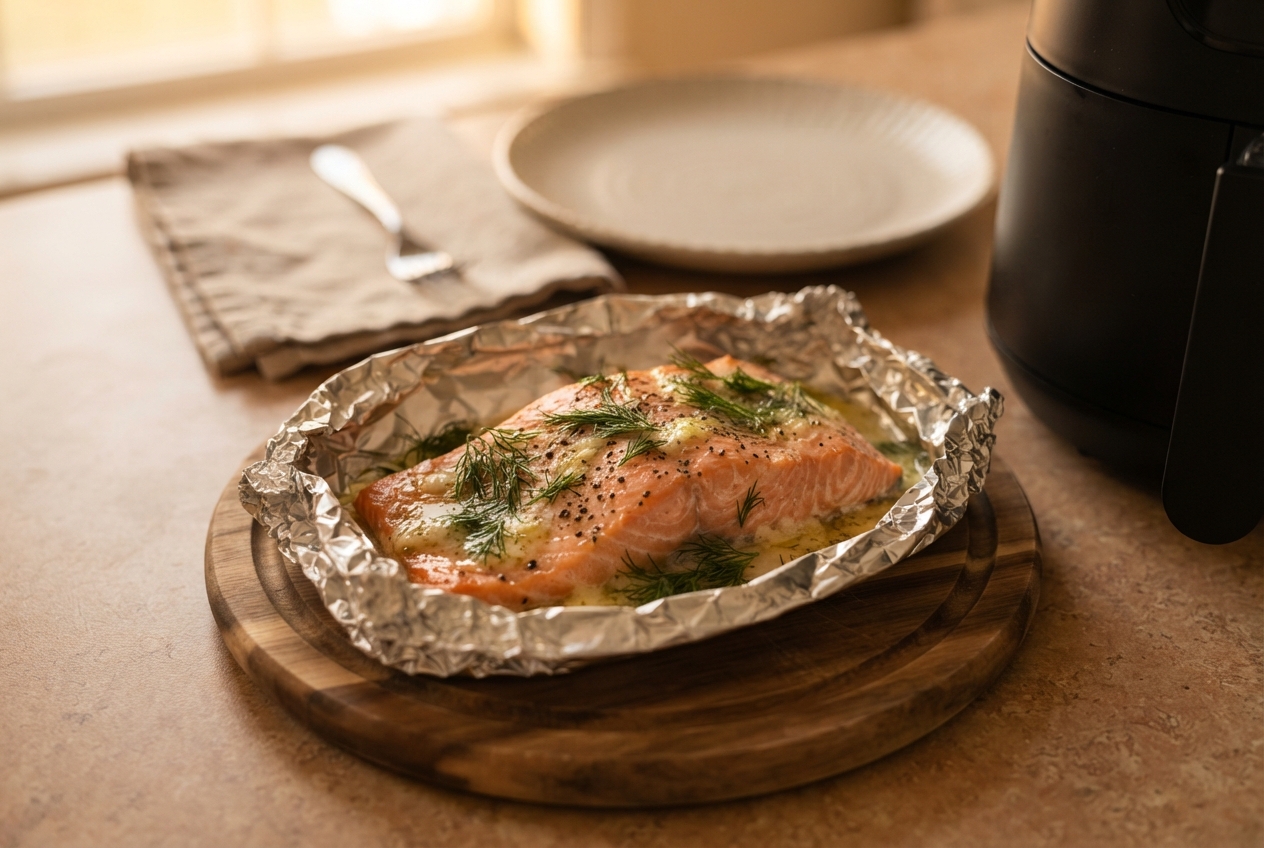
Making an open foil boat traps savory juices when cooking delicate fish fillets while keeping cleanup effortless.
Recipes That Work Brilliantly with Foil
- Glazed Salmon and Delicate White Fish: Shape your foil into a shallow “boat” with raised edges. It holds the melting herb butter around the fillet while letting the hot air caramelize the top surface without tearing delicate skin on the wire grate.
- Sticky Honey or Teriyaki Chicken: Sugary glazes char and weld themselves onto non-stick baskets like cement. A small sheet of foil beneath the chicken catches the dripping sugar for a two-second cleanup.
- Roasted Whole Garlic Bulbs: Wrap a head of garlic drizzled with olive oil tightly in heavy-duty foil. The foil traps the moisture, turning the cloves soft, sweet, and spreadable.
Foods You Should Never Cook on Foil
- Homemade French Fries: Fries rely on bottom airflow to pull away steam. On foil, they sit in their own moisture and turn limp and greasy.
- Crispy Chicken Wings: Rendered chicken fat needs to drip through the basket grates into the pan below. If wings sit in a pool of hot fat on foil, the skin stays rubbery rather than crunchy.
- Roasted Brussels Sprouts and Broccoli: Trapped steam prevents the leaves from developing those deeply browned, crispy edges that make air-fried veggies irresistible.
Foil vs. Parchment vs. Silicone: Which Liner Wins?
If your main goal is skipping the sink scrub after a long workday, foil is not your only choice. Kitchen accessory makers have developed liners specifically engineered around air circulation.
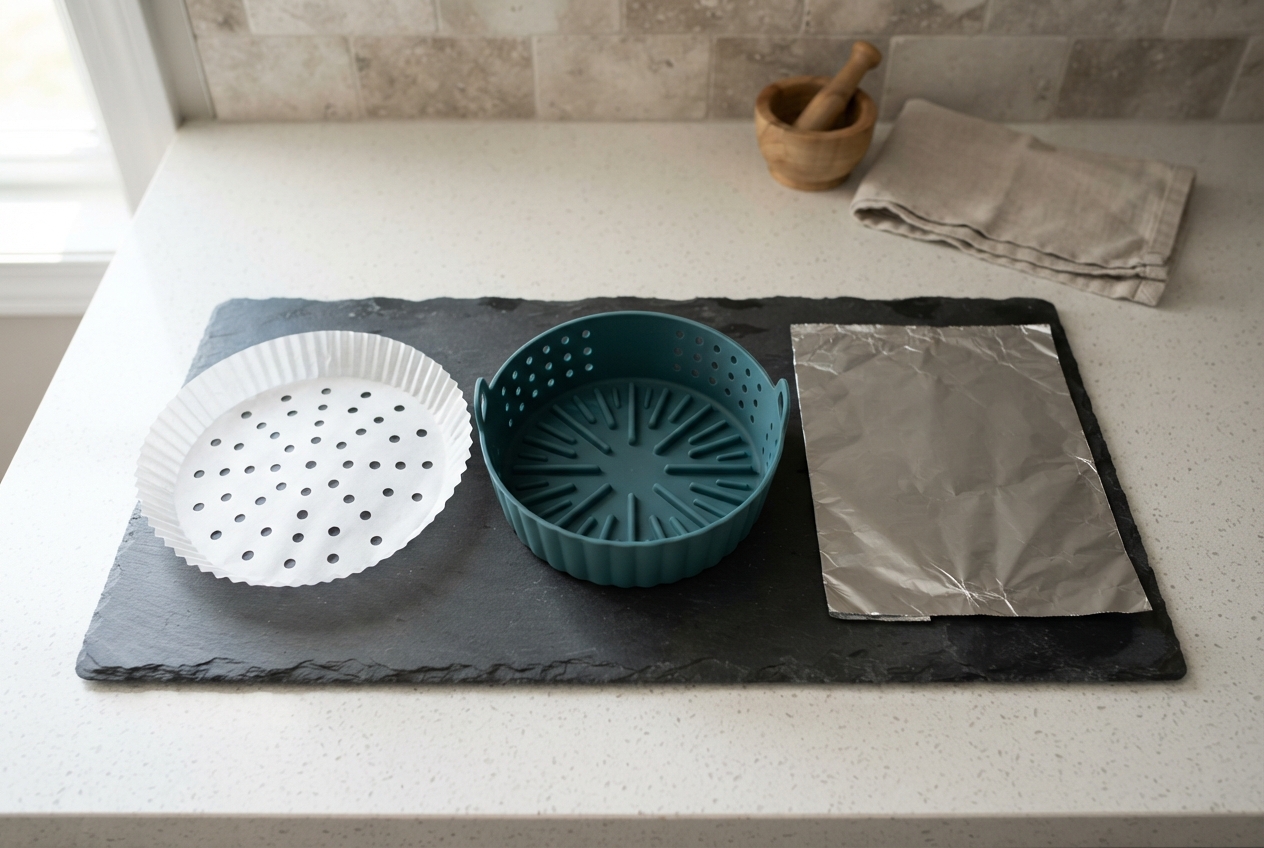
Comparing the top three basket liners: perforated parchment, reusable silicone inserts, and heavy-duty foil.
| Liner Type | Best For | Airflow Impact | Reusability |
|---|---|---|---|
| Heavy-Duty Foil | Sticky glazes, fatty meats, juicy fish boats | Moderate (blocks holes unless trimmed small) | Single-use (recyclable if cleaned) |
| Perforated Parchment | Baking, pastries, breaded chicken cutlets | Low (factory holes maintain airflow) | Single-use / Compostable |
| Food-Grade Silicone Mats | Everyday roasting, roasted vegetables, meatballs | Very Low (grooved channels lift food) | High (dishwasher safe) |
Perforated parchment rounds are fantastic for baked goods and breaded items because the pre-punched holes keep the hot air moving without sticking. Reusable silicone inserts feature raised ridges that lift your ingredients above grease while protecting the basket surface for years.
Foil remains the undisputed champion when you need to mold custom shapes, catch liquid butter, or wrap items completely for gentle steaming.
Smart Steps for Quick Air Fryer Cleanup
If you choose to cook without any liner to get maximum crispiness, cleaning your appliance does not have to be an ordeal. Avoid aggressive wire brushes or harsh scouring pads, which strip the delicate ceramic or PTFE non-stick coating in a matter of months.
As soon as you pull your food onto a serving platter, let the basket cool for five minutes. While it is still warm, squirt a few drops of grease-cutting dish soap into the basket, fill it halfway with warm tap water, and let it sit on the counter while you enjoy dinner. The residual warmth softens baked-on starches, allowing a soft microfiber sponge to wipe the grate clean in seconds.
Mastering aluminum foil in an air fryer comes down to balance. Keep your foil trimmed, weigh it down firmly, avoid high-acid marinades, and leave enough open grate space for the air to work its magic. Your dinners will stay wonderfully crisp, and your cleanup will take practically no effort at all.