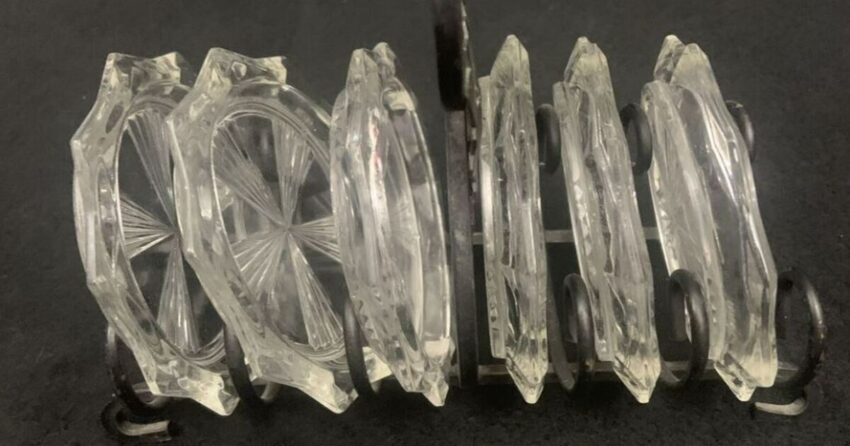
If your heart beats faster when you spot a dusty box marked “Depression Glass” at an estate sale, or if the subtle gleam of a pressed pattern catches your eye under a pile of old linens, this is for you. We are talking about those little, surprisingly heavy glass pucks you might have dismissed as tiny ashtrays or incomplete drink coaster sets. They are vintage glass furniture coasters, and they are the forgotten, practical home decor accessory that will make you rethink floor protection forever.
My first run-in with them was in my grandmother’s dining room, tucked invisibly under the massive, claw-foot table legs. I thought they were strange, until she showed me the light-reflecting caustics they cast on the Persian rug in the morning sun. It was an instant crush. They are functional, yes, but they are also tiny pieces of history you can still use today. Let’s explore why these little beauties are a must-have for the modern homemaker.
What Exactly Are Vintage Glass Furniture Coasters?
For most of the early 20th century, floors—especially hardwood, marble, and soft pine—were precious. Furniture, unlike today’s flat-packed alternatives, was heavy, made of dense hardwoods, and often featured casters or metal feet that could mercilessly gouge those surfaces. The solution was simple: place a glass cup between the heavy furniture foot and the floor. This redistributed the immense weight evenly, stopping dents and scuffs before they could happen.
These vintage glass furniture coasters (sometimes called furniture cups or floor guards) are fundamentally different from their beverage-focused cousins. They are thicker, heavier, and crucially, they have a concave well or specific indentation designed to hold the heavy foot or leg securely. Most measure between two and four inches in diameter, though larger ones exist for grand piano legs.
Identifying Styles: Depression Glass and Mid-Century Minimalism
The beauty of collecting and using vintage glass furniture coasters is the sheer variety available. Because they were mass-produced over decades, you will find examples reflecting every major glass era and style.
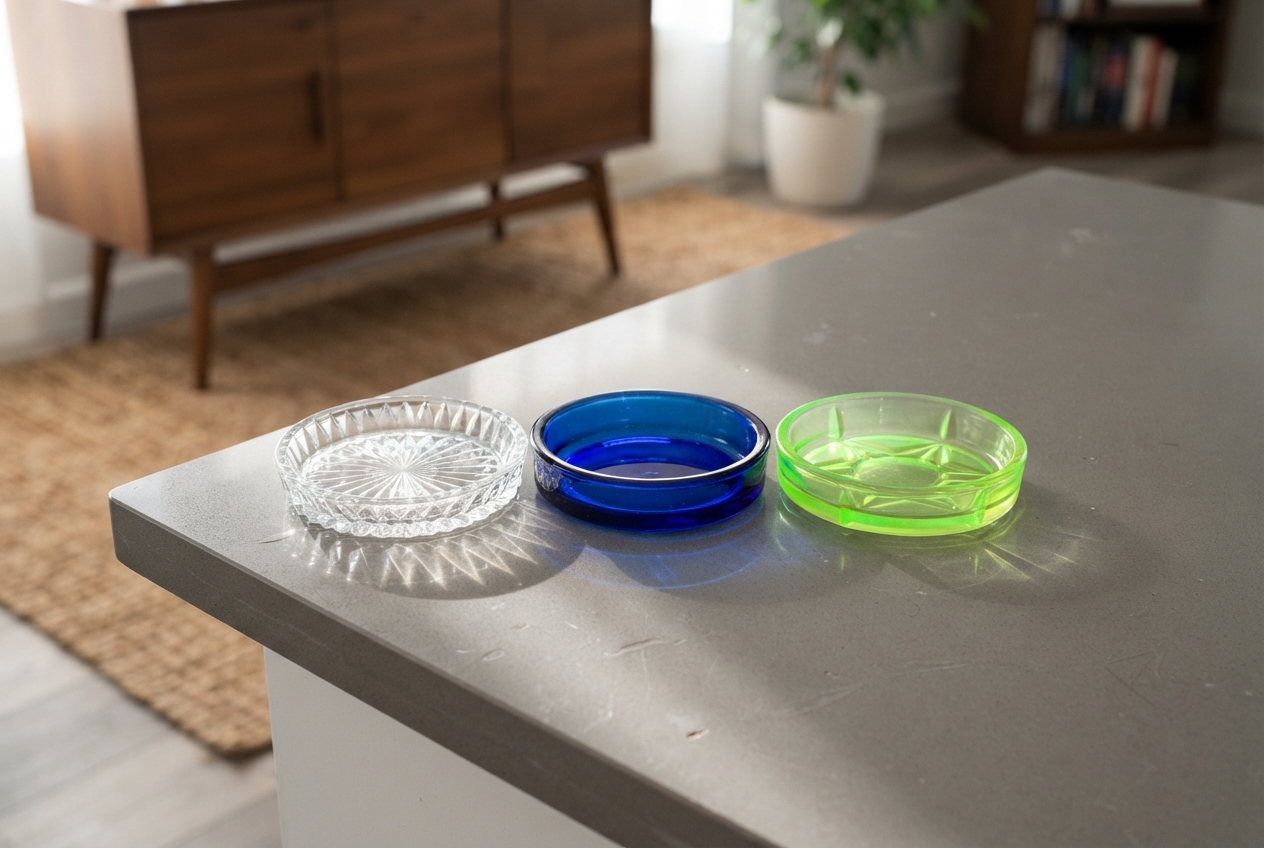
A diverse trio: clear pressed patterns, deep cobalt blue, and glowing green Uranium glass showcase the vast landscape of vintage options.
A Guide to Identification
When scouring antique malls or online listings, keep your eyes peeled for specific characteristics that distinguish these practical pieces from beverage coasters.
- Weight and Thickness: These were made to support massive loads. They should feel unexpectedly heavy and substantial for their size.
- Internal Indentation: This is the dead giveaway. If the glass has a deep, concave well or multiple concentric rings designed to “trap” a leg, you’ve found one.
- Pattern and Manufacture: While generic patterns are common, some bear the distinctive marks of famous American glass companies like Fenton, Cambridge, or Imperial Glass.
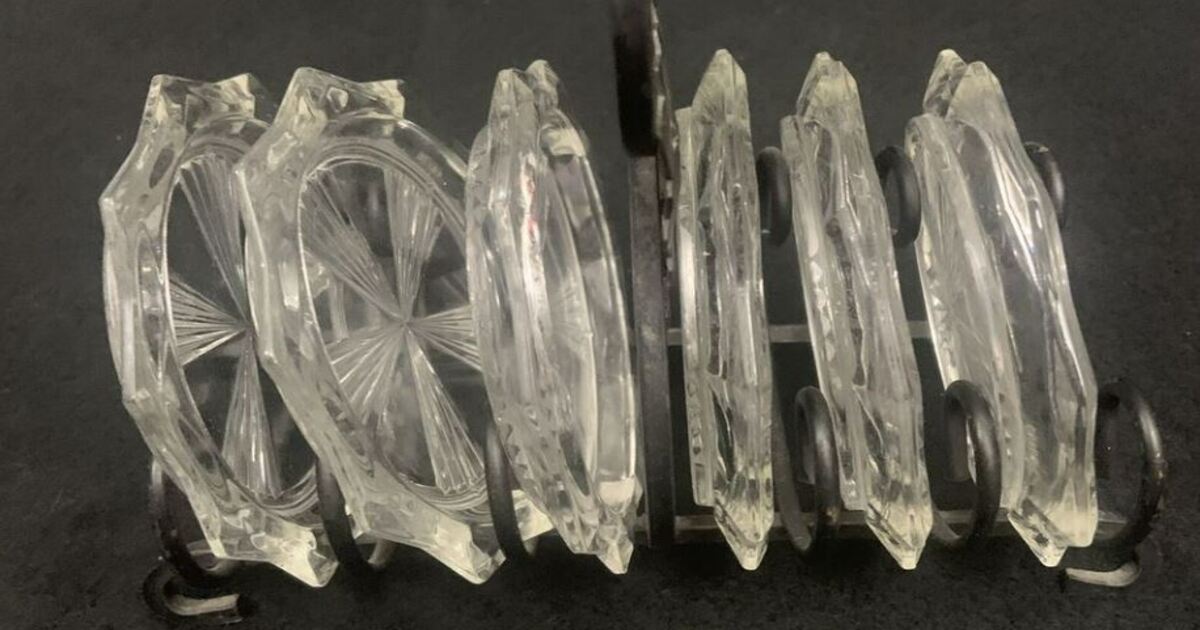
Identifying different styles, from simple pressed patterns to this set with distinct decorative amber glass prongs.
Depression Glass and Uranium Glow
During the Depression era, glass manufacturers infused their practical wares with vibrant, cheerful colors: pink, amber, amethyst, cobalt blue, and the highly sought-after green. The green, made with uranium oxide, famously glows bright, neon green under a blacklight. If you are lucky enough to find a set of these glowing beauties, snap them up. They look spectacular under dark wood furniture.
Simple Pressed Patterns
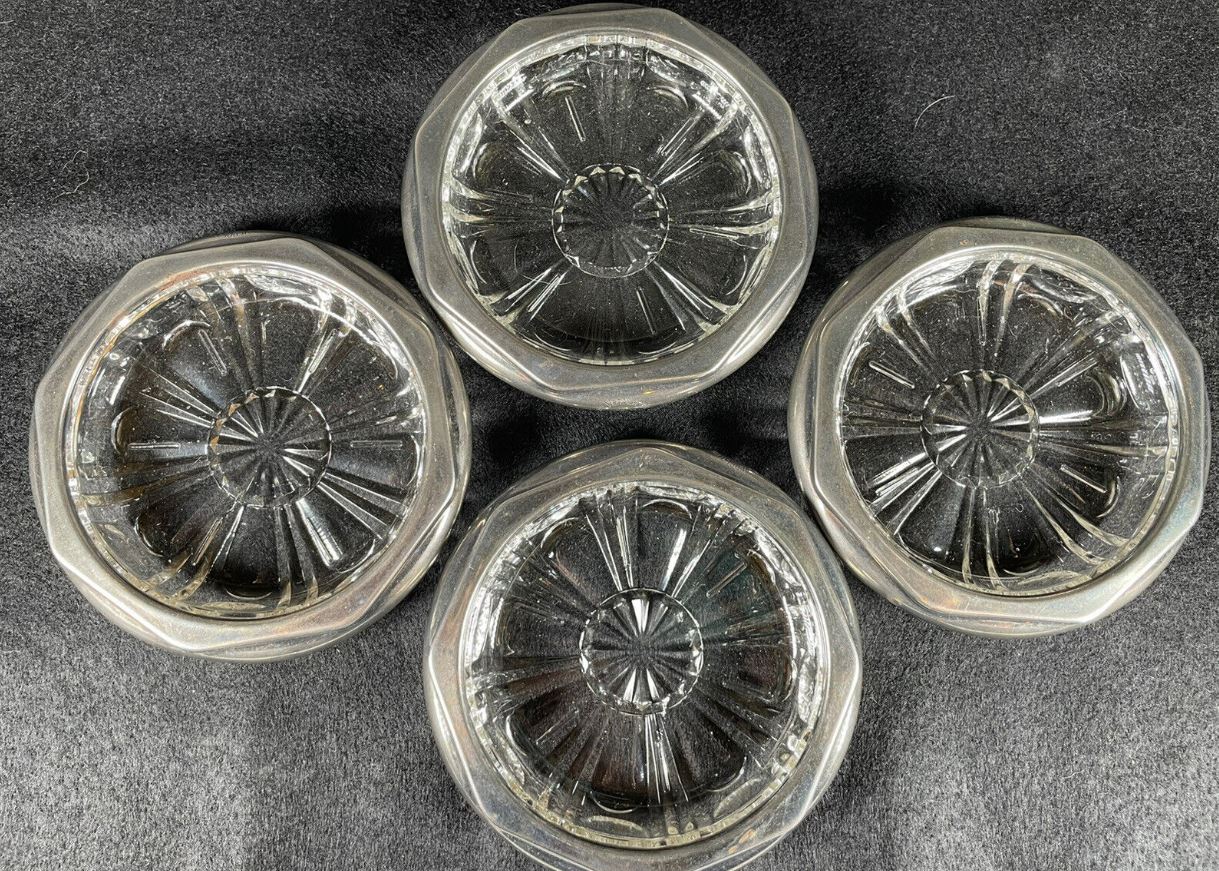
Mid-century manufacturers moved toward more minimalist designs, focusing on clear glass with simple, geometric pressed patterns: radial lines, starbursts, or subtle concentric rings. These are often the easiest and most affordable options, making them great for everyday use under modern credenzas.
These clear, geometric pressed patterns were ubiquitous in mid-century homes and are often the easiest to find.
How to Use Vintage Furniture Cups in Your Modern Home
Using vintage glass furniture coasters is simpler than you think, but there are a few considerations to ensure both your antique glass and your floors remain pristine.
Traditional Floor Protection
Their first and best use is as a practical floor guard. They are spectacular under:
- The legs of antique sewing tables or vanity desks.
- Grand pianos (ensure you get the larger size!).
- Metal bed frames that love to scratch floorboards.
- Mid-century modern sideboards.
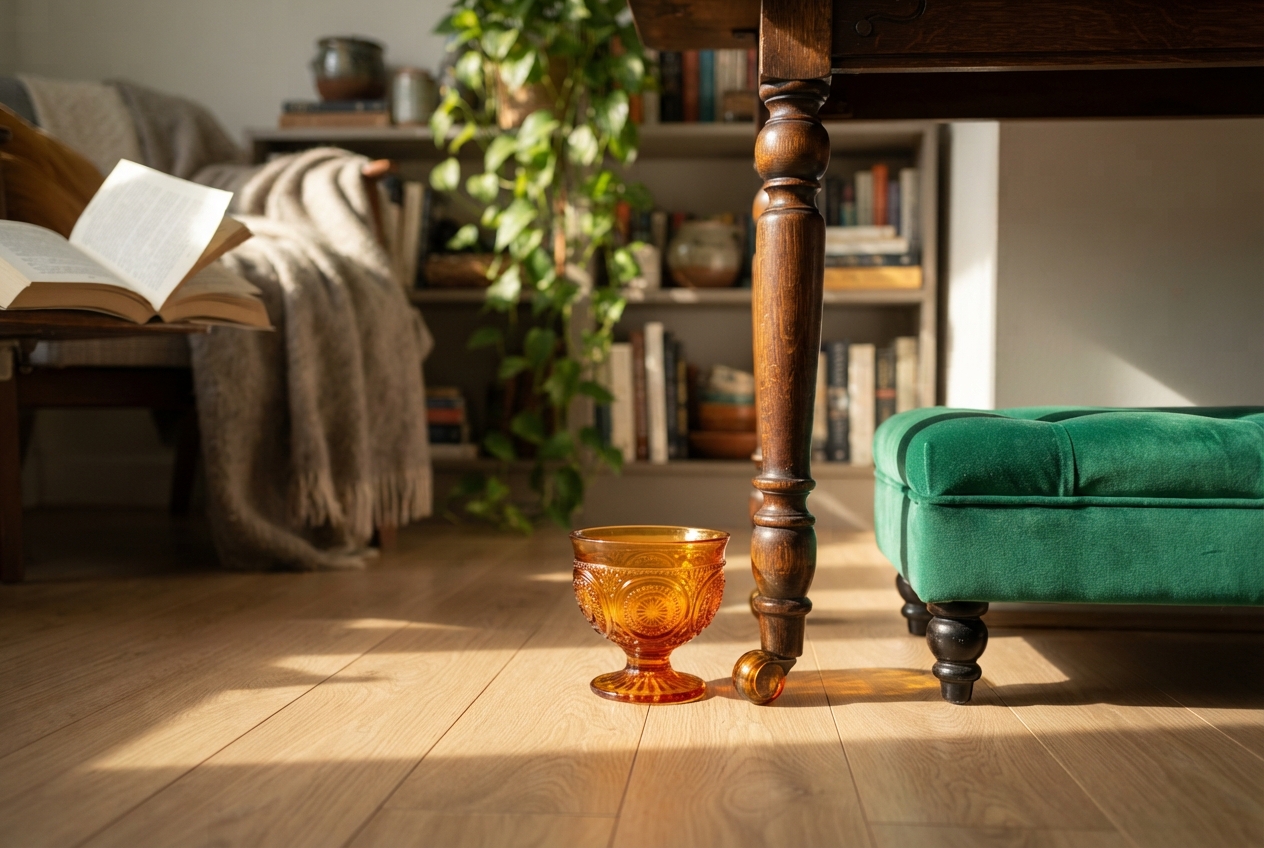
A single amber glass furniture cup seamlessly blends style and function under an antique turned wooden table leg.
Modern Alternative Styles
Don’t just stick them under tables and chairs. They can serve dozens of functions on countertops and shelves.
- Jewelry Holders: Place one on your nightstand to catch earrings and rings.
- Soap Dishes: A Depression-era cup is the perfect size for a guest soap.
- Condiment Cellars: Use them as tiny individual bowls for salt flakes or paprika at a dinner party.
- Desk Organizers: A stack of two or three can hold paperclips, tacks, or binder clips.
- Plant Saucers: A large clear one makes an unobtrusive base for a small terracotta pot, protecting your shelves from water.
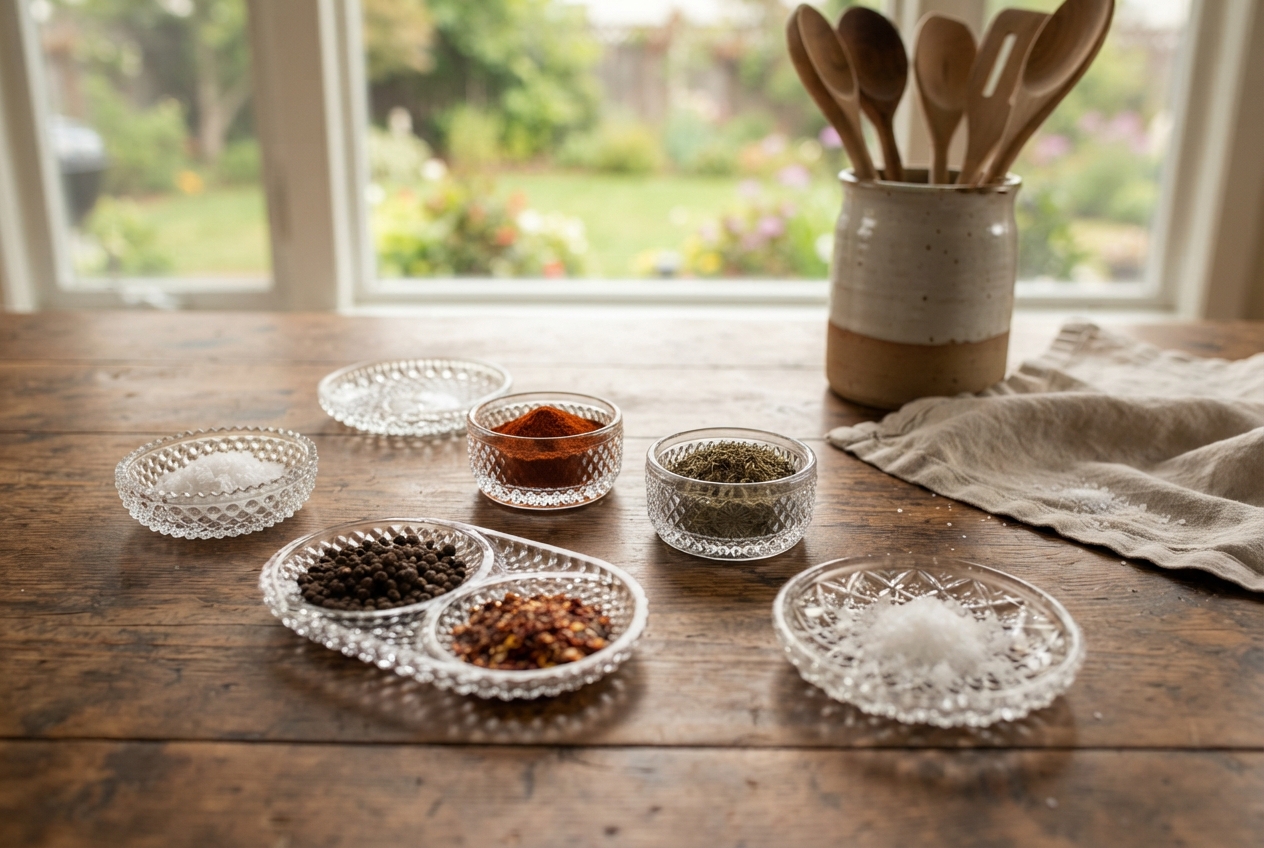
Repurposing these treasures: from under furniture to holding flaky sea salt and spices on the dining table.
“They aren’t just functional, they are tiny history pieces you still use today.”
Cleaning and Care for Your Vintage Glass
Vintage glass furniture coasters have lived a tough life. They’ve supported grand pianos and resisted scuffs for decades, so they deserve a little pampering. Cleaning them is usually easy, but gentle care is crucial.
The Gentle Hand-Washing Protocol
- Start with Lukewarm Water: Avoid hot water, which can cause internal stress cracks. A quick lukewarm rinse will suffice for most dusty finds.
- Use a Mild Dish Soap: A tiny drop is all you need. Harsh cleaners can dull the glass or react with the metal prongs, if your set has them.
- Skip the Abrasives: Do not use steel wool or harsh scrubbing pads, which can scratch the glass and ruin any etched patterns. A soft-bristled toothbrush is your best friend for cleaning out crevices.
- Tackle Mineral Deposits: If you find a coaster with stubborn cloudiness (often caused by mineral deposits), soak it in a mixture of one part water to one part white vinegar for an hour. The acid will gently dissolve the buildup.
Never, ever put vintage glass in the dishwasher. The high heat, intense water pressure, and harsh detergents can permanently etch the glass, turn clear glass “sick” or cloudy, and irreparably damage any delicate patterns or colors.
Spotting the Real Deal: Beware of Reproduction
The popularity of Depression glass means that reproductions are everywhere. For furniture coasters, this is less common than for vases or plates, but reproduction sets do exist. True vintage glass often has imperfections: small air bubbles trapped inside (called “seeds”), subtle seam lines from the mold, or tiny “straw marks” left during the pressing process. Reproductions will often look too clean and perfect.
If a set looks brand new, is remarkably light, and feels “plasticky” or thin, it is likely a modern copy. True vintage glass furniture coasters feel cold, heavy, and substantive.
Next time you find yourself browsing an antique mall, don’t walk past that obscure pile of small glass cups. They are an elegant, historical answer to a timeless problem. By choosing to use vintage glass furniture coasters, you are protecting your floors, embracing sustainable home decor, and keeping a beautiful, forgotten part of history alive on your hardwood floors. And honestly, they just make any table leg look infinitely more sophisticated. Your claw-foot table will thank you.