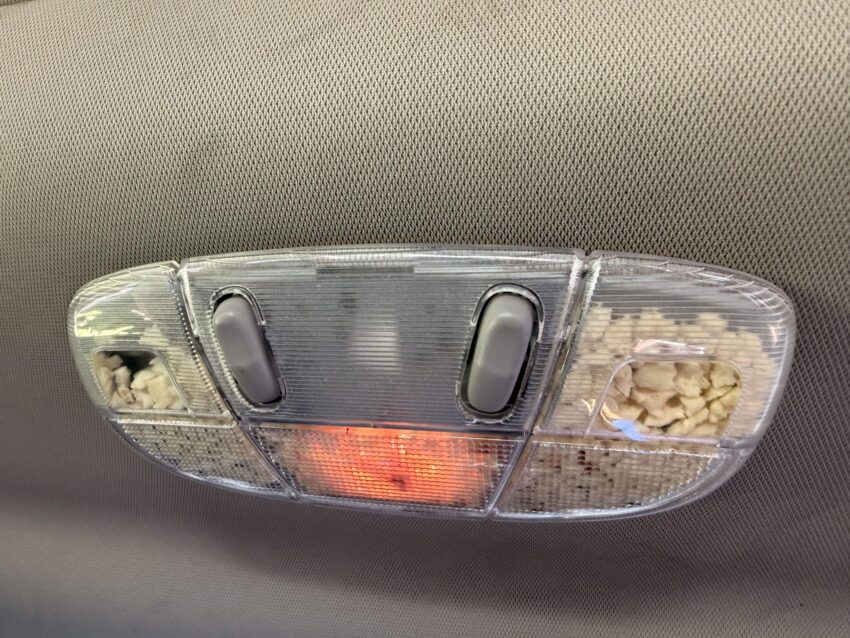
A person on Reddit asked this exact question after looking up while sitting in the driver’s seat of their older Lincoln MKX and freezing in total confusion: “wtf is in my cars light I’m scared.”
Behind the clear plastic lens of the overhead console, right around the map light toggle switches, sat a thick layer of pale, gravel-like chunks. It looked like someone had deliberately packed the fixture full of crushed cereal, crumbled gravel, or dried pet food. Naturally, the internet jumped in with hundreds of wild theories, but the truth behind this bizarre sight points to a sneaky hazard for vehicle owners: mice in car headliner panels.
wtf is in my cars light I’m scared
by
u/brody3014 in
whatisit
The Wild Guesses: From Tonsil Stones to Cereal Heists
When the photo hit the forum, the comment section exploded with equal parts horror and comedy. At first glance, the jagged, yellowish-white bits looked disturbingly organic. Several commenters swore they were looking at a terrifying collection of human teeth left behind by a confused tooth fairy.
Others wondered if a passenger had shoved crushed crackers or dry breakfast cereal into the plastic housing as a prank. A few folks guessed the vehicle had been broken into by someone attempting to stash contraband, while one user joked that a neighbor had secretly converted the dome light into a pantry for dried soup crackers.
The image is undeniably eerie. Dome lights are sealed units meant to illuminate your cup holders, not store dry pantry goods. Yet there it was, packed so full of fragmented material that the switch mechanism was nearly jammed.
The Clues Hidden Above Your Head
To understand what happened, you have to look at the architecture of a vehicle roof. Between the painted metal sheet of your car roof and the soft fabric you see overhead sits a molded backing board cushioned with synthetic acoustic foam and fiberglass batting.
This hidden space is dark, dry, and shielded from chilly weather. The wiring harnesses that power your vanity mirrors, sunroof controls, and map lights run straight through this hollow channel. Small openings around the bulb housings provide a direct drop chute straight into the clear plastic light covers.
When something disturbs the material above that fabric, tiny particles have only one place to fall: straight onto the clear lens directly over your head.
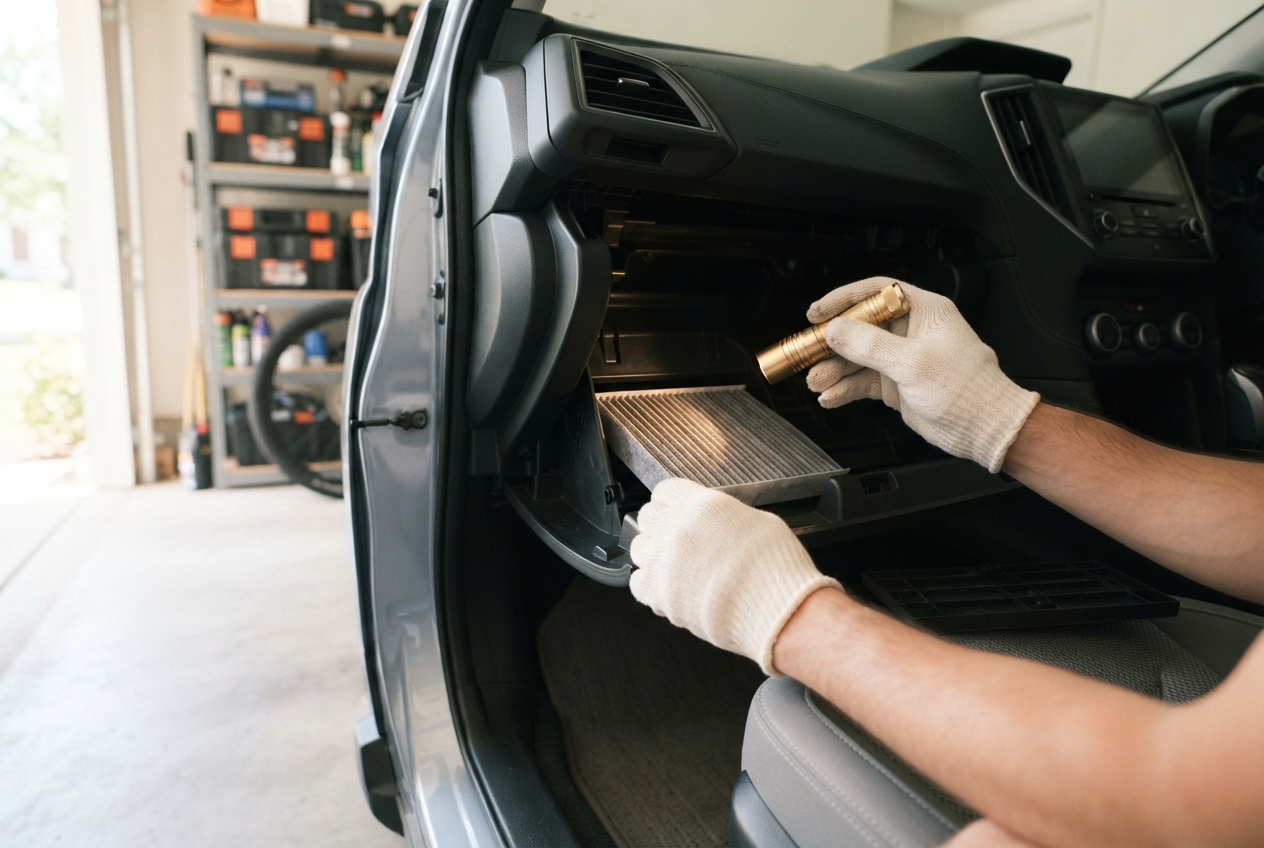
Checking the cabin air filter and glove box compartment for hidden debris is one of the quickest ways to trace unwanted car visitors.
The Reveal: Why That Crumbly Debris Is Actually Bad News
Those strange, tooth-like morsels are not food, teeth, or stones. They are shredded pieces of polyurethane headliner foam and thermal roof insulation, chewed apart and shoved into the light housing by nesting rodents.
When outdoor temperatures drop or a car sits parked for a few days, mice and squirrels view the engine bay and roof cavities as five-star winter hotels. They squeeze through tiny openings near the firewall, slip up the windshield pillars, and discover the soft padding glued to the ceiling.
Mice rip the foam into bite-sized clumps to build warm, cupped nests. Because the space directly around overhead lights gets warm when the bulbs turn on, rodents often pack insulation right against the plastic housing to insulate their sleeping quarters. In some vehicles, squirrels also use the cavity to store dry acorns and sunflower seeds, turning the light fixture into an accidental pantry.
Warning Sign: If you turn on your interior lights and smell toasted nuts, dry paper, or a faint sweet musky odor, you likely have rodent nesting material sitting directly against a hot bulb.
The Real Hazards of Rodents in Your Car Roof
Finding chewed foam in your light fixture might seem like a quirky annoyance, but it signals serious risks that demand fast attention. Unchecked rodents cause extensive, expensive damage in hidden automotive spaces.
- Chewed Electrical Wiring: Many modern vehicles use soy-based coatings on electrical wires. Rodents love the taste and will chew through vital sensor lines and power cords, triggering check-engine lights and costly harness replacements.
- Fire Hazards: Dry insulation foam and paper bedding packed directly against incandescent bulbs or short-circuiting wires create a direct fire hazard inside the cabin.
- Air Quality & Respiratory Risks: Rodent droppings and urine trapped in the headliner or HVAC ducts dry out and circulate through the air vents, spreading airborne bacteria whenever you turn on the heater.
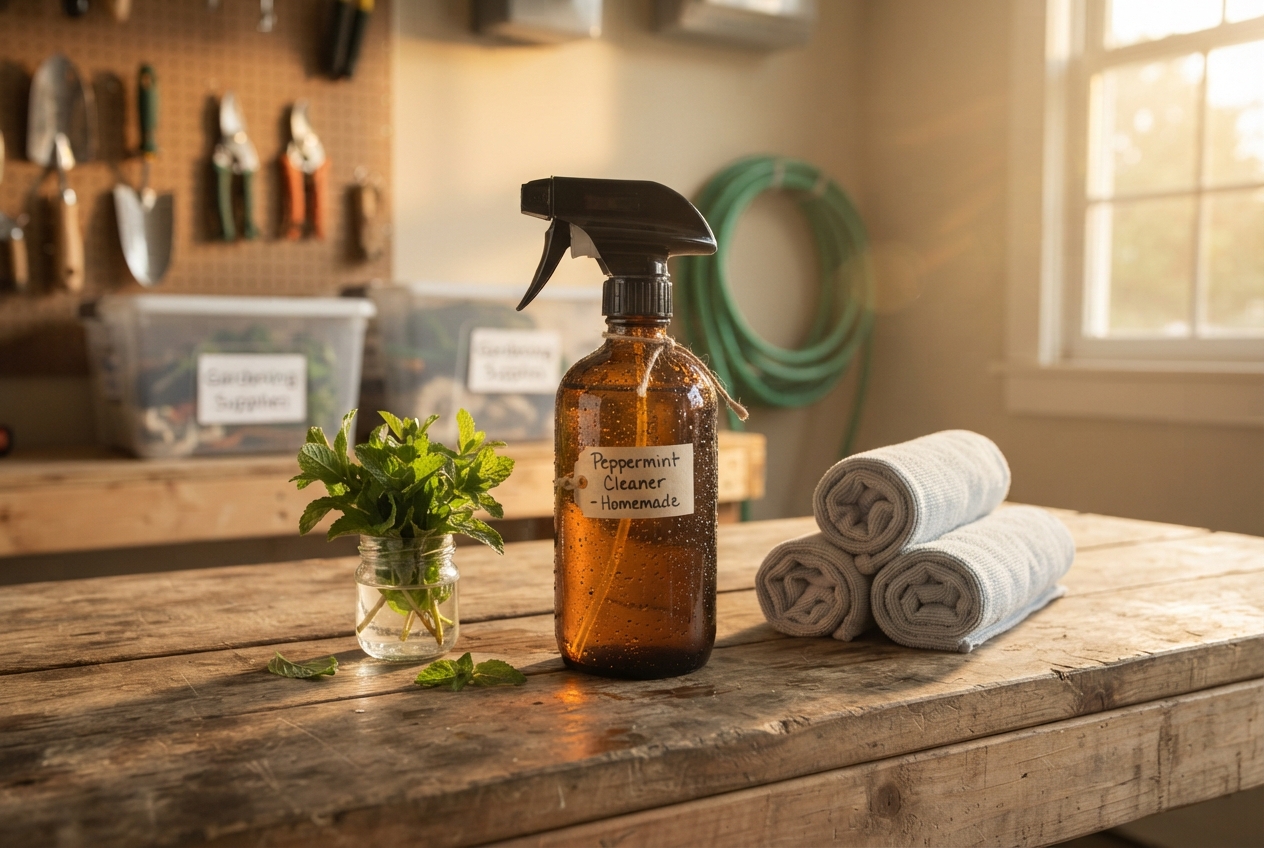
A simple blend of pure peppermint oil and water creates a fresh, non-toxic deterrent that keeps critters away from your car interior.
How to Clear Out the Mess Safely
If you spot foam bits or droppings anywhere in your car, avoid grabbing a dry household vacuum immediately. Vacuuming dry rodent debris can launch dust and pathogens straight into the air you breathe.
1. Gear Up and Ventilate
Open all car doors in a well-ventilated driveway or garage. Put on rubber gloves and an N95 mask before handling any loose debris or removing interior panels.
2. Remove and Wash the Lens
Use a plastic trim tool or a flathead screwdriver wrapped in masking tape to gently pry the dome light lens free from its clips. Dump the shredded foam into a sealable trash bag and wash the plastic cover in warm, soapy water.
3. Disinfect the Cavity
Spray a mild disinfectant or a diluted white vinegar solution onto a microfiber towel and wipe the accessible edges of the housing. Allow the area to air-dry completely before snapping the clean lens back into place.
4. Check the Cabin Air Filter
Open your glove compartment and slide out the cabin air filter tray. Mice frequently build their primary nests directly on top of the pleated filter element. If you see chewed paper, acorn shells, or droppings, discard the filter and install a fresh one.
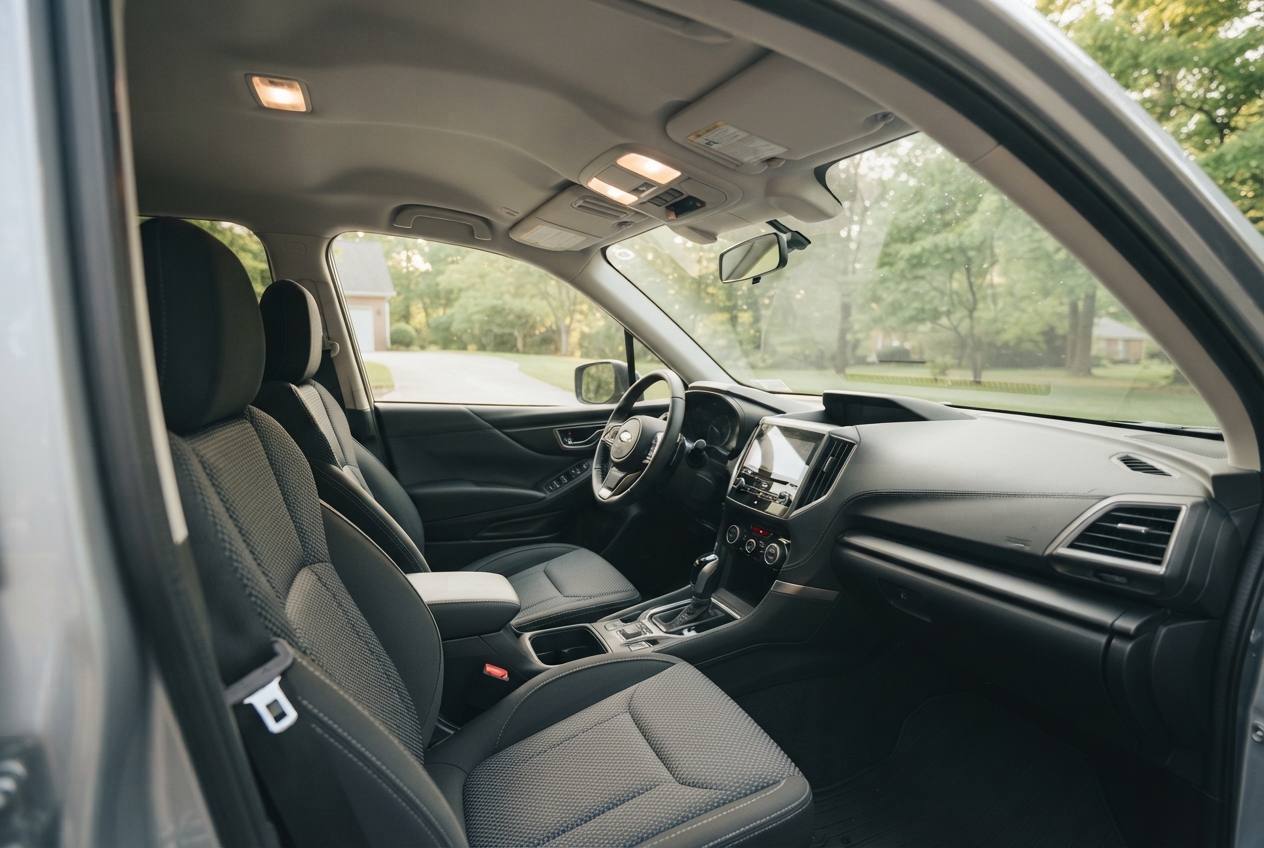
Regular vehicle inspections and a crumb-free cabin protect your ceiling liner and wiring from expensive hidden damage.
Natural Ways to Keep Critters Out of Your Vehicle
Preventing an infestation is far easier than rewiring a car ceiling. You do not need harsh chemicals or messy traps to protect your ride.
- Deploy Peppermint Essential Oil: Rodents have intensely sensitive noses and avoid strong menthol scents. Add 20 drops of pure peppermint essential oil to a spray bottle filled with warm water, and mist your floor mats, trunk edges, and the perimeter of your parking spot.
- Clear Out Food and Trash: Even a forgotten granola bar wrapper, a stray French fry under the passenger seat, or a bag of dog kibble left in the cargo area acts as a neon welcome sign for hungry mice.
- Park on Clean, Hard Surfaces: Avoid parking for extended periods over tall grass, mulch beds, or near woodpiles where critters naturally forage.
- Install Wire Mesh over Air Intakes: For persistent problems, an automotive mechanic can install fine stainless steel mesh (hardware cloth) over the cabin air intake cowl under the hood to physically block entry points.
Catching the signs of mice in car headliner spaces early protects your upholstery, keeps your family breathing clean air, and prevents a small mystery from turning into a four-figure repair bill.