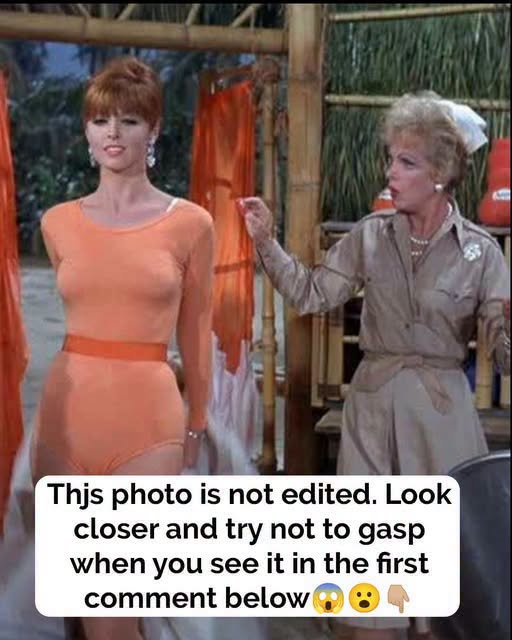
Anyone who grew up watching television on lazy weekday afternoons remembers the accordion theme, the crashing surf, and seven castaways stranded on an uncharted reef. Decades later, revisiting those familiar episodes reveals a collection of funny Gilligan’s Island mistakes and bloopers that flew right over our heads when we were kids. Those tiny slip-ups, from misplaced props to sneaky background buildings, give us a candid peek behind the curtain of mid-century network television. They do not spoil the illusion at all. If anything, every production goof feels like an affectionate wink from the cast and crew.
The Mystery of the Eighth Passenger: Gilligan’s Island Mistakes and Bloopers
Take a close look at the opening sequence of season two. The lyrics clearly promise a small charter vessel carrying five passengers and a crew of two on a fateful tropical voyage. Yet if you freeze the frame as the boat cuts through open water, you can count eight distinct people standing on deck.
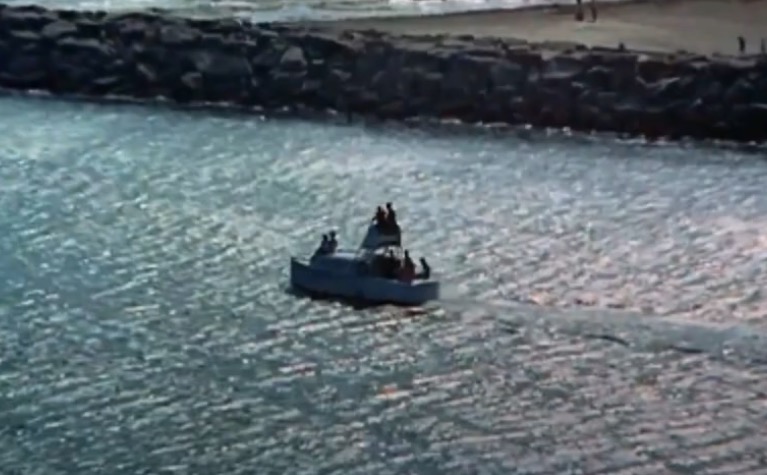
Count the silhouettes aboard the S.S. Minnow in the season two credits, where an unexpected eighth person sneaks onto the deck.
The blunder came down to how 1960s studios handled exterior second-unit location shoots. Crew members filmed ocean footage off the California coast using stand-ins rather than the primary cast members. In the rush to wrap the shot before losing daylight, an extra hand stayed aboard when the cameras rolled. Television sets in 1965 were small, curved, and fuzzy. Editors never imagined anyone would scrutinize the footage on high-definition widescreen displays decades down the road.
When Hollywood Soundstages Peeked Through the Jungle
Keeping up the illusion of an isolated South Pacific paradise required constant vigilance from the set decorators. In season two, episode twenty-nine, titled “The Friendly Physician,” Gilligan and his companions paddle away from their home base and encounter an eccentric scientist named Dr. Balinkoff. As their small rowboat glides along what should be an uninhabited coastline, the camera angle tilts just a bit too high.
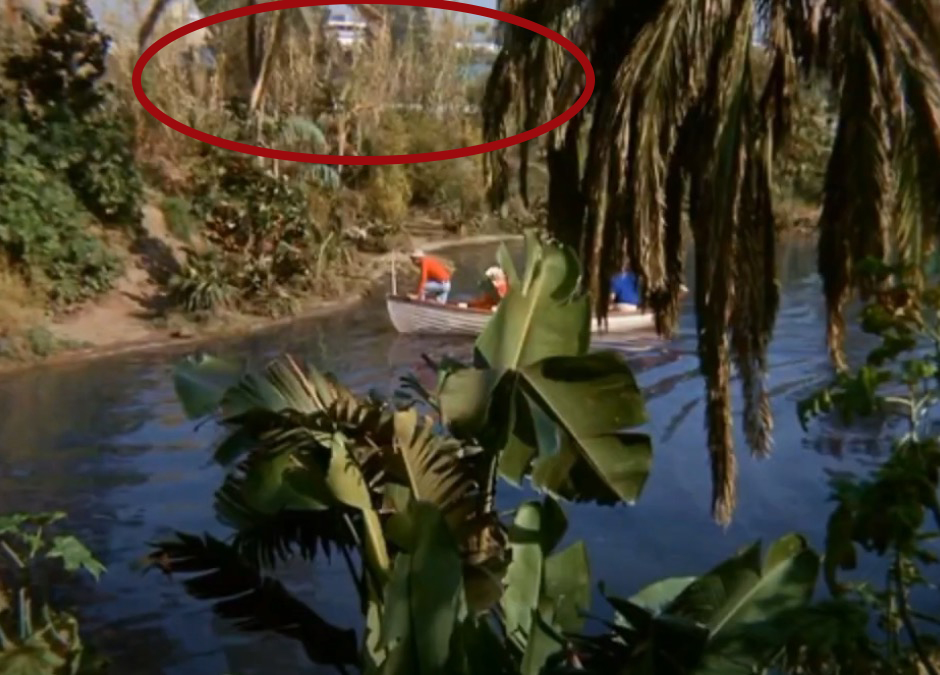
Look past the palm fronds in “The Friendly Physician” to catch 1960s CBS studio rooftops standing in plain sight.
Perched directly above the tropical greenery sits the unmistakable roofline of CBS Studio Center soundstages in Studio City, California. The famous tropical lagoon was actually an asphalt basin filled with four feet of heavily chlorinated water right on Lot 2. Whenever traffic backed up on the nearby Ventura Freeway, filming halted until the engine noise faded. Studio gardeners constantly wired fresh palm fronds onto telephone poles to conceal the surrounding San Fernando Valley hillsides.
The Stagehand Swimming Beneath the Miniature Submarine
Special effects in vintage television relied on wires, stagehands, and raw ingenuity. One memorable storyline involved a wayward sailor who arrives off the beach inside a compact two-man submarine. Audiences watched Gilligan clamber onto the vessel and steer it around the lagoon while the periscope sliced through the water.
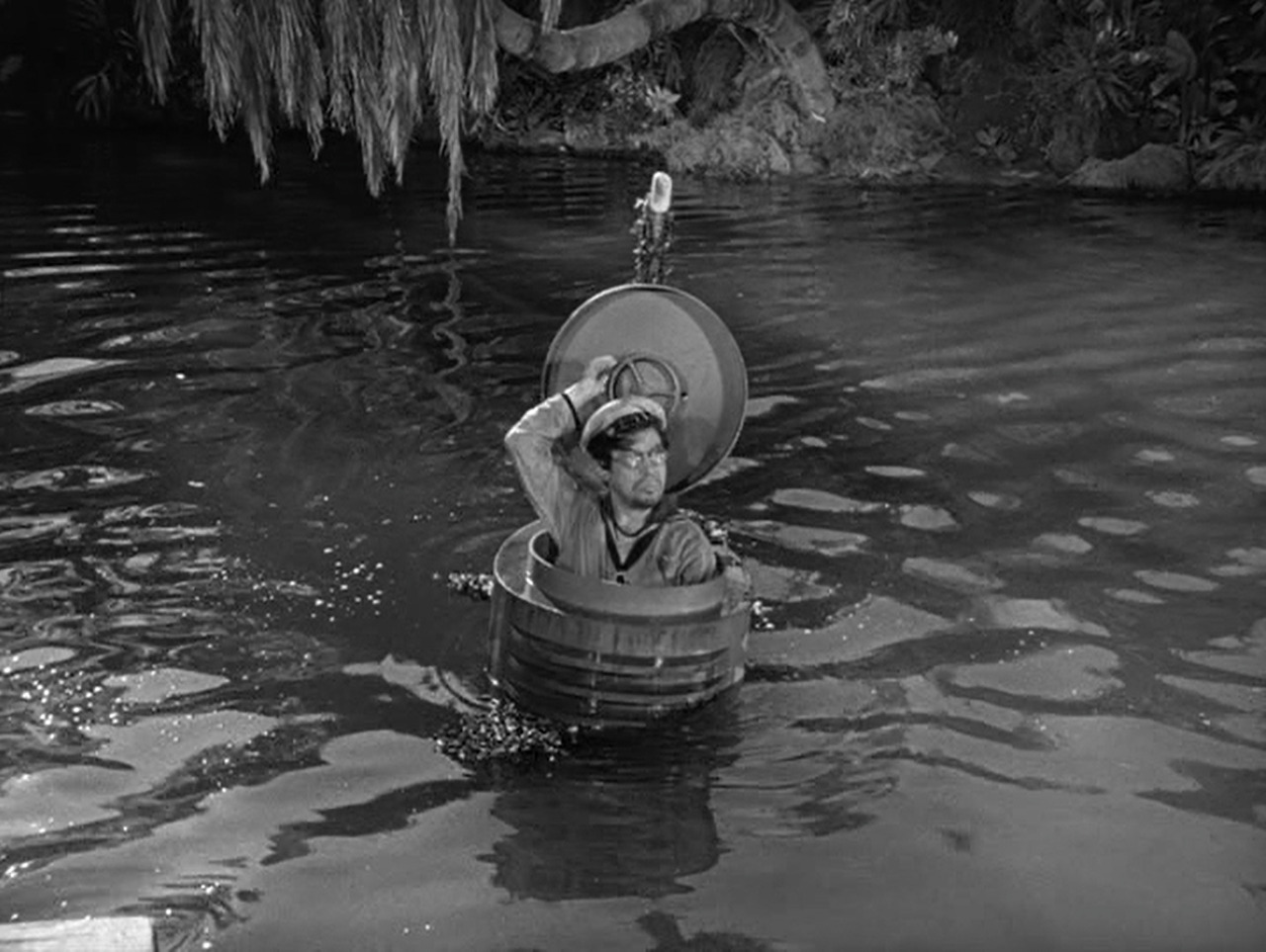
The show’s famous midget submarine relied on a submerged studio diver pushing the periscope rather than naval engineering.
Underneath that metal shell was no engine at all. A studio stunt diver spent the afternoon swimming beneath the surface, manually guiding the periscope and fiberglass hull through the chlorinated water. If you look closely at the water around the vessel, you can spot trail bubbles, diving equipment edges, and unnatural surface ripples. It was community theater ingenuity on a network budget.
Water sequences frequently gave away the physical limitations of the studio lot. When a shark stalked the lagoon in an early black-and-white episode, the painted concrete rim of the indoor filming tank flashed into view for a split second. Careful viewers can also catch the shadow of an overhead boom microphone dancing across the bamboo raft while the castaways plot their latest escape.
Wandering Wedding Rings and Alan Hale Jr.’s Desert Dash
Continuity slips were bound to happen when a crew filmed over thirty episodes a season. In the season two episode “They’re Off and Running,” Gilligan cheers wildly during a turtle race along the beach. As he raises his hands in excitement, a gold band glints on his left ring finger. Gilligan was a bachelor, but actor Bob Denver had recently married and simply forgot to remove his personal wedding band before walking onto the set.
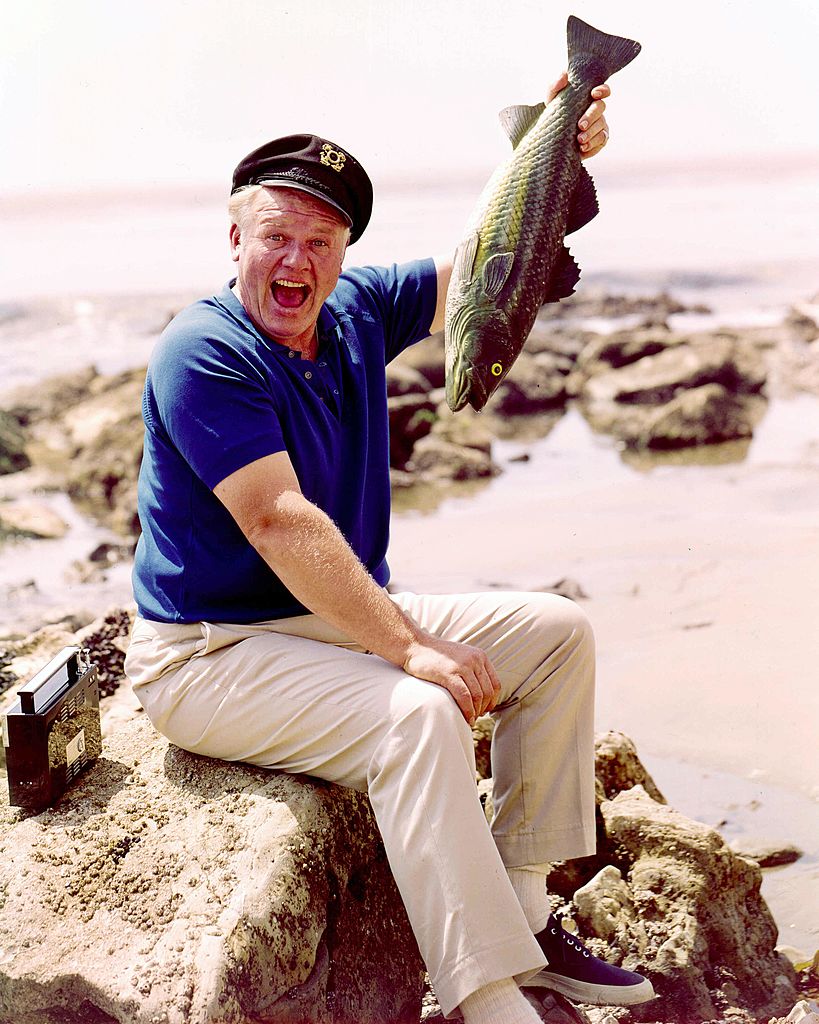
Alan Hale Jr. brought pure joy to the Skipper, even after racing across state lines on horseback to win the role.
The energy behind the scenes was just as spirited as the scripts. Alan Hale Jr. nearly lost the chance to play the Skipper due to a scheduling clash. When the audition notice went out, Hale was on location filming a Western called Bullet for a Bad Man in the desert near St. George, Utah.
Determined to read for creator Sherwood Schwartz, Hale slipped away from his Utah movie set on horseback. He rode several miles down to a main highway, hitched a ride to Las Vegas, and caught a commercial flight to Los Angeles. He walked into CBS covered in desert dust, aced the audition, and flew back to Utah before the movie director noticed his absence. That dedication translated directly into the warmth he brought to his “little buddy” on screen.
Campy Contraptions, Walking Robots, and Island Logic
Part of the enduring fun of the series was its willingness to lean into total slapstick absurdity. In season two, an errant military humanoid robot parachuted directly into camp during “Gilligan’s Living Doll.” The cast treated this giant walking piece of sheet metal like an unruly houseguest, attempting to teach it household chores and basic island manners.
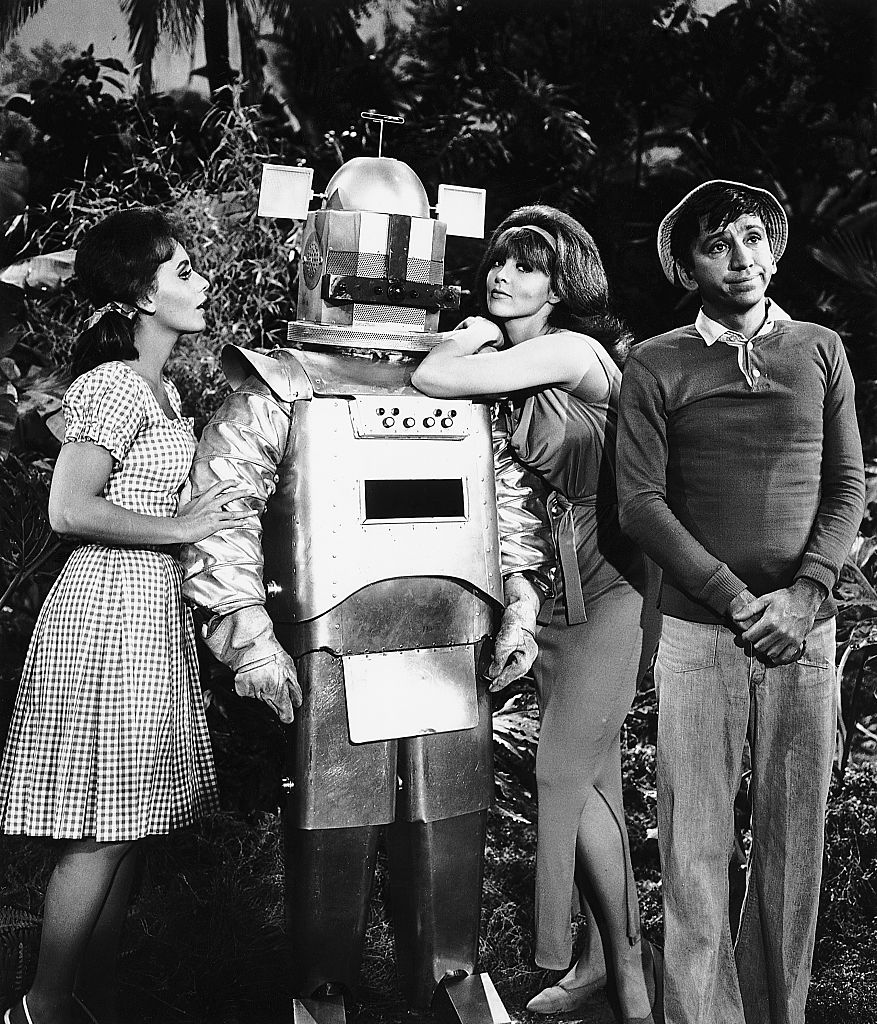
Gilligan, Ginger, and Mary Ann inspect an errant government robot, leaning into the delightfully absurd side of 1960s sitcom writing.
The mechanical logic of the camp changed whenever the plot demanded it. Prop master Stan Jolley built working phonographs powered by foot pedals, sewing machines made of bamboo, and hot water heaters crafted from hollowed coconuts. Yet the castaways could never seal a small crack in the Minnow’s wooden hull. In another jungle scene, a North American woodpecker loudly drills into a hollow tree, an amusingly out-of-place bird for a tiny South Pacific coral reef.
Live actors had their own quiet slips as well. Mrs. Howell, played with comedic grace by Natalie Schafer, supposedly fainted dead away during a chaotic jungle scramble. If you watch her face while Gilligan rushes to her aid, her eyelids flutter open to check her spacing before shutting tight again.
Evening Gowns, Strict Censors, and the Great Theme Song Battle
Viewers always chuckled over Ginger Grant’s endless wardrobe. Packing dozens of sequined floor-length dresses for a simple afternoon harbor tour stretched reality, but it established the visual rhythm of the ensemble. Ginger brought classic Hollywood glamour, while Mary Ann supplied the grounded girl-next-door balance.
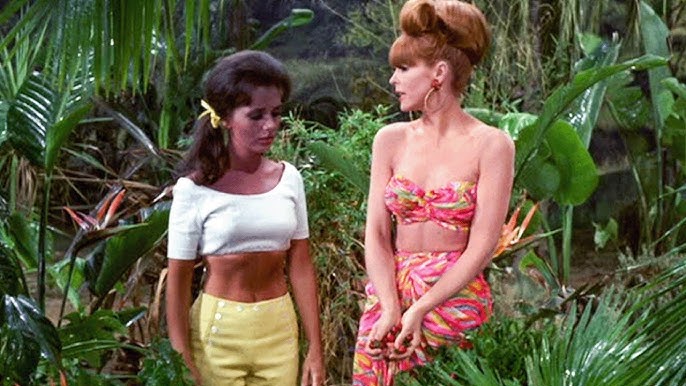
Ginger’s glamorous evening dresses and Mary Ann’s tailor-made shorts created television’s most memorable style contrast.
Behind Mary Ann’s casual wardrobe lay a genuine struggle with network censors. During the mid-1960s, CBS Standards and Practices strictly prohibited actresses from exposing their navels on screen. Dawn Wells had to wear her denim shorts pulled well above her hip bones, with custom waistbands sewn specifically to cover her midriff and keep the production compliant with broadcast codes.
The cast supported each other when cameras stopped rolling. During the first season, the opening theme song dismissed Russell Johnson and Dawn Wells with a quick “and the rest.” Bob Denver personally marched into executive offices to demand equal billing for his co-stars. Denver insisted that if producers refused to include Mary Ann and the Professor by name, he would pull permission for his own solo billing. By season two, the updated recording locked their names into the credits permanently.
Somber Flags, Warm Friendships, and a Lasting Legacy
Hidden beneath the slapstick lies a poignant moment in American history. In November 1963, the cast and crew were stationed near Honolulu Harbor filming the pilot’s opening scenes when news arrived that President John F. Kennedy had been assassinated in Dallas. In the background of several harbor shots, military flags can be seen flying at half-staff, capturing a somber national moment preserved inside a lighthearted sitcom.

Dawn Wells remained devoted to Mary Ann’s legacy, bringing genuine warmth and affection to generations of fans.
Decades have passed, and we have bid farewell to most of the original seven, including Jim Backus, Natalie Schafer, Alan Hale Jr., Bob Denver, Russell Johnson, and Dawn Wells. Tina Louise remains the last living castaway, carrying the memories of that sunny backlot set.
Catching these vintage Gilligan’s Island mistakes and bloopers never takes away from the fun. Seeing a studio roof peek over a palm tree, noticing an extra passenger on the boat, or spotting a diver moving a periscope simply reminds us of the dedicated people who built a beloved world out of stage paint, bamboo, and pure imagination.