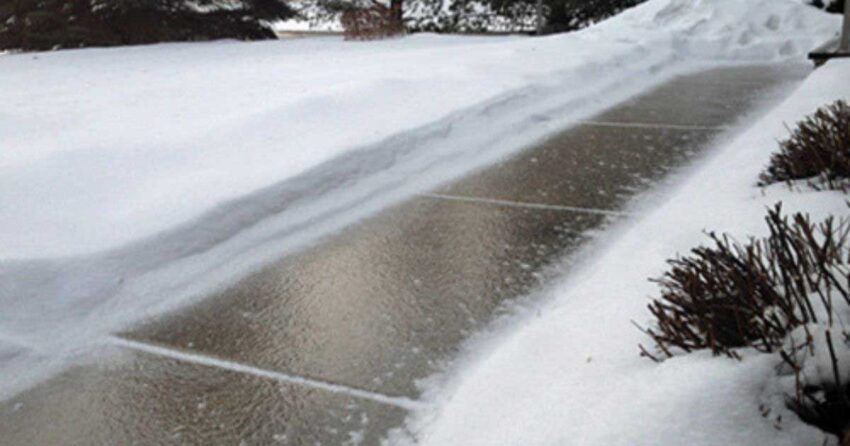
Few sounds trigger seasonal dread quite like the sharp scrape of boots sliding across an invisible glaze on the front stoop. When temperatures plummet overnight, our first instinct is to dump whatever we have on hand onto the slippery concrete to clear a safe path to the car or mailbox. We want traction, we want it fast, and we want to know our front steps will not send delivery drivers skidding into the flowerbeds.
Before you run to grab whatever jug sits under your kitchen sink or toss down corrosive road salt, it helps to understand how melting agents interact with your hardscaping. If you have been searching for how to safely de-ice walkways without cracking pavers, poisoning soil, or burning dog paws, you are in the right spot. Let us sort out the science, ditch the gimmicks, and build a winter routine that genuinely protects your property.
The Hidden Cost of Traditional Rock Salt on Concrete
Rock salt, or sodium chloride, remains the default choice in hardware store bins because it is dirt cheap. However, using it on residential paths comes with a steep hidden bill come spring. Traditional salt does not just dissolve ice; it forces moisture through rapid, artificial freeze-thaw cycles that break apart concrete from within.
When concrete absorbs salty slush, the liquid freezes at lower temperatures and expands with tremendous hydraulic pressure. This process causes surface spalling, flaking, and deep pitting across steps and driveways. If your concrete is less than two years old, rock salt is an absolute non-starter, as the material is still curing internally and remains highly susceptible to surface breakdown.
Beyond masonry damage, sodium chloride leaches directly into surrounding garden borders. It desiccates perennial roots, alters soil pH, and leaves behind white powdery crusts on brickwork. Finding gentler methods is not simply an aesthetic preference; it preserves thousands of dollars in home exterior investments.
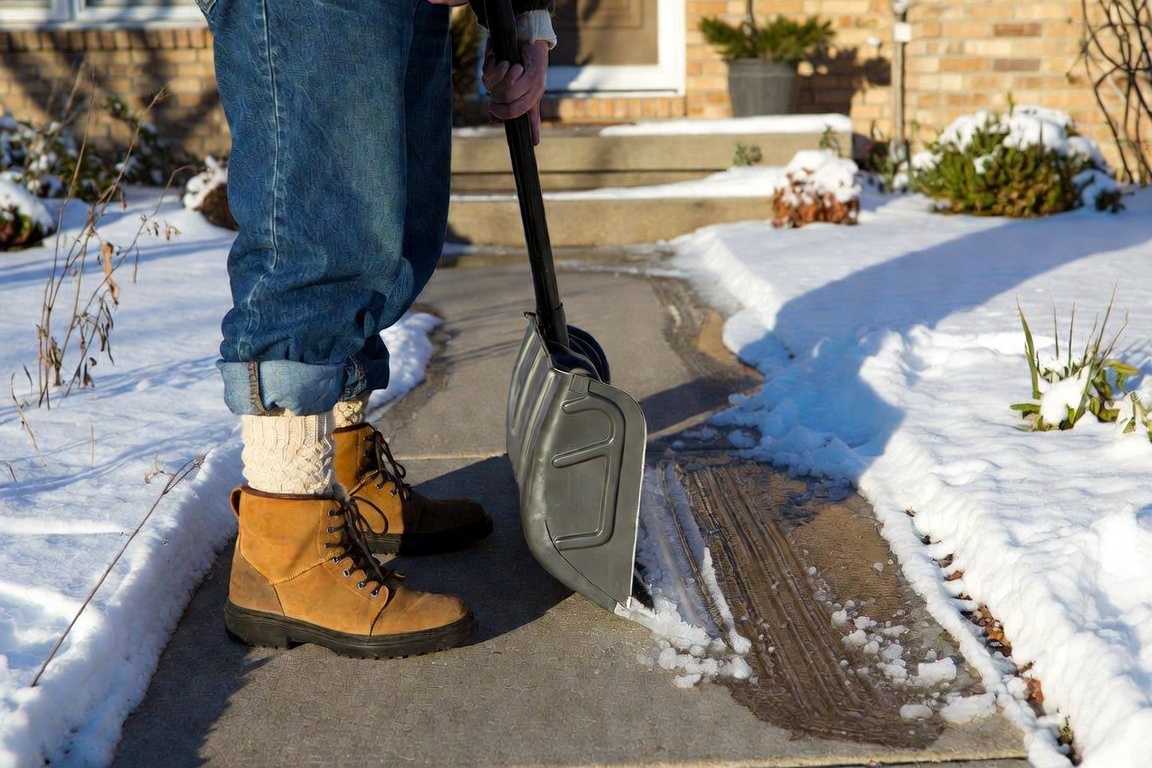
Getting down to the bare pavement with a flat-edged shovel before applying any melting agent prevents slush buildup later.
Testing the Viral Rubbing Alcohol & Dish Soap Recipe
Every winter, a familiar tip circles the internet claiming that a quick blend of warm water, liquid dish soap, and rubbing alcohol will clear your stairs permanently without refreezing. It sounds convenient because almost everyone keeps those basic items in a pantry cabinet.
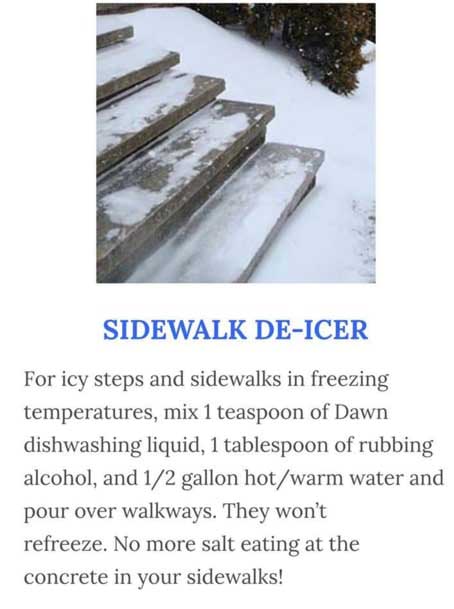
The viral social media sidewalk de-icer recipe that promises freeze-free concrete, broken down to its real ingredients[cite: 2].
The reasoning behind the mixture relies on isopropyl alcohol having a much lower freezing point than pure water. In theory, splashing alcohol over ice lowers the surface freezing threshold and breaks the bond between frost and stone. The warm water provides rapid thermal melting, while the surfactant in the soap helps break surface tension.
While the initial reaction looks promising as steam rises and thin frost vanishes, this household recipe carries severe practical limitations in deep winter conditions. Understanding those shortcomings saves you from creating a dangerous skating rink right outside your own front door.
The Trouble with Quick-Fix DIY De-Icers: Why Dish Soap Can Backfire
The biggest flaw in the viral formula lies in the liquid dish soap. Surfactants clean greasy dishes beautifully, but when poured onto freezing outdoor pavers, soap leaves an oily, invisible film. Once the alcohol evaporates—which it does rapidly in dry winter air—the residual soapy water leaves steps slicker than the original frost.
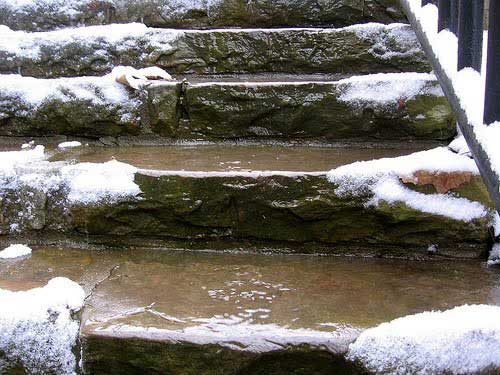
Natural stone steps slick with melting slush after a spot treatment, showing how runoff can linger on textured risers[cite: 1].
Pouring warm water outdoors during sub-zero temperatures also invites immediate refreezing if the solution runs off toward an untreated patch. Unless you physically squeegee or shovel away every trace of melted slurry within minutes, you are simply adding moisture to a frozen environment. For stairs especially, soapy moisture settling into stone pores creates a prolonged slipping hazard.
Pet-Safe and Plant-Friendly Chemical Alternatives
If sodium chloride damages your walkways and kitchen hacks carry hidden slip risks, what should you keep in your utility shed? The secret lies in choosing mineral compounds designed to melt ice without attacking structural materials or stinging sensitive animal paws.
- Calcium Magnesium Acetate (CMA): Made from dolomitic limestone and acetic acid, CMA is widely considered the gold standard for eco-friendly de-icing. It operates differently than salt: instead of creating a chemical brine, it prevents snow and ice particles from sticking together, turning pack into easily shovelable crust without harming lawns.
- Magnesium Chloride: Effective down to roughly -13°F (-25°C), this compound is far gentler on concrete surfaces and significantly less irritating to animal paws than conventional salt. It leaves minimal residue and breaks down naturally without scorching soil borders.
- Potassium Chloride: A plant-friendly option that acts similarly to natural fertilizer in tiny amounts. While it ceases working once temperatures dip below 15°F (-9°C), it serves as a wonderful early-winter choice for walkways flanked by prized shrubs.
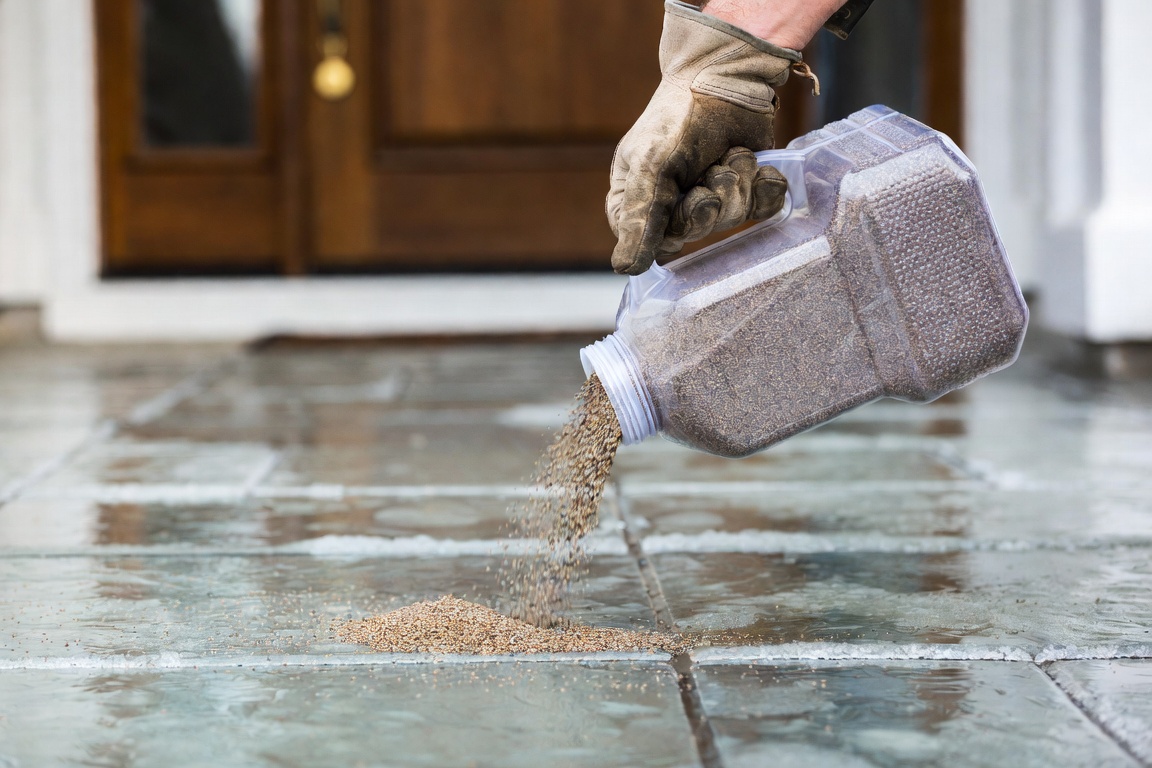
Coarse mineral sand and grit give immediate footing on stubborn black ice without degrading your masonry or harming garden soil.
Mechanical Grip: Why Traction Often Beats Melting
Sometimes the safest answer does not involve melting the ice sheet at all. Chemical melting always creates liquid runoff, and if night falls before that moisture dries, flash-freezing leaves an imperceptible layer of black ice. Providing immediate physical grip often delivers better security underfoot.
Keep a bucket of coarse builder’s sand, chicken grit, or crushed zeolite next to your entryway. Unlike play sand, which is rounded and fine, builder’s sand has jagged, angular edges that bite into hard ice sheets instantly. When sunlight hits dark grit, the grains absorb solar warmth and embed themselves into the surface, creating permanent non-slip traction.
Clean fireplace wood ash also provides decent grip and gentle melting due to naturally occurring potassium salts. Just remember that ash can track charcoal-colored footprints onto light carpets, so keep a sturdy bristled coir mat by the door if you try this rustic trick.

Safe de-icing means protecting sensitive pet paws from chemical burns and stomach upset when they clean their feet indoors.
Protecting Different Walkway Materials
Every hardscape material reacts differently to freezing moisture and chemical treatments. Tailoring your approach prevents costly repairs when the spring thaw reveals what happened underneath the winter snowpack.
Poured Concrete & Exposed Aggregate
Never apply chemical de-icers to concrete poured within the past two calendar years. Protect new concrete with angular sand exclusively. For seasoned slabs, stick strictly to magnesium chloride or CMA, and shovel slush off the surface before evening temperatures plunge.
Natural Flagstone, Slate, and Brick Pavers
Natural stone features microscopic clefts and fissures where liquid readily settles. Standard rock salt crystallizes inside these crevices, popping entire shale layers off flagstone steps. Use CMA or straight traction grit on custom stone steps to maintain their natural finish and mortar integrity.
Wood and Composite Decking
Metal shovels gouge cedar and composite boards, stripping protective factory coatings. Always clear wooden steps with a rubber-edged snow pusher or stiff outdoor broom. Avoid magnesium pellets on bare wood surfaces, as chemical residue can pull natural oils from timber grain; stick to rubber traction runners or clean sand instead.
A Smarter Winter Walkway Routine
Clearing a frozen front path does not require harsh chemical dumps or risky kitchen concoctions. By clearing snow mechanically before foot traffic packs it down, choosing gentler compounds like magnesium chloride, and utilizing coarse grit for instant traction, you can keep your steps secure all season long.
Taking a deliberate approach keeps your home entryway welcoming and dependable. Once you understand how to safely de-ice walkways with the right materials, you protect your stone, preserve your greenery, and give your family peace of mind through every frosty stretch of winter.