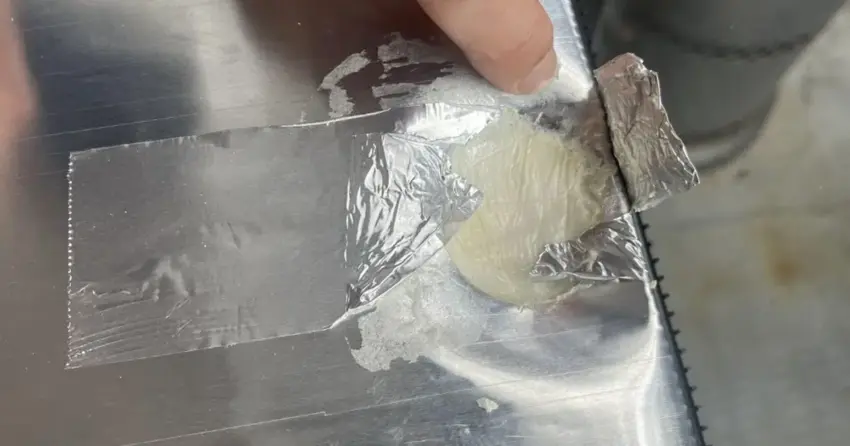
You just spent a Saturday wrestling a sparkling new stainless steel refrigerator through the front door. You peel away the blue protective film, slide the cabinet into place, glance over the top or around the back, and freeze. Right there, stamped into the metal shell, sits a rough circular hole plugged with what looks like hardened spray foam and covered with a cheap piece of tape.
Your heart sinks. Did the delivery crew drop it? Did the assembly line skip a cosmetic cap? Before you dial customer service in an absolute panic, take a deep breath. That foam-filled hole on your refrigerator is 100% intentional, factory-engineered, and keeping your groceries cold right this second.
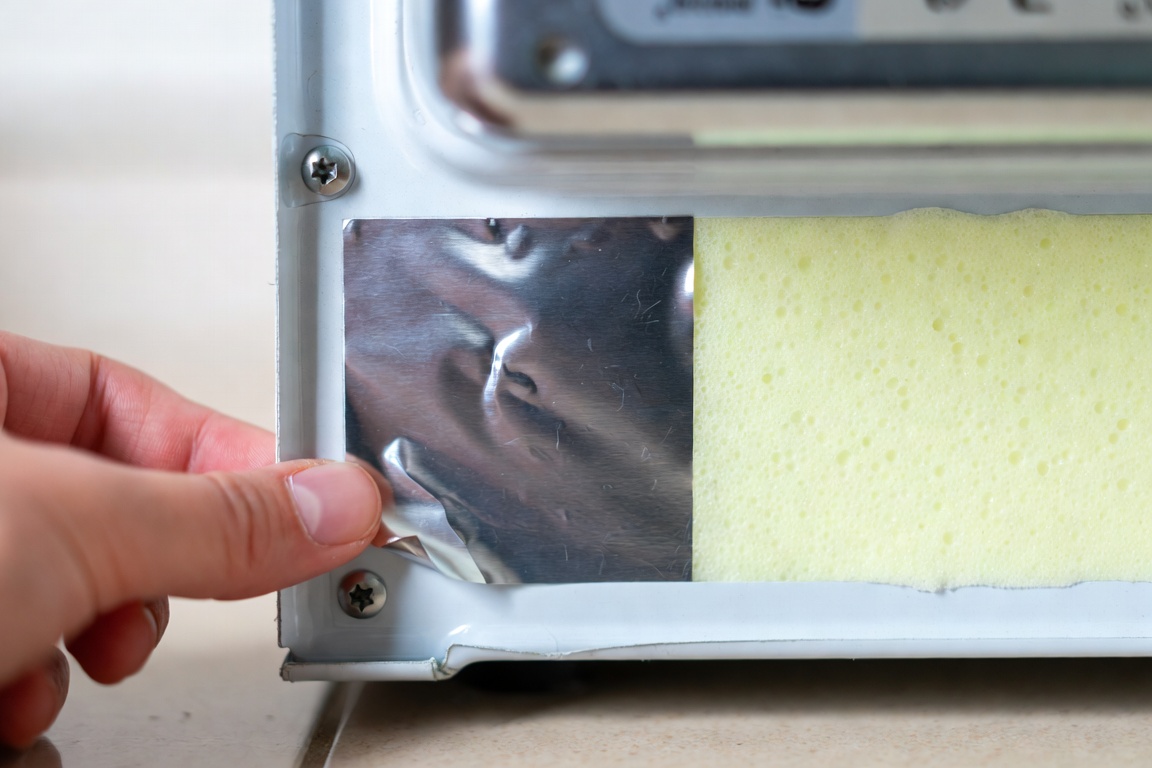
A clean look at an insulated factory injection hole with its original aluminum foil seal partially peeled.
The Mystery Plug: Understanding the Factory Injection Port
Every modern refrigerator functions like a heavy-duty thermos. The exterior is a stamped sheet of steel or enameled metal, while the interior is a single molded plastic liner. In between those two layers sits an empty cavity roughly two inches thick. If that cavity stayed filled with plain air, your compressor would run non-stop, your electric bill would skyrocket, and your milk would spoil by Tuesday afternoon.
To prevent heat transfer, manufacturers inject that hollow space with liquid polyurethane insulation. The curious hole on your refrigerator is simply the injection port where industrial nozzles pumped that chemical blend into the walls during assembly.
Once inside, the liquid reacts, heats up, expands into every crevice, and cures into an ultra-dense rigid foam. When the curing completes, a small plug of hardened foam remains right at the nozzle entry point. Think of it as your appliance’s belly button—an undeniable scar from how it was created.
Where You’ll Spot It (And Where It Hides)
Depending on whether you bought a French door showstopper, a compact beverage cooler, or a classic top-freezer unit, the injection site can end up in a few distinct locations:
- The Upper Back Panel: The most common spot for freestanding units, tucked well out of sight once pushed against the drywall.
- The Top Outer Casing: Frequently found on tall, built-in models right near the upper door hinge where factory jigs clamp the panels during foaming.
- Behind Bottom Grilles or Compressor Covers: Occasionally concealed behind the mechanical lower housing where hot tubing runs.

Built-in and freestanding stainless steel refrigerators often hide factory ports along the top rim or back panel to maintain a seamless kitchen aesthetic.
Is It a Defect? (What Happens If You Mess With It)
When people spot a hole filled with foam, human curiosity takes over. Some folks pick at it with a fingernail; others assume the tape is packing trash meant to be stripped away during unboxing. Resist the urge to poke, scratch, or peel.
That rigid foam is an isocyanate-based polyurethane with a density of about two pounds per cubic foot. It provides structural rigidity to the metal walls while delivering outstanding thermal resistance. It does not lead into your crisping drawers, and it does not vent air from the freezer.
Never dig into the cured foam plug with screwdrivers, pens, or utility knives. Puncturing the core compromises the closed-cell structure and can accidentally nick internal refrigerant copper lines or wiring harnesses running through the wall cavity.
Why That Square of Shiny Tape Actually Matters
On many models, you will find a square of metallic silver tape plastered directly over the foam hole. While it looks like a slapdash afterthought from the factory floor, that tape serves a quiet, protective duty: moisture exclusion.
Polyurethane foam is naturally hydrophobic, but under constant atmospheric exposure, ambient room humidity can slowly seep into microscopic open pockets at the cut surface. When humid air enters cold insulation, water vapor condenses into liquid droplets. Wet insulation conducts heat instead of blocking it, forcing your compressor to work harder.
The tape acts as an impermeable vapor barrier. It locks room humidity out and preserves the thermal efficiency of the wall cavity for the entire lifespan of the appliance. If your unit arrived with a bare foam plug and no tape, do not worry—some brands use proprietary self-skinning foam formulas that form their own sealed crust, or they install a snug plastic friction plug instead.
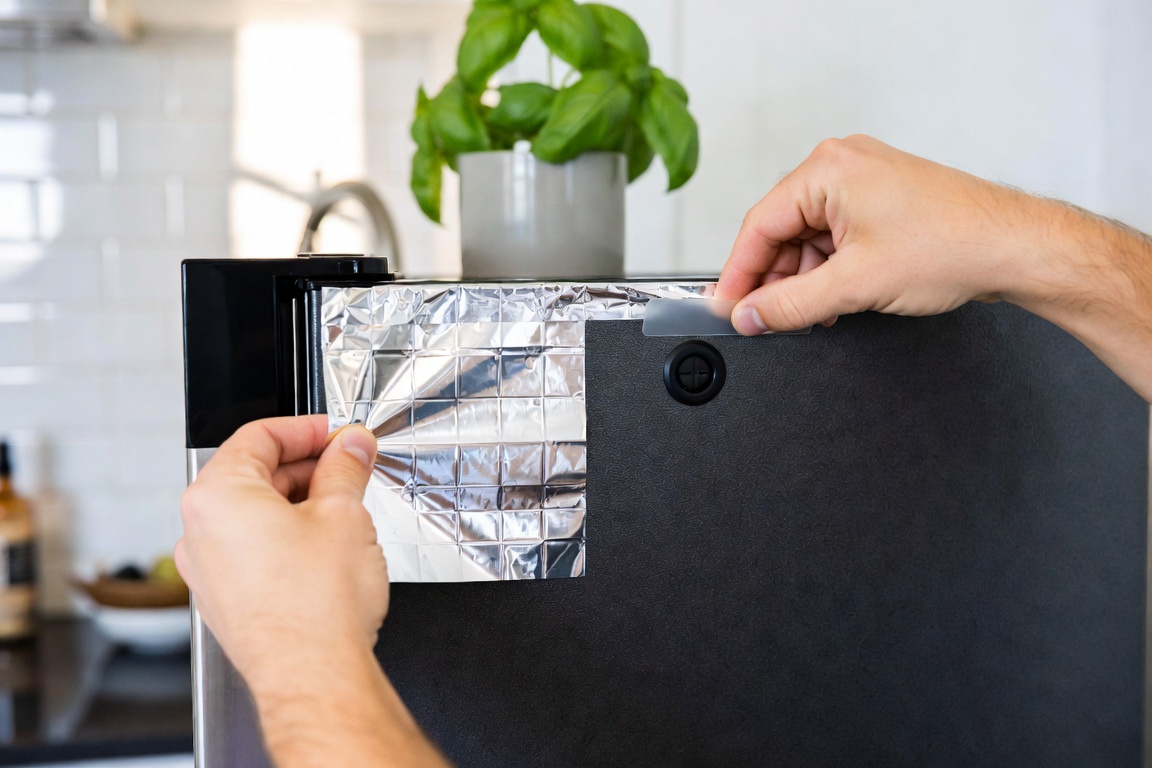
Resealing an exposed injection port with heavy-duty HVAC foil tape prevents moisture from degrading the cabinet insulation.
How to Reseal a Peeling or Missing Port Cover
If your factory tape snagged on a doorway during moving, or if unboxing peeled the edge back, fixing it takes less than five minutes. Do not reach for standard gray duct tape. Fabric duct tape relies on rubber adhesive that dries out, turns yellow, and crumbles when exposed to heat and humidity changes.
Supplies You Need
- Heavy-duty aluminum foil tape (found in the home improvement store ductwork aisle)
- Rubbing alcohol (70% or 91% isopropyl)
- A clean microfiber rag
- Household scissors

Everything you need to clean and seal a peeling factory port: foil tape, rubbing alcohol, and a lint-free cloth.
Step-by-Step Patching
- Clean the Surrounding Sheet Metal: Dampen your microfiber rag with isopropyl alcohol and wipe down the metal surface around the hole. This removes machine oils and shipping dust so the new adhesive bonds permanently.
- Let It Dry Completely: Wait sixty seconds for the alcohol to flash off into the air. Ensure the foam plug itself is dry and free of loose crumbs.
- Cut an Oversized Patch: Cut a square of aluminum foil tape that extends at least one inch past the perimeter of the hole on all sides. Rounding the corners slightly with scissors keeps edges from snagging later.
- Press and Smooth: Peel the paper backing, center the tape directly over the foam, and press firmly. Work your thumb or a plastic putty knife from the center outward to push away any trapped air bubbles.
Quick Checklist: Factory Port vs. Real Problem
Still nervous that your appliance has actual transit damage? Compare what you see against this simple checklist:
- Smooth, Circular Edges: Factory injection ports have clean, punched-out metal rims with no jagged tears or chipped paint around the circumference.
- Dense, Rigid Filler: The foam inside feels solid and firm to gentle pressure, not soft like bread dough or flaky like dried shaving cream.
- No Cold Air Leaks: Hold the back of your hand next to the sealed port while the compressor hums. You should feel zero cold drafts coming through.
- No Frost or Droplets: If you see thick white frost or water dripping directly from the hole, your internal cabinet seal has failed, which requires a warranty service call.
Modern home appliances are full of manufacturing quirks that look alarming until you understand how the factory puts them together. That little foam-filled spot is simply proof that your refrigerator has a thick blanket of insulation standing between your crisp vegetables and the warm summer kitchen.