
After seven years together, I walked into Valentine’s Day dinner trying very hard not to expect a ring.
That probably sounds contradictory. When you have spent the better part of a decade building a life with someone—sharing grocery runs, nursing each other through flu season, and discussing house prices—every quiet milestone dinner carries an unspoken weight.
You tell yourself to stay calm. You adjust your coat, smooth your dress, and remind yourself that an anniversary dinner is just dinner. Still, my heart kept up a steady, stubborn rhythm against my ribs the entire drive across town.
My boyfriend had made the reservation himself. That alone caught my attention. Usually, our evenings involved mutually agreed-upon neighborhood takeout or tossing together pasta while chatting over the kitchen counter. This time, he told me where to be, asked me to wear something elegant, and said he had taken care of every detail.
The bistro was quiet and warm. It smelled of roasting garlic, melted butter, and fresh rosemary. Soft piano music drifted through the air, low enough that conversations remained private whispers across white linen tables. Candlelight flickered inside heavy glass votives, casting a warm amber glow over everything.
When he sat down across from me, his movements carried an odd, twitchy energy. His fingers brushed the inside pocket of his jacket. Once. Then twice. It was a nervous habit I had never seen before. I watched his hand drop back to the table, wondering what was tucked inside that wool lining.
We ordered two sparkling blackberry-thyme spritzers. He raised his chilled glass with a faint, tentative smile. “To us,” he said softly. I touched my glass to his, the gentle chime fading into the hum of the dining room. “To us.”
Then, he started reminiscing. He brought up our first fourth-floor walkup apartment, laughing about the bulky gray sofa we dragged up narrow stairs until our hands blistered. He talked about the winter my old sedan broke down outside the city, leaving us eating stale pretzels by the side of a frozen highway. Seven years of small, ordinary survival. Seven years of showing up for each other.
He leaned forward, his fingers lightly covering mine. “We’ve built something real,” he whispered. Looking at his face in the soft candlelight, I allowed myself to believe the moment had finally arrived.
The Anatomy of an Unspoken Expectation
I excused myself to the restroom, stepping onto the cold marble tiles just to catch my breath. Looking into the mirror, my cheeks were flushed. I smoothed down my hair with damp fingers, laughing silently at my own runaway imagination. Stop building castles out of glances, I told my reflection.
When I returned to the corner booth, a dessert plate sat waiting between our water glasses. A warm chocolate torte, drizzled with sharp, glossy raspberry puree. My favorite. He had ordered it without asking.
Everything about the evening felt intentional. The private table. The shared memories. The dessert. That persistent hand touching his breast pocket. I was not hoping for a theatrical scene with applause from surrounding strangers. I simply believed we were finally stepping into the future we had spent years discussing.
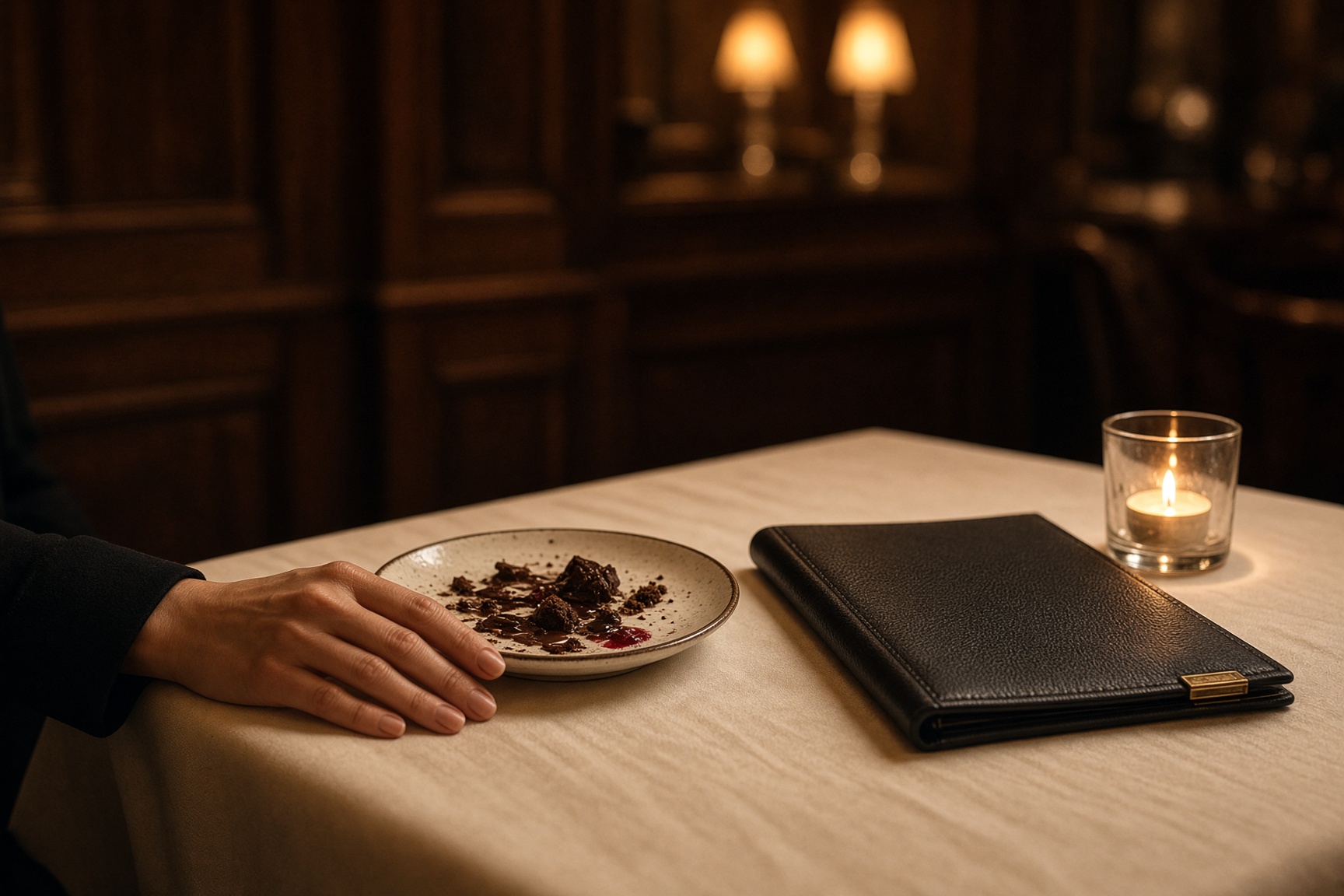
We finished the torte, scraping the dark cocoa crumbs from the porcelain. The server cleared the table and set a small leather billfold squarely in the center.
My partner picked it up, glanced at the total, and looked up at me with an easy, offhand expression. “Shall we split this half and half?”
The sentence hung in the warm air between us like sudden static. I blinked. “What?”
“The bill,” he said, offering a casual shrug. “Fifty-fifty?”

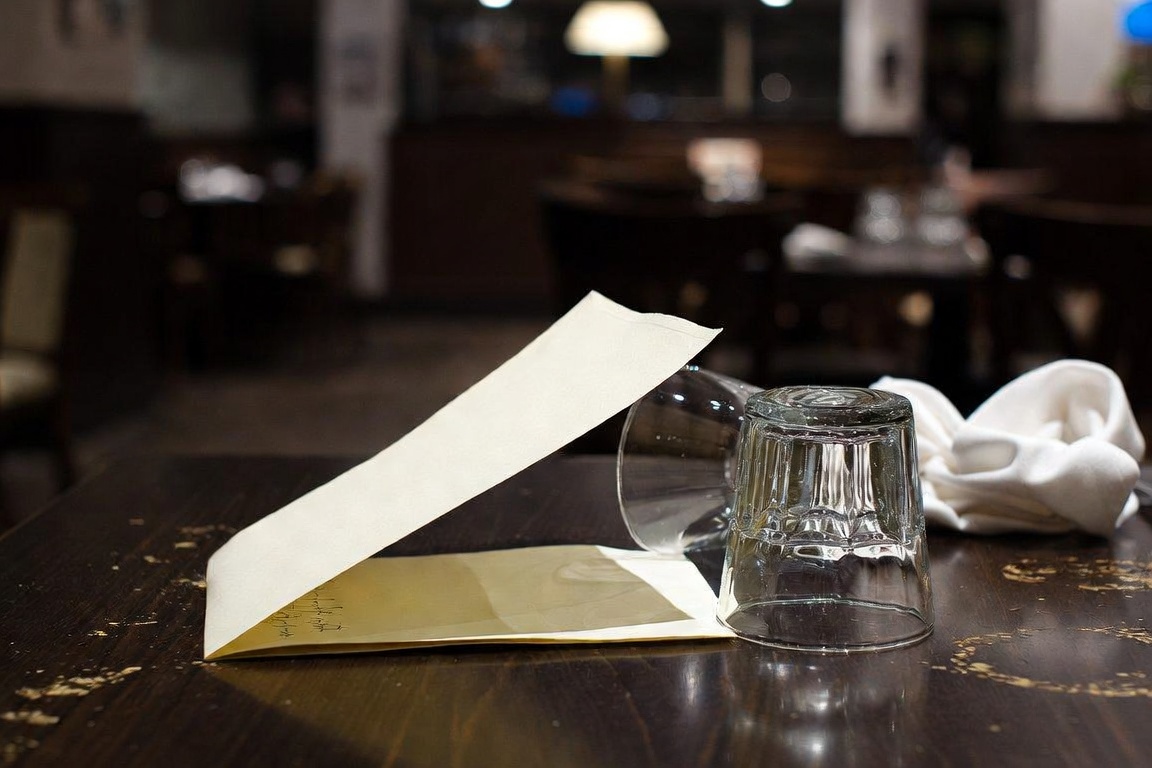
The folded letter left behind on the white linen, containing a confession and an ending.
For a brief second, I thought he was teasing. We had split hundreds of dinner tabs over seven years. We had venmoed each other for groceries, shared repair bills, and taken turns covering utility costs. Money had never been a battleground for us. But he had framed this specific night as his gift—an intentional, romantic gesture he had spent weeks planning.
My hesitation was immediate. “You want to split the bill tonight?”
His eyes narrowed slightly, the easy warmth vanishing from his face. “Is that a problem?”
“No,” I said, though my voice carried a genuine note of surprise. “I just thought… since you planned everything tonight…”
“You look annoyed,” he said flatly, leaning back against the leather booth.
“I’m not annoyed,” I replied, feeling heat rise to my collar. “I’m just surprised.”
“Why should you be surprised?” he asked, his tone sharpening. “Because you expected me to carry the entire evening?”
When a Date Becomes a Secret Relationship Test
That accusation stung. In seven years, I had never once demanded to be financially supported. When he lost his marketing contract two winters earlier, I paid our entire apartment lease for four months without keeping score. When my hours were cut, he bought the groceries. We had always functioned as a team.
I reached into my bag for my card, eager to erase the sudden tension. “Here. Take my card. Let’s just split it.”
He stared at the plastic on the table, his jaw clenched tight. “Never mind. I’ve got it.”
“Don’t do that,” I pleaded softly. “I’m happy to pay half. I just didn’t expect you to ask tonight.”
He handed his card to the passing server without another word. The silence that followed was heavy and suffocating. The candles around us kept flickering, couples at adjacent tables laughed over dessert, but the space between us felt completely hollowed out.
When the receipt returned, he signed his name with rapid, jagged strokes. He stood up immediately, grabbing his wool coat from the back of the booth.
“Are you ready?” I asked, reaching for my purse.
“Actually, I’m taking a cab,” he said, refusing to meet my eyes. “I need some space right now.”
I froze, my coat half-fastened. “You’re leaving? We drove here together.”
“You can call a rideshare,” he replied quietly. Then, before I could answer, he turned and walked out through the heavy front doors into the winter chill.
I sat there alone in the corner booth, my cheeks burning. A few diners glanced over, their eyes catching my confusion before looking away out of polite embarrassment. My hands trembled as I buttoned my coat.
A moment later, our server stepped back toward the table, her expression tight with sympathy. She extended a folded piece of restaurant paper. “He asked me to hand this to you on my way out.”
The Ring in the Pocket and the Hidden Trap
I opened the paper with numb fingers. The first lines took the breath straight out of my chest.
“I brought a ring with me tonight. I came here fully intending to ask you to marry me.”
My stomach dropped. I had not imagined the nervous fidgeting. I had not misread the pocket. The question had been right there, inches away across the table.
I kept reading, each sentence colder than the last. He wrote that marriage required equal financial partnership. He wrote that before taking the biggest step of his life, he needed to know what my instincts were when money was on the line. He admitted that asking to split the Valentine’s bill had been an intentional check—a trial to see whether I felt entitled to his income.
Because I looked surprised instead of immediately reaching for my wallet, he decided I had failed. He concluded that our values did not align, and he could not marry someone who expected him to prove love through payment.
“I need certainty before I make a lifelong commitment,” the note finished. “Tonight gave me that certainty. I don’t think we should see each other anymore.”
Seven years of loyalty, shared rent, emergency room visits, and quiet devotion were erased on a piece of bistro stationery. All because of a covert exam I never agreed to take.
The quiet weight of a shared kitchen the morning after an engagement turns into a split.
I called his phone three times from the back of the rideshare. Every call clicked straight to voicemail. I sent two short text messages: “Please talk to me. You completely misread what just happened.”
An hour later, as I sat on our sofa surrounded by his sneakers by the door and his coat on the rack, a single message lit up my screen: “There is nothing left to discuss.”
The Morning After: Fear, Scarcity, and Covert Contracts
I did not sleep that night. When his key turned in the apartment lock at eight the following morning, I was sitting at the kitchen table with two cold mugs and his note lying between them.
He walked in, looking tired and pale. He looked at the paper on the table, then at me.
“You set a trap for me,” I said, keeping my voice as steady as I could.
“I needed to understand your mindset,” he replied, sitting down across from me with a heavy sigh. “My parents fought about money my entire childhood. My dad paid for everything, and he resented my mother until the day they divorced. I refused to walk into that dynamic.”
“And you thought I was your mother?” I asked.
“No,” he said, rubbing his eyes. “I just wanted to see your natural reaction when expectations were removed.”
“My natural reaction?” I looked at him, disbelief washing over the exhaustion. “You watched my natural reaction for seven years. I paid for groceries when you were between contracts. I split our rent down to the penny. I paid your dental bill when you cracked a molar and had no insurance.”
He looked down at his hands, silent.
“You had seven years of proof,” I continued. “And you threw it away because I looked surprised for five seconds on Valentine’s Day.”
“You looked disappointed,” he muttered.
“I was disappointed,” I said, tears finally spilling over. “Not because of sixty dollars. I was disappointed because you dressed me up, took me to a romantic restaurant, reminisced about our entire life together, and made me feel like you were about to propose. When you asked to split the bill, I didn’t think, ‘Why won’t he pay?’ I thought, ‘I was foolish to think tonight meant something special.'”
He froze. His face went completely slack. “You thought I was proposing?”
“Yes,” I whispered. “And instead of asking me what was on my mind, you made yourself judge and jury in a trial I didn’t even know was happening.”
Finding clarity among packing boxes: why honest conversation matters more than testing someone you love.
The True Damage of a Secret Relationship Test
For a brief moment, I saw regret flash across his features. I saw him realize the magnitude of what he had constructed in his head. But the damage was already done. The illusion of safety had fractured.
When someone subjects you to a secret relationship test, they are not looking for truth. They are searching for confirmation of their own deepest anxieties. They set up an obstacle course in the dark, hoping you trip so they can validate their fear of being hurt.
Testing your partner in a relationship is the exact opposite of intimacy. Intimacy requires the vulnerability to sit across a kitchen table and ask directly: How will we manage our finances if we get married? What are your fears about sharing money? What financial wounds are you carrying from your family?
Those conversations can be uncomfortable, but they honor both people. A pop quiz disguised as a date honors no one. It reduces a complex, multi-year partnership to a single pass-fail grade awarded by someone too frightened to speak honestly.
We packed up the apartment over the next three weeks. We divided the books, split the kitchen utensils, and closed the shared utility accounts. There were tears and quiet apologies, but we both knew the bridge had collapsed.
Years later, I still think about that dinner table. I no longer feel the sharp sting of rejection, nor do I mourn the ring hidden inside that jacket pocket. That evening gave me a gift I didn’t recognize at the time: the understanding that real love never operates in secret traps. Anyone who truly values you will ask you what you think, rather than relying on a secret relationship test to invent an answer for you.