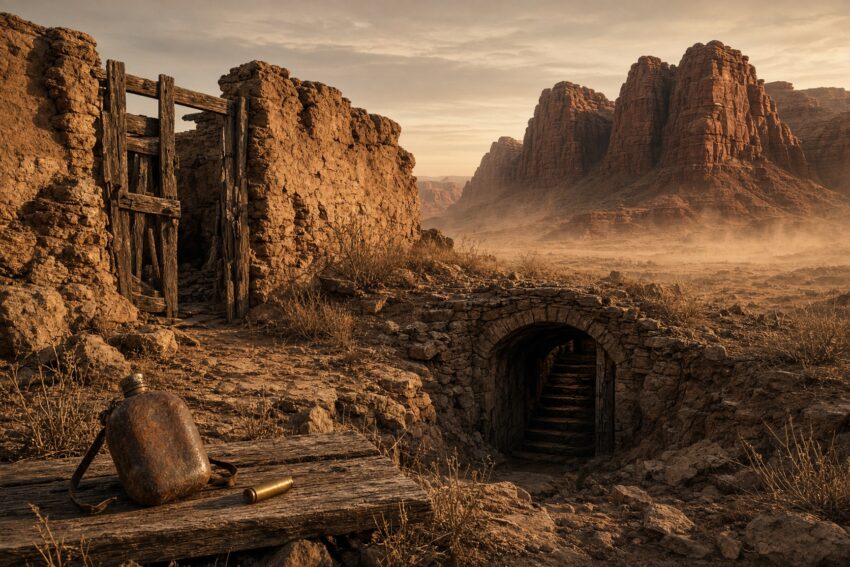
CHAPTER 1: The Apache Woman Who Knew His Wife’s Name
The first thing Silas Vance heard that morning was the wind.
Not horses.
Not voices.
Not danger.
Only wind.
It came quietly across the empty Arizona flats, dragging dust through the dry grass and rattling the loose boards on the northern wall of his barn.
Silas despised that wall.
Clara used to complain about it.
“You’re going to wait until the whole barn falls over before you fix that thing.”
Silas would grin.
“Still standing.”
“So are stubborn men. Doesn’t mean they shouldn’t be repaired.”
Five years later, the barn was still standing.
Clara was not.
At least, that was what Silas had believed.
Every morning began the exact same way now.
Boots.
Hat.
Bucket.
Well.
No breakfast until the animals had water.
No sitting still long enough to think.
And, whenever possible, no memories before noon.
That last rule mattered most.
Because mornings belonged to Clara.
She had loved sunrise.
Loved the brief hour before the desert heat turned the land into something merciless.
She would walk barefoot toward the garden carrying a tin cup.
Before she drank, she always poured a little water onto the soil.
Every single morning.
Every season.
Silas used to shake his head.
“You’re wasting good water.”
Clara would smile softly.
“The earth gets thirsty too.”
He never truly understood why she said it.
He would give almost anything now to hear her explain it one more time.
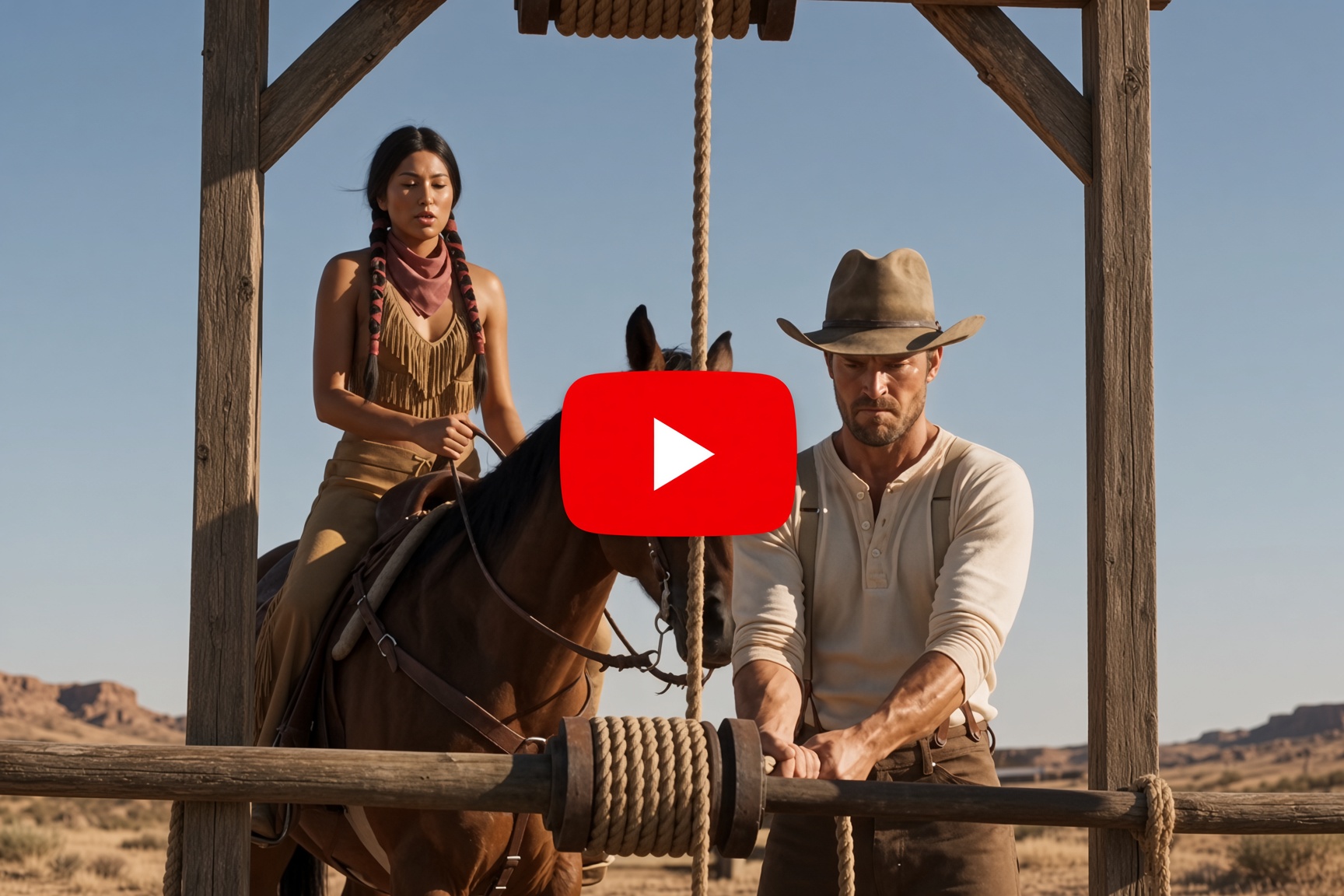
Silas lowered the bucket into the stone well.
The rope groaned through his palms.
Far below, the bucket struck water.
That sound was one of the few things in his life that still felt dependable.
Thirty miles in nearly every direction, shallow wells had dried up.
Creeks had become scars of cracked mud.
Ranchers had started selling off livestock because there was no longer enough water to keep them alive.
Silas’s well remained.
Deep.
Cold.
Reliable.
People called him lucky.
Silas no longer believed in luck.
Not after Clara.
He began hauling the bucket upward.
Then he heard it.
Hoofbeats.
At first, Silas thought it was a single horse.
Maybe Jesse Doyle.
Maybe someone from Larson’s spread.
Then more hoofbeats joined the first.
Five.
Ten.
Too many.
Silas stopped pulling.
Water spilled over the bucket rim and darkened the dust beside his boots.
He turned toward the eastern ridge.
Nothing.
Then a silhouette appeared.
One rider.
Another.
Three more.
Then an entire line emerged against the pale orange dawn sky.
Silas’s hands tightened around the rough hemp rope.
His body recognized them before his mind wanted to admit it.
Apache.
For one second, the ranch vanished.
Silas was no longer thirty-three.
He was back in that dark night five years earlier.
Smoke.
Flames.
G.u.n.f.i.r.e echoing in the distance.
A horse screaming.
Clara’s voice.
Then silence.
The memory struck so hard that Silas nearly dropped the rope.
His eyes darted toward the house.
The rifle hung above the doorway.
Thirty feet.
Maybe thirty-two.
If he sprinted now, he could reach it.
The old soldier inside him immediately began calculating.
Distance.
Cover.
Angles.
Number of riders.
Escape route behind the barn.
Yet Silas did not run.
Because something was wrong.
The riders were descending slowly.
Far too slowly for an attack.
Nobody shouted.
Nobody raised a weapon.
Their horses carried their heads low.
One animal stumbled badly enough that its rider had to haul back hard on the reins to keep it upright.
Dust coated the travelers so completely that they seemed carved from the desert itself.
These were not warriors riding confidently toward a target.
These were people barely reaching one.
A woman rode at the head of the group.
She sat straighter than everyone else.
Not because she was less exhausted.
Silas could see the strain in her shoulders.
She simply refused to show weakness.
Her raven hair was tied behind her head with a strip of faded red cloth.
Her face was sunburned.
Her lips were cracked and pale.
Her eyes, however, were sharp.
They remained locked on Silas.
The riders drew rein thirty feet from the well.
A deliberate distance.
Close enough to speak.
Far enough to retreat.
The woman studied him.
“You are Silas Vance.”
It was not a question.
Silas’s hand went instinctively toward the empty hip where a revolver had once rested.
He had stopped wearing it more than a year ago.
“That’s right.”
Her gaze drifted toward the well.
Then the wooden bucket.
Then back to him.
“This is your land?”
Silas’s tone hardened.
“Yes.”
The woman looked around.
The cabin.
The barn.
The dry corral.
The abandoned garden.
Then she spoke:
“My name is Sena.”
A pause.
“Daughter of Tolan.”
The name struck Silas harder than a fist.
Tolan.
His grip tightened.
He had heard that name before.
After the fire.
After Clara.
Among soldiers.
Ranchers.
Men who claimed to know which Apache bands had passed through the valley that season.
Tolan.
Silas’s expression must have shifted.
Sena caught it.
“You know that name.”
Silas said nothing.
She looked toward the stone well.
“We need water.”
Silas almost laughed.
It would have sounded bitter.
“You ride onto my land and ask me for water?”
Sena did not flinch at the hostility.
“Our children have gone three days without.”
Silas looked past her.
That was his mistake.
Until that moment, he had seen a nameless group.
Apache.
Enemies.
A label large enough to blot out individual faces.
Now he actually looked.
A young boy no older than six leaned against an older woman, barely conscious.
A teenage girl had both hands knotted into her horse’s mane because she lacked the strength to sit upright.
An old man’s lips were split and bleeding.
Several horses shuddered on their legs.
One repeatedly lowered its muzzle toward the dirt as if praying water might appear there.
Something inside Silas twisted.
Then another memory surfaced.
The fire.
The men who arrived the following morning.
Their certainty.
Apache raiders.
Everyone had repeated the exact same thing.
The tracks led west.
The timing fit.
The violence made easy sense.
Silas had been too hollowed out by grief to question any of it.
He looked at Sena.
“You’re asking a man whose wife d.i.e.d in an Apache raid to give water to the people who may have set that fire.”
The riders behind her went motionless.
Sena did not.
Her eyes held Silas’s gaze.
“I lost a brother during that same season.”
Silas’s jaw tightened.
“Then you understand what that costs.”
Sena nodded once.
“I understand grief.”
The answer was too steady.
Too calm.
Silas felt anger flare because some part of him wanted her to argue.
He wanted hatred to stay simple.
Sena continued.
“Grief does not ask who deserves it before it enters a home.”
Silas stared at her.
The wind swept dust between them.
He looked back at the child.
At the old man.
At the trembling horses.
Then at the bucket.
His bucket.
His well.
His choice.
He could command them to leave.
No settler would blame him.
Some men in town might even shake his hand.
And that was when another voice echoed in his memory.
Clara.
Years earlier.
A traveler had broken a wagon axle outside their spread.
Silas had hesitated.
The man looked rough and suspicious.
Clara had walked right past Silas carrying a pail of water.
Afterward, Silas had complained.
She had laughed.
“You think too hard before you’re kind.”
Silas remembered rolling his eyes.
Clara had reached up and touched his cheek.
“Kindness doesn’t need that much thinking.”
He hated how clearly he could hear her voice right now.
Silas looked back at Sena.
“No man owns the right to stand beside water and watch another living soul d.i.e of thirst.”
Sena’s expression shifted.
Barely.
“You would offer water to people who may have k.i.l.l.e.d her?”
Silas swallowed hard.
“I’m giving water to people who are d.y.i.n.g.”
Silence settled.
Then Silas stepped aside.
Sena stared at him for another heartbeat.
She turned and spoke quietly in her own tongue.
The riders began to dismount.
Hesitantly at first.
Wary.
Then thirst overwhelmed caution.
Silas hauled water until his palms burned raw.
Bucket after bucket.
Children drank first.
Then the elders.
A mother cupped water in her trembling hands and lifted it to her child’s lips before tasting a drop herself.
Two young men led the horses to the trough.
An older woman whispered words over the cool water.
A prayer, perhaps.
Or a quiet blessing.
Silas did not know.
He only knew the scene was nothing like what he had imagined whenever he thought about “the Apache.”
There was no victory here.
No hostility.
No arrogance.
Only survival.
That unsettled him to his core.
Hatred had been convenient from a distance.
It was impossible while watching a father hold a tin cup for his shaking daughter.
Silas hoisted another bucket.
When he turned, Sena was standing beside him.
She had waited until everyone else had quenched their thirst.
Silas handed her a metal flask.
She filled it to the brim.
He expected her to drink greedily.
Instead, Sena lowered the flask.
Then she tipped it.
A thin stream of water poured onto the parched soil near her boots.
“For the earth,” she murmured.
Silas froze.
The rope slipped through his fingers.
The bucket dropped half a foot before catching on the timber axle.
Sena looked at him.
“What is wrong?”
Silas stared at the dark patch of damp soil.
For the earth.
Clara.
The same movement.
The exact same words.
The identical ritual.
His throat tightened.
“Where did you learn that?”
Sena frowned slightly.
“Learn what?”
“That.”
He pointed down at the wet earth.
Sena looked at the soil.
“From my father.”
Silas took a step closer.
“My wife used to do that.”
Sena went completely still.
“What was her name?”
Silas noticed the wording immediately.
Not, “Why?”
Not, “When?”
Her name.
“Clara.”
Something flickered across Sena’s face.
Recognition.
Then it vanished behind a guarded mask.
Silas caught it anyway.
“You know her.”
“No.”
Too fast.
Silas’s eyes narrowed.
“You’re lying.”
Several riders on the perimeter turned toward them.
Sena lowered her voice.
“I did not know your wife.”
“Yet you recognized her name.”
Sena looked toward her people.
Then back at Silas.
“There are truths that turn dangerous if uncovered too quickly.”
Silas felt the old anger surge back.
“What does that mean?”
Sena sealed the flask.
“It means you need to speak with Tolan.”
“About Clara?”
Sena offered no reply.
Silas stepped directly in front of her path.
“Why would your father know a damn thing about my wife?”
Sena’s eyes softened with a look Silas found deeply unsettling.
“Ask him yourself.”
“Ask him what?”
For several seconds, she held his gaze in silence.
Then:
“Ask him what truly happened the night your house burned.”
Silas felt a cold chill spread down his spine.
Before he could demand another word, Sena walked away.
That night, the Apache group made camp at a respectful distance across the flat.
Silas sat by the dark window frame.
He did not sleep.
He kept vigil over their fires.
One question looped endlessly in his mind:
Why would Tolan know anything about Clara?
At dawn, Sena’s people began packing their gear.
Silas met her beside the well.
“What happened to my wife?”
Sena studied him carefully.
“You were handed a story.”
Silas stepped closer.
“Was it a lie?”
Sena mounted her horse.
“I believe part of you has suspected that for years.”
Silas’s jaw clenched hard.
“Answer me.”
Sena looked down from the saddle.
“My father will come if he knows it is safe.”
“And then?”
“Then you must decide if you actually want the truth.”
Silas nearly shouted.
“I have wanted the truth for five long years!”
Sena’s face filled with quiet sorrow.
“No.”
Silas froze.
“You wanted a story that made the agony bearable.”
She turned her mount.
“Those are rarely the same thing.”
Then she rode out.
Silas watched until the final silhouette dipped beneath the ridgeline.
He never noticed the man watching from the rocky outcrop east of the ranch.
Reeves Hargrove lowered his brass spyglass.
He had watched every second of it.
Sena’s arrival.
Silas stepping aside to let them drink.
Their quiet exchange.
And, above all, the ritual.
The water offered to the dry ground.
Hargrove knew precisely where that ritual came from.
He knew who had taught Tolan.
He knew who else had practiced it every morning.
And he knew that if Silas Vance began comparing accounts with Tolan, five years of meticulously constructed hatred would collapse into dust.
Hargrove collapsed the spyglass with a click.
“Well.”
His tone was cold and controlled.
“That is remarkably inconvenient.”
For five years, Silas Vance had blamed the ideal culprits.
Ideal for Hargrove.
Fatal to the truth.
A bitter widower convinced Apache raiders had k.i.l.l.e.d his wife would never sit down with them to ask questions.
He would never compare timelines.
Never ask why army-issue brass casings had been found near his burned fence line.
Never question why official territorial reports had vanished.
Never wonder why Reeves Hargrove had arrived so swiftly after the flames died down.
Sena had shattered that distance.
Hargrove reined his horse toward town.
He was not panicking yet.
He had buried worse problems than this.
Open violence was unnecessary.
Violence left b.o.d.i.e.s.
B.o.d.i.e.s brought federal marshals.
Fear was far more efficient.
A missing steer.
A planted rumor.
A few frightened ranchers whispering in a tavern.
That would do the work.
By the time Reeves Hargrove reached the edge of town, he already knew how the next chapter of Silas Vance’s undoing would begin.
With six missing cattle.
CHAPTER 2: The Missing Cattle That Pointed to a Bigger Lie
Three days crawled past.
Far too quietly.
Silas worked on the barn.
Or tried to.
Every time a hammer struck an iron nail, Sena’s voice rang in his ears.
You were handed a story.
The words gnawed at him.
On the third afternoon, Jesse Doyle rode into the yard.
Silas knew instantly that trouble had arrived.
Jesse did not dismount.
He rarely stayed in the saddle when dropping by.
This afternoon, his knuckles were white around the reins.
“Silas.”
“What’s happened?”
Jesse glanced back toward the road behind him.
“Larson lost stock.”
Silas waited.
“Six head.”
“When?”
“Two nights back.”
A knot tightened in Silas’s gut.
Jesse went on.
“They cut a trail.”
Silas’s face hardened.
“Heading west.”
Jesse remained silent.
Silas stared at him.
“Toward Apache territory.”
Jesse let out a heavy breath.
“Yes.”
Silas took a step toward the horse.
“And the whole valley has already drawn their verdict.”
Jesse shifted uncomfortably in his stirrups.
“Folks are terrified.”
“Of six stray cattle?”
“Of what those cows mean.”
Silas let out a harsh breath.
“They mean a rustler took cattle.”
Jesse finally met his gaze.
“They mean something far worse after what you did three days ago.”
Silas went still.
“What did I do?”
“You watered that group.”
“They were d.y.i.n.g.”
“I know that.”
“Then speak like a man who knows it.”
Jesse dropped his voice to a hushed murmur.
“The county isn’t calling them parched travelers, Silas.”
Silas waited.
“They’re calling them a war party.”
Silas’s teeth clenched.
“There were small children.”
“I know.”
“An elder who could scarcely keep his saddle.”
“I know.”
“Their mounts were near collapse.”
“I KNOW!”
Jesse’s voice cracked across the yard.
He looked down, his face flushed with shame.
Then, more quietly:
“Fear travels ten times faster than the truth.”
Silas said nothing.
Jesse wheeled his horse around.
Before spurring forward, he looked back over his shoulder.
“Watch your back.”
“From whom?”
Jesse paused grimly.
“That’s the trouble. Nobody knows.”
He rode off in a cloud of dust.
Silas stood alone in the quiet yard.
Fear travels faster than the truth.
The phrase echoed like a ghost.
Five years ago, the dawn after his homestead burned, everyone in the valley had known who was responsible before the smoke cleared.
No tracking.
No inquiry.
No doubt.
Apache raiders.
By midday, it was gospel.
By sundown, it was history.
Silas saddled his gelding.
He rode straight out to Larson’s boundary fence.
The cattle sign was obvious.
Six cows driven hard toward the western bluffs.
Several shod horses trailing behind.
At first glance, the tracks matched the common story.
Then Silas noticed the split.
Half a mile past Larson’s rail fence, the cattle continued west toward the reservation line.
Yet three horsemen had veered sharply south.
Silas dismounted.
He crouched, reading the soil.
The southern riders had deliberately guided their mounts into fractured limestone and stone shelves.
Trying to scrub their sign.
Silas’s old tracking training took over.
A snapped scrub oak branch.
A fresh pale scratch on slate.
The gleam of a sheared iron horseshoe nail.
He tracked them step by step.
The faint trail cut across a dry arroyo.
Then it met the packed dirt of an abandoned military supply road.
Silas halted.
He stared south toward the rolling basin.
Hargrove owned that entire valley.
Tens of thousands of acres.
Silas pushed the suspicion away immediately.
Hargrove?
Reeves Hargrove had stood as a friend.
Or as close to one as a frontier rancher could find.
After Clara was lost, Hargrove had organized the posses.
He supplied riders.
Rations.
Support.
He helped sift through the charred timbers of the cabin.
He stood beside Silas when the earth was shoveled into the grave.
When Silas had discovered a brass military casing pressed into the dirt near the corral, Hargrove had taken it into his palm.
“Old spent shell,” he had said smoothly.
“Likely dropped during patrol months back.”
Silas had believed him without question.
Why would he doubt a decorated former cavalry colonel?
Hargrove was respected.
Level-headed.
Commanding.
The exact breed of man communities lean on during a crisis.
Silas suddenly remembered the brass casing slipping into Hargrove’s vest pocket.
He had never seen it again.
Night was falling by the time Silas rode back into his yard.
At first, the house appeared undisturbed.
Then he noticed Clara’s writing desk.
A drawer sat open two inches.
Silas froze in his boots.
He had not touched that desk in nearly a year.
Inside were three keepsakes he could never bring himself to move:
Clara’s blue silk hair ribbon.
Her worn Bible.
And an old folded parchment she had kept tucked beneath the velvet lining.
The parchment was gone.
Silas stared into the vacant drawer.
Someone had walked into his home.
Not for the cash in the tin.
Not for supplies.
Not for ammunition.
For something Clara had preserved.
He picked up the Winchester rifle from the mantle.
Outside, the prairie was deathly still.
Silas stepped out onto the porch, boot soles silent on the pine boards.
Then a flash of color caught his eye.
A strip of red fabric knotted around the cedar fence post.
The exact shade of the cloth worn in Sena’s hair.
Hanging beneath it was a small carved wooden songbird.
Silas approached cautiously.
Carved into the pine base was a single name:
CLARA.
His heart slammed hard against his ribs.
A voice spoke quietly from the shadows near the hay shed:
“You ought to burn that before another man sees it.”
Silas wheeled, leveling the Winchester in a split second.
An elder Native American man stepped into the moonlight near the barn.
Empty hands raised waist-high.
Silas recognized him.
The frail elder from the well.
“You.”
The man gave a slow nod.
“You were riding with Sena.”
“I was.”
“Who are you?”
“Hastiin.”
“Did she send you back here?”
“She did.”
Silas kept the rifle centered on his chest.
“Why?”
“Because she told Tolan the name of your wife.”
Silas’s finger tightened over the trigger.
“And?”
“Tolan remembered her well.”
The world seemed to spin on its axis.
“From where?”
Hastiin looked toward the cabin door.
“Not out here in the open.”
Inside, Silas stayed on his feet, back against the timber wall.
Hastiin sat at the rough table.
He accepted a cup of well water.
Nothing more.
For a full minute, neither man broke the silence.
Then Hastiin spoke:
“Tolan did not burn your home.”
Silas’s jaw clenched.
“Get off my land.”
“Hear me first.”
“I’ve heard enough ghost tales.”
“Then why did you open the door to let me sit?”
Silas had no answer.
Hastiin continued in a measured cadence.
“Your homestead was burned during a military operation.”
Silas stared at him.
“That’s impossible.”
“The men wore civilian buckskins to disguise themselves as raiders.”
“No.”
“They crossed Apache territory first.”
Silas’s breathing grew shallow.
“Why would they do that?”
“To draw warriors behind them.”
“Why?”
“So that any witness who saw our riders trailing the fire would swear the attack belonged to us.”
Silas leaned over the table, palms flat against the wood.
“Who commanded them?”
Hastiin looked him dead in the eye.
Silas already felt the answer like ice in his chest.
He simply refused to utter the name.
“Reeves Hargrove.”
Silas shoved the table back with a harsh scrape.
“Liar. Hargrove rode in the search party for Clara.”
“He did.”
“He brought his own men to put out the embers.”
“He did.”
“He swore on his honor it was your people!”
“Yes.”
Silas crossed the floor and grabbed Hastiin by the coarse wool of his shirt.
“You dare sit in my house and slander the man who helped me bury my wife?”
Hastiin did not struggle.
He did not flinch.
Instead, he spoke five words that drained every ounce of strength from Silas’s arms:
“I never said Clara was buried.”
Silas’s grip loosened.
“What?”
Hastiin straightened his collar calmly.
“I said nothing about her d.e.@.t.h.”
Silas’s voice dropped to a ragged whisper.
“I found her.”
“No.”
“I found b.l.o.o.d.”
“You found b.l.o.o.d.”
“Her silver locket.”
“Her locket, yes.”
“A burned b.o.d.y.”
“A b.o.d.y.”
Silas stopped breathing.
The charred remains inside the collapsed bedroom.
Everyone in the posse had identified it as Clara.
Yet the blaze had consumed nearly everything.
There had been no readable face.
No recognizable hands.
Only the melted silver chain found inches away.
Silas had never challenged it.
He had needed the horror to have a final grave.
Hastiin spoke softly:
“Tolan witnessed a woman carried away alive.”
Silas took a stumbling step back.
“What woman?”
“He could not see her face through the smoke.”
“Then you know nothing for certain!”
“He saw Hargrove’s riders drag her into an army ambulance wagon.”
Silas stared, the room spinning around him.
“No.”
“He sent a runner to this valley three days later.”
Silas shook his head wildly.
“No rider ever came.”
“We know.”
Silas looked up.
“What does that mean?”
“It means whoever met that runner made sure he never reached your gate.”
A dreadful silence hung in the room.
Silas’s gaze drifted toward the ransacked drawer.
The stolen parchment.
The diverted cattle trail.
The military road.
The brass casing.
Hargrove.
Every isolated detail from five years of grief suddenly snapped together into a horrifying trap.
Silas whispered:
“What else did Tolan see?”
Hastiin paused.
“Your wife fought like a wolf.”
Silas closed his eyes, his chest aching.
“She drove her teeth into the shoulder of the commander.”
A bitter, broken breath escaped Silas’s throat.
“That sounds like Clara.”
For the first time, Hastiin offered a faint nod of respect.
Then his tone darkened.
“The commander cursed the bite when he reached the fort.”
“Who?”
“Hargrove.”
Silas opened his eyes.
The glass window shattered violently.
A high-powered rifle s.h.o.t tore through the cabin.
Silas dropped to the floorboards.
Hastiin rolled beneath the heavy table.
A second round pulverized the timber wall inches above Silas’s ear.
“Stay low!”
Silas scrambled toward his Winchester.
Another round took out the kerosene lamp, plunging the room into shadow.
Silas crawled beneath the sill, raised the rifle barrel, and spotted a muzzle flash by the fence line.
He pulled the trigger.
The crack echoed; an unseen horse shrieked in pain.
Then came the frantic drumming of hooves retreating down the canyon road.
Silas kicked through the front door, levering another round into the chamber.
He fired into the dust.
The horseman vanished into the black night.
Hastiin stepped onto the porch.
Near the gatepost where the shooter had taken aim, Silas spotted something dropped in the dirt.
A stamped leather cartridge box.
He wiped the grime from the flap.
Three brass-stamped letters caught the starlight:
R.H.C.
Reeves Hargrove Command.
Hastiin looked down at Silas.
“Do you still believe the official story?”
Silas stared at the leather box, his grief hardening into lethal clarity.
“Tell me where to ride.”
Before first light, Hastiin gave him a single name:
Arthur Finch.
Former territorial army quartermaster clerk.
A clerk who had kept duplicate manifests because he knew Hargrove was corrupt to the bone.
Silas rode hard before the sun crested the peaks.
He located Finch living in a fortified cabin behind an abandoned stage stop.
The graying clerk answered the door with a cocked revolver.
Silas did not waste time with pleasantries.
“My name is Silas Vance. My wife was Clara Vance.”
Finch’s face went pale.
The barrel dropped.
“Step inside.”
The cabin was a labyrinth of paper.
Crates.
Ledgers.
Requisition sheets.
Finch opened an iron-banded trunk.
“You want to know how men like Hargrove acquire empires?”
Silas remained silent.
“They burn the paper trail.”
Finch hauled out a leather-bound military register.
He flipped past yellowed pages and tapped his finger against a dated line.
The exact night Silas’s ranch had burned.
The top entry:
SUPPLY WAGONS DETOURED OFF-RECORD.
Second entry:
CIVILIAN PROPERTY CLEARED FOR MILITARY USE.
Third entry:
SPECIAL PRISONER ESCORT. FEMALE CIVILIAN. NAME RESTRICTED.
Silas felt the blood rush in his ears.
“Where was she taken?”
Finch pointed to the margin.
“Fort Bell.”
Silas looked up.
Fort Bell was an old outpost left to rot after the wars.
“Why would they take Clara?”
“Because she held the deeds.”
Finch explained the puzzle piece by piece.
Hargrove had realized that early territorial families held undisputed legal rights to every key spring and river access in the basin.
If those ranchers were panicked off their land, the titles could be snatched up for pennies.
If Apache war parties took the blame, the territory would beg for military intervention.
More troops.
More forced seizures.
More abandoned properties for Hargrove’s syndicate.
Clara had walked into the trap by mistake.
A wounded boundary surveyor had sought shelter at the Vance homestead.
Clara had tended his wounds.
Before he passed, he handed her the duplicate certified boundary deeds proving the fraud.
Hargrove discovered she had them.
The attack on Silas’s home was never a raid.
It was an armed robbery designed to look like Apache butchery.
Silas’s hands shook with fury.
“What did they do to her when she refused to surrender them?”
“They dragged her to Fort Bell.”
Silas took a ragged breath.
“Did Hargrove k.i.l.l her?”
Finch looked away.
“The ledger stops there. I don’t know.”
The uncertainty was a fresh dagger in his chest.
Silas vaulted onto his horse and rode south without stopping.
By late afternoon, the ruined palisades of Fort Bell appeared against the sun like broken teeth.
Collapsed guard towers.
Rotting timber gates.
Endless silence.
Silas cleared the buildings room by room until he found the sunken guardhouse cells.
A heavy iron latch hung loose.
Inside the limestone cellar:
A splintered table.
A single chair.
And scratches etched deep into the soft stone wall.
Names.
Tallies.
Silas brought his hand close to the wall.
Carved beneath a calendar of notches were two initials:
S.V.
Beneath them, scratched with an iron nail:
DON’T BELIEVE THE FIRE.
Silas pressed his fingers into the cold stone.
She had been here.
Alive.
Long after the smoke cleared.
Long after he had wept over an empty grave.
A heavy boot scraped against the stone threshold behind him.
Silas turned.
Reeves Hargrove stood framed in the cellar doorway.
Two armed mercenaries flanked him, rifles leveled.
Hargrove looked older, but his expression was as smooth and arrogant as ever.
“I had hoped you possessed more sense than this, Silas.”
Silas’s right hand drifted toward his holster.
Both rifle hammers clicked back.
Hargrove shook his head.
“Don’t be foolish.”
Silas glared through the dim light.
“You burned my life to ash.”
“I conducted necessary business.”
“You took Clara.”
“She became an unbearable obstacle.”
Silas’s voice shook with rage.
“Where is she, Hargrove?”
Hargrove said nothing.
Silas took a step forward, ignoring the rifles.
“WHERE IS MY WIFE?”
Hargrove let out an exhausted sigh.
“She broke out.”
Silas stopped.
“What?”
“Three nights after she was brought here. She took two horses and vanished into the canyon.”
“You’re lying.”
“I have no reason to lie to a man staring down two barrels. I never recovered her.”
“Who helped her?”
A woman’s voice cut through the damp cellar air:
“Tolan.”
Everyone turned.
Sena stood at the foot of the stone stairs, three mounted braves visible behind her.
Hargrove’s composed facade cracked for a split second.
Sena stepped into the cellar lantern light.
“My father helped Clara cut her ropes.”
Silas forgot the guns aimed at his chest.
“Where is she, Sena?”
Sena’s eyes held an agonizing mixture of truth and sorrow.
“My father guided her west toward the border.”
“Where?”
“He took a b.u.l.l.e.t in the canyon.”
Silas stepped toward her, his voice breaking.
“WHERE IS SHE?”
“Cavalry patrols cut their path off.”
“Did she make it?”
“He lost her trail near the crossing five years ago.”
Silas felt his knees weaken.
“You told me she was alive.”
“She survived the fire. She survived this fort.”
“And then?”
“She left something behind before she vanished.”
Sena reached inside the fold of her buckskin tunic.
Hargrove barked:
“K.I.L.L THEM ALL!”
G.u.n.f.i.r.e detonated inside the stone room.
They rode before dawn.
No ceremony.
No goodbyes.
Just Ethan, Nohimana, two exhausted horses, and the ancient map hidden beneath Ethan’s coat.
Behind them, the camp burned orange against the dark horizon.
Ahead…
Golden Valley waited.
For hours, neither spoke.
Finally Ethan broke the silence.
“You believe him?”
Nohimana stared ahead.
“My father?”
“Yes.”
“No.”
“Good.”
She looked toward him.
“Why good?”
“Because I don’t either.”
Her expression remained cold.
“He lied about Mato being d.e.a.d.”
“Yes.”
“He lied for years.”
“Yes.”
“And now suddenly he tells us Mato is working for the enemy.”
Ethan nodded.
“Convenient.”
Nohimana looked toward him.
“You think my father wants us to turn against Mato.”
“I think everybody in this story wants us to turn against somebody.”
That made her pause.
Ethan continued.
“Takoda wants you to distrust the Chief.”
“The Chief wants you to distrust Mato.”
“You trapped yourself because you didn’t trust anyone.”
“And apparently my father knew all of them.”
He shook his head.
“We’re swimming in lies.”
Nohimana looked back toward the distant smoke.
“So what do you trust?”
Ethan patted his revolver.
“This.”
She almost smiled.
“Very sophisticated.”
“And you?”
She touched the bow across her saddle.
“This.”
“Excellent.”
“Marriage is going beautifully.”
That time she actually smiled.
Small.
Brief.
Then the valley appeared.
Two enormous sandstone cliffs opened ahead.
Between them…
a narrow path disappeared into shadow.
Ethan slowed his horse.
“That’s the entrance.”
Nohimana checked the map.
“No.”
He frowned.
“This matches my father’s journal.”
She pointed toward the cliffs.
“The map says the entrance is west.”
“Your father’s route comes from north.”
They looked at each other.
Two routes.
That mattered.
Ethan removed the old journal page from his saddlebag.
The three stone pillars.
The same marks.
Then he noticed something he had never understood.
A small symbol beside the route.
M.
Nohimana stared.
“Mato?”
Ethan shook his head.
“This was drawn before Mato disappeared.”
She frowned.
“Then what?”
He turned the page.
On the back…
faded handwriting.
MERCER PASS.
Nohimana looked confused.
“Who is Mercer?”
Ethan stared.
“A man who attended my father’s funeral.”
Her expression changed.
“What man?”
“Silas Mercer.”
“Army officer.”
“He told me he had served with my father.”
Nohimana looked toward the canyon.
“What rank?”
“Colonel.”
Her expression sharpened.
“Mato once mentioned a Colonel.”
Ethan turned.
“What name?”
“I never knew.”
She looked toward him.
“He called him the Falcon.”
A cold feeling moved through Ethan.
At his father’s funeral, Colonel Mercer had worn a small silver pin.
A bird.
Wings spread.
Ethan whispered:
“Falcon.”
Nohimana saw his face.
“You recognize it.”
“Yes.”
They entered the canyon.
The walls rose higher.
Sunlight disappeared.
Then they found the first b.o.d.y.
A man lying beside a broken wagon.
D.e.a.d long enough for dust to cover his coat.
Ethan dismounted.
Nohimana followed.
No b.l.o.o.d.
No obvious wound.
Ethan checked his pockets.
Empty.
Then Nohimana noticed the wrist.
A black mark.
A falcon.
She looked at Ethan.
“He was one of them.”
Ethan stood.
“How long?”
“Days.”
“Maybe a week.”
Then they heard horses.
They moved behind the rocks.
Three riders passed through the canyon.
One wore tribal clothing.
Two wore military coats without insignia.
Nohimana stared.
The first rider turned his head slightly.
Her face went pale.
“Mato.”
Ethan looked.
The rider was in his thirties.
Hard face.
Long hair tied back.
A scar along his cheek.
Nohimana’s hand shook.
“That’s him.”
Her brother.
Alive.
Riding beside the enemy.
Ethan whispered:
“Don’t move.”
She looked toward him.
“I have to…”
“No.”
“He’s my brother.”
“And we don’t know who is watching.”
Her jaw tightened.
But she stayed.
The riders disappeared deeper into the valley.
They followed at a distance.
The canyon opened into something neither expected.
Buildings.
Wooden warehouses.
Corrals.
Armed guards.
Supply wagons.
Crates marked with Army inventory codes.
Dozens of stolen cattle.
And a stone building carved into the cliff.
Nohimana stared.
“My God.”
Ethan looked toward her.
“This is Golden Valley.”
She nodded slowly.
Mato dismounted near the stone building.
Then another man stepped outside.
Tall.
Gray-haired.
Military posture.
Ethan stopped breathing.
Nohimana saw it.
“What?”
Ethan whispered:
“That’s him.”
“Who?”
“Colonel Mercer.”
Silas Mercer.
The man who stood beside Ethan’s mother at Thomas Miller’s funeral.
The man who told young Ethan:
“Your father d.i.e.d an honorable man.”
Mercer embraced Mato.
Not as prisoner.
Not as enemy.
As ally.
Nohimana stared.
Her face collapsed.
“No.”
Ethan caught her arm.
“Wait.”
She pulled away.
“Mato is with him.”
“Yes.”
“My father was right.”
“Maybe.”
She glared.
“You saw that.”
“I saw an embrace.”
“That’s enough.”
“No.”
Her eyes burned.
“He abandoned us.”
“We don’t know that.”
“You always need proof?”
“Yes.”
“Why?”
Ethan looked toward Mercer.
“Because twenty years ago that man looked me in the eyes and lied about my father.”
That stopped her.
Nohimana breathed hard.
Then Ethan saw something.
Mato handed Mercer a leather pouch.
Mercer opened it.
Inside…
a silver key.
Ethan’s face changed.
His father had owned an identical key.
He had kept it for years.
Still did.
His hand moved toward the chain beneath his shirt.
Nohimana noticed.
“You have one.”
“Yes.”
“Why?”
“My father left it.”
She stared.
Then Mercer looked around.
And spoke loudly enough that they could hear.
“We finally have half.”
Mato asked:
“And Miller?”
Mercer smiled.
“He’ll bring the other half.”
Ethan went cold.
Nohimana looked at him.
“They’re expecting you.”
“Yes.”
Mercer continued.
“He always was predictable.”
Mato’s expression did not change.
“And the woman?”
Mercer shrugged.
“Disposable.”
Nohimana’s eyes hardened.
Mato looked toward him.
“She is my sister.”
Silence.
Mercer smiled.
“Then you understand the problem.”
Nohimana froze.
Mato’s jaw tightened.
For the first time…
he looked conflicted.
Mercer continued:
“You chose this operation.”
“You chose the valley.”
“You chose survival.”
Mato said nothing.
Mercer stepped closer.
“Do not become sentimental now.”
Nohimana whispered:
“He did choose them.”
Ethan watched carefully.
“No.”
She glared.
“What?”
“Look at his right hand.”
Mato’s fingers moved slowly against his leg.
Three taps.
Pause.
Two taps.
Pause.
Three.
Nohimana stared.
Her breath stopped.
“What?”
Ethan whispered:
“Signal?”
Her eyes widened.
“That’s the warning my father taught us as children.”
“What does it mean?”
Nohimana watched.
Mato tapped again.
Three.
Two.
Three.
Then two fingers pointed toward the east ridge.
Her face changed completely.
“He knows we’re here.”
Ethan stared.
“And?”
Nohimana whispered:
“He’s telling us to run.”
Before Ethan could answer…
Mercer’s voice rang out.
“Enough.”
Mato stopped tapping.
Mercer looked directly toward the rocks where Ethan and Nohimana were hiding.
Then smiled.
“You can come out now, Ethan.”
Both froze.
Mercer continued.
“You’ve always been terrible at hiding.”
Ethan drew his revolver.
Nohimana raised her bow.
Armed guards surrounded the rocks.
Too many.
Mercer smiled.
“Welcome to Golden Valley.”
Ethan stepped out.
Nohimana beside him.
Mato stared at his sister.
Emotion flashed across his face.
Then disappeared.
Mercer looked toward Ethan’s chest.
“You still wear Thomas’s key.”
Ethan’s hand moved toward it.
“How do you know?”
Mercer smiled.
“Because I gave it to your father.”
Silence.
Ethan stared.
“What?”
Mercer stepped closer.
“Thomas Miller didn’t discover Golden Valley.”
A pause.
“He helped build it.”
Nohimana looked toward Ethan.
Ethan’s face went white.
“No.”
Mercer smiled.
“Yes.”
“Your father and I created the original route.”
Ethan shook his head.
“My father would never…”
“Smuggle?”
Mercer laughed.
“He did far worse than that.”
Ethan raised his revolver.
“Careful.”
Mercer ignored it.
“He kept records.”
“He stole from the network.”
“He tried to expose us.”
“And then…”
Mercer looked toward the silver key.
“…he hid the master ledger where only his son could reach it.”
Ethan froze.
Nohimana stared.
“So the key opens the storehouse.”
Mercer smiled.
“No.”
“It opens the real Golden Valley.”
Ethan frowned.
Mercer pointed toward the stone cliff behind him.
A narrow seam ran through the rock.
Almost invisible.
“The valley you see…”
“…is only the front door.”
He looked toward Ethan.
“Behind that wall is every ledger, every payment, every name, every stolen deed, and every officer who ever bought silence.”
Ethan’s breathing slowed.
Nohimana looked toward Mato.
“You knew?”
He finally spoke.
“Yes.”
Her eyes filled with anger.
“And you said nothing?”
Mato looked at her.
“Because I joined them.”
Her face broke.
Mercer smiled.
“There.”
“The truth.”
Nohimana stared at her brother.
Mato continued.
“I joined them so I could get close enough to destroy them.”
Mercer’s smile vanished.
Everyone froze.
Mato turned toward him.
“You should have listened to the signal.”
Then he drew his knife.
Not toward Nohimana.
Toward Mercer.
Chaos exploded.
A guard raised his rifle.
Ethan fired.
One s.h.o.t.
Nohimana released an arrow.
Mato slammed Mercer against the stone.
Guards scattered.
Ethan grabbed Nohimana.
“THE WALL!”
“What?”
“The key!”
They ran toward the hidden seam.
Ethan ripped the silver key from his neck.
Pressed it into a small metal plate carved into the stone.
CLICK.
The cliff trembled.
A narrow doorway opened.
Darkness beyond.
Mercer screamed:
“STOP THEM!”
Mato shouted:
“GO!”
Nohimana looked toward her brother.
“What about you?”
He smiled for the first time.
“Welcome to marriage, sister.”
She almost laughed through tears.
Then Ethan pulled her inside.
The stone door began closing.
Mercer lunged toward them.
Too late.
The wall sealed.
Darkness swallowed Ethan and Nohimana.
Then torches along the underground corridor suddenly ignited.
One after another.
Illuminating shelves stretching farther than they could see.
Ledgers.
Maps.
Boxes.
Documents.
A buried archive.
Nohimana whispered:
“This is it.”
Ethan stared.
The real Golden Valley.
Then he noticed something on the nearest table.
A photograph.
His father.
Nohimana’s father.
Colonel Mercer.
And Chief Chaska.
All four standing together.
Ethan picked it up.
On the back were six words:
WE BUILT THIS TO HIDE THE TRUTH.
Nohimana looked toward him.
“That doesn’t sound like smugglers.”
“No.”
Ethan stared deeper into the underground archive.
“It sounds like witnesses.”
Then a voice came from the darkness ahead.
“Finally.”
They spun.
An old man stepped into the torchlight.
Ethan’s face went white.
Because he had seen that face every day of his childhood.
His father.
Thomas Miller.
Alive.
END OF PART 3
Golden Valley was never simply a hidden route.
It was a front.
Behind the canyon lies a secret archive containing stolen land records, military payments, smuggling ledgers, and the names of everyone involved in the conspiracy.
Mato did join the enemy, but only to infiltrate it from inside.
And Ethan has just uncovered an impossible truth:
The father he believed had been d.e.a.d for twenty years is alive inside Golden Valley.
TO BE CONTINUED…
Disclaimer: This is a creative work of historical drama sourced from web fiction archives. All storylines and personas are fictionalized for entertainment value.