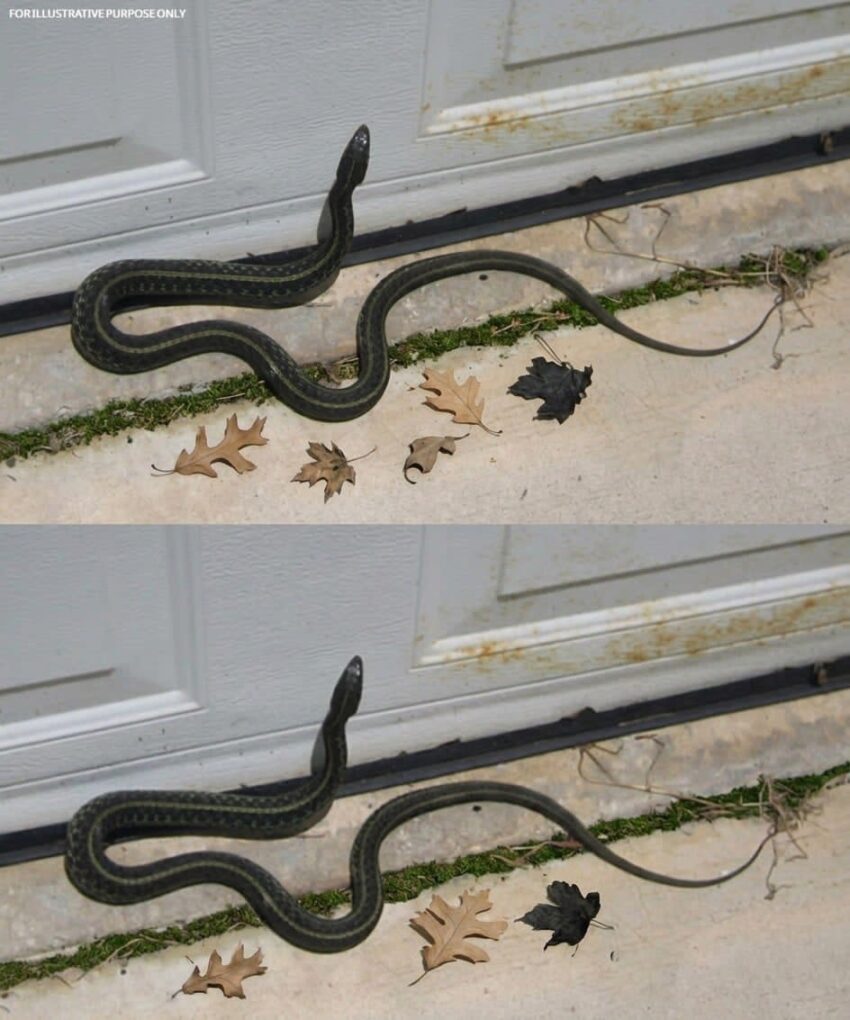
You walk into your mudroom, reach down for your running shoes, and freeze. A dark, slender ribbon rests silently along the baseboard. Your stomach drops, your pulse hits your ears, and your brain fires off ten rapid-fire questions at once.
Finding a snake in your house is one of those startling moments that leaves even seasoned gardeners shaken. Take a slow breath. In the vast majority of suburban and rural neighborhoods, that unexpected guest is entirely non-venomous, utterly bewildered, and desperate to escape back into the grass.
Here is your clear, calm, and practical guide for managing the immediate encounter, safely nudging them out, and sealing up your living space so it never happens again.
What to Do First: The 4-Step Immediate Response
When panic kicks in, our first instinct is often frantic movement or reaching for something heavy. That is where accidents happen. Snakes strike only when cornered, trapped, or stepped on. Your primary goal right now is simply space and separation.
- Back away slowly: Maintain at least six to eight feet of clearance. Do not make sudden waving motions or stomp on floorboards.
- Secure pets and children: Quietly guide barking dogs and curious kids into a bedroom or outdoor patio, and latch the door behind them.
- Confine the snake to one room: If the visitor is in a powder room, office, or utility closet, step outside and close the door. Roll up a bath towel and firmly wedge it across the bottom crack so they cannot slip into another part of the home.
- Snap a quick photo from a safe distance: A clear photo on your smartphone allows local wildlife rescue or animal control to identify the species in seconds before anyone steps foot inside.
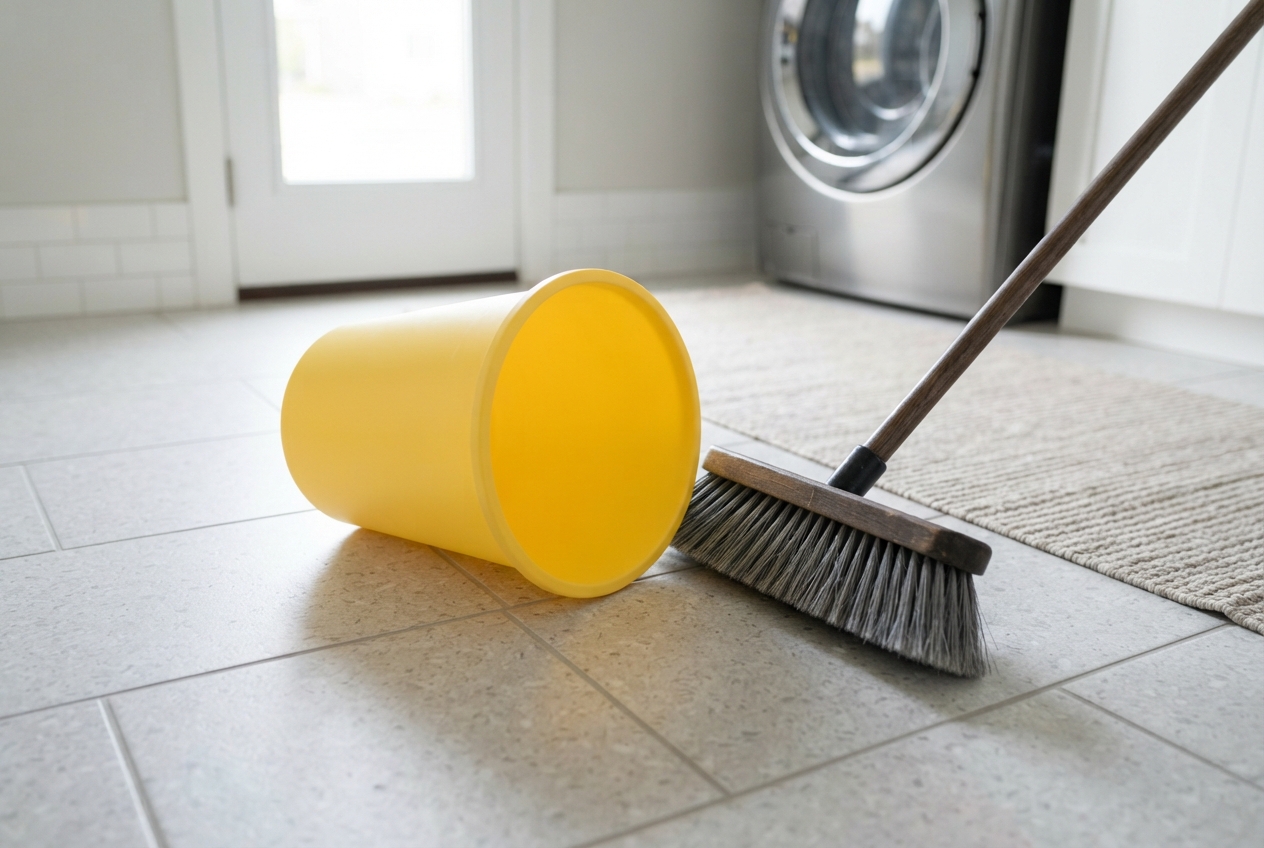
Isolating a harmless visitor with an overturned bin and a soft broom keeps everyone calm until help arrives.
How to Tell What Kind of Snake You Are Dealing With
North America is home to dozens of native snake species, yet only four families carry medically significant venom: rattlesnakes, copperheads, cottonmouths (water moccasins), and coral snakes. Most residential indoor sightings involve harmless rat snakes, garter snakes, or juvenile black racers.
Look at the general body shape from across the room. Rat snakes and garter snakes are slender and agile, moving with steady speed along wall edges. Pit vipers generally look heavier-bodied and thicker relative to their length, with distinctly broad, spade-shaped jowls and vertical cat-like pupils.
A quick caution: Non-venomous species like the eastern rat snake often flatten their heads and shake their tails against dry leaves or cardboard to mimic a rattlesnake when frightened. Never rely solely on head shape if you feel uncertain. Always treat an unknown snake with hands-off respect.
How Did a Snake Get in Your House in the First Place?
Snakes do not chew holes in siding or dig through drywall. They exploit existing gaps left behind by plumbers, builders, or weather erosion. A juvenile garter snake can slide effortlessly through an opening no larger than a standard lead pencil.
1. Dryer Vents and Exterior Pipe Flanges
Walk around your foundation and check where your AC lines, water spigots, and dryer exhaust pipes pierce the siding. Gaps around plastic vent hoods often lose their silicone bead over winter, creating a direct runway behind your drywall.
2. Garage Door Corners and Worn Weatherstripping
Look at the bottom corners of your closed garage door during midday. If you can spot slivers of daylight creeping across the concrete floor, snakes can slide right in. Garage door rubber seals often dry out, stiffen, and tear within three years of installation.
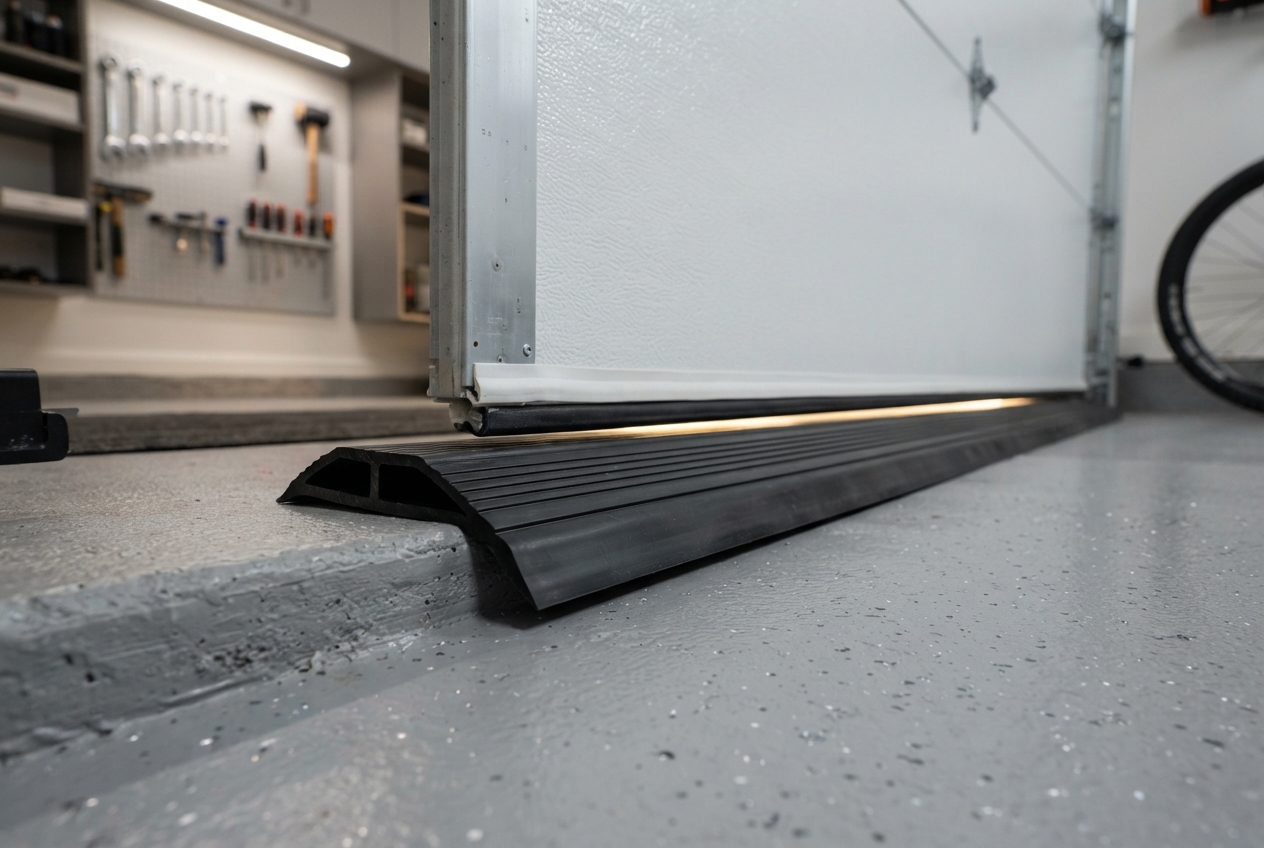
A snug rubber bottom seal on your garage door closes the quarter-inch gaps snakes rely on to get inside.
3. Brick Weep Holes and Foundation Settling Cracks
Homes built with brick veneer feature vertical weep holes at ground level to allow air circulation and water drainage. These narrow slots are convenient front doors for mice, crickets, and the snakes following them.
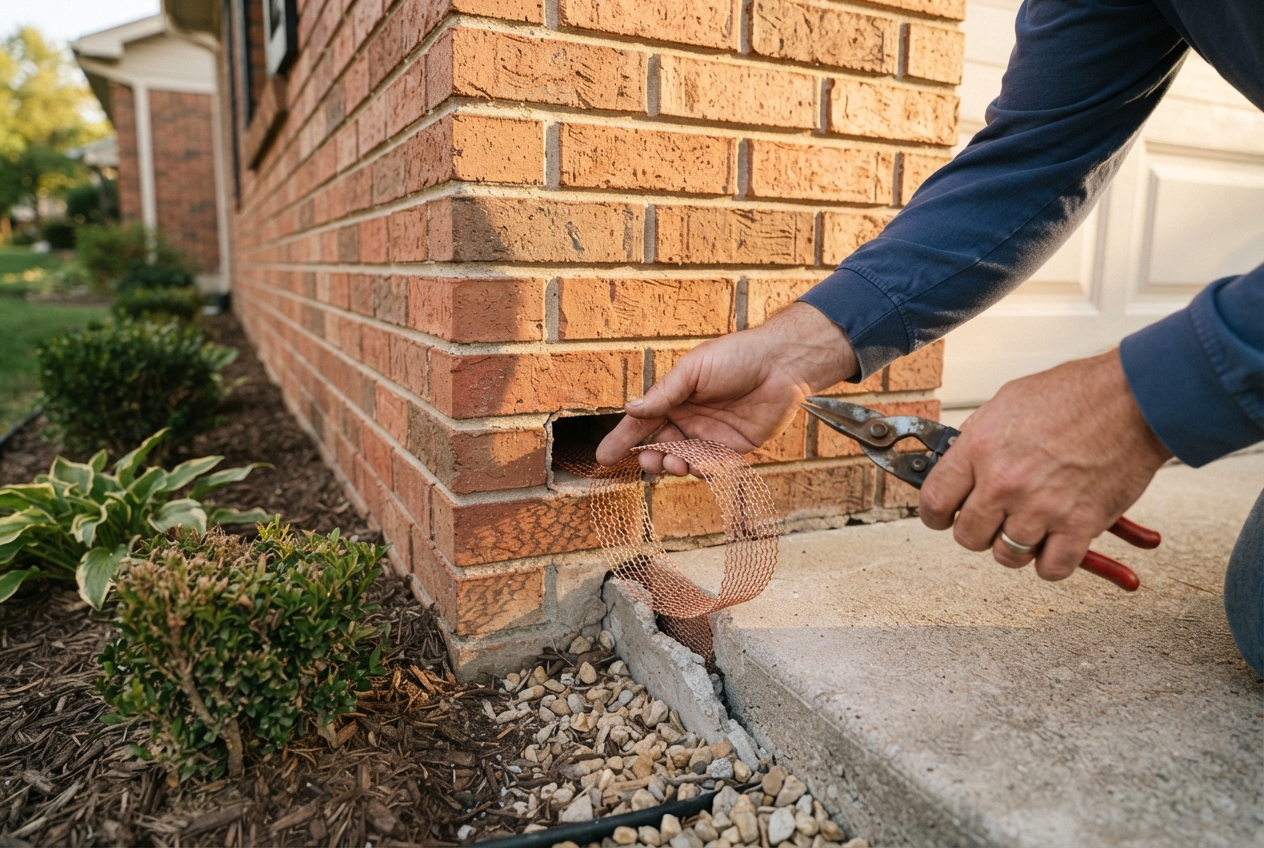
Stuffing weep holes with breathable copper mesh blocks slithering guests without trapping structural moisture.
The Hidden Trigger: Check for Household Pests
Snakes do not wander into air-conditioned, human-occupied rooms for fun. Cold indoor air actually slows them down and leaves them sluggish. They come inside chasing scent trails left by rodents, lizards, or nesting birds.
If you find an eastern rat snake in your attic, crawlspace, or basement drop ceiling, take it as an early warning signal. That animal is almost certainly hunting mice or chipmunks that found an entryway first. Tackling small rodents with humane traps and pantry cleanup stops the food chain at its root.
Safe, Humane Ways to Remove a Non-Venomous Snake
If you are confident the snake is a harmless garden variety and animal control has a multi-hour wait time, you can manage gentle relocation yourself without touching the animal.
- The Open-Door Sweeping Method: If the snake is near an exterior door, open it wide. Grab a long-handled, soft-bristled push broom and gently guide the snake toward the threshold. Move smoothly without swinging.
- The Bucket and Dustpan Trap: Place a deep, clean plastic bucket or wastepaper basket on its side near the snake. Use a broom to coax the animal toward the opening. Most snakes naturally seek out dark hiding spots and will glide straight inside. Once inside, tip the bucket upright, loosely cover the top with a piece of cardboard, and walk it to a wooded area at least 150 yards away.
- Call an Expert for Venomous Encounters: If you suspect a copperhead, rattlesnake, or are simply uncomfortable, do not play hero. Keep your eyes on the creature from across the room and contact a local wildlife removal specialist or non-emergency municipal animal control.
Effective Snake Prevention: What Actually Works (and What Does Not)
Every spring, hardware store shelves fill up with granular snake repellents, sulfur bags, and sonic vibration stakes. Save your money. University wildlife extensions have tested these products repeatedly and found little to no deterrent effect.
Chemicals like mothballs are not only useless against reptiles, but they are also toxic to household pets and leach harmful fumes into your ground soil. Reliable, lasting prevention comes down to physical exclusion and good yard hygiene.
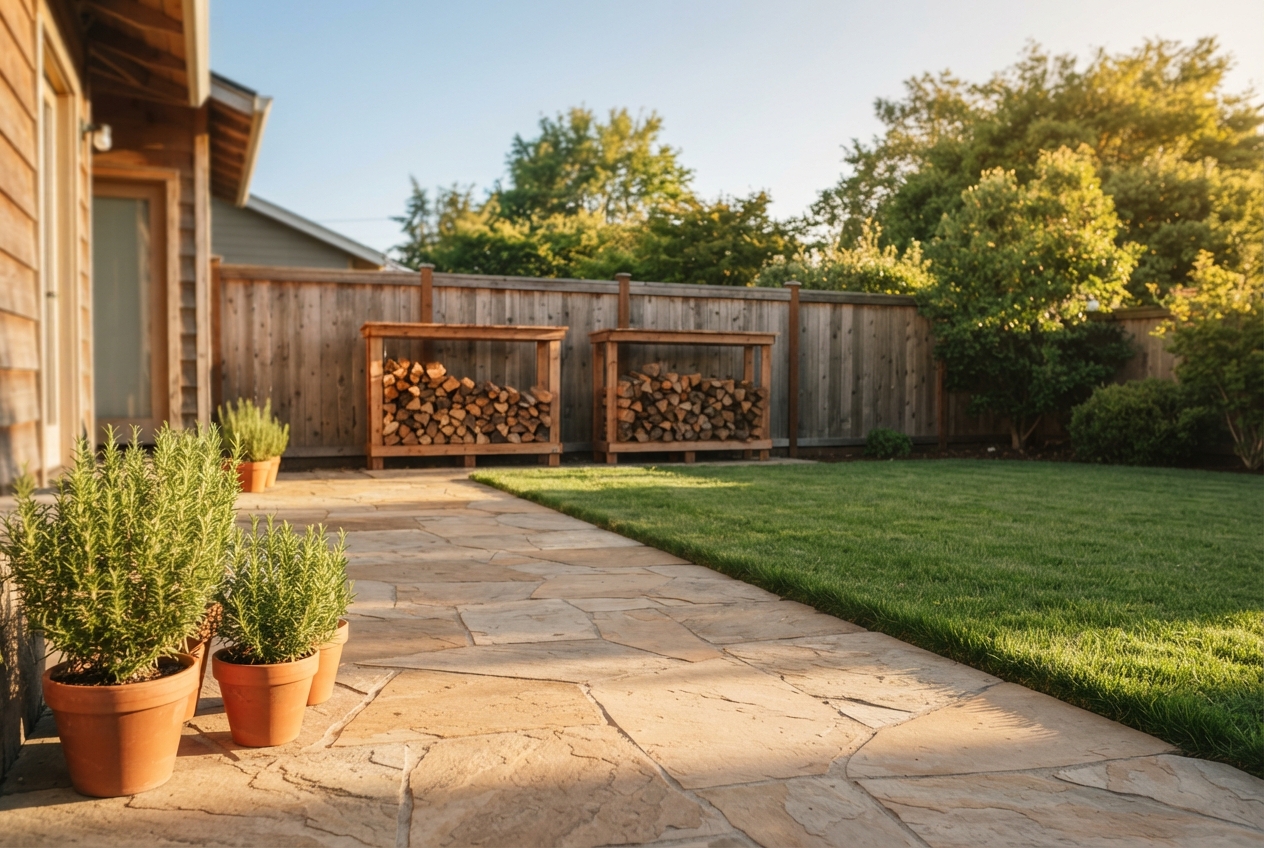
Moving firewood stacks well away from your foundation strips away the shaded hiding spots snakes love.
Your Seasonal Perimeter Checklist
- Install stainless steel mesh: Cut strips of quarter-inch hardware cloth or copper stuffing mesh and press them into brick weep holes. This maintains wall ventilation while barring slithering critters.
- Inspect door sweeps: Replace brittle vinyl sweeps on all exterior doors, mudrooms, and basement walkouts. Ensure the rubber gasket makes firm contact with the aluminum threshold.
- Clear foundation clutter: Stack firewood stacks on raised metal racks at least twenty feet away from your home’s exterior walls. Keep flowerbed mulch layers below two inches near ground vents.
- Prune dense groundcover: Trim heavy ivy, junipers, and overgrown perennial beds back from your siding by at least eighteen inches to eliminate shaded runways.
Living Peacefully Near Native Wildlife
Coming face to face with a snake indoors will startle anyone, but keeping cool heads preserves safety for everyone under your roof. Native snakes are quiet, hardworking neighbors that chew through pest populations and maintain balanced gardens.
Once you patch up structural gaps and remove food sources, your living spaces will stay private, secure, and comfortably snake-free all season long.