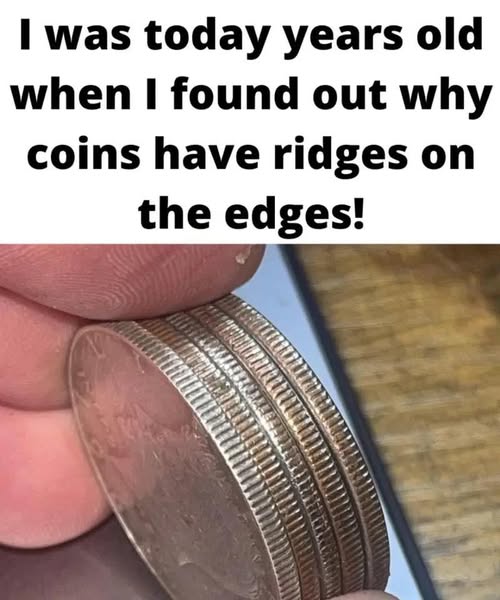
You have touched them while fishing for parking meter change, digging through couch cushions, or dumping your pockets into a ceramic dish by the front door. You run your thumb along the rim of a quarter or dime, and your skin catches on a steady ring of tiny raised grooves. They feel familiar. Satisfying, even. Yet most of us never pause to ask why they exist in the first place.
Those miniature ridges are formally known as reeded edges. They are not an aesthetic flourish dreamt up by an artistic engraver. Instead, they represent centuries of high-stakes financial espionage, ruthless black-market thieves, and a brilliant technological standoff that saved entire national economies from ruin.

A morning pocket change sort reveals the tactile grooves we touch every day without second thought.
The Medieval Heist You Could Do at Home: Coin Clipping
To understand why coins have ridges, you have to rewind to an era when money carried intrinsic value. Long before paper tender, fiat systems, or tapping a phone against a checkout terminal, coins were minted directly from solid precious metals. A silver shilling was prized because it held genuine silver; a gold crown was literally worth its weight in gold.
Back then, minting techniques were remarkably crude. Mints produced what historians call “hammered coins.” A blank disk of warmed metal was placed between two engraved steel dies and struck forcefully with a heavy mallet. The resulting coins were rarely uniform. Their borders were soft, uneven, and somewhat oblong, leaving plenty of blank space around the edges.
Shrewd scoundrels soon spotted a lucrative loophole known as coin clipping. Using shears or kitchen files, a person would gently trim tiny shavings of silver or gold from the outer rim of each coin. Afterward, they filed down the rough cut to make it look like natural pocket wear.
The shaved coin was returned to circulation at full face value to buy loaves of bread, firewood, or livestock. Meanwhile, the thief hoarded the precious metal trimmings in leather pouches under floorboards. Once they gathered enough scraps, they melted the flakes down into bullion bars to sell on the black market.
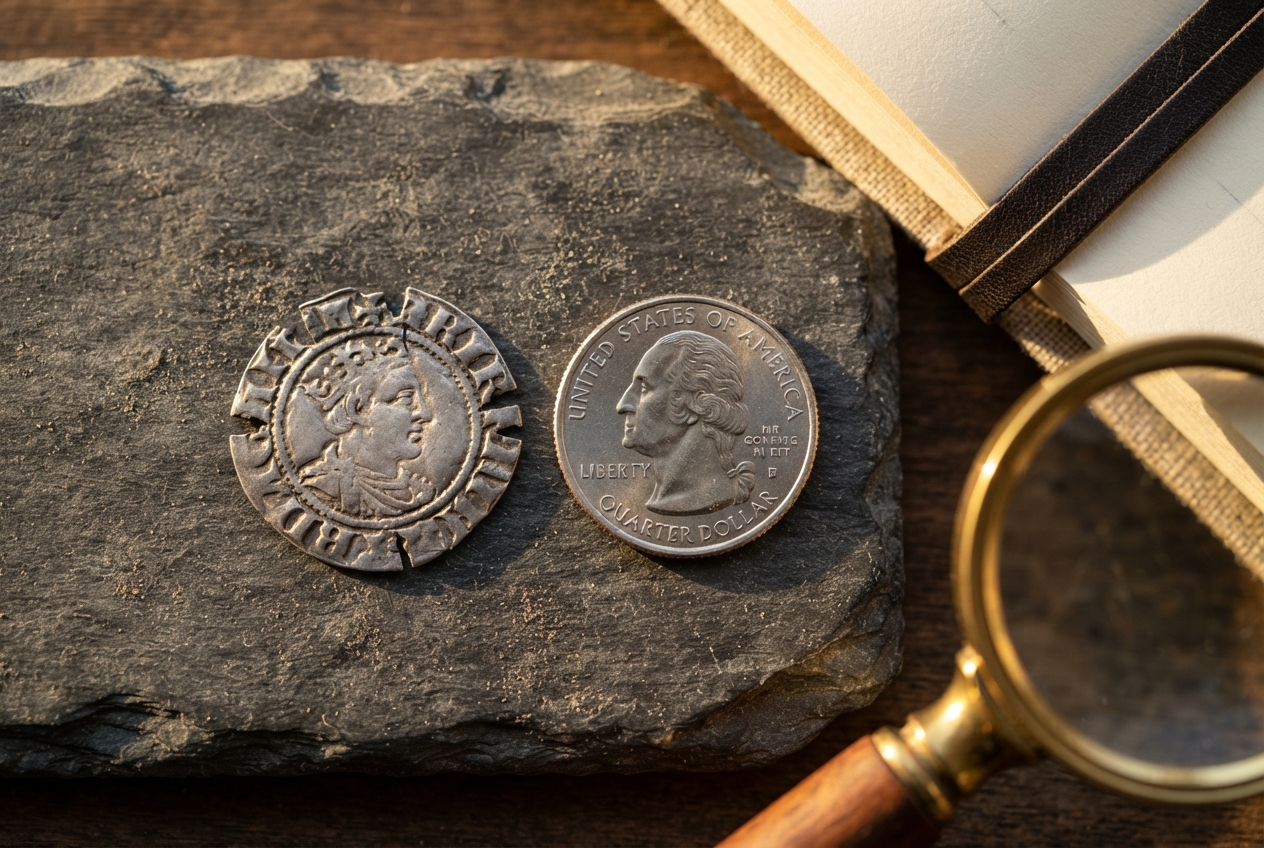
Notice the crisp, serrated milled perimeter compared to the vulnerable, smooth border of early hammered currency.
When Bad Money Drove Out the Good
Clipping one sixteenth of an ounce from a single coin might sound petty, but the habit spread across Europe like wildfire. By the late seventeenth century in England, virtually every circulating coin was badly mutilated. Some silver pieces were shaved down to half their original weight.
Merchants began carrying small scales on their belts, refusing to take coins at face value. They weighed every single piece offered for a transaction. Trade stalled, arguments erupted at butcher stands, and international merchants refused to accept English sterling abroad. The entire monetary engine was on the verge of grinding to an absolute halt.
“Tampering with the king’s coin was considered high treason, punishable by hanging or the stake, yet the rewards of clipping were so enticing that the gallows did little to deter the practice.”
Enter the Milled Edge: A Mechanical Trap for Thieves
Governments tried draconian punishments first. Caught clippers were executed without mercy, yet the illicit trade continued because the money was simply too easy to slice without anyone noticing. The authorities realized that to stop the bleeding, they had to alter the physical architecture of the coins themselves.
The breakthrough came with the transition from hand-hammering to steam and horse-powered rolling mills. In the mid-1600s, a French engineer named Jean Castaing invented an ingenious edge-marking machine. The Castaing machine squeezed blank coins between two grooved steel bars under tremendous mechanical pressure, etching intricate lettering, stars, or parallel fluting directly onto the narrow edge before the faces were ever stamped.
This process created the milled or reeded edge. A coin treated this way featured sharp, uniform, mechanical serrations running along its circumference. If someone took a file or shears to a reeded coin, the smooth shaved patch stood out like a sore thumb. A merchant could glance at the rim or simply feel it with two fingers to spot tampering in an instant.
When the famous scientist Sir Isaac Newton was appointed Warden (and later Master) of the Royal Mint in 1696, he took this defensive design and ran with it. Newton oversaw the Great Recoinage of England, systematically hunting down counterfeiters like the notorious William Chaloner while churning out precision-milled coins with pristine reeded borders that impossible to tamper with unnoticed.
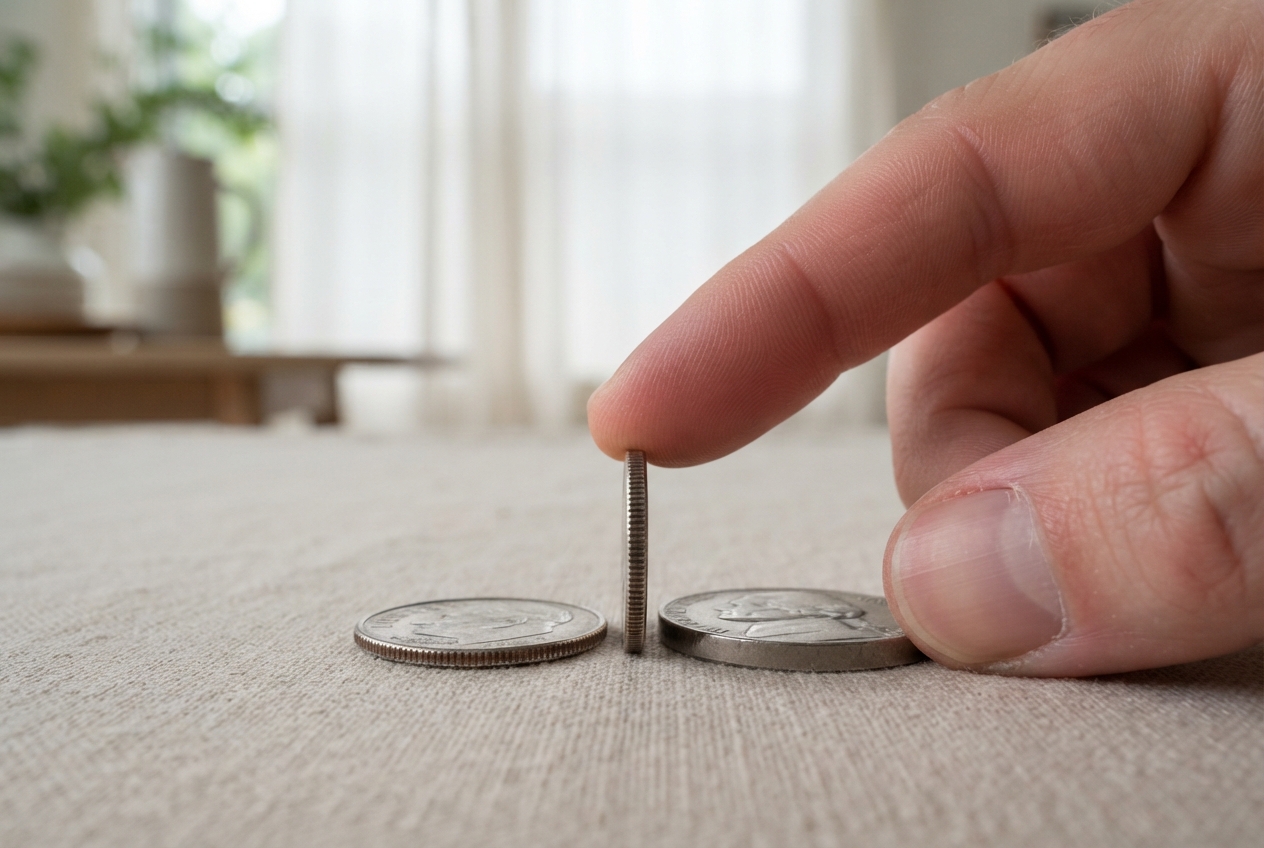
Reeded edges allow quick, tactile identification without needing to pull coins into direct light.
Why Do Modern Coins Still Have Ridges?
Look into your wallet today. Our modern quarters and dimes contain zero silver; since the Coinage Act of 1965, United States circulating coinage has been composed of a base-metal sandwich made of copper and nickel. Nobody is sitting at their dining room table with iron shears trying to harvest cupronickel dust from pocket change. So why did the ridges stick around?
1. Tactile Accessibility for the Visually Impaired
Modern coin ridges provide instant tactile feedback. For visually impaired and blind individuals, distinguishing coins by diameter alone can be frustratingly imprecise, especially between coins of similar scale. A dime measures 17.91 millimeters across, while a penny measures 19.05 millimeters—a difference you might easily miss when reaching into your pocket.
The ridges solve this instantly. A dime has a distinct corrugated border, while a penny has a smooth rim. You do not need to look at them under bright light; your fingertips tell you everything you need to know within half a second.
2. The Mystery of the Smooth Nickel
You might wonder: if ridges are so useful, why are nickels and pennies totally smooth? The answer ties directly back to their historical metal content. Pennies were struck from copper, and five-cent pieces were made of nickel and copper alloy. Neither metal was precious enough in the eighteenth or nineteenth centuries to justify the dangerous labor of clipping.
Because nobody bothered to steal cheap base metals, the mints never incurred the expense of cutting reeded edges onto pennies or nickels. Today, that deliberate historic difference remains an accessibility feature. A quarter has ridges; a nickel of similar thickness is completely smooth. You will never mix them up in a dark movie theater or while reaching into your coat pocket.

Rubbing pencil lead over coin borders makes a fun weekend kitchen table experiment to explore edge patterns with kids.
3. Vending Machine Sensors
When you drop a quarter into an automated parking meter, laundromat dryer, or vending machine, it does not just drop straight into the collection bin. It passes through optical and mechanical sensors that measure thickness, weight, and edge texture. The uniform diameter produced by precision reeding helps sorting tracks grip and propel the coin smoothly through mechanical chutes without jamming.
4. A Fun Kitchen Table Fact for the Kids
If you want a charming little piece of trivia to share over breakfast, pull out a quarter and a dime. Have your kids count the ridges—or better yet, run a pencil rubbing over the edges onto white craft paper. A standard United States quarter has exactly 119 reeded ridges around its perimeter, while a regular dime contains 118. It is an astonishing bit of microscopic engineering hiding on something that usually gets forgotten under car seats.
The Enduring Genius in Your Pocket
Our day-to-day lives are filled with clever little historical artifacts that survive simply because they work. We tap plastic cards and wave smartwatch screens, yet the pocket change jingling in your coat remains tied to a three-hundred-year-old game of cat and mouse between clever thieves and brilliant mint masters.
The next time you pull a quarter out of your coin jar, pause for a second. Press your thumb against that serrated edge. Feel that sharp, rhythmic texture. You are holding a tiny piece of crime-fighting engineering that rescued commerce and built the foundation of honest trade.