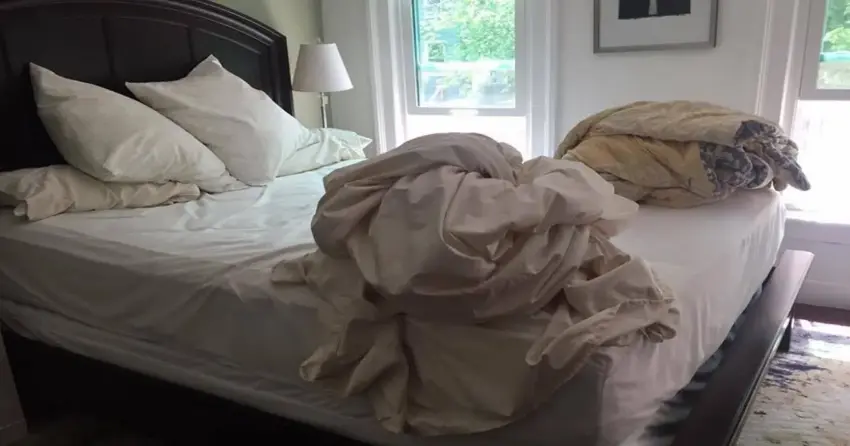
You have packed your duffel bag, zipped your toiletry kit, and checked the nightstand drawer twice for rogue charging cords. Now you are standing at the foot of the guest bed, staring down the rumpled duvet. A classic quandary strikes every considerate traveler: should you strip the bed or make it before you walk out the front door?
Most of us want to be gracious guests who get invited back. We want our hosts to feel respected, not saddled with an overwhelming pile of chores the second the front door clicks shut. Yet pulling the duvet tight and fluffing the throw pillows might actually cause your host more trouble than leaving the whole setup alone.
Here is what actually happens on turnover day, what hosts secretly wish you would do, and how to handle guest bed etiquette without second-guessing yourself.
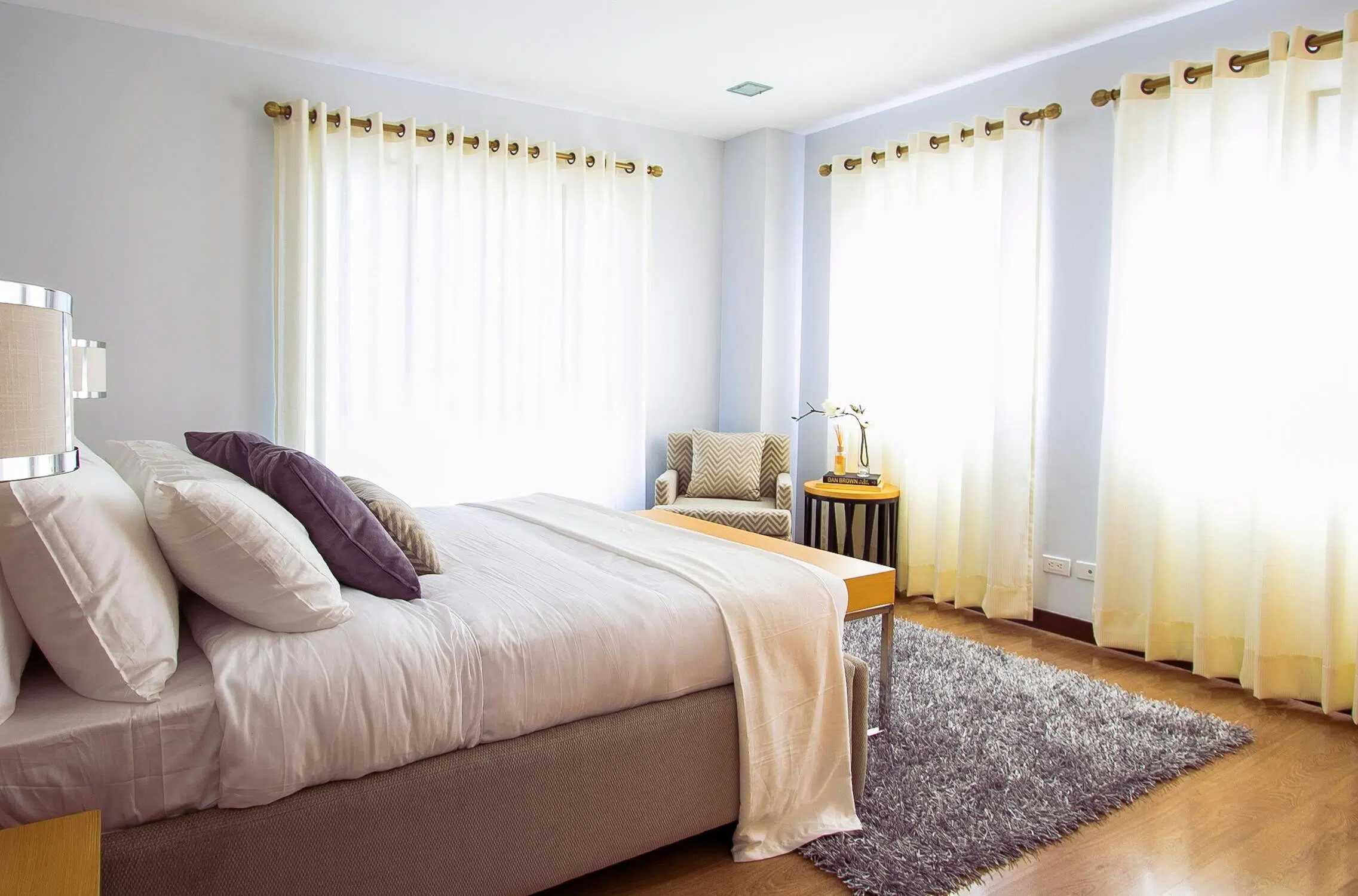
A freshly arranged guest bed looks peaceful, but hosts often prefer quick access to linens on laundry day.
The Morning Dilemma: Strip It, Make It, or Walk Away?
At first glance, making the bed feels like the polite, civilized reflex drilled into us since childhood. Leaving a tangle of twisted sheets out in the open feels untidy, almost like skipping out on doing your breakfast dishes. But modern hospitality follows a slightly different logic than a Sunday morning inspection from your parents.
The core issue comes down to ambiguity. When a bed looks made, your host has to wonder whether anyone actually slept on top of the quilt or slipped underneath the top sheet. If you used two pillows out of four, a tightly made bed hides which pillowcases need washing and which stayed untouched.
Stripping the bed solves the mystery instantly, but doing it improperly brings its own headaches. Knowing when to pull sheets, when to fold blankets, and when to leave things alone will save both your host’s time and their delicate bedding.
Why Making the Bed Can Actually Backfire on Your Host
When you tuck the flat sheet tightly into the mattress corners and arrange the decorative shams, you create an optical illusion. The bed looks pristine. To an exhausted host juggling morning chores and a busy workweek, a made bed invites doubt.
Did they sleep under the quilt or just nap on top? Did they use the bottom fitted sheet? If they think the bed is clean, a future guest might end up sleeping on used cotton. If they assume it is dirty, they have to unmake your careful work just to reach the corners anyway.
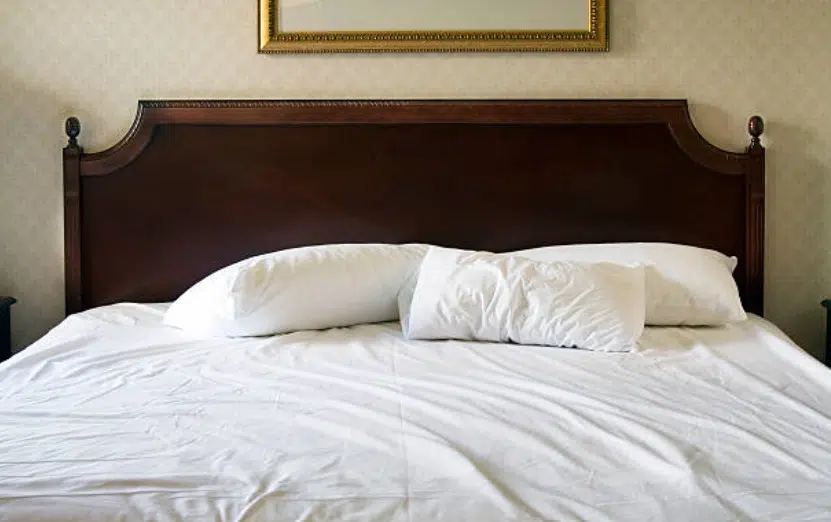
Pulling the covers tightly over slept-in sheets creates unnecessary guesswork for your host.
Even worse, guests who remake the bed often trap dampness underneath heavy quilts. Sleeping bodies generate heat and moisture throughout the night. Sealing that moisture under heavy layers prevents natural airflow, leaving mattress protectors and fitted sheets musty before wash time.
The golden rule of guest bedrooms: never disguise a slept-in space as fresh linen. Clear boundaries make laundry day faster for everyone.
The 3-Step “Tidy Strip” Technique
If you decide to strip the bed, avoid tearing off every layer and creating a chaotic boulder of fabric in the center of the mattress. Follow this simple, considerate method instead:
- Remove pillowcases and pillow protectors carefully. Leave the bare pillows resting upright against the headboard. Take only the outer cotton or linen pillowcases. Do not pull off zippered inner protectors unless your host asks.
- Peel back sheets and duvet covers, leaving quilts alone. Unbutton or unzip the duvet cover if you feel confident, or simply bundle the fitted sheet and flat sheet together. Never bundle heavy wool throws, down quilts, or decorative woven blankets into the wash pile, as washing them together can ruin delicate fibers.
- Leave mattress pads untouched. Mattress pads protect expensive foam and springs from sweat and spills. They do not get washed after every single stay unless an accident occurs. Pulling them off forces your host to wrestle an elastic corner back on before rebuilding the bed.
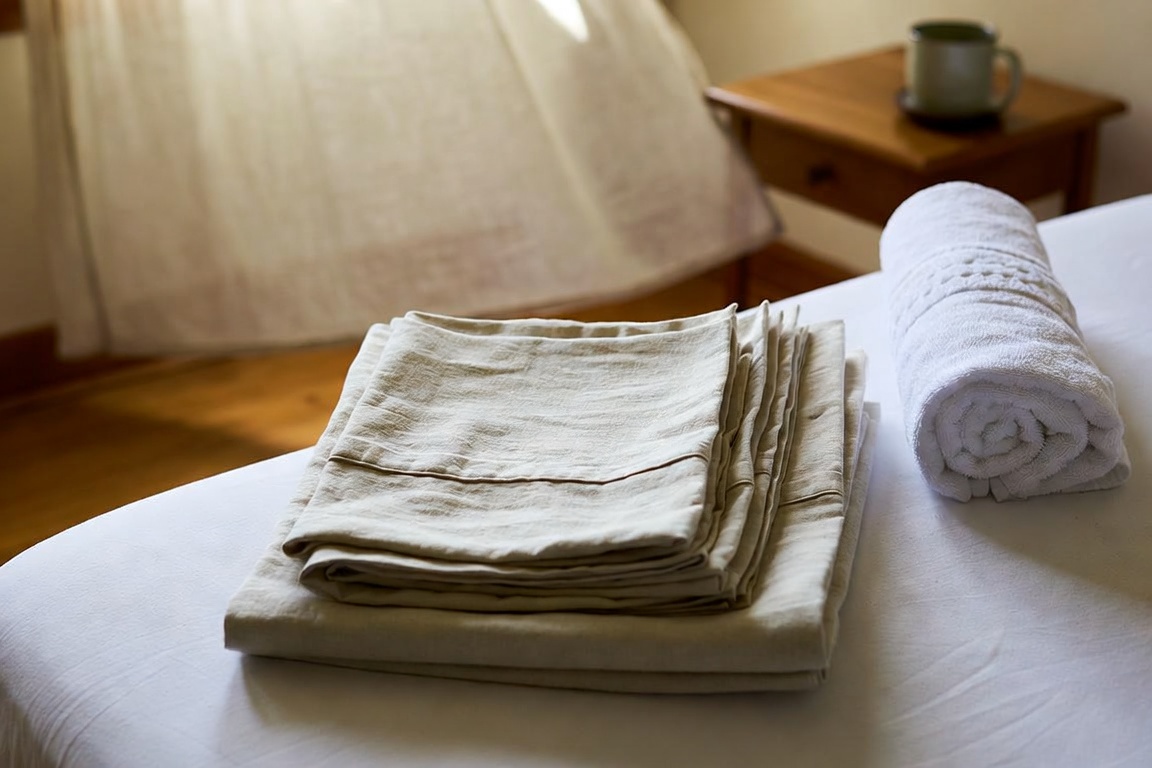
Leaving stripped sheets neatly folded at the foot of the bed saves your host time without cluttering the room.
Hotels vs. Short-Term Rentals: What Housekeeping Actually Wants
Commercial lodging requires a completely different approach than staying at your cousin’s house. In commercial hotels, guests often assume stripping the bed helps the housekeeping staff beat their rigid room turnaround targets. In truth, housekeepers frequently advise against it.
Hotel housekeepers need to inspect linens for stains, tears, and stray items before tossing them into giant commercial carts. Rolling sheets into a massive, tight bundle forces staff to untangle the damp ball, checking for hidden items like dropped wedding rings or smartphone adapters.

Commercial lodgings operate on strict turnover schedules, where tidy piles beat tightly tucked sheets every time.
For short-term rentals and Airbnb properties, the game changes entirely. Check the listing guide or refrigerator magnet before touching a single pillowcase. Some property hosts employ professional cleaners who charge extra if guests leave beds completely tangled, while others specifically request that guests do not start laundry cycles because detergent pods ruin delicate linen covers.
When in doubt at a vacation rental, leave used sheets pulled neatly back toward the foot of the bed and place used towels inside the bathtub or on the bathroom tile floor.
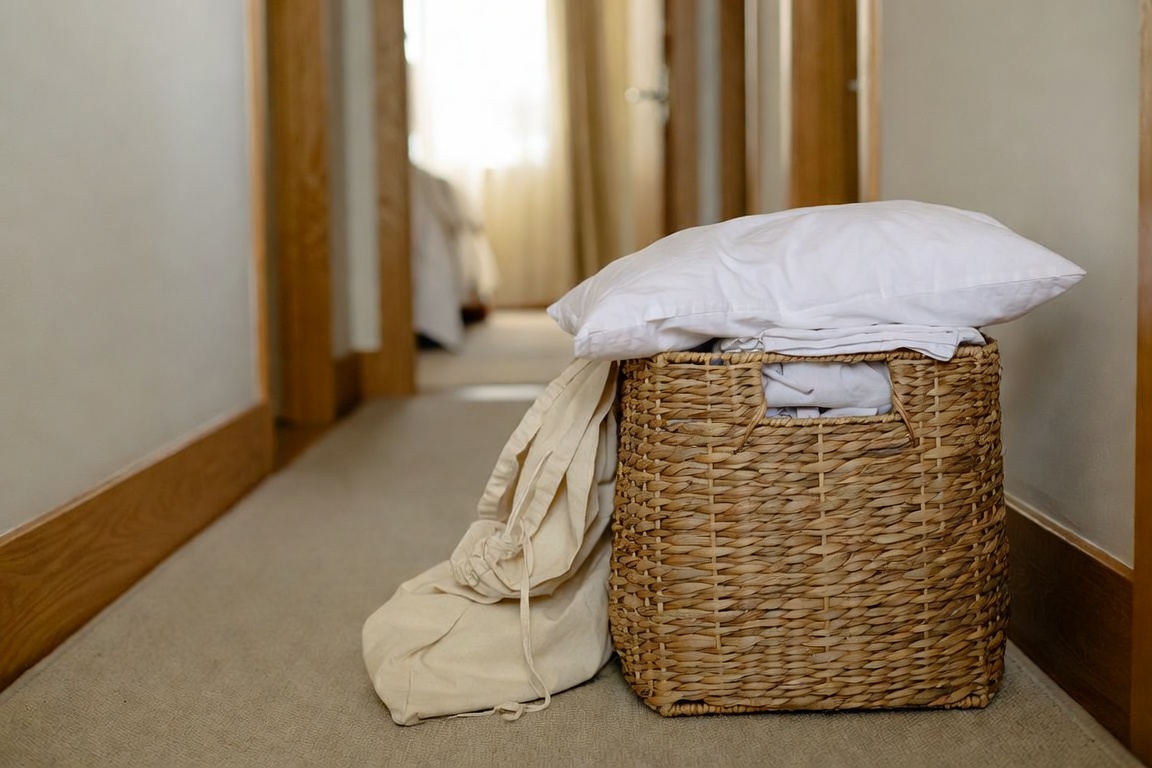
Gathering used linens directly into a laundry basket or designated hamper keeps walkways tidy.
The Discreet “Air-Out” Compromise for Everyday Visits
What if your host has not provided explicit instructions, and you feel awkward asking at breakfast? Use the foolproof “air-out” method. It signals clearly that the bed was used while keeping the room looking tidy.
Simply fold the duvet or quilt in half downward toward the foot of the mattress, exposing the slept-in sheets to fresh air. Straighten the pillows against the headboard. This shows at a glance which pillows and sheets need laundering, lets the mattress breathe, and keeps the room from looking like a campsite.
Folding extra throw blankets preserves cleanliness while keeping used sheets distinct from decorative pieces.
What to Do With Used Towels and Linens
Bed linens are only half the battle. Damp towels create genuine hazards for home finishes. Avoid the common mistake of tossing damp bath sheets onto hardwood floors, antique rugs, or directly onto the mattress. Moisture seeps into timber floorboards and creates stubborn water stains within hours.
Hang damp towels over bathroom towel bars or shower curtain rods so they can dry. If your host provides a dedicated laundry basket in the hall or closet, gather dry linens and drop them inside. If no basket is visible, fold used towels loosely and leave them on the tiled bathroom counter or inside the shower basin.
The 10-Second Text That Solves the Mystery
Hospitality anxiety usually vanishes with a simple, cheerful question. You do not need an elaborate conversation. A quick message over morning coffee settles everything without awkwardness:
“Morning! I am getting ready to pack up. Would you prefer me to strip the bed sheets, or would you rather I leave everything as-is?”
Hosts love this question. It demonstrates that you care about their household routine without presuming how their laundry gets handled. Some hosts wash sheets on hot immediately; others send them to a dry cleaner, while some run gentle cold cycles for heirloom quilts.
Whether you strip the bed completely or simply pull the covers back to let the room breathe, your host will remember your mindfulness long after your suitcase is back in your own closet.