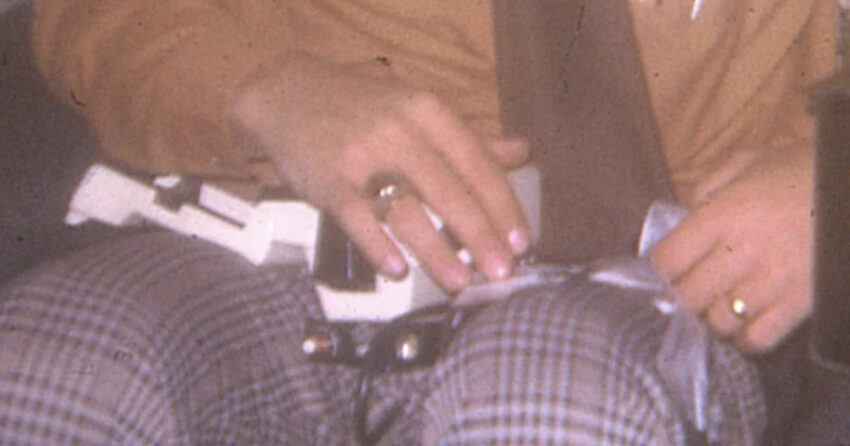
Pull open the bottom drawer of an old sideboard or dig into a shoebox tucked away in the attic closet, and you will almost certainly find one: a faded, square-shaped print with rounded corners, silver-toned highlights, and unmistakable personality. That candid snap of a relative grinning against faux wood paneling tells a story long before you read the penciled date on the back.
Tucked in the subject’s hands is a distinct piece of mid-century ingenuity known as the Polaroid Swinger Model 20. Long before we carried thousands of digital files in our pockets, this quirky gadget transformed how households preserved life’s simplest afternoons.
The 1965 Sensation: Meet the Polaroid Swinger Model 20
Before the mid-1960s, instant photography was largely an expensive hobby reserved for serious enthusiasts and commercial studios. Land Cameras were heavy, metal instruments that commanded a hefty sum. Edwin Land changed that equation entirely when his company rolled out the Polaroid Swinger Model 20 in the autumn of 1965.
Priced at just $19.95, it was an immediate runaway hit. Polaroid marketed the camera directly to teens and casual home shutterbugs with catchy musical commercials and bright, pop-art packaging. Suddenly, capturing a backyard barbecue or a holiday morning did not require waiting a week for the neighborhood drugstore to develop a roll of film.
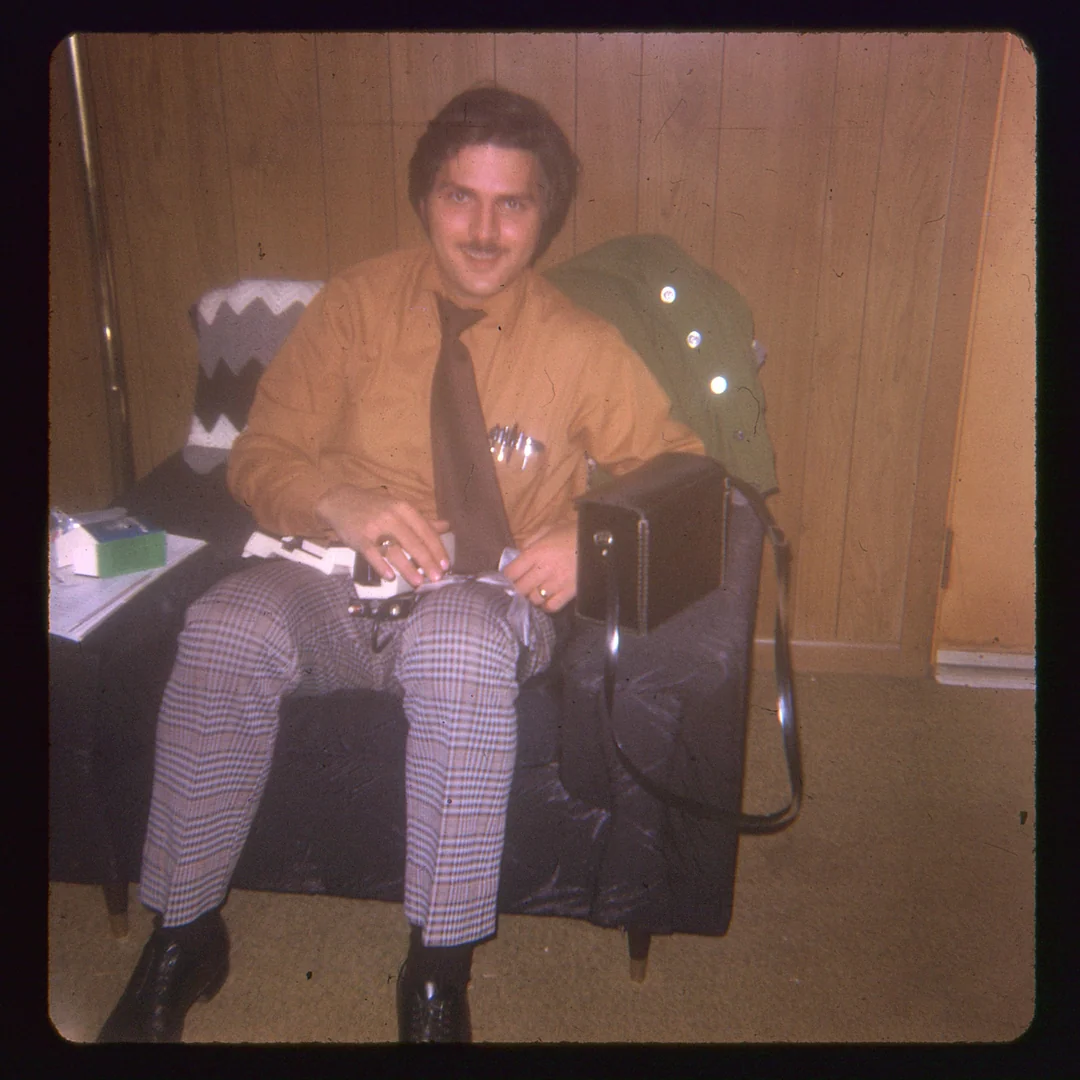
A classic living room moment captured on film, complete with wood paneling and the unmistakable white body of an instant camera.
The camera became a fixture of family gatherings. It sat beside punch bowls on dining tables, rode along in station wagons on summer road trips, and rested on the arm of plaid-upholstered armchairs while relatives unwrapped gifts. It made documenting daily living accessible to anyone willing to spend twenty dollars.
Plastic, Chemistry, and the Viewfinder That Said “YES”
Pick up a Model 20 today and you will notice how tactile the design feels. Crafted from lightweight, high-impact white plastic, the camera had a charmingly chunky silhouette with a prominent black faceplate and a bright red shutter button on the top deck.
Operating it was surprisingly intuitive, built around an ingenious mechanical photometer. As you looked through the viewfinder, you twisted the red knob above the lens until the internal meter spelled out the word “YES.” If there was too little light, the meter remained blank, saving amateur photographers from wasting costly shots on underexposed shadows.
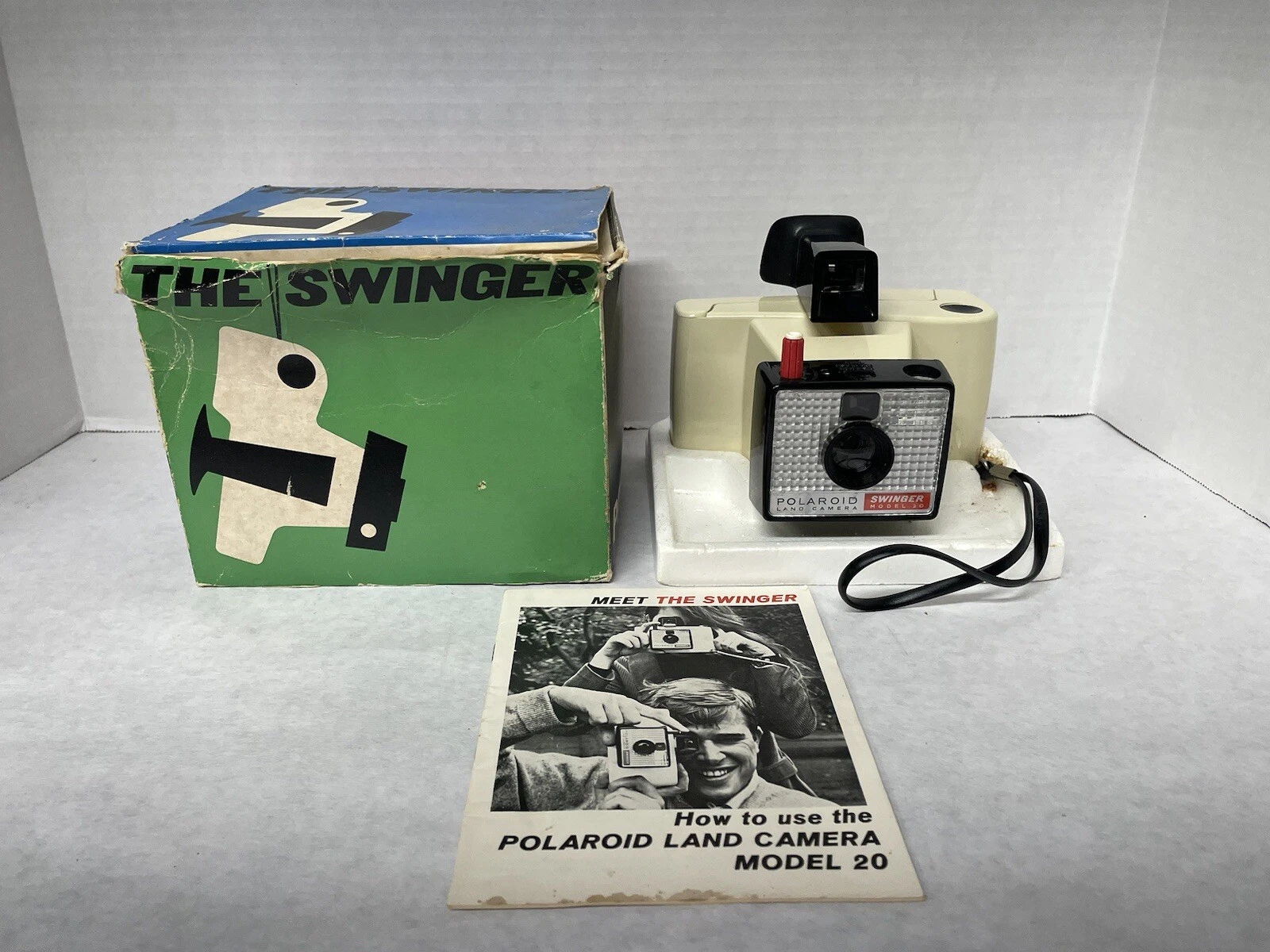
The original packaging, manual, and high-impact graphic design of the 1965 Polaroid Swinger Land Camera Model 20.
Unlike later cameras that ejected self-developing square prints automatically, the Swinger used Type 20 roll film. Taking the picture was only the beginning of a miniature chemistry experiment:
- The Pull: You pulled the paper tab firmly to draw the negative and positive sheets through built-in steel rollers, crushing an internal reagent pod.
- The Count: You counted down fifteen seconds in your head while the chemistry transferred the silver emulsion.
- The Peel: You carefully pulled the print apart to reveal a stark, high-contrast monochrome image.
- The Coater Wand: You swabbed the fresh print with a chemical-soaked sponge wand to protect the emulsion from fingerprints and air degradation.
That sharp, vinegary smell of the print coater wand is something anyone who grew up in the sixties or seventies remembers instantly. It was the scent of anticipation.
The Lost Art of Tangible Memories in a Screen-Filled World
Today, our phone photo libraries swell with thousands of unorganized, duplicated images that rarely leave a digital cloud. We snap thirty variations of a garden tomato or a breakfast plate, confident that we will sort through them later. In practice, they often sit forgotten.
Shooting with an original instant camera forced a wonderful kind of patience. A roll held only eight exposures, meaning every frame carried real value. You framed the picture carefully, waited for your family members to stop fidgeting, and accepted whatever happy accidents occurred when the shutter clicked.
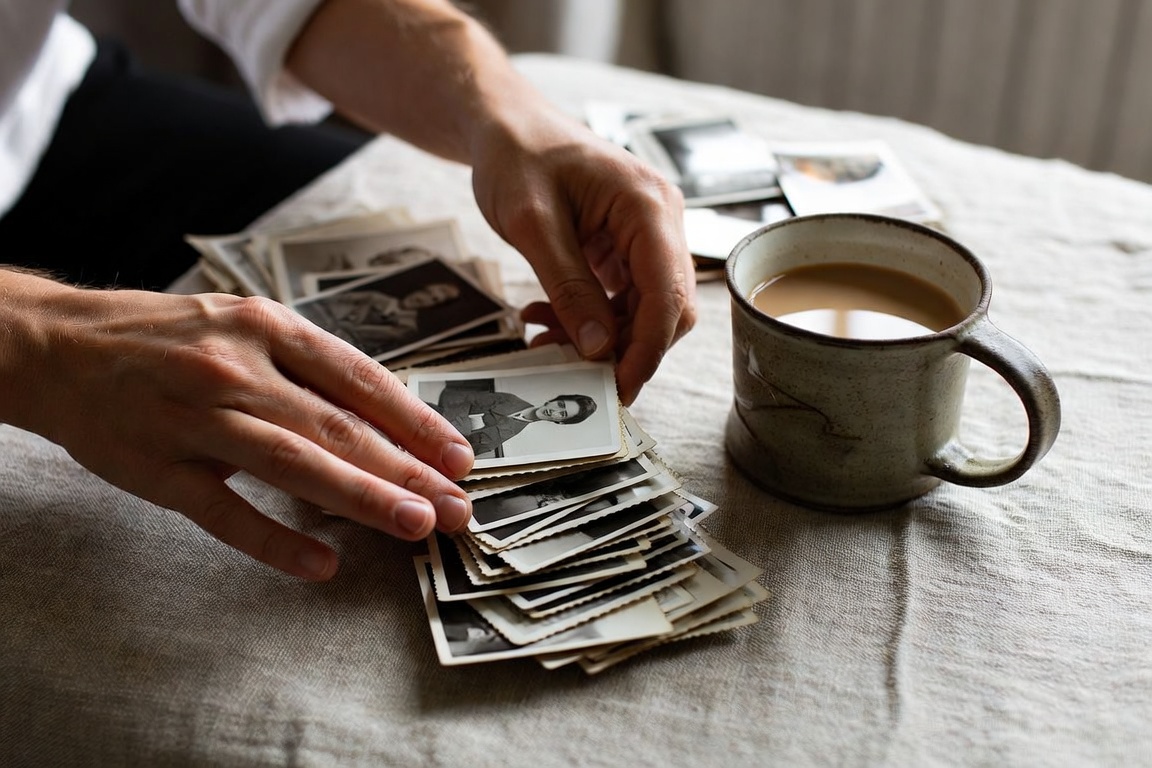
Sorting through heirloom family snapshots reminds us how precious physical, unedited moments truly are.
Those small, imperfect prints have an emotional weight that glass screens cannot replicate. A slightly off-center snapshot of a father smiling in a brown tie captures genuine atmosphere precisely because it was never filtered, retouched, or cropped to match a trend.
How to Preserve Delicate 1960s Instant Snapshots
If you have inherited a collection of roll-film prints from an older family home, taking care of them ensures they survive for generations. Because early peel-apart emulsions are sensitive to environmental shifts, simple preservation steps make a major difference.
Keep these care rules in mind when handling your vintage originals:
- Shield from direct sunlight: Ultraviolet rays break down old photo emulsions rapidly. Avoid hanging bare vintage prints directly opposite sun-drenched south-facing windows.
- Choose acid-free archival storage: If storing prints in boxes, use archival-grade paper sleeves or photo-safe boxes rather than cheap plastic bags that trap moisture.
- Watch temperature and humidity: Basements and uninsulated attics fluctuate wildly across seasons. Keep your memory boxes inside a climate-controlled closet on your main living level.
- Scan at high resolution: Before mounting or framing, create a digital backup by scanning the original at 600 DPI or higher to preserve the rich silver tones.
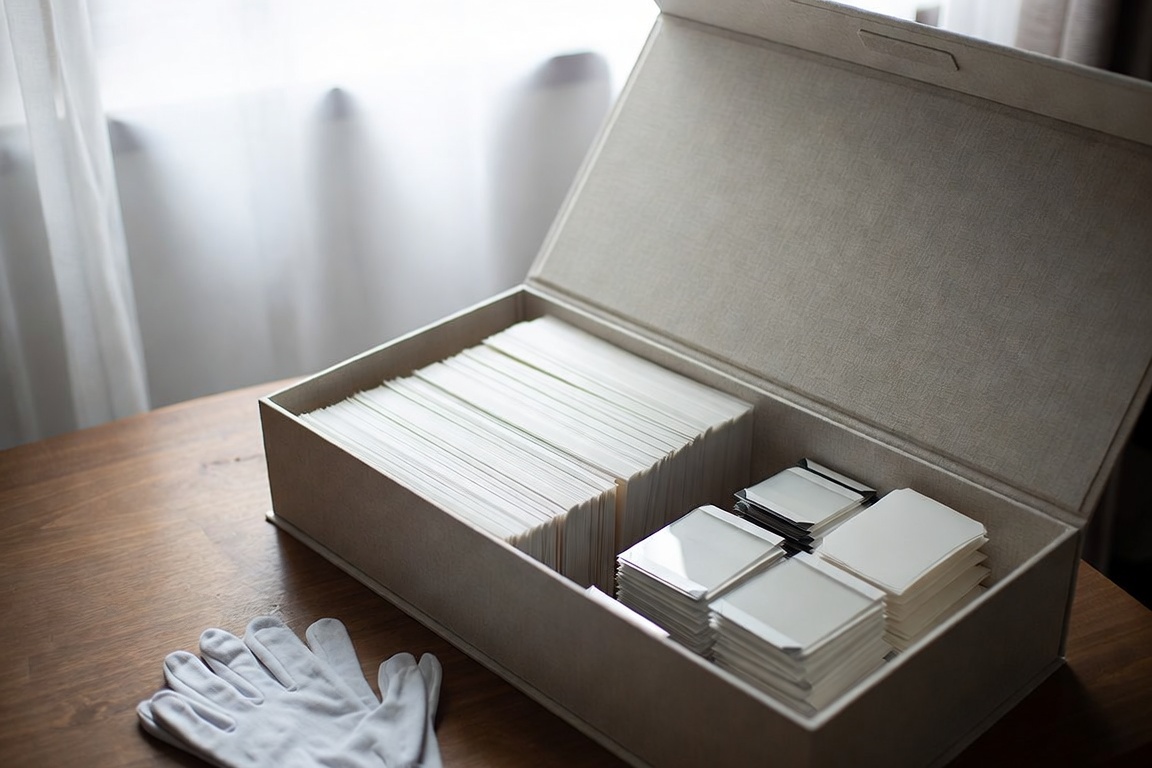
Archival storage boxes and photo corners keep delicate emulsion layers safe from sunlight and humidity.
Styling Vintage Cameras and Heirloom Prints on Open Shelves
Vintage photography equipment does not need to hide inside dark cupboards. Mid-century cameras bring authentic character to contemporary living room decor, bridging modern accents with warm history.
The cream-colored body of the Polaroid Swinger Model 20 pairs naturally with natural wood finishes and clean styling. Set the camera on an oak bookshelf next to a trailing pothos or a small brass bowl, letting its distinctive mod typography catch the eye without overwhelming the display.
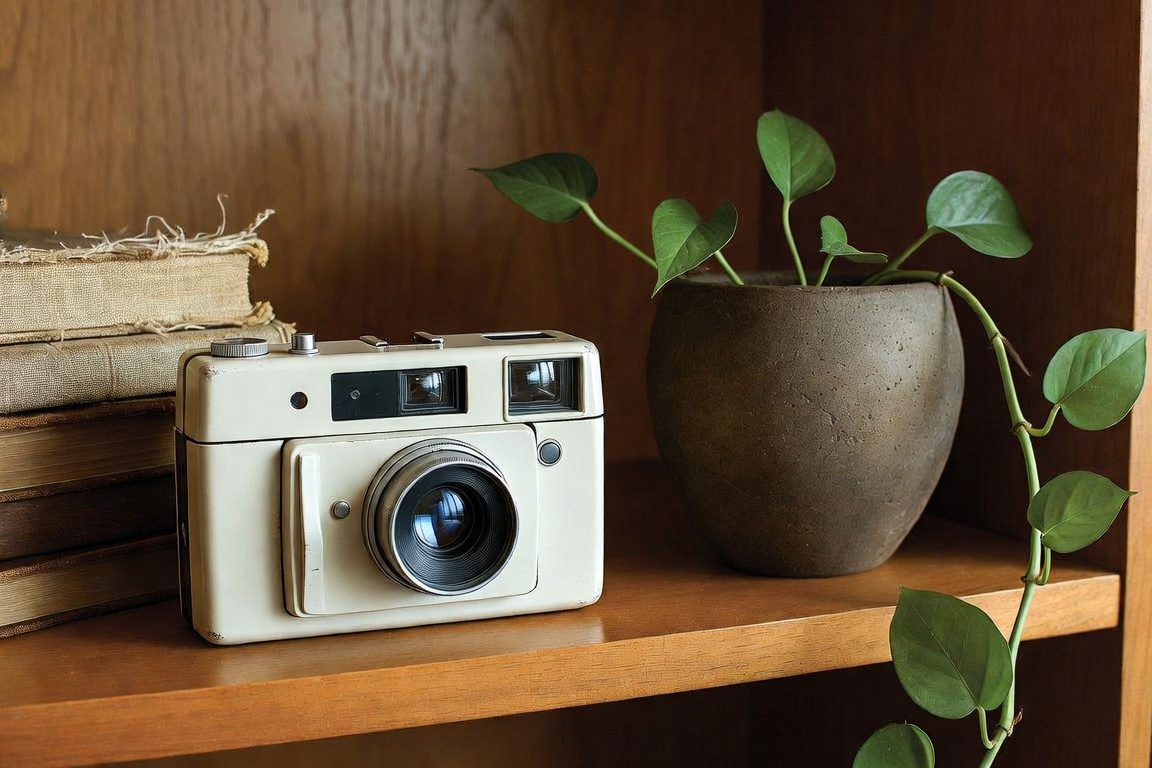
Pairing mechanical history with house plants creates a layered, lived-in feel on open living room shelves.
For the photos themselves, build an understated vignette on a credenza or sideboard. Place two or three small framed originals alongside a jug of fresh garden clippings and a stack of favorite books. Grouping small frames together keeps the presentation cohesive and inviting.
Creating an Authentic Living Room Gallery Wall
When you want to display family heritage across a larger space, a gallery wall offers a warm, personal backdrop. Instead of choosing matching modern portraits, mixing candid generational snapshots brings depth and honesty to your walls.
To keep the look balanced rather than cluttered, use these simple framing strategies:
- Use generous matting with wide white borders to give small snapshots visual prominence.
- Mix slim black metal frames with warm oak or birch mouldings for a curated, collected-over-time aesthetic.
- Group prints by theme—such as front porches, holidays, or backyard gatherings—rather than strict chronological order.
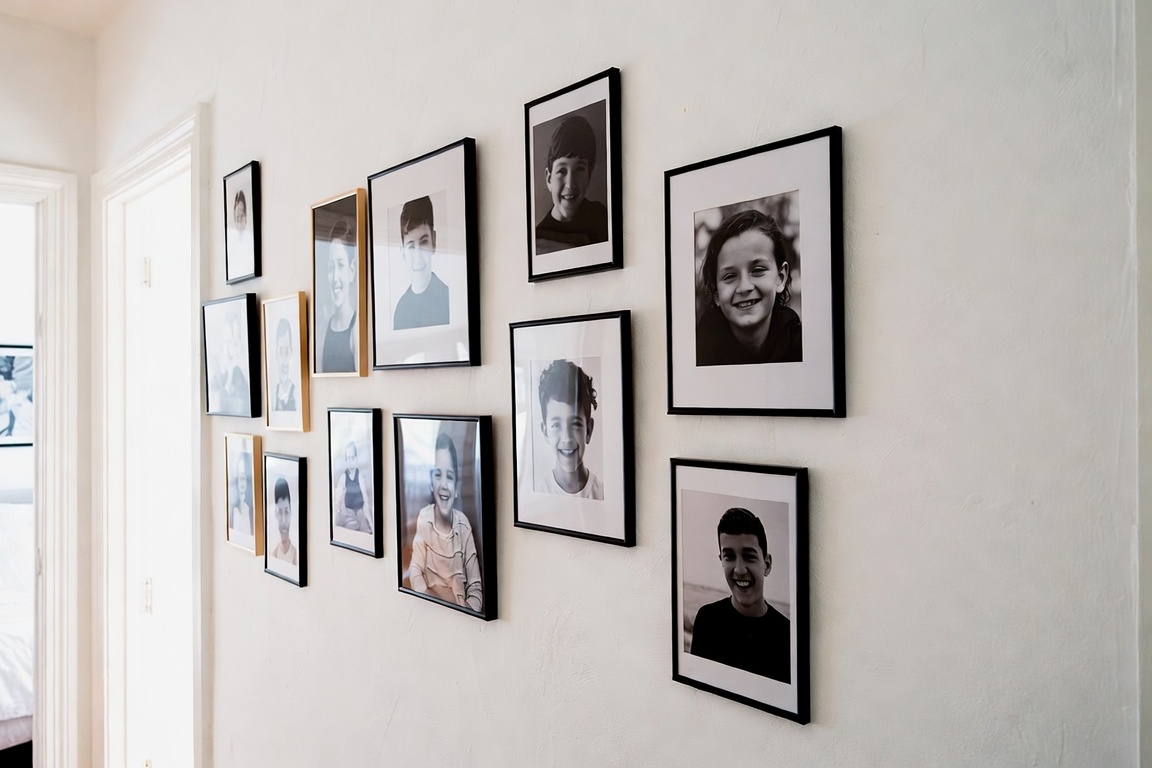
Thoughtfully framed vintage prints give historical family memories pride of place in modern corridors.
Walking past those honest, smiling faces every morning grounds a home in its own living history.
Bringing the Slow Photography Habit Back to Your Table
There is no reason the spirit of the sixties instant photograph cannot find a home in our everyday routines today. Keep an instant camera sitting on the sideboard during casual family gatherings or weekend brunches with a pitcher of iced tea.
Hand the camera to a guest, snap a single picture, and place the physical print right beside their plate to take home. That simple ritual brings back the tactile delight that Edwin Land tapped into sixty years ago.
The lasting charm of the Polaroid Swinger Model 20 was never about technical sharpness or complex gadgetry. It was about making moments visible right when they happened, giving ordinary families a small square piece of time they could hold in their hands.