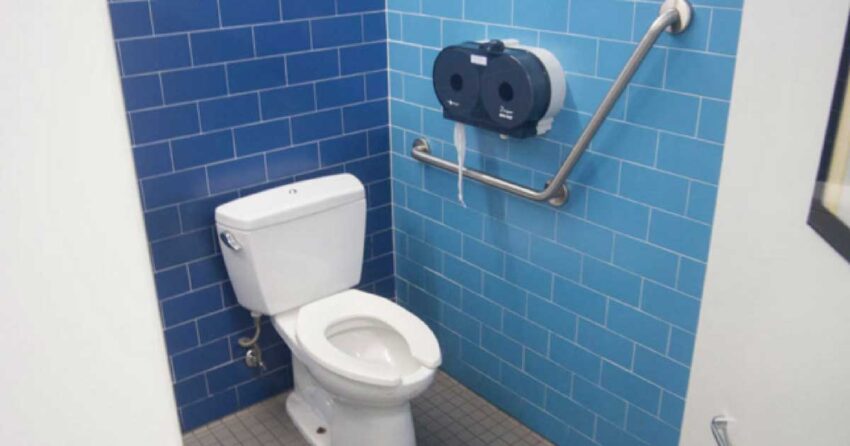
We have all experienced that specific moment on a family road trip. You pull off the highway, push open the heavy metal door of a gas station restroom, and brace yourself against the faint hum of industrial exhaust fans and institutional disinfectant. You hover, you reach for the paper liners, and you notice that familiar gap at the front of the porcelain bowl. Ever stopped to wonder why public restrooms have U-shaped toilet seats while your master bath at home features a tidy, unbroken oval?
That split rim is not an accident of manufacturing, nor is it a random design whim from a quirky architect. It represents decades of engineering, legal codes, and clever public health strategies working quietly behind the scenes. Once you understand the mechanics behind this everyday fixture, you will never look at a public stall the same way again.
The Legal Rulebook: Why Commercial Plumbing Codes Require Open Fronts
The biggest reason you see these horseshoe-shaped fixtures everywhere from airports to coffee shops comes down to simple compliance. In the United States, commercial restrooms must follow strict building mandates established decades ago. The Uniform Plumbing Code (UPC), originally published by the International Association of Plumbing and Mechanical Officials back in 1955, explicitly specifies that toilet seats in public facilities must be of the open-front design.
Subsequent standards, including the American Society of Mechanical Engineers standard ASME A112.19.5, solidified this requirement into law for modern commercial buildings. When a restaurant, office complex, or community park opens its doors, city inspectors walk through with a checklist. If the contractor installed standard residential closed-ring seats, the building fails inspection before the first customer even walks through the front door.
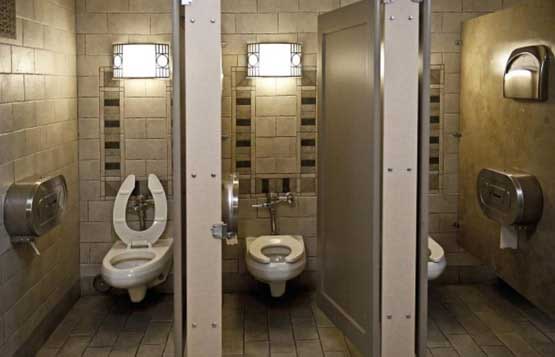
Standard commercial stalls rely on open-front seats to comply with municipal building codes and maintain sanitary separation.
Plumbing codes prioritize population safety over cozy residential aesthetics. By standardizing commercial bowls as elongated units with a split front, public health officials created a uniform sanitation baseline that protects hundreds of thousands of people moving through shared spaces daily.
The Anatomy of Hygiene: How the Front Cutout Protects You
Cleanliness in a shared restroom is about physical clearance. In our private master bathrooms, we know exactly who cleaned the seat and when it happened. In a public terminal with three thousand visitors an hour, that peace of mind disappears. The two-inch gap at the front of a U-shaped seat solves two distinct contact problems.
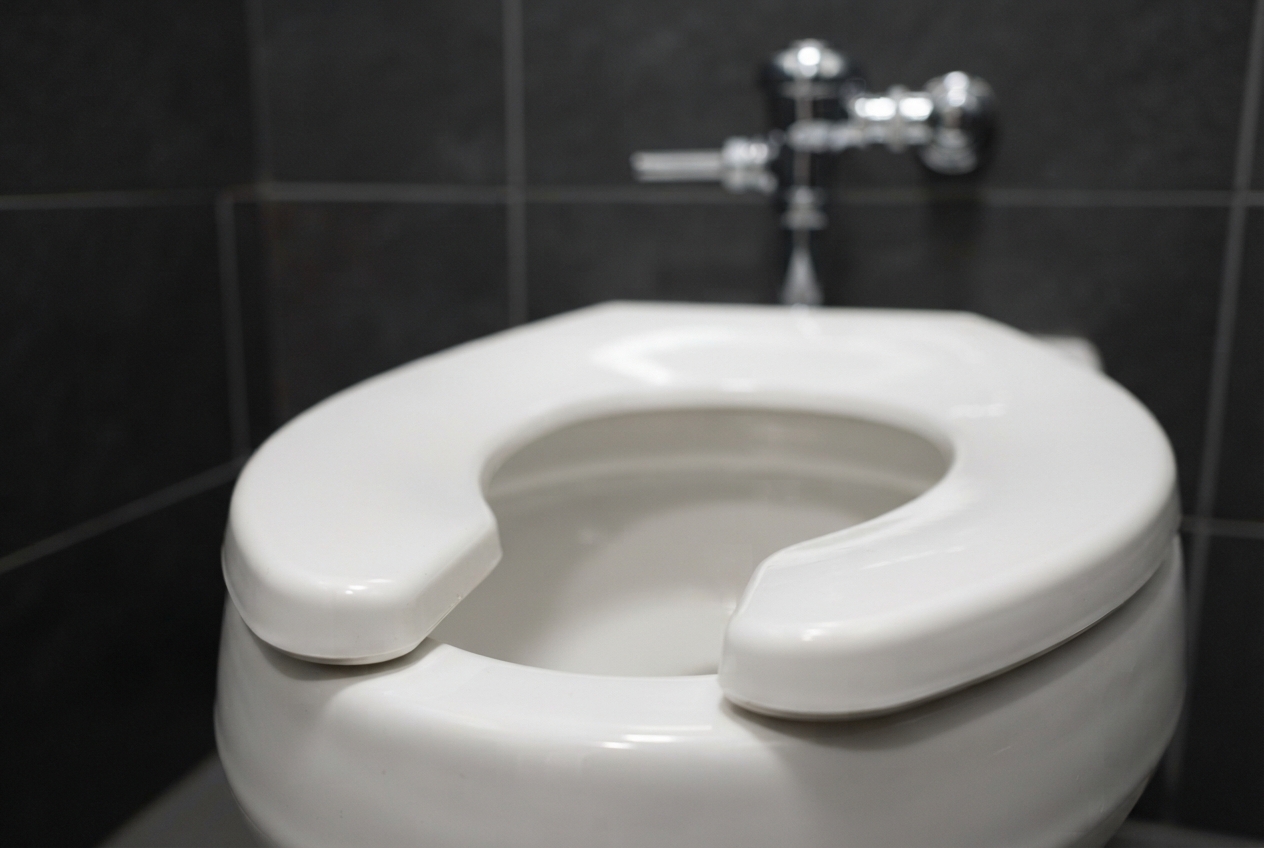
The characteristic horseshoe cutout prevents direct physical contact and leaves plenty of clearance for daily sanitizing.
First, the cutout significantly reduces the likelihood of direct skin contact with the seat. When sitting down on an open-front bowl, sensitive areas never touch the front plastic rim, which is historically the primary zone where stray urine drips accumulate. It creates a clean barrier between your body and whatever surface contaminants were left behind by previous occupants.
Second, the open design provides ergonomic room for personal hygiene. Wiping front-to-back—the golden rule for avoiding urinary tract infections—requires physical clearance. On an unbroken circular seat, your hand or the tissue easily brushes the underside of the plastic rim. The open horseshoe shape gives you generous space to wipe without grazing contaminated porcelain or hardware.
“The U-shaped seat eliminates the most common point of friction and contamination in public fixtures: the front rim contact zone.”
Cost Control, Wear-and-Tear, and Stolen Fixtures
Beyond hygiene, facility managers care deeply about the bottom line. Running a high-capacity facility means dealing with constant traffic, aggressive cleaning chemicals, and unexpected maintenance costs. Open-front seats offer distinct structural advantages that help operations managers keep budgets intact.
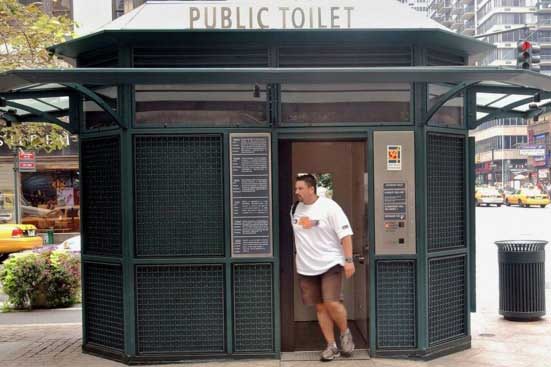
Public outdoor kiosks and city facilities need heavy-duty fixtures that withstand constant daily turnover.
Molded polypropylene seats without a front connection use slightly less plastic resin per unit. Multiply those pennies across thousands of rest areas, school districts, and stadium stalls, and the material savings add up quickly. More importantly, the split-front geometry gives the seat slight lateral flex, which prevents stress cracking when heavy loads shift suddenly.
Then comes the odd world of commercial theft. Yes, people really do steal fixtures from public washrooms. Because commercial toilets are extended elongated bowls, these U-shaped seats look completely out of place on standard round residential toilets. Taking an institutional seat home simply does not make practical sense, making it far less tempting to unbolt in the dead of night.
Residential vs. Commercial: Why Don’t We Use Them at Home?
If open-front seats are so sanitary and durable, why haven’t they taken over our suburban en suites and charming powder rooms? The answer comes down to home comforts, visual warmth, and the simple luxury of a closed lid.
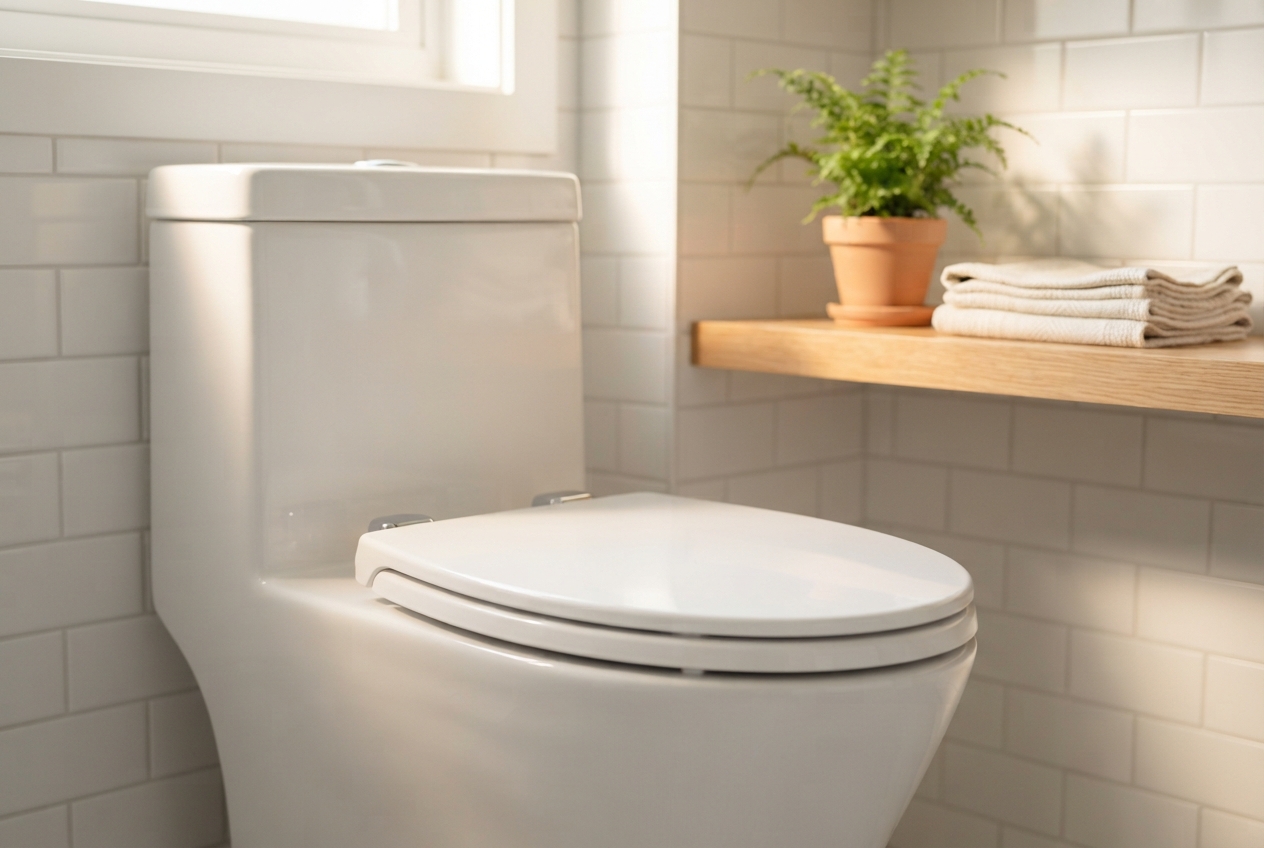
Residential bathrooms almost exclusively use closed-front seats with full lids for a cleaner visual profile in living spaces.
In our own homes, bathrooms are peaceful personal retreats. We want our spaces to feel soft, welcoming, and thoughtfully styled. A commercial U-seat feels utilitarian and institutional, reminiscent of a school hallway or hospital ward. Furthermore, home seats almost always feature a solid lid that closes completely to trap odors, hide the bowl, and keep curious pets or falling toiletries out of the water.
- Aesthetic Harmony: Closed-front seats match traditional home decor, ceramic finishes, and wooden vanities without looking clinical.
- Aerosol Control: Closing a solid residential lid before flushing traps airborne droplets, keeping toothbrushes and counter surfaces cleaner.
- Child Safety: Toddlers learning to use the toilet find solid, smaller-aperture round seats much easier to balance on without slipping.
Simple Upkeep: Keeping Any Bathroom Seat Spotless
Whether you are dealing with an open-front model in your small business workshop or a classic porcelain setup in your hallway powder room, keeping bathroom hardware clean takes consistency rather than harsh, toxic chemicals. Harsh bleach sprays often yellow durable polypropylene and degrade the metal hinges over time.
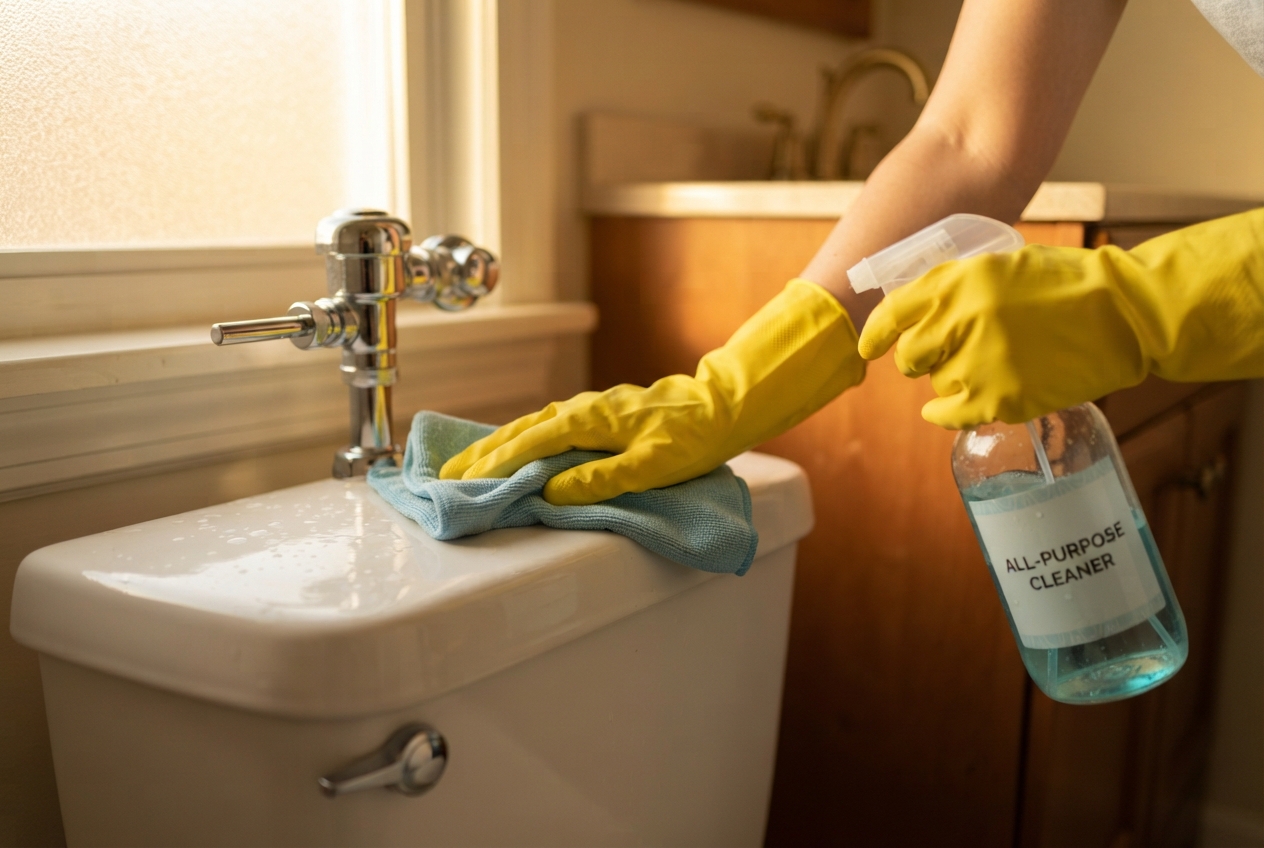
Quick sanitizing habits and non-abrasive cleaners keep bathroom hardware pristine without clouding smooth plastic surfaces.
Keep a spray bottle filled with equal parts warm water, white distilled vinegar, and a few drops of tea tree or lavender essential oil under your vanity. Spritz the top, underside, and hinge bolts, letting it sit for two minutes before wiping down with a plush microfiber rag. The mild acid dissolves hard water splashes and urine salts cleanly without stripping the glossy protective finish.
A Little Thought Behind Everyday Details
Every corner of our built world has a story, even the fixtures we rarely pause to appreciate. Understanding why public restrooms have U-shaped toilet seats reveals a practical mix of smart hygiene science, historic plumbing legislation, and tough commercial durability. Next time you stop at a rest stop on a family getaway, you can look at that familiar front gap not as an oddity, but as an intentional piece of public health engineering keeping our communities safer.