You unpack your groceries on a quiet Sunday afternoon, pull out a fresh pack of ribeyes or sirloin, and notice that familiar pool of deep red liquid sloshing around the bottom of the plastic tray. Your immediate instinct might be a slight grimace. Most of us grew up assuming that crimson pool was runaway animal blood, which makes handling raw dinner feel a bit like a squeamish biology experiment.
Take a deep breath and set down the paper towels. That fluid is not blood, your steak is not defective, and your grocery store is not cutting corners. Understanding what that fluid really is will make you a smarter shopper, keep your kitchen sanitary, and help you cook noticeably juicier meals.
Why Packaged Meat Leaks: Meet Myoglobin (Not Blood)
To understand the red liquid in meat packages, you have to look at what happens long before a cut arrives at your local supermarket. During professional meat processing, virtually all blood is systematically removed from the animal. Blood circulates within the vascular system (veins and arteries), not inside muscle fibers. What stays behind in the muscle tissue is water, fat, minerals, and muscle proteins.
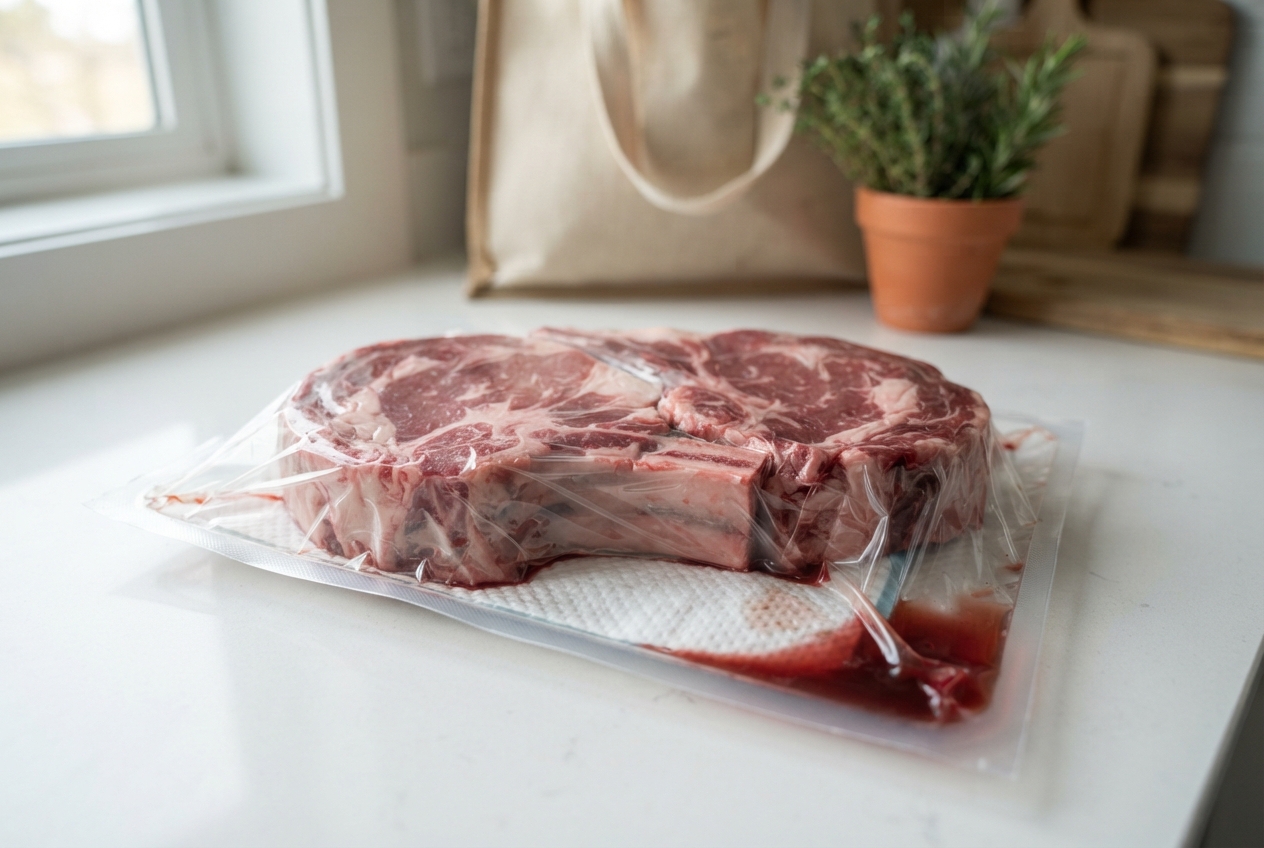
The telltale pool of red liquid inside supermarket packaging is an everyday sight, but it tells an interesting story about meat science.
Fresh red meat is roughly 75 percent water. Held within that cellular water is a deeply pigmented protein called myoglobin. While hemoglobin carries oxygen through the bloodstream of a living creature, myoglobin takes over once that oxygen reaches muscle tissue, storing it for energy and endurance.
Because myoglobin contains iron, it has an intensely dark reddish-purple color. As meat sits in its packaging, the microscopic fibers naturally contract and release cellular moisture. The fluid that escapes is simply water carrying dissolved myoglobin. In the food science industry, this fluid is formally known as purge or weep. It is 95 percent water, rich in protein, and completely blood-free.
The Color-Shifting Science: Purple, Bright Red, and Gray
Have you ever bought a vacuum-sealed roast that looked dark, purplish, and somewhat flat, only to watch it turn brilliant cherry-red twenty minutes after you cut the plastic? That color shift is myoglobin reacting directly with ambient air.
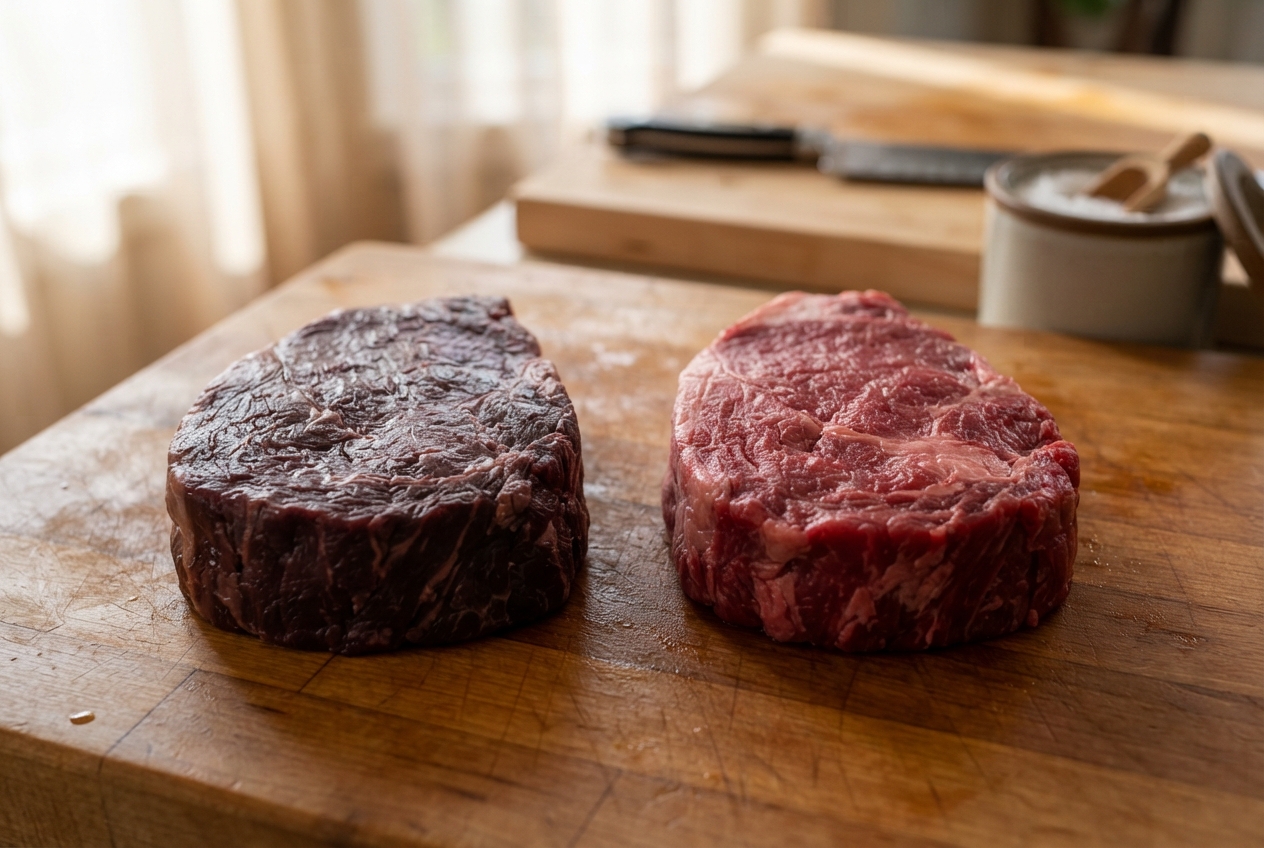
Exposure to oxygen causes myoglobin to bloom from a deep purple-maroon into the bright cherry red we look for at the butcher counter.
Myoglobin moves through three distinct visual stages depending on its environment:
- Deoxymyoglobin (Purple-Red): When meat has had zero contact with oxygen—such as deep inside a vacuum-sealed pack or fresh off the carcass—it appears dark purplish-red. This is the natural color of intact muscle tissue.
- Oxymyoglobin (Bright Cherry-Red): Once exposed to ambient air, myoglobin binds with oxygen. It “blooms” into the familiar, mouthwatering cherry-red color displayed under butcher shop lights. Supermarket plastic wrap is intentionally engineered to be micro-porous, allowing tiny amounts of oxygen through so the meat stays bright red.
- Metmyoglobin (Brownish-Gray): With extended exposure to light, low oxygen levels, or extended refrigerator storage, the iron atom inside the myoglobin molecule oxidizes. This transforms the protein into metmyoglobin, turning the surface dull brown or gray.
Butcher’s Tip: If you pull apart two overlapping chops and find the touching surfaces look dull gray or brownish, do not panic. Those spots were simply starved of oxygen. Give them ten minutes on the cutting board, and they will often bloom right back to pink.
The Freezer Factor: Why Thawed Steaks Leak More Liquid
If you have ever thawed a frozen roast in your refrigerator, you likely noticed three times as much red liquid gathering inside the bag compared to a fresh cut. That sudden puddle comes down to basic physics.
When meat freezes slowly in a standard home freezer, the water trapped inside muscle cells expands and forms jagged, microscopic ice crystals. These needle-sharp crystals act like tiny blades, puncturing the delicate cellular walls of the meat fibers. When the cut thaws, those damaged cells can no longer hold onto their internal moisture. The liquid rushes out, carrying large amounts of myoglobin with it.
Excessive purge leaves meat drier and tougher once it hits the heat. To preserve tenderness, freeze meat rapidly by placing individual cuts flat against the coldest part of your freezer, and always thaw them slowly in the refrigerator rather than using warm water or a microwave.
How to Safely Handle the Red Liquid in Meat Packages
Now that you know what that fluid is, the practical question remains: how should you handle it during weeknight meal prep? A surprising number of home cooks make a few messy, hazardous mistakes at this stage.
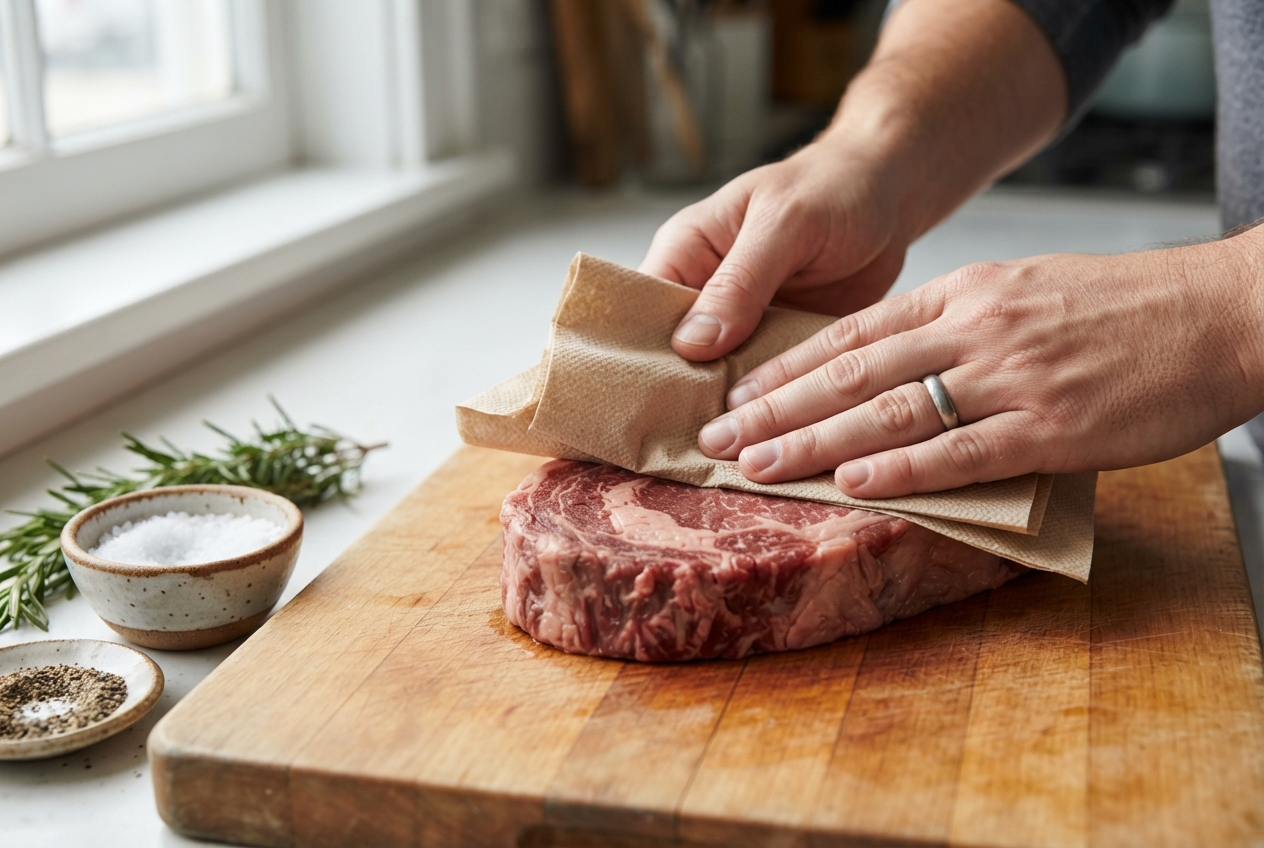
Patting steaks thoroughly dry with paper towels removes excess surface purge, ensuring a deep, flavorful crust in the pan.
Keep these fundamental food safety rules in mind every time you unpack dinner:
- Never rinse raw meat in the kitchen sink: Washing raw beef or pork under running water does not clean it. Instead, the water droplets bounce off the meat, splattering bacteria up to three feet across your faucets, clean dish racks, and counter tops. High cooking heat is what sterilizes meat, not tap water.
- Drain directly into the trash: Slit the packaging corner and let the excess liquid drain straight into your garbage bin or into a disposable container. Avoid pouring it down the sink drain where it can harbor odors.
- Pat the surface completely dry: Moisture is the ultimate enemy of a good sear. If you drop a wet steak into a hot pan, that puddle of myoglobin and water instantly turns to steam, boiling the meat instead of browning it. Use thick, unbleached paper towels to pat both sides dry until the surface feels tacky.
- Mind the absorbent pad: That soft rectangle tucked beneath your meat (often called an absorbent drip pad) is made of silica gel or cellulose fibers wrapped in food-safe perforated plastic. Its sole job is to trap loose purge so the meat does not sit in stagnant liquid. Discard it directly into the trash; never leave it stuck to the bottom of your roast when seasoning.
Checking for Freshness: How to Spot Truly Spoiled Meat
Because myoglobin naturally turns brown when exposed to air, color alone is a deceptive indicator of freshness. A steak that looks a little tan around the edges can still be delicious and safe to eat. To tell whether meat is genuinely fresh or headed for the compost, rely on your other senses.
Fresh meat should smell neutral, clean, and faintly metallic from the iron content. If you open the packaging and detect a sharp, sour scent resembling spoiled buttermilk or a pungent sulfur note, harmful bacteria have begun breaking down the proteins. Trust your nose immediately.
Next, check the texture with your fingertips. Fresh beef feels firm, dense, and resilient, springing back when pressed. Spoiled meat develops a sticky, tacky, or distinctly slimy film over its surface caused by microbial colonies. If the liquid feels gummy or slippery rather than watery, discard the meat regardless of what the sell-by date claims.
Why That Same Red Fluid Pools on Your Dinner Plate
The science of myoglobin does not end when raw meat hits the heat. Have you ever cooked a steak, sliced into it right off the pan, and watched a river of pinkish juice flood your cutting board? That is our friend myoglobin making an encore appearance.
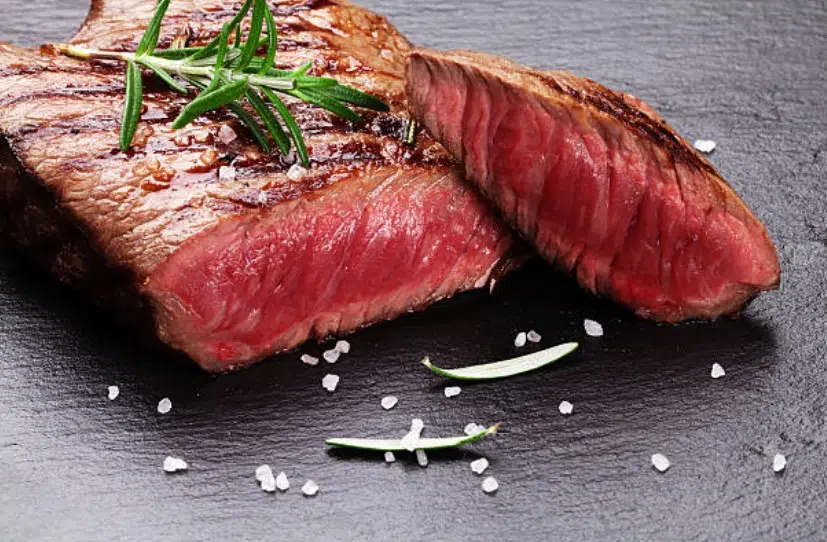
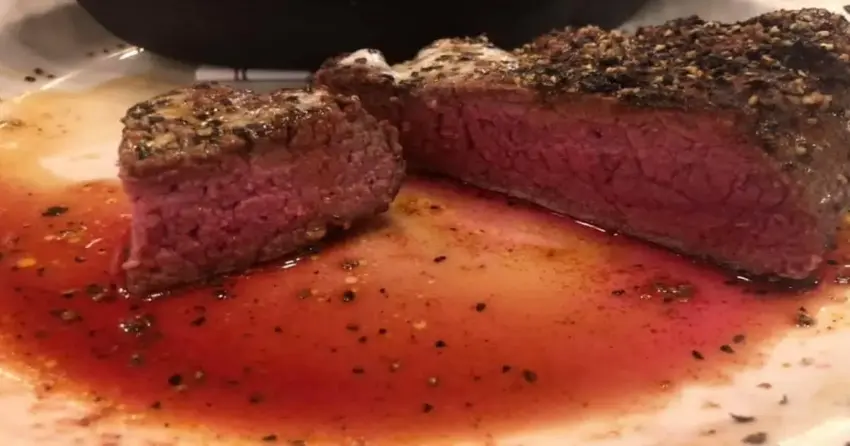
A rested medium-rare steak retains its flavorful juices inside the muscle fibers rather than pooling onto the carving board.
As meat cooks, the heat causes muscle fibers to tighten and squeeze inward, much like wringing out a wet washcloth. This pressure forces cellular water toward the cooler center of the cut. If you slice into that hot steak immediately, that pressurized liquid bursts out across the board, leaving the interior dry and chewy.
Give your meat five to ten minutes of undisturbed resting time on a warm board. As the exterior temperature cools slightly, the contracted muscle proteins relax, allowing the juices to redistribute evenly throughout the entire cut. When you finally slice across the grain, the myoglobin-rich moisture stays locked within each bite. If any flavorful juices do escape onto the carving board, whisk them into a reduction of rich unsalted beef bone broth, minced garlic, and fresh rosemary for an easy pan drizzle.
Embrace the Science of the Red Liquid in Meat Packages
That crimson puddle at the bottom of the butcher tray might look startling at first glance, but it is nothing more than water and natural muscle proteins doing what biology intended. It is not blood, it is not harmful, and it is certainly nothing to dread.
The next time you prep dinner, treat that moisture as a reminder to pat your cuts dry, heat your cast iron skillet until smoking hot, and give your food the patient rest it deserves. When you understand the science happening inside your kitchen, cooking ceases to be guesswork—and dinner tastes dramatically better for it.