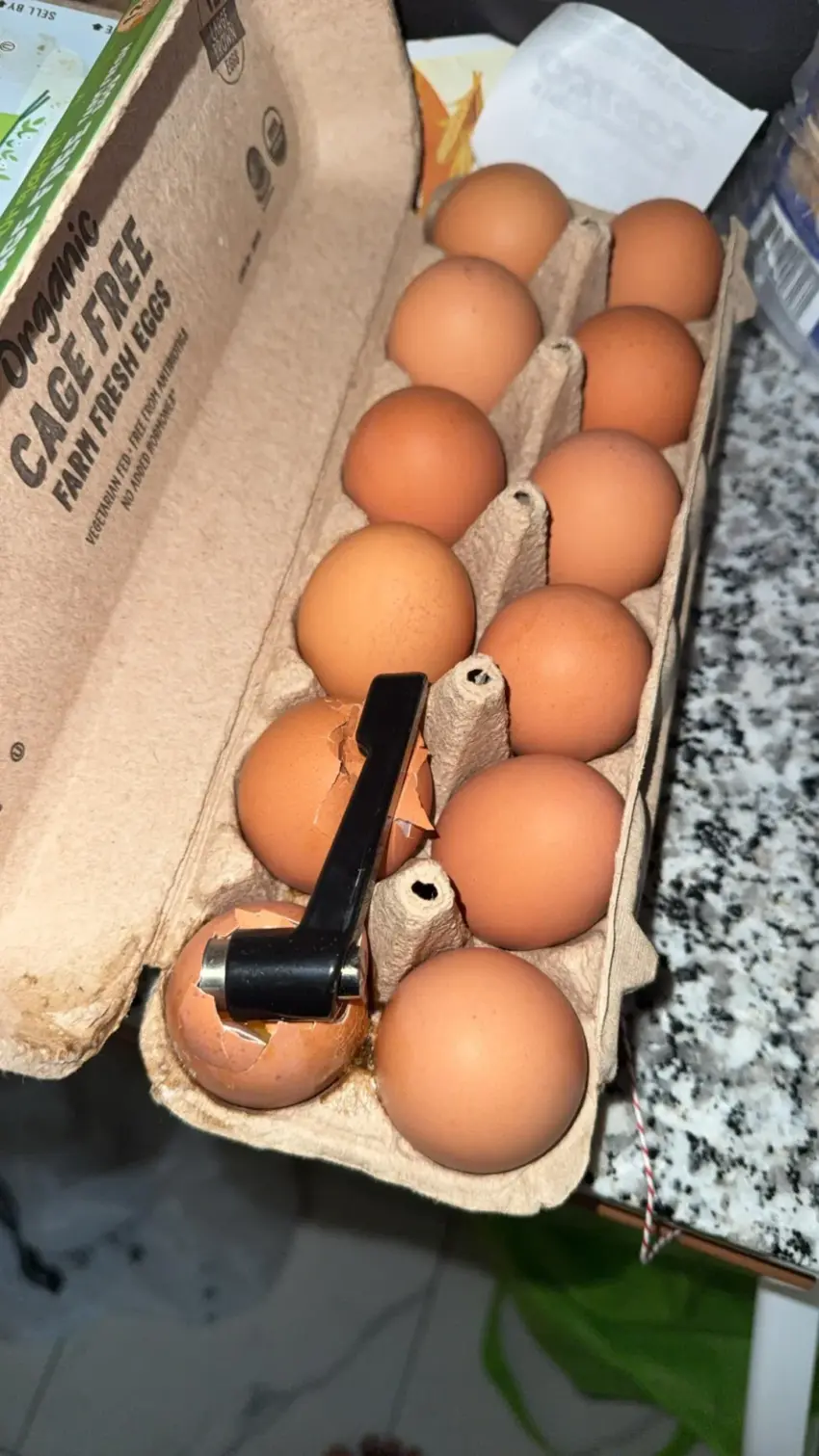
You know the feeling of unpacking a fresh grocery haul on a quiet Sunday morning. The kitchen smells faintly of ground coffee, the skillet is warming on the stove, and you reach into the brown paper grocery bag for a carton of farm-fresh eggs. You flip back the recycled cardboard lid, expecting a dozen smooth, unblemished brown shells ready for a batch of scrambled eggs or fluffy pancakes.
Instead, your eyes land on something that looks like it belongs in a mechanic shop rather than a farm stand. That is exactly what happened when a person on Reddit shared a head-scratching grocery discovery that quickly caught the attention of thousands of curious home cooks.
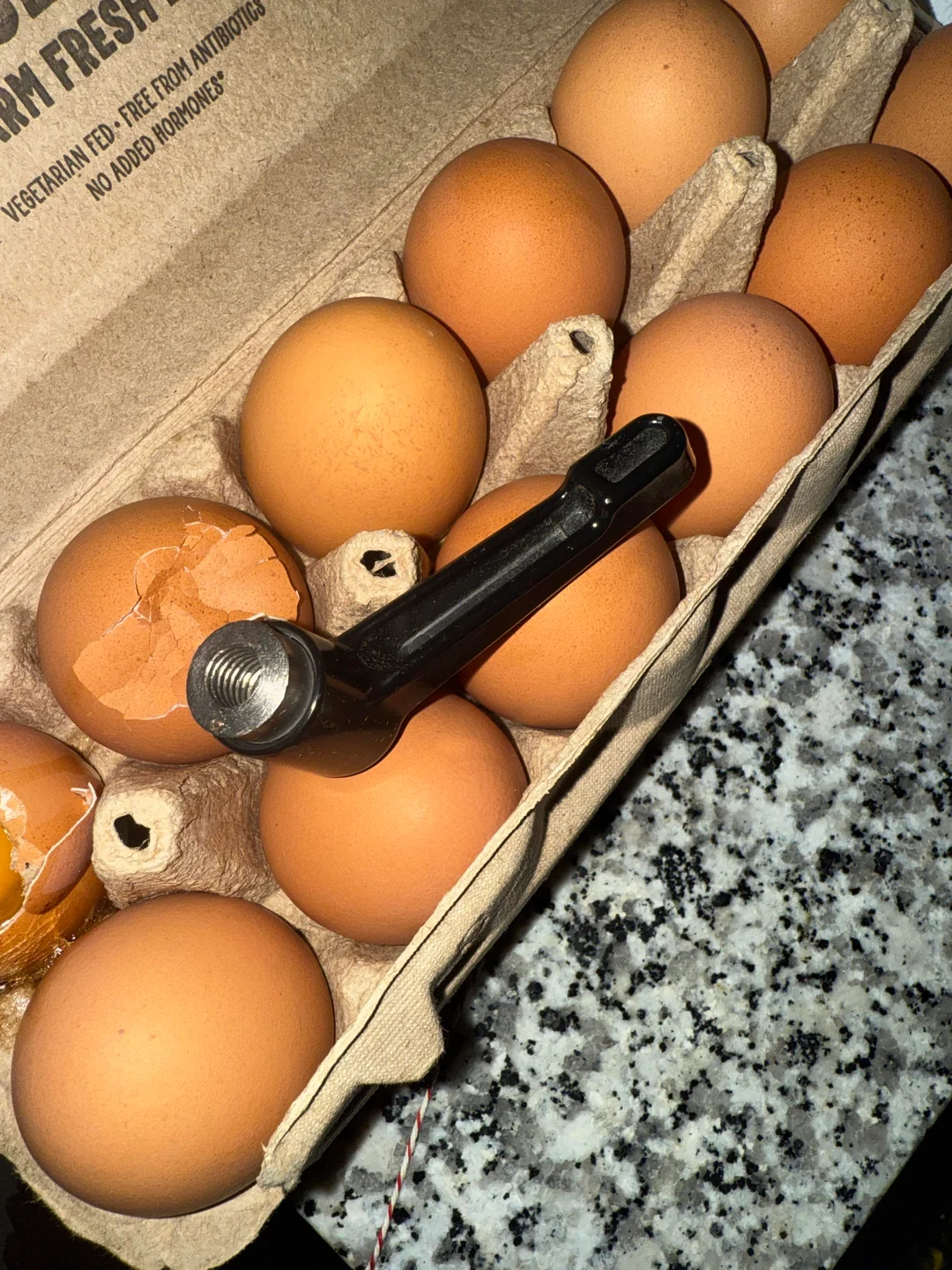
A curious shopper opened their fresh egg carton to discover a heavy black mechanical lever resting across two crushed eggs.
The Bizarre Morning Discovery in a Sprouts Egg Carton
A shopper opened a brand-new carton of organic cage-free eggs purchased from Sprouts Farmers Market, only to find a heavy, industrial black lever resting squarely inside. The foreign object was not tiny. It was a sturdy, threaded metal and composite piece that had visibly crushed two eggs in the corner cups, leaving sticky yolk pooling across the cardboard bottom.
The shopper turned to the popular “What Is This Thing” community online to ask a simple question: what in the world is this weird handle doing in my egg carton?
what’s this weird handle thing i found in my eggs
by
u/WasabiElectronic7297 in
whatisit
Within hours, the post collected hundreds of reactions, range-of-motion jokes, and genuine detective work from engineers, woodworkers, and commercial food plant workers alike.
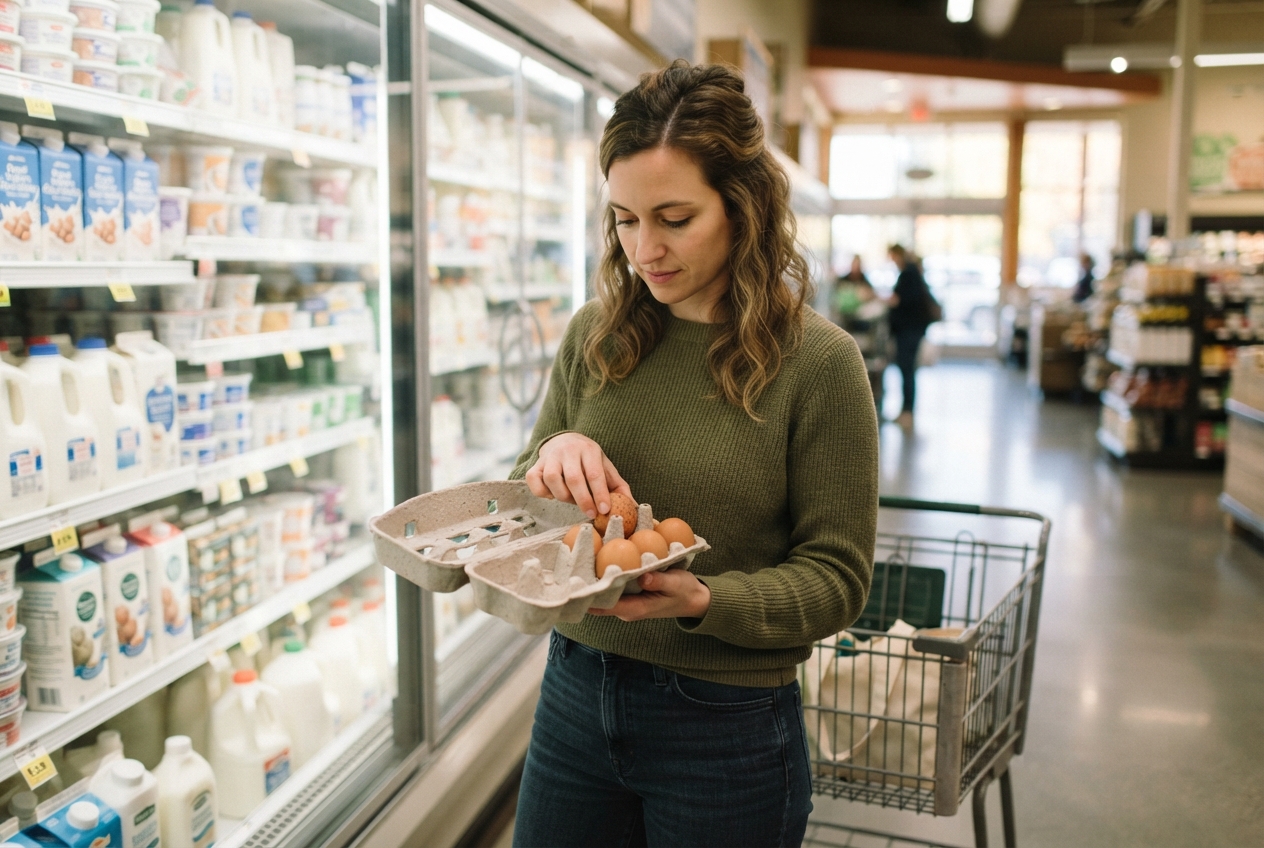
Taking a few seconds to inspect every egg in the grocery aisle saves you from sticky breakfast surprises at home.
The Sacred Grocery Ritual: Why We Always Check Our Eggs
Before cracking the mystery behind the hardware, the discovery sparked a lively debate on an ancient household habit: inspecting your eggs at the store. Most of us learned this routine at the elbow of a parent or grandparent. You open the carton, scan the tops, and give each egg a gentle twist between your fingertips.
That subtle wiggle is not just an old habit. When an egg develops a hairline fracture underneath, the leaking whites act like industrial glue, cementing the shell to the molded pulp carton. A quick twist lets you know instantly if an egg is stuck or cracked before you reach the checkout register.
However, modern convenience often gets in the way of our kitchen rituals. With the rise of doorstep grocery drop-offs and fast-paced delivery apps, shoppers no longer pick through the dairy aisle themselves. Personal shoppers working under strict delivery timers grab items at lightning speed, meaning an unchecked carton with a heavy surprise can easily land on your kitchen counter.

Morning meal routines rely on simple kitchen staples, making unexpected packaging flaws all the more startling.
Internet Sleuths and the Wildest Theories
As the Reddit thread gained traction, theories began rolling in. Some commenters offered pure comedy, joking that the original poster had discovered a literal “chicken crank” or that the coop hens had unionized and begun using power tools. Others joked about the resale value of the part, claiming the shopper had just scored a free workshop upgrade at the cost of two scrambled breakfasts.
“Imagine doing the wiggle check in the dairy aisle and hearing a socket wrench tighten. I would think the farm chickens started their own maintenance crew.”
Jokes aside, seasoned tradespeople and industrial workers quickly spotted familiar design cues on the mystery piece. Woodworkers recognized it from their drill presses and band saws. Machinery operators recognized it from packaging assembly lines. The clues all pointed directly toward the inner workings of commercial food packing facilities.
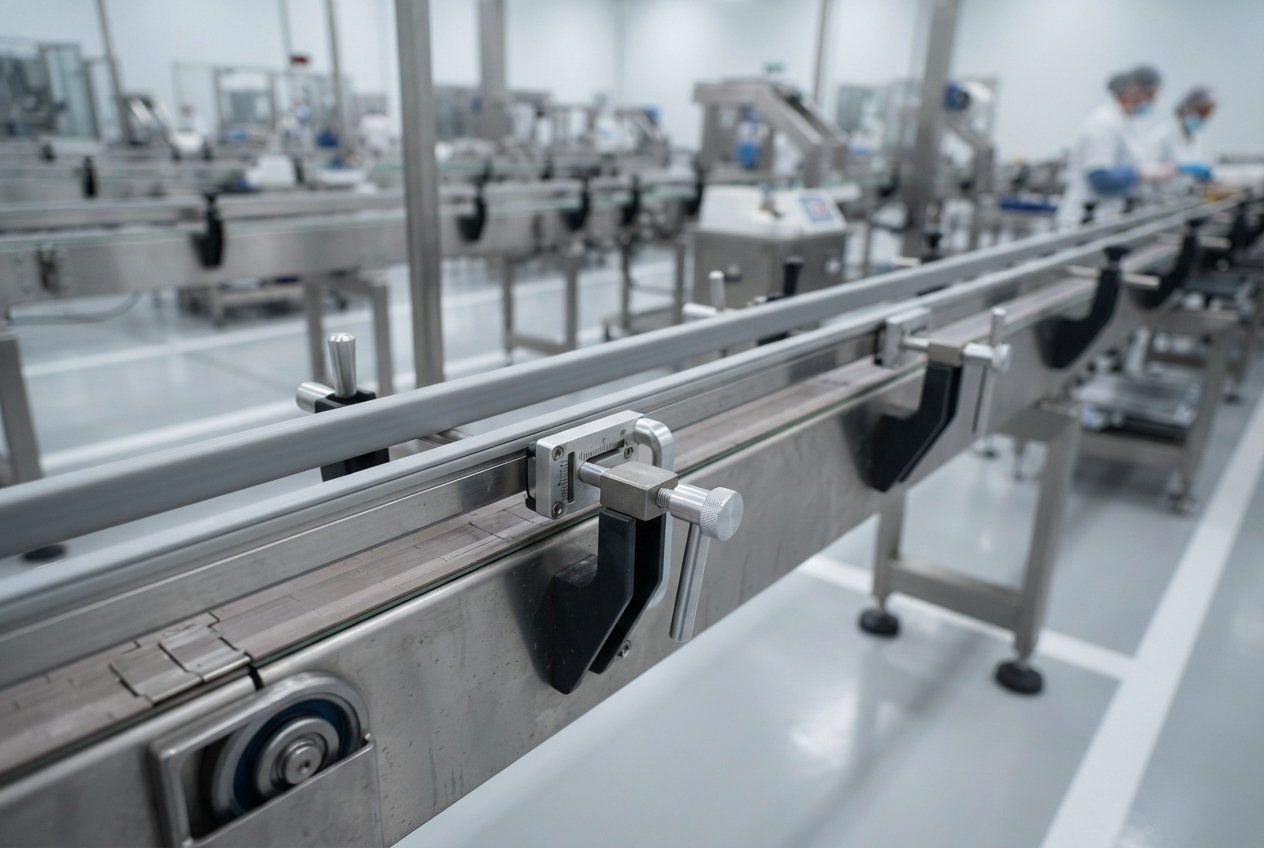
High-speed conveyor guide rails and packaging arms rely on quick-adjust hardware to keep cartons moving smoothly.
Behind the Scenes: How Modern Eggs Get Washed and Packed
To understand how a piece of factory hardware ends up in your breakfast supplies, it helps to understand the journey an egg takes before reaching grocery shelves. Commercial egg processing facilities handle thousands of eggs per hour through high-speed automated systems.
First, eggs travel across rubber conveyor tracks where they undergo thorough washing and sanitizing. Next, they pass over bright optical stations—a process called candling—where high-powered lights illuminate the interior to check for internal defects or shell micro-fractures. From there, sensitive acoustic sensors tap each shell to detect hidden cracks that light might miss.
Once graded and sized, eggs move toward robotic packaging arms. These arms open pulp cartons, drop the eggs into individual slots, close the lids, and funnel the finished packs down metal guide rails toward shipping crates. These sorting and packaging tracks vibrate constantly throughout the workday as thousands of cartons glide across the line.
The Big Reveal: What Is That Weird Handle in Egg Carton Packaging?
So, what was the mysterious object? Industrial mechanics in the thread correctly identified the part as an adjustable clamping lever, widely known in manufacturing as a Kipp handle.
Named after the German manufacturing company that popularized the design, a Kipp handle is a specialized clamping tool designed for rapid manual adjustment. Unlike a standard bolt that requires a wrench, a clamping lever features an internal ratcheting spring mechanism. An operator can pull the handle outward to disengage the internal drive teeth, swing the handle freely to a clear position, and release it to lock and tighten the clamp by hand.
Food processing plants use these handles on conveyor guide rails, carton size adjusters, and drop chutes. Because packaging lines switch between six-count, twelve-count, and eighteen-count carton configurations, operators use these handles to adjust track widths quickly without searching for a toolbox.
Over hundreds of hours of mechanical vibration, a loose clamping handle can slowly back out of its threads. In this rare case, the handle shook loose, fell directly into an open carton moving along the conveyor, and crushed two shells just as the automated lid folder snapped the carton shut.
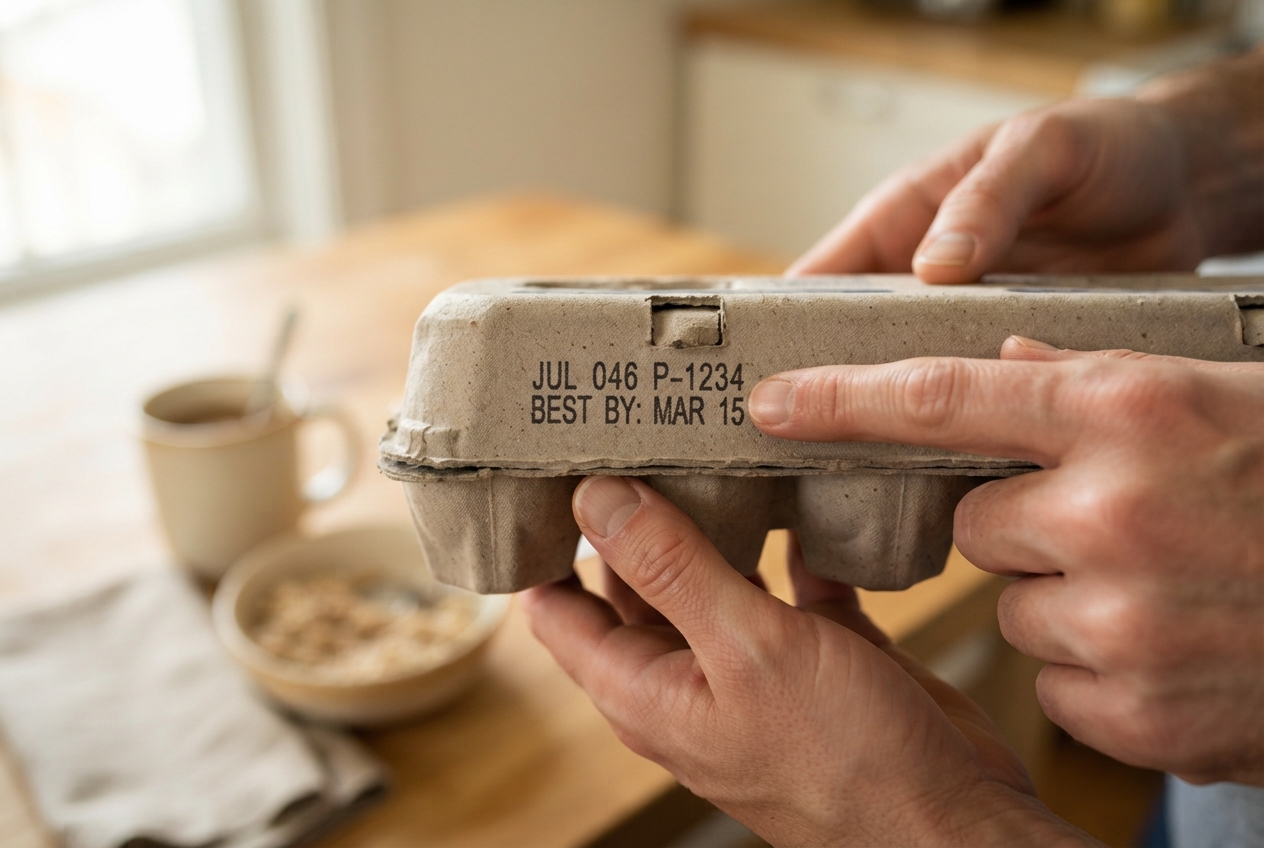
The printed letters and numbers on your carton tell the whole story of where and when your food was packaged.
What to Do If You Find Hardware in Your Groceries
Finding foreign objects in your pantry or fridge is rare, but knowing how to handle it ensures your family stays safe and your grocery bill stays protected.
- Do not eat damaged food: When an egg shell cracks open and comes into direct contact with non-food-grade metal or machinery grease, discard the broken eggs immediately. Bacteria can enter cracked shells quickly.
- Document the carton codes: Every commercial egg carton features a printed code on the side. The letter ‘P’ followed by four digits identifies the exact USDA packaging plant. Next to it, a three-digit Julian date (from 001 to 365) tells you the exact day of the year the eggs were packed.
- Snap clear photos: Take a few well-lit photos of the foreign object, the broken product, and the printed plant codes on the side of the carton.
- Notify the store: Return the carton to customer service for a prompt refund or exchange. Most grocery managers appreciate the heads-up so they can check other cartons from that specific delivery batch.
- Contact the brand: Reaching out to the egg producer gives their quality assurance team the chance to alert their plant maintenance crew about loose equipment on specific packing lines.
Keeping Your Kitchen Safe and Stress-Free
Finding a heavy mechanical lever instead of a clean dozen eggs makes for a great story around the breakfast table, but it also serves as a handy reminder of the complex journey our food makes from farm to fridge. Automated systems make fresh food accessible, but human attention to detail still matters most.
The next time you walk the grocery aisles, give your egg carton that classic two-second look. Open the lid, check for cracks, give the shells a tiny wiggle, and you can head home confident that your weekend breakfast will go off without a hitch.