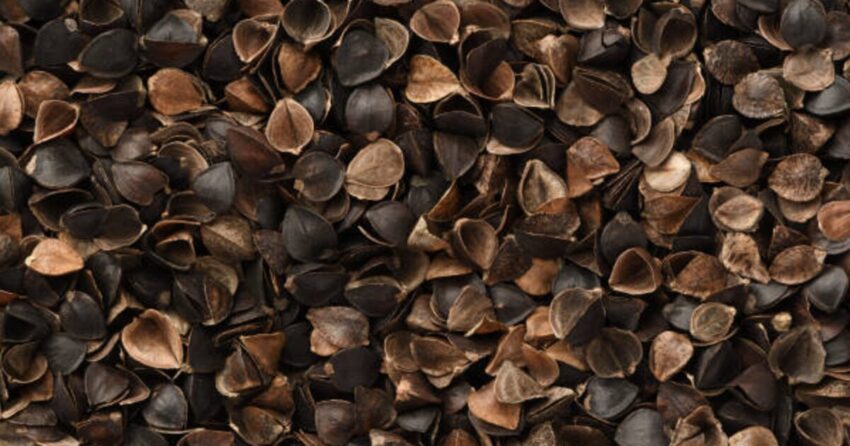
Those “seeds” in the sheets are not a pest problem
You flip the duvet and find a scatter of dark, triangular bits. They look like seeds. They sound like seeds when you walk on them. Your first thought is pantry moths, or a houseplant that exploded, or something worse hiding in the mattress.
Nine times out of ten, they came from a pillow. Specifically a buckwheat hull pillow—the kind sold for decades under names like Sobakawa, soba gara makura, or just “Japanese buckwheat pillow.” The fill is not grain you would cook. It is the hard outer shell left after the seed is hulled. Empty. Dry. Harmless. And very good at escaping a tired zipper.
Once you know what you are looking at, the mystery gets practical fast: how did they get out, are they safe on the floor, and can you save the pillow instead of throwing the whole thing away?
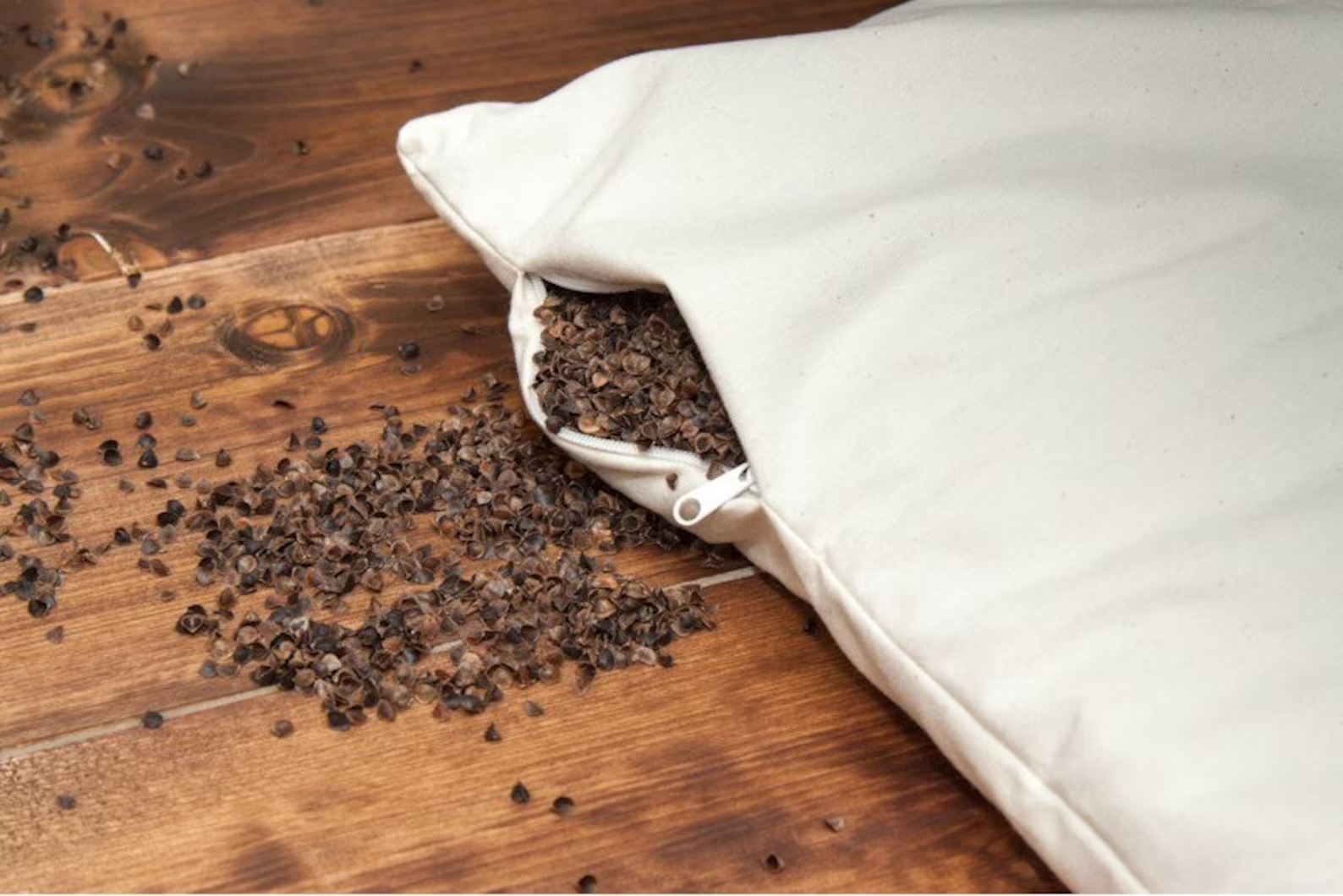
A zipper that finally gave up: buckwheat hulls tumbling onto the floor look like someone planted a garden in the sheets.
What a Sobakawa pillow actually is
Sobakawa is Japanese for buckwheat hull. Farmers grow buckwheat for noodles and flour. The leftover husks—small, pyramid-shaped, chocolate-brown—were stuffed into pillows in Japan as far back as the 1400s. The idea was simple: keep the head cool and the neck supported.
The hulls do not squash into a pancake the way foam does. They slide against each other, lock into a shape under your head, and stay there until you move. Air moves through the gaps, which is why people who sleep hot often prefer them to memory foam.
In the 1990s those pillows showed up on American late-night TV. The ads promised less snoring and fewer neck aches. Some of that was sales talk. The cooling and the custom loft were real, and a lot of those pillows are still in guest rooms, attics, and the back of linen closets. When a seam finally splits, the hulls show up in the bed like a crime scene.
How to tell buckwheat hulls from actual seeds
Hold one up. A buckwheat hull is hollow, thin, and usually split along one edge. It feels papery-hard, not oily. Real buckwheat groats (the food) are plump and pale. Birdseed is rounder. Mouse droppings are softer and smell different. If you pinch a hull, it crushes with a dry click.
They do not sprout in the mattress. They do not feed pantry moths. Cleaned, heat-treated hulls have almost no starch left, so they are a poor snack for insects. Dust mites also dislike the airflow between the shells.
That does not mean you should leave a pile on the floor. Hulls work into rug fibers and between floorboards. Sweep first, then vacuum with the hose, not the beater bar, or you will grind them into dust.
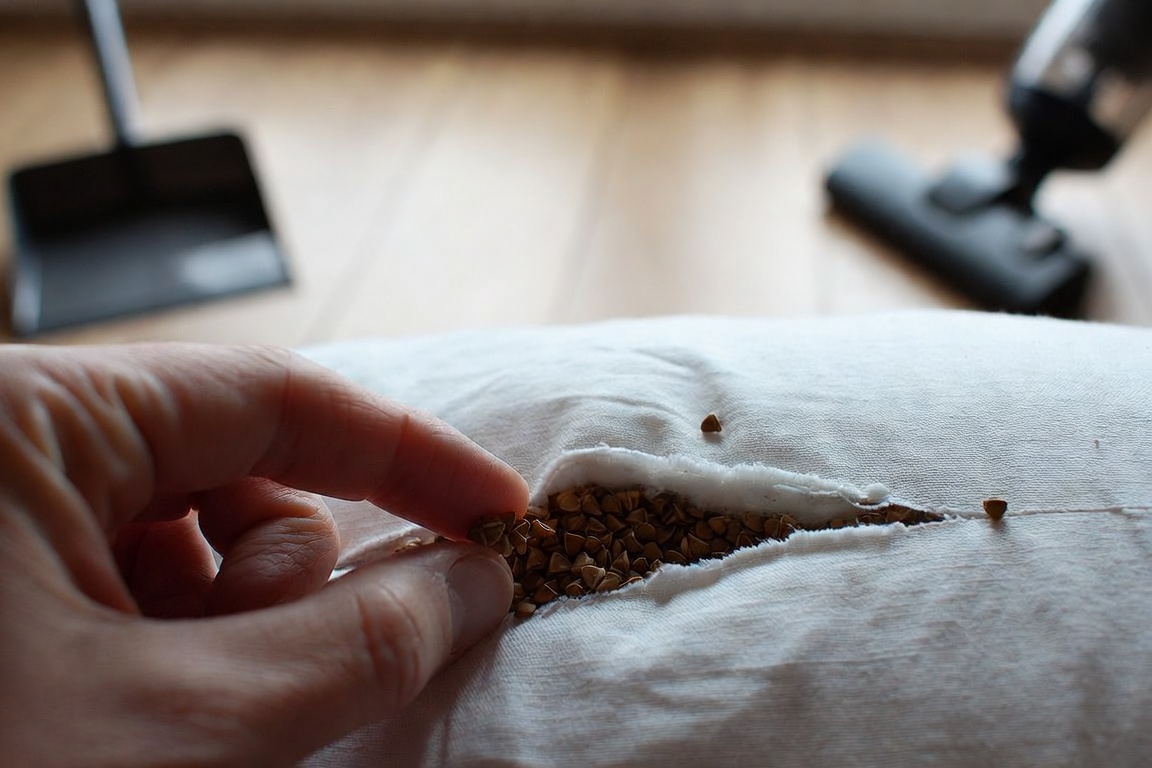
Those “seeds” are empty husks. They have no food value, but they will hide in every floor crack if you don’t catch them early.
Stop the leak before you refill
Most spills start at the zipper or a worn corner of the inner liner. Unzip the cover over a large bowl or a clean tote. Pour the remaining hulls out. Check the inner bag. If the fabric is thin or the teeth of the zipper no longer meet, stitch a new zipper or slip the fill into a tightly woven cotton liner before it goes back in the decorative case.
Do not wash the hulls. Water ruins their shape and can start mold. Wash the empty cover on cold, gentle cycle. Dry it completely. The hulls themselves only get sunlight.
How a buckwheat hull pillow is supposed to hold your neck
The job of this pillow is not fluff. It is height. Your ear should sit roughly level with your shoulder when you lie on your side. On your back, your chin should not tip toward your chest. If the pillow is overstuffed, your head tilts up and the neck compresses. If it is too empty, your head drops and the opposite muscles complain by morning.
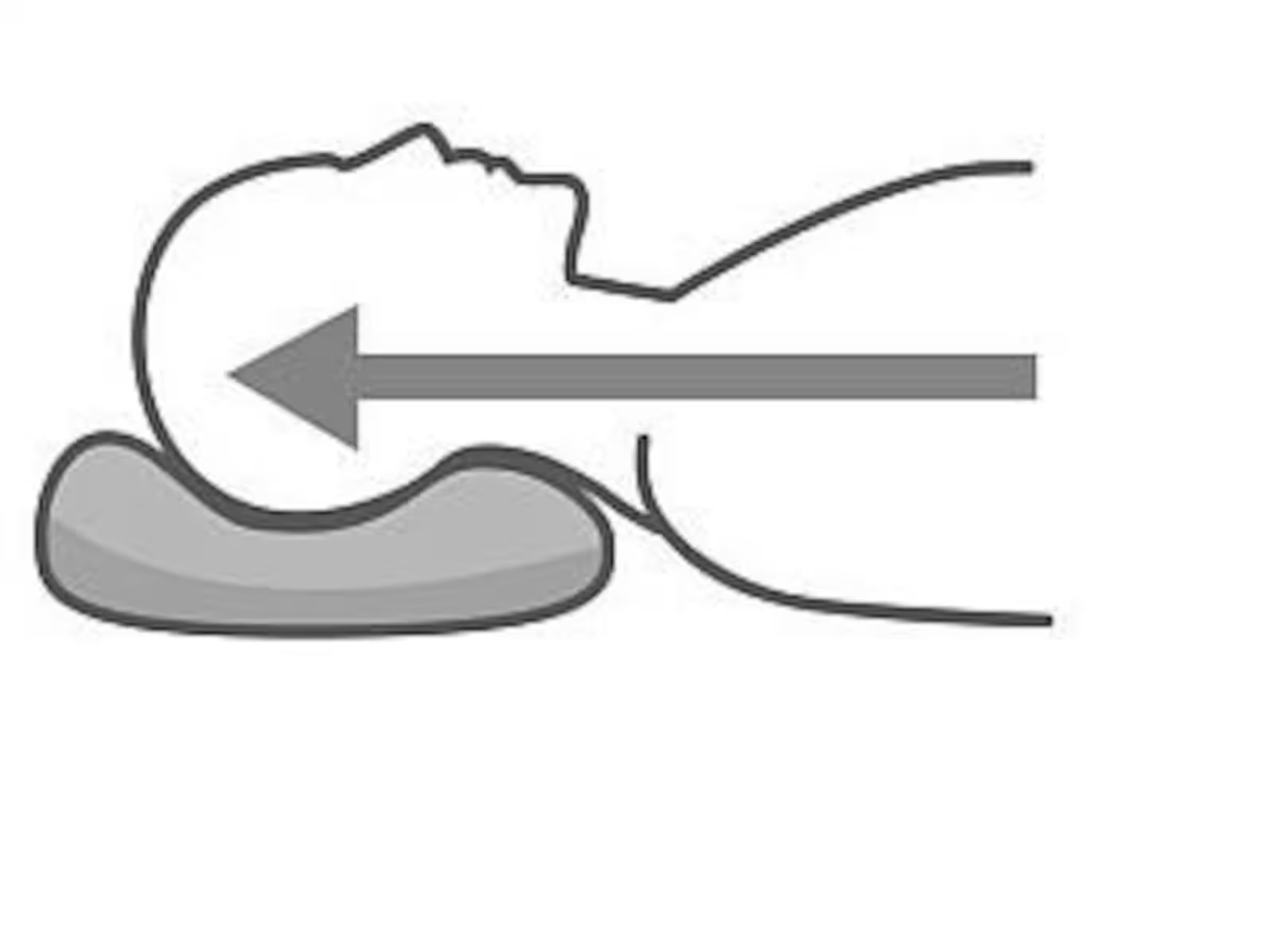
The hulls should hold your head so your neck stays in a straight line with your spine—not jacked up toward the ceiling.
Use a measuring cup. Side sleepers usually keep the pillow about 90 percent full so the shoulder gap is filled. Back sleepers often drop to 75–85 percent. Stomach sleepers go lower still, sometimes half full, or they switch to a thinner travel-size hull pillow. Change the fill in half-cup steps and sleep on it a night before you decide.

Side sleepers usually want the pillow fuller so the shoulder gap doesn’t yank the neck sideways.
The rustle, the weight, and the first-week adjustment
New hulls make a soft rain sound when you turn. Most people stop hearing it after a few nights. Pre-polished hulls are quieter than raw ones because the sharp corners have been knocked off. If the noise still bothers you, a thicker outer pillowcase helps.
These pillows are heavy. A standard size can weigh five to eight pounds. That weight is part of why they stay put. It is also why you do not want to haul one across the house every morning. Keep it on the bed.
The first week can feel firm in a way foam never does. That is the hulls stacking. Give it several nights before you declare it a failure. If your jaw or the base of your skull aches, remove fill. If your shoulder rolls forward, add some back.
Care that actually keeps a hull pillow going
Wash the pillowcase weekly. Wash the inner cover about once a month after you empty the hulls. Twice a year, spread the hulls in a thin layer on a sheet or baking tray and set them in sun for three or four hours. Stir once. That airing knocks back moisture and the faint grain smell some pillows pick up in humid rooms.
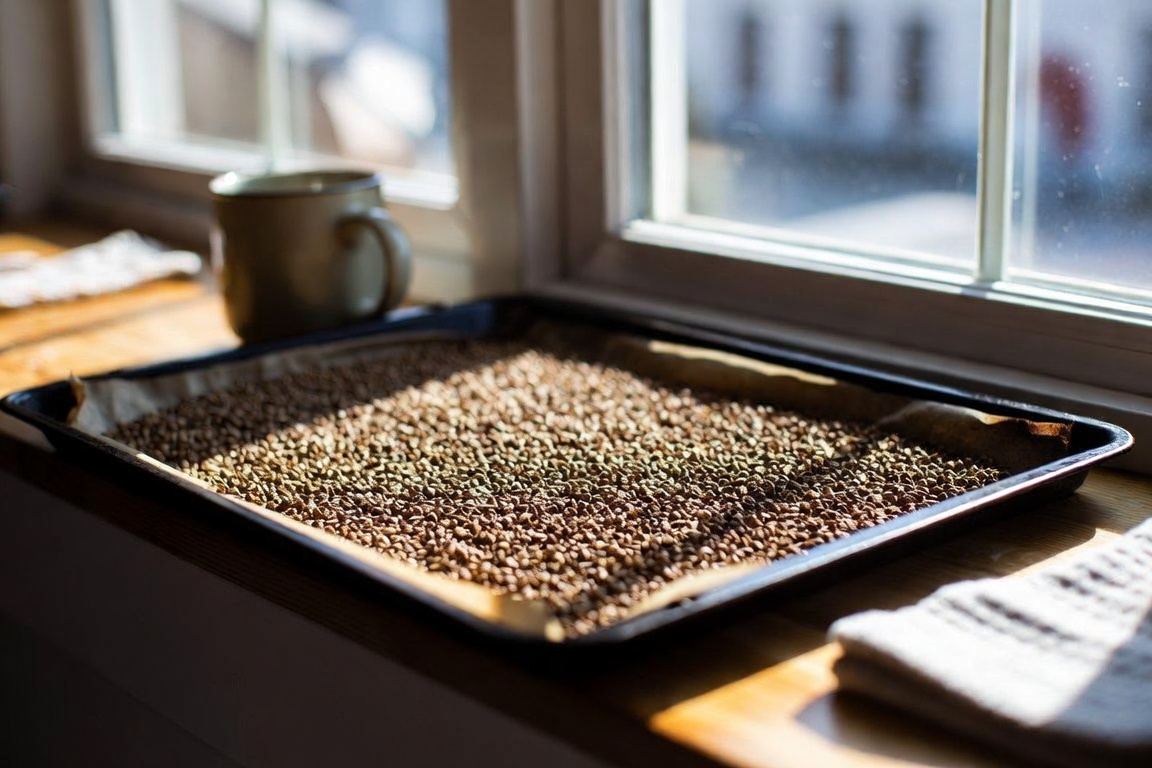
Twice a year, pour the hulls out and let the sun do the work. Never soak them.
If a drink soaks through, dump the wet hulls immediately and dry what you can in a single layer with a fan. Fully submerged hulls are not worth saving. Buy a refill bag and start clean. Musty smell that survives a sun session is the same verdict: replace the fill, keep the cover.
Hulls flatten after years of nightly pressure. Plan on a top-off or a full swap every three to five years. The cotton shell can last much longer. That is how these pillows reach a decade when foam is already in the trash.
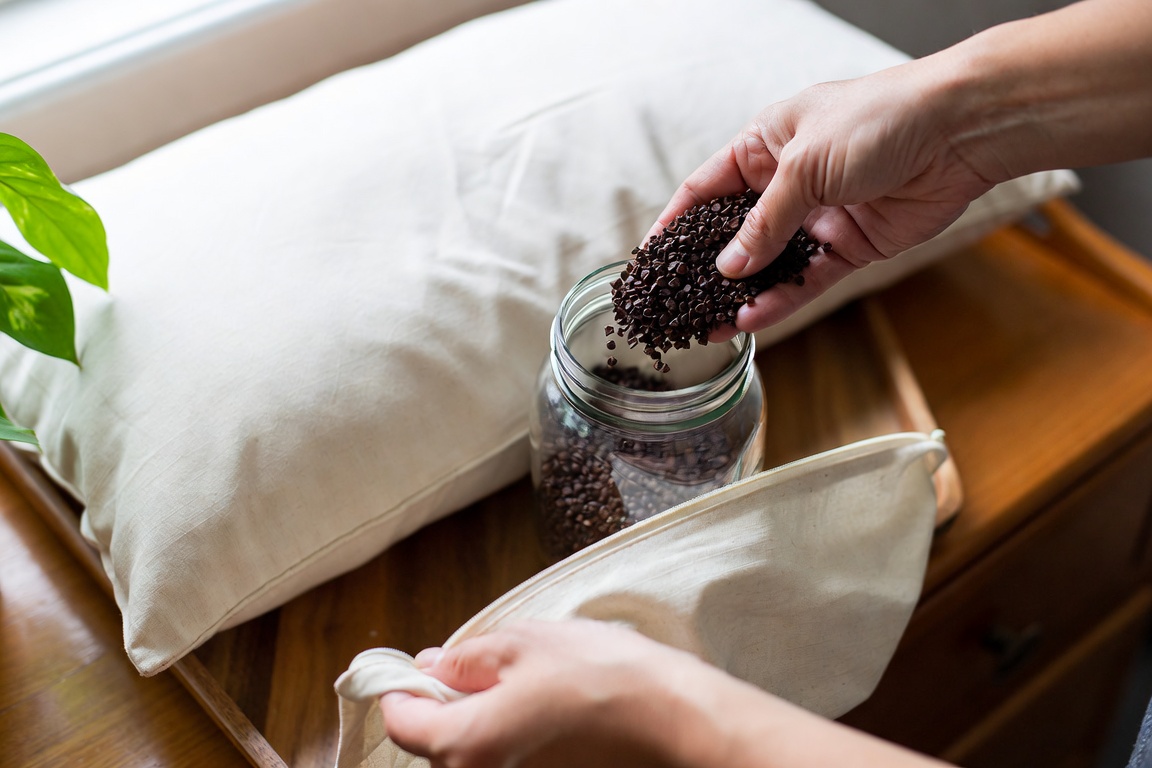
Keep extra hulls in a jar. Adding or subtracting a half-cup is how you tune loft without buying a new pillow.
Buckwheat hull pillow vs the foam you already own
Memory foam hugs, then holds heat. Hulls stay cooler because air has somewhere to go. Foam has a fixed height unless it is shredded. Hulls are a zipper and a measuring cup. Foam goes silent; hulls whisper. Foam is lighter. Hulls last longer if you refill them.
If you sleep in one position and like a slow sink, foam may still suit you. If you flip from back to side, wake up sweaty, or cannot find a loft that matches your shoulder width, the old Japanese fill is often the better tool. It is not magic. It is adjustable height with airflow.
What to do tonight if the bed is already full of hulls
Strip the sheets. Shake them outside. Sweep. Vacuum the cracks. Empty the pillow over a bin. Repair or replace the liner. Put a tight pillow protector on before the decorative case. Sleep on the adjusted loft for a few nights and notice whether your neck feels level when you wake.
Those weird seeds were never a infestation. They were a pillow telling you the zipper lost. A buckwheat hull pillow is still one of the simplest ways to keep a cool, custom-height headrest in a regular bedroom. Keep the seams honest, keep the hulls dry, and the only surprise left is how long the same pillow can last.