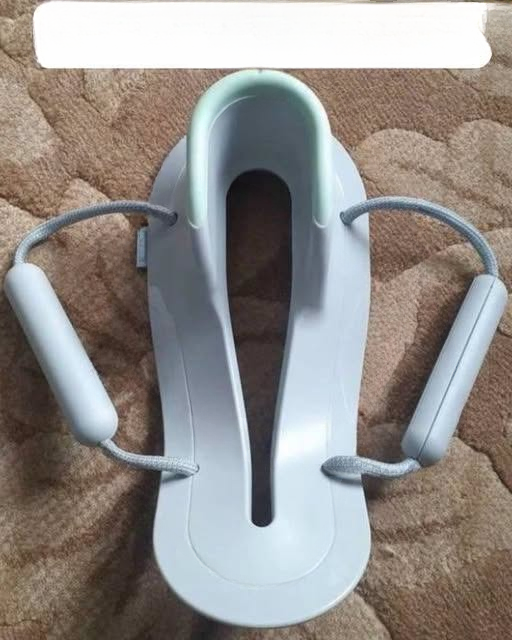
There is a familiar cadence to clearing out a bedroom dresser that has sat untouched since last winter. You start with good intentions, a sturdy canvas tote for giveaways, and a tall mug of steamy lemon ginger tea. You sort past unmatched wool socks, forgotten cedar blocks, and old flannel pajamas. Then your fingers hit something smooth, rigid, and entirely unexpected in the dark corner of the bottom drawer. You pull out a curved piece of white plastic equipped with two long braided cords and foam grips, wondering how it ever landed in your house.
When an odd contraption surfaces during a routine tidy-up, identifying mystery household gadgets turns into a delightful little puzzle. You turn it over in your hands, check the curves, and try to remember if it arrived after a sprained ankle or during a late-night online browsing streak. Before you toss it into the recycling bin, here is the real story behind this quirky tool and how it helps around the house.
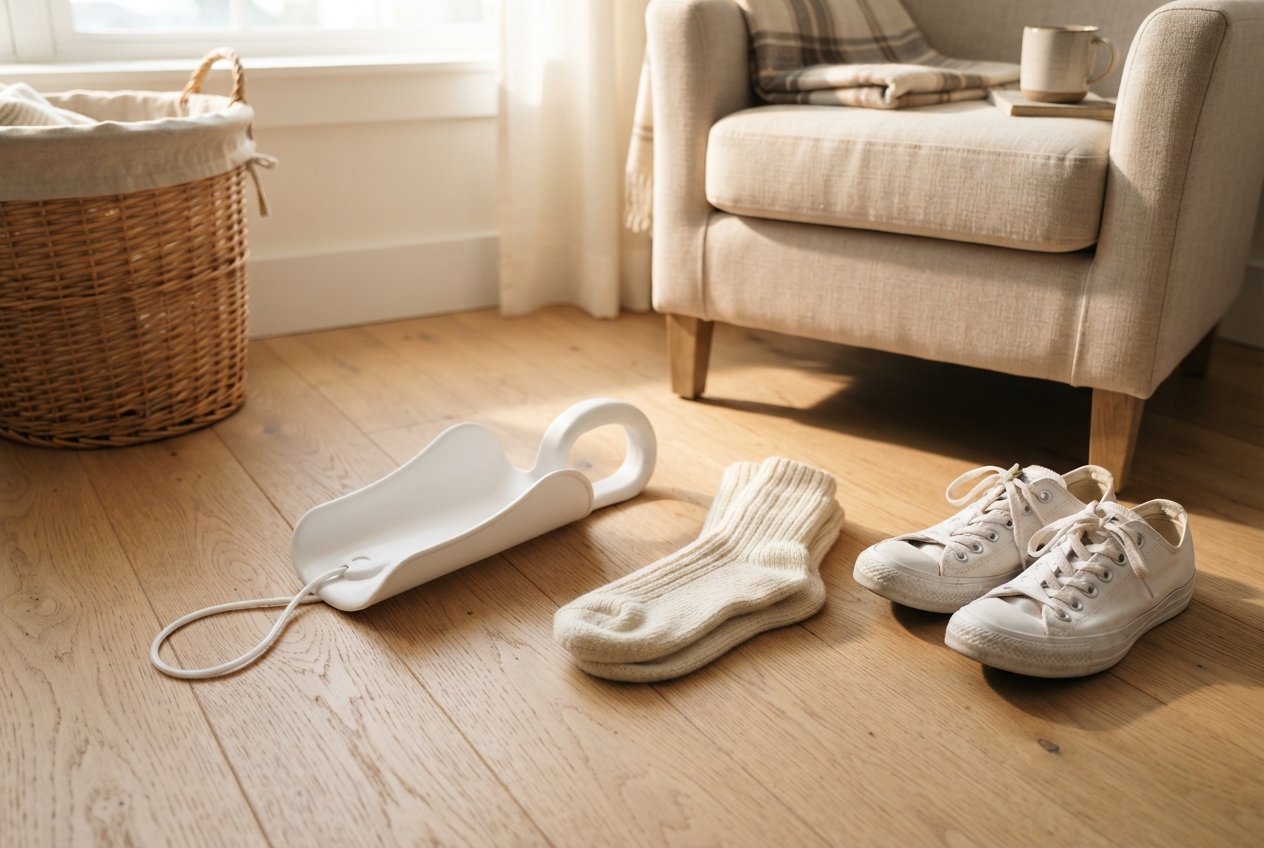
A clean, molded sock assist tool resting with everyday wool socks by a bedroom chair.
The Mystery Solved: What Is That Curved Plastic Gadget?
That lightweight, trough-shaped piece of molded plastic with twin handles is an adaptive dressing aid known as a sock slider (or sock assist tool). While it looks like a miniature piece of workout equipment or a strange kitchen mold, its actual job is simple mechanics. It allows anyone to put on socks without bending down, twisting their torso, or straining tight hip joints.
These tools are common staples in physical therapy clinics, orthopedic recovery kits, and homes of anyone managing back stiffness. The clever part? It uses zero electricity, has no moving gears, and relies entirely on light tension and basic friction to do the heavy lifting.
Breaking Down the Anatomy of a Sock Slider
Every contour on this tool serves a distinct physical function. Once you understand the parts, the shape makes complete sense:
- The Flexible Plastic Cradle: The curved trough holds the mouth of the sock wide open so your foot can step right in without catching on the collar.
- The Textured Friction Pad: The subtle rubber or foam patch on the underside grips the sock fabric, keeping it anchored while your heel slides into place.
- Long Braided Pull Cords: Heavy-duty cords let you drop the slider all the way to the rug while keeping your hands comfortably at waist level.
- Padded Foam Grips: Soft handles ensure a firm grip for fingers experiencing early-morning stiffness, carpal tunnel, or arthritis.
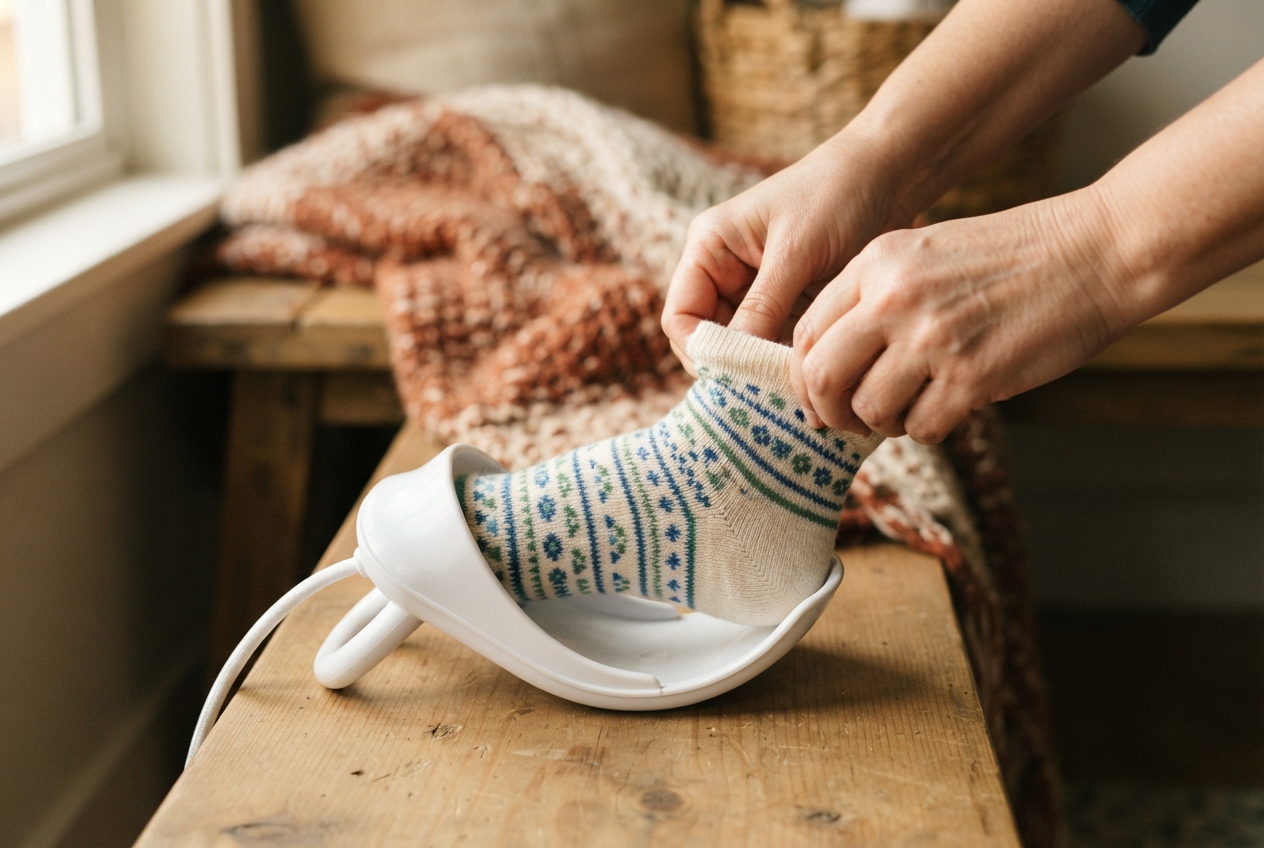
Pulling the sock over the plastic shell until the toe sits snug against the end.
How to Use a Sock Slider in 30 Seconds
Whether you are recovering from a weekend gardening marathon or helping a family member get dressed after surgery, using a sock slider takes just a few smooth motions. Set yourself up in a comfortable, sturdy armchair with your feet flat on the floor.
First, sit down and rest the plastic trough in your lap or between your knees. Roll the cuff of your sock over the wide end of the plastic shell, feeding the fabric down until the toe sits flat against the front notch. The opening should now resemble a wide, welcoming tunnel.
Next, lower the gadget to the floor by holding both foam handles. Keep the cords slack as you guide your toes directly into the sock opening. Once your toes touch the tip, push your foot firmly forward through the cradle until your heel seats into the bottom curve.
A gentle pull is all it takes: draw the foam handles straight back toward your thighs. As the cords tighten, the plastic cradle slips backward, gliding the sock smoothly over your heel and up your calf.
Why We Accumulate Mystery Living Aids and Drawer Clutter
Almost every organized home harbors a hidden stash of single-purpose contraptions. We usually acquire daily living aids during moments of short-term necessity. A sudden lower back pull, a knee replacement, or an ankle injury prompts a quick purchase. Once mobility returns, the tool gets tucked beneath folded sweaters and forgotten.
Gift-giving and viral online shopping also fuel the collection. Well-meaning relatives often share clever gadgets they love, or a short video makes an ergonomic tool look irresistible. Because these objects lack standard boxes or cords, they drift into catch-all drawers instead of living with regular tools or toiletries.
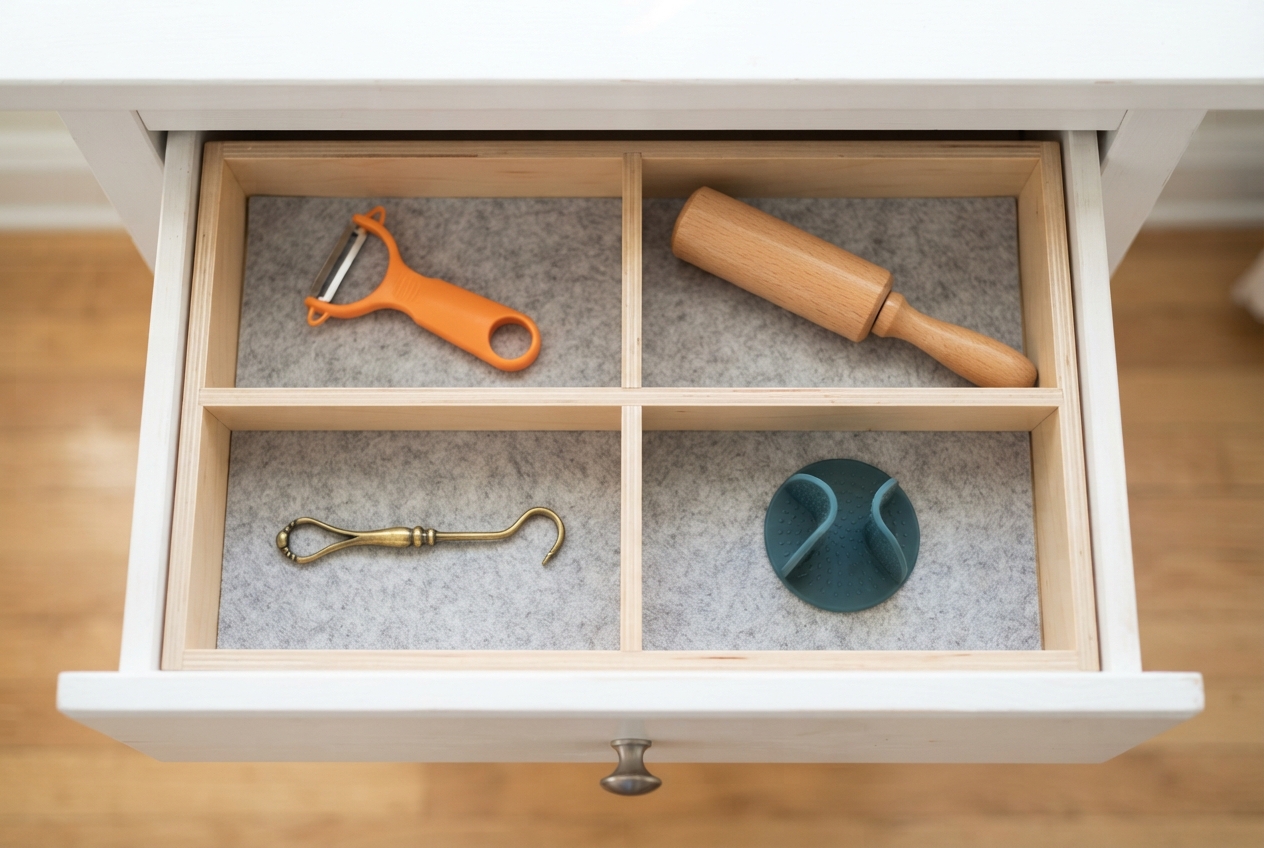
Organizing specialty wellness tools and daily living aids in shallow partitioned bins.
Diagnostic Guide: Identifying Mystery Household Gadgets
If your cleanout uncovers other baffling items with no brand labels, you do not have to guess. Use this straightforward diagnostic routine right at your kitchen table to identify almost any household object in minutes.
1. Examine the Material and Build
Flexible polypropylene and smooth cord channels point toward ergonomic living aids or rehabilitation equipment. By contrast, heat-resistant silicone, stainless steel, and stamped measure lines belong in the kitchen. Heavy cast aluminum with spring-loaded hinges usually indicates a sewing, leathercraft, or woodworking accessory.
2. Look for Mold Marks and Icons
Turn the item over under bright table light. Food-safe tools feature a tiny wine-glass-and-fork stamp or clear resin codes. Assistive dressing aids, reachers, and orthopedic devices often carry patent serial stamps, manufacturer batch numbers, or medical equipment mold markings along the inner ribbing.
3. Run a Quick Visual Search
Lay the item flat on a solid surface, such as a plain cutting board or neutral table runner. Take a crisp photo on your phone and run it through a visual search tool. In seconds, visual engines match the silhouette against retail listings, patent registries, and specialty medical supply catalogs.
4. Check Common Mystery Suspects
If the shape still seems odd, consider whether it fits one of these frequently misplaced specialty tools:
- Loop with a wire hook: A button assist tool used for fastening dress shirts with one hand.
- Teardrop plastic notched ring: A safety seal cutter for medicine bottles or milk jugs.
- Small wooden wheel on a spindle: A seam-creasing roller used in quilting and tailoring.
- Conical rubber cone: A non-slip twist grip for opening stubborn vacuum-sealed pantry jars.
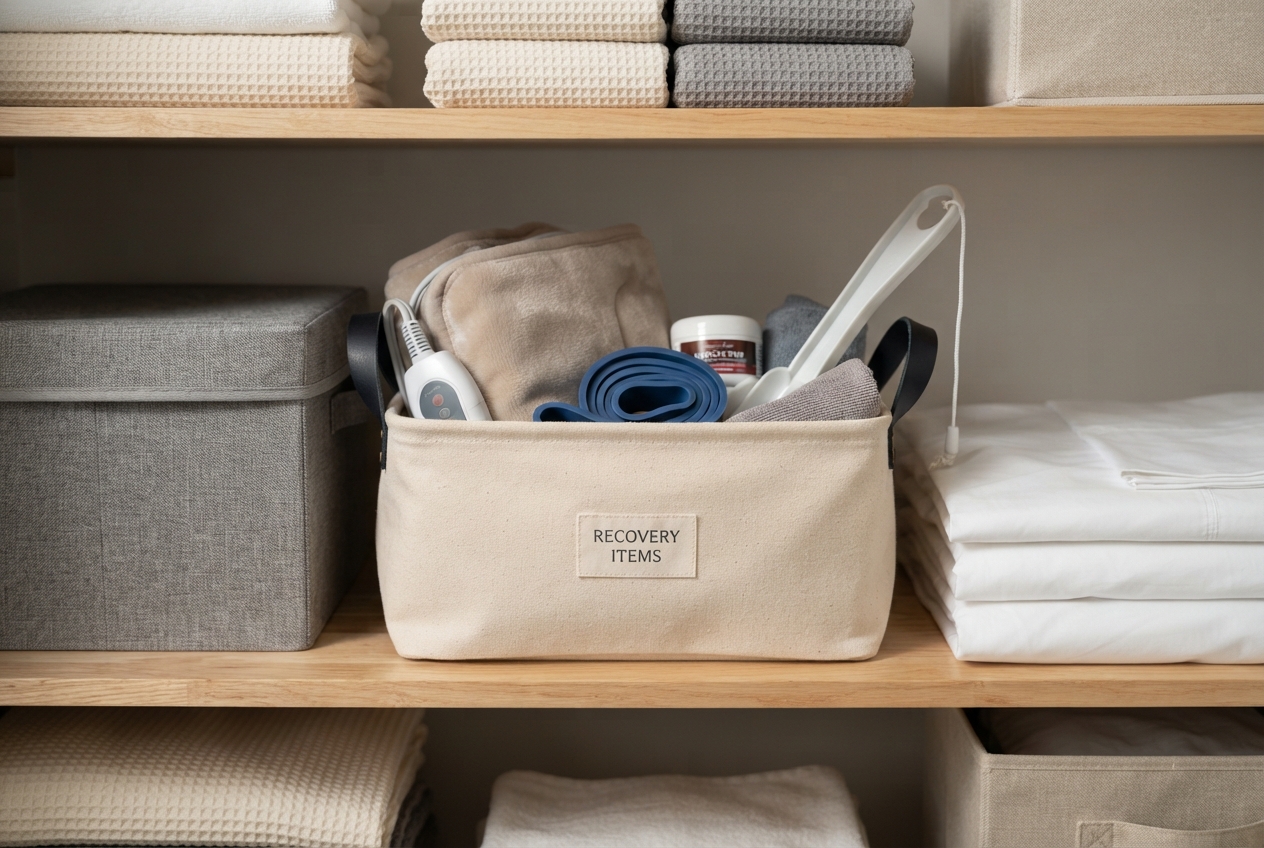
Stashing occasional-use mobility aids in a labeled recovery caddy keeps drawers tidy.
Organizing, Keeping, or Rehoming Forgotten Wellness Aids
Once you solve the mystery, decide whether to store the tool or pass it along. If you experience seasonal joint stiffness or manage strenuous DIY projects, keep the slider handy. Instead of burying it in a dresser, prepare a dedicated “Recovery Basket” in your linen closet alongside heating pads, muscle balms, and stretch bands.
If you have no use for the gadget, keep it out of the landfill. Assistive dressing tools are durable and easy to sanitize with warm soapy water. Local physical therapy clinics, non-profit medical equipment loan closets, and neighborhood senior community centers welcome clean living aids for community members in need.
Unearthing an unfamiliar tool during a weekend chore turns an ordinary chore into a fun moment of discovery. When you get comfortable with identifying mystery household gadgets, you save useful tools from the trash, keep your drawers organized, and perhaps help a neighbor regain their independence.