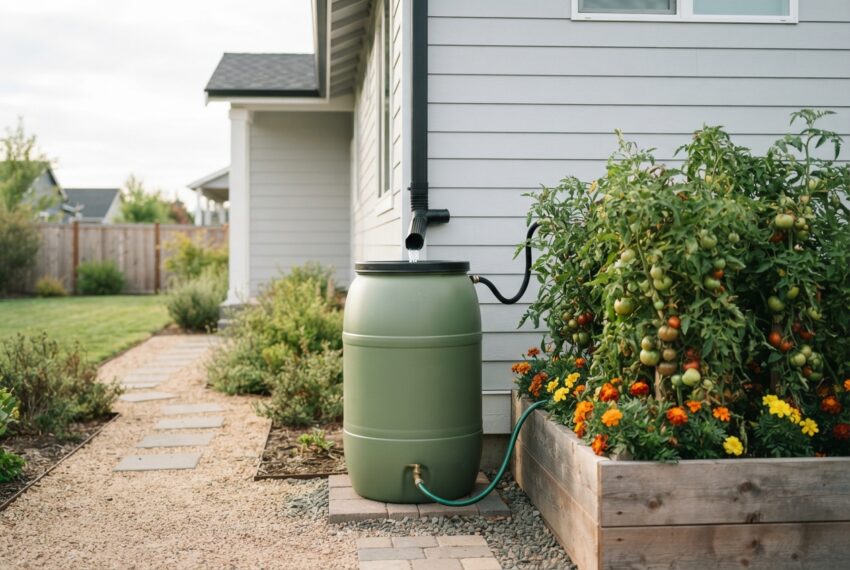
There is nothing quite like the smell of dry earth welcoming a sudden summer downpour. The sky turns the color of slate, thunder rumbles in the distance, and gallons of crisp, chlorine-free water rush through your gutters. If you are a gardener, watching all that liquid gold slip down the storm drain feels almost painful.
A few years ago, a neighbor leaned over my fence while I was hooking up a 50-gallon drum to my downspout. He shook his head and said, “You know the state owns that water, right? People have gone to prison for that.”
It stopped me in my tracks. Could setting a simple container under a downspout actually land an ordinary homeowner in legal trouble? The internet is full of sensational headlines claiming that gathering raindrops is a crime. The real story is far more practical, far less terrifying, and full of good news for your garden beds.
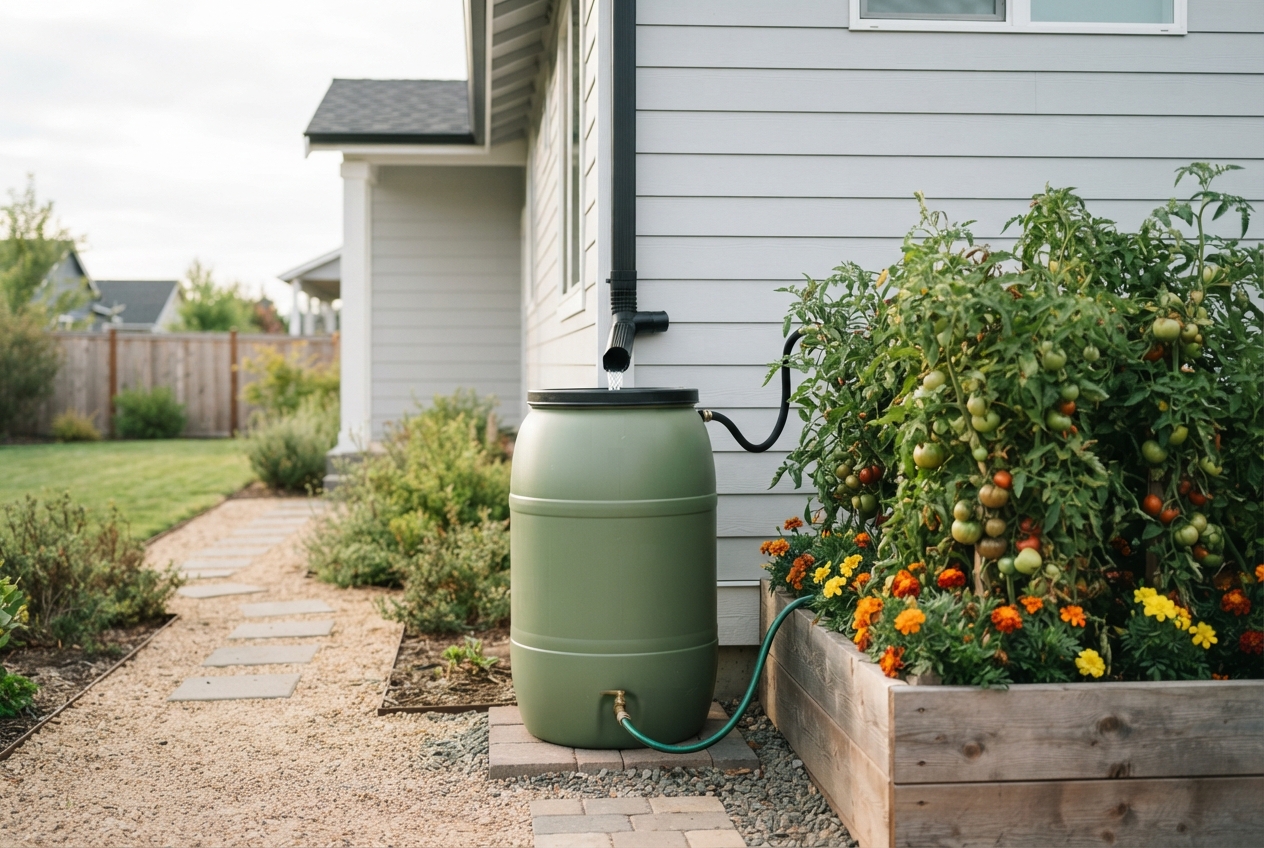
A simple, well-maintained rain barrel is one of the easiest ways to keep your garden hydrated while saving on city water bills.
The 13-Million-Gallon Urban Legend: What Really Happened in Oregon
Almost every scary headline about rainwater arrests traces back to a single 2012 court case in Eagle Point, Oregon. The story quickly morphed into a game of internet telephone, with rumors suggesting that an ordinary citizen was jailed simply for saving water to sprinkle on his vegetables.
That rumor leaves out nearly all the actual facts. The homeowner in question, Gary Harrington, was not using a standard plastic barrel off his garage eave. Over the course of a decade, he constructed three large reservoirs on his rural property, secured by 10-foot to 20-foot earthen dams.
These dams intercepted runoff and natural tributaries that fed directly into the Big Butte Creek watershed. In total, the reservoirs locked up roughly 13 million gallons of water—enough to fill twenty Olympic-sized swimming pools. Local water managers stepped in because that water had already been allocated to downstream agricultural users and city supplies.
The legal dispute was never about a residential barrel catching roof runoff. It was about building unlicensed private lakes that dammed up public waterways.
After multiple court orders, decade-long appeals, and deliberate refusals to open the dam gates, the court issued a 30-day jail sentence for unauthorized water diversion. Context changes everything. Catching the drizzle off your back porch is a world away from building private dams across natural drainage basins.
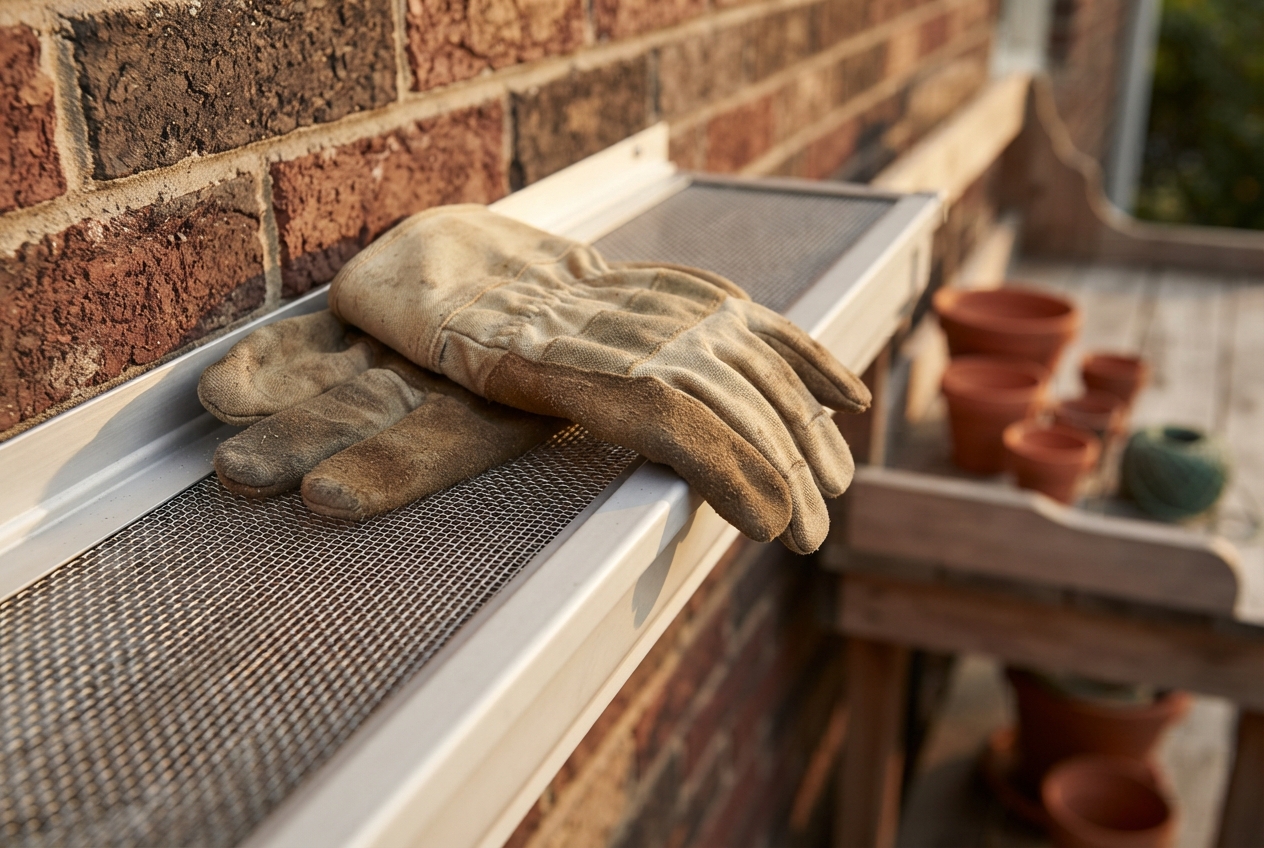
Keeping gutter screens and diverters clean ensures your rainwater stays free of organic debris and sediment.
Rainwater Laws 101: Prior Appropriation vs. Common Sense
To understand why rainwater harvesting ever became a legal question, you have to look at how water rights evolved in different parts of the country. Water law in the United States generally splits into two broad philosophies.
In eastern states where rain is frequent and rivers run steady, water rules follow the Riparian Doctrine. If water touches or falls on your land, you generally have a reasonable right to use it for your household and garden.
Out west, where water is scarce and gold-rush miners fought over every stream, states adopted the Doctrine of Prior Appropriation, often summarized as “first in time, first in right.” Under this framework, the first person to claim water for a beneficial purpose holds seniority over everyone who comes later. For a long time, western lawmakers argued that intercepting rain before it reached the ground technically robbed senior water rights holders downstream.
Over the last decade, hydrologists and state assemblies realized that small-scale residential barrels have virtually zero negative impact on groundwater replenishment. In fact, catching rooftop rain reduces municipal stormwater strain, prevents soil erosion, and conserves treated drinking water.
State-by-State Reality Check: Who Regulates and Who Rewards
Today, collecting rainwater from your roof is legal in all 50 states for typical residential gardening and outdoor chore use. However, a handful of states place sensible caps on capacity or require basic registration.
- Colorado: Once the strictest state in the nation, Colorado modernized its statutes under House Bill 16-1005. Homeowners can now operate up to two rain barrels with a combined maximum capacity of 110 gallons. The collected water must be used on the property where it fell for outdoor purposes.
- Utah: You can legally harvest up to 2,500 gallons on residential property. If you store more than 100 gallons, the state asks you to complete a free, quick online registration with the Division of Water Rights.
- California: The Rainwater Capture Act allows homeowners to install and operate rooftop harvesting systems without needing formal water rights permits, provided the system complies with basic plumbing codes.
- Texas & Rhode Island: These states actively encourage harvesting. Texas exempts rainwater collection equipment from state sales tax and prevents HOAs from outright banning rain barrels, while Rhode Island offers state tax credits for system installations.
- Ohio: Rainwater collection is completely legal for outdoor use and is even permitted for home potable water systems if designed to meet state health standards for private water systems.
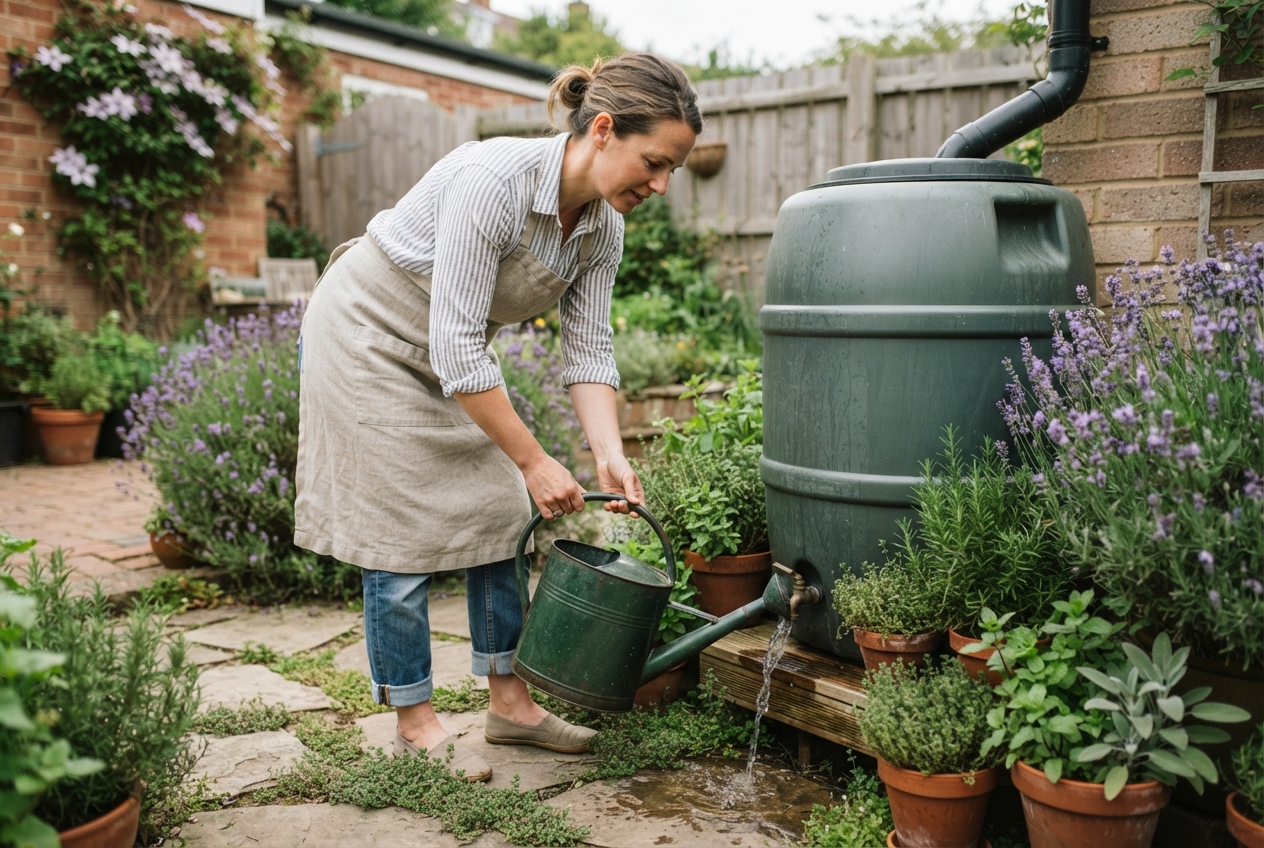
Harvesting rain directly for hand-watering flower beds is permitted across the vast majority of residential zones.
Smart Rain Barrel Setup for Backyard Gardeners
Staying on the right side of local ordinances comes down to building a clean, responsible system. You do not need expensive commercial hardware to collect water effectively, but you do need to follow a few basic design rules.
1. Block the Mosquitoes
Standing water is an open invitation for mosquitoes to breed. Ensure your barrel inlet is fitted with a fine stainless steel or brass mesh screen. If you notice larvae wiggling inside, drop in half a mosquito dunk (Bacillus thuringiensis israelensis), a natural bacterium that kills mosquito larvae without harming plants, pets, or songbirds.
2. Keep Light Out to Stop Algae
Clear or white translucent containers let sunlight through, turning your water into green algae soup within a week of warm weather. Use opaque, UV-resistant, food-grade plastic drums in dark green, terracotta, or charcoal gray to keep the water clear.
3. Plan for Heavy Storm Overflows
A single one-inch rainfall on a 1,000-square-foot roof yields around 600 gallons of water. Your 50-gallon barrel will fill in minutes during a good thunderstorm. Always install a wide overflow hose near the top rim and route it away from your home’s foundation toward a gravel swale, rain garden, or lawn depression.
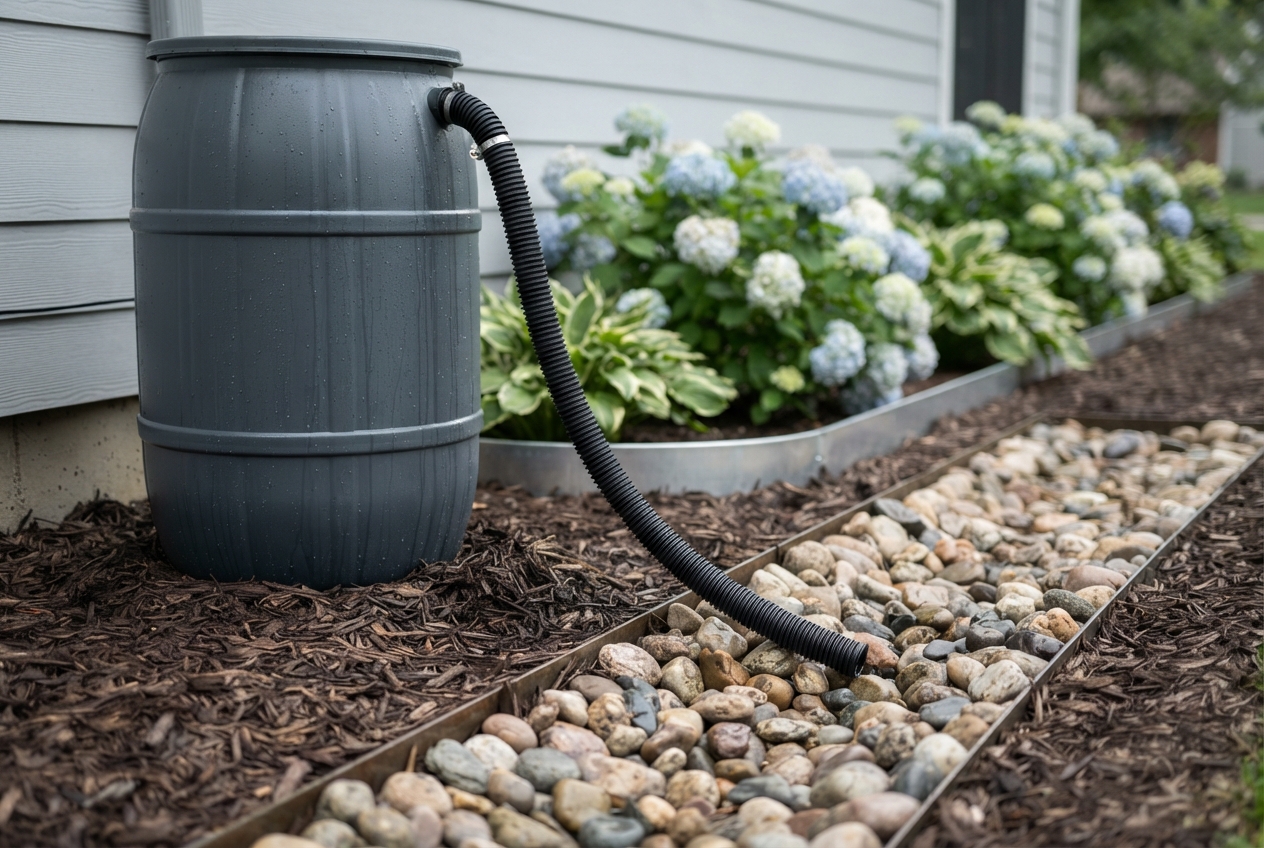
Routing your overflow pipe away from your foundation prevents basement moisture problems during heavy downpours.
Using Your Harvested Water Safely
Rainwater is naturally soft, slightly acidic, and free from the chlorine, chloramines, and heavy minerals found in municipal tap water. Houseplants and acid-loving shrubs like blueberries, hydrangeas, and azaleas thrive when watered with rain.
Keep in mind that water collected from standard asphalt shingle roofs picks up dust, bird droppings, and microscopic airborne particulate matter. Use harvested roof water for soil-level soaking, shrub borders, container flowers, and lawn care.
If you use rain on vegetable patches, direct the hose or watering can at the base of the plants rather than spraying the leaves directly. Always wash your leafy greens, root vegetables, and garden herbs with clean tap water before preparing meals in the kitchen.
Catch the Next Storm with Confidence
The rumor that setting out a rain barrel will bring code enforcement or police to your door is simply a misunderstanding of large-scale water diversion cases. For everyday homeowners, capturing the shower running off your shed or garage is an ancient, sensible way to care for your soil and soften your impact on city infrastructure.
Set your barrel on level concrete pavers, secure your intake screen tightly, attach your downspout diverter, and let nature do the watering work for you during the next summer storm.
Notice: Water rights, municipal codes, and local homeowner association guidelines vary by county and municipality. This article is published for educational and informational purposes only and does not constitute formal legal or plumbing counsel. Always check your specific state statutes and local building regulations before building large-scale water storage systems.