Early mornings on the lake have a rhythm all their own. The smell of damp pine hangs heavy in the cool air, mist dances across glassy water, and the metallic click of a tackle box latch echoes down the shoreline. You cast a line near the old dock, wondering why some spots pull in fat bluegills year after year while others remain completely barren. The secret rarely lies in the lure you tied on; it sits quietly ten feet below the surface.
Natural lake beds can be surprisingly empty. When wind, shoreline development, and routine clearing strip away fallen timber and weed beds, young fish lose their only defense against open-water predators. That is where fish cribs come in. These handmade underwater shelters turn barren aquatic floors into bustling nurseries, kick-starting a healthy food chain right in front of your dock.
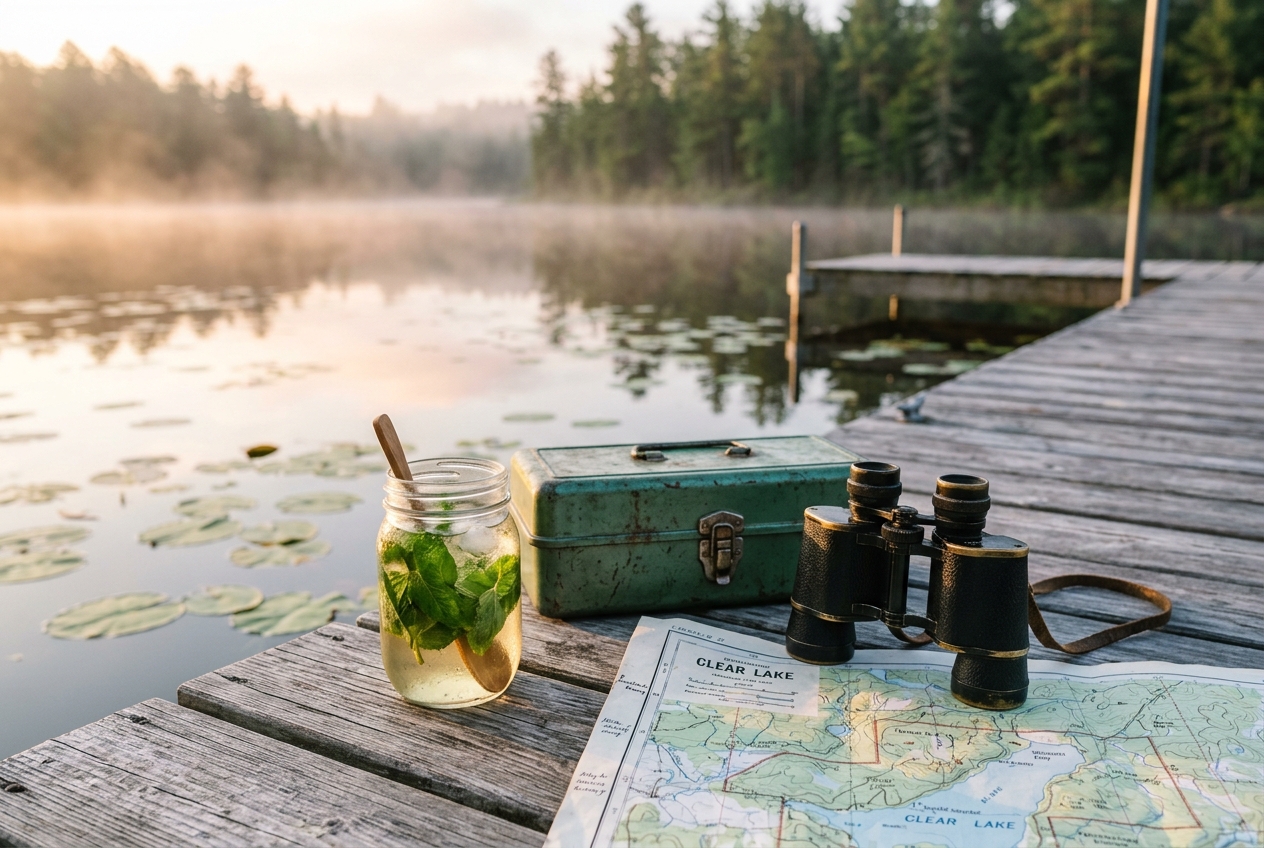
Scouting bottom contours and mapping your lake bed makes habitat placement effortless and effective.
What Exactly Are Fish Cribs?
At their core, fish cribs are man-made structures placed intentionally on lake bottoms to replicate natural brush piles, fallen trees, and rocky reefs. Think of them as apartment complexes for freshwater life. They provide dense physical cover where fry and fingerlings can hide from voracious bass, walleye, and pike.
Without adequate structure, young fish remain exposed in open water, drastically lowering their survival rates into adulthood. When you introduce a complex, multi-layered crib, you create an immediate safe haven. Tiny minnows tuck into the tight inner branches, intermediate panfish hold along the outer edges, and larger game fish cruise the perimeter.
Over time, these habitats become far more than hiding spots. They serve as biological anchors that support every layer of life in your lake or pond, from microscopic organisms all the way up to trophy sportfish.
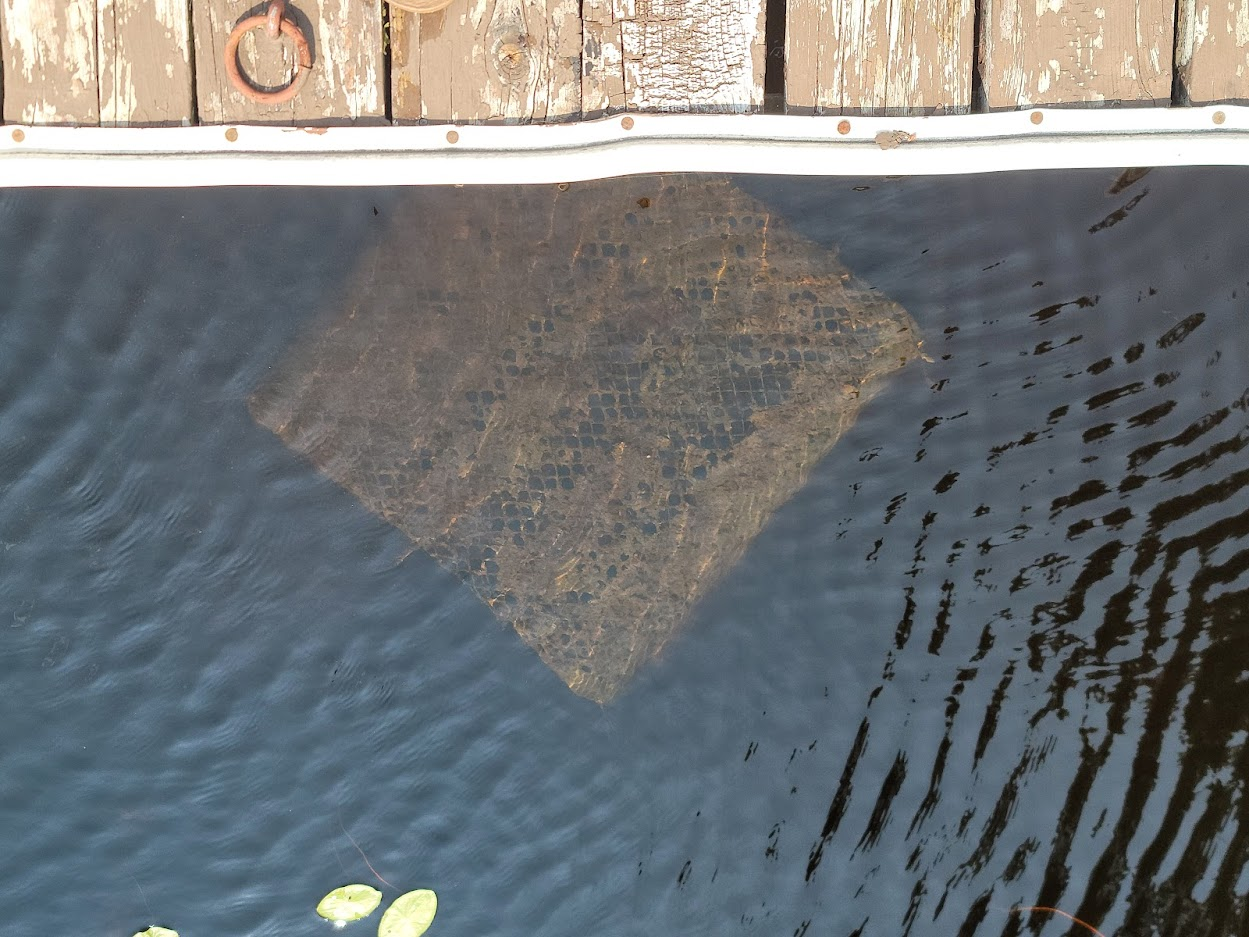
A submerged DIY fish crib visible just beneath the calm surface near a dock, providing instant shade and safety.
The Ecological Engine: How Cribs Feed the Lake
Dropping a structure into the water does not just give fish a roof over their heads. Within days, the clean wood or composite surfaces begin collecting a rich, slippery coating of green biofilm and microscopic algae known as periphyton.
This green layer attracts aquatic insects, snails, scuds, and freshwater shrimp. In essence, the crib becomes an all-you-can-eat buffet for newly hatched fry. Instead of burning precious energy hunting across empty mud flats, baby bluegills and crappies graze on the structure safely under cover.
A well-built crib acts as both shelter and pantry. It feeds the small fish that eventually feed the big fish, balancing the entire aquatic food web from the bottom up.
As the smaller forage fish gather to eat and grow, sportfish naturally establish territories around the perimeter. The structure stabilizes the local ecosystem, creating consistent, sustainable fishing opportunities while protecting the next generation of fish stocks.
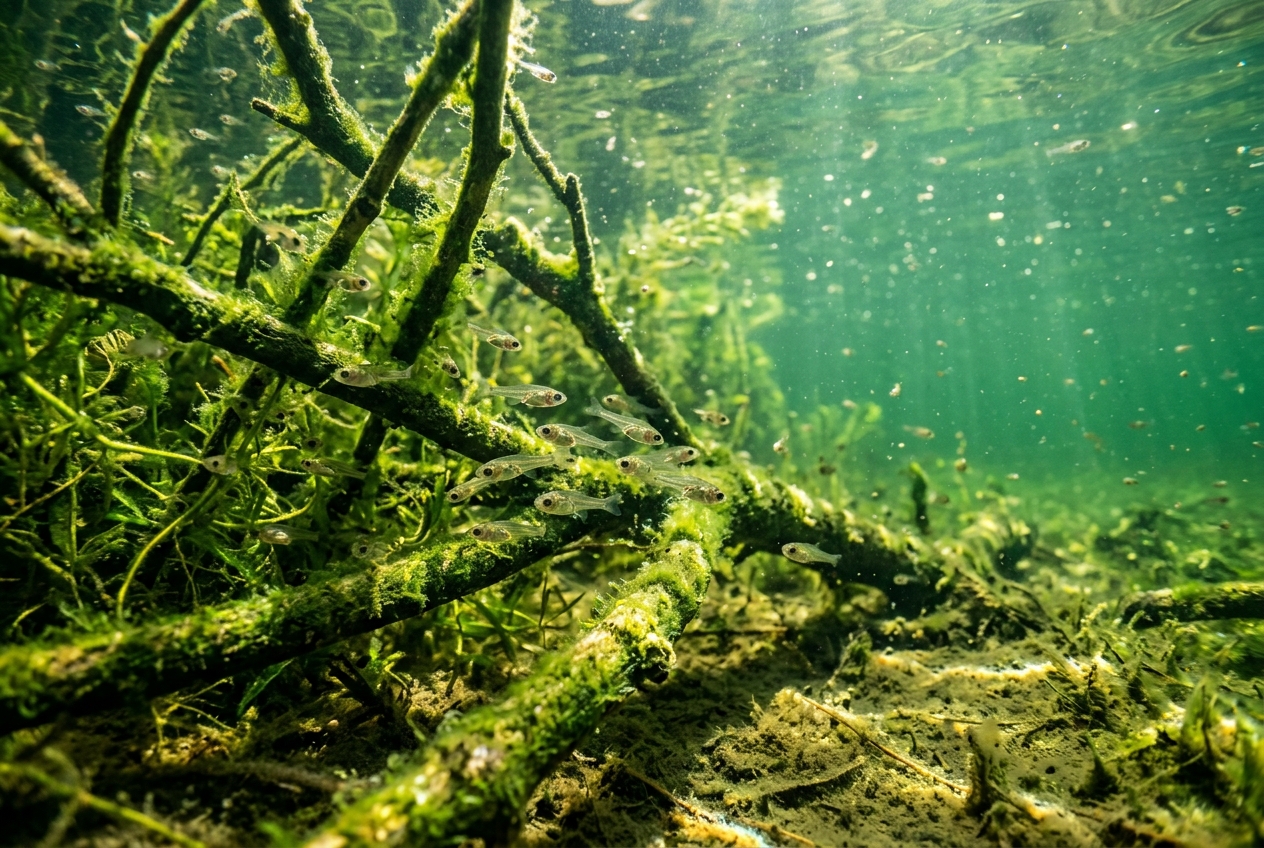
Within weeks of submersion, dense algae growth coats the branches, creating a self-sustaining feeding ground for young fish.
Permits, Rules, and Safety First
Before gathering materials and hauling timber, check your state and local wildlife regulations. Placing unapproved structures in public waterways without a permit can result in hefty environmental fines from your local Department of Natural Resources or conservation agency.
Public water guidelines exist for good reason. Poorly placed cribs can become hazardous obstructions for water-skiers, pontoon boats, and swimmers. Keep these basic placement rules in mind:
- Depth Clearance: Most wildlife agencies require cribs to sit in at least 10 to 15 feet of water, ensuring a minimum of 5 feet of clear water above the top of the structure at low pool.
- Navigation Lanes: Never place structures in marked boating channels, near public launch ramps, or across high-traffic swimming zones.
- Private Ponds: If you manage your own private pond, permits are rarely needed, but you must still avoid non-biodegradable or toxic materials that could leach chemicals into the water.
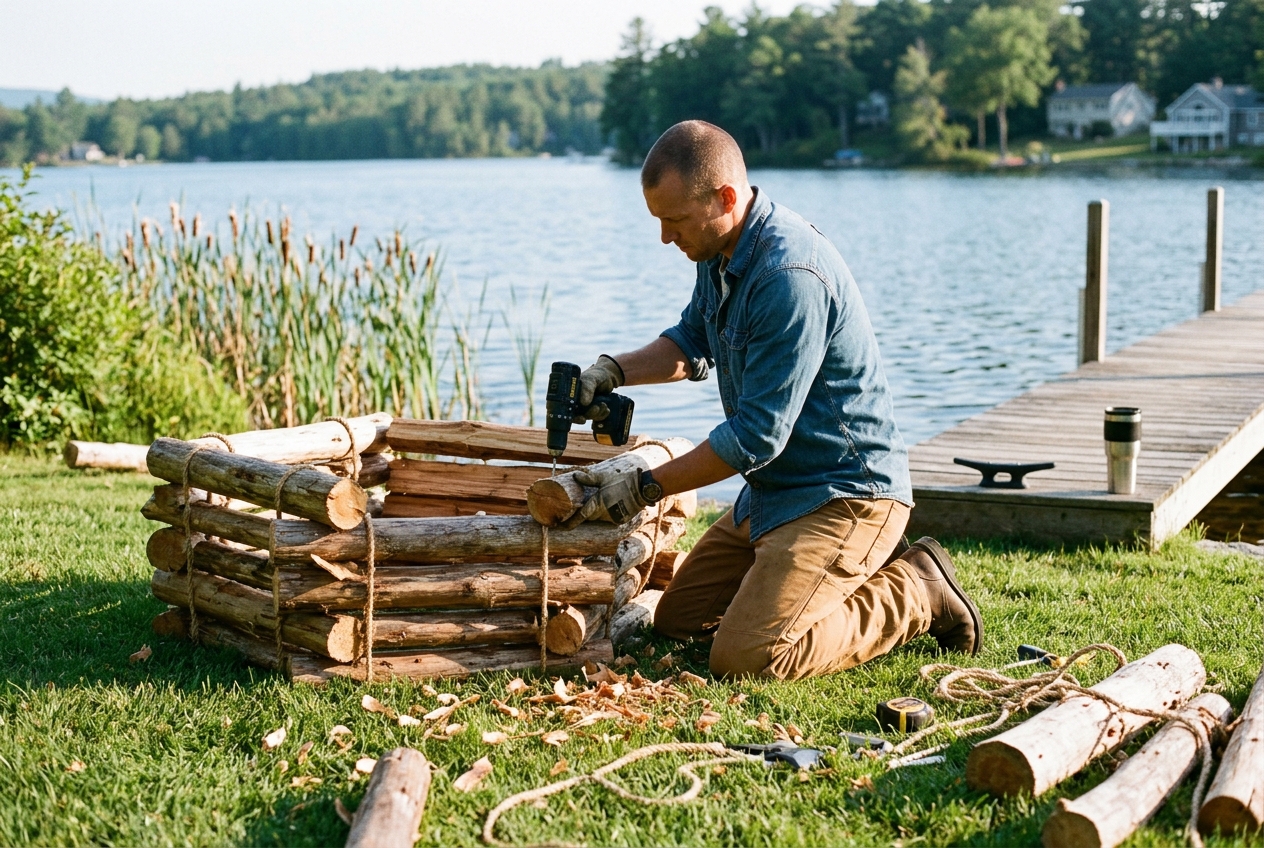
Assembling a classic log-style crib on shore ensures every joint is fastened before the structure hits the water.
Choosing the Right Build: From Hardwood Log Cabins to Mesh Cubes
Fish habitat designs range from simple brush bundles to sophisticated synthetic trees. The best option depends on your available materials, budget, and how long you want the structure to last.
1. The Classic Log-Cabin Crib
Traditional cribs resemble miniature log cabins built from green oak, cedar, or pine logs roughly 6 to 8 inches in diameter. Builders notch the logs together into an open 6-foot by 6-foot square box, anchor the corners with rebar, and pack the interior with brush branches and fieldstones. These heavy-duty wooden forts last 15 to 20 years on lake bottoms.
2. The Hardware Cloth & Wire Mesh Box
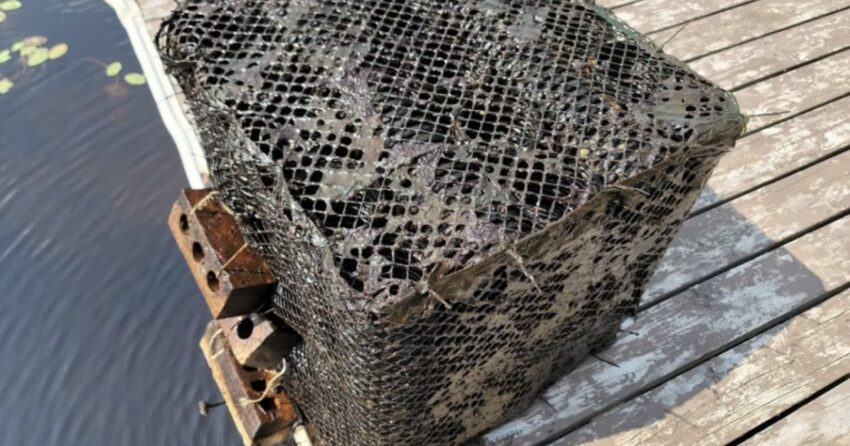
For dockside placement and smaller panfish management, square wire-mesh cages offer incredible density. Built with coated hardware cloth or plastic-wrapped wire, these cubes are filled with sticks, weighted down with standard construction bricks, and suspended or rested securely along deep dock footings.
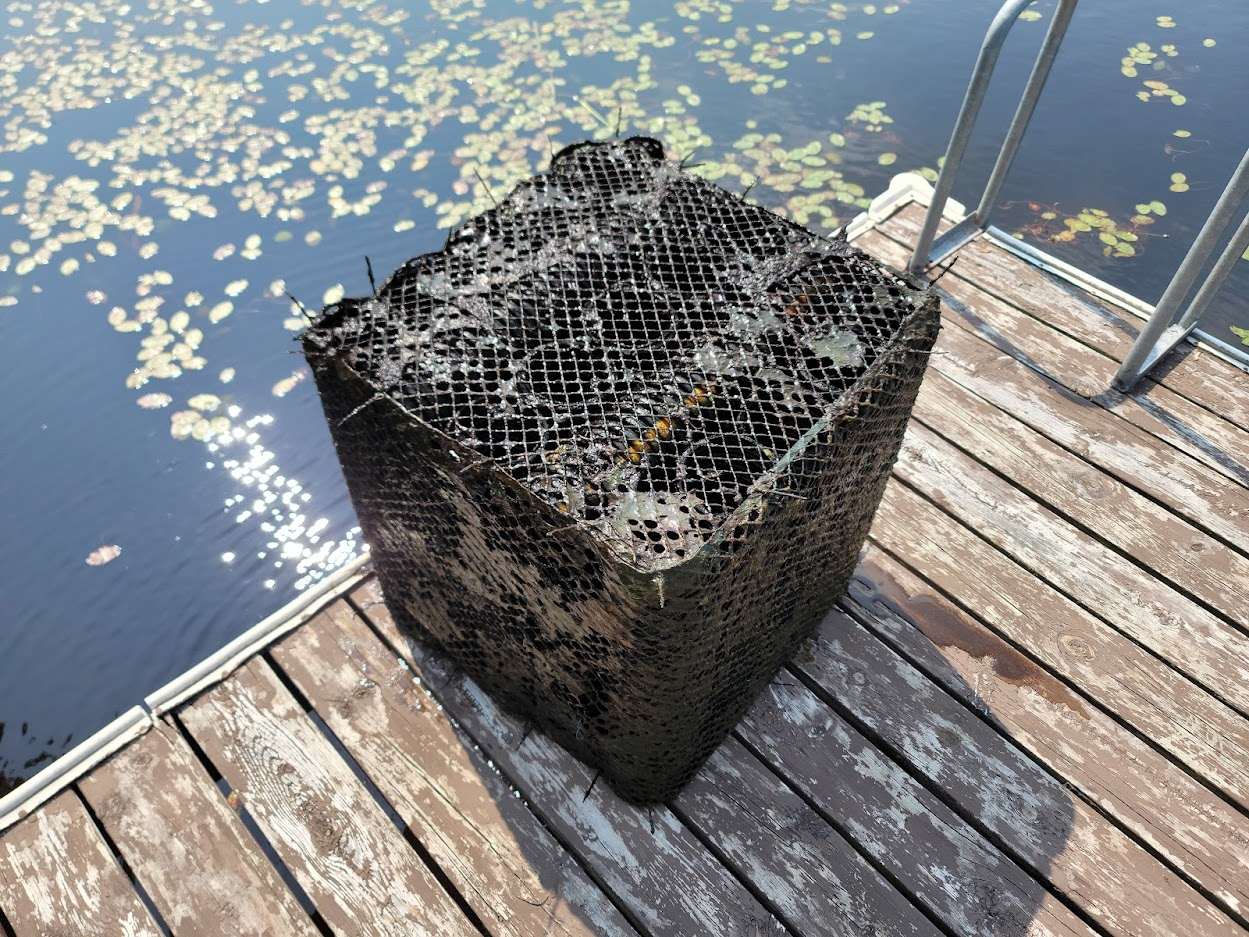
A wire-mesh cube fish crib resting on a wooden dock with brick ballast, ready to offer dense cover for young fry.
3. Modern Synthetic and PVC Habitats
Plastic pipes, buckets filled with concrete, and corrugated tubing are increasingly popular because they never rot. Synthetic structures also prevent fishing hooks from snagging permanently in soft timber, saving plenty of tackle when casting around your honey hole.
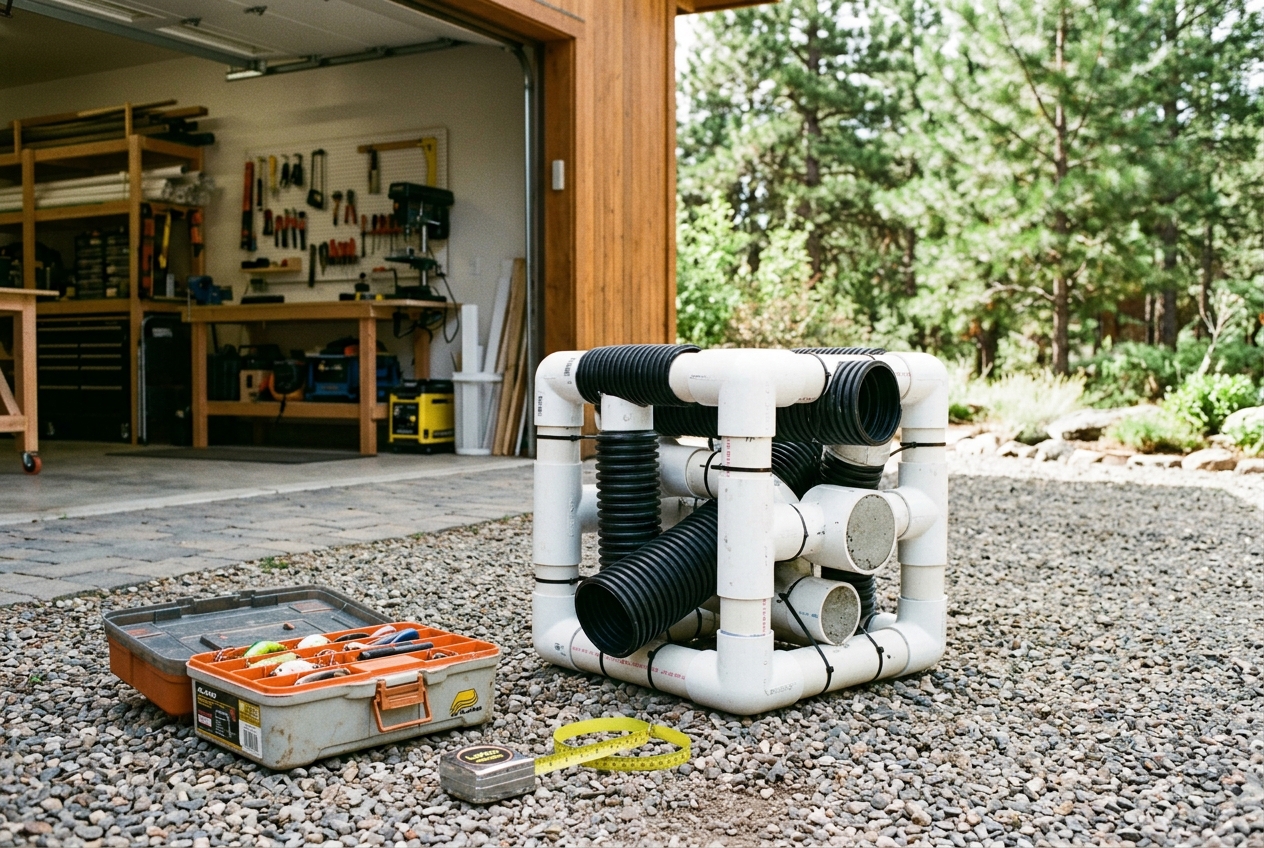
Modern synthetic fish habitats made from rigid pipe offer snag-free cover that lasts for decades underwater.
How to Build a Simple Brush and Cinder Block Crib
You do not need a forestry degree or expensive machinery to build an effective habitat. A simple pallet and brush structure can be built on the shoreline in an afternoon using basic tools.
Materials You Will Need:
- 2 untreated wooden shipping pallets (check for the “HT” heat-treated stamp, avoid chemical “MB” stamps)
- Dense hardwood branches (oak, maple, or cedar trimmings make great filler)
- 4 standard concrete cinder blocks (roughly 30–35 lbs each)
- Heavy-gauge galvanized wire or rot-resistant poly rope
- Drill and 3-inch exterior deck screws
Step-by-Step Assembly:
- Build the Base: Place one pallet flat on the ground. Stack the 4 cinder blocks evenly across the lower deck boards to serve as internal ballast.
- Pack the Interior: Wedge your dense branches, cut limbs, and brush tightly between the pallet slats and around the concrete blocks. Pack it densely; water pressure and current will compress the branches over time.
- Cap the Box: Screw the second wooden pallet over the top of the brush, compressing the filler down. Secure the edges firmly with deck screws.
- Lash the Blocks: Run your heavy poly rope or galvanized wire through the pallet openings and around the cinder blocks. This prevents the ballast from shifting when the unit sinks.
Placement, Depth, and Sinking Tactics
Building the structure is only half the battle; putting it in the right underwater address makes all the difference. Fish seek distinct comfort zones depending on water clarity and water temperature.
Target the transition zones. Look for gradual drop-offs, the edges of weed lines, or points that extend toward deeper water. Placing a crib in 12 to 18 feet of water near a natural contour drop gives fish easy access to both shallow feeding flats and deep thermal sanctuaries.
In northern climates with safe winter ice, landowners traditionally assemble heavy log cribs directly on the frozen lake surface over their chosen waypoint. When spring arrives and the ice thaws, gravity drops the structure smoothly onto the lake bed without needing heavy barge equipment.
For open-water deployment in spring or autumn, lash your completed structure between two sturdy flat-bottom rowboats or canoes, paddle gently to your marked GPS spot, and cut the release lines simultaneously to keep the crib upright as it settles.
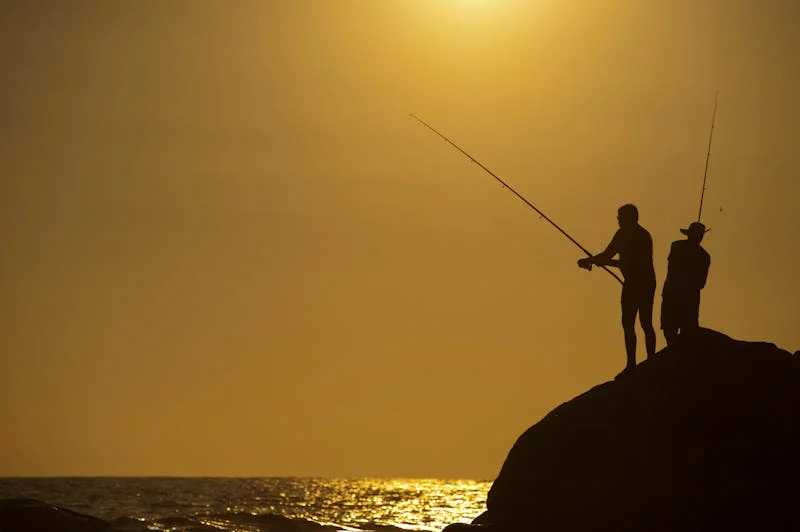
Anglers casting lines at golden hour over deep-water structure to catch crappie and bass drawn to underwater habitat.
Smart Angling: How to Fish Around Structure Without Ruining It
Once your crib has settled and spent a few months building its ecosystem, the fishing around it can be electric. However, casting aggressively straight into the middle of dense brush is an easy way to lose a handful of jigs.
Approach the spot with stealth. Cut your motor early and drift into position, keeping your shadow off the target area. Use vertical jigging techniques with light fluorocarbon line, dropping small soft plastics or live bait just above the roof of the structure rather than dragging through the middle.
Larger bass and walleye routinely stage a few yards off the edges to ambushed passing bait. Cast past the structure and retrieve your lure alongside the perimeter, enticing active predators without disturbing the inner nursery.
Stewarding Your Lake for Generations
Caring for a lake is an ongoing commitment to the water and the memories built beside it. Dropping a handmade habitat into the depths honors the natural cycle of the fishery, giving back more than we take every time we cast a line.
Whether you assemble a small dockside mesh cube or sink a full hardwood crib on a deep drop-off, you create a lasting underwater legacy. Years from now, the water will still ripple in the early morning breeze, and generations of young fish will thrive in the haven you built with your own hands.