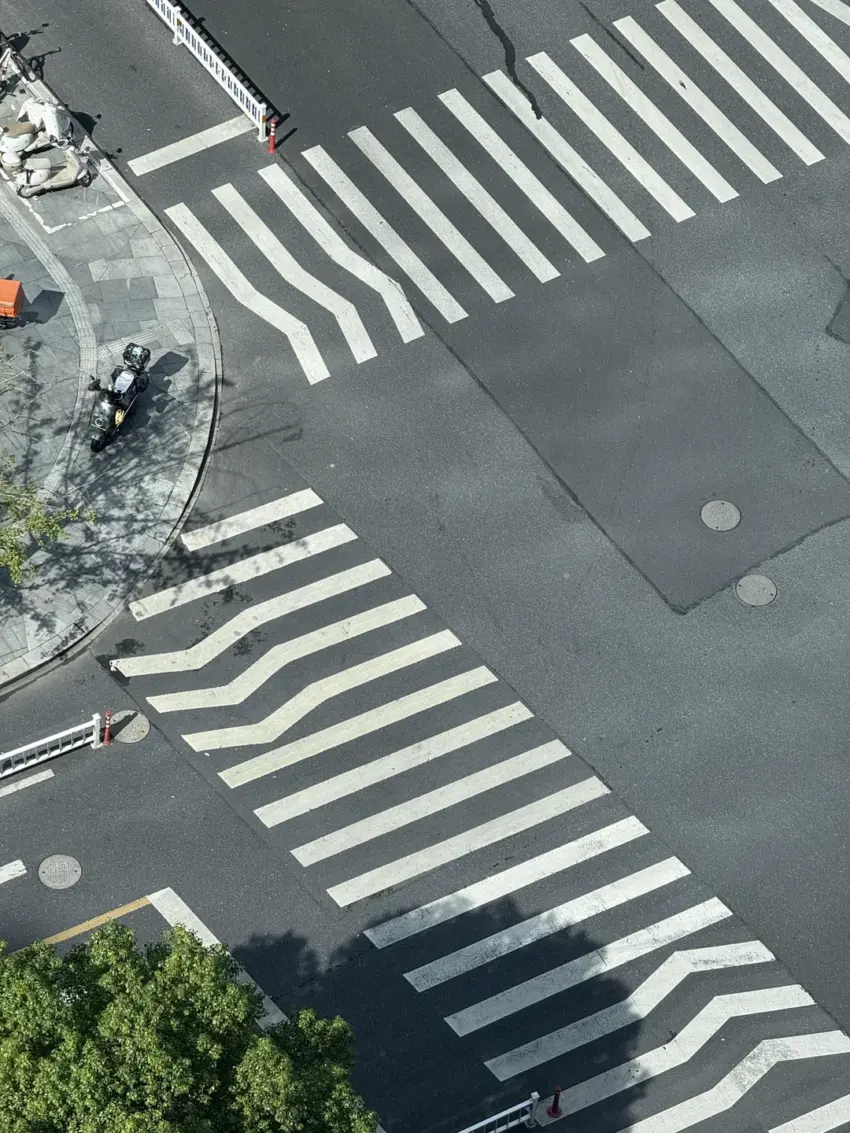
Take a morning stroll through a newly redesigned urban neighborhood. Look down at the asphalt right before you cross the street. You might spot something unusual on the ground. Instead of standard straight stripes from curb to curb, the paint takes a sharp, intentional turn.
These angled markings resemble stylized chevrons or tiny arrows. Road crews did not make a measuring error with their paint equipment. In truth, kinked crosswalk lines are a smart urban design choice. They quietly solve one of the most frustrating parts of city walking.
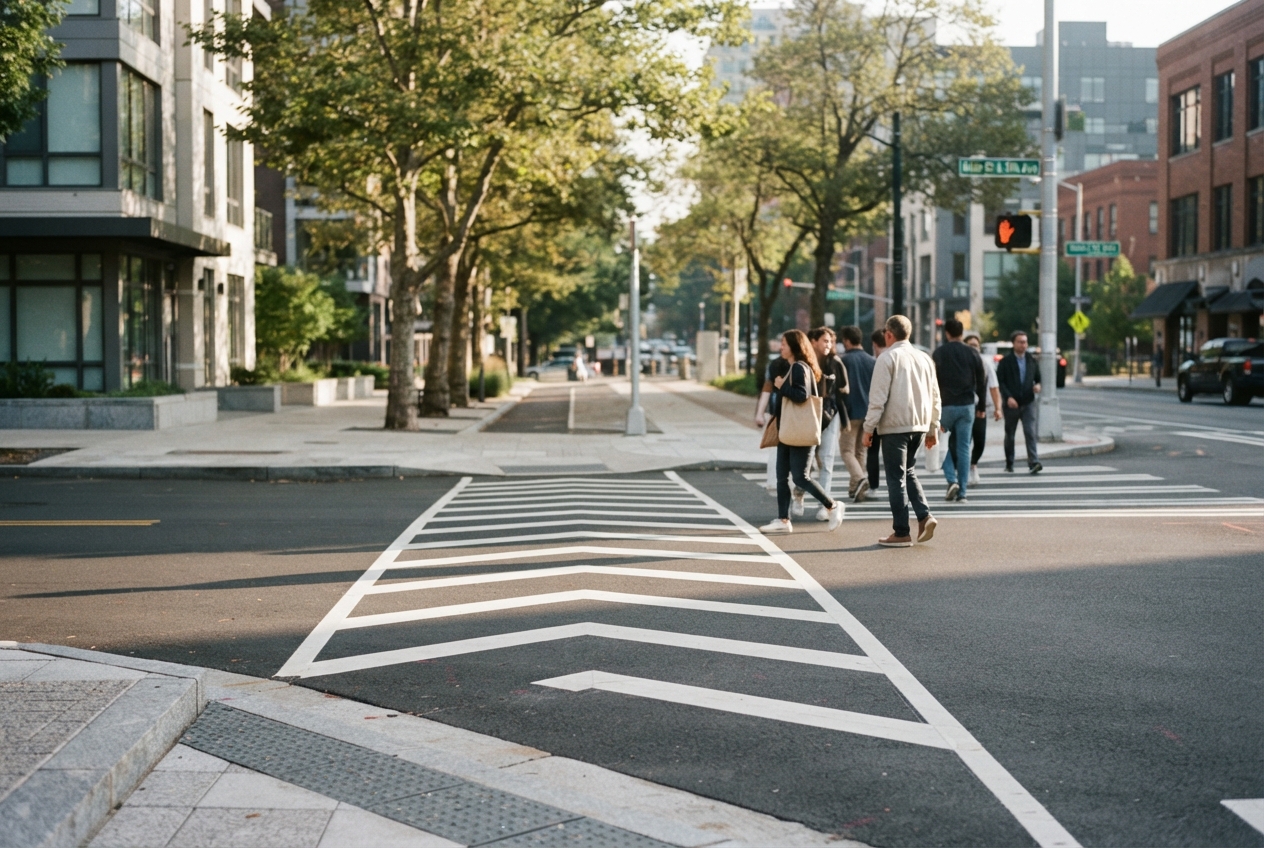
Angled pavement markings act as quiet visual signposts, gently organizing foot traffic before pedestrians step into traffic lanes.
The Curious Case of the Bent Crosswalk
The conversation around these markings went viral after a newcomer in Hangzhou, China, noticed them across city intersections. Commuters, travelers, and design lovers immediately began debating their purpose online.
Theories ranged from optical illusions that slow down speeding cars to tribute art for classic rock bands. Others joked about video game speed pads on the pavement. The real answer comes down to human behavior and public space management.
Viewed from above, the angled sections point toward the right side of the crosswalk. They act as quiet lane dividers for your feet. No metal signs or flashing lights are needed. The street markings tell your feet which side to use to keep movement smooth.
The Awkward Sidewalk Shuffle and Why Flat Stripes Fall Short
Think about the classic sidewalk shuffle. You step off the curb to cross the street on a sunny afternoon. An oncoming stranger approaches from the opposite sidewalk. Both of you make sudden, awkward eye contact.
Next comes the hesitation dance. Stepping to your left only makes the stranger shift in the exact same direction. Moving right causes another brief standoff. You both waste valuable seconds while the pedestrian countdown clock ticks down.
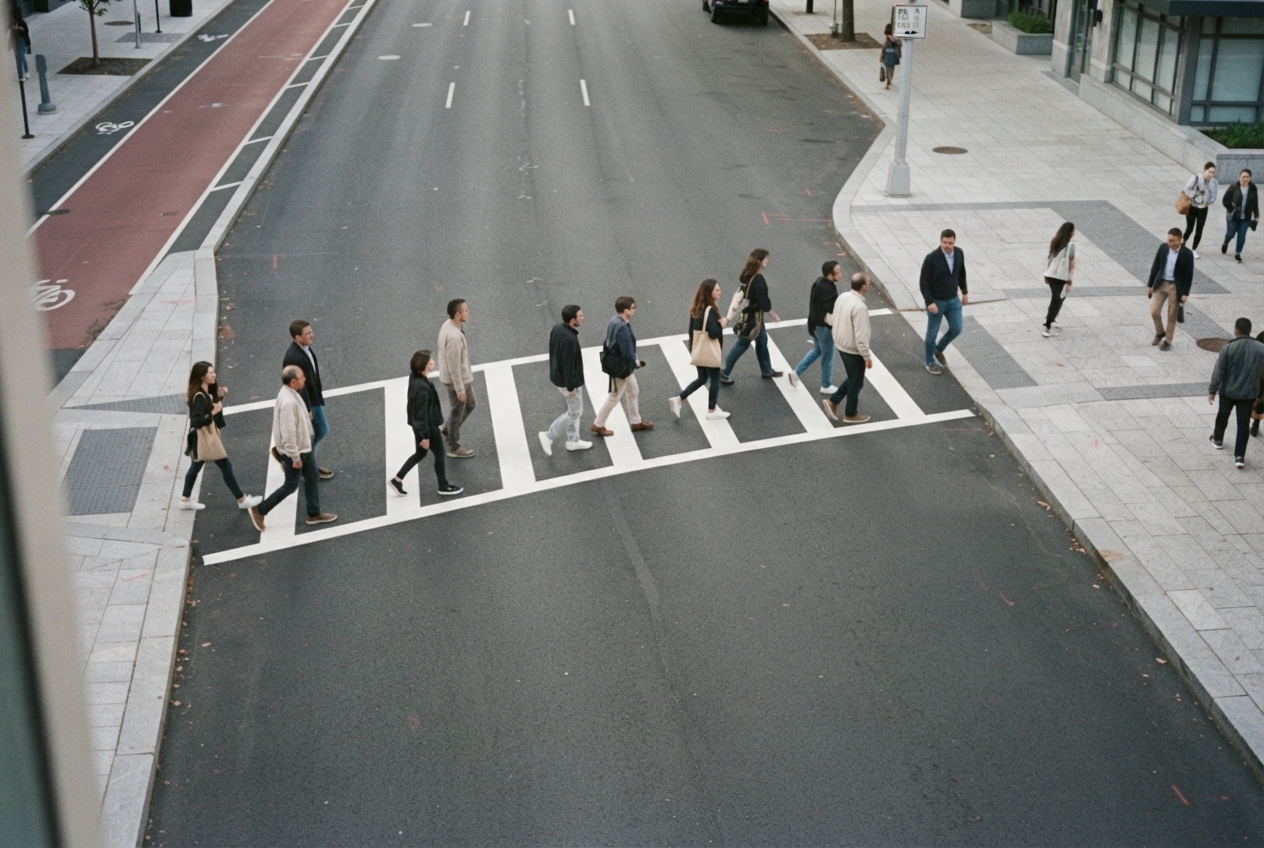
When foot traffic picks up, subtle directional stripes prevent the awkward sidewalk dance of oncoming commuters.
Traditional zebra stripes treat the crosswalk as an open canvas. That simple layout works fine when only two people cross at a quiet hour. Morning commutes and subway rushes turn open crossings into chaotic bottlenecks.
Commuters end up bumping shoulders and veering outside the marked safety zone. Pedestrians get stuck waiting in front of turning vehicles longer than necessary. Angled stripes fix this friction by creating a natural two-way lane system on the asphalt.
“Smart design does not need to shout. When pavement guides human habits quietly, order happens on its own.”
Nudge Theory: How Pavement Shapes Our Movement
Urban planners rely on a concept called choice architecture to guide public behavior. Tall metal instructional signs on street corners rarely work well. People walk with grocery bags, push baby strollers, or listen to music on earbuds.
Our eyes naturally scan the pavement directly in front of our shoes. High-contrast paint patterns trigger an immediate response in our peripheral vision. We process spatial shapes long before our conscious minds notice a posted sign.
Because the stripes bend to the right, approaching walkers instinctively match their stride to the angle. Nobody has to stop and decipher the markings. You step into the open lane and leave room for oncoming pedestrians.
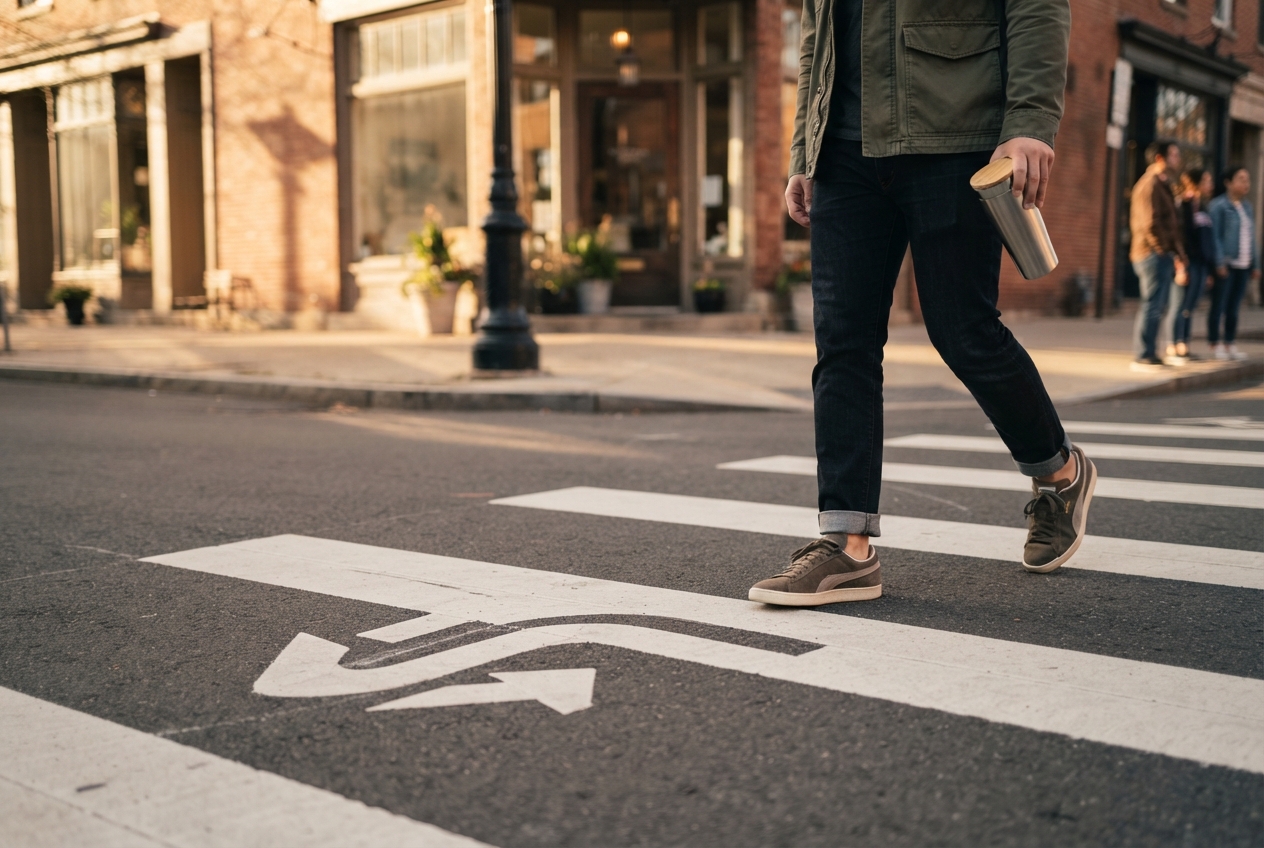
Subconscious visual cues guide our steps long before our conscious minds notice the pattern on the road.
This approach works just like dedicated bike path lanes or divided highway markings. Splitting pedestrians into two tidy streams helps crosswalks clear out much faster. Everyone spends less time standing exposed to vehicle traffic in busy intersections.
Do Angled Markings Actually Change Pedestrian Habits?
Skeptics often wonder if painted lines truly change how people walk. Distracted pedestrians looking at smartphones might seem to ignore road markings entirely. Hurried commuters often rush along the shortest diagonal path regardless of street paint.
Real-world crowd psychology tells a fascinatingly different story. Herd behavior plays a powerful role whenever humans move through public spaces. If even a fraction of walkers follows the kinked crosswalk lines, a clear path forms instantly.
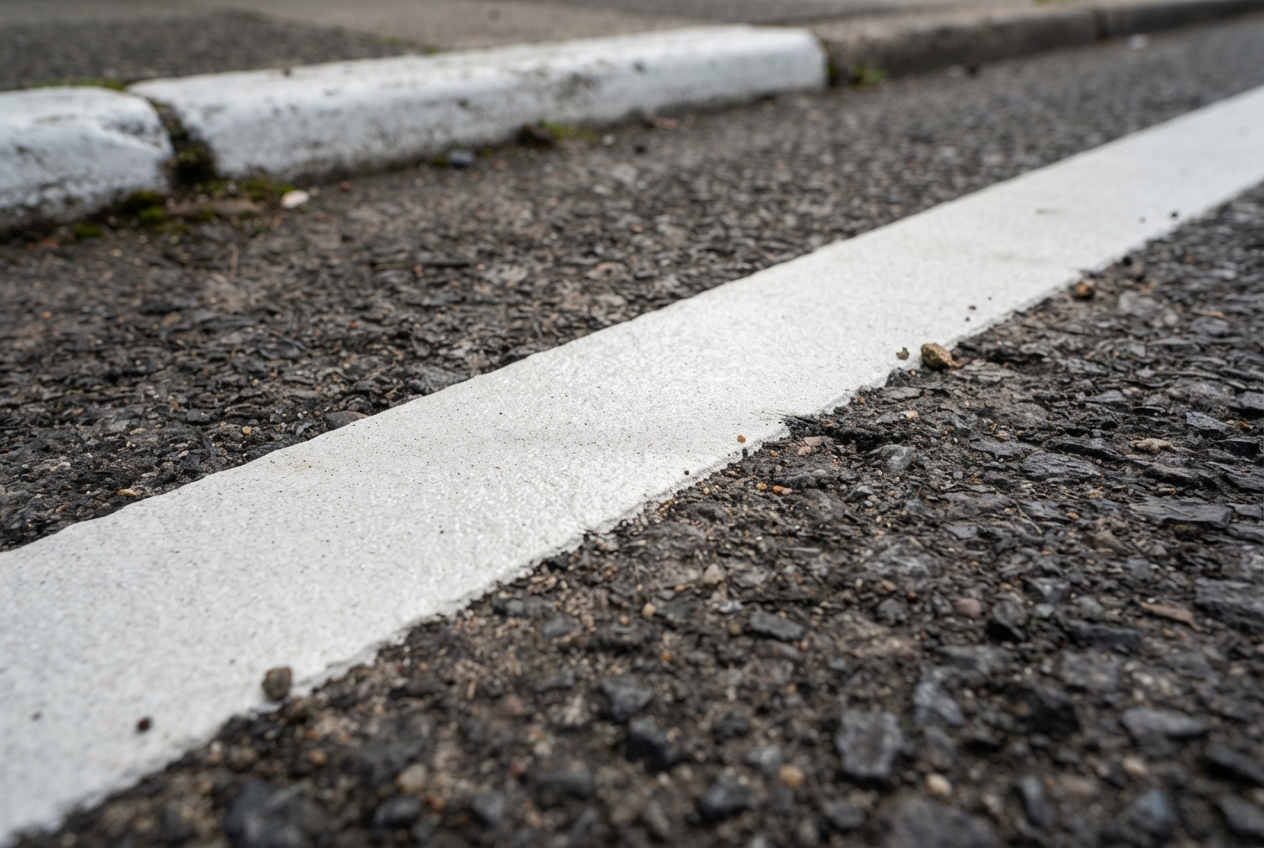
Simple thermoplastic geometry turns standard road paint into an intuitive flow-management system.
That initial stream of walkers acts as a moving physical guide. People behind them fall into place without thinking about the underlying geometry. Order emerges across the street within seconds, transforming potential chaos into smooth pedestrian movement.
Why Inexpensive Paint Beats Costly Concrete Renovations
City budgets are always tight, and major roadway overhauls take months of construction. Adding physical barriers, pedestrian fences, or raised concrete medians disrupts traffic and costs thousands of dollars. Thermoplastic paint offers a fast, low-cost alternative.
Road crews can apply angled line stencils during regular overnight maintenance. The street reopens before morning rush hour starts. A small change in paint geometry yields massive improvements in foot traffic efficiency without heavy equipment.
This practical approach lets municipalities test and refine pedestrian flows in real time. Planners can evaluate how commuters respond to subtle bends before committing to major structural changes. When a low-cost visual tweak solves a daily bottleneck, everyone wins.
Micro-Design in Action: 5 Subtle Everyday Cues Around Town
Subconscious directional cues are all around us once you start paying attention. City planners, transit authorities, and retail designers use subtle spatial tricks every day to keep crowds moving comfortably.
- Tactile Train Platform Tiles: Raised yellow domes and painted perimeter arrows show commuters where to stand so departing riders can step off freely.
- Contrasting Airport Walkways: Large transit terminals switch from soft carpet to smooth stone tile to guide travelers toward baggage claim without tall signage.
- Gently Curving Park Trails: Meandering gravel paths encourage a slower walking pace, helping visitors relax and take in flower beds at a gentle rhythm.
- Supermarket Aisle Flooring: Subtle variations in floor tile color keep shopping carts flowing smoothly around tight corner displays.
- Contrasting Stairwell Risers: Bright edge strips on public steps reduce tripping hazards while naturally speeding up foot traffic during peak transit hours.
Learning to Notice the Hidden Logic in Our Neighborhoods
Our daily routines feel richer when we start noticing the intentional design choices around us. From curb cut angles to textured ramp slopes, public infrastructure quietly solves complex human challenges.
These small street features make our daily commutes smoother and safer. They turn crowded sidewalks into pleasant, cooperative community spaces where everyone shares the road effortlessly.
Keep an eye on the pavement during your next morning coffee walk or farmers market trip. Those clever kinked crosswalk lines are proof of smart design. A tiny bend in the paint can transform the daily rhythm of an entire town.