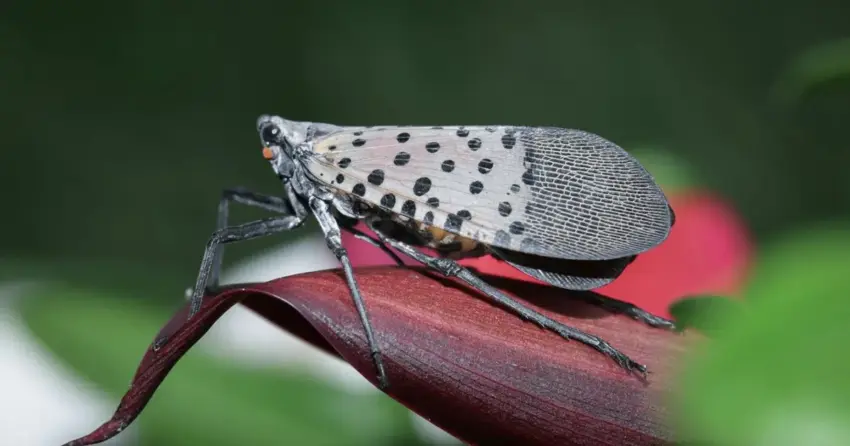
You step outside on a quiet Saturday morning with a mug of coffee, ready to check on your hydrangeas and breathe in the fresh air. Then you spot it: a strange, polka-dotted insect clinging to the trunk of your favorite maple tree, looking completely unfazed by your presence. If that bug flashes a shock of bright red underwing when it hops, you are staring at a spotted lanternfly.
First detected in Pennsylvania back in 2014 after hitchhiking on imported stone, this invasive planthopper from East Asia has spread across backyards throughout the eastern United States and Midwest. While it looks oddly decorative at first glance, it poses a serious threat to native shade trees, backyard grape arbors, and fruit patches. Managing them does not require turning your yard into a chemical zone, but it does require quick, smart action.
Identifying the Spotted Lanternfly Through Every Life Stage
Stopping this pest starts with knowing what you are looking for during each month of the gardening season. Spotted lanternflies go through distinct physical transformations between spring and late autumn, and catching them early makes control far easier.
1. Early-Stage Nymphs (May through July)
When the eggs hatch in late spring, the tiny nymphs measure barely an eighth of an inch long. They are wingless, jet-black, and covered in bright white polka dots. They hop with incredible speed when startled, often gathering in clusters on tender new plant shoots, rose canes, and perennial stems.
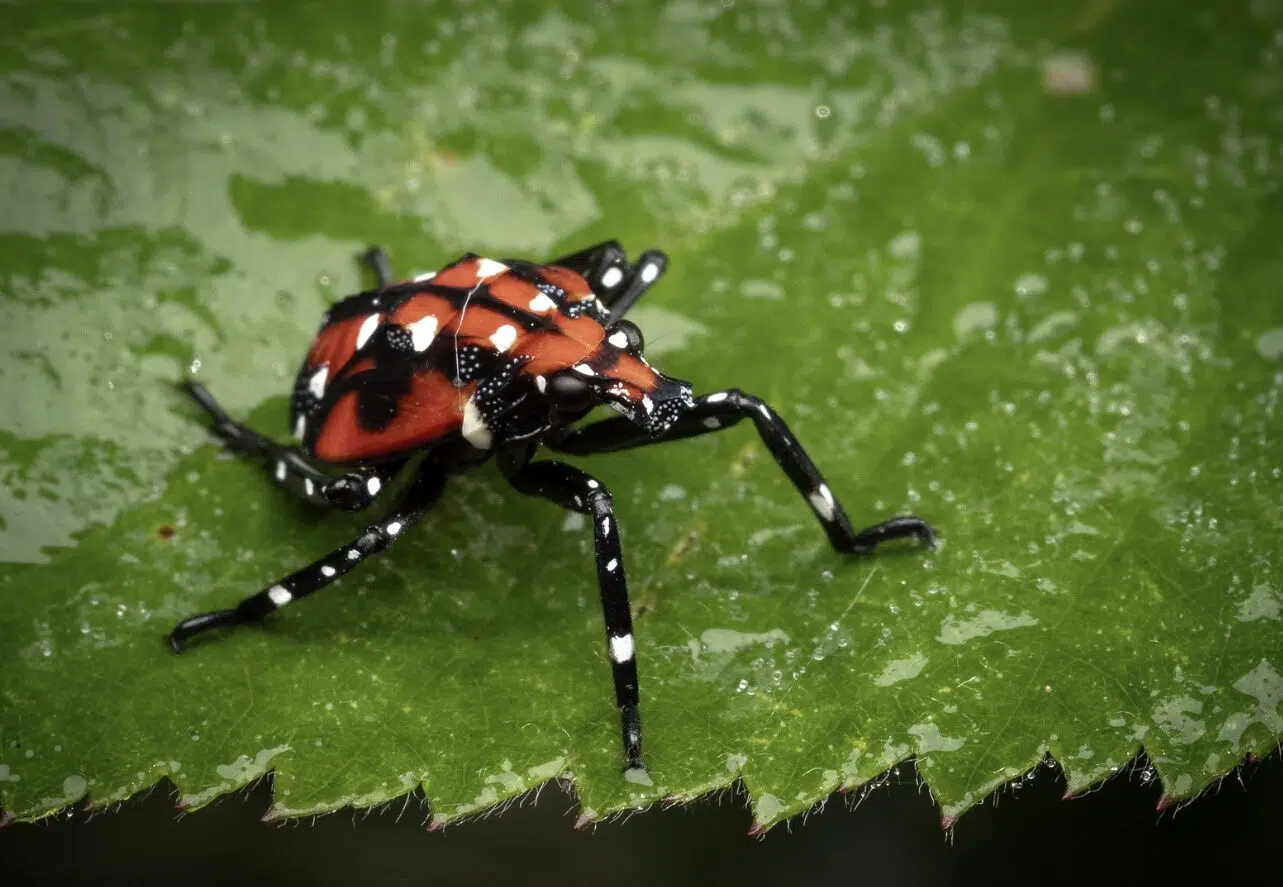
A late-stage fourth instar spotted lanternfly nymph displays its distinctive red, black, and white markings on garden foliage.
2. Late-Stage Nymphs (July through August)
By midsummer, the nymphs enter their fourth instar stage, growing to roughly half an inch. Their black bodies develop brilliant scarlet-red patches alongside the white spots. They become much more active climbers, moving up and down tree trunks in search of sap.
3. Mature Adults (August through November)
Adults measure about an inch long and look deceptively muted when resting. Their forewings are light grayish-brown with distinct black speckles and dark brick-like wingtips. When they take flight or hop, they display vibrant red hindwings bordered by black and white bars, along with a bright yellow abdomen banded in black.
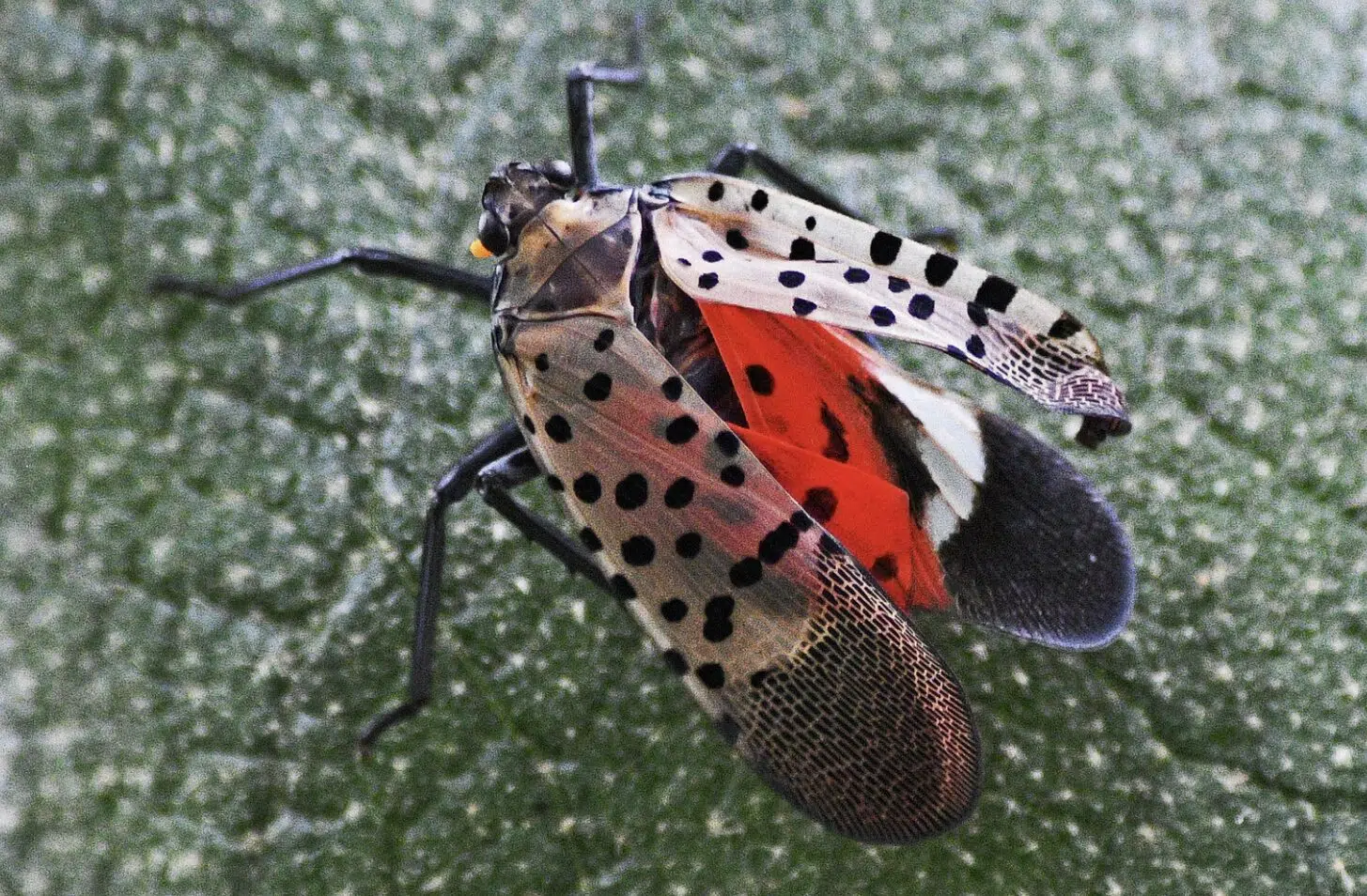
An adult spotted lanternfly opens its forewings, revealing the vivid scarlet hindwings and black spots that signal active feeding season.
How Spotted Lanternflies Damage Backyard Trees and Plants
Unlike caterpillars or beetles, spotted lanternflies do not chew leaves or bore holes into wood. Instead, they use piercing-sucking mouthparts that act like tiny drinking straws to drill directly into the plant’s vascular system, draining the sugary sap that trees rely on for nourishment.
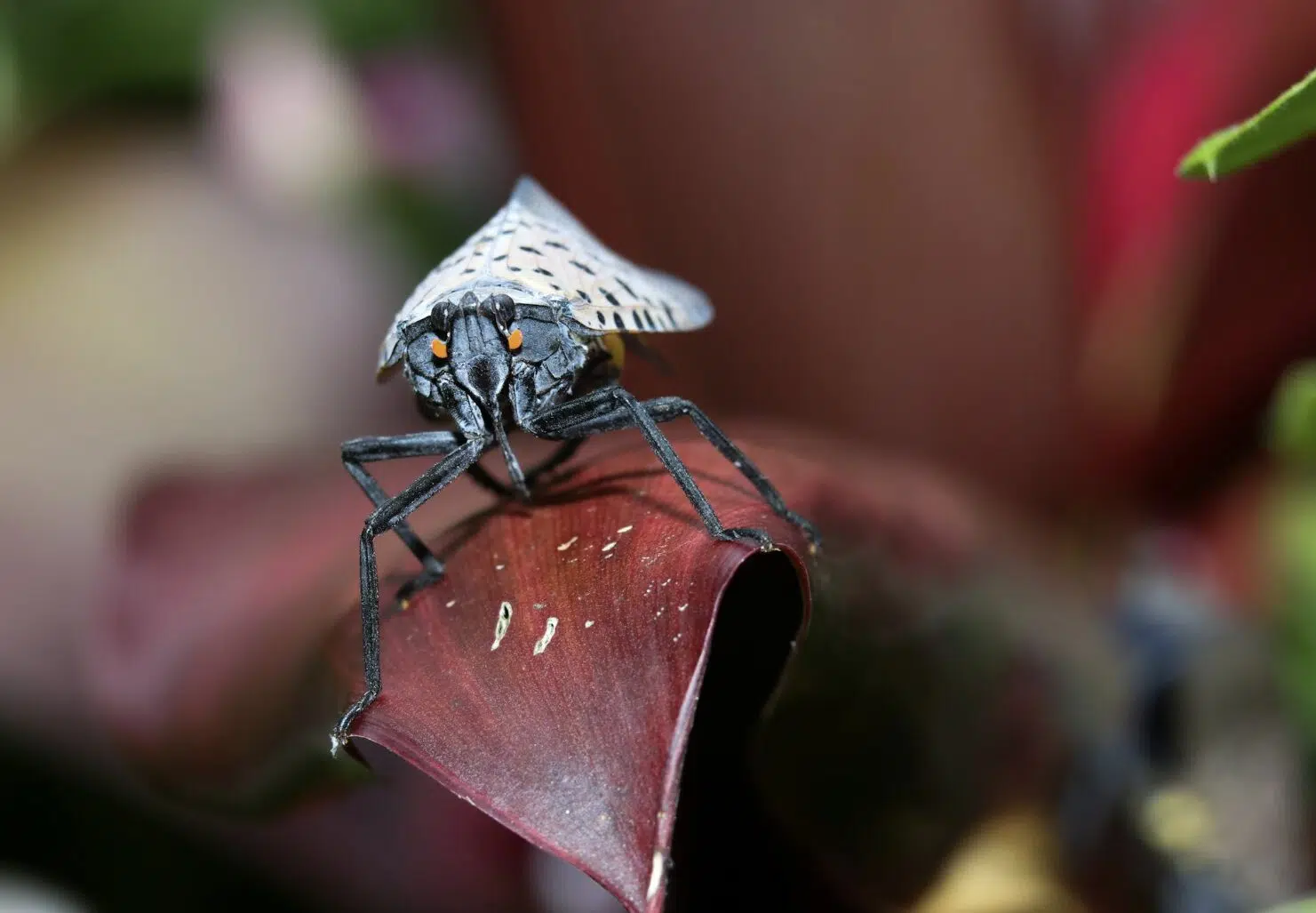
Up close, the piercing-sucking mouthparts of the lanternfly show how easily it drills into delicate plant tissue.
When hundreds of these bugs feed simultaneously, they rob the tree of vital energy. This feeding stress leads to branch dieback, wilting, leaf curling, and stunted growth. The secondary damage, however, is often what gardeners notice first.
As lanternflies drink sap, they excrete large amounts of a clear, sticky, sugary waste known as honeydew. This liquid coats leaves, patio furniture, deck boards, and lawn ornaments below. Within days, this sweet residue fosters the growth of black sooty mold, a dark fungus that blocks sunlight from reaching leaves and gives the plant an unsightly, scorched appearance. The sugary buildup also draws swarms of wasps, yellowjackets, and ants right to your outdoor sitting areas.
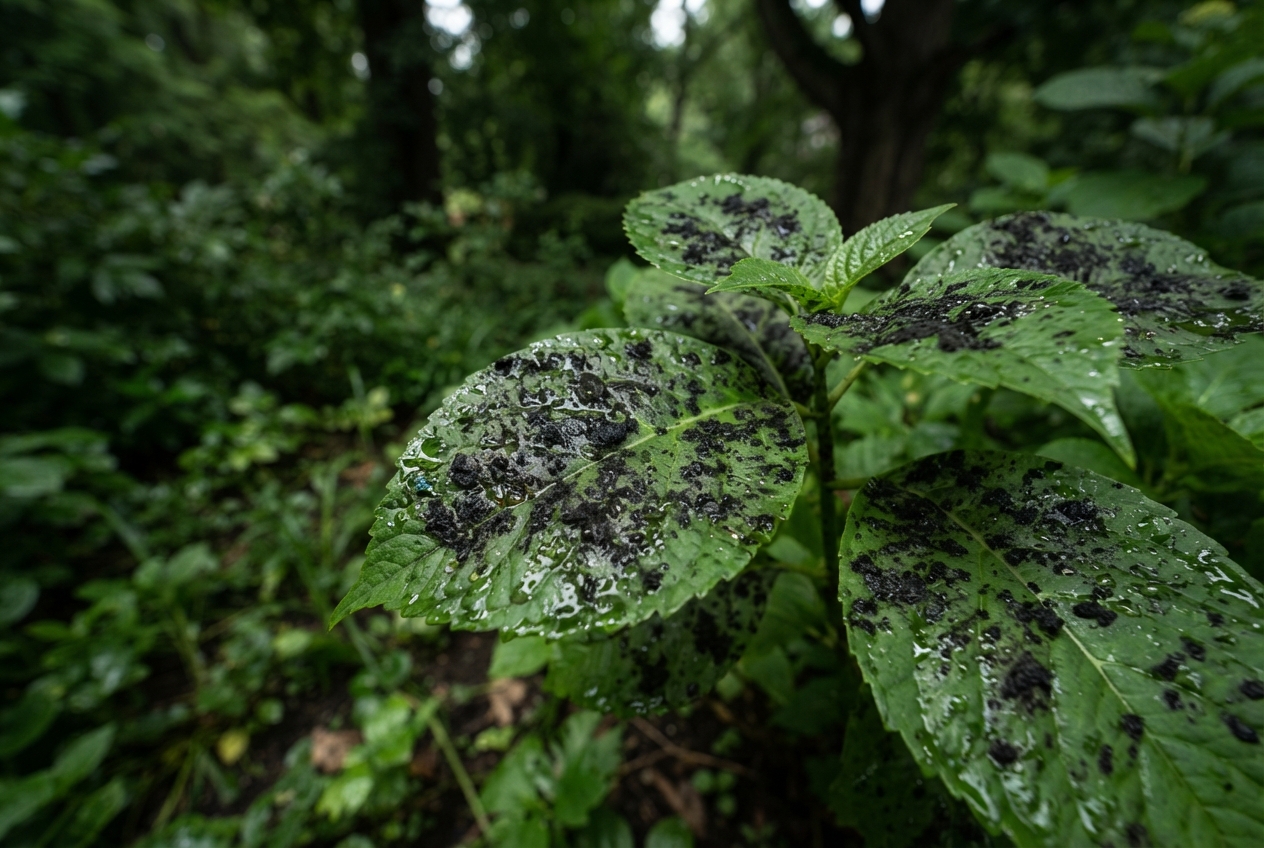
Black sooty mold builds up on foliage coated in sticky honeydew, blocking sunlight and weakening garden plants.
Target Trees: What Spotted Lanternflies Attack First
While lanternflies can feed on more than 70 plant species, they have strong preferences. Scouting these specific plants in your yard gives you an early warning system before a minor sighting turns into a full infestation.
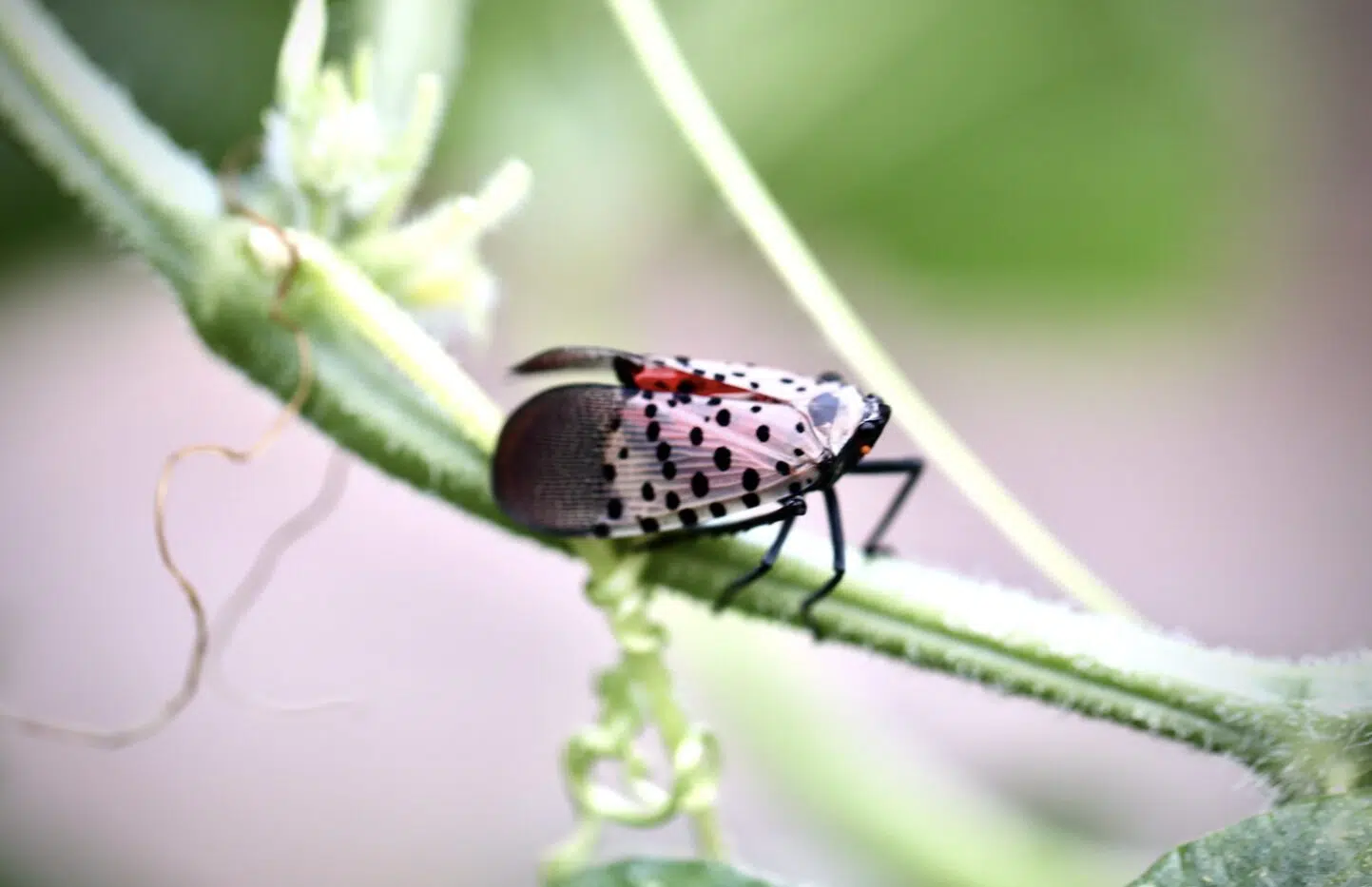
An adult spotted lanternfly rests on a green stem, feeding on sap channels before laying autumn egg masses.
- Tree of Heaven (Ailanthus altissima): This invasive tree is their absolute favorite host. If you have Tree of Heaven growing along your fence line or property edge, check it first.
- Grapevines: Whether you grow table grapes, Concord varieties for fresh juice, or ornamental wild vines on an arbor, lanternflies swarm them heavily.
- Maples: Silver maples, red maples, and Norway maples are prime feeding spots during late summer.
- Black Walnut & Willow: Smooth-barked branches on these shade trees frequently host large clusters of adults.
- Fruit Trees: Apple, sweet cherry, and peach trees can suffer reduced yields and branch damage from heavy feeding.
How to Get Rid of Spotted Lanternflies Naturally
You do not need harsh synthetic sprays to keep your yard safe. A combination of physical removal, homemade contact sprays, and smart trapping helps bring populations under control while keeping your garden friendly for bees, butterflies, and pets.
1. The Classic Stomp (With a Strategic Twist)
Squashing every bug you see genuinely makes a difference by stopping potential egg layers. The trick is understanding how they jump. Lanternflies always jump forward. Approach them from the front rather than behind; when they leap away from your shadow, they jump straight into your shoe or flyswatter.
2. Homemade Castile Soap Spray
For reachable nymphs and adults gathered on stems, a simple liquid soap spray works wonders. The soap dissolves their protective waxy outer coating, causing them to dehydrate rapidly without leaving harmful chemical residues on your soil.

A simple mix of gentle liquid soap and water creates an effective direct-contact spray for feeding nymphs.
DIY Garden Contact Spray Recipe: Mix 2 tablespoons of mild liquid castile soap (unscented or peppermint) into 32 ounces of warm tap water inside a clean spray bottle. Shake gently to combine. Spray directly onto clusters of nymphs or adults during early morning or evening hours when bugs are resting.
3. Horticultural and Neem Oils
Cold-pressed neem oil or lightweight horticultural oils work well for targeting nymphs on ornamental plants. Apply during cool, cloudy mornings to prevent sunlight from scorching sprayed leaves. These oils smother the pests on contact while breaking down naturally in the environment.
Backyard Trapping: Why Circle Traps Beat Sticky Bands
Lanternfly nymphs have a natural instinct to climb up tree trunks every morning after dropping to the ground. Traps take advantage of this daily migration to catch hundreds of pests without any spraying.
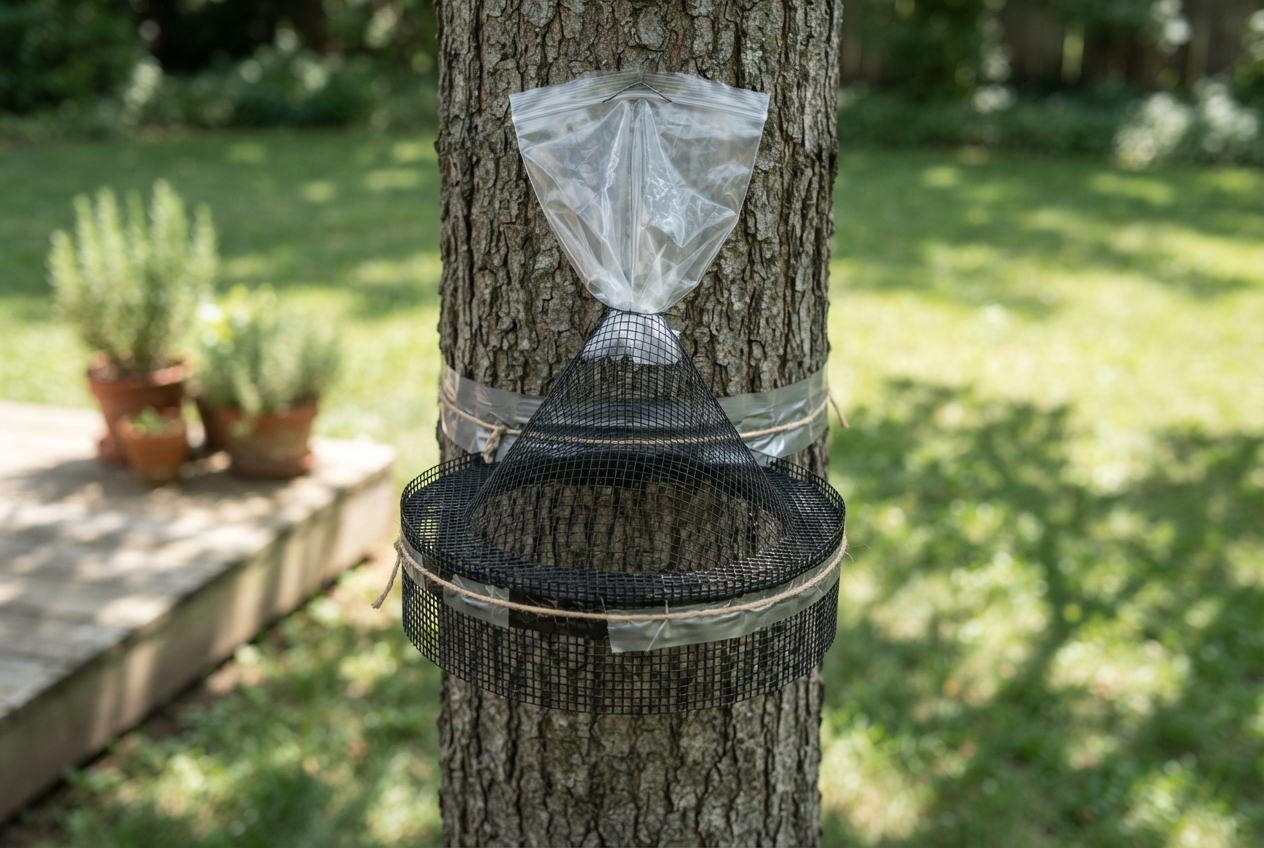
A wildlife-safe circle trap wraps around the trunk to catch climbing nymphs without harming birds or squirrels.
In the past, many gardeners wrapped tree trunks in wide bands of sticky flypaper. While effective at catching bugs, exposed sticky tape presents a terrible hazard to wild birds, bats, flying squirrels, and beneficial pollinators who get trapped on the adhesive.
Instead, install a wildlife-friendly circle trap. This simple setup uses a band of window screening wrapped around the trunk that funnels climbing insects upward into an enclosed plastic bag or jar at the top. The bugs enter easily, cannot figure out how to crawl backward, and collect harmlessly inside where you can empty them into soapy water.
Finding and Scraping Lanternfly Egg Masses Before Spring
The single most powerful way to protect your garden for next season happens between October and April. Each female adult lays one to two egg masses in late fall, each containing 30 to 50 individual eggs. Finding and destroying these clusters cuts next spring’s population dramatically.
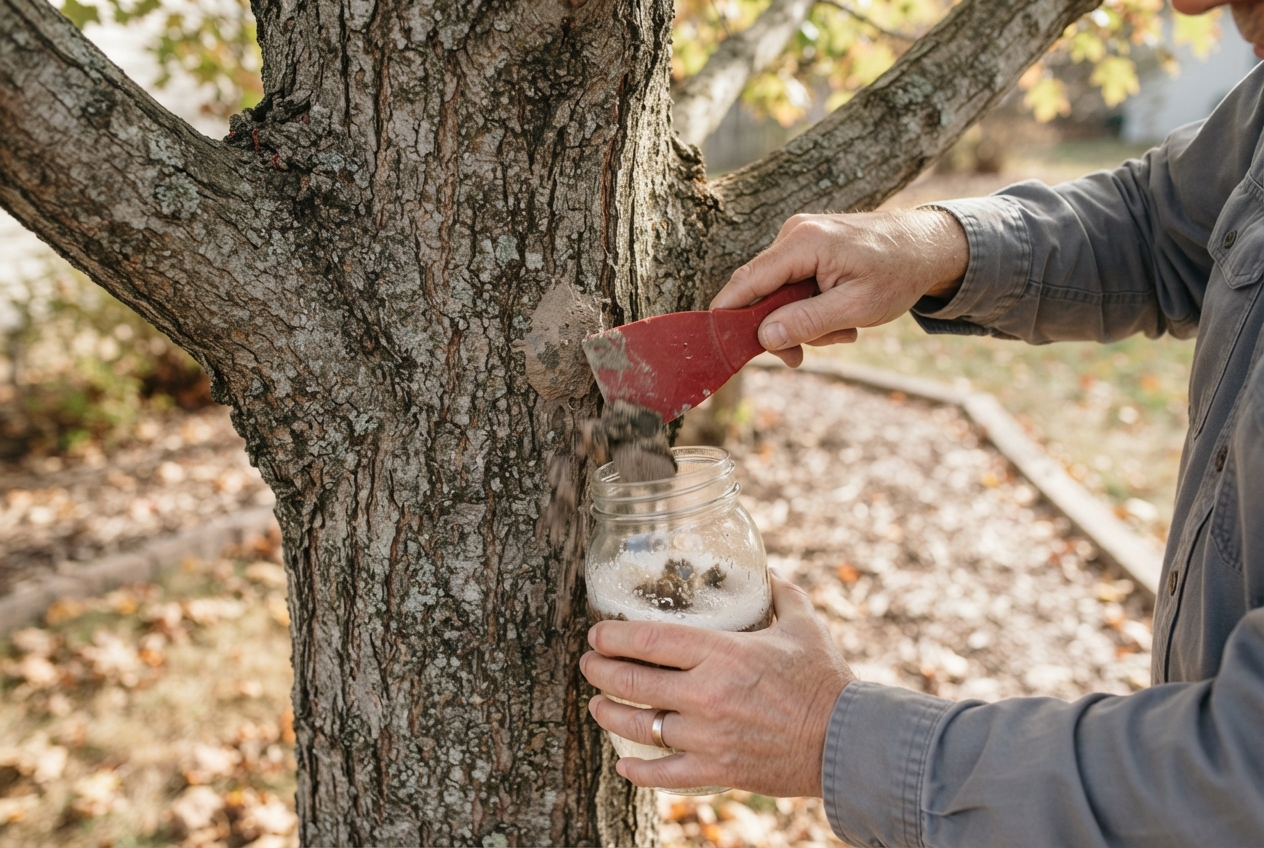
Scraping dried egg masses off tree bark into soapy water stops hundreds of nymphs before spring hatching.
What Egg Masses Look Like
Fresh egg masses look like smooth, grayish-white patches of wet mud smeared against a surface. Over the winter, they dry out, turning dull brownish-gray with tiny hairline cracks that look like old mortar or dried clay. By early spring, the protective coating can wear down, revealing neat vertical rows of tiny seed-like eggs beneath.
Where to Look for Them
Lanternflies do not just lay eggs on trees. Check the undersides of horizontal branches, deep bark crevices, stone retaining walls, wooden fence posts, concrete foundations, outdoor patio furniture, stackable planters, and even firewood logs stored near the house.
The Proper Scraping Method
- Fill a sturdy wide-mouth plastic container or glass jar with warm water and a generous squirt of dish soap (or rubbing alcohol).
- Hold the open container directly beneath the egg patch.
- Use an old gift card, putty knife, or paint scraper to firmly scrape downward against the surface, letting the entire mass drop into the liquid.
- Listen for a slight popping sound as you press, which confirms the eggs are being crushed.
- Keep the mass submerged for several days before discarding the liquid in the trash. Never scrape eggs directly onto the ground, as many will still hatch in the spring soil.
Reporting Sightings and Stopping the Spread
Beyond protecting your own backyard, helping your wider community keeps this pest from damaging local agriculture and regional parks. If you live in an area where spotted lanternflies are newly arriving, take a clear photo of the insect and report the sighting to your state department of agriculture or local county extension office.
Before traveling out of an infested region, take three minutes to inspect your vehicle. Check wheel wells, roof racks, windshield wiper bays, and truck beds for hitchhiking adults or egg patches. Inspect camping gear, outdoor patio sets, and nursery plants before moving them to new locations.
Dealing with the spotted lanternfly takes a bit of persistence, but combining seasonal egg scraping, gentle homemade soap sprays, and smart circle traps keeps your trees strong and your garden thriving throughout the growing season.