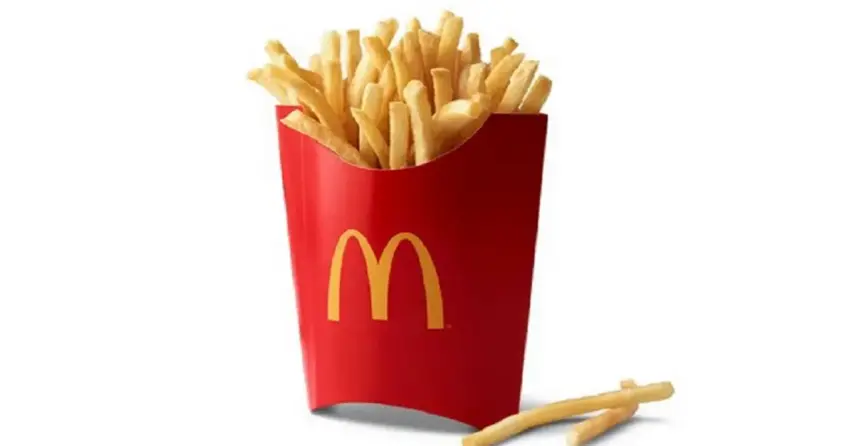
We have all sat in the drive-thru lane with the dashboard clock ticking and an open mobile app on our lap. The voice over the speaker crackles, the back seat chimes in with three different requests, and you are left staring at the screen trying to calculate dinner logistics on the fly. Small feels like an appetizer. Medium feels like the default option. Large feels like a commitment.
For years, the internet insisted that ordering large McDonald’s fries was the only sensible choice based purely on cost per gram. A food scale in a studio kitchen proved that bigger cartons give you more potato for every penny. Yet a kitchen scale never had to budget a family dinner, clean out the backseat footwells, or figure out what to do with a cold clump of shoestrings sitting on the counter at 8:00 p.m.
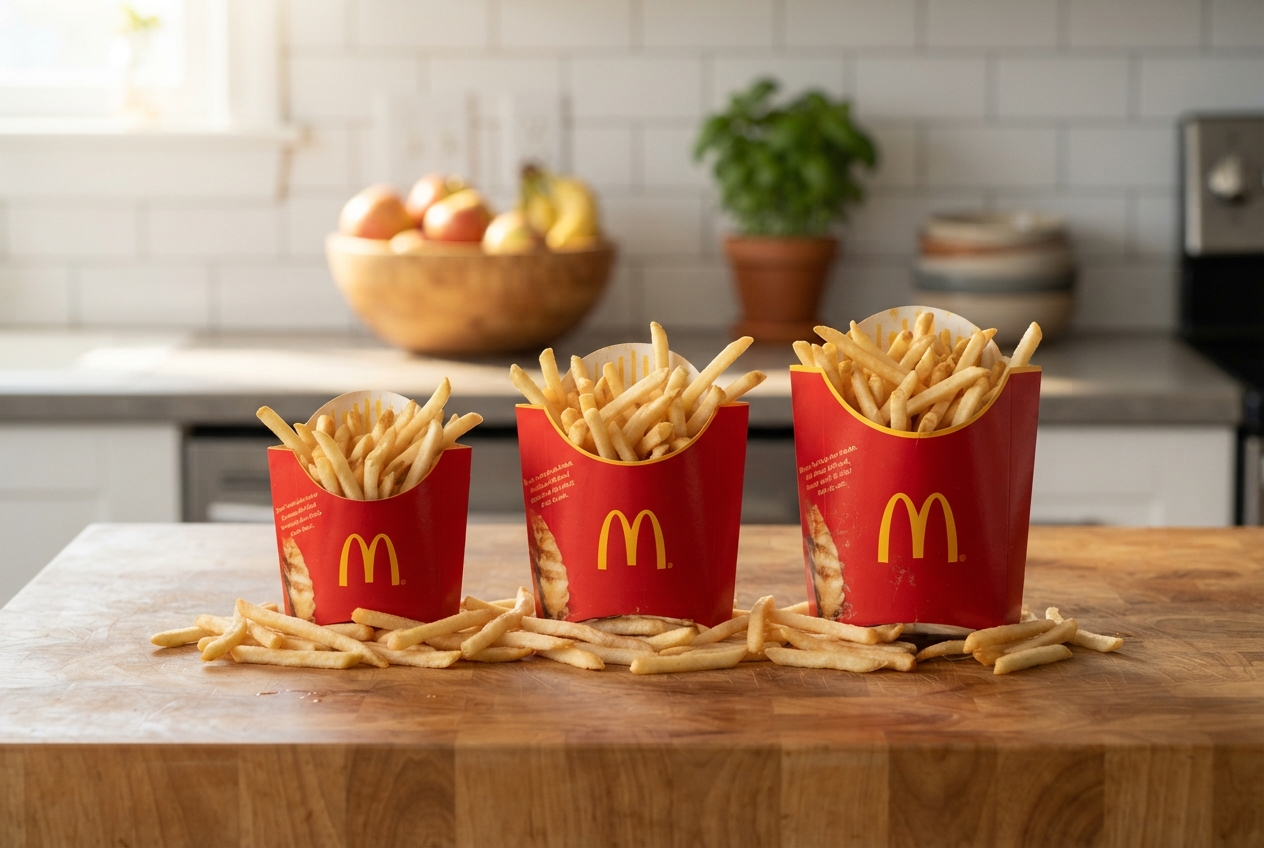
Comparing small, medium, and large fry cartons side by side highlights the real difference in volume and portion control.
The Real Math Behind Every McDonald’s Fry Size
Understanding which size to pick starts with separating carton height from real potato volume. The iconic red cardboard sleeves taper outward, meaning a small carton is packed tightly with almost zero empty pocket space, while a large carton flares wide at the top. Fast-food fry scoops move quickly during a lunch rush, so portion weights vary depending on shift timing, bin replenishment, and scoop angle.
When you look at standard menu benchmarks, the numbers break down into three distinct tiers:
- Kids / Mini Size: Roughly 1.1 ounces (around 100–110 calories). Perfect for young children or a quick handful to satisfy a salt craving without leftovers.
- Small Fry: Roughly 2.6 ounces (approx. 230 calories). Compact, snugly packed, and provides just enough crunch for a single meal.
- Medium Fry: Roughly 4.0 ounces (approx. 320 calories). The middle ground, though often the least cost-effective price jump per ounce.
- Large Fry: Roughly 5.4 to 6.0 ounces (approx. 480–500 calories). The undisputed champion of volume and price-per-ounce economics.
The price jump from small to medium is often steep for the modest ounce increase you get. However, stepping from medium up to a large McDonald’s fries order generally costs less than a dollar extra while adding nearly 40% more volume. If you are feeding more than one person, skipping medium altogether is almost always the smartest move.
Who Each Fry Carton Is Actually For
A smart order depends on how your household actually eats, not just the menu algorithm. Purchasing a giant carton simply because it boasts better unit economics turns into wasted money if half of it ends up in the compost bin.
Match your carton to your meal plan with these practical household rules:
- Choose the Small: When you are driving solo, crave the savory crunch, and want to finish your meal cleanly with zero leftover obligations.
- Choose the Medium: When sharing between two light eaters who want a side dish without turning fries into the main course.
- Choose the Large: When feeding multiple kids, splitting an order between two adults, or picking up a side for movie night at home.
A good bargain is only a deal if the food gets eaten. Wasted potatoes are always the most expensive size on the menu.
The Drive-Thru Freshness Window: Beating the 10-Minute Clock
Shoestring potatoes shine because of their ultra-thin cut. They flash-fry into a blistered, golden crust with an airy center. That delicate texture also means they lose heat quickly. Once sealed inside a hot paper bag, lingering steam softens the exterior within minutes, turning crisp potatoes into limp strings before you even pull into the driveway.
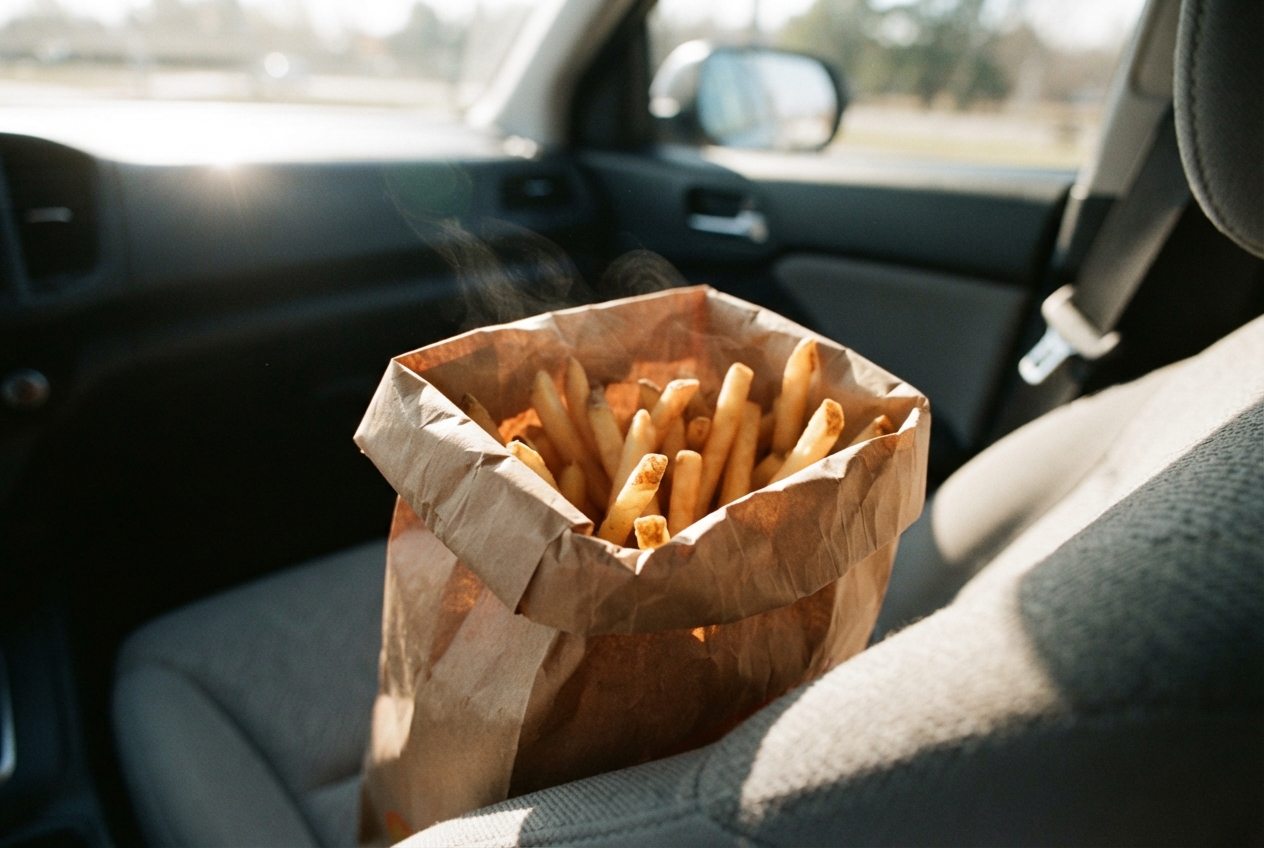
Venting the brown paper bag on the drive home prevents steam from trapping moisture and softening the crisp outer crust.
To keep your batch in peak condition during transport, roll down the top of the outer paper takeout bag immediately. Leaving the bag open lets moisture escape instead of condensing along the cardboard sleeves. Keep the bag resting upright on the console rather than flat on a cold seat.
If you prefer a piping-hot drop straight from the fryer basket, request your fries without salt at the speaker window. The kitchen will drop an unseasoned basket to order. You can easily sprinkle on fine sea salt or your favorite herb blend once you get home.
How to Revive Limp Takeout Fries at Home (Oven & Air Fryer Rules)
Never toss leftover fries into the microwave. Microwaving vibrates water molecules inside the starch cells, creating steam that turns the outer crust soft and gummy. To restore the original blistered crunch, you need dry, circulating convective heat.
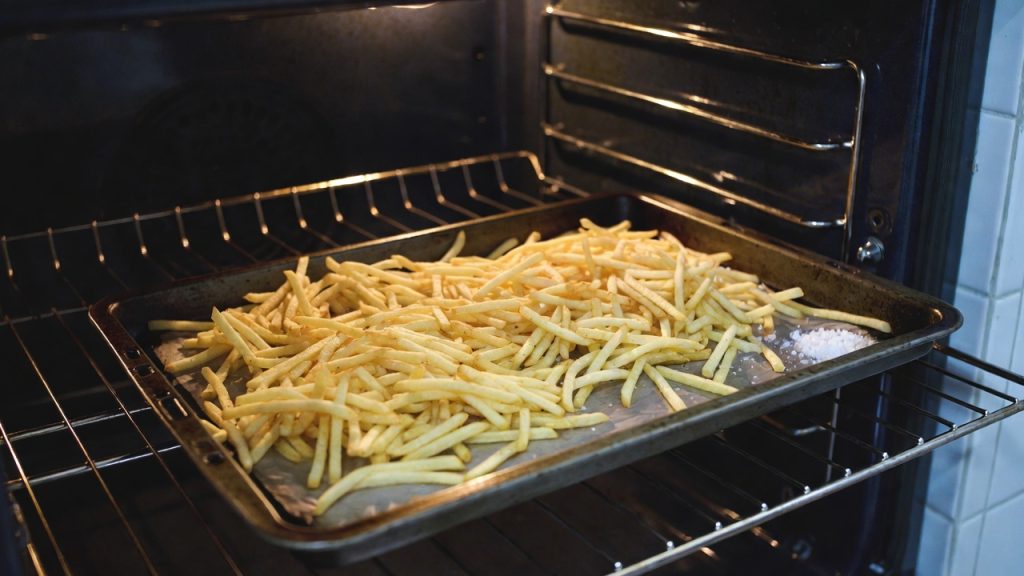
Spreading leftover fries across a preheated sheet pan in a single layer ensures maximum hot air circulation and restores crunch.
The Sheet Pan Oven Method
Preheat your oven to 425°F. Spread the cold fries across an ungreased baking sheet in a single layer so they do not overlap. Slide the tray onto the center oven rack for 4 to 6 minutes. The residual surface oil will bubble and recrisp the shell without drying out the potato centers. Pull them out and finish with a fresh pinch of flaky salt.
The Speedy Air Fryer Method
Set your air fryer to 380°F. Add the fries directly to the basket, keeping the layer shallow to allow airflow. Air fry for 2 to 3 minutes, shaking the basket halfway through. The high-velocity heat strips away surface moisture rapidly, returning that fresh-from-the-fryer snap.
Transforming Leftover Fries into a Savory Breakfast Hash
If you ordered a large carton and ended up with a surplus that made it into the refrigerator overnight, turn them into weekend breakfast fuel instead of letting them sit forgotten in the fridge.
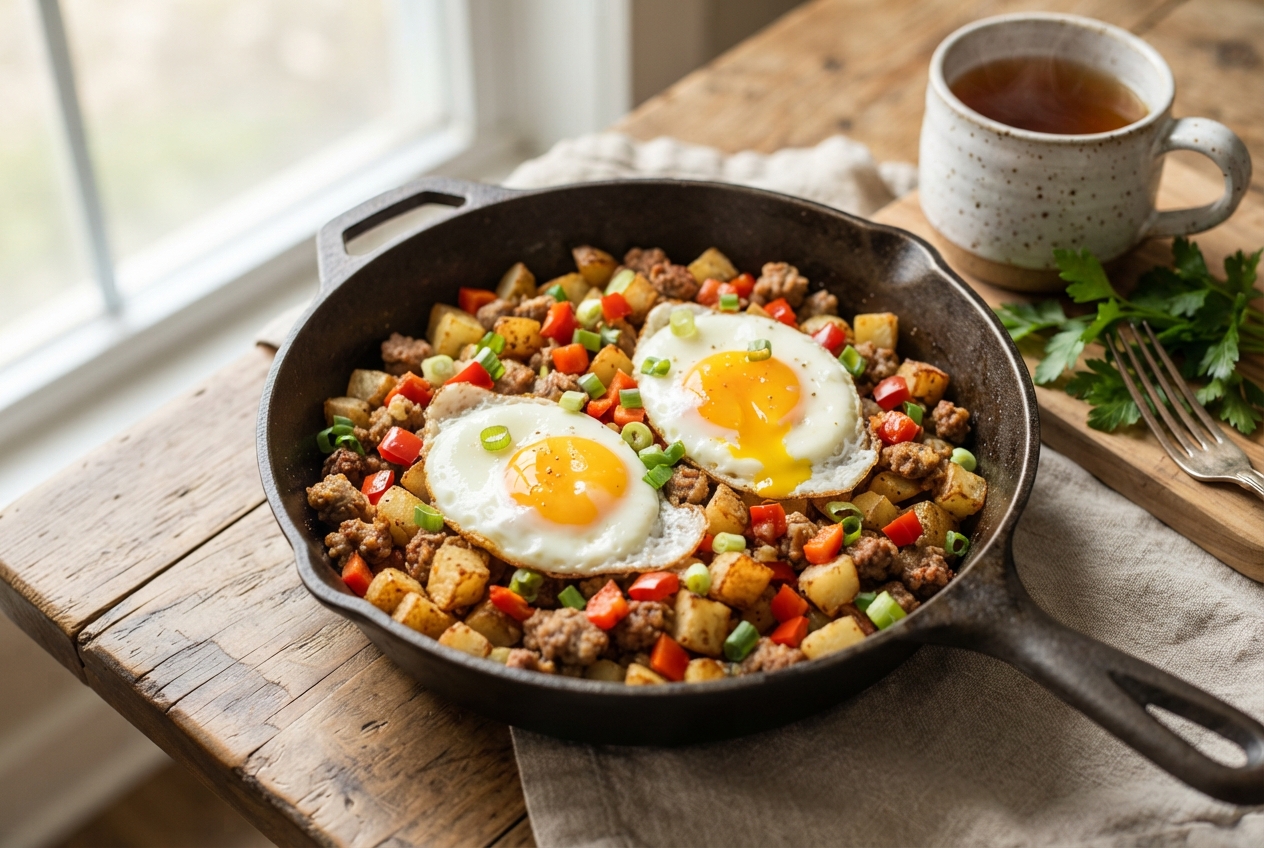
Repurposing cold leftover fries into a loaded breakfast hash gives second-day potatoes a savory, golden makeover.
Dice the cold fries into bite-sized half-inch pieces. Heat a cast-iron skillet over medium heat with a teaspoon of olive oil or melted butter. Toss in diced bell peppers, sweet onions, and the chopped potatoes. Cook undisturbed for 3 minutes until the bottom edges brown deeply, then flip with a flat spatula.
Crack two eggs directly into the skillet gaps, cover with a lid until the egg whites set and yolks remain soft, and finish with freshly cracked black pepper and chopped chives. The seasoned starch crisps up beautifully into a skillet hash that rivals your favorite neighborhood brunch spot.
Easy Alcohol-Free Kitchen Dips for Takeout Night
Elevate your weeknight takeout by skipping the standard ketchup packets and whisking together quick, flavorful homemade dips using pantry staples:
- Smoky Garlic Aioli: Whisk 3 tablespoons of mayonnaise with half a teaspoon of smoked paprika, one minced garlic clove, and a squeeze of fresh lemon juice.
- Creamy Honey-Mustard: Combine equal parts yellow mustard, Dijon mustard, and raw honey with a spoonful of Greek yogurt for a tangy bite.
- Herb Buttermilk Ranch: Stir fresh dill, dried parsley, onion powder, and garlic powder into whole-milk sour cream with a splash of buttermilk.
Making the Smart Call at the Window
Choosing the right fry size is simply about matching your purchase to the realities of your kitchen. Ordering large McDonald’s fries makes complete financial and culinary sense when you have multiple mouths to feed, plan on sharing across the table, or look forward to a crispy morning skillet hash.
If you just want a personal treat on the drive home, stick to the small, skip the food waste, and enjoy every bite while the steam is still rising from the paper carton.