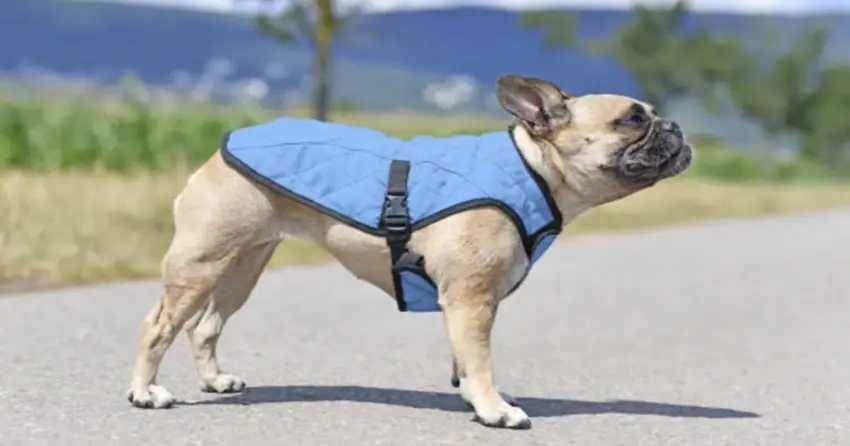
You spot it thirty feet down the walking path: a bright royal blue vest, a matching leash, and a dog trotting along with purpose. Your first instinct might be to pull back your pup, freeze in place, or wonder if you are watching an active medical alert team in motion. Other times, the dog turns out to be a rowdy young mix who simply looks sharp in primary colors.
So, what does a blue vest or bandana on a dog mean? In dog gear culture, blue usually signals a working service dog, a therapy dog on assignment, an animal in formal obedience training, or simply a pet dressed in clean gear. Because canine color codes are widespread yet rarely defined by law, knowing the difference keeps sidewalks peaceful and handlers safe.

Working service dogs wear tailored blue vests to signal focus, not as a legal permit.
The Legal Reality: ADA Guidelines vs. Sidewalk Signals
Under the Americans with Disabilities Act (ADA), a service dog is defined by the specific work or tasks it has been trained to perform for a person with a disability. These tasks range from blood sugar detection and allergen alerts to psychiatric interruption, mobility support, and guiding the visually impaired.
Here is what surprises most people: the ADA does not require service dogs to wear a vest, patch, harness, or specific color. A service dog working in a plain collar is legally identical to one covered in patches. Handlers choose blue vests because deep navy and royal blue stand out clearly against street traffic while projecting a calm, professional tone that naturally discourages strangers from interrupting.
Under federal law, businesses may only ask two specific questions if a dog’s function is not obvious: (1) Is the dog a service animal required because of a disability? and (2) What work or task has the dog been trained to perform?
Service Dogs vs. Therapy Dogs vs. Emotional Support Animals
Much of the sidewalk confusion comes from mixing up three very distinct canine roles. Each has different training standards, distinct public-access rights, and different reasons for wearing gear.
- Service Dogs: Individually trained to perform specific disability-mitigating tasks. They enjoy full public access rights to grocery stores, restaurants, and transit. Blue vests act as visual notices to the public: I am working, please ignore me.
- Therapy Dogs: Trained and certified to bring comfort, affection, and calm to hospitals, reading programs, nursing homes, and hospice facilities. They have no public-access rights in regular retail businesses and only work during designated visits, often wearing uniform blue bandanas or program-issued vests.
- Emotional Support Animals (ESAs): Provide therapeutic companionship within home settings. They do not require task-specific training and do not possess public-access rights for non-pet-friendly spaces, regardless of vest color.
The Complete Leash and Bandana Color Code System
While blue gets the spotlight on service animals, trainers and rescue organizations use an informal color-coded language to signal a dog’s temperament, health needs, and training boundaries from a distance.

Leash color codes like bright yellow give reactive or recovering dogs the physical buffer they need.
Recognizing these shades helps you make smart, split-second decisions when walking through crowded neighborhood greenways:
- Yellow (The Yellow Dog Project): The dog needs space. This could mean they are reactive to other dogs, recovering from surgery, prone to fear-based barking, or in heat. Give them a wide berth.
- Red: Caution. The dog is not comfortable with approaching strangers or other animals. Do not attempt a meet-and-greet.
- Orange: No Dogs. The dog is generally friendly with humans but does not want to interact with other canines.
- Green: Friendly. The dog is generally social and open to polite introductions, though you should still ask the handler first.
- White: Deaf or blind. The dog has sensory limitations and can be easily startled by sudden touch.
- Purple: Do not feed. The dog has severe food allergies or is on a strict veterinary diet.
- Blue: Service dog, formal training in progress, or pet lifestyle gear.
Everyday Etiquette: What to Do When Passing a Working Dog
When you share walkways, grocery aisles, or apartment elevators with a dog in a vest, your best reaction is simple: be completely uninteresting. Working dogs are trained to filter out ambient noise, but direct social signals pull their attention away from life-saving tasks.
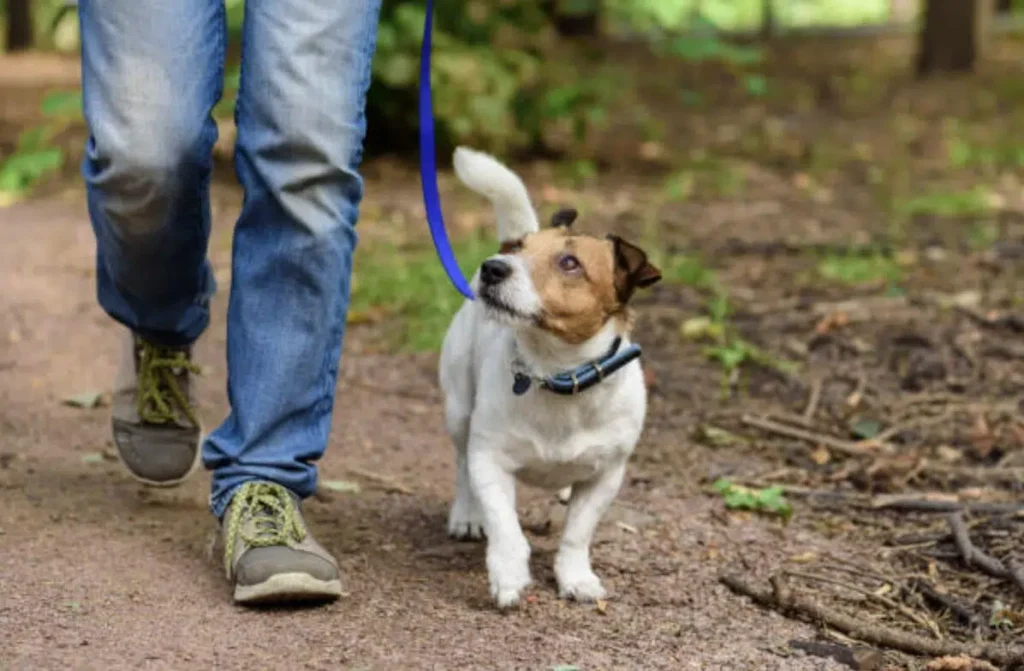
Keeping your pet on a short, controlled leash lets working dogs stay focused on their tasks.
Follow these quick sidewalk guidelines whenever you cross paths with a vested dog:
- Skip the Baby Talk and Kissy Noises: Whistling, snapping fingers, or making high-pitched sounds forces the dog to actively fight their instincts to stay focused on their handler.
- Reel in Your Leash: Even if your dog is gentle and social, an unexpected nose-to-nose greeting can startle a service dog mid-alert or break weeks of careful obedience conditioning. Gather your leash and pass on the far side.
- Teach Children the “Look, Don’t Touch” Rule: Remind kids that dogs wearing vests are on the clock, just like school crossing guards or paramedics.
- Speak to the Human, Not the Dog: If you need to navigate a narrow doorway or share an elevator, ask the handler, “May we step through?” rather than engaging the animal directly.

A rescue pup sporting a classic patterned blue bandana during an afternoon neighborhood walk.
When Blue Just Means Blue: Everyday Style and Sun Protection
Not every blue bandana carries a heavy legal meaning. Many owners grab a blue cotton kerchief simply because it complements their dog’s coat, hides park dirt better than pastel tones, or keeps cooling gel packs tucked against the neck during sweltering summer strolls.
If you love dressing your pet in blue, go right ahead. The only boundary to respect is honesty: never attach bogus “Service Animal” patches to a pet’s harness just to bypass pet policies. Doing so undermines public trust for disabled handlers who rely on their service animals every single day.

Clean, well-fitted gear keeps daily walks comfortable and communicates clear signals to your neighbors.
Choosing, Fitting, and Caring for Dog Gear
Whether you are outfitting a working dog with task patches or slipping a cotton bandana onto your rescue pup, comfort and fit come before aesthetics. Ill-fitting harnesses cause chafing behind the elbows, restrict shoulder movement, and create unnecessary stress on daily walks.
Keep these practical gear tips in mind:
- Check the Y-Front Clearance: Look for harnesses with a deep Y-shaped chest plate that allows full shoulder extension without pinching the armpits or pressing on the soft trachea.
- Opt for Breathable Fabrics: Heavy nylon and neoprene trap heat quickly. Lightweight mesh and natural cotton canvas offer airflow during long afternoon outings.
- Wash Gear Regularly: Sweat, dander, and street grime break down webbing fibers. Soak nylon gear in warm water with a splash of pet-safe mild soap, scrub with an old toothbrush, and lay flat to dry in the sun.
- Use Removable Hook-and-Loop Patches: If your dog is working on specific skills, interchangeable patches (such as “IN TRAINING” or “PLEASE ASK TO PET”) give you clear communication that changes as your dog advances.
Understanding what a blue vest or bandana on a dog means helps all of us share sidewalks, public parks, and neighborhood trails with confidence and courtesy. Give working teams the space they need to do their jobs, keep your own pets safely leashed, and enjoy the rhythm of the daily walk.