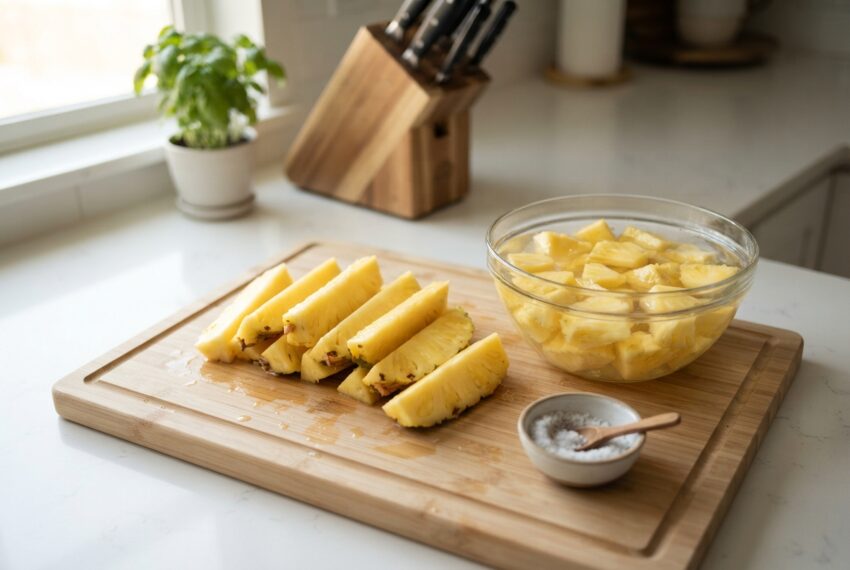
You know that tingling, sandpaper sensation that attacks your tongue three bites into a bowl of fresh pineapple? It starts as a mild prickle, moves into a sharp scrape, and leaves you wondering why nature made such a sweet fruit so aggressive to eat. Fortunately, there is a simple kitchen routine that completely tames the burn in less than three minutes: soaking pineapple in salt water.
This traditional fruit-prep method has been used for generations across Southeast Asia and Latin America. It requires nothing more than cool tap water, a pinch of common salt, and a timer. Once you try it, you will never slice raw pineapple without a small bowl of brine nearby.
The Double-Punch Science: Why Fresh Pineapple Burns Your Mouth
Most people blame the sting entirely on fruit acid. While pineapple contains plenty of citric and malic acids, the real culprit is a unique biochemical combination of an enzyme called bromelain and microscopic mineral needles called raphides.
Bromelain is a powerful proteolytic enzyme. In plain English, that means its primary job is breaking down proteins. When you chew raw pineapple, the enzyme immediately begins breaking down the protective mucosal layer and surface proteins on your tongue, cheeks, and roof of your mouth.
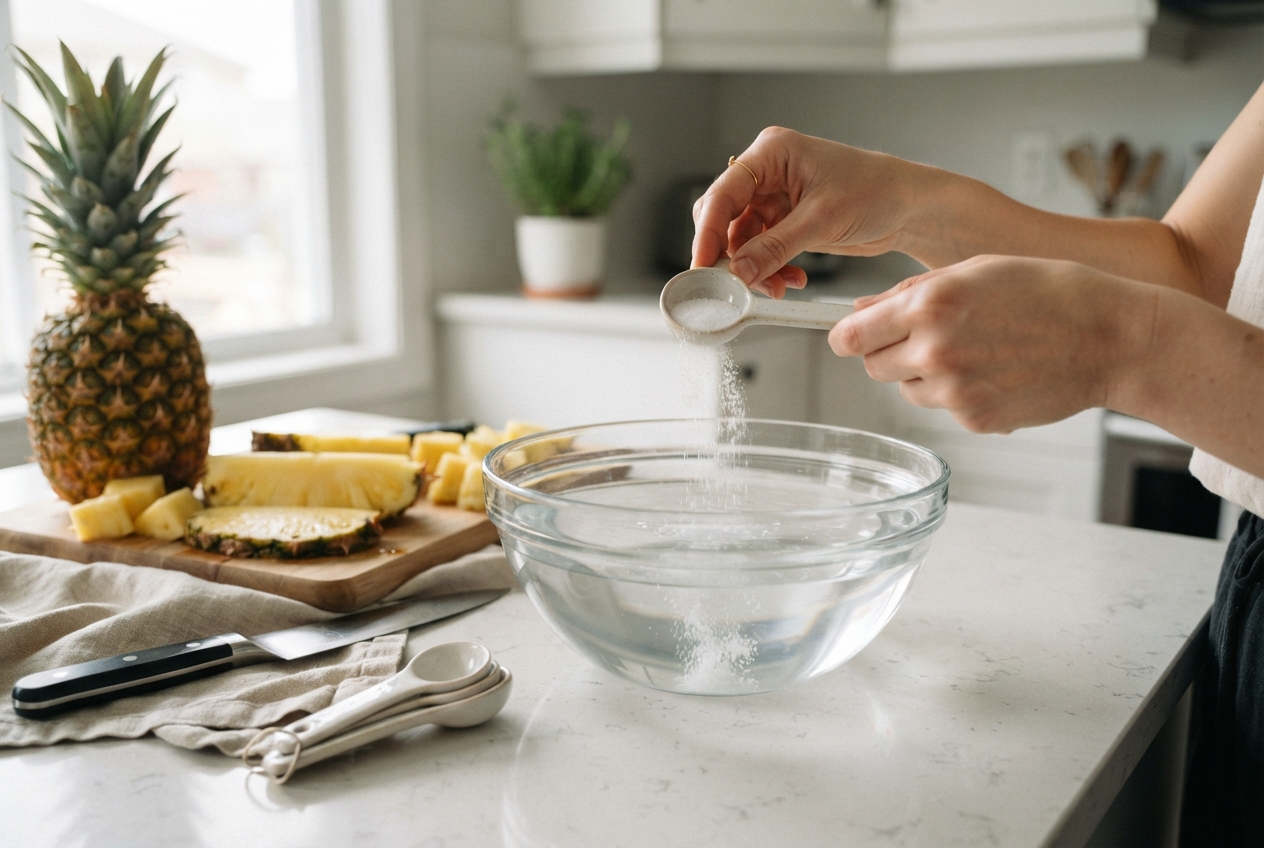
Dissolving a single teaspoon of fine salt into cool water creates the wash that tames raw pineapple.
Making matters worse, pineapple cells also contain raphides—thousands of tiny, needle-sharp calcium oxalate crystals. As you chew, these micro-needles create tiny punctures across your delicate mouth tissues. This allows the bromelain enzyme to penetrate deeper, amplifying that raw, irritated burn. You are not imagining it: the fruit is physically and enzymatically fighting back.
Safety Note: A mild prickle on the tongue is standard bromelain activity. However, if you ever experience lip swelling, throat tightness, hives, or breathing difficulty, stop eating immediately and seek medical attention, as those are signs of a genuine food allergy.
How Soaking Pineapple in Salt Water Stops the Sting
Dropping freshly sliced pineapple into a mild salt bath triggers two distinct culinary reactions that transform how the fruit tastes and feels.
First, sodium chloride (table or sea salt) alters the ionic charge on the fruit’s cut surfaces. This change denatures and temporarily suppresses the surface activity of the bromelain enzyme. Because the enzyme cannot latch onto mouth proteins as easily, the stinging sensation drops dramatically.
Second, salt acts as an organic flavor balancer. It suppresses the perception of sharp, astringent bitterness while activating the sweet-sensing receptors on your tongue. The pineapple does not actually produce more sugar during the soak, but your palate perceives it as noticeably sweeter and rounded.
The Master Soak: Exact Water-to-Salt Ratio and Timing
The goal is to neutralize the enzyme without turning your fresh fruit into a pickle. Getting the balance right comes down to precise proportions and strict soak times.
- Water: 4 cups cool or room-temperature filtered water
- Salt: 1 level teaspoon fine sea salt, kosher salt, or standard table salt
- Pineapple: 1 whole fresh pineapple, peeled, cored, and cut into bite-sized chunks or spears
- Soak Time: 2 to 3 minutes (maximum 5 minutes)
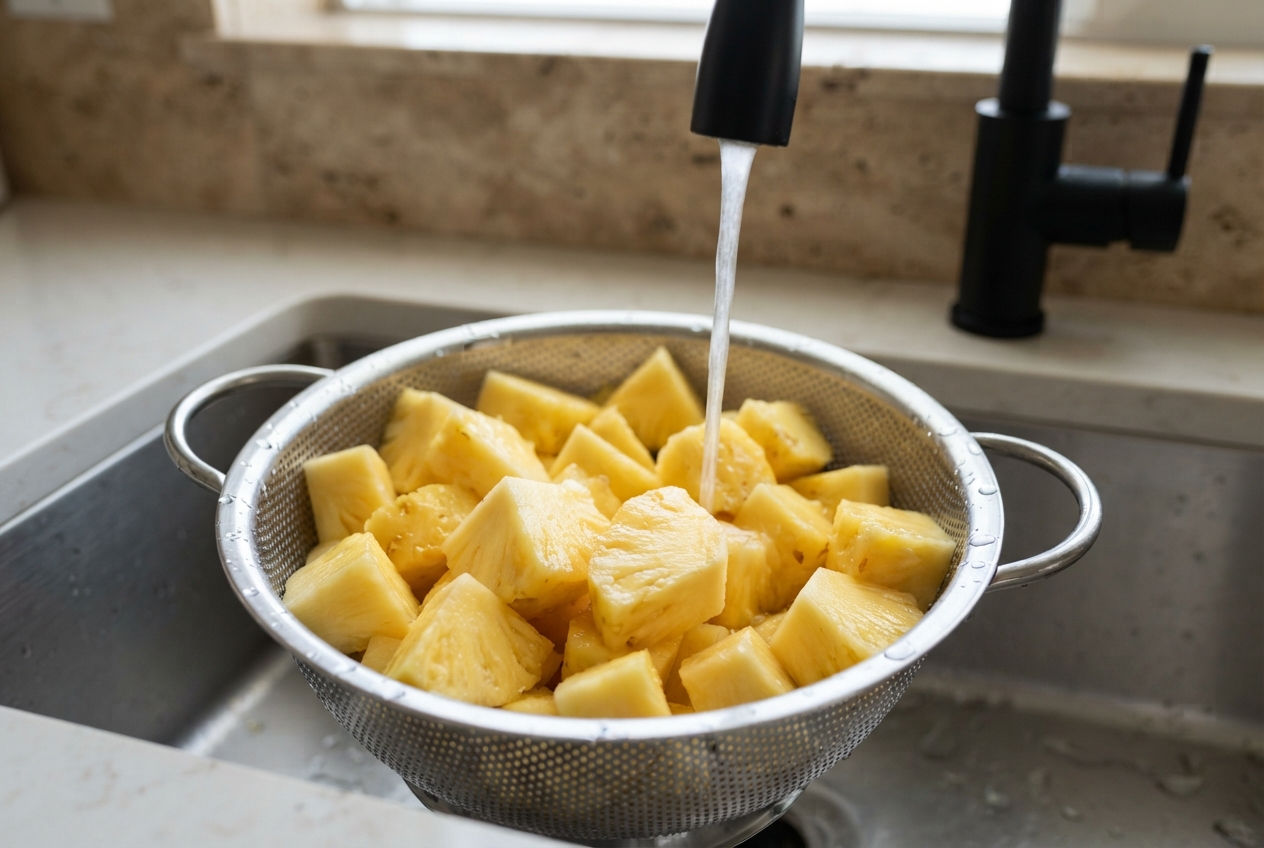
A brief rinse under cool tap water removes any leftover salinity while locking in natural sweetness.
Step-by-Step Prep Method
1. Dissolve the salt: Add 1 teaspoon of salt to 4 cups of cool water in a large glass or ceramic bowl. Stir until the salt crystals completely vanish.
2. Submerge the fruit: Drop your freshly cut pineapple pieces into the brine, pressing them down so the liquid coats every exposed side.
3. Set a 2-minute timer: Let the fruit rest in the liquid for two to three minutes. Avoid walking away; leaving it too long will pull out the fruit juices and leave a salty aftertaste.
4. Drain and quick-rinse: Pour the contents through a colander. Give the fruit a swift 5-second rinse under cold running tap water to wash away residual surface salt.
5. Pat dry: Spread the pieces over a clean kitchen towel or paper towel for a minute to absorb excess moisture before serving or chilling.
How to Pick a Ripe Pineapple That Stings Less
Preparation is half the battle, but choosing the right fruit at the grocery store makes a massive difference. Underripe pineapples contain much higher concentrations of acids and active bromelain.
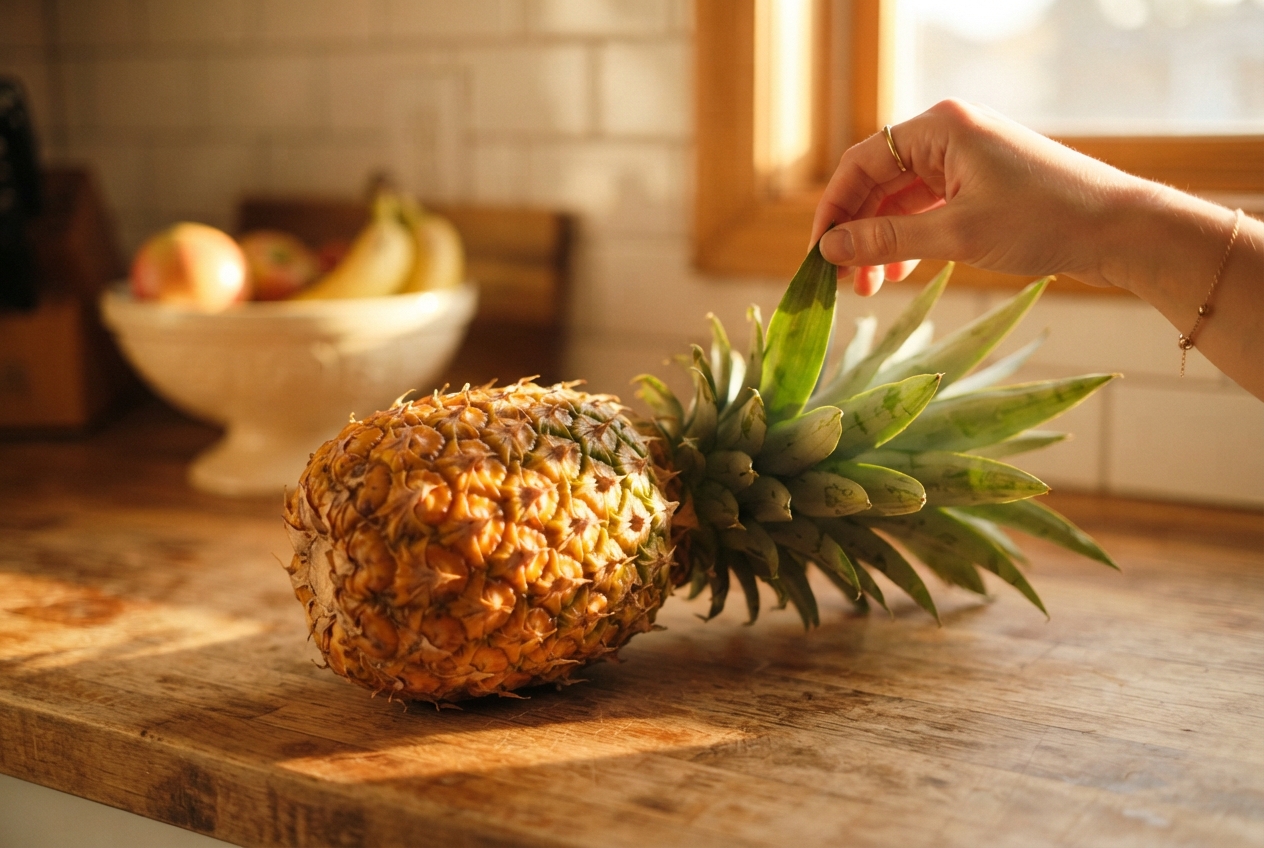
Checking for a golden base and an easy-to-pull crown leaf helps you pick a pineapple with naturally lower acidity.
Look for these four signs of ripeness when shopping:
- The Scent Test: Sniff the very base of the fruit. It should smell sweet, warm, and distinctly tropical. If it smells like nothing, it is underripe; if it smells sour or fermented, it is past its prime.
- The Crown Tug: Gently pull one of the small leaves from the very center of the top green crown. If it slides out with gentle resistance, the fruit was picked at peak ripeness.
- The Base Color: Look for a warm, golden-yellow blush spreading upward from the base. A completely dark green shell usually means high acidity and firmer flesh.
- The Gentle Squeeze: Give the body a light press with your thumb. It should have a slight give, similar to a ripe avocado, without feeling mushy.
Fresh vs. Canned Pineapple: Why Canned Never Burns
If you have ever eaten an entire can of pineapple rings without feeling a single tickle, there is a simple explanation: heat processing.
Commercial canning requires the fruit to go through high-heat pasteurization to ensure shelf stability. Heat permanently breaks down the protein structure of bromelain, rendering the enzyme completely inactive. While canned fruit is convenient for baking or quick lunches, it loses the snappy, crisp texture and vibrant, bright aroma of raw pineapple. The salt-water soak gives you the best of both worlds: crisp, raw texture with zero mouth irritation.
Alcohol-Free Serving Ideas for Salt-Soaked Pineapple
Once your fruit is prepped, rinsed, and patted dry, you can enjoy it straight from the bowl or dress it up for an afternoon snack spread.
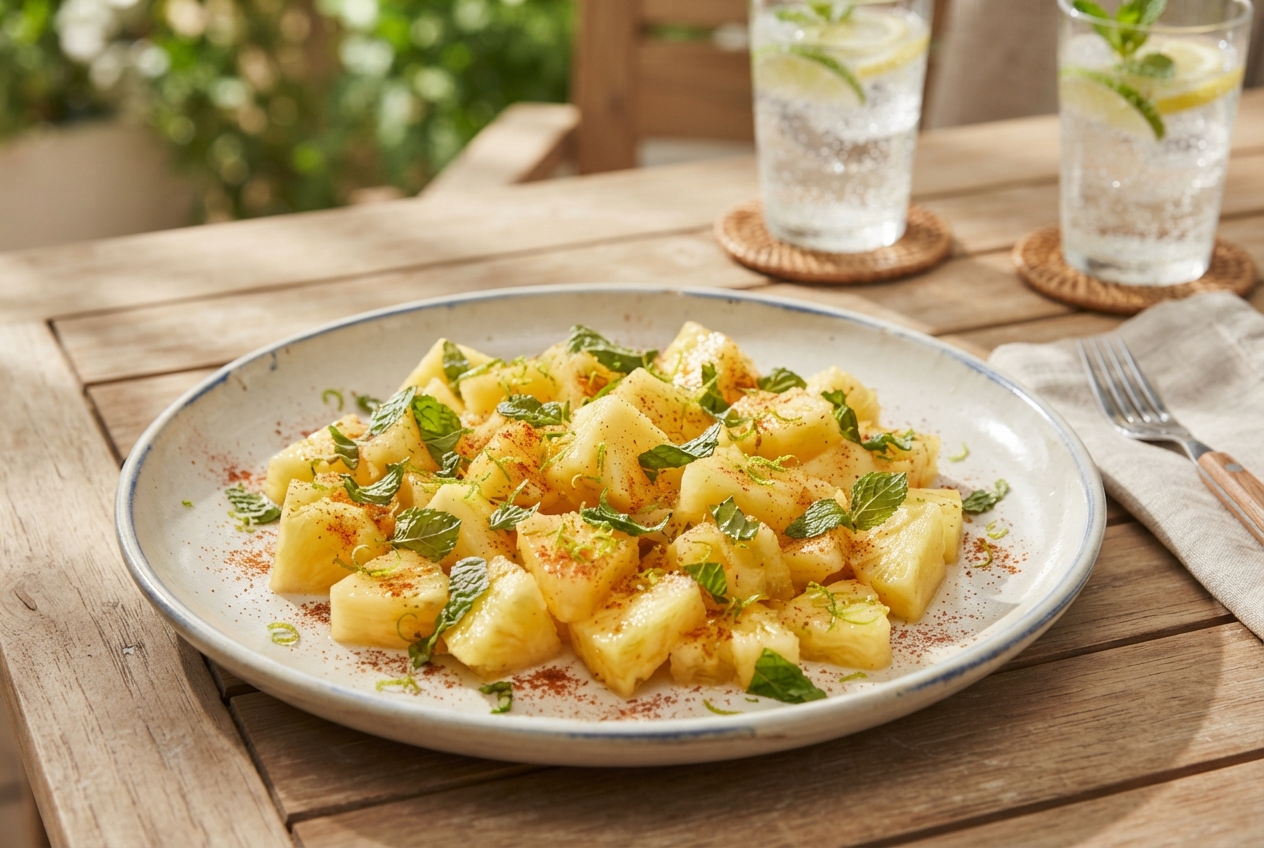
Serve your prepped pineapple with lime zest and fresh garden mint for an easy, alcohol-free afternoon snack.
- Lime & Garden Mint Toss: Fold fresh torn spearmint leaves and finely grated lime zest over chilled pineapple chunks for a bright, cooling profile.
- Chili-Lime Snack Bowl: Dust the drained chunks with a sprinkle of Tajín or mild chili powder for a sweet, savory, and tangy street-food treat.
- Sparkling Pineapple Spritzer: Muddle a few salt-treated chunks in the bottom of a tall glass, add crushed ice, and top with plain sparkling mineral water and a squeeze of fresh lime juice.
- Charred Fruit Skewers: Thread the treated chunks onto bamboo skewers alongside red bell peppers and grill over medium coals for three minutes per side until caramelized.
Frequently Asked Questions
Will the pineapple taste salty after soaking?
Not if you follow the 2-minute timing and rinse the fruit afterward. The quick cold-water rinse removes surface sodium, leaving behind only bright, enhanced sweetness.
Can I store salt-soaked pineapple in the refrigerator?
Yes. After rinsing, pat the pieces dry with a paper towel and transfer them to an airtight glass container. Salt-treated pineapple keeps crisp and sweet in the fridge for up to five days.
Can I use iodized table salt instead of sea salt?
Standard iodized salt works fine in a pinch, but coarse kosher salt or pure sea salt is preferable. Non-iodized salts dissolve cleanly without leaving any subtle metallic aftertaste on fresh fruit.
Making a habit of soaking pineapple in salt water turns a notoriously tricky fruit into an easy, dependable staple for your kitchen. Keep a small bowl of salt on hand the next time you break down a fresh crown, and enjoy sweet, juicy slices without a trace of tongue sting.