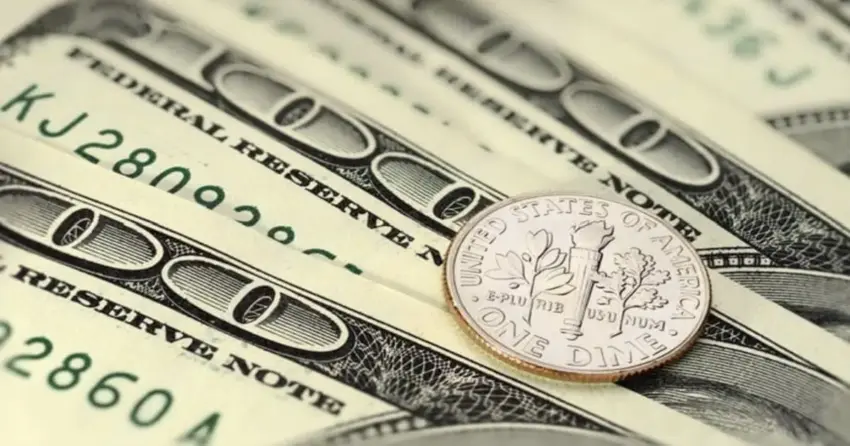
Every flea market lover knows the quiet thrill of digging through an unorganized estate sale box. You sift through rusted skeleton keys, vintage bone buttons, and tarnished silver plate, hoping to unearth something special. Most of the time, you head home with a charming recipe tin or an antique glass jar for your windowsill flowers.
Every so often, a genuine historical relic slips through the cracks. Hidden among common Buffalo nickels and worn Mercury dimes sits one of the most famous rarities in American numismatics: the 1894-S Barber Dime. A single specimen of this tiny ten-cent piece once commanded nearly two million dollars at auction.
Before you brush off that dusty coin jar sitting in your grandparents’ cedar chest, take a closer look. What seems like an ordinary tarnished dime could be one of the rarest pieces of American silver ever minted.
The True Story Behind the 1894-S Barber Dime
To understand why this specific coin carries such legendary status, you have to rewind to the summer of 1894 at the San Francisco Mint. The facility was wrapping up its fiscal year-end accounts when superintendent John Daggett noticed an awkward imbalance. The books showed an odd surplus of bullion valued at precisely two dollars and forty cents.
To balance the ledger without carrying fractional bullion over to the next accounting period, workers struck exactly twenty-four proof dimes. Each coin carried a face value of ten cents, balancing the books to the penny. The mint then shut down the dime presses for the remainder of the year.
Legend tells us that Daggett gave three of those fresh proof coins to his young daughter, Hallie. On her walk home through the breezy streets of San Francisco, the childhood temptation proved too strong. She promptly spent one of the dimes on a dish of cold ice cream, releasing a fortune directly into circulation.
Only nine confirmed specimens are documented today, held in prestigious private vaults and secure museum displays. Two remain completely unaccounted for. They could be resting inside a forgotten tackle box, slipped behind drawer linings, or tucked into a sewing basket.
Anatomy of a Treasure: How to Spot the Real Deal
Designed by Chief Engraver Charles E. Barber, this classic coinage series ran from 1892 through 1916. The coin feels pleasantly substantial in your palm, composed of 90 percent silver and 10 percent copper. It weighs exactly 2.5 grams with a diameter of 17.9 millimeters.
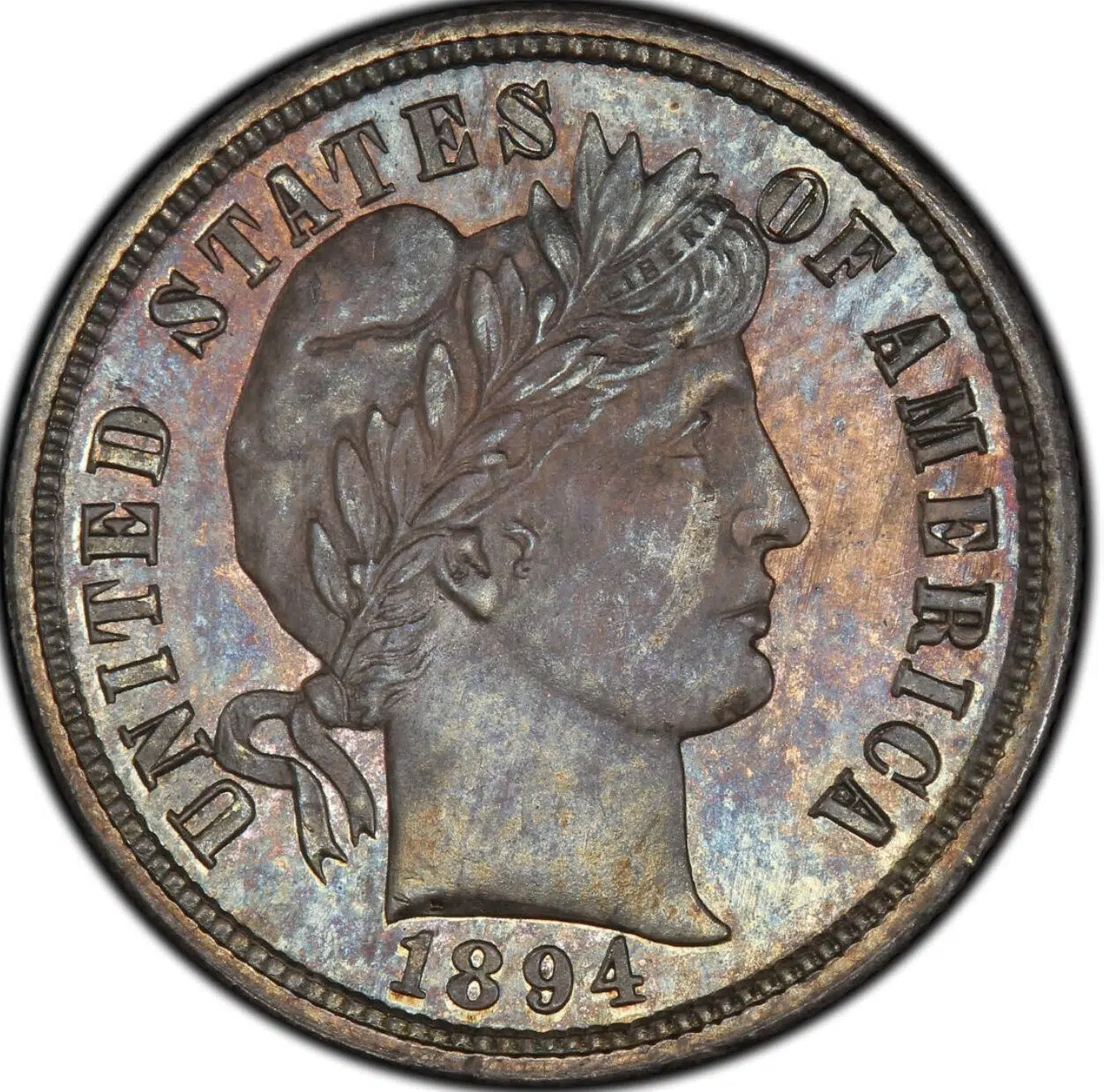
The classic profile on the 1894 Barber Dime displays Charles Barber’s Liberty design, complete with a laurel wreath and the crisp 1894 date along the bottom rim.
On the front, or obverse, you will find Miss Liberty wearing a Phrygian cap secured by a laurel wreath. Her ribbon headband displays the word “LIBERTY,” though heavily circulated coins often show wear across these letters. The clear year “1894” is stamped directly beneath her neck.
The real secret lies on the reverse side. The design features a lush agricultural wreath blending ears of corn, wheat, maple leaves, and oak sprigs tied with a neat bowknot. Inside the wreath, bold letters spell out “ONE DIME.”
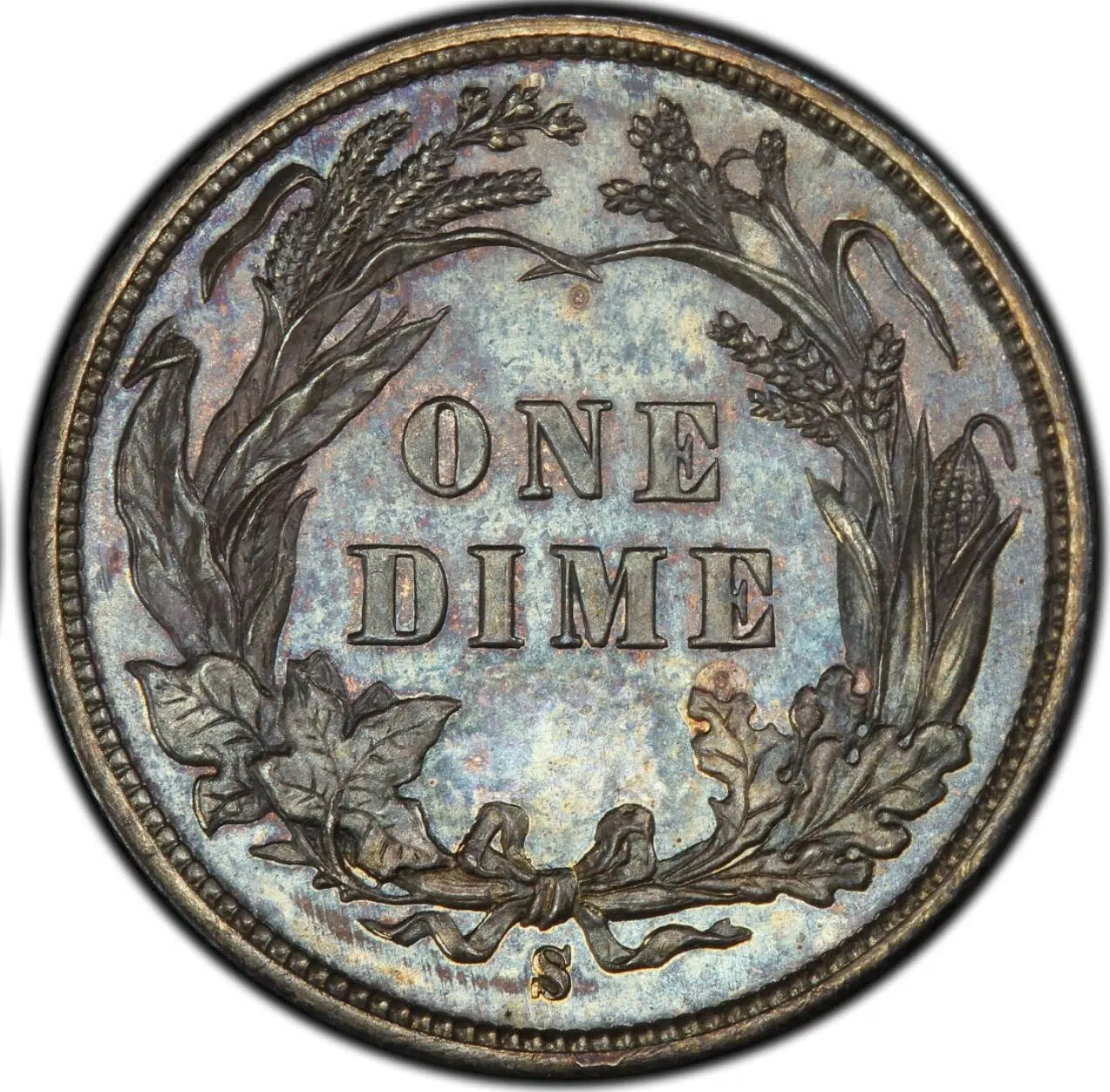
Turn the coin over and check directly below the ribbon bow: that tiny “S” mintmark is the detail that turns pocket change into a seven-figure treasure.
Directly beneath the ribbon knot at the six o’clock position sits the tiny letter “S.” That microscopic initial signifies the San Francisco Mint. If your 1894 dime has no mintmark at all, it was produced in Philadelphia, where over 1.3 million examples were made.
The Golden Rule: Never Clean Old Silver Coins
If you uncover an old silver coin coated in dark grime, fight every homemaking urge to make it shine. Do not scrub it with baking soda, do not wipe it with vinegar, and never apply jewelry polish. Harsh abrasives strip away microscopic metal layers and destroy the original surface luster.
Numismatists prize natural toning. Decades of atmospheric exposure create deep charcoal halos, warm russet shadows, and iridescent flashes of blue and amber. A coin scrubbed bright with silver polish drops in resale value overnight.
Handle old coins only by their outer edges to keep natural skin oils off the field. Rest the coin on a clean linen towel or place it inside an acid-free cardboard flip. Steer clear of cheap vinyl sleeves made with PVC, as the chemical breakdown coats old silver in sticky green residue.
Fakes and Alterations: Watching for Common Scams
Whenever a coin commands six or seven figures, dishonest hands attempt to recreate it. Altered dates and glued mintmarks have circulated through flea markets and antique stalls for generations. Knowing the basic warning signs protects you from false hope.
One classic trick involves taking an ordinary 1894 Philadelphia dime and soldering an “S” borrowed from a common 1897-S or 1900-S coin onto the reverse. Under a ten-power jeweler’s loupe, you can often spot tiny seam lines, discoloration, or traces of glue around the base of the letter.
Another common counterfeit involves filing an 1891 or 1894 coin to reshape the final digit. Authentic 1894-S coins were struck as branch-mint proofs, displaying sharp rims, mirrored fields, and exceptional detail along the wreath leaves. If a coin looks soft, mushy, or unevenly struck, treat it with healthy skepticism.
Genuine branch-mint proofs display crisp squared rims and deep, uniform details. Any seam, raised bubble, or tool mark near the mintmark points toward an altered specimen.
Where Could the Missing Dimes Be Hiding?
People often wonder how a valuable coin could stay hidden for over a century. Think about how our grandparents and great-grandparents saved money during times of financial uncertainty. Loose change rarely went into digital accounts; it went into glass jars, coffee cans, and secret hiding spots.
Estate sales in historic neighborhoods are prime territory. Old tool chests, bureau drawers, sewing baskets, and tucked-away books frequently hold forgotten currency. Even bank safety deposit boxes passed down through generations can contain uncataloged heirlooms.
Flea market junk drawers and thrift store grab bags also hold quiet surprises. Sellers clearing out house cleanouts often bundle unsorted vintage coins together. Taking fifteen minutes at your kitchen table with a magnifying glass and a cup of mint tea can turn into an exciting treasure hunt.
What to Do If You Spot a Contender
Say you inspect an old family collection and find an 1894 dime with an unmistakable “S” beneath the wreath. Keep your composure and avoid rushing to the nearest pawn shop. Pawn brokers and general scrap buyers rarely pay fair market value for elite numismatic rarities.
Your first step is independent authentication. Respected services like the Professional Coin Grading Service (PCGS) or Numismatic Guaranty Company (NGC) inspect coins under high magnification, confirm authenticity, and encapsulate them in protective archival plastic.
Once a certified grade is established, high-end auction houses handle the sale. They connect verified rarities with serious collectors worldwide, ensuring the find brings its genuine historical worth. Holding an authentic 1894-S Barber Dime connects you directly to a century-old mint mystery, making every dusty coin jar worth a second look.
Disclaimer & Reader Notice: This article is published exclusively for general entertainment, storytelling, and historical curiosity. The values mentioned represent historical auction records for certified, authenticated specimens and do not constitute professional financial, legal, investment, or numismatic appraisal advice. Coin markets fluctuate widely, and the vast majority of antique coins carry modest collector value. Neither the author nor the publisher assumes any liability for financial decisions, purchases, cleaning damages, or private transactions made based on this content. Always consult a certified, independent numismatist or accredited professional grading organization before buying, selling, or altering any rare item.