Grab a warm mug of spiced cider, pull your favorite throw blanket up to your chin, and get comfortable. Every once in a while, a story surfaces in the quiet corners of the internet that hits every emotional frequency: family dynamics, petty sibling squabbles, heirloom textiles, and the kind of cosmic payback you usually only find in classic novels. Today, we are breaking down the viral internet tale of Clara, her sister Lila, and a family heirloom inheritance drama that starts with a mocking smirk in an attorney’s office and ends with a stunning revelation.
Act I: The Will Reading Smirk Nobody Forgets
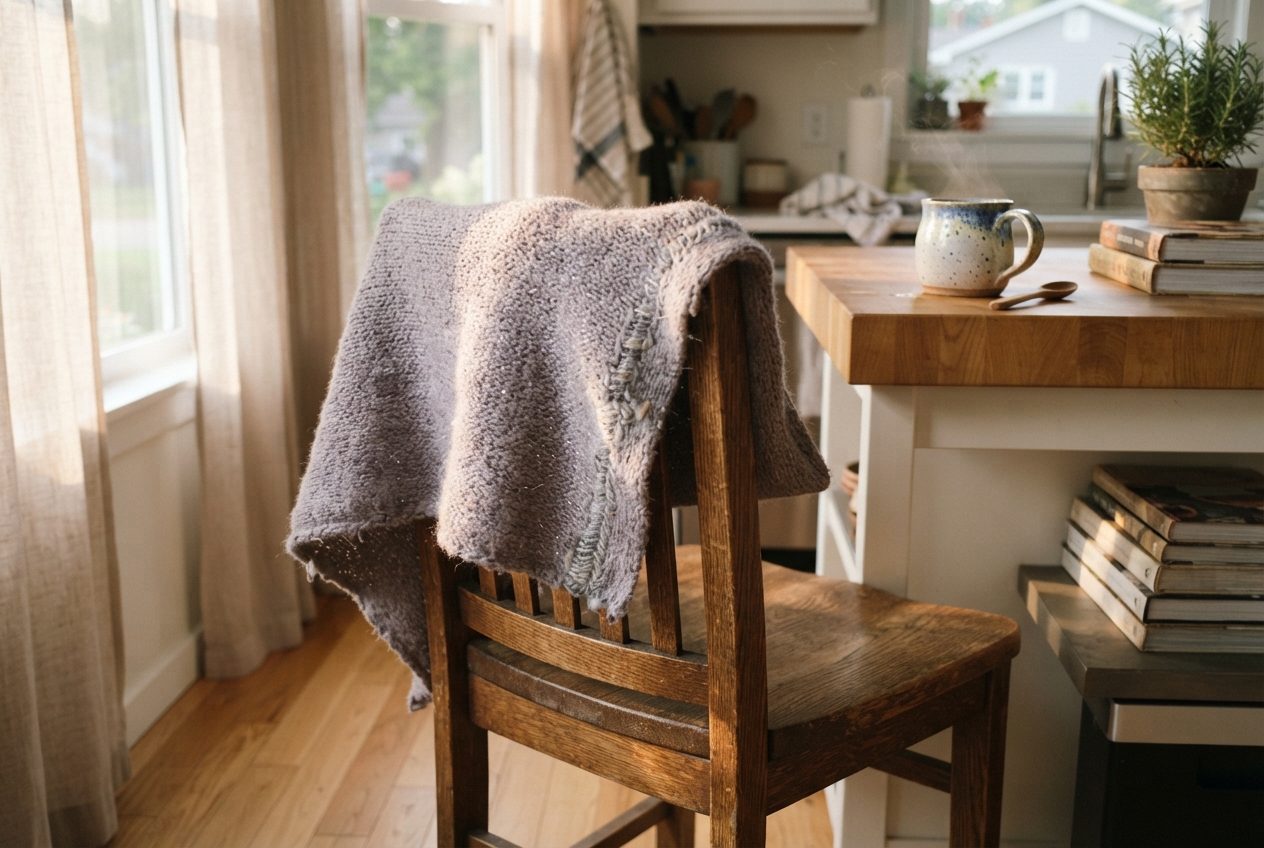
That tattered lavender knit looked like thrift-store castoff material, but real family treasures rarely arrive wrapped in gold foil.
The lawyer had barely finished reading my mother’s will when my sister began smiling. Not a sad smile. Not the kind people wear when grief and gratitude become tangled together. Lila’s smile was sharp, satisfied, and almost triumphant. She inherited my mother’s house. My brother received the car and a large portion of her savings. Several relatives were given jewelry, antique furniture, paintings, and other possessions that had been in our family for generations. Then the lawyer looked at me. There was a pause before he read my name. “To my daughter, Clara, I leave my old lavender shawl.” For a moment, I thought there had to be more. The lawyer lowered the paper. That was all.
Let us pause right here because anyone who has sat through an estate settlement knows this exact chill. There is always that one relative who treats a parent’s passing like an auction block where whoever walks away with prime square footage gets declared the “winner.” Lila getting the house and instantly weaponizing it with that razor-sharp smirk tells you everything you need to know about where her heart sits.
The room remained silent for several seconds. Then Lila laughed. She tried to disguise it as a cough, but nobody believed her. “Well,” she said, glancing around the lawyer’s office, “I suppose Mother made her feelings clear.” I looked at her. “What is that supposed to mean?” She shrugged. “Nothing. I’m only saying that people usually leave their most valuable things to the children they feel closest to.” Our brother shifted uncomfortably in his chair. “Lila, this isn’t the time.” “When would be the right time?” she replied. “We’re here to discuss what Mother wanted. Apparently, she wanted Clara to have an old blanket.” “It’s a shawl,” I said quietly. Lila smiled. “Of course. Forgive me. An old shawl.”
The sheer audacity of calling it “an old blanket” while people are still wiping tears away is peak sibling pettiness. You can smell the tension in that oak-paneled office—the crisp scent of legal bond paper mixed with unresolved childhood rivalries. Clara walked out holding a cardboard box, holding back tears while her sister whispered one last jab in the hallway: “You always thought you were her favorite.” Ouch.
Act II: Scented Memories and an Embroidered Initial
Grief does funny things to your head. Clara left that cardboard box sealed in her bedroom for days, staring at it with that heavy mix of hollow grief and sharp resentment that creeps in when you feel cast aside. But heirloom textiles carry an energy that spreadsheets and deed transfers never will.
Eventually, one rainy evening, I carried the box into the living room. I made tea, sat on the couch, and lifted the lid. The shawl lay folded exactly as my mother had always folded it. I picked it up carefully. The fabric was softer than I remembered. When I pressed it against my face, I noticed a faint scent. Lavender. My mother had kept small sachets of dried lavender in her dresser drawers. The smell had followed her everywhere. Suddenly, I was no longer sitting alone in my house. I was eight years old again, waking from a nightmare and crawling into my mother’s bed. I was sixteen, crying after my first heartbreak while she wrapped that shawl around both of us.
There is a lesson here for all of us who save our grandmother’s stitched dish towels or old hand-crocheted afghans. The world calls it clutter; your heart recognizes it as living history. While Clara traces the uneven mending along the hem, she spots something the rest of the family missed during their inventory rush: a small, delicately stitched letter “E” nestled into the corner seam.
Eleanor. My grandmother. She was wealthy, proud, and famously stubborn. She guarded her money fiercely, argued with everyone, and by the end of her life, most of the family had distanced themselves. Lila visited only around holidays, usually when she wanted something. My mother was different. No matter how difficult Eleanor became, Mother kept returning. She drove her to appointments, prepared meals, cleaned the large house, and sat beside her through countless nights of illness. When I asked why she stayed, she told me: “Love is not always easy, Clara. Sometimes it is simply choosing not to leave.” Sitting on the couch with the shawl around my shoulders, it no longer felt like an insult. It felt like a question.
That quote alone deserves to be cross-stitched and hung in every kitchen: “Sometimes it is simply choosing not to leave.” Eleanor was prickly and guarded, but Clara’s mother showed up anyway. And as anyone who pays attention to family lore knows, quiet devotion rarely goes completely unnoticed—even if the ledger stays hidden for years.
Act III: The Panic Call and the Five-Figure Offer
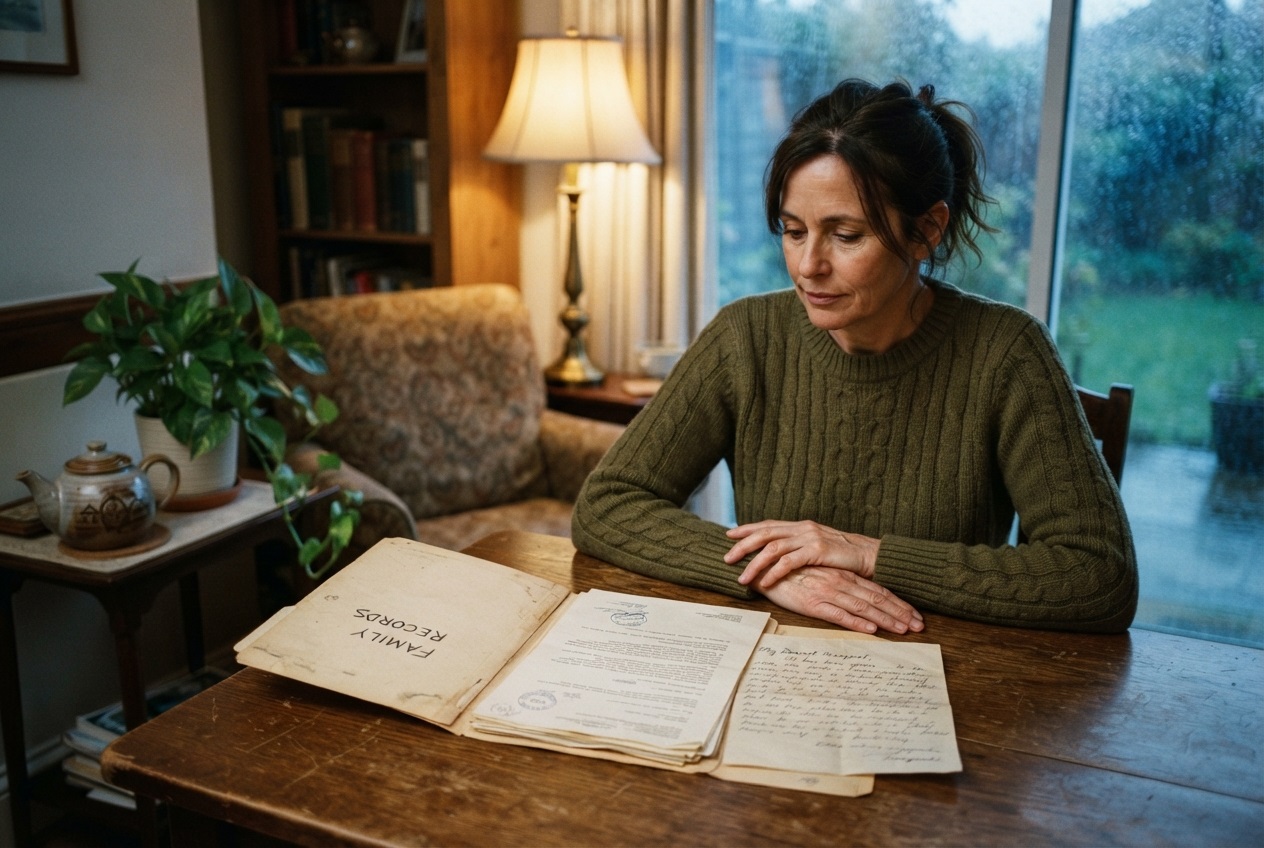
Nothing makes the room freeze quite like a sudden knock from the estate lawyer carrying a second briefcase.
Six weeks go by without a word. Then Clara’s phone lights up with Lila’s name. This is where the story shifts from a tender family drama into a nail-biting mystery. Watch how quickly the tone changes the moment dollars enter the equation.
When I answered, her breathing sounded rapid and uneven. “Do you still have it?” I frowned. “Have what?” “The shawl.” “Yes.” “Where is it?” “At my house.” Lila spoke in a calmer tone, though I could hear the strain. “I want to buy the shawl. I’ll give you five thousand dollars.” I thought I had misheard her. “For Mother’s old shawl?” “Yes. It has sentimental value.” “You called it an old blanket.” “Fine,” she said. “Ten thousand.” My skin prickled. “Twenty-five thousand,” she said. I stood up. “What did you find out?”
Can you imagine the audacity? Offering twenty-five grand for the very item you ridiculed at a formal estate hearing! If someone offers you used-car money for a piece of frayed violet wool, you don’t call a courier—you double-lock your front door and inspect the seams with a magnifying glass.
Less than an hour later, someone knocked on my door. It was not Lila. It was the family lawyer. Mr. Bennett sat at my kitchen table and looked unusually serious. “Your sister contacted me yesterday. She asked several questions about your grandmother’s estate.” He opened his briefcase and removed a thick folder. “Your grandmother established a private trust shortly before her death. The trust would remain private until the legal owner of a particular personal item was identified. The shawl. Inside one of the repaired seams is a small identification plate bearing the trust number and the initials of the rightful beneficiary. The person who legally owned the shawl at the time the trust was activated would receive everything.”
The delicious irony here is almost poetic. Lila thought she had stripped Clara of everything by snatching up the brick-and-mortar property. Meanwhile, the eccentric grandmother Eleanor had rigged the entire inheritance through a tiny metal plate sewn inside a hand-mended hem. She set a trap for the transactional relatives and built a shelter for the one who cared without keeping score.
Act IV: The Letter and the True Meaning of Inheritance
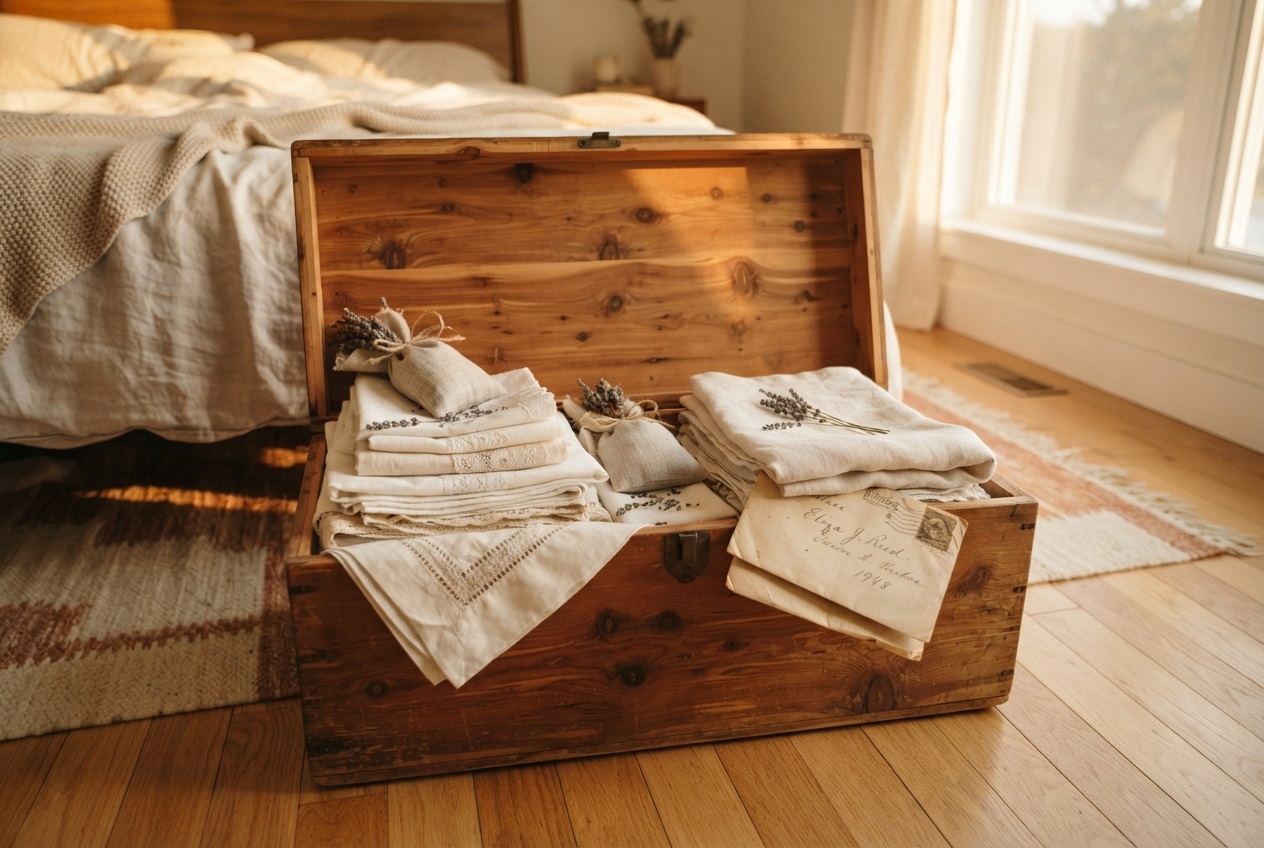
Kept safe inside cedar wood, heirloom textiles preserve love, memory, and occasionally a secret that changes everything.
Before handing over the signatures that transfer commercial shares, properties, and accounts large enough to fund generations, the attorney passes Clara one final item: an envelope handwritten by her late mother. This is the emotional anchor of the entire narrative.
“My dearest Clara, By the time you read this, you may already know the truth about the shawl. I watched my mother test every person around her with money. Some failed quickly. Others failed slowly. Wealth revealed parts of them they tried to hide. You were different. You cared for me when I was ill, even when you had little time and no expectation of reward. You visited your grandmother when everyone else complained she was too difficult. The shawl is yours because I trust you. Not only with the money, but with the responsibility that comes with it. Please remember that its greatest value is not hidden in a bank or a trust. It is what it carries from one woman to another: loyalty, sacrifice, memory, love. Use what comes with it wisely. And never let anyone convince you that the smallest gift means the smallest love.”
While Clara reads through tears, Lila’s text notifications start flooding the screen like a frantic slot machine: Fifty thousand. One hundred thousand. We can divide the estate equally. That would be fair.
Now she wants fairness! Isn’t it fascinating how the people who show the least grace when they feel on top are always the first to cry “equity” the second the tables turn? Clara did what any sensible woman with an ounce of dignity would do: she hit the power button, set her phone face-down on the counter, and finished her paperwork in peace.
Carrying What Matters Most
Clara didn’t buy a mega-mansion or splash her name across sports cars. She cleared her mortgage, set up local caregiver support funds, established scholarships, and tucked the shawl inside a sturdy cedar trunk alongside her mother’s letter. The lavender scent may have softened, but the protection remains intact.
When you strip away the legal documents and the hidden trust numbers, this story leaves us with a quiet, grounded truth about family heirloom inheritance drama. The most valuable things passed across kitchen tables rarely glitter. Sometimes they look like worn stitches, a lingering hint of lavender herbs, and the steady assurance that authentic love never needs to brag to be real.
Disclaimer: This story is a fictional narrative shared across social media and internet forums for entertainment, reflection, and storytelling purposes. Character names, legal twists, and scenarios are works of creative fiction.